FromSoftware's fastest, most aggressive Souls game turns everything the trilogy built up to that point — punishing combat, colossal bosses, environmental storytelling — up to a final, deliberate intensity, and closes the series out as close to a masterpiece as it gets.
A haunting, wordless puzzle-platformer from the makers of Limbo, whose ending has divided players in exactly the same way for nearly a decade — not through controversy, but through a deliberate ambiguity some find profound and others find frustrating.
A decade on, the thing that still makes Stardew Valley work isn't the farm, it's the clock — energy, daylight and a hard seasonal deadline turned into the best progression pressure the genre has ever built, even if the pressure quietly switches off once you're rich.
Red Hook Studios' gothic party roguelike turns stress into a second health bar and turns your roster, not any one hero, into the thing you're actually raising from level one.
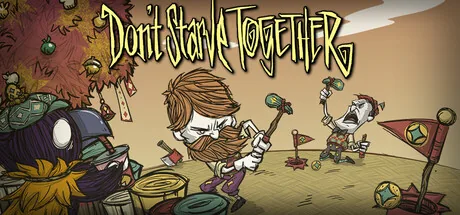
Klei's co-op survival sandbox turns Wilson's original nightmare into a shared one, where the real threat isn't the Deerclops so much as what happens when nobody on the team remembers it's coming. A decade of free content updates against 49 mostly-cosmetic DLC entries makes it a genuinely useful case study in how to monetise a survival game politely.
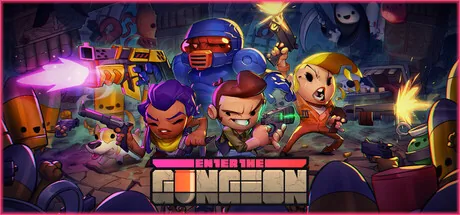
A genre-defining bullet-hell roguelike about diving through a fortress of guns to find the one weapon that can kill the past — nearly a decade old and still Overwhelmingly Positive across almost 80,000 reviews, with fans logging thousands of hours apiece, undercut by a steep, RNG-heavy difficulty curve and a still-raw 2025 controversy over online co-op arriving on mobile years before it ever reached PC or console.
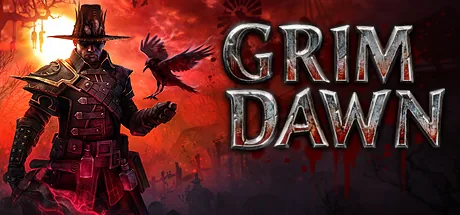
A decade-old action RPG that just got a real tenth mastery and a third of a new map, proving Crate Entertainment still has more to say — even if the engine underneath it never stopped being from 2016.
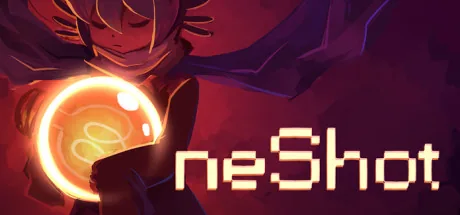
A short, genuinely inventive puzzle adventure that reaches outside the game window to talk to you — 98.3% positive, and if you're on Linux or Steam Deck you should buy a different version of it.
Ten years on it's still the sharpest turn-based tactics game ever made, built on one brilliant, divisive decision: you are always out of time. The thing that's actually got worse since 2016 isn't the game — it's what you have to agree to in order to launch it.
A voxel survival sandbox that replaces Minecraft's tap-a-block-get-an-ingot logic with real material science — knapping, pit kilns, bloomeries and alloy ratios you actually have to measure — sold direct from the developer for one flat price with no storefront in between.
A decade-old mobile idle game about running a chicken farm into the stratosphere, held together by a prestige loop, an artifact-crafting layer, and — unusually for the genre — timed co-op contracts that only work if other people show up.
A decade-old physics-puzzle co-op favorite still getting free content updates today — and still, nearly a decade later, drawing a specific, sustained complaint from Linux owners about a 2018 platform decision that's never been reversed or clearly explained.
The most complete redemption story in gaming, a decade on. The 2016 launch reviews and the 2026 ones are describing almost different games — and the newest wave of criticism has nothing to do with the old one.
You move to Shenzhen, take a job building circuits, and read a manual you're expected to print out — and the most-upvoted negative review, at 905 votes, recommends it anyway.
The definitive modern Civilization for most players, thanks to two expansions that meaningfully deepened its district-and-diplomacy foundation — carrying an old, now-dated controversy over a data-collection policy update, and a genre-standard but real DLC bill for anyone chasing the complete roster.
Respawn Entertainment's 2016 shooter remains Overwhelmingly Positive across more than 284,000 Steam reviews, widely regarded as one of the finest FPS campaigns ever made — a reputation shadowed by a genuine, years-long multiplayer DDoS crisis this review can confirm directly from the developer's own communications, and by the mandatory EA App launcher requirement that recurs as a real, persistent complaint even in reviews from Steam Deck-era players decades removed from launch.
An action-combat MMO where the fighting is closer to a character-action game than a tab-target RPG, the real long-term game is an offline worker economy running nodes and trade routes while you're logged out, and gear upgrades can fail hard enough to destroy the item you spent months building. Ten years old, still getting weekly content, and still the most mechanically dense MMO most players will ever half-understand.
Sad Panda Studios' idle dating sim is a genuine time-blocking resource-allocation game wearing an anime pin-up costume, still shipping new characters and events after almost a decade — and still leaning on the same event-currency pressure its own players complain about.
Arkane's supernatural stealth-action sequel remains Very Positive across more than 66,000 Steam reviews, widely regarded as one of the finest immersive sims ever made — a reputation that survived a severe, well-documented 2016 launch-performance crisis this review can confirm was genuinely fixed, though a separate, newer, still-unresolved AMD CPU plus Nvidia GPU launch-failure bug persists in reviews dated as recently as August 2025, alongside real, current uncertainty over Arkane's own future following a July 2026 Xbox restructuring.
A shipwreck-survival action RPG that turns rescuing NPCs into a settlement-building system and backs it with some of the fastest, most readable real-time combat Nihon Falcom has ever shipped. The PC version carries genuine baggage from a rough 2018 launch and a since-rewritten English script, but the game underneath both has aged well.
Ten years, 38 DLC packs and 924,876 reviews later, the complaint isn't the licensed horror store — DLC appears in nine of a hundred negative reviews. It's each other.
Eidos-Montreal's cyberpunk immersive sim remains Mostly Positive across more than 42,000 Steam reviews for its genuinely excellent stealth gameplay and world-building — undercut by a real, remarkably consistent complaint that its story ends abruptly mid-arc, a flaw this review can confirm the game's own writer has since publicly acknowledged, tied to a since-cancelled sequel that would have resolved it, and to real, dateable studio layoffs still affecting Eidos-Montreal as recently as March 2026.
A free browser idler from 2014 that outgrew Kongregate, landed on Steam in 2016, and has spent over a decade turning shadow clones and god fights into one of the genre's longest and most demanding progression ladders.
A ten-year-old space sandbox that still earns a Very Positive rating on the strength of its crafting-and-exploration loop and its modding scene — until you check the dates and find the developer has shipped one hotfix since 2019, then marked the tenth anniversary of its 1.0 launch with a vinyl record instead of an update, which is currently tanking the recent-review score in real time.