One continuous journey
The world
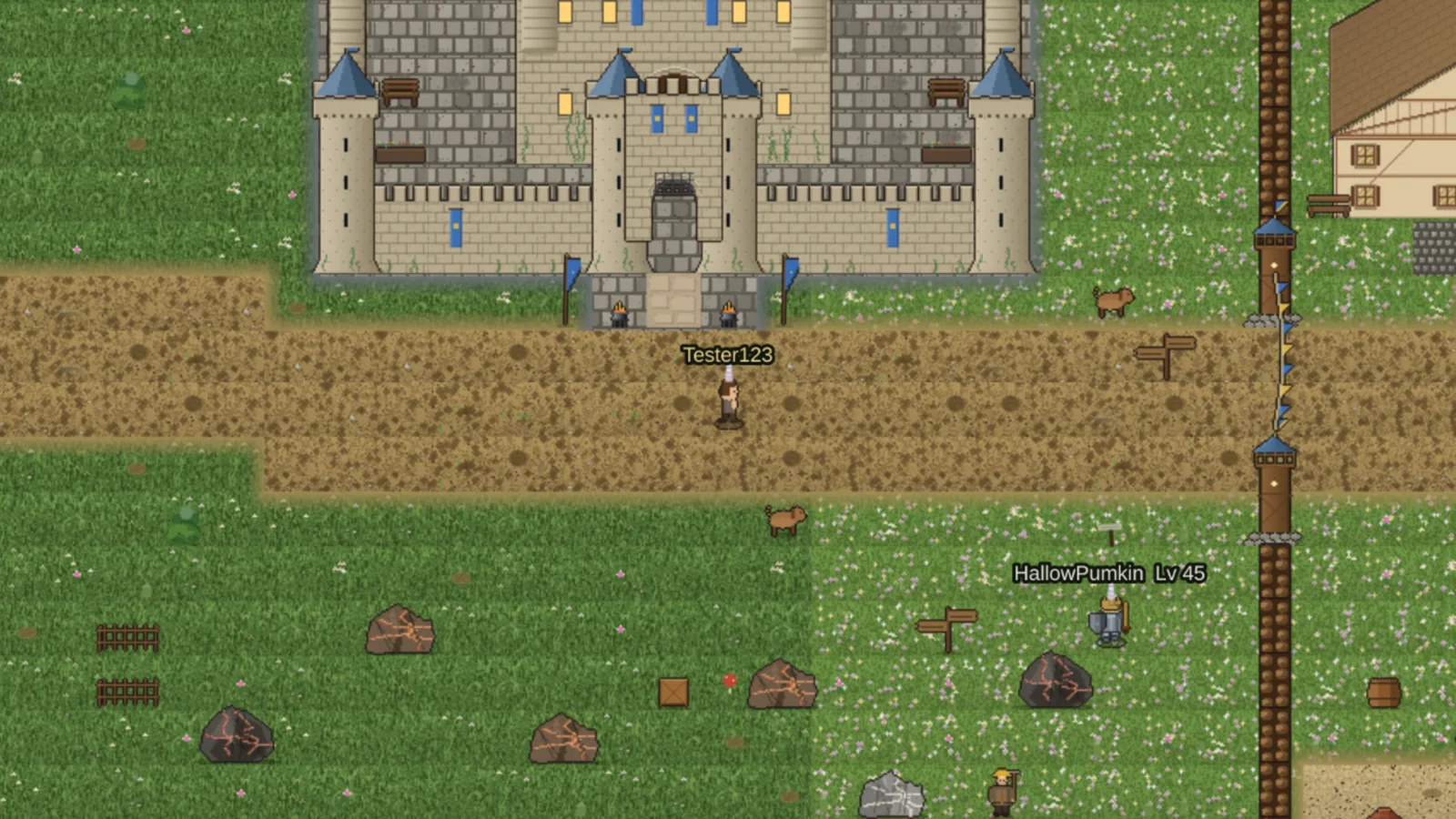
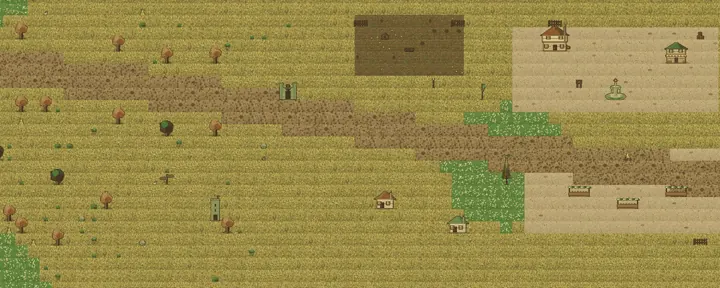
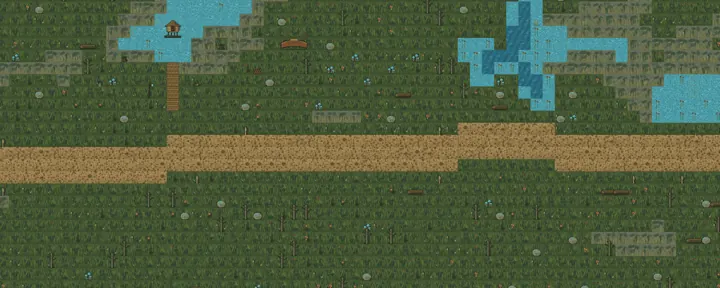
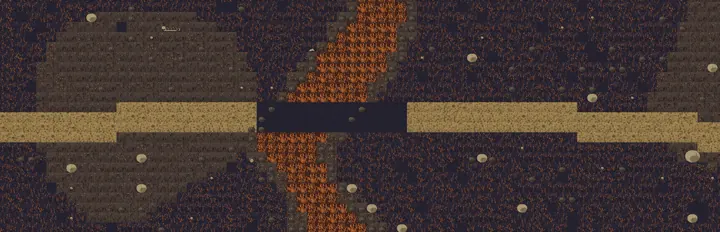
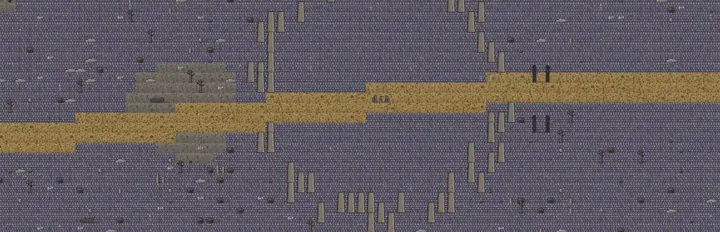
The whole game happens along the Long Road: one seamless corridor that begins in the meadows of Wanderer's Rest and ends, a very long way later, at the doors of the Forgotten Sanctum. Between the two lie thirty-two hand-built regions — deep forest, black fen, frozen reaches, a burning ridge, the shattered capital of a fallen empire, a coast littered with wrecked ships, a graveyard of titans. Difficulty rises the further east you walk, so the road itself is the difficulty curve: you can always see harder country coming.
The world is dressed by hand. Roads are lined and milestoned, towns fade naturally into their farmland, marshes freeze believably into snowfields, and one-off landmarks — a toppled god's head, a beast sealed in glacier ice, an aqueduct of the old empire — anchor the stretches between settlements.
Play actively or let the road unfold
How it plays
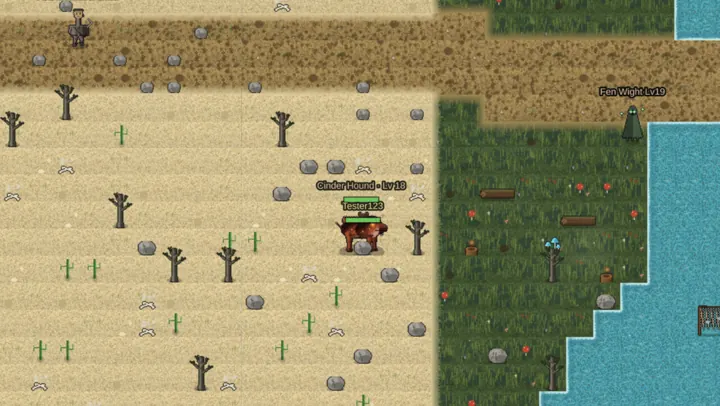
Tap to walk, or let your wanderer explore on their own — the game is built for both. Monsters find you as you travel; fights resolve automatically against your Attack, Strength and Defence, your equipment, and your hit points. Win and you take experience, coins and loot. Lose and you're knocked back to safety to recover — your gear stays yours.
Towns are safe ground. Twenty-eight settlements line the road with shops, blacksmiths, and named locals who wander about their day and talk to passers-by. Mine ore in the rock fields, smelt bars, forge better gear, and when you've earned it, build a house of your own on a roadside lot.


Gear and growth
Equipment covers six slots — weapon, shield, helmet, body, legs and boots — across twenty-six tiers, from a worn starter blade to legendary gold. Better gear drops from monsters or comes out of the forge. Requirements are forgiving: gear above your level can still be worn at reduced effect, so a lucky drop is never a dead weight in your bag.

Offline, honestly
When you close the app your wanderer keeps at whatever you left them doing — walking east, fighting what finds them, mining, smelting. Come back and pick up where they got to. There is no energy system, no daily streak, and no penalty for being away; away time is part of the game, not a tax on it.

Play anywhere
Wanderer runs in any modern browser on phone or desktop — no install needed — and there's a native Android app on Google Play. Progress lives on the server with a Google sign-in, so the same wanderer walks on whichever screen you open.
Built to respect your time
Why it exists
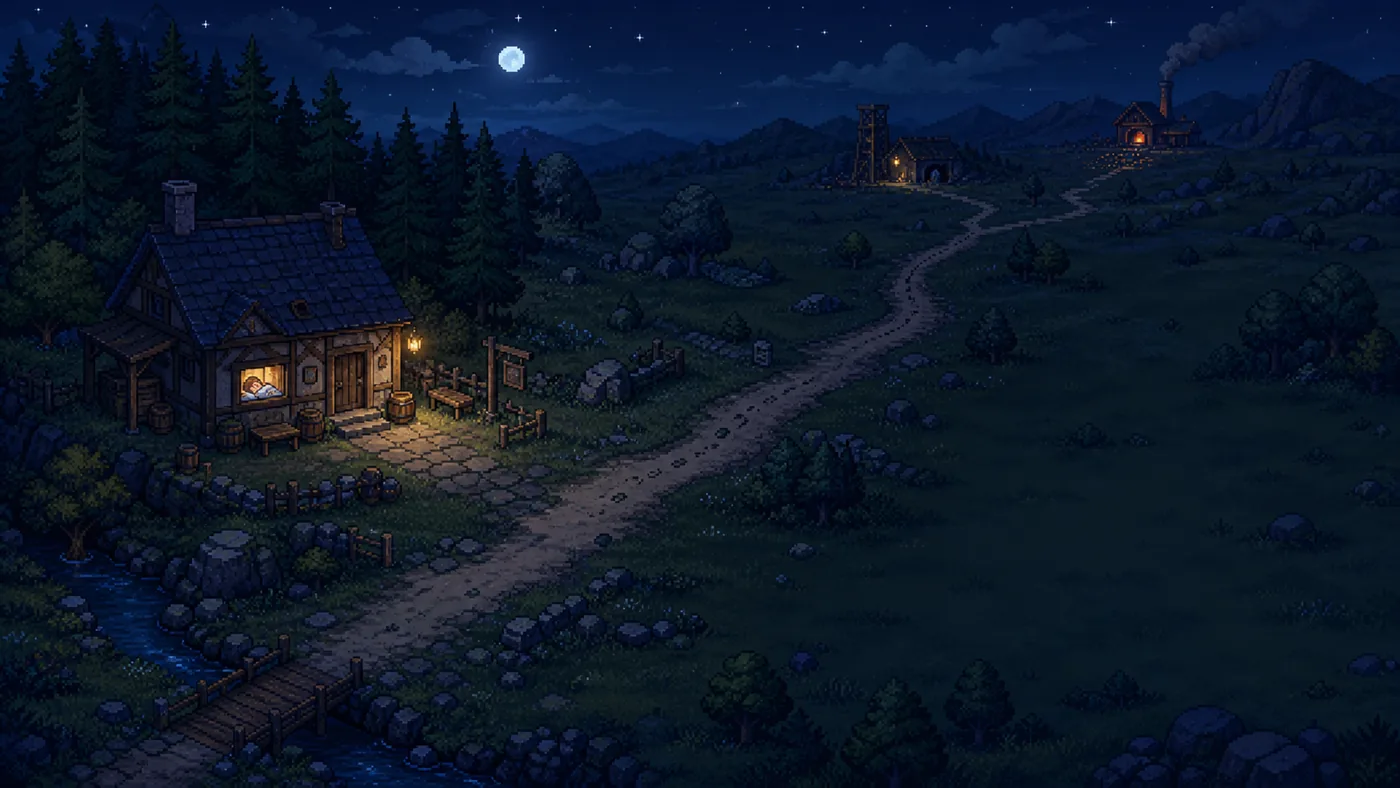
Wanderer started with a simple irritation: idle games that respect your time are rare, and MMOs that respect your schedule are rarer. The goal was a persistent world you could genuinely live alongside — check in from a bus stop, or settle in for an evening, or vanish for a week — without the game punishing any of those choices. Every design decision since has been tested against that: no energy bars, no streaks, defeat that costs position but never property, and away time simulated honestly instead of paid out as a lump of numbers.
Why one road
The world wasn't always a corridor. The first version of Wanderer spread in all directions from a central town — and distance stopped meaning anything, because there was always an easier direction to drift. Rebuilding the world as a single east–west road (June 2026) gave the game its spine: one axis, one rising difficulty curve, one number — how far east you've stood — that says everything about a wanderer. The road doubled in length a month later, and it will likely grow again; the changelog keeps the honest record.

Independent and evolving
Made by one person, shaped by many
Wanderer is built and run by a single independent developer — known in-game as Killerworm — with a closed-testing crew and a talkative player base doing the arguing. A remarkable share of the game's recent features began as player messages; the development page explains how the game is actually made, tools, art pipeline, AI assistance and all, and the roadmap shows where it's headed. The game is actively developed, with updates shipping most weeks.
What we think of other games
The same small team writes the site's game reviews — nearly 2,000 honest, scored write-ups of idle games, RPGs and everything between, judged by the same standards Wanderer holds itself to.