Game review
Stardew Valley
9 / 10
- Developer
- ConcernedApe
- Publisher
- ConcernedApe
- Released
- 26 February 2016
- Platforms
- Windows, macOS, Linux, Nintendo Switch, PlayStation 4, PlayStation 5, Xbox One, Xbox Series X|S, iOS, Android
- Genre
- Farming sim, life RPG
- Monetisation
- Premium, one-off purchase. No in-app purchases, no subscription, no battle pass; the only optional add-on is a $4.99 soundtrack DLC
- Players
- Online and local co-op for up to four players sharing one farm (host-dependent, no dedicated servers); split-screen support for two
The short version
Stardew Valley's real invention isn't the farm, the mines or the twelve marriage candidates — it's making a single in-game day feel like a resource to be spent under real constraint. Energy runs out, daylight runs out, and the season ends whether your fields are finished or not. That three-way squeeze is what turns watering crops into a decision instead of a chore, and almost everything the game does well is built on top of it.
The trouble is that the squeeze has an expiry date. Clear the Community Center, build a greenhouse and a bank of iridium sprinklers, and the economy that gave the clock its teeth stops biting. What's left afterward is still a huge, generous, beautifully soundtracked game — it just spends its second half coasting on content rather than pressure.
Biggest strengths
- The energy, daylight and season clock creates a genuine resource-allocation puzzle every single morning
- Five skills with branching professions give farming, mining, fishing, foraging and combat real numerical growth, not flavour text
- Choosing the Community Center or Joja's membership is a values-driven fork, not a cosmetic one, and it changes the town permanently
Biggest weaknesses
- Combat rarely demands more than walking into range and swinging, even in the Skull Cavern's supposedly harder runs
- Once the greenhouse and iridium sprinklers are unlocked, money stops being a constraint and the clock loses its sharpest edge
- Heart events fire on friendship-point thresholds rather than reacting to what you've actually done, so courtship reads as a checklist
Who it's for: Anyone who wants a management sim with an actual skill ladder underneath the cosy aesthetic, players returning after a few years to see how much Update 1.6 changed, and anyone who bounced off a newer cosy-farming release and wants to see the version that set the template.
Our recommendation: Buy it without hesitation on PC. It's cheap, it's had a decade of free content added on top of the original price, and there's no purchase after the first one. On mobile, check the touch controls suit you before committing serious hours — the interface is a port of a mouse-and-keyboard game, and it shows in the fiddlier tasks.
9 / 10
Ten years after release, Stardew Valley's hardest boss still isn't a mine monster or a rival farmer. It's 6 a.m. At that hour the game puts you to bed whether the crops are watered or not, no negotiation, no stamina potion that buys you past it. Everything interesting Stardew Valley does — the farming, the mining, the fishing, the relationships — happens inside a day that a huge number of games in this genre pretend is infinite and Stardew Valley refuses to.
That clock is the reason this is still the reference point for the entire cosy-farming category rather than just its most famous entry. It's also, a decade on, showing exactly where its design runs out of ideas: a combat system that never grew past "walk over and hit it," a money curve that solves itself well before the game is finished being played, and a friendship system that mistakes counting hearts for modelling a relationship. None of that changes what Stardew Valley gets right first. It changes how confidently you should expect the back half of a save to hold your attention the way the front half does.
The clock as a progression system, not a countdown
Most life sims treat time as pacing — a soft nudge to stop dawdling. Stardew Valley treats it as the actual resource under management. Every morning hands you a fixed energy bar, roughly sixteen hours of daylight, and a season that ends on day 28 no matter what's still in the ground. Spend energy watering, hoeing and swinging tools, and it's gone until you sleep or eat it back with food you had to grow, buy or catch. Walk too far from home as the sun drops and you'll pass out in a field and lose money and time for the privilege.
What makes this a progression system rather than an inconvenience is that every tool upgrade directly attacks the constraint. A better watering can covers more tiles per use. A better hoe does the same for tilling. Sprinklers remove watering from the loop entirely, tile by tile, as you can afford them. So the thing you're actually levelling, underneath the skill numbers, is your own authority over the day — how much of that sixteen-hour window a single action costs you. Few management sims tie their equipment tier this directly to the resource that actually limits you, and it's the reason early Stardew Valley feels tight in a way that's rare for the genre: you are never far from a decision that trades energy against time against money, and getting that trade wrong costs you the rest of the day.
It's worth being specific about how long that tension lasts, because "it opens up eventually" undersells how front-loaded the good part is. A newcomer who checks the bulletin board, learns the delivery routes and doesn't waste days is usually clearing the Community Center bundles and unlocking the greenhouse somewhere in the fifteen-to-thirty-hour range, depending on how much time they spend exploring the mines rather than farming. That's not a bad ratio for a genre where some competitors never build a real ladder at all — Moonlight Peaks, a recent entry in the same shelf, borrows Stardew's daily-deadline pressure almost exactly and then never builds the skill progression that gives Stardew's version of that pressure something to resolve into. But it does mean the sharpest version of Stardew Valley's central idea is a finite phase, not the permanent state of the game.
Two ideologies, one bulletin board
The choice between restoring the derelict Community Center or paying Joja Corporation to bulldoze it is the game's best piece of design that has nothing to do with numbers. Both routes unlock the same six buildings — mini-obelisks, the panning spot, the bus to the desert — but they arrive through opposite means: donating specific items gathered from farming, fishing, foraging and mining, or paying escalating sums of gold for a corporate membership. It's a real fork. Choosing Joja is faster and doesn't ask you to engage with half the game's systems, and the town visibly changes around that choice — buildings close, characters react, the museum stays boarded up. Very few farming sims give the player a values decision with a mechanical cost attached to picking the "efficient" option instead of the "in the spirit of the game" one. It's telling that most players, by their own account across ten years of forum and Reddit discussion, take the slower Community Center route anyway. That's the pull of good design rather than a moral lecture.
Five skills, and where they actually go
Farming, Mining, Foraging, Fishing and Combat each run to level 10, with a profession choice at level 5 and another at level 10 that locks you into a build rather than letting you stack every bonus. Take Tiller for a farming multiplier or Rancher for animal produce; take Miner for ore yield or Geologist for gem drops. These aren't cosmetic flavour picks — they measurably change what your farm is good at producing, and switching later costs a rare respawn item, so the choice has actual weight the first time you make it.
The ceiling on all five skills is the mine, which runs 120 levels deep before opening into Skull Cavern, a much harder randomised dungeon in the desert that exists purely to keep testing a maxed-out build. That's a sensible endgame shape on paper: a bottomless risk-reward space for players who've run out of farm to optimise. In practice it's gated behind a system — combat — that never developed the depth the other four skills got. More on that below.
The mid-game problem: money solves itself
This is Stardew Valley's least-discussed weakness, mostly because it's the kind of flaw players experience as things getting easier rather than things getting worse. Once bundles are cleared and the greenhouse removes seasonal restrictions from farming, a modest cluster of iridium sprinklers and a few high-value crops — ancient fruit and starfruit are the usual choices — turn income into a number that goes up on autopilot. From that point, the clock stops functioning as pressure. You still have the same sixteen hours and the same energy bar, but there's rarely anything left that costs enough to make spending them feel risky.
That's the flip side of the excellent opening. A game that ties its whole identity to a hard resource constraint needs the constraint to keep mattering, and Stardew Valley's late game hands you the tools to opt out of it entirely, then gives you festivals, the Mastery Cave, Ginger Island and social content to fill the time instead. Those additions are genuinely well made. They're also a different kind of game — a checklist of remaining things to see, rather than a system still pushing back on you the way the first thirty hours did.
Combat is the weak link, and the game builds an endgame on it
Compare the combat skill to the other four and the gap is obvious. Weapons come in a handful of archetypes — swords, daggers, clubs, slingshots — but positioning rarely matters beyond staying out of a hitbox, enemy variety in the mines repeats heavily by depth, and the profession choices for Combat (more crit, more defence, more damage) don't reshape how a fight plays the way Farming's or Mining's professions reshape a day. It works well enough as friction between the player and loot, which is all it needs to be for most of the game.
The problem is that Skull Cavern — the one part of Stardew Valley explicitly built as a long-term endgame test — runs entirely on this system. A shallow combat loop is a fine seasoning across five skills; asked to carry an entire late-game dungeon on its own, its limits show. Players who want a genuine skill ceiling in Stardew Valley find it in resource optimisation and route planning long before they find it in a fight.
Villagers, hearts, and the limits of a threshold
Thirty-plus villagers populate Pelican Town, twelve of them marriageable, and gifting twice a week raises a friendship meter that unlocks scripted cutscenes at set point thresholds. It's a well-written cast — Barone's dialogue has real range, from Pierre's small-business anxiety to Linus's deliberate distance from town life — and the sheer density of one-off lines rewards players who read everything.
What it isn't is reactive. A heart event fires because a number crossed a line, not because of anything the player specifically did to earn it, and once a friendship maxes out there's very little left for that character to say that changes based on your actions. Marriage locks in a small rotation of dialogue and a handful of scheduled events rather than a relationship that keeps developing. It's a real system with genuine writing quality behind it, and it's also fundamentally a checklist wearing a friendship meter's clothes — closer to Moonlight Peaks' one-date-per-character structure than either game's marketing would suggest.
Multiplayer: real, but shaped by its host
Added years after launch and still clearly built as an addition rather than a foundation, multiplayer lets up to four players share a farm, split resources and work independent plots inside one shared save, plus split-screen for two players on one machine. It's a genuinely generous implementation — farmhands get their own cabins, their own inventories and meaningful input into shared decisions — but the structure is host-dependent throughout. There's no dedicated server option, the save file belongs to whoever hosts, and a chunk of main-story content is gated behind the host specifically completing it. A long-running co-op farm works best when everyone involved treats it as the host's world that others are visiting, not a fully equal shared project.
A decade of free updates, and platforms that lag
Update 1.6 landed on PC as a free download years after release and it's a genuinely substantial addition: a Mastery Cave endgame that hands out permanent bonuses once the five skills max out, a new farm layout built around animal husbandry, a new resident, dozens of new recipes and crops, and a long list of smaller fixes and quality-of-life changes. That a solo developer is still shipping content of that size for a nine-year-old game, at no additional cost, is close to unheard of in this price bracket, and it's the strongest evidence for buying now rather than waiting: everything in 1.6 belongs to owners of the original $14.99 purchase.
Console and mobile versions have historically trailed the PC build by months as ports get built and certified, which is worth knowing before assuming feature parity with a friend who plays on Steam. It's a minor asterisk rather than a real weakness, but it's the kind of thing that catches multiplayer groups out when one player is further behind on content than the rest of the party.
Mobile: the same game, with the seams showing
The mobile release is a genuine, complete port rather than a stripped spin-off, and that's admirable on its own terms. It's also the version where the game's mouse-and-keyboard origins are hardest to disguise. Precise tool placement on a touchscreen is noticeably fiddlier than on a controller or mouse, time-sensitive minigames like fishing ask for a level of touch accuracy the interface doesn't comfortably provide, and menus originally designed for a cursor still read as cramped on a small phone screen even after interface passes aimed at fixing exactly that. None of it makes the mobile version unplayable, but anyone weighing platforms and planning to put serious hours in should treat PC or a controller-equipped console as the default and mobile as the convenience option for shorter sessions.
What $14.99 buys
Fourteen dollars and ninety-nine cents on Steam (NZ$17.99, checked 30 July 2026) is the entire transaction. There's a single optional four-dollar soundtrack DLC and nothing else — no currency, no season pass, no cosmetic shop, no cloud-save paywall. Set against nearly a decade of free major content and a modding ecosystem healthy enough to add whole new mechanics on top of the base game, it's one of the strongest value propositions on Steam's storefront, full stop, not just within its genre.
Verdict
Stardew Valley earns its reputation on the strength of one idea executed better than almost anything else has managed since: a day that runs out, energy that runs out, and a season that ends on schedule, all pushing against a player who has to decide what actually matters this morning. That idea, plus five skills that give the decision real numerical stakes and a Community Center-versus-Joja choice with genuine values behind it, is enough to carry a first playthrough a very long way.
It doesn't reach the very top of the scale because the things it's weakest at are the things it leans on hardest late: a combat system asked to anchor an entire endgame dungeon it was never built to support, a money curve that quietly switches off the pressure the whole design is built around, and a friendship system whose reactivity tops out at a meter crossing a line. None of that erases a decade of free content, one of the best-regarded soundtracks in the genre, and a price that hasn't needed to change because the game keeps being added to instead. Buy it on PC first. Everyone else gets the same game, just with a few more rough edges to route around.
Prices and platform availability checked via Steam's storefront listing, 30 July 2026.
Players who like their progression to keep ticking without a farm attached, and without a save file that has to end when the host logs off, may also want to look at Wanderer — a persistent world with skills that level the same way Stardew Valley's do, running whether the tab is open or not.
Pros and cons
Pros
- The energy, daylight and season clock creates a genuine resource-allocation puzzle every single morning
- Five skills with branching professions give farming, mining, fishing, foraging and combat real numerical growth, not flavour text
- Choosing the Community Center or Joja's membership is a values-driven fork, not a cosmetic one, and it changes the town permanently
- Update 1.6 added a full Mastery Cave endgame, a new farm layout, a new villager and dozens of fixes years after launch, all free
- Four-player drop-in multiplayer lets a whole farm run as a shared economy without diluting the single-player game underneath it
- Fourteen dollars reliably returns hundreds of hours, and the modding scene extends that further without asking for anything else
Cons
- Combat rarely demands more than walking into range and swinging, even in the Skull Cavern's supposedly harder runs
- Once the greenhouse and iridium sprinklers are unlocked, money stops being a constraint and the clock loses its sharpest edge
- Heart events fire on friendship-point thresholds rather than reacting to what you've actually done, so courtship reads as a checklist
- Touchscreen tool-targeting on mobile is imprecise in tight spaces, and time-sensitive tasks like fishing are noticeably harder than with a controller
- A farmhand's progress still belongs to the host's save, so long-term multiplayer runs depend on one player staying committed to the world
- The base bundle list most players see on a first save hasn't materially changed since 2016, even as everything built on top of it has
Screenshots
-
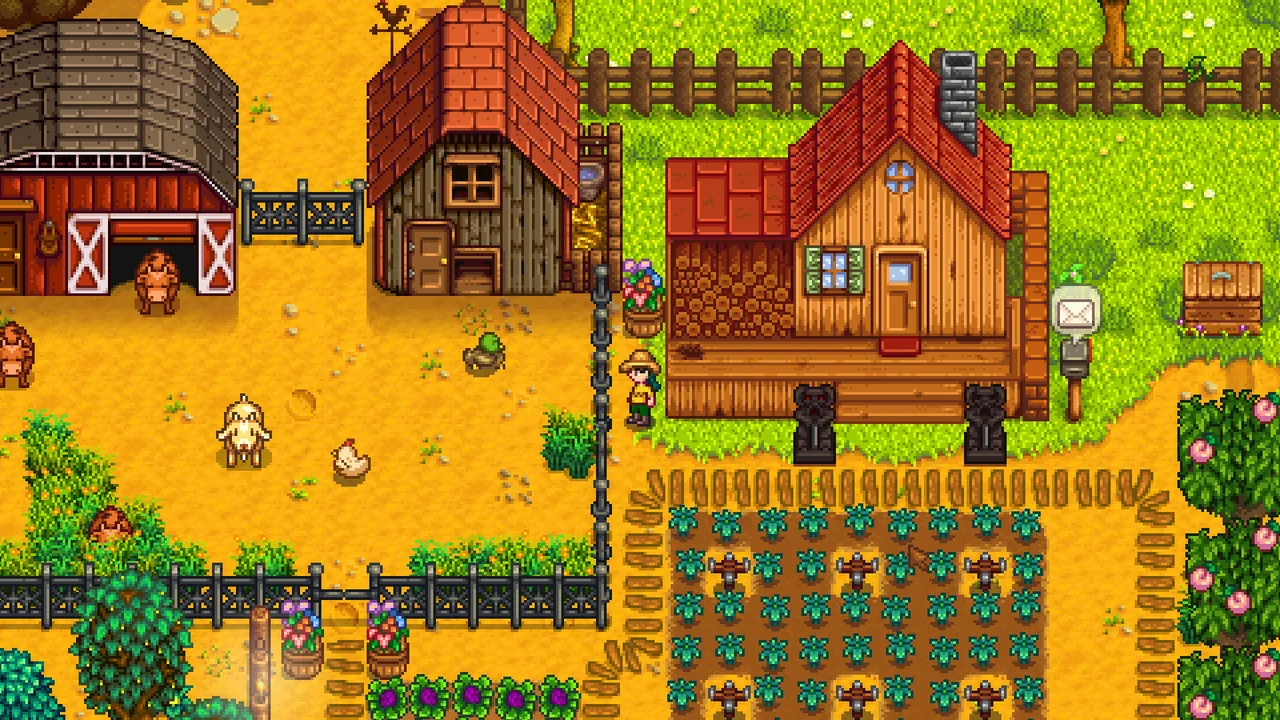
Stardew ValleyImage: ConcernedApe via Steam -
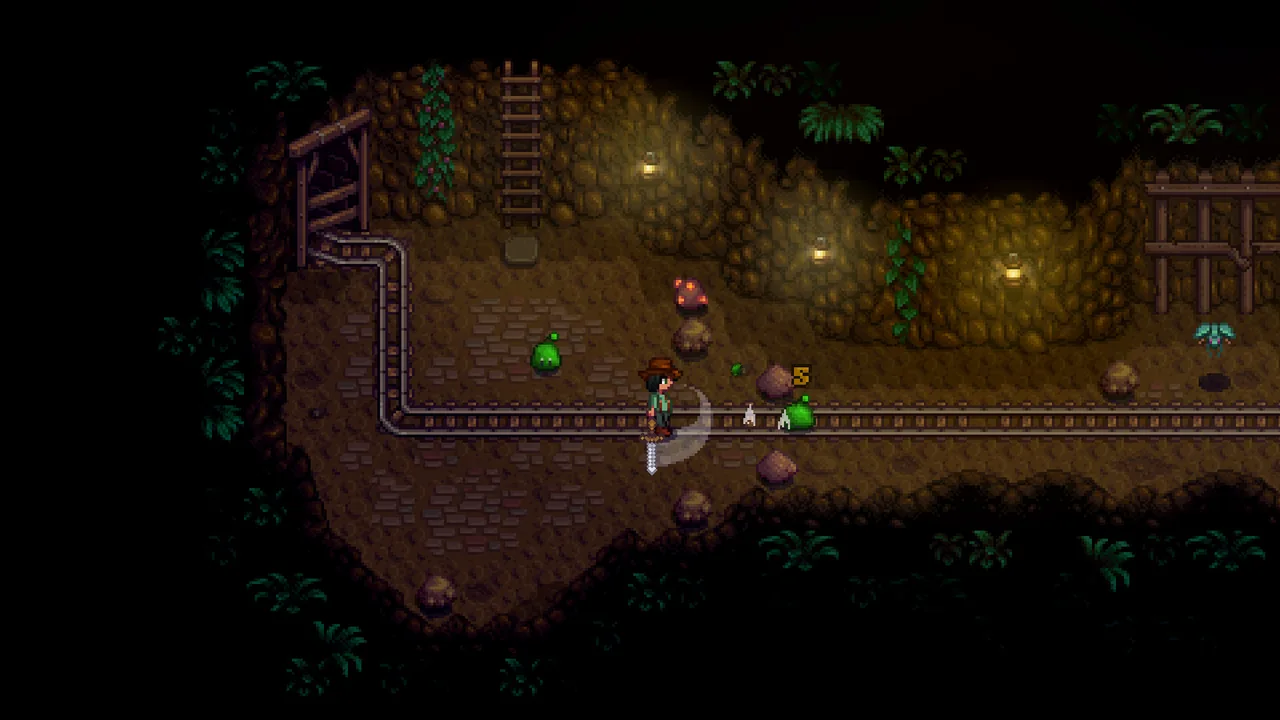
Stardew ValleyImage: ConcernedApe via Steam -
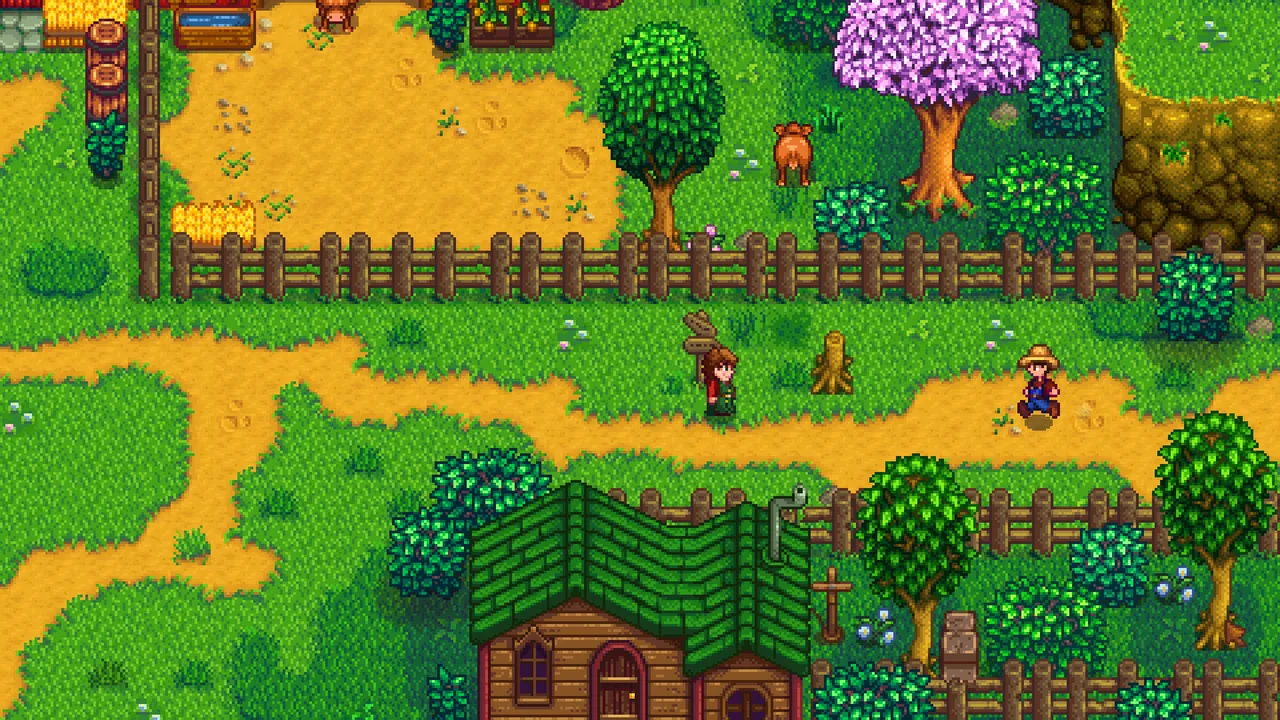
Stardew ValleyImage: ConcernedApe via Steam -
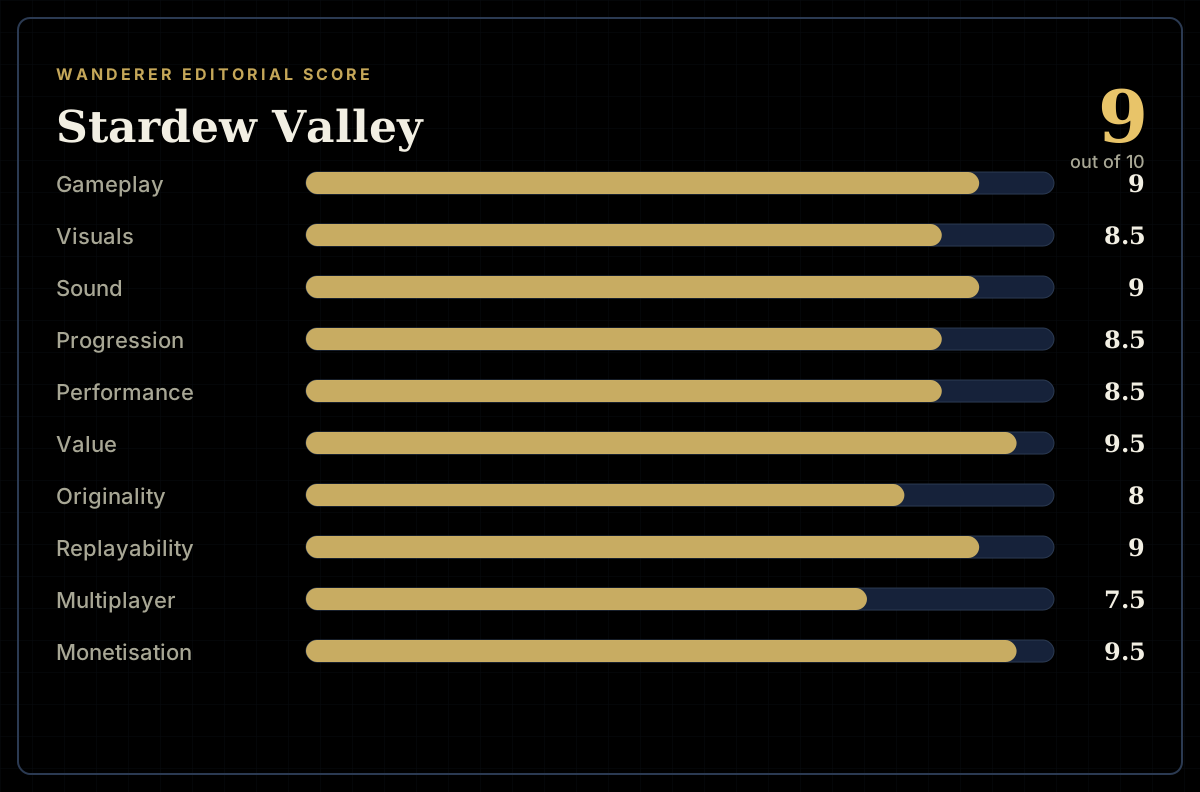
How the review scores each part of the gameWanderer Editorial -
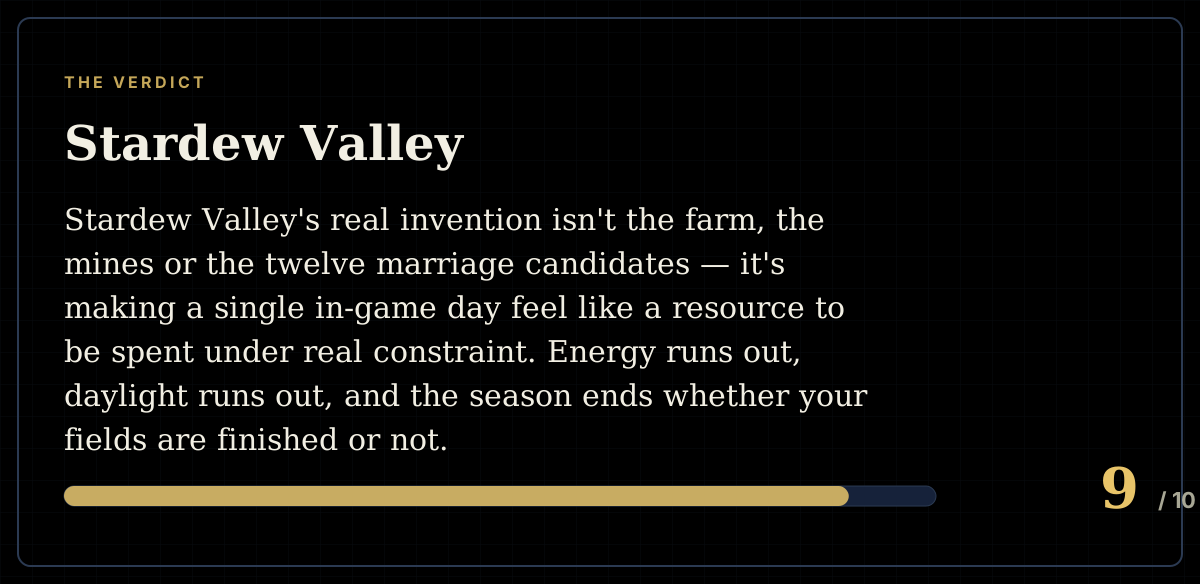
The short versionWanderer Editorial