Game review
Sun Haven
6 / 10
- Developer
- Pixel Sprout Studios
- Publisher
- Pixel Sprout Studios
- Released
- 10 March 2023
- Platforms
- Windows, macOS
- Genre
- Farming RPG
- Monetisation
- NZ$12.59 base with 27 DLC. Pricing the 26 that carry a price on 4 August 2026 totals **NZ$174.00** — median NZ$6.29, none dearer than NZ$11.39. That is roughly fourteen times the base price, spread across many small packs. Steam also flags in-app purchases.
- Players
- Online co-op for up to eight players, with significant limitations — see the review
The short version
Sun Haven's pitch is genuinely appealing: a farming sim that also has a class system, combat, magic, dragons and three towns, playable with up to eight people, for under thirteen dollars. Its admirers describe it as closer to Rune Factory than to Stardew, and they're right that the ambition is real. The execution is where it comes apart — a 1.0 that long-time players called unfinished, co-op that separates players during the fights it advertises, and a DLC catalogue costing fourteen times the base game. Recent sentiment has fallen to 74%, and much of it concerns the studio rather than the game.
Biggest strengths
- Genuinely ambitious for the genre — classes, skill trees, magic, combat and dragons alongside the farming
- Three distinct towns with their own residents, quests and aesthetics
- Cheap entry at NZ$12.59, and frequently discounted further
Biggest weaknesses
- Co-op separates players during boss encounters, so the headline multiplayer feature doesn't deliver shared combat
- Long-time players described the 1.0 release as unfinished, citing missing content such as marriage dialogue
- The DLC catalogue totals NZ$174 across 26 priced packs, roughly fourteen times the base price
Who it's for: Farming-sim players who want combat and character classes in the mix and are buying cheaply with modest expectations. Not for anyone buying primarily for co-op, and not for players who want a finished, settled product.
Our recommendation: If the class-and-magic angle appeals, the base game is cheap enough to try — but buy it alone, not for shared boss fights, because co-op does not work the way the store implies. Skip the DLC entirely on a first playthrough; twenty-six small packs at six dollars each add up to fourteen times what you paid for the game. And read the recent reviews yourself before spending, because a large share of them raise concerns that have nothing to do with gameplay.
6 / 10
Sun Haven costs NZ$12.59. Its DLC costs NZ$174.00 — twenty-six priced packs, median six dollars, none of them expensive on their own.
That ratio, fourteen to one, is the most extreme I've measured, and it's the second thing wrong with this game rather than the first.
What it was trying to be
The ambition here deserves acknowledging, because it's more than most farming sims attempt.
Sun Haven is a farming game with a class system. You pick a path, level skill trees, fight monsters, cast spells and eventually deal with dragons, across three distinct towns with their own residents and quests. Up to eight people can share a world. It's pitched at players who found Stardew Valley's combat perfunctory and wanted the RPG half to matter.
Its defenders make that case well. One long-time player, in a review that ultimately declines to recommend it, describes the game as genuinely expansive and unique — closer to a quirky Rune Factory successor with unusual breadth than to the usual Stardew imitator. The pixel art is attractive, the towns are varied, and at under thirteen dollars nobody could call it poor value on paper.
The RPG half is the reason to look
It's worth being specific about what Sun Haven adds, because "farming sim with combat" undersells the structure and it's the part the game genuinely gets right.
You level three things in parallel. Farming works as you'd expect. Combat improves through fighting and feeds a class system with skill trees — melee, ranged and magic paths that change how you approach the dungeons rather than just raising numbers. And exploration opens the three towns, each with its own residents, festivals, crops and aesthetic: a human farming village, an elven settlement, a desert city.
Those trees are the hook. Investing in magic changes what you do with a day, because combat stops being a chore between harvests and becomes something you're building toward. It's the structure Rune Factory pioneered, executed with more breadth than most Western attempts, and it's why the game's defenders are as loyal as they are.
The three-town design also solves the genre's usual mid-game problem. Stardew's Pelican Town is fixed; here, running out of things to do in one settlement means unlocking another with different crops, different quests and different people. On paper that's a genuinely good answer to farming-sim fatigue.
The trouble is that breadth costs finish. A game with three towns, three progression tracks, a class system, dungeons, dragons and eight-player co-op has a great deal of surface to complete — and the specific complaints below are all about places where that surface wasn't finished before the studio moved to selling additions to it.
Where the execution falls down
Co-op doesn't do what it looks like. The most-upvoted negative review on the game, with over 1,600 helpful votes from a player with 73 hours, explains that there is no true shared combat: fight a boss alongside a friend and you are each fighting your own instance of it, layered rather than together. You can farm side by side and see each other. That's the extent of it.
For a game advertising eight-player co-op, that's a significant gap between expectation and delivery, and it's the single thing I'd want a prospective buyer to know.
The 1.0 was widely considered unfinished. A reviewer with 216 hours — who opens by saying they love the game and are writing negatively because it deserves better — describes a release that wasn't finished after a long Early Access, with DLC already planned. Another, with 106 hours, points at a specific and telling omission: a spouse without marriage dialogue who doesn't share your bed, in a game already selling add-ons.
And reviewers report it degrading. Later negatives describe the game becoming buggier over time, and several allege that raising issues in official community channels results in bans.
The part that isn't about the game
From late 2024 onward, the negative reviews change character almost entirely.
A large and sustained group of reviewers — with 24, 59, 60, 82, 105 hours logged — decline to recommend Sun Haven on the grounds of how the studio has treated the people who made it. The recurring specifics are underpayment of artists and staff, an absence of credits in the game and on the studio's website, and suppression of discussion about it. Some of the accusations go further and into legal territory.
I'm not going to repeat those specific claims as findings. I haven't investigated them, a game review is not the venue to adjudicate an employment dispute, and the difference between "reviewers allege" and "it is the case" matters.
What I can report is verifiable and relevant to a purchase: this is now the dominant theme in Sun Haven's negative reviews, it comes from players with substantial hours who liked the game, it has been sustained across two years, and negative reviews in my sample peak in 2025. Several of those reviewers explicitly recommend buying My Time at Sandrock or another farming RPG instead.
If that matters to your purchasing decisions, the material is easy to find and you should read it yourself rather than take a review's summary. If it doesn't, the paragraphs above about co-op and the 1.0 still apply.
6.0 out of 10. Rated 6.0 out of 10.
There's a likeable, ambitious game here, and at twelve dollars the class system and the three towns represent real value for a farming-sim player who wants more RPG in the mix. The 81% lifetime score isn't wrong about that.
But the score has to describe what you'd be buying today: a game whose advertised co-op doesn't deliver shared combat, whose 1.0 its own devotees called unfinished, whose DLC costs fourteen times its base price, and whose recent review page is dominated by people who enjoyed it and stopped recommending it anyway. Six out of ten is the honest weight of all that, and the recent 74% suggests the playerbase agrees.
Pros and cons
Pros
- Genuinely ambitious for the genre — classes, skill trees, magic, combat and dragons alongside the farming
- Three distinct towns with their own residents, quests and aesthetics
- Cheap entry at NZ$12.59, and frequently discounted further
- Up to eight players can share a world, which is far beyond what most farming sims attempt
- Expansive enough that admirers compare it to Rune Factory rather than to Stardew clones
- Pixel art and character design are attractive and distinctive
Cons
- Co-op separates players during boss encounters, so the headline multiplayer feature doesn't deliver shared combat
- Long-time players described the 1.0 release as unfinished, citing missing content such as marriage dialogue
- The DLC catalogue totals NZ$174 across 26 priced packs, roughly fourteen times the base price
- Reviewers repeatedly say DLC has been prioritised over completing existing content
- Reports of the game becoming buggier over time, alongside complaints about moderation of criticism in official channels
- A large, sustained group of reviewers decline to recommend it over concerns about the studio's treatment of its workers
Screenshots
-
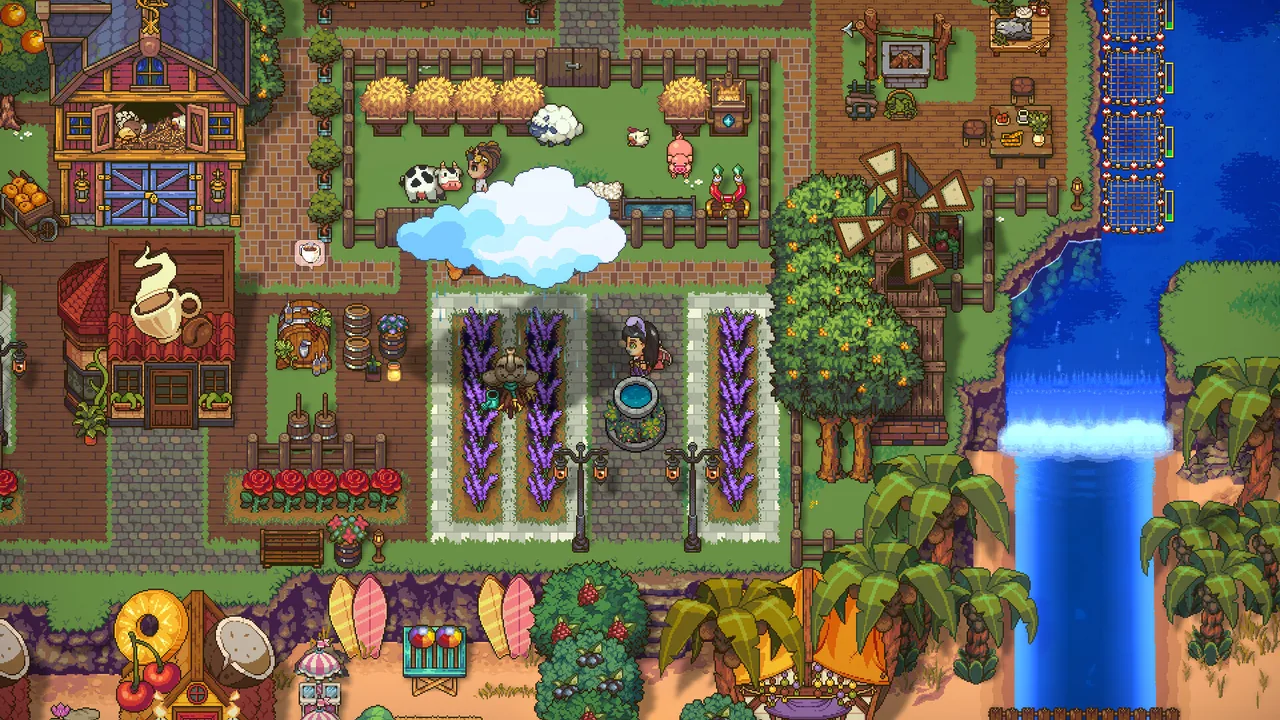
Sun HavenImage: Pixel Sprout Studios via Steam -
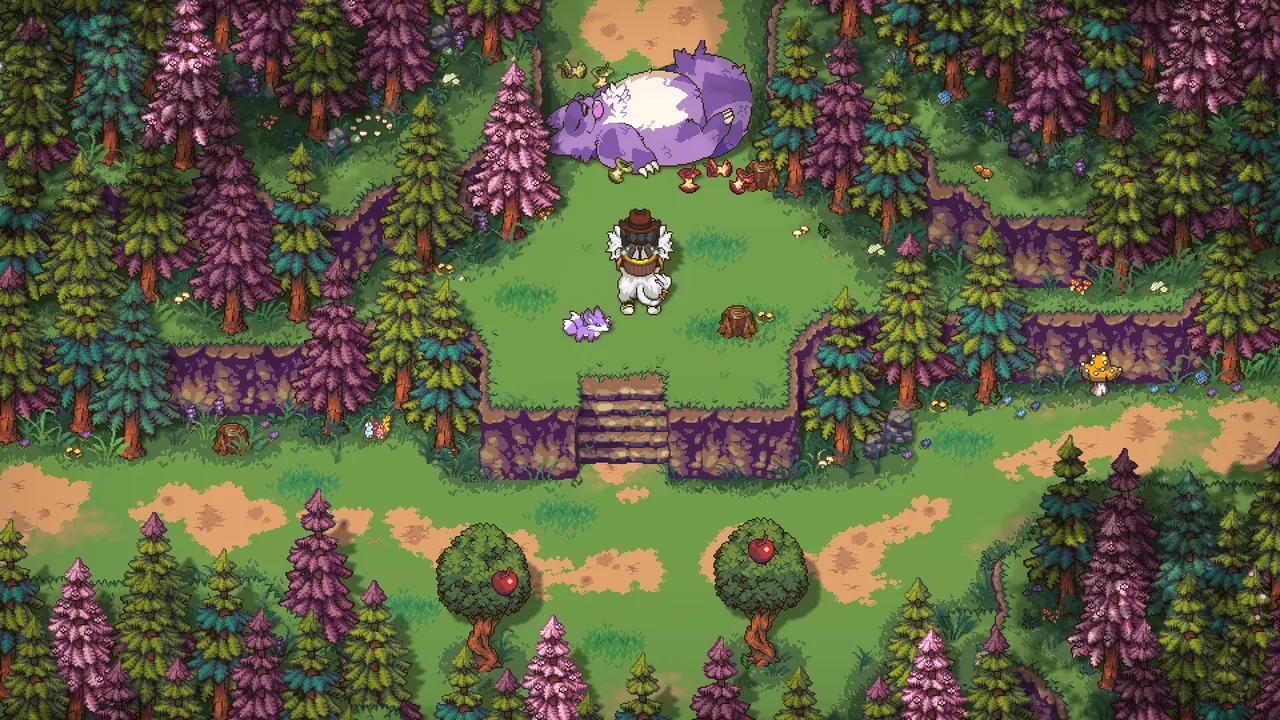
Sun HavenImage: Pixel Sprout Studios via Steam -
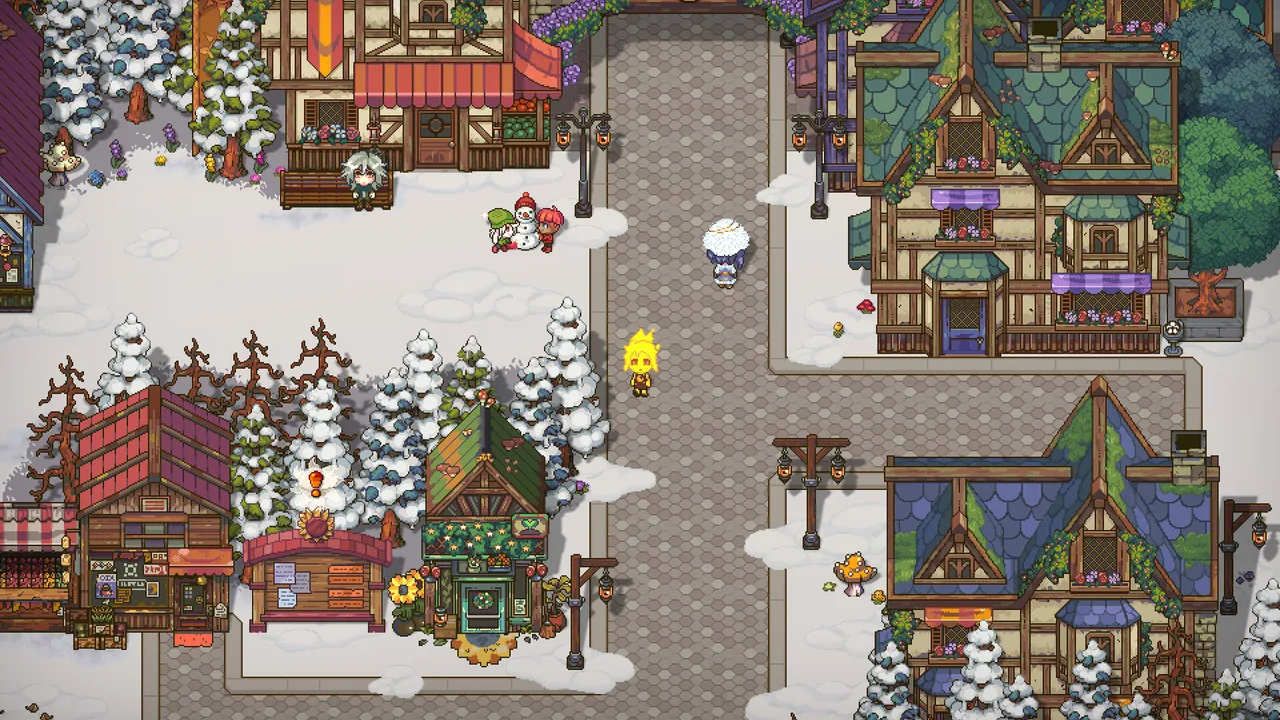
Sun HavenImage: Pixel Sprout Studios via Steam -
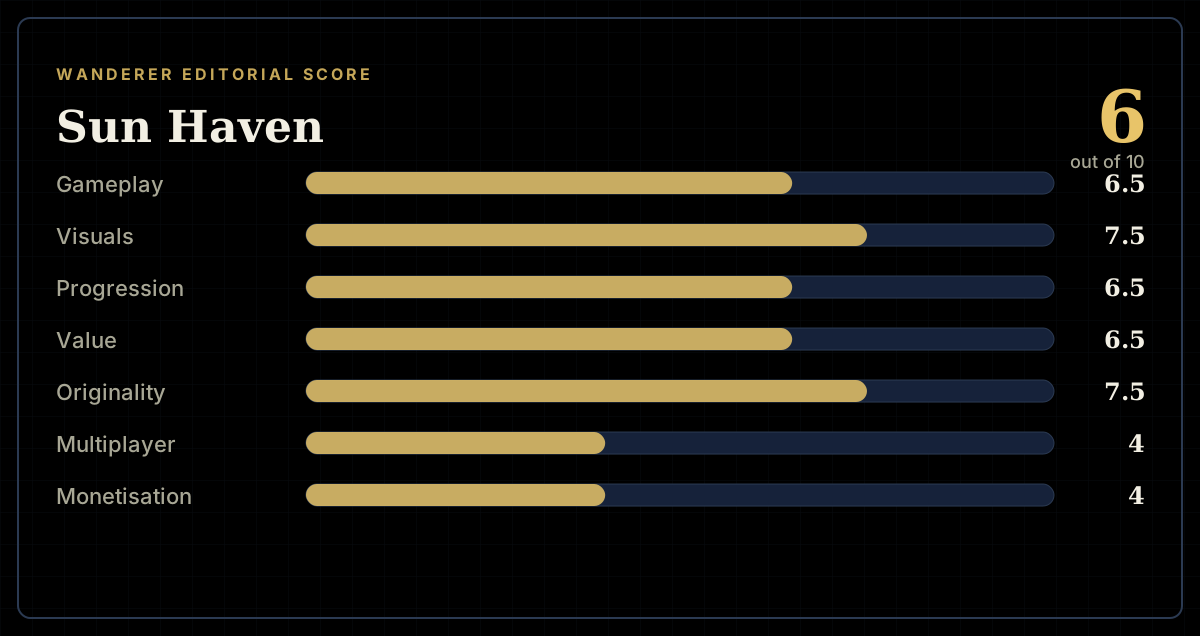
How the review scores each part of the gameWanderer Editorial -
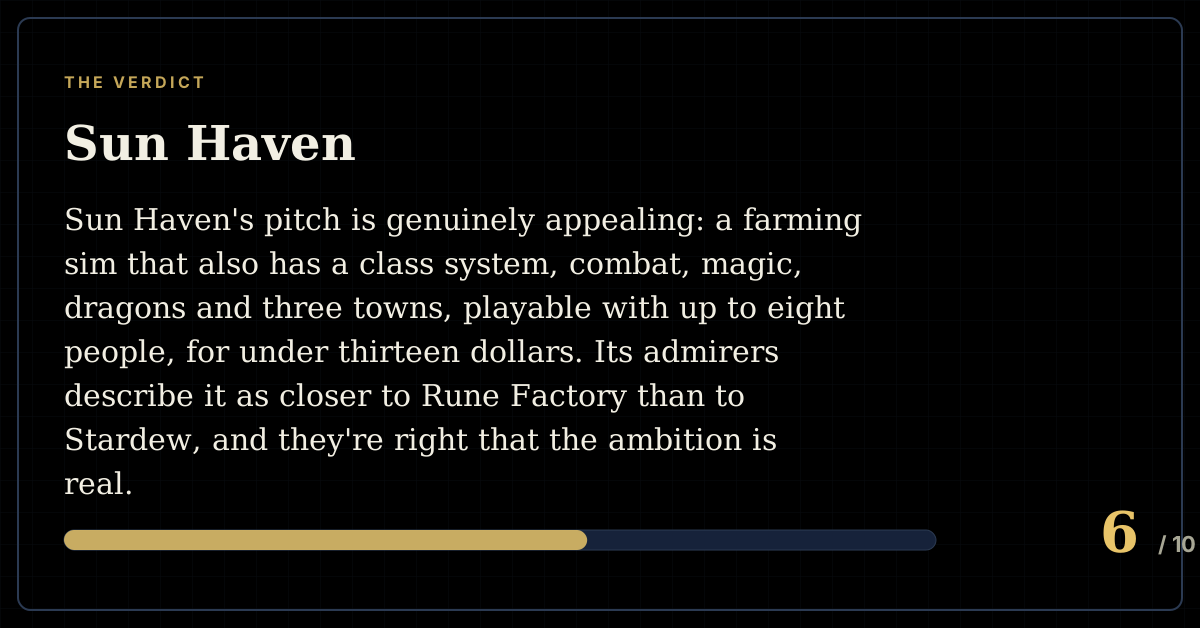
The short versionWanderer Editorial