Game review
Aggelos 2 Review
6.5 / 10
- Developer
- WONDERBOY BOBI
- Publisher
- PQube / PixelHeart
- Released
- 27 August 2026
- Platforms
- ["Windows"]
- Genre
- Action
A Nostalgic Sequel With a Sharp Second Act
Aggelos 2 launched August 27, 2026 from developer WONDERBOY BOBI, published by PQube and PixelHeart, picking up centuries after the original 2019 Wonder Boy-inspired metroidvania to send its angelic hero through two enormous, interconnected realms of light and darkness. At $19.99 with no active sale at review time, it landed to a substantial pool, 41 English reviews, 31 positive, "Mostly Positive," all read in full for this review.
Retro Craft That Reviewers Keep Praising Unprompted
Almost every reviewer, positive or negative, opens with the same compliment: the pixel art, music, and core movement feel are exactly what fans of the genre came for. "Love the classic music and retro feel. Really great control, responsive ranged and melee combat," one reviewer wrote, specifically praising the "Mega man style boss fights with a bullet hell inspired design" as "awesome without being too cheap or difficult." Another described the game in almost sensory terms: "the kind of game I would play for hours as a kid, on a Saturday morning as the cold fall air slowly would seep in through the window," crediting the retro presentation with genuinely earning that nostalgia rather than just borrowing it. The new flight ability, letting the hero soar briefly before needing to touch ground again, drew specific praise as a structural addition rather than a gimmick: one reviewer called it a "shmup energy" unique niche, while another highlighted how "once you get the wings upgrade and the grapple hook, navigating the terrain becomes a very satisfying experience." Several reviewers explicitly ranked it alongside genre peers like Alwa's Legacy and Elliot Quest as a "great retrovania," and multiple reviewers who'd played the 2019 original said this sequel found its own identity rather than just repeating the first game's tricks.
The Light/Dark Mechanic Divides the Room
The game's headline new system, swapping between a light form and a more powerful but unhealable dark form mid-combat, is simultaneously the thing reviewers praise as the most distinctive addition and the thing multiple independent reviewers name as the game's biggest structural problem. On the positive side, one reviewer compared the boss-fight execution favorably to "Ikaruga style" light/dark switching, framing it as a skill-expression tool rather than a chore. But a detailed negative review laid out the specific mechanical complaint shared by several others: "the dark form is unable to heal. Instead the healing potions are replaced by speed boosters. This would be fine for balance if the dark form had a noticeable increase in power compared to the normal form, but it doesn't," describing a sharp difficulty spike the moment that form unlocks. A second reviewer independently arrived at nearly the same conclusion, calling the game a "rugpull" that "hits a wall" mid-game specifically because "previous bosses utilize the form swapping mechanic" fairly while later ones don't. A third reviewer who still recommended the game overall admitted "having to transition from light to dark while fighting bosses is not really my cup of tea," and a fourth broke the specific problems into a numbered list, citing the mechanic's demand on "hand/eye coordination... that just isn't natural" combined with "the sharp difficulty curve once you gain the second form." That's four separate reviewers converging on the same specific mid-game turning point, which is a considerably more serious signal than a single frustrated one-off complaint.
Bugs, Backtracking, and a Missing Hint System
Beyond the form-swapping debate, a cluster of reviewers flagged concrete technical and design friction. One reviewer reported the game "crashes from the map a LOT" on Steam Deck and Linux, costing "probably an hour and a half's worth of progress," and a separate, more severe report described an outright save-corruption bug on Steam Deck: after a crash at 70% completion, the reviewer's save was wiped and replaced with a fresh file, prompting them to conclude "nunca recomendaría un juego con un fallo así" (never recommend a game with a bug like that). Multiple reviewers also independently raised the lack of any in-game hint or tracking system for the map's 100 collectible eggs, which gate upgrades: one who reached "99/100 with complete map coverage" said there was "no way I could ever really find 1 missing thing over 2 massive maps to retrace," while another simply joked "eggs everywhere... upgrades gated by eggs," a specific and reasonable quality-of-life gap for a game built around this much backtracking.
A Sequel That Changed What It Didn't Have To
A handful of longtime fans of the first Aggelos noted the sequel dropped its predecessor's experience-point leveling system in favor of pure item-based progression, a change reviewers were split on: one admitted being "a little disappointed" at first but found "enough of a 'growing stronger' aspect built into other mechanics to make up for it," while another felt the removal, combined with a currency cap that has to be manually raised through exploration, "does not feel rewarding to find those drops that does nothing." None of this reads as a fundamentally different game from its predecessor, reviewers largely agree the map size, art direction, and controls carried over faithfully, but the specific systems layered on top for this entry are exactly where opinions split.
Verdict
Aggelos 2 is a technically accomplished, visually and musically confident retro metroidvania wrapped around one genuinely divisive new idea, and the review pool's split verdict traces almost entirely back to that one mechanic rather than to any broader failure of craft. The light/dark form-swap looks spectacular in the moments it works, framing boss fights as bullet-hell duets between two versions of the same character, but a meaningful cluster of independent reviewers converge on the exact same complaint: it introduces a real fairness and pacing problem right at the story's midpoint that the earlier hours never hint at. Layer on a serious, if apparently inconsistent, Steam Deck crash-and-save-corruption risk and a total absence of tools for tracking down the last few of a hundred scattered collectible eggs, and what's left is a game that's easy to recommend to patient, forgiving genre veterans and much harder to recommend unconditionally to everyone else. For fans of the 2019 original specifically, it's a worthy if rougher successor; for newcomers to the series, it's worth going in with tempered expectations about that mid-game turn.
Screenshots
-
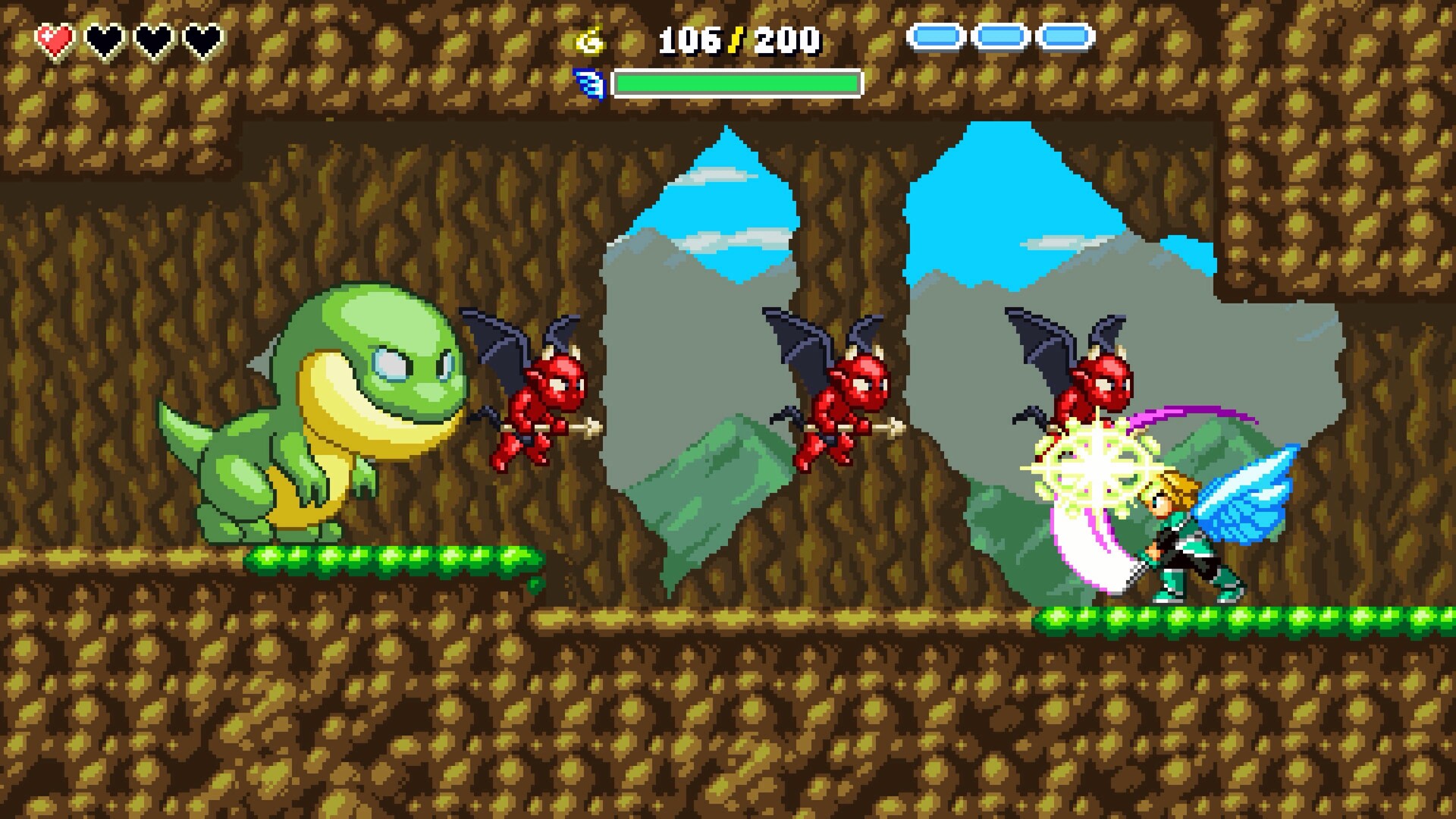
The light form in combat, mid-battle against a small swarm of enemies, with the flight-energy gauge (top left) that governs the game's soaring movement.Image: PQube via Steam -
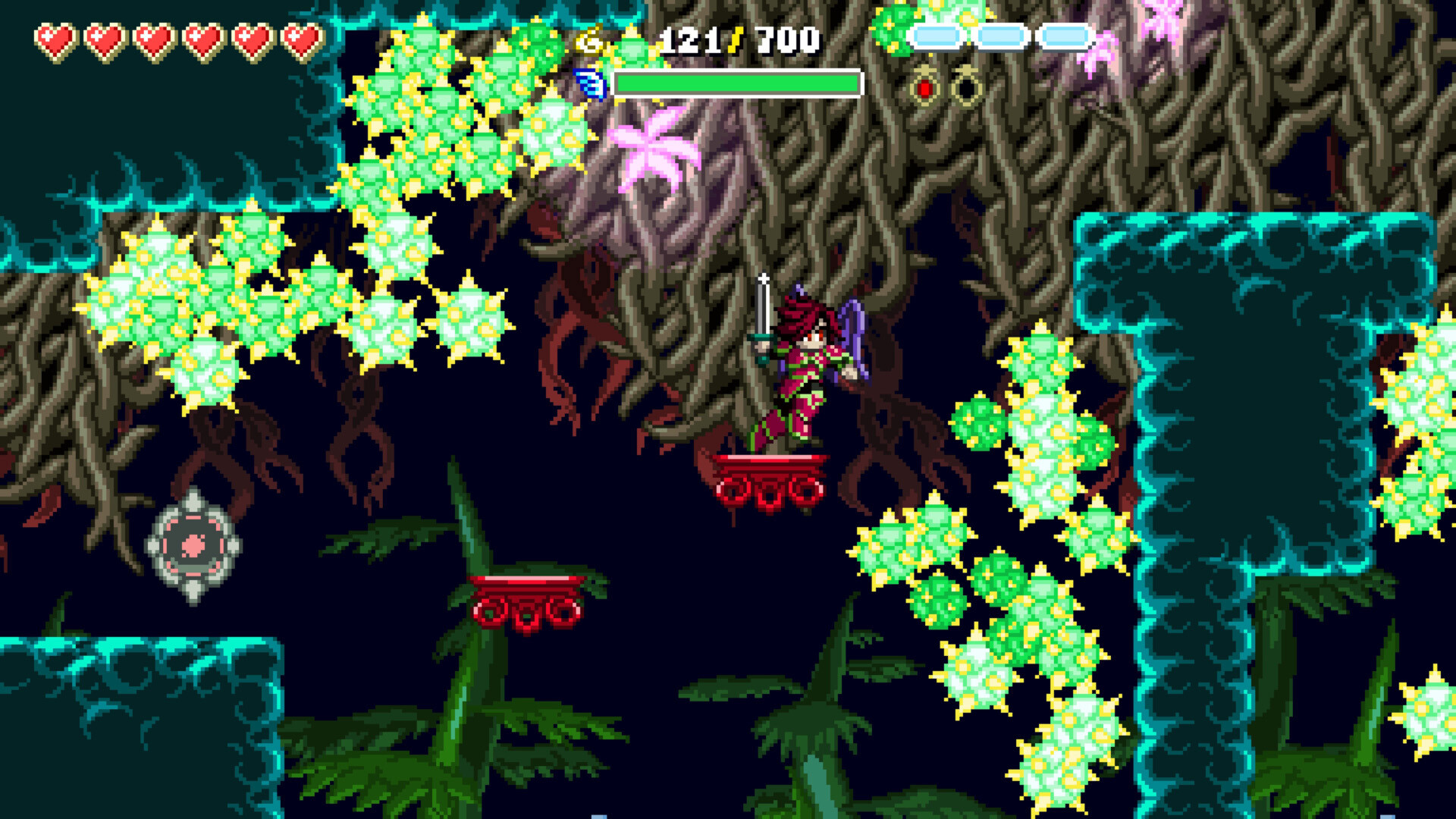
The dark form exploring a thornier, more hostile-looking cave layout, the transformation several reviewers said removes the ability to heal with potions.Image: PQube via Steam -
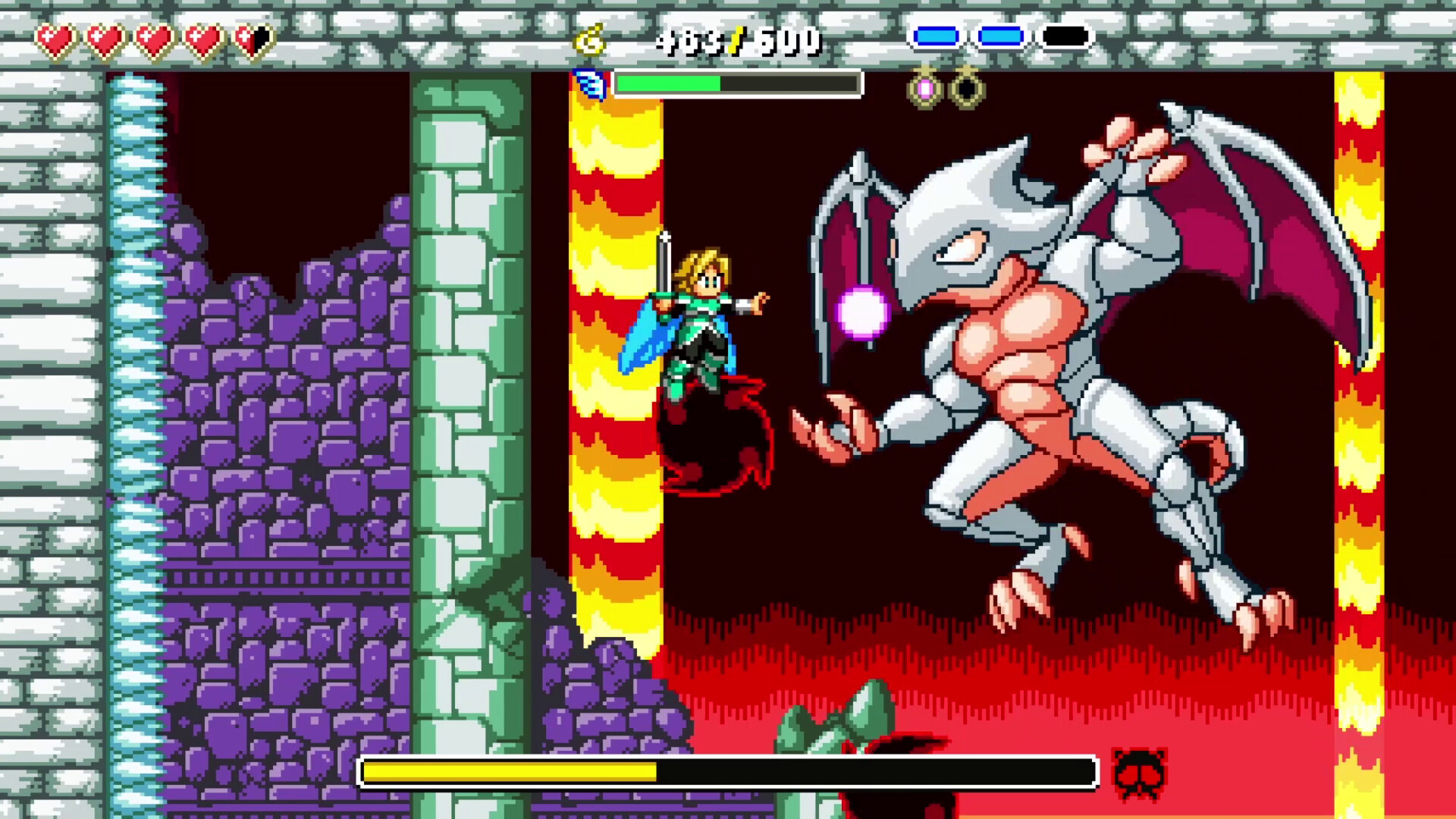
One of the Mega Man-style boss encounters reviewers repeatedly singled out as a highlight, framed against a long, mostly-full boss health bar.Image: PQube via Steam