Game review
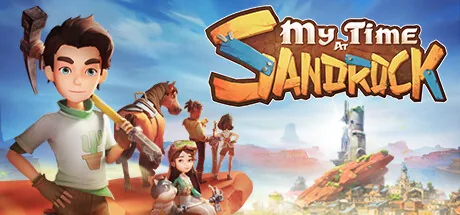
My Time at Sandrock
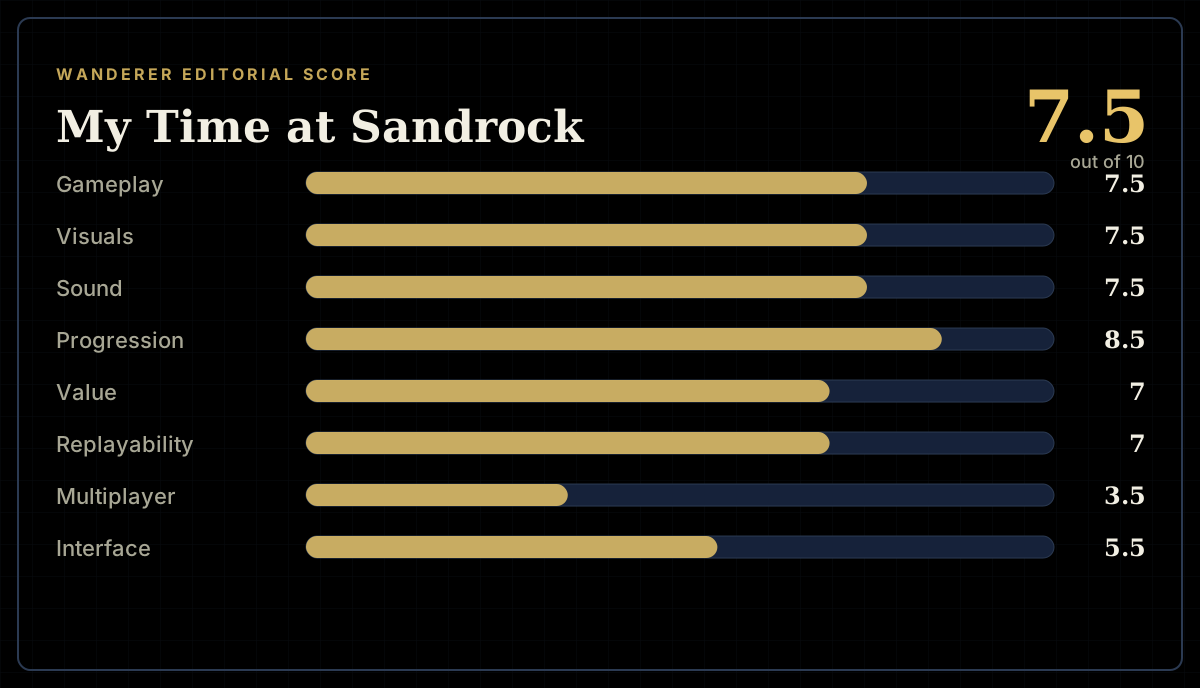
7.5 / 10
- Developer
- Pathea Games
- Publisher
- Focus Entertainment
- Released
- 2 November 2023
- Platforms
- Windows
- Genre
- Crafting RPG / Life Sim
- Monetisation
- One-time purchase at NZ$69.99 with sixteen DLC. Pricing fifteen of them on 4 August 2026 gives **NZ$122.15** — median NZ$8.49, dearest NZ$11.99 — so the complete package runs to roughly NZ$192. No in-game microtransactions.
- Players
- Online co-op — but a separate sandbox mode with no story content, not a co-op campaign
The short version
You arrive in a desert town as its new builder, and over the next hundred hours you rebuild the place — machines, commissions, water infrastructure, relationships, an actual plot that turns out to have real stakes. Sandrock is enormous, generous and much better than its predecessor, and its players prove it: a 118-hour median and 92% of recent reviews positive. Three things stop it being a straightforward recommendation. The advertised multiplayer contains no story. Missing a deadline can permanently lock content out of your save. And the sixteen small DLC packs cost more than the game.
Biggest strengths
- Genuinely enormous, with a median recent playtime of 118 hours and plenty of players past 400
- A real story that escalates far beyond the cosy-town setup, with an ending players describe as leaving them hollow
- The workshop loop — commissions, machines, assembly lines — has satisfying depth and a strong sense of the town physically improving
Biggest weaknesses
- Multiplayer is a storyless sandbox despite prominent advertising, and buyers repeatedly report discovering this after purchasing a second copy
- Content can be permanently missed — one reviewer lost access to the pet system entirely by missing a single deadline
- Sixteen DLC packs total about NZ$122 on top of a NZ$69.99 base, most of them small
Who it's for: Players who want a very long crafting RPG with a real narrative and a town that changes around them, and who are playing alone. Not for couples buying it to play the story together, and not for anyone who needs a tidy fifty-hour experience.
Our recommendation: Buy the base game on sale and skip the DLC until you know you love it — the packs are small, numerous and add up to more than the game itself. Do not buy it for co-op story play; that mode does not exist. And look up the missable content list early, because at least one mechanic can be permanently locked out by missing a single deadline, which is a brutal thing to discover at hour seventy.
7.5 / 10
The median person who reviewed My Time at Sandrock recently has 118 hours in it, and 92 of the last hundred English reviews recommend it. Those are the numbers of a game people genuinely love, and having read the corpus, they've earned it.
So this review is mostly about three specific things that could still ruin it for you, because they're the kind of problem you only discover after you've paid.
What's good is very good
You arrive in a desert town that is quietly failing — water is short, the machines are broken, the old builder is gone — and you take over the workshop. From there it's commissions: someone needs a bridge, a water tank, a machine, a monument. You gather, you refine, you assemble, and the town physically changes around you as you go.
That last part is the trick this series pulls better than anyone. Buildings appear. Infrastructure comes online. The place you're living in visibly improves because of specific work you did, and after eighty hours the difference between the Sandrock you arrived in and the one you're standing in is enormous.
The workshop loop underneath is deep — assembly lines, ore processing, machine upgrades — and closer to a light factory game than to farming. If you enjoyed the production-chain half of Graveyard Keeper but not its contempt for your time, this is that idea done generously.
And the story is a genuine surprise. It opens cosy and escalates a long way past it; reviewers who finish describe feeling hollow afterwards, which is not a reaction cosy games usually earn. The cast is large and written with care, and even reviewers who are furious about other things concede the game is a substantial improvement on My Time at Portia.
The town is doing things when you aren't
The other reason the 118-hour median is plausible is that Sandrock's cast behaves like a simulation rather than a set of quest dispensers.
Everyone has a schedule and a job. The shopkeeper opens and closes. People eat at the saloon, take days off, turn up at the same events you do, and comment on things that recently happened in town — including work you did. Relationships build through repeated small interactions rather than a gift counter, and the friendship arcs have actual content behind them: side stories, changing dialogue, characters who start relying on you.
There's also a rival builder, which is the smartest structural idea in the game. Commissions are competitive; if you don't take a job, someone else does, and it gets built by them instead. That turns the workshop from a to-do list into a business with a competitor, and it's why the early game has a tension most cosy games never generate.
Layer on top the town's own trajectory — infrastructure projects, seasonal events, a plot that periodically reorganises who lives where — and you get a place that reads as continuous. It's the difference between a village that waits for you and one that's getting on with things.
That simulation is also why the missable-content problem stings so much. In a game where the world moves regardless of you, a deadline you didn't know existed is entirely consistent with the fiction — and completely unreasonable as a design, because the game never tells you which passing events are permanent forks. The same system that makes Sandrock feel alive is the one that quietly closes doors behind you.
If Stardew Valley's Pelican Town is a place you visit, Sandrock is a place that is being built whether you help or not. That's the appeal, and the trap, in one design.
The multiplayer is not what it looks like
This is the most important thing in the review, and it's the single most-upvoted complaint.
Sandrock advertises co-op. What co-op actually is: a separate sandbox mode containing no story missions. You can run co-op commissions and share a workshop. You cannot play the campaign together, and you cannot meaningfully progress the game you bought it for.
Two of the highest-voted negative reviews are from people who bought a second copy — one for a spouse — specifically to play through the story together, and discovered after several hours that nothing was happening because there is no story in that mode. That's a purchasing decision made on a false impression, and it's been the top complaint since launch.
If co-op is your reason for buying, it is the wrong game, and no amount of 118-hour medians changes that.
Missables, and the pet you can never get
The second trap is subtler and arguably worse.
A reviewer with 71 hours logged describes enjoying the game, finding it grindy-but-not-tedious, and then discovering that by missing one deadline they had permanently locked themselves out of the pet system — and, on investigation, other content too. They stopped playing and never returned.
For a game this long, irreversible missables with no warning are a serious design choice. Seventy hours is far past the point where restarting is reasonable, and "you can never have this now" is a hard thing to absorb at that stage. Look up a missables list before you start. It's an unsatisfying thing to recommend and it will save you the experience that reviewer had.
The bloat, and the shop
Two smaller marks.
A reviewer with 254 hours titles their piece "wide as an ocean, deep as a puddle" and notes the developers themselves have said the story is 3.29 times longer than Portia's. More game sounds like a virtue; here it means the back half sags, and several long-session players describe waiting for it to end. The pacing problem is real, and it's the price of the scale that makes the good parts work.
Then the DLC. There are sixteen packs. I priced fifteen of them on 4 August: NZ$122.15, with a median of NZ$8.49 and nothing dearer than NZ$11.99. On a NZ$69.99 base, that's the same long-tail structure I found on The Sims 4 — lots of small, individually harmless purchases that collectively cost more than the game. Some recent reviewers are explicitly angry about DLC arriving while bug reports sit unanswered.
7.5 out of 10. Rated 7.5 out of 10.
Sandrock is a genuinely excellent crafting RPG and the best thing Pathea have made. If you want a hundred hours in a town you rebuild yourself, with a story that turns out to matter, buy it — and the improving recent sentiment suggests the people arriving now are having a better time than the 2024 cohort did.
The score reflects three things that a 9 wouldn't have: a co-op mode that isn't what it's sold as, permanent missables in a hundred-hour game, and a DLC catalogue that costs nearly twice the base price. Buy the base game, alone, on sale, with a missables list open. On those terms it's superb.
Pros and cons
Pros
- Genuinely enormous, with a median recent playtime of 118 hours and plenty of players past 400
- A real story that escalates far beyond the cosy-town setup, with an ending players describe as leaving them hollow
- The workshop loop — commissions, machines, assembly lines — has satisfying depth and a strong sense of the town physically improving
- A large, well-written cast with meaningful relationship arcs
- Substantially better realised than My Time at Portia, which even critical reviewers concede
- Recent sentiment is climbing: 92 of the last 100 English reviews are positive against 88% lifetime
Cons
- Multiplayer is a storyless sandbox despite prominent advertising, and buyers repeatedly report discovering this after purchasing a second copy
- Content can be permanently missed — one reviewer lost access to the pet system entirely by missing a single deadline
- Sixteen DLC packs total about NZ$122 on top of a NZ$69.99 base, most of them small
- The interface is convoluted, and building, decorating and gardening are more awkward than they need to be
- Pacing sags badly in the back half; the developers state the story is over three times the length of Portia's and it shows
- Some long-term players report a visual downgrade after console parity work, with older promotional material still in circulation
Screenshots
-
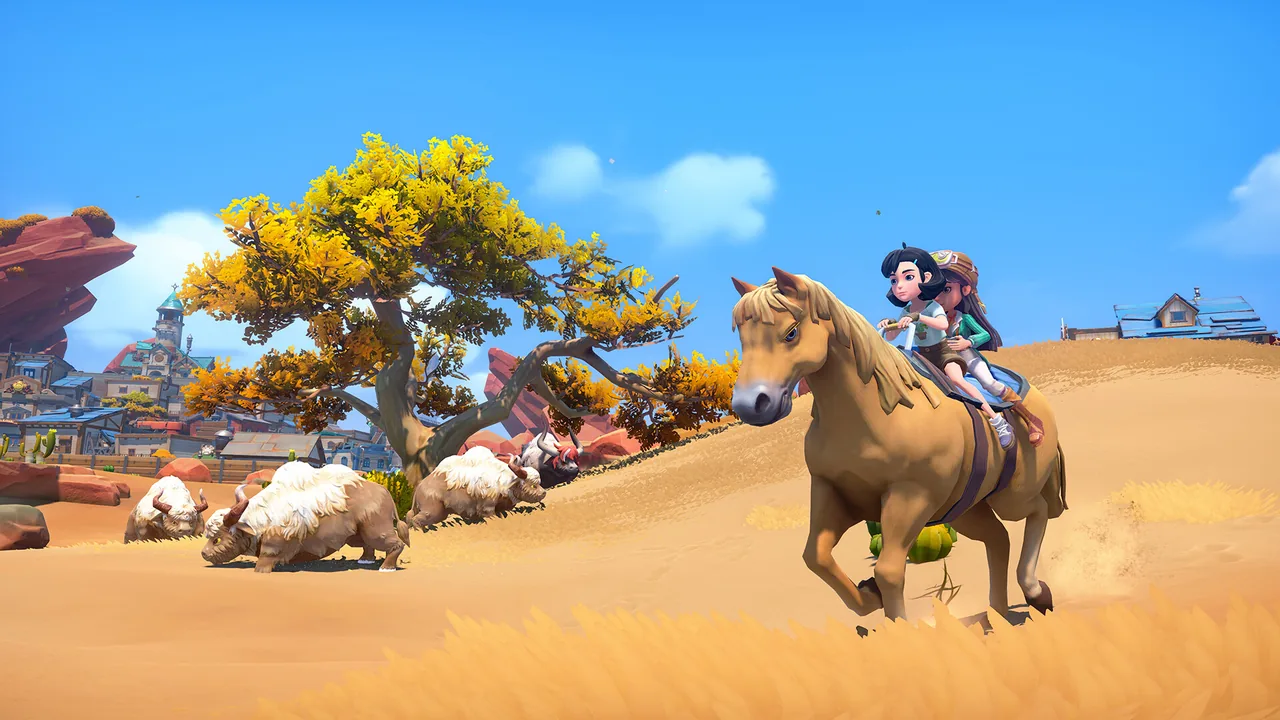
My Time at SandrockImage: Pathea Games via Steam -
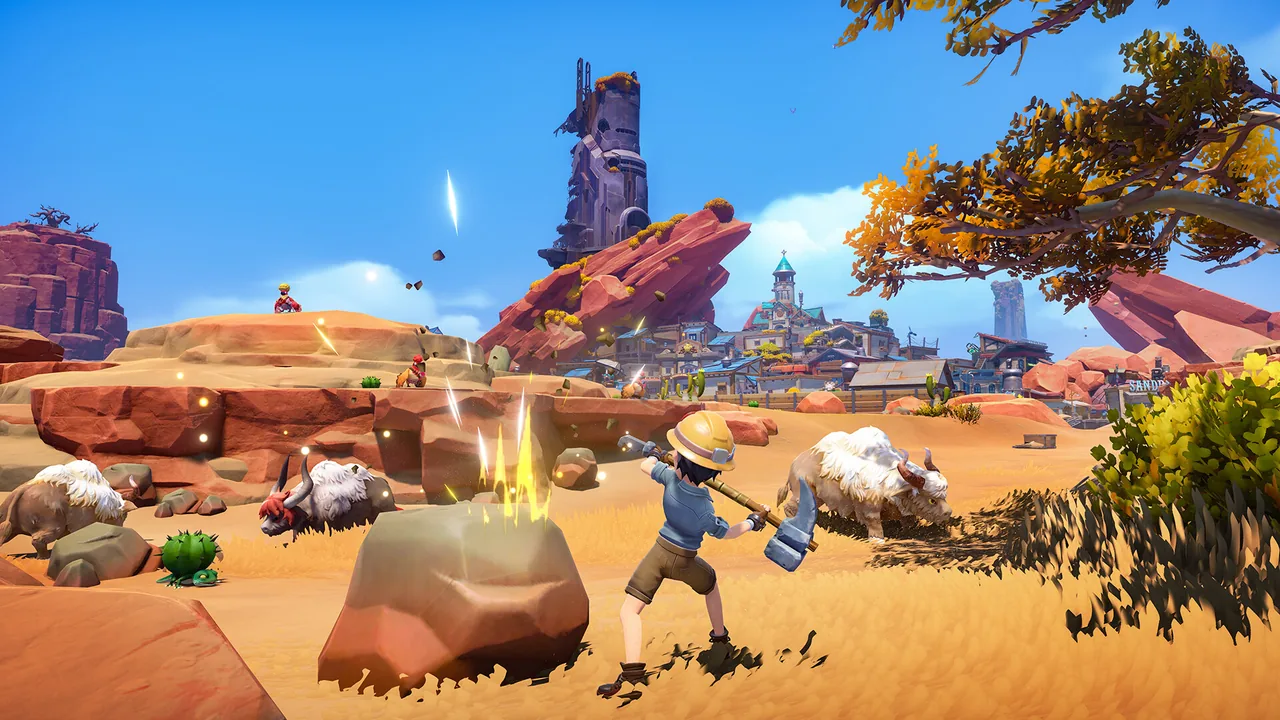
My Time at SandrockImage: Pathea Games via Steam -
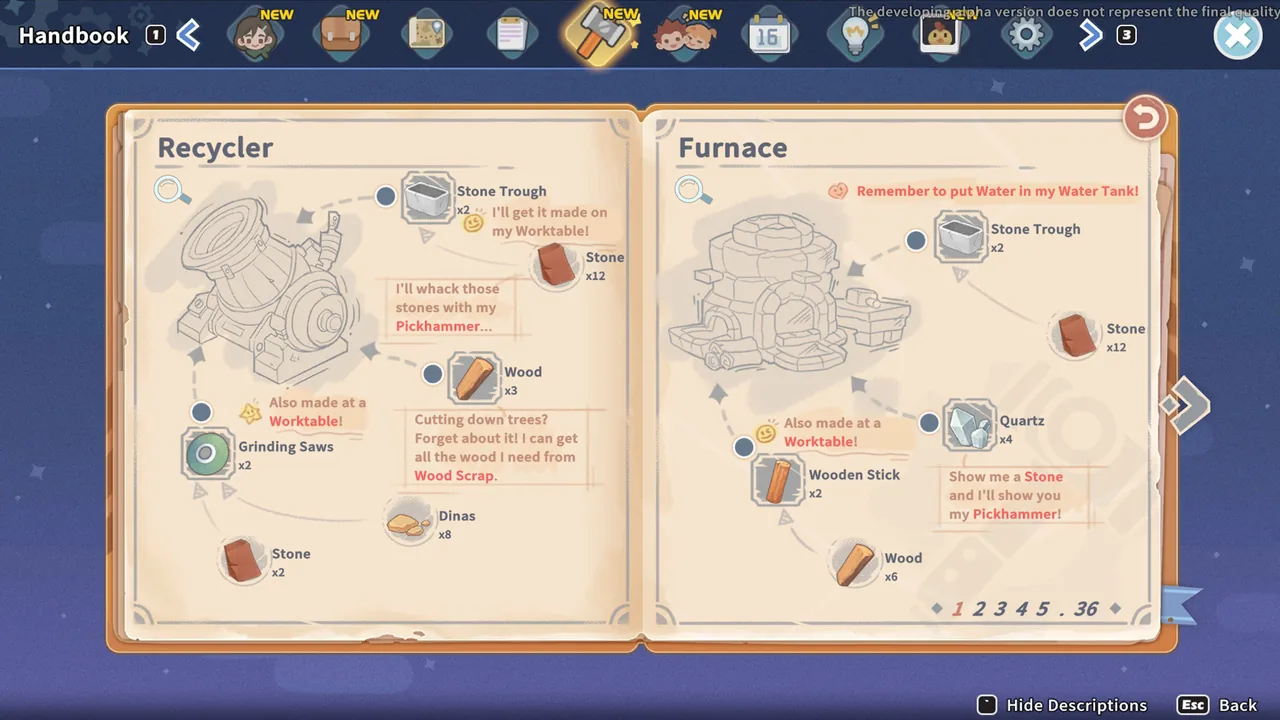
My Time at SandrockImage: Pathea Games via Steam -
How the review scores each part of the gameWanderer Editorial -
The short versionWanderer Editorial