Game review
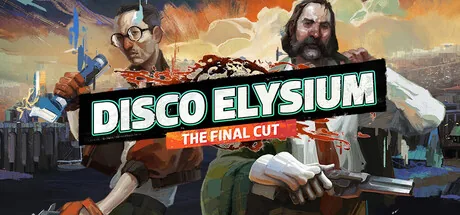
Disco Elysium
9.5 / 10
- Developer
- ZA/UM
- Publisher
- ZA/UM
- Released
- 15 October 2019
- Platforms
- Windows, macOS
- Genre
- CRPG / Detective RPG
- Monetisation
- One-time purchase at NZ$59.99. No microtransactions; the only extras are a soundtrack and artbook. Checked 4 August 2026.
- Players
- Single-player only
The short version
You wake up in a wrecked hostel room with no memory, no clothes and a corpse hanging in the yard outside. What follows is a role-playing game in the most literal sense available — your skills are characters, they interrupt you, they lie to you, and one of them will eventually persuade you to do something catastrophic. There is no combat. There is instead the best-written script in games, a city with an actual political economy, and a partner in Kim Kitsuragi who may be the finest companion ever written. It is close to flawless as a work. What you do about buying it is a separate question, and one a lot of its admirers have strong feelings about.
Biggest strengths
- Writing that operates at a level no other game has reached, funny and devastating in the same paragraph
- Twenty-four skills implemented as internal voices with their own agendas, turning character building into a genuine psychological system
- Failure is content — botched checks open routes and jokes rather than simply blocking progress
Biggest weaknesses
- The most-upvoted negative reviews all praise the game and urge readers not to purchase it, on ethical grounds relating to the studio's ownership
- It is entirely text and dialogue — no combat, and long stretches with no mechanical activity
- The opening hours are disorienting by design, and some players never find their footing
Who it's for: Anyone who reads. Players who want dialogue, character and consequence rather than systems mastery, and who don't need combat to feel engaged. Not for players who skip text, and not for anyone wanting mechanical challenge.
Our recommendation: Play it. If you have never touched a CRPG, this is still the one to start with, because it asks for attention rather than expertise. Take the Final Cut's voice acting seriously — it transforms a text game into a performance. Fail some checks deliberately; failure here is usually more interesting than success, and the game is built expecting it. Be aware before buying that a large, sustained group of reviewers object to purchasing it on ethical grounds — see below, and make your own call.
9.5 / 10
Sort Disco Elysium's negative reviews by how helpful people found them. The top one, with nearly five thousand votes, opens: "It's the best game I've ever played. I love it." The second calls it good. The third says it's the closest thing to perfect a game can get. The sixth simply reads "10/10 Game."
Every one of them is a thumbs down.
That's the most unusual review corpus I've encountered, and we'll come to why. First, the game, because on its merits it is one of the best things anyone has made in this medium.
Your skills are people
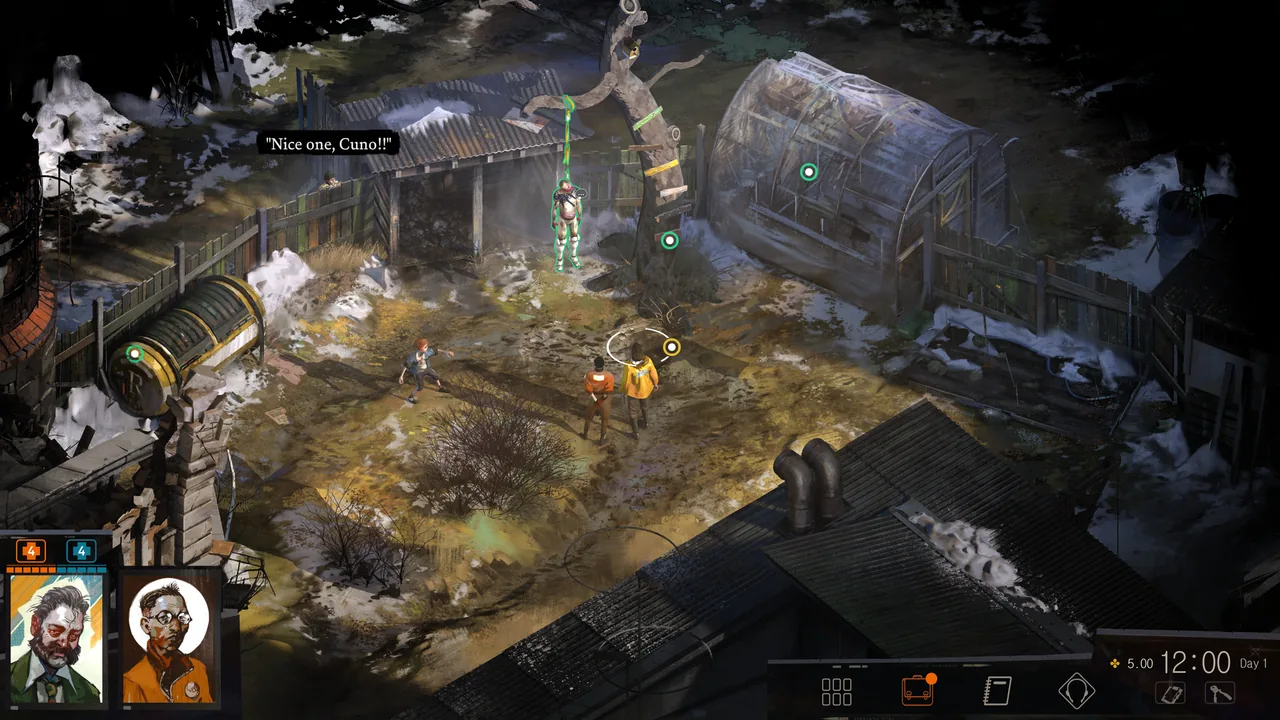
You wake with no memory in a room you have destroyed, and you are a detective, and there is a body hanging behind the hostel. That's the setup. What makes it extraordinary is the character system.
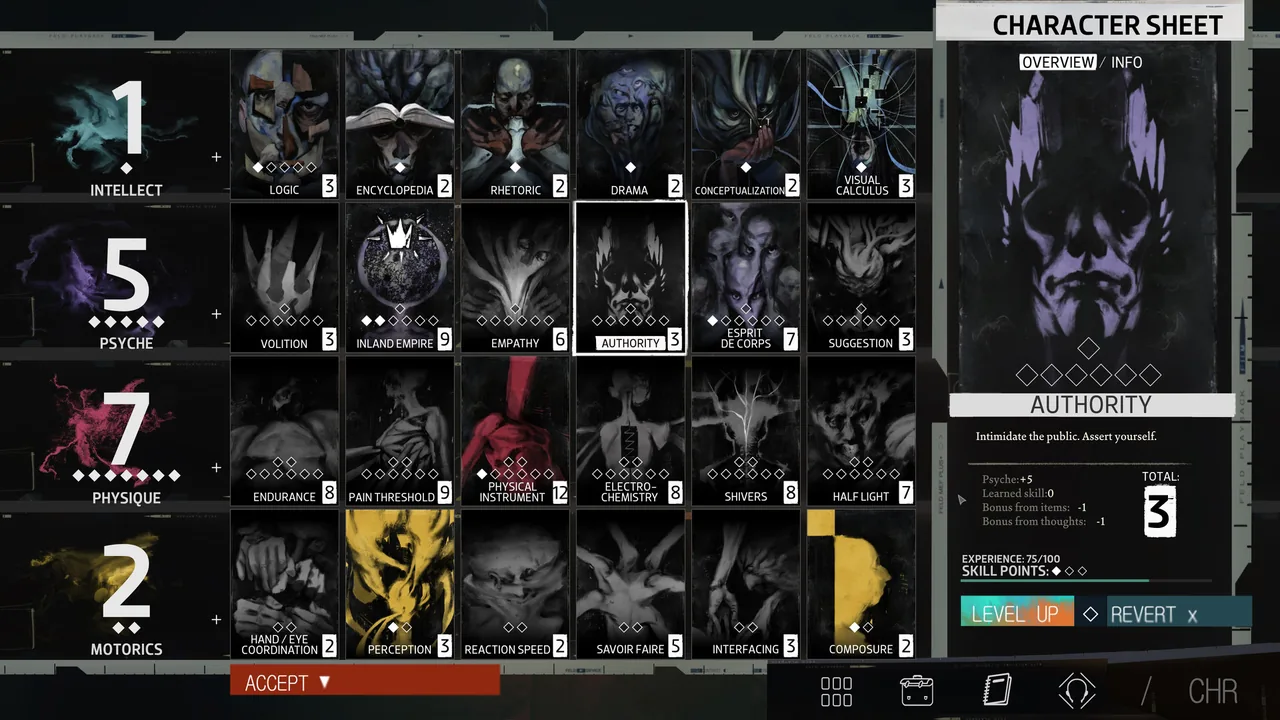
Disco Elysium's twenty-four skills aren't modifiers. They're voices. Logic reasons with you. Electrochemistry wants you to take drugs and will make a compelling case. Inland Empire believes your necktie is speaking. Half Light is convinced everyone is about to attack. They interrupt conversations, contradict each other, and offer you actions you would never have thought of — and the ones you invested in speak loudest, so building a character genuinely changes what you perceive rather than what you can defeat.
There is no combat anywhere in the game. Every check is a skill roll against a conversation, an object, or your own psyche, and the crucial design decision is that failure is content. Fail a check and you don't hit a wall; you get a different, often funnier, sometimes devastating scene. Players routinely report that their best moments came from catastrophic failures. That single choice frees the game from the save-scumming that afflicts every other RPG built on dice.
Around that sits Revachol — a city with a real history, a lost revolution, an occupying commission and an economy that the murder plot is genuinely about rather than set against. The politics aren't decoration. You can build your detective into a communist, a fascist, an ultraliberal or a moralist, and the game will let you, then hold up a mirror you may not enjoy looking into. The achievement data shows those paths are actually played: the archetype achievements sit between 12% and 32%, spread fairly evenly across ideologies.
And then there's Kim Kitsuragi, your partner, who is patient, professional, quietly kind and entirely unimpressed by you. The Final Cut voices every line in the game, and his performance in particular turns an already superb script into something closer to radio drama. Recent reviews are substantially declarations of love for him.
The Thought Cabinet
The other mechanic worth explaining, because nothing else has copied it and it deserves to be stolen, is the Thought Cabinet.
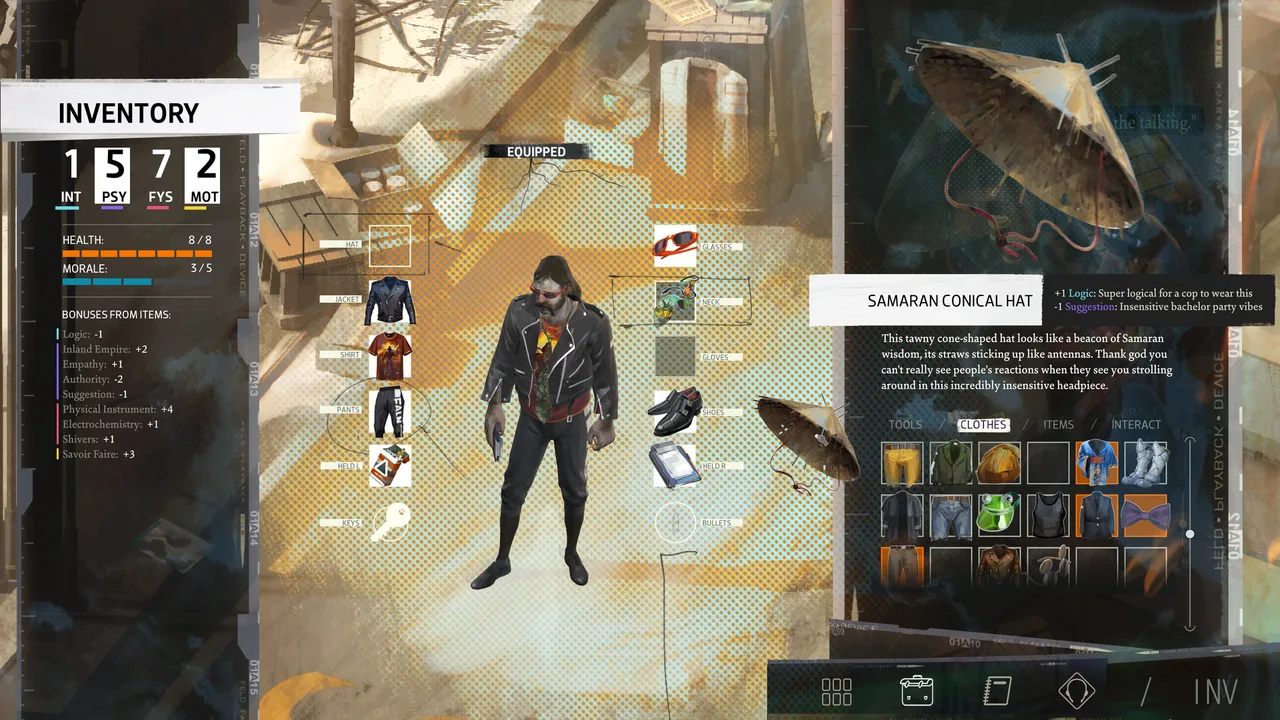
As you talk and think, you pick up ideas — not items, not perks, but half-formed notions. A suspicion about the case. A political conviction you blurted out and can't take back. An embarrassing theory about your own name. Each one can be slotted into a limited number of cabinet spaces and then internalised, which takes real in-game hours during which the thought usually makes you temporarily worse at something.
Then it resolves, and you have permanently become a person who believes that.
The effects are mechanical — bonuses, penalties, new dialogue — but the point is what it does narratively. Character growth in RPGs is normally acquisition: you get stronger, you get more options. Here it's commitment. Deciding to internalise a thought is deciding what your detective is going to be, and the game charges you a cost for thinking it through, and some of the results are humiliating. You can end up permanently marked by an idea you adopted in a bad mood eight hours earlier.
You can pay to forget a thought later, at a cost. Most players don't, because by then it's part of who the character became.
Pair that with the skill voices and you get the game's central trick: a system where your build and your personality are the same object. In Pillars of Eternity or Divinity: Original Sin 2, your character sheet describes what you can do. Here it describes who you are, and the difference is the whole reason people write essays about this game seven years later.
It's also why replays differ so much. A Logic-heavy detective and an Inland Empire mystic aren't different loadouts working the same case — they perceive different evidence and reach the truth by different roads.
The part that isn't about the game
Now the corpus.
In 2022, the game's lead designer Robert Kurvitz, art director Aleksander Rostov and writer Helen Hindpere departed ZA/UM. The circumstances have been the subject of extensive press reporting and of legal proceedings between the parties, and I'm not going to adjudicate them here — the specific allegations flying in both directions are contested, and a game review is not the venue.
What I can report is the effect, because it's measurable. Since then, a large and growing number of Steam users have left negative reviews that praise the game in the strongest possible terms while asking readers not to buy it, on the grounds that purchases no longer benefit the people who made it. Bucketed by year, those reviews run 11 in 2022, 14 in 2023, 19 in 2024, 28 in 2025 and 17 so far in 2026. This is the rare case where a game's negative sentiment is growing years after release and has nothing to do with the software.
Some of those reviewers advocate obtaining the game without paying. I'm not going to endorse that, and I'd note it doesn't resolve the underlying issue so much as sidestep it.
What I'd say instead is this: the objection is sincere, it is held by people who clearly love the work, and it is about a real dispute rather than a rumour. Read the reporting, which is plentiful and easy to find, and decide for yourself. That's a genuinely personal call and I don't think a review should make it for you.
9.5 out of 10. Rated 9.5 out of 10.
The score is for the game, and the game is a landmark. Nothing else in the medium writes like this, nothing else has turned character building into interior monologue this effectively, and nothing else has made failing a dice roll something you look forward to. It is funnier than it has any right to be, sadder than you expect, and it respects your intelligence in a way that is genuinely rare.
Its faults are small and worth stating plainly: it's entirely text and talk, the opening is deliberately disorienting, and the most-earned achievement sitting at 32% suggests a lot of people put it down before the end. Sixty dollars is also a lot for thirty hours, though few of those hours are wasted.
If you have ever wondered what this medium can do that no other can, play Disco Elysium. Then read about what happened to the people who made it, and draw your own conclusions.
Pros and cons
Pros
- Writing that operates at a level no other game has reached, funny and devastating in the same paragraph
- Twenty-four skills implemented as internal voices with their own agendas, turning character building into a genuine psychological system
- Failure is content — botched checks open routes and jokes rather than simply blocking progress
- Revachol is a fully realised place with a history, an economy and a politics the plot actually depends on
- Full voice acting in The Final Cut, including a standout performance for your partner
- Hand-painted art and a score that are both among the best in the medium
Cons
- The most-upvoted negative reviews all praise the game and urge readers not to purchase it, on ethical grounds relating to the studio's ownership
- It is entirely text and dialogue — no combat, and long stretches with no mechanical activity
- The opening hours are disorienting by design, and some players never find their footing
- The most-earned achievement sits at 32%, suggesting a substantial share never reach an ending
- At NZ$59.99 it is priced above most of its genre for a roughly 30-hour experience
Screenshots
-
Disco Elysium - The Final CutImage: ZA/UM via Steam -
Disco Elysium - The Final CutImage: ZA/UM via Steam -
Disco Elysium - The Final CutImage: ZA/UM via Steam -
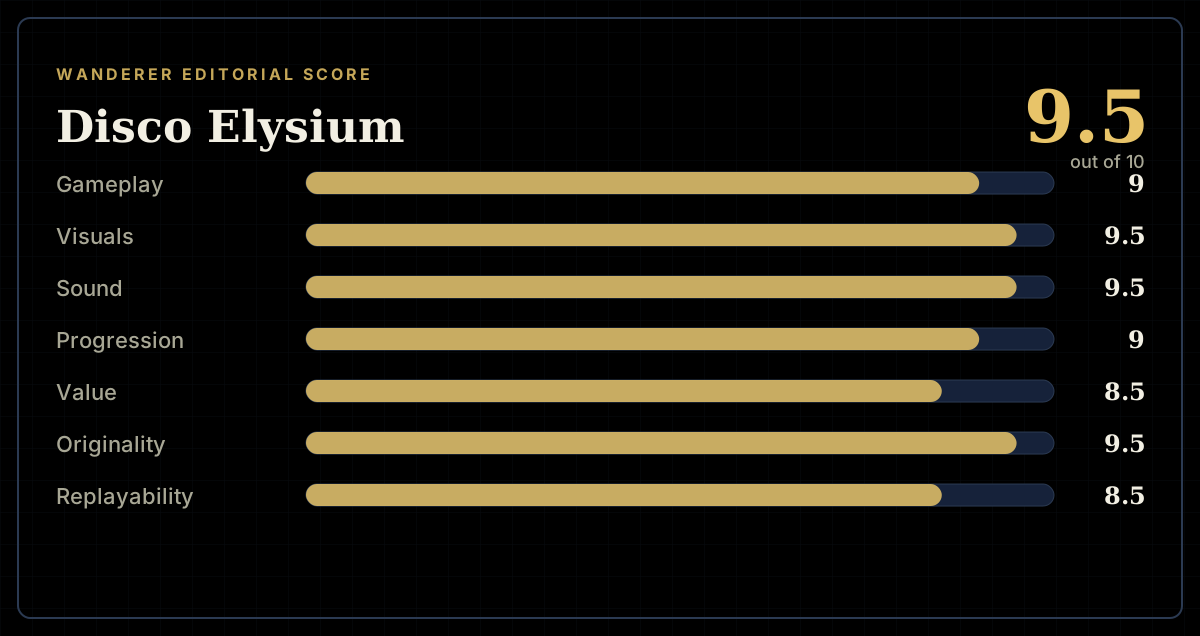
How the review scores each part of the gameWanderer Editorial -
The short versionWanderer Editorial