Game review
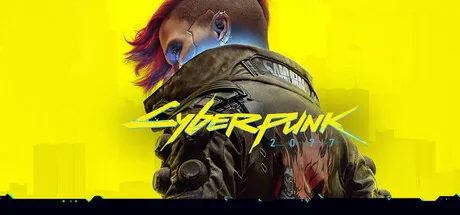
Cyberpunk 2077
9 / 10
- Developer
- CD PROJEKT RED
- Publisher
- CD PROJEKT RED
- Released
- 9 December 2020
- Platforms
- Windows, macOS
- Genre
- Open-world Action RPG
- Monetisation
- One-time purchase at NZ$29.99 for the base game, with the Phantom Liberty expansion sold separately. No microtransactions, no battle pass, and years of free content updates. Price checked 4 August 2026.
- Players
- Single-player only
The short version
Night City is still the best-realised urban environment in games, and the 2.0 rebuild finally gave it a combat and progression system worth the setting — perks that change how you play, netrunning that feels like a discipline rather than a menu, and a police system that no longer spawns officers behind you. The writing was always good; now everything around it is too. Five years of free updates on a thirty-dollar game with no microtransactions is close to exemplary. The one thing keeping this from an unqualified recommendation isn't in the game at all — it's a 2025 licence change that a large cluster of buyers object to strongly enough to review over.
Biggest strengths
- Night City remains an extraordinary achievement — dense, vertical, layered and coherent in a way almost no other open world manages
- The 2.0 overhaul rebuilt perks, cyberware and combat into a system with genuine build identity, where a netrunner and a solo play like different games
- Superb writing and performances, with side quests that routinely outclass other games' main stories
Biggest weaknesses
- A 2025 end-user licence change drew a large, well-upvoted cluster of negative reviews from players who say it lets the publisher revoke access to a single-player game they paid for
- The narrative's built-in urgency sits awkwardly against eighty hours of optional content, and the game doesn't let you continue in the same save after the ending
- Still demanding hardware for its highest settings, and the ray-traced modes remain expensive
Who it's for: Anyone who wants a dense, beautiful, adult open-world RPG with real build variety and one of the best supporting casts in the genre. Not for players who want a sandbox to break, and not for anyone who bounces off first-person combat.
Our recommendation: Buy it — at thirty dollars for a seventy-plus-hour game this is one of the strongest value propositions on Steam, and the version you'll install bears little resemblance to the one people were refunding in 2020. Take Phantom Liberty too if you enjoy the base game; it's the best-reviewed part of the whole package. Before you buy, read CD PROJEKT RED's current end-user licence yourself — a substantial group of 2025 buyers left negative reviews over changes to it, and it's the sort of thing you should judge for yourself rather than take mine or theirs on.
9 / 10
Here is the redemption arc in one line of data. Sort every English negative review of Cyberpunk 2077 by year: forty of them in 2020, thirty-nine in 2021, eleven in 2022, five in 2023, one in 2024.
Now look at the other end. Of the hundred most recent English reviews, ninety-six recommend it, and the median reviewer among them has seventy-four hours logged.
The 87% lifetime score you see on the store page is a historical document. It's measuring a game that no longer exists.
What the rebuild actually fixed
The 2020 version's problem wasn't only bugs, though there were plenty. It was that the systems underneath Night City were thin — perks that adjusted numbers without changing how you played, cyberware as a shopping list, police who materialised behind you, and driving that fought you.
The 2.0 overhaul rebuilt that layer. Perks now define an approach rather than decorate one: a netrunner playing through quickhacks, a solo built around Sandevistan time dilation and a stealth build with monowire are genuinely different games sharing a map. Cyberware became the progression spine it always should have been, with a capacity budget that forces real choices instead of letting you slot everything. The police behave like a system. Vehicle combat exists.
What that means practically is that the part of the game that used to be a delivery mechanism for the writing is now good on its own terms. And the writing was always the strong part — the side quests here still outclass most games' main campaigns, the supporting cast is among the best in the genre, and Night City remains the most convincing city anyone has built in a game. Dense, vertical, layered, and coherent in a way that The Witcher 3's countryside never needed to be.
The achievement spread reflects a game people actually finish: 88.5% clear the prologue, 67% reach the mid-game beat, half the playerbase has the Roleplayer achievement, and the deep tail sits around 5%. For an eighty-hour RPG, that's healthy engagement rather than a stack of unplayed purchases.
Builds, and why they matter here
The thing worth dwelling on, because it's what separates the 2026 version from the 2020 one, is that this is now a genuine build game.
Cyberware is the clearest example. It runs on a capacity budget, so every implant you slot costs something you can't spend elsewhere, and the interesting decisions come from what you're prepared to give up. A Sandevistan build — slowing time to walk through a firefight — eats capacity that a netrunner needs for RAM and quickhack tiers. You cannot have both, and the game is better for refusing.
Those two archetypes genuinely play differently. Netrunning is a resource-management discipline: you scan a room, chain hacks across linked enemies, spread a contagion through a gang and walk in after it's finished. A Sandevistan solo is a twitch game about picking a moment and spending it well. Stealth with a monowire is a third thing again, and the mantis-blade melee build is a fourth. Whichever you pick pulls the perk trees, the weapon choices and even the routes you take through levels along with it.
That matters more than it would in a shooter because Night City's encounter design is unusually permissive. Most locations have a roof, a maintenance entrance, a terminal that opens a side door and a window someone forgot to weld shut. The level design was always good; what it lacked in 2020 was a character system worth exploring it with.
The weapon layer supports it. Smart weapons that track targets, tech weapons that charge through cover, power weapons that ricochet off walls — three distinct feels rather than three damage numbers, and each one synergises with different cyberware. Iconic weapons pulled from quests carry unique modifiers that are worth building around rather than being strictly-better versions of common ones.
None of this is unprecedented — Elden Ring asks harder build questions and Baldur's Gate 3 asks more interesting ones. But it's a long way from where this game started, and it's the reason a seventy-hour median playtime is plausible rather than a statistical oddity. People are replaying it, and replaying it means something now.
What it still isn't
It's worth being clear that some of the 2020 criticism was never addressed, because it couldn't be.
The systemic simulation people were promised — a city that lives independently, crowds and traffic with real behaviour, lifepaths that fundamentally reshape the campaign — is still not what this game does. Your lifepath colours the prologue and sprinkles dialogue options afterwards. The city is a magnificent stage set rather than a simulation, and if you go looking for Baldur's Gate 3-style systemic reactivity you will be disappointed.
There's also a structural tension the game never resolved and which its own fans raise: the plot runs on urgency — you are dying, the clock matters — while eighty hours of optional content sits around you asking to be done. And the game doesn't let you continue in the same save after the ending, which turns "finish the story" into "close the book" whether or not you were done with Night City.
Neither of those stops it being excellent. Both are worth knowing before you start.
The part that isn't about the game
In 2025 a cluster of negative reviews appeared that had nothing to do with quests or bugs. The most-upvoted of them has around fifteen hundred helpful votes, and the objection is to a change in CD PROJEKT RED's end-user licence agreement.
The characterisation in those reviews is that the revised terms allow the publisher to terminate a buyer's access to the game at will — on a single-player, non-live-service product that people paid for outright — and that the terms weren't like this when the game shipped. Reviewers also describe the opt-out process as impractical.
I'm going to be careful here, because I've read the reviews rather than the contract, and what a licence says and what a large group of annoyed customers say it says are not always the same document. What I can tell you is verifiable and worth acting on: a substantial, well-upvoted group of 2025 buyers considered the licence change serious enough to leave a negative review over, on a game they otherwise praise. Several explicitly say the game is good and they're downvoting the terms.
So read the current EULA before you buy. That's not a fence-sit — it's the only honest advice when the complaint is about a legal document you can go and read yourself, and when it's the single most common reason anyone has left a negative review of this game in the last two years.
9.0 out of 10. Rated 9.0 out of 10.
Judged as a game in August 2026, Cyberpunk 2077 is outstanding. It's beautiful, enormous, superbly written, mechanically deep after the rebuild, generous with free updates, entirely free of microtransactions, and thirty dollars. Very little on Steam offers that combination, and the turnaround from its launch is the most complete redemption the industry has managed.
The score reflects the game. The licence question is a separate decision, and it's yours to make — but it's the one thing I'd actually check before clicking buy, which is a strange sentence to write about a game whose problem used to be that it didn't run.
Pros and cons
Pros
- Night City remains an extraordinary achievement — dense, vertical, layered and coherent in a way almost no other open world manages
- The 2.0 overhaul rebuilt perks, cyberware and combat into a system with genuine build identity, where a netrunner and a solo play like different games
- Superb writing and performances, with side quests that routinely outclass other games' main stories
- Five years of substantial free updates on a single-purchase game with no microtransactions
- Strong accessibility provision, including adjustable text size, colour alternatives, camera comfort options and adjustable difficulty
- The turnaround is measurable: negative reviews collapsed from 40 in 2020 to a handful a year from 2023 onward, and 96 of the last 100 English reviews are positive
Cons
- A 2025 end-user licence change drew a large, well-upvoted cluster of negative reviews from players who say it lets the publisher revoke access to a single-player game they paid for
- The narrative's built-in urgency sits awkwardly against eighty hours of optional content, and the game doesn't let you continue in the same save after the ending
- Still demanding hardware for its highest settings, and the ray-traced modes remain expensive
- Some of the original promises — deeper systemic simulation, meaningful lifepath divergence beyond the prologue — were never delivered and never will be
- The launch-era reputation still shapes the lifetime score, which understates what you'd actually be buying today
Screenshots
-
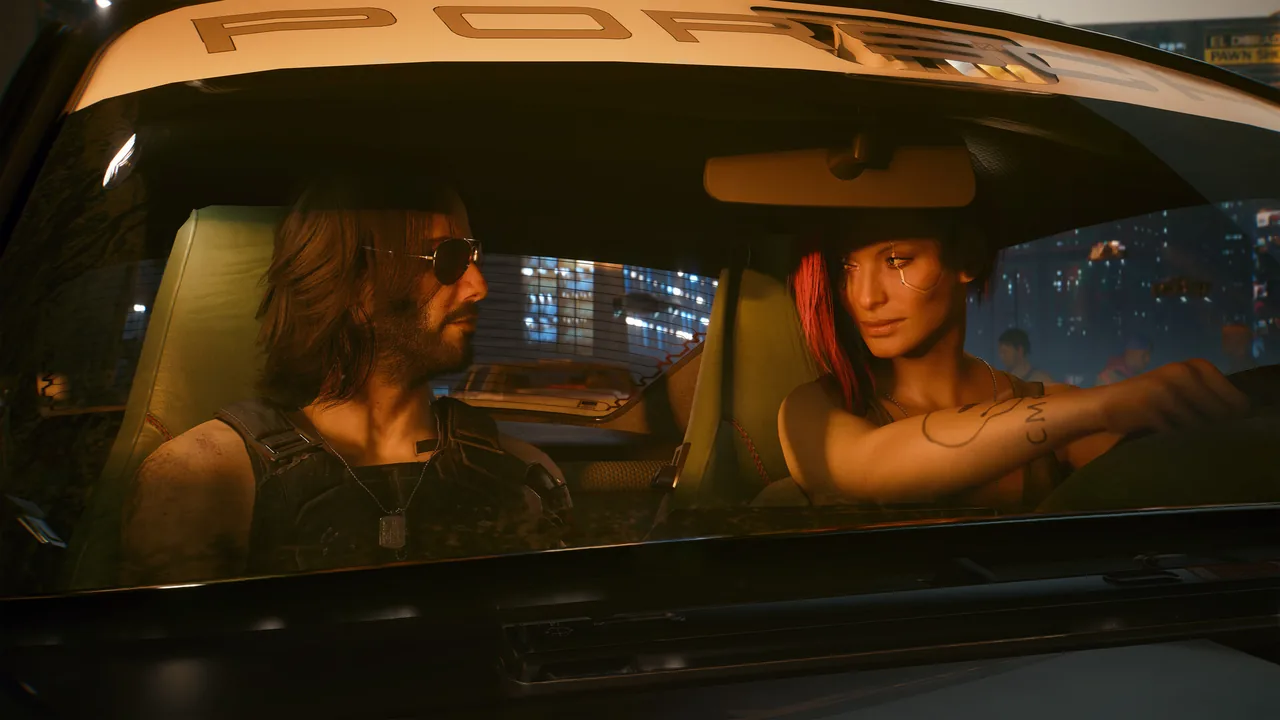
Cyberpunk 2077Image: CD PROJEKT RED via Steam -
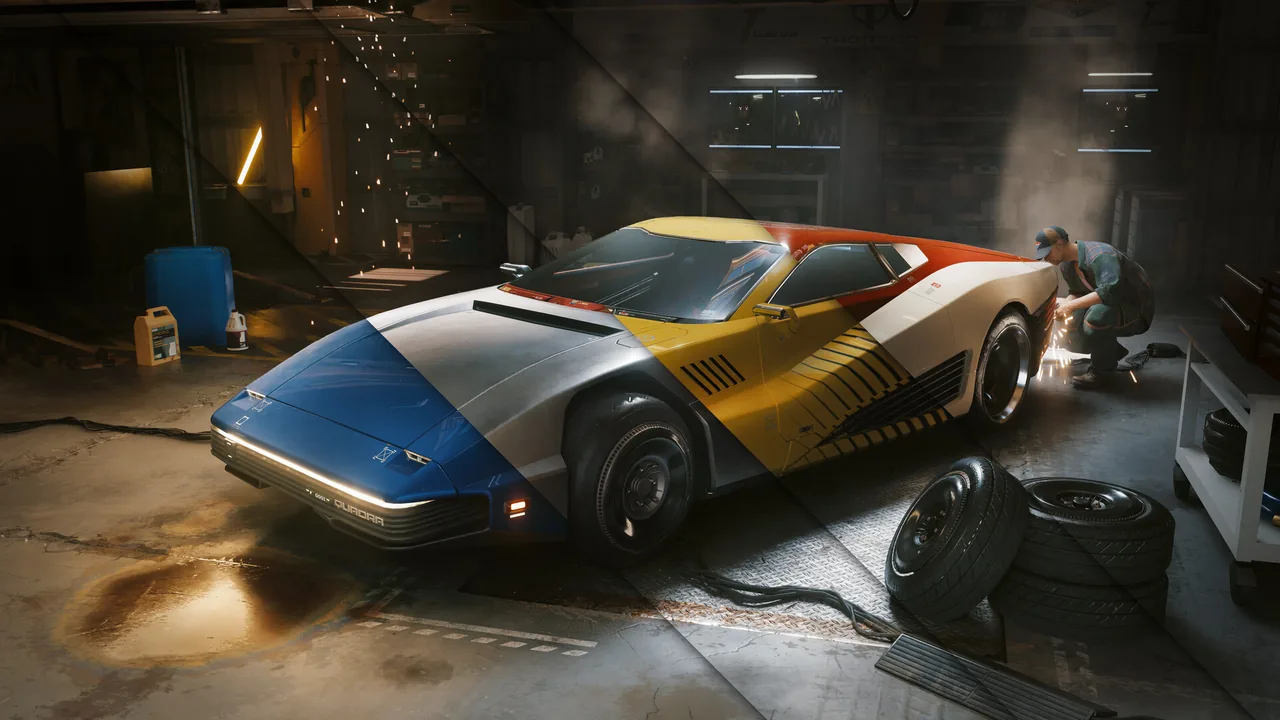
Cyberpunk 2077Image: CD PROJEKT RED via Steam -
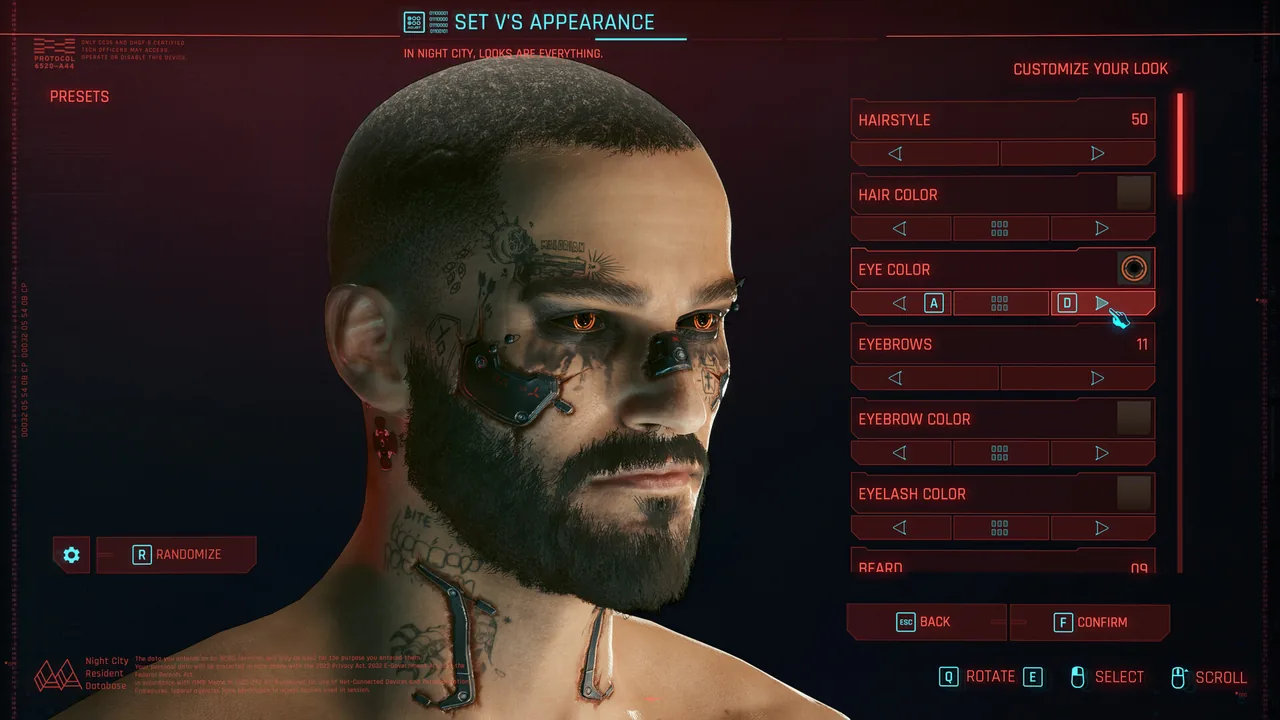
Cyberpunk 2077Image: CD PROJEKT RED via Steam -
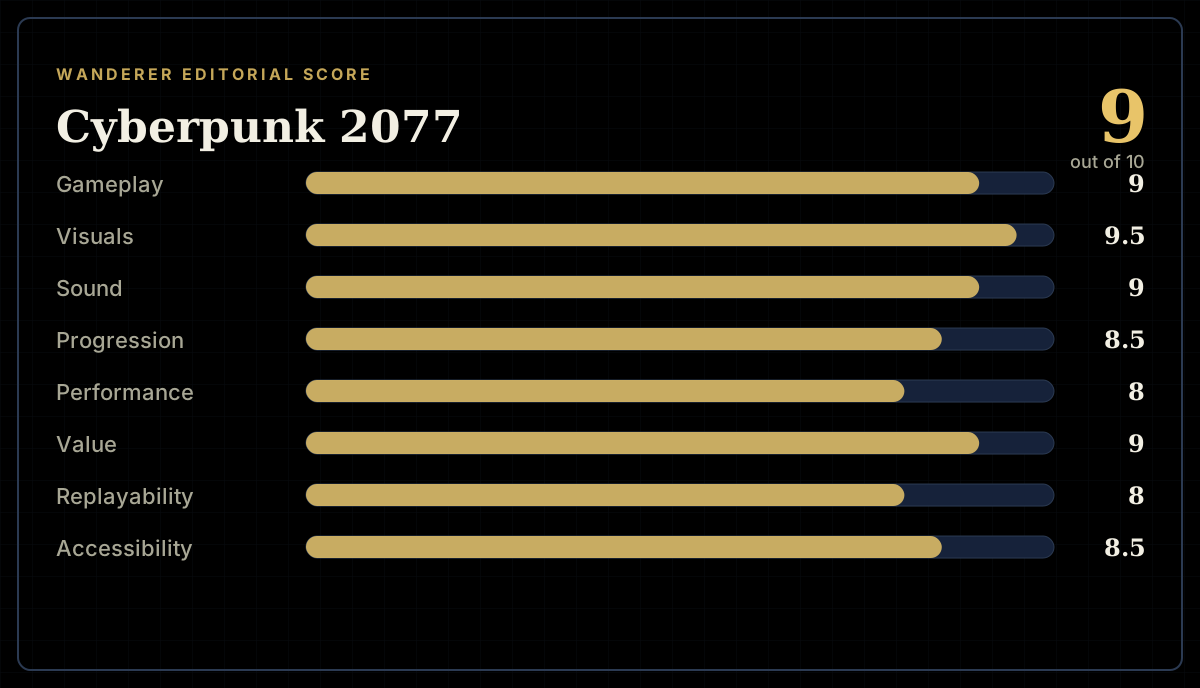
How the review scores each part of the gameWanderer Editorial -
The short versionWanderer Editorial