Game review
Ni no Kuni II: Revenant Kingdom
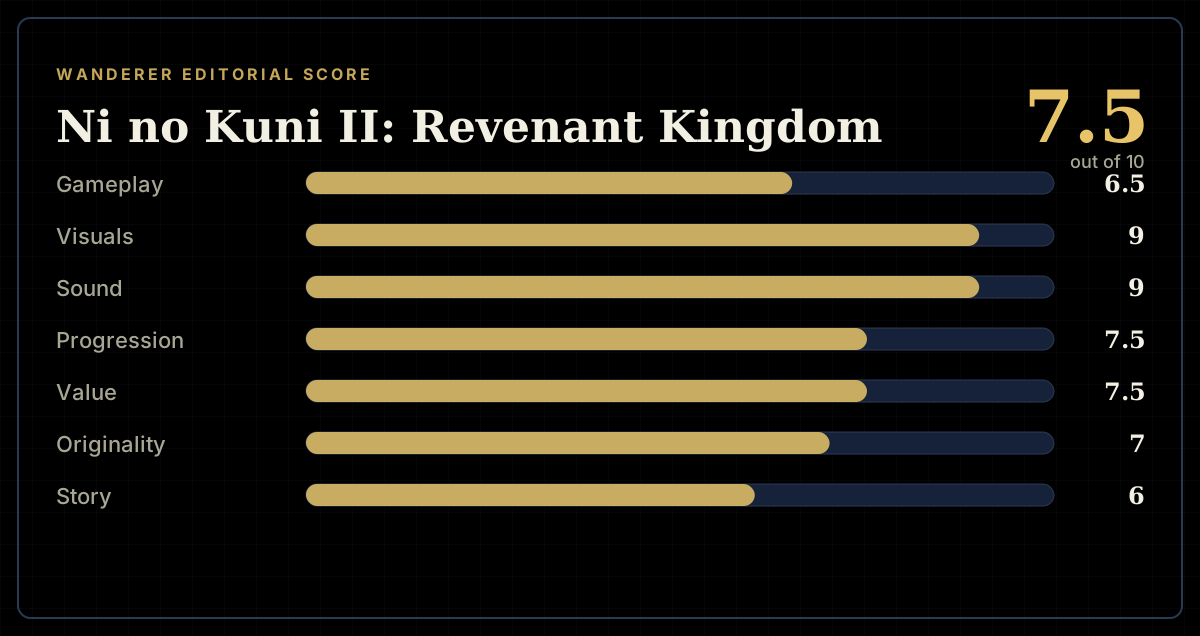
7.5 / 10
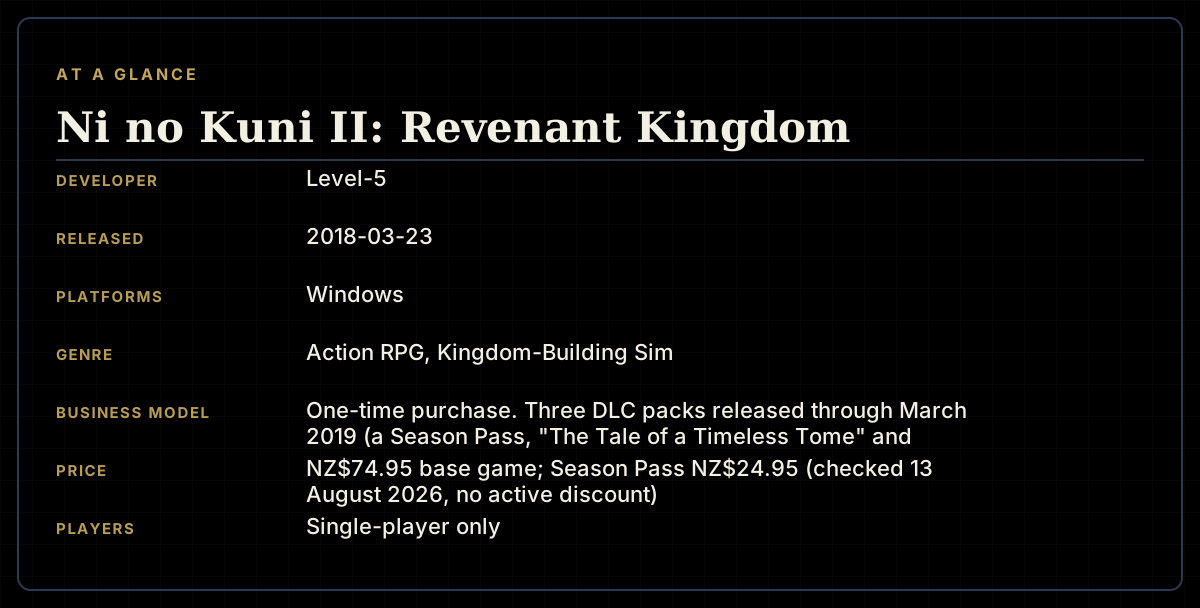
- Developer
- Level-5
- Publisher
- Bandai Namco Entertainment
- Released
- 23 March 2018
- Platforms
- Windows
- Genre
- Action RPG, Kingdom-Building Sim
- Monetisation
- One-time purchase. Three DLC packs released through March 2019 (a Season Pass, "The Tale of a Timeless Tome" and "The Lair of the Lost Lord"), plus a bundled Adventure Pack. No in-game purchases in the base game.
- Players
- Single-player only
The short version
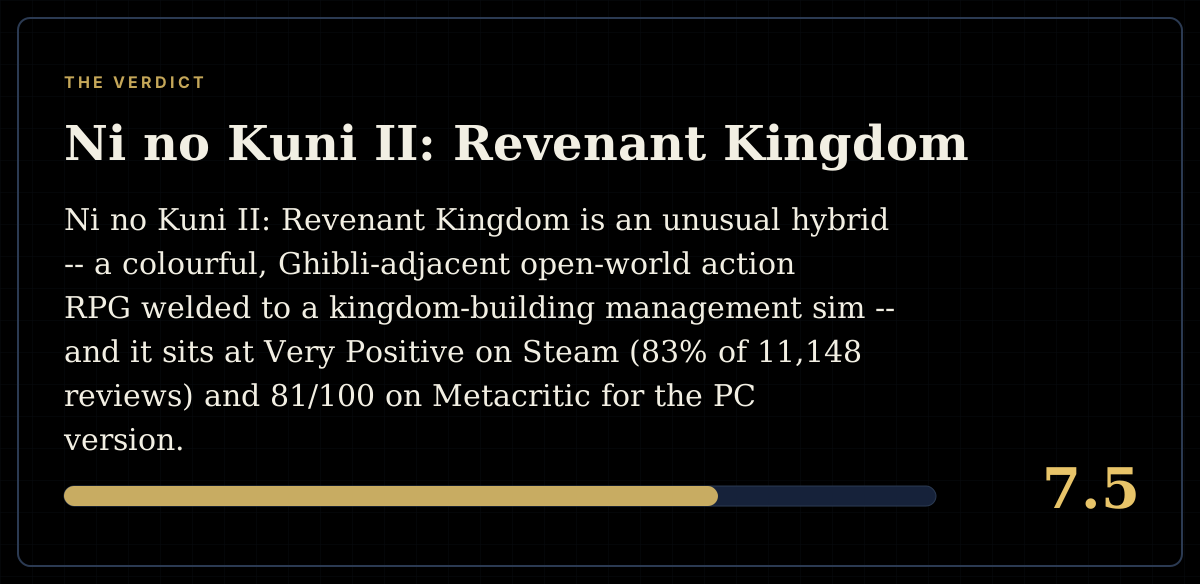
Ni no Kuni II: Revenant Kingdom is an unusual hybrid -- a colourful, Ghibli-adjacent open-world action RPG welded to a kingdom-building management sim -- and it sits at Very Positive on Steam (83% of 11,148 reviews) and 81/100 on Metacritic for the PC version. The kingdom-building side, which one contemporary review dryly called "a glorified idle game," is the part players consistently single out as the thing that kept them playing for hundreds of hours, sometimes long after finishing the main story.
Reading a wide, recent sample of English-language Steam reviews turns up a consistent set of complaints that outlives the initial 2018 reception: combat that's fast and pretty but shallow and easy, a story that reads as noticeably weaker and more childish than the original Ni no Kuni, and the large-scale "Skirmish" army battles that most reviewers describe as an underdeveloped side system built around basic rock-paper-scissors logic. None of these are dealbreakers on their own, and plenty of the same reviewers still recommend the game -- but they're specific, repeated points rather than isolated gripes.
Biggest strengths
- A genuinely engaging, moreish kingdom-building loop that a large share of reviewers name as the game's real hook, with some logging hundreds of hours mostly building and staffing their kingdom rather than fighting
- Consistently gorgeous, colourful art direction and a Joe Hisaishi score that reviewers across the whole review sample praise almost without exception, Ghibli involvement or not
- A huge amount of content for the price once DLC and post-game systems are included, and the game is frequently discounted well below its NZ$74.95 list price
Biggest weaknesses
- Real-time combat is repeatedly described as easy, simple and shallow -- fun in short bursts but without the depth some hoped for from an action RPG built around it
- The large-scale Skirmish battles are widely called half-baked, reduced by many reviewers to a basic rock-paper-scissors exchange rather than genuine strategy
- Story and character writing are consistently rated well below the original Ni no Kuni -- "childish," "predictable" and "generic" are recurring words even from reviewers who otherwise recommend the game
Who it's for: Fans of colourful, story-driven JRPGs who don't mind a kingdom-management sim eating a large share of the playtime, and anyone curious how an open-world action RPG and a city-builder fit together. Not for players expecting the narrative and emotional weight of the first Ni no Kuni, or for anyone who wants deep, technical action combat.
Our recommendation: Worth playing, especially now that it's had eight years of patches, three platforms' worth of ports and frequent Steam sales -- but go in expecting a game that's really two different, unevenly matched games bolted together, and be ready for the kingdom-building side to become the actual main event.
7.5 / 10
Level-5's 2018 sequel to the beloved Ni no Kuni: Wrath of the White Witch arrived with an unavoidable asterisk: Studio Ghibli, whose animators gave the first game its cutscenes, wasn't involved this time. What Level-5 did keep was composer Joe Hisaishi and former Ghibli character designer and animation director Yoshiyuki Momose, and between them the sequel still looks and sounds like a Ghibli production even without the studio's name on the box. Whether that's enough carries most of this review, because Revenant Kingdom is really two very different games sharing one save file — an open-world action RPG about a boy king reclaiming his throne, and a kingdom-building management sim about staffing that throne's capital — and eight years of Steam reviews make it clear which one players actually fell for.
Two games, unevenly matched
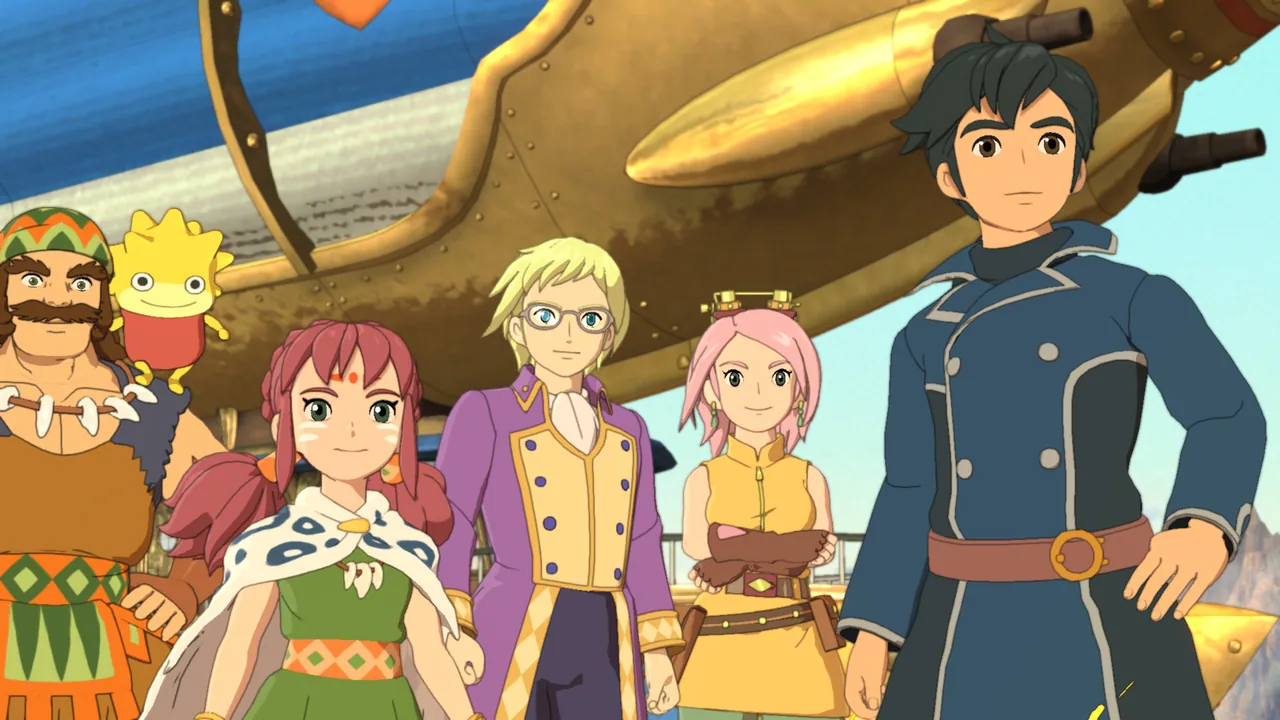
The pitch is that you play as Evan, a young king deposed on his coronation day, who sets out to build a new kingdom and unite the world's warring nations under a "Ding Dong Dell" of his own. That means real-time, open-battlefield combat against monsters as you explore an admittedly gorgeous overworld, punctuated by story missions, side quests and the elemental Higgledy creatures that buff your attacks and cast spells alongside you. It also means, once the capital of Evermore is founded a few hours in, a full kingdom-building layer: recruiting citizens with specific skills, assigning them to workshops and facilities, researching upgrades and watching the whole settlement grow — resource management with a visible, walkable city attached to it.
Critics at launch were fairly split on how well those two halves cohere. Some outlets, like Game Informer, praised the way the game "aims for multiple targets — a world-spanning story, management sim, recruitment game, and solid combat experience — and manages to hit them all," while others were blunter: one contemporary review described the kingdom-building system as feeling less like a management sim you plan around and more like "a glorified idle game" layered on top of an action RPG. Reading that description eight years later, from a site that reviews idle and incremental games for a living, it isn't really a criticism — it's a fairly accurate description of what makes that side of Revenant Kingdom work. The loop of assigning citizens, watching production tick along, and coming back to collect and reinvest is the same loop that makes idle games moreish, just wrapped in an RPG's presentation rather than a spreadsheet's. It's telling that a genuinely large share of the recent Steam review sample singles out kingdom-building as the thing that kept them playing well past the credits — several mention returning years after finishing the story specifically to keep optimising their settlement, and one recent review logged nearly 200 hours with the story described almost as an afterthought to it.
Combat that's fast, pretty, and thin
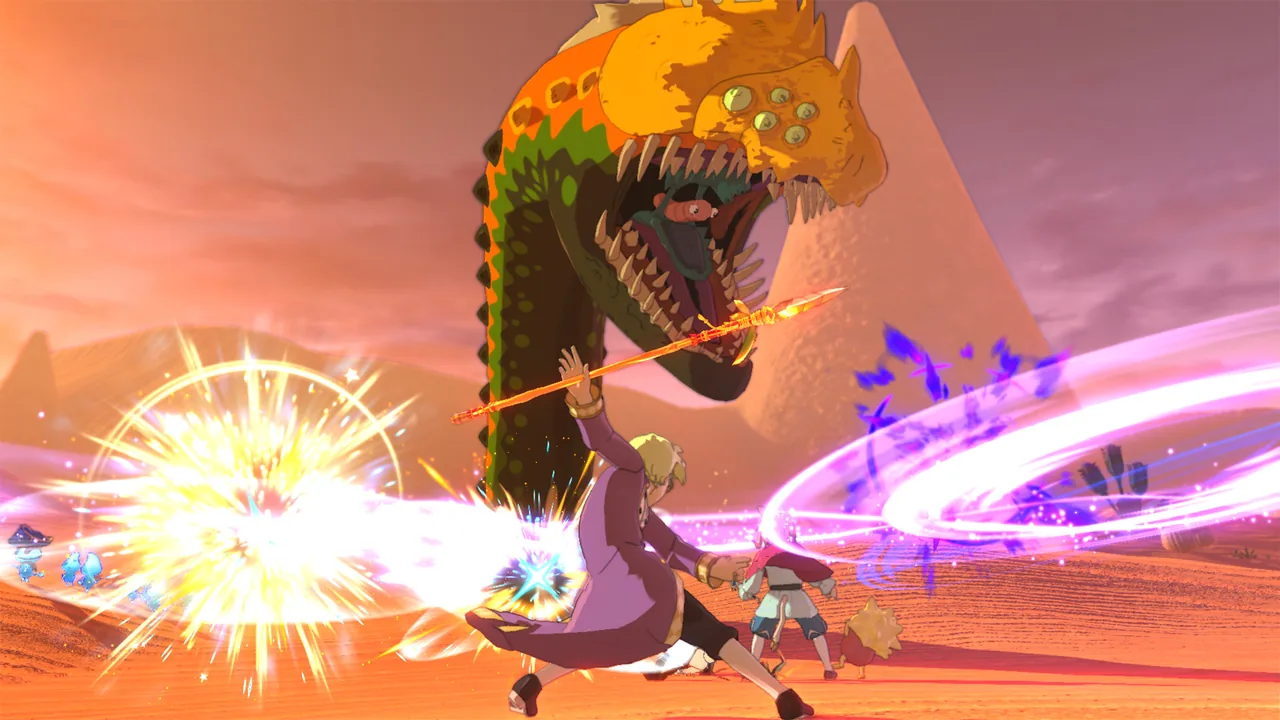
The action combat, by contrast, is the part almost every negative review — and a fair few positive ones — single out as underwhelming. It's fast, colourful and easy to pick up: you control one party member directly while two AI companions fight alongside you, switching weapon types on the fly and calling in Higgledy support abilities. Several reviewers in the recent sample describe it approvingly as accessible and fun in short bursts, and it's genuinely a good fit for playing with family — one review from a parent describes 50 hours spent playing co-operatively with their kids, praising exactly how unintimidating the combat is to newcomers. But "easy to learn" tips over into "shallow" for a large share of reviewers, who describe it as a cakewalk with limited strategic depth even on higher difficulties, closer to a dull hack-and-slash than the tactical action RPG some expected from the marketing. It rarely gets in the way of exploring or building your kingdom, which is a defensible design choice for a game whose real hook is elsewhere — but it also means the combat rarely gives you a reason to engage with it beyond the minimum required to progress.
Skirmish battles: the system nobody asked to keep
Sitting alongside both of those is a third system, the large-scale "Skirmish" battles where you command squads of little chibi soldiers against enemy armies on a real-time map. This is consistently the most criticised piece of the game across both 2018 critic reviews and the current Steam sample. The pitch — turning your kingdom's army into a strategic layer — is sound on paper, but the actual mechanic mostly reduces to a basic rock-paper-scissors exchange between unit types, with little of the depth that term implies elsewhere in strategy games. Recent reviewers describe it as tacked-on and skippable in spirit even when it isn't skippable in practice, since certain story and side-quest progress gates behind it. It's the clearest example in the whole game of an ambitious idea that Level-5 didn't have the scope, or perhaps the interest, to fully develop — three overlapping systems (action combat, kingdom management, army strategy) is a lot for one game, and Skirmish battles read as the one that got the least attention.
Higgledies and the exploration layer
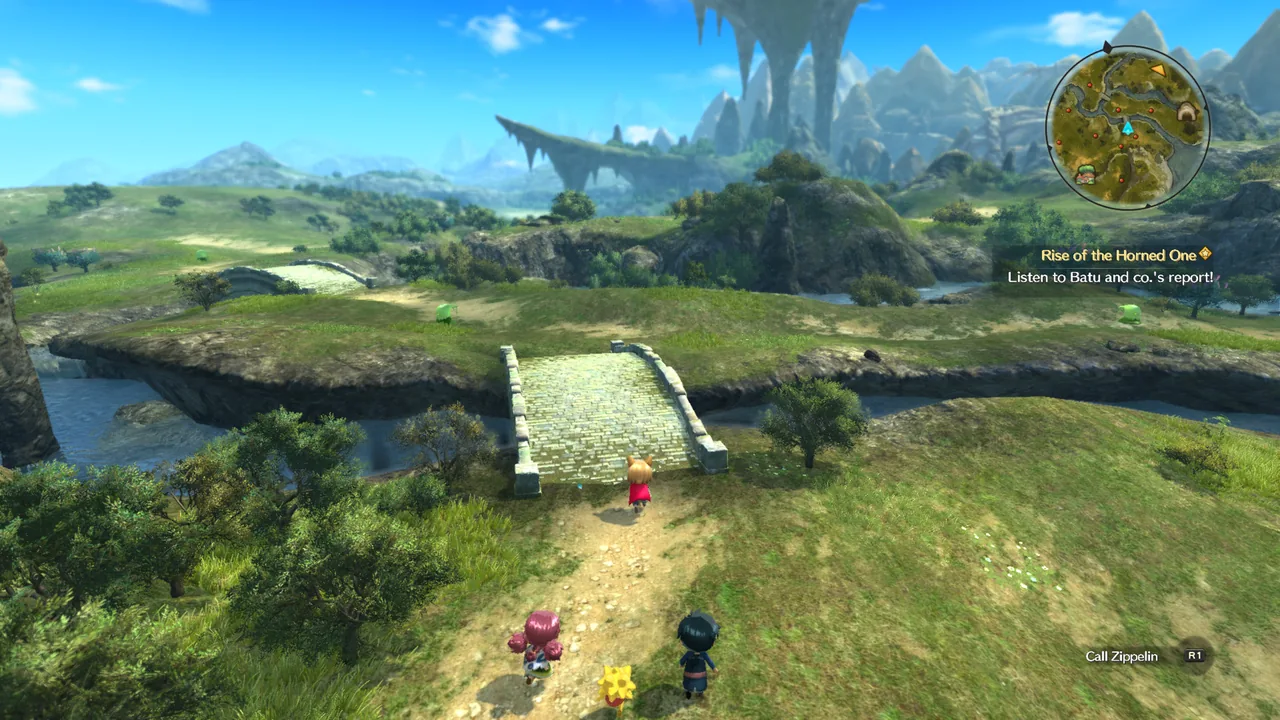
Sitting underneath the headline systems is a quieter one that reviewers mention less often but consistently enjoy: the Higgledies, small elemental creatures collected across the world in six varieties, who ride along in combat granting buffs and, more importantly, gate access to puzzle doors and dungeon shortcuts scattered around the overworld. It's a light collection layer rather than a deep one — you're not building complex teams so much as making sure you're carrying the right type for the area you're in — but it gives exploration a small, constant carrot beyond combat XP and loot, and it's one of the few systems in the game that draws almost no criticism in either the 2018 critic reviews or the current Steam sample. The wider overworld itself gets similar treatment: reviewers consistently praise how varied and colourful the regions are to just wander through, even the ones who are otherwise unimpressed by what they find fighting or building in them. It's a reminder that Level-5's strongest instinct across Revenant Kingdom isn't any one system in isolation, but environment and art direction doing the work of making three uneven mechanical layers feel like they belong in the same game.
A weaker story than the one it's compared to
The comparison that shadows every review of Revenant Kingdom, positive or negative, is the original Ni no Kuni. That game's story — co-written with Ghibli's involvement and built around themes of grief and growing up — is remembered fondly enough that the sequel gets measured against it constantly, and it consistently comes up short. Recent reviews describe the writing as "childish," "predictable" and lacking the "magic" or "charm" of the first game, with several longtime fans of the series specifically calling out how much thinner Evan's story and cast feel next to Oliver's in the original. This isn't a case of nostalgia inflating the earlier game unfairly — it shows up as a specific, repeated complaint from reviewers who otherwise like Revenant Kingdom fine on its own terms, distinguishing "this is a decent story" from "this doesn't live up to what came before it." The visual presentation carries a lot of weight here regardless: even the harshest reviews in the sample concede that the art direction, character design and Hisaishi's score are excellent throughout, doing a lot of the emotional work the script sometimes doesn't.
Eight years on: ports, patches, and one very old bug
Revenant Kingdom's afterlife is a reasonable success story by re-release standards. It shipped day one on PS4 and Windows in March 2018, sold over 900,000 copies within two months, picked up Best RPG honours at Gamescom and a Game Awards nomination for its score, then kept expanding: three DLC packs through to March 2019, a Nintendo Switch port in September 2021 that bundled all of them as the "Prince's Edition," and an Xbox release as recently as March 2023. That's five years of a single-player, story-driven RPG staying commercially active enough to justify two more platform ports — not a common trajectory, and one that speaks to the kingdom-building loop's staying power specifically, since that's the system most likely to bring lapsed players back years later.
The Steam version itself shows its age in smaller ways. A small but consistent thread in the recent review sample reports technical friction on modern hardware — a handful of reviews describe the game failing to launch on newer GPUs until display or HDR settings are manually adjusted, which is the kind of paper cut that accumulates on an eight-year-old engine running on hardware nobody was testing against in 2018. More strikingly, one recent review reports that the "Tainted Monster" achievement has been broken since launch and remains unfixed to this day — whether or not that's still accurate for every player, it's the kind of long-tail neglect that separates a game still actively maintained from one that's essentially finished shipping updates and living on legacy sales and ports. The global achievement data backs up the shape of that story in general: the opening achievements sit around 65-79% completion, typical mid-game milestones fall into the 40-60% band, and the deep post-game and DLC-tied achievements drop to 1-2% — consistent with a game where a solid majority finish the main story, a smaller group dig into kingdom-building and side content, and only the most dedicated touch the post-launch DLC at all.
The rest of the franchise hasn't aged as gracefully
Judging Revenant Kingdom purely on its own merits undersells how well it's held up next to what Level-5 and its partners did with the Ni no Kuni name afterwards. The mobile spin-off Ni no Kuni: Cross Worlds launched globally in 2022 built partly around Netmarble's MARBLEX crypto and NFT infrastructure, and it drew years of backlash for aggressive monetisation, bots and pay-to-win progression layered under that same familiar Ghibli-adjacent art style. As of this review, Netmarble has announced Cross Worlds' current global service will shut down on 17 September 2026, with all player progress reset and the game relaunched on a unified server that strips out the crypto elements entirely — an unusually blunt admission that the mobile game's direction didn't work. There's also a Ni no Kuni animated film from 2019 that underperformed critically and commercially, and no mainline sequel has followed Revenant Kingdom in the seven-plus years since. Set against that backdrop, a single-purchase, no-microtransactions RPG that still gets played enough to justify Switch and Xbox ports years later, that never asked players for a cent beyond its DLC, and that built a genuinely sticky kingdom-management loop without needing live-service mechanics to do it, looks better in hindsight than it might have in March 2018 — not because it improved, but because the rest of the franchise's choices since have made its restraint look like a feature rather than a limitation.
Verdict
7.5 out of 10. Ni no Kuni II: Revenant Kingdom is a strange, genuinely likeable hybrid that never quite resolves the tension between its three overlapping systems, and eight years of player feedback has settled into a fairly stable pattern: the kingdom-building is the real draw, the open-world action combat is pleasant but thin, the Skirmish battles are the part nobody defends, and the story doesn't live up to the game it's inevitably compared against. None of that stopped it selling nearly a million copies in two months, picking up two more platform releases across the following five years, or building a Steam review base that's stayed comfortably Very Positive the whole way through. If you go in for the kingdom-building — a system this site's readers, of all audiences, will recognise the appeal of immediately — and treat the combat and story as pleasant scaffolding around it rather than the main event, Revenant Kingdom holds up well. Go in expecting the reverse and you'll likely land closer to its detractors.
Pros and cons
Pros
- A genuinely engaging, moreish kingdom-building loop that a large share of reviewers name as the game's real hook, with some logging hundreds of hours mostly building and staffing their kingdom rather than fighting
- Consistently gorgeous, colourful art direction and a Joe Hisaishi score that reviewers across the whole review sample praise almost without exception, Ghibli involvement or not
- A huge amount of content for the price once DLC and post-game systems are included, and the game is frequently discounted well below its NZ$74.95 list price
- Runs comfortably on modest hardware by current standards, which several recent reviewers call out specifically given how demanding many 2026 releases are
Cons
- Real-time combat is repeatedly described as easy, simple and shallow -- fun in short bursts but without the depth some hoped for from an action RPG built around it
- The large-scale Skirmish battles are widely called half-baked, reduced by many reviewers to a basic rock-paper-scissors exchange rather than genuine strategy
- Story and character writing are consistently rated well below the original Ni no Kuni -- "childish," "predictable" and "generic" are recurring words even from reviewers who otherwise recommend the game
- A minority of recent reviews report technical problems on modern PCs, including launch failures tied to HDR settings and at least one achievement reported as bugged since 2018 and still unfixed
Screenshots
-
Ni no Kuni™ II: Revenant KingdomImage: BANDAI NAMCO Entertainment via Steam -
Ni no Kuni™ II: Revenant KingdomImage: BANDAI NAMCO Entertainment via Steam -
Ni no Kuni™ II: Revenant KingdomImage: BANDAI NAMCO Entertainment via Steam -
How the review scores each part of the gameWanderer Editorial -
The essentialsWanderer Editorial -
The short versionWanderer Editorial