Game review
ELEX
7 / 10
- Developer
- Piranha Bytes
- Publisher
- THQ Nordic
- Released
- 17 October 2017
- Platforms
- Windows
- Genre
- Open-World Action RPG
- Monetisation
- One-time purchase. A small "Digital Extras" DLC (soundtrack and art book) is sold separately.
- Players
- Single-player only
The short version
ELEX is Piranha Bytes doing what Piranha Bytes has done since the first Gothic in 2001: building a dense, hostile, hand-crafted world and handing you almost no help getting through it. This time the valley is a whole planet, split between Berserker druids running on Elex-infused magic, Clerics wielding recovered pre-collapse technology, and Outlaws cooking the same resource into a drug, with a jetpack bolted onto the traversal to make the open world feel genuinely open. Steam's aggregate score sits at Mostly Positive across 19,600-plus reviews, but split by language it comes apart: the English-language sample alone is Mixed, at 68% positive. That gap is the review in miniature -- this is a game reviewers describe as "an uncut gem" in one breath and "the worst game that was ever made" in the next, sometimes about the exact same combat system.
Nine years out, the shape of the disagreement hasn't changed. The complaints are specific and consistent: combat that Destructoid's launch review called committing to an attack like "running full-tilt down a steep hill," a punishing opening stretch with almost no guidance, and a jetpack that runs out of fuel too fast to be the free-flight fantasy the marketing implied. The praise is just as specific: one of the most distinctive settings Piranha Bytes has ever built, three factions worth actually picking between, and an open world whose verticality and hand-placed detail still get called out by name in reviews written this year.
Biggest strengths
- A genuinely distinctive setting -- sword-and-sorcery magic, scavenged pre-apocalypse tech and drug-fuelled outlaws sharing one hostile planet -- that reviewers still single out nine years on
- Three real factions with different aesthetics, moral logic and playstyles, tied into a functioning reputation and dialogue system rather than a coat of paint on one linear story
- Open-world design with real verticality and hand-placed detail, meaningfully extended by the jetpack once players learn its limits
Biggest weaknesses
- Combat is the single most repeated complaint across nine years of reviews -- animations that commit you to an attack, underpowered early guns and swords, and momentum-based movement that reads as unresponsive to players coming from more modern action RPGs
- A genuinely brutal opening several hours with minimal tutorialising, which the Steam refund window (two hours) does not reliably outlast; several long-form reviews explicitly warn buyers to push past it before judging the game
- Console versions launched with real technical problems (framerate drops and hitches); PC reviewers report a mix of smooth performance and stutter depending on hardware and driver version, including flicker complaints tied to newer GPUs
Who it's for: Genre veterans who already know they can tolerate old-school jank for a genuinely distinctive, reactive open world -- particularly anyone who liked Gothic or Risen and wants to see the studio's ideas scaled up to a full planet. Not for anyone who wants combat to feel responsive out of the box, or who needs a game to hold their hand through its first few hours.
Our recommendation: Worth it on a sale, which is how most of its committed fans seem to have bought it -- push through the first several hours before judging it, because that is where almost every negative review stops. If ELEX II's rougher critical reception is any guide, the original's particular mix of jank and ambition was closer to a feature than Piranha Bytes' own sequel managed to repeat.
7 / 10
The pitch
ELEX is Piranha Bytes doing to a whole planet what it previously did to one Bavarian-sized valley at a time. The German studio built its reputation on Gothic and Risen -- dense, unfriendly, hand-authored open worlds where the player starts as nobody and has to earn every scrap of power the hard way, with no fast travel handed out and no quest markers doing the thinking for you. ELEX takes that exact philosophy and drops it onto Magalan, a planet devastated by a comet that scattered a resource called Elex across the surface -- part magic reagent, part fuel, part drug, depending on who is refining it and why.
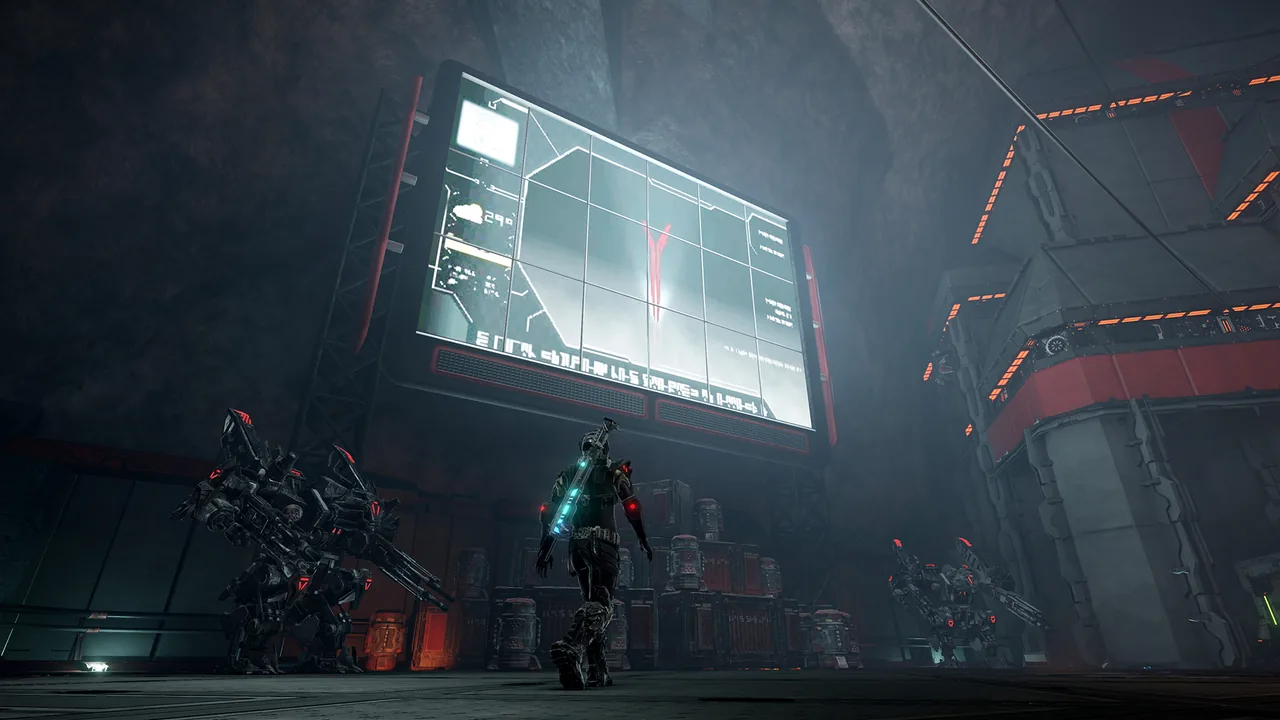
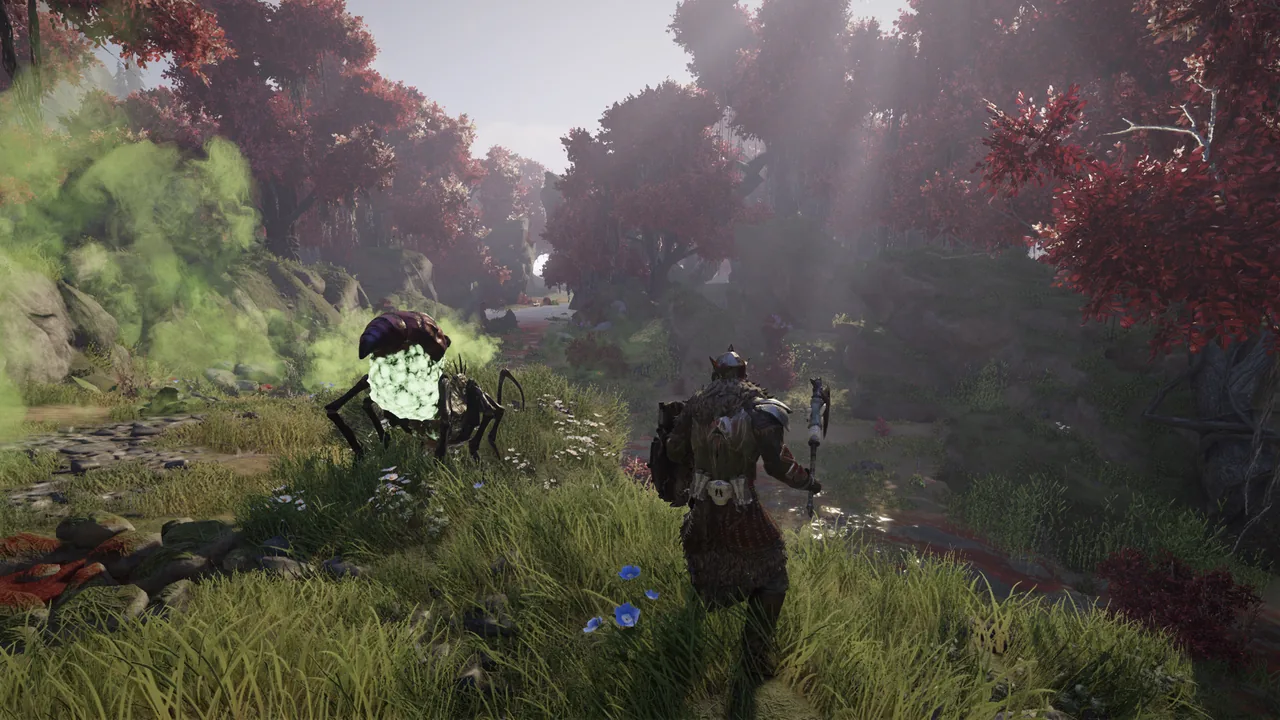
Three factions carve up the wreckage. The Berserkers turn Elex into mana and grow terraforming World Trees, running on sword-and-sorcery logic in overgrown ruins. The Clerics scavenged what was left of pre-collapse technology and built a quasi-religious order around it, fighting with guns and armour under a rigid hierarchy. The Outlaws just want to get rich, cooking Elex into a drug and running their territory like a wasteland biker gang. Above all three loom the Albs -- former Clerics who inject raw Elex directly, gaining inhuman strength and losing their emotions and skin pigmentation along the way, now serving something called the Hybrid that wants to consume every scrap of Elex on the planet for its own ends. It is a strange, specific setting -- sci-fi tech next to magic swords next to drug economics -- and it is the thing almost every review, positive or negative, agrees is the game's strongest asset.
The mechanical hook on top of all this is a jetpack: strap it on and you can fly, in short hops limited by a fuel bar, over Magalan's cliffs, ruins and canyons. It is meant to turn Piranha Bytes' traditionally cramped, walled-in world design into something you can approach vertically as well as horizontally.
Where the disagreement actually sits
Steam's aggregate score for ELEX is Mostly Positive across more than 19,500 reviews as of this writing. Split the number by language and it tells a more interesting story: the English-language subset alone sits at Mixed, 68% positive of roughly 7,400 reviews, noticeably softer than the all-languages total. Piranha Bytes is a German studio with a large, forgiving home audience that grew up on Gothic's exact brand of friction; the English-speaking Steam crowd, on average, is less patient with it. That gap between the two numbers is not noise -- it is the actual shape of ELEX's reputation, and reading a hundred of the most recent English negative reviews alongside a sample of the most-detailed positive ones shows exactly where the line falls.
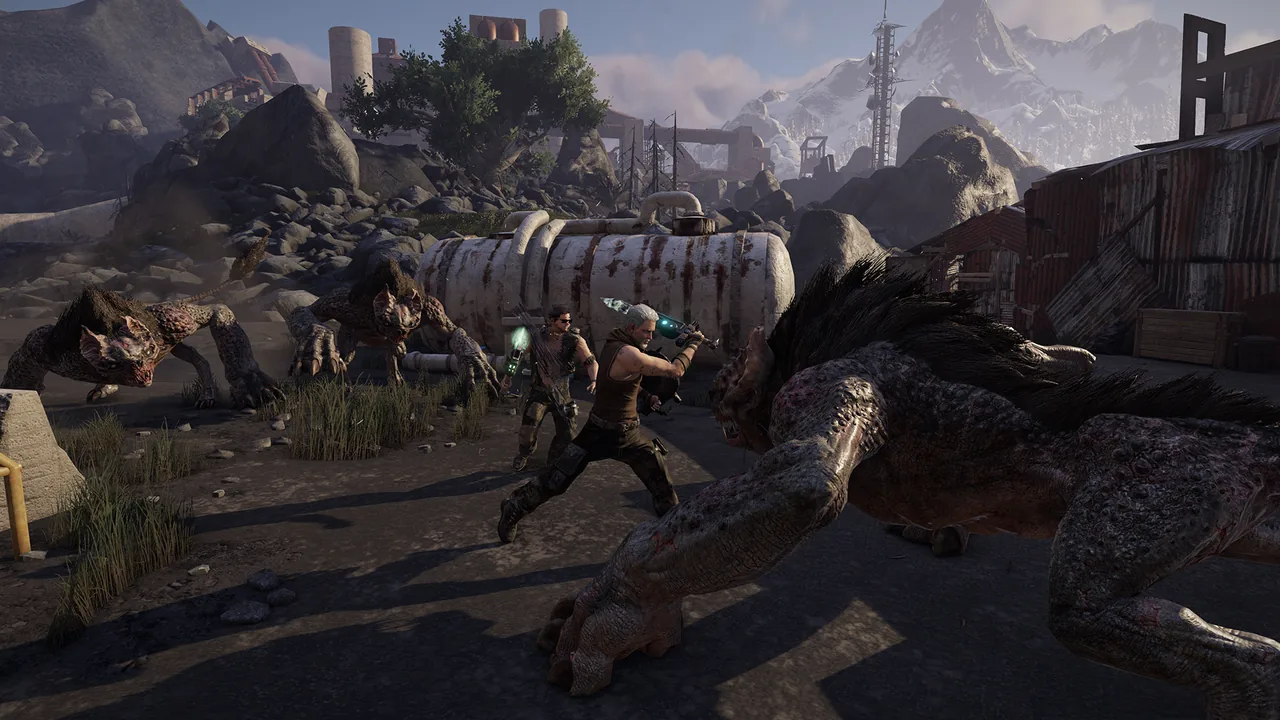
The negative reviews converge hard on one target: combat. Destructoid's launch review put it best, describing melee attacks as committing you the way that "running full-tilt down a steep hill" commits you -- once you swing, you are swinging, whatever the enemy does in response. Nine years of Steam reviews repeat the same complaint in different words: heavy, momentum-driven movement, underpowered starting weapons, animations that feel like they belong to an earlier generation of RPG. One 2026 reviewer, coming to the game fresh, calls it flatly "the worst game that was ever made" after describing the combat on highest difficulty; a 2018 reviewer with over a hundred hours logged says almost the same thing about the fighting while still recommending the game overall for everything built around it. That combination -- real, specific mechanical complaints sitting inside reviews that are often positive on balance -- shows up constantly in the negative sample, which is usually a sign the underlying game has something worth defending even from people frustrated by it.
The positive reviews, meanwhile, consistently reach for the same handful of things: the setting, the factions, the verticality of the world once the jetpack clicks, and -- repeatedly -- the sheer amount of time people have sunk into it. One of the more detailed positive reviews on file reports close to a thousand hours and a self-written community walkthrough; another describes the game as "an uncut gem" and explicitly frames its flaws as something the player chooses to accept in exchange for what is underneath them. That is a different relationship to a game's problems than most negative reviews describe, and it is consistent across years, which argues it is a real subculture of fans rather than a launch-week honeymoon that faded.
The brutal opening, and why it matters more than usual
Piranha Bytes games have always started players at the bottom, but ELEX's opening hours are singled out often enough, by name, to be treated as a design decision rather than an unfortunate side effect. You begin stripped of your prior strength (a returning franchise trope, here dressed up in plot), thrown into hostile territory with weak gear and enemies that outclass you badly before you've picked a faction or learned the systems. Several long-form Steam reviews explicitly structure themselves as "here is how to survive the first few hours," treating that stretch as a separate obstacle from the game itself. One December 2017 review put it plainly: "the two hours before refund are not enough to even get the s[tory going]" -- gesturing at the actual mechanical problem, which is that Steam's standard two-hour refund window sits entirely inside the part of the game every recommendation says to push through before judging it.
That is a real, structural risk for anyone trying ELEX today rather than a complaint that ages out. It is not fixed by patches, because it is not a bug -- it's the same "earn everything, get told nothing" philosophy the studio has run since Gothic, applied to a game with a much larger, initially more hostile map than any of its predecessors. If you know that going in and budget the patience for it, most of what follows gets noticeably better reviews; if you don't, the negative sample suggests you bounce off hard, often within the exact window where a refund is still on the table.
Technical health and where the fall-off happens
Console reviewers at launch flagged real technical problems -- Destructoid's PS4 review specifically called out framerate drops and hitches "often in places that didn't seem especially busy," alongside AI that gets caught on scenery and a PC-oriented interface that reads poorly on a TV. PC performance reports in the Steam review sample are more mixed than uniformly bad: several reviewers describe the game running smoothly on modest hardware, while a handful of much more recent reviews (2026) flag screen flickering tied to newer GPU generations the game was never built to expect -- a common problem for a nine-year-old engine, and one the developer has limited ongoing incentive to keep patching for.
The clearest evidence of where players actually stop, though, is the global achievement data. The game's very first flight -- essentially a tutorial-stage milestone -- sits at 88% completion, and killing twenty monsters sits at 62%. From there the curve drops fast: faction-ending and "complete a storyline" achievements sit in the low single digits, several under 5%. Some of that gap is ordinary for any long RPG with branching paths that can't all be completed in one save. But combined with how consistently reviewers describe the opening hours as the point where people quit, it lines up with a real, sizeable fraction of buyers bouncing off early rather than simply not finishing a 40-plus-hour game, which is the more usual explanation for a steep achievement curve.
Value, and the case for buying it now
At full price, NZ$44.95, ELEX is a hard sell against friendlier open-world RPGs released since. At its current 75%-off price of NZ$11.23 (checked 13 August 2026), the calculation changes completely: this is a large, dense, single-player RPG with three real factions, dozens of hours of content for players who click with it, and a documented fanbase that reports hundreds of hours logged, for roughly the price of a fast-food meal. Piranha Bytes and THQ Nordic have leaned on repeated, steep discounts for years rather than a permanent price cut, which is itself a signal about where the publisher thinks the game's actual market sits.
It's also worth reading ELEX against its own sequel. ELEX II, released in March 2022, tried to smooth off some of the original's rough edges and was received noticeably less warmly by critics -- Metacritic put the sequel in the high 50s against the original's 67. That is not proof the first game's jank was secretly a feature, but it is a useful data point against the idea that Piranha Bytes simply hadn't figured out how to fix ELEX yet: when they tried, with a bigger budget and nine more years of tooling, the result landed worse. Whatever the original does right, it isn't purely an accident of inexperience.
Verdict
ELEX earns its Mixed-to-Mostly-Positive reputation honestly, on both sides. The combat complaints are real, specific and remarkably consistent across nine years of reviews -- this is not a game that got better with patches so much as one whose core feel never really changed. But so is the praise: a genuinely unusual setting, three factions worth actually choosing between, and a world built with the kind of vertical, hand-placed density that reviewers are still calling out by name in 2026. The people who bounce off it mostly do so in the same brutal opening stretch, and the people who push through it mostly end up defending it, jank included, rather than despite it.
At full price it's a tough recommendation next to friendlier modern open-world RPGs. At the discount it's almost always sold at, it's a legitimately large, distinctive game for very little money -- provided you go in knowing the first few hours are meant to be survived, not enjoyed, and that the jetpack is a vertical-mobility tool with a fuel gauge, not the flight fantasy the marketing leans on. Wanderer's own idle progression never asks players to relearn a combat system from scratch, but the appeal of a world dense enough to reward hundreds of hours of poking around its corners is a feeling players here will recognise immediately.
Pros and cons
Pros
- A genuinely distinctive setting -- sword-and-sorcery magic, scavenged pre-apocalypse tech and drug-fuelled outlaws sharing one hostile planet -- that reviewers still single out nine years on
- Three real factions with different aesthetics, moral logic and playstyles, tied into a functioning reputation and dialogue system rather than a coat of paint on one linear story
- Open-world design with real verticality and hand-placed detail, meaningfully extended by the jetpack once players learn its limits
- A committed, long-tenured fanbase -- multiple detailed positive reviews report hundreds of hours and repeat playthroughs across different factions
- Consistently discounted; a legitimately large, dense RPG for around NZ$11 at the time of writing
Cons
- Combat is the single most repeated complaint across nine years of reviews -- animations that commit you to an attack, underpowered early guns and swords, and momentum-based movement that reads as unresponsive to players coming from more modern action RPGs
- A genuinely brutal opening several hours with minimal tutorialising, which the Steam refund window (two hours) does not reliably outlast; several long-form reviews explicitly warn buyers to push past it before judging the game
- Console versions launched with real technical problems (framerate drops and hitches); PC reviewers report a mix of smooth performance and stutter depending on hardware and driver version, including flicker complaints tied to newer GPUs
- The jetpack, the game's headline traversal gimmick, has a fuel limit narrow enough that several reviewers call it disappointing rather than the freedom-of-movement tool it was pitched as
- Global achievement data shows a steep fall-off from early milestones (88% for the game's first flight) to faction-ending achievements in the low single digits, consistent with a real fraction of buyers not finishing what they start
Screenshots
-
ELEXImage: THQ Nordic via Steam -
ELEXImage: THQ Nordic via Steam -
ELEXImage: THQ Nordic via Steam -
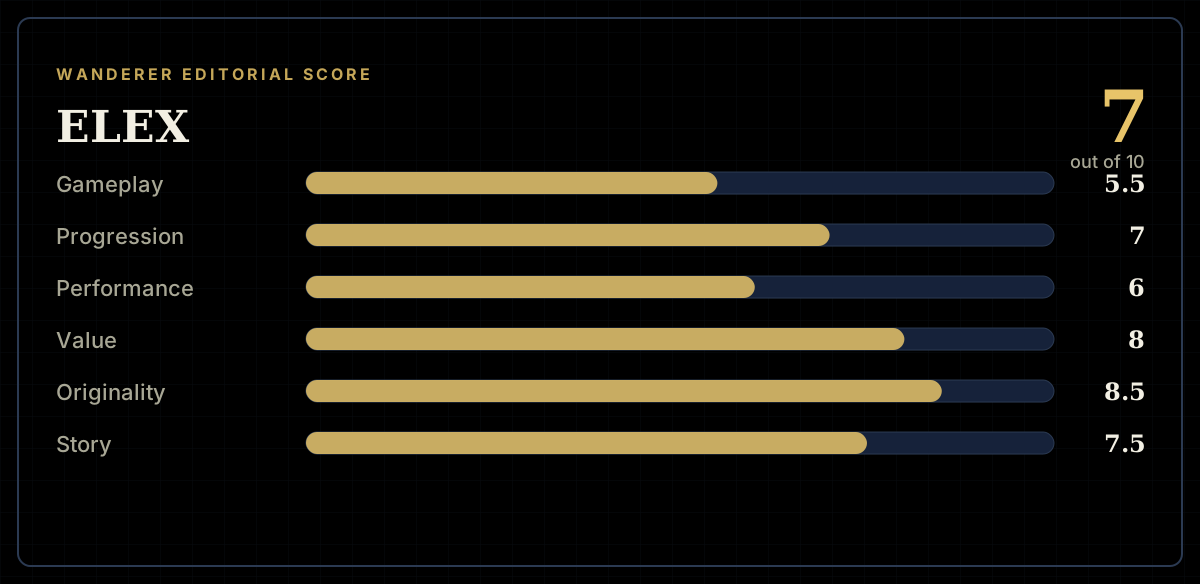
How the review scores each part of the gameWanderer Editorial -
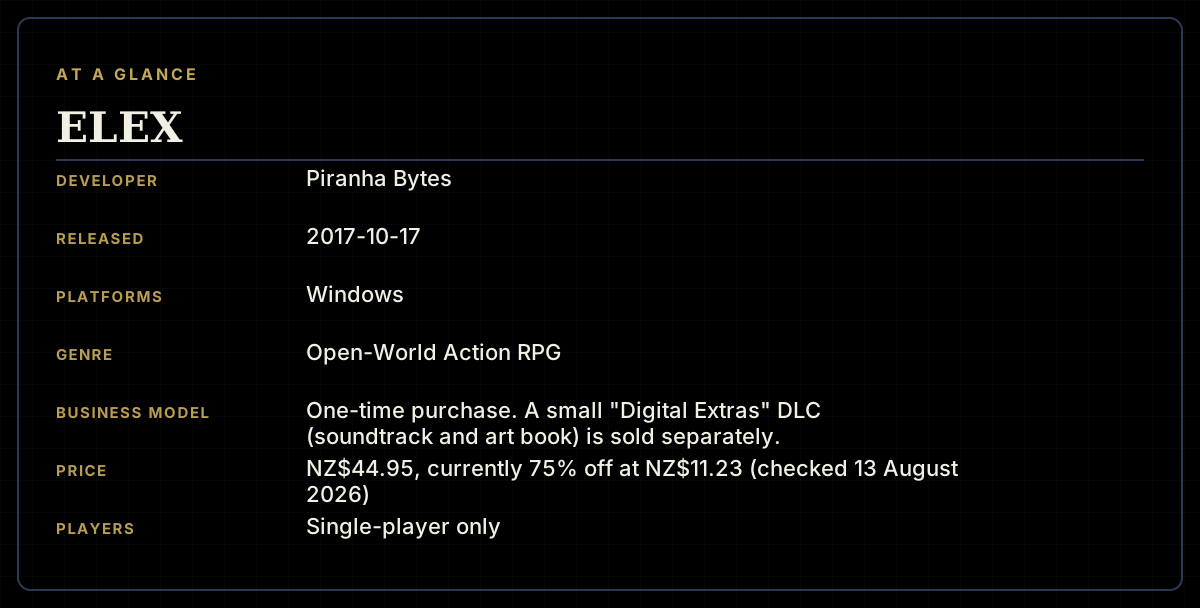
ELEX at a glanceWanderer Editorial -
The short versionWanderer Editorial