Game review
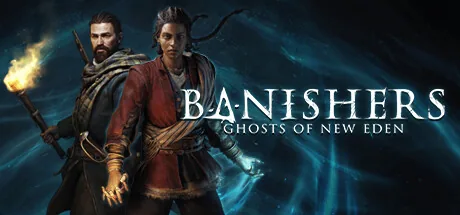
Banishers: Ghosts of New Eden
7 / 10
- Developer
- DON'T NOD
- Publisher
- Focus Entertainment
- Released
- 12 February 2024
- Platforms
- Windows
- Genre
- Action RPG
- Monetisation
- One-time purchase, no in-game microtransactions
- Players
- Single-player only
The short version
Banishers: Ghosts of New Eden is a story-driven action RPG from DON'T NOD, published by Focus Entertainment, that follows Red and Antea — a ghost-hunting Banisher and his partner, now dead and clinging to existence as a ghost herself — across a haunted colonial-era version of 1695 New England. Released 12 February 2024, it sits at Very Positive across a substantial 4,059 English-language reviews (~85%), and the shape of that reception is unusually consistent: this review's read of both the negative and positive samples finds near-universal praise for the central relationship, the writing, and the moral weight of its choice system, set against an equally consistent complaint that the open world built to carry that story is simply larger than the game inside it actually needs. Reviewers with genuinely enormous playtime — several in the thousands of hours, some over 5,000 — describe a 15-to-20-hour emotionally driven character study stretched across a 40-to-50-hour open-world structure, with excessive traversal, thin enemy variety, and repetitive unavoidable combat cited as the price paid for that scale.
Biggest strengths
- The central relationship between Red and Antea draws consistently strong, specific praise as emotionally profound rather than merely well-executed, with reviewers citing it among the best story-driven games they've played
- Voice acting is repeatedly singled out as outstanding, distinct from generic "good performances" comments
- The moral choice system is credited by many reviewers with genuine difficulty and consequence, deliberately resisting an easy all-good or all-evil path in favour of a harder middle ground
Biggest weaknesses
- Reviewers across the sample, including several with thousands of hours logged, describe the open world as substantially larger than the story needs, with one calling it "SO — MUCH — PADDING" and another estimating the actual character-driven content at around 15 hours stretched across a 40-to-50-hour playthrough
- Combat draws a specific, recurring criticism: despite multiple equipment slots and character switching, several reviewers describe the underlying options as functionally reskins of each other rather than genuinely distinct playstyles
- Enemy variety is a consistent complaint, with reviewers citing as few as five to seven distinct enemy types recycled throughout the entire game
Who it's for: Narrative RPG fans drawn to a serious, emotionally difficult central relationship and genuinely consequential moral choices; less suited to players who prioritise tight pacing and varied combat over story-first open-world scope.
Our recommendation: A genuinely excellent character-driven story wrapped in an open world several thousand hours' worth of its own most invested players wish were considerably smaller — worth playing for the writing and the relationship at its centre, with patience for the padding around it.
7 / 10
Introduction
Banishers: Ghosts of New Eden asks a genuinely difficult emotional question and builds an entire open-world action RPG around answering it: how far do you go to save someone you love, when saving them might cost everything else? Developed by DON'T NOD — the studio behind Life is Strange and Vampyr — and published by Focus Entertainment, it follows Red, a professional ghost-hunter called a Banisher, and Antea, his partner and fellow Banisher, now dead and existing as a ghost herself, as they hunt supernatural Hauntings across a colonial-era 1695 New England. Released 12 February 2024 for NZ$84.99, it sits at Very Positive across a substantial 4,059 English-language reviews (~85%). This review reads a large share of both the negative and positive samples, and finds a genuinely consistent story running through both: reviewers with staggering amounts of playtime logged — several in the thousands of hours, some past 5,000 — largely agree on what the game does brilliantly and what it does to excess.
A relationship reviewers keep calling among the best they've played
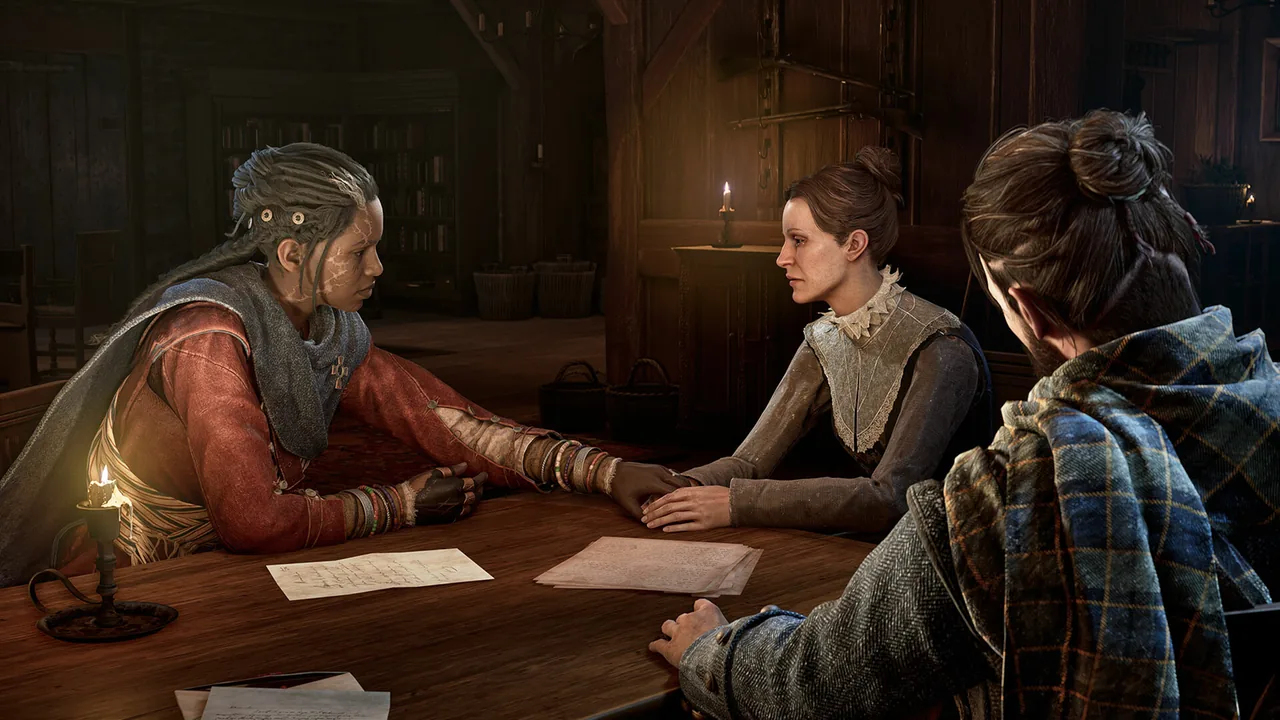
The single clearest throughline in this review's sample is how highly reviewers rate the central relationship between Red and Antea. One reviewer, with 3,915 hours logged across their broader history, called the narrative "exceptional... engaging and profound," specifically praising the game's world-building attention. Another, at 5,101 hours, called it simply "one of the best story based games I have ever played." That's not faint praise repeated by casual players — these are deeply experienced reviewers making a comparative claim against a large personal catalogue, and the consistency of that specific comparison across multiple independent, high-hour reviews is a stronger signal than any single glowing quote would be alone. Voice acting draws its own separate, repeated praise, distinct from the writing itself, and the 1695 New England setting is credited for being genuinely immersive rather than a generic historical backdrop.
Choices that reviewers say actually hurt — mostly
The game's moral choice system draws real, specific praise from a meaningful share of this review's sample: reviewers describe choices deliberately resisting an easy binary, pushing players toward a harder middle path rather than a clean all-good or all-evil route. One reviewer described having their "moral ground tasted" and warned other players to expect the same. That's a specific, credible description of well-designed moral difficulty rather than vague "choices matter" marketing language.
What makes this genuinely interesting, though, is that a separate, comparably-sized share of the same review sample disagrees sharply. Several reviewers describe the choice-and-consequence system as an illusion — predetermined "correct" answers dressed up as ambiguity rather than genuine moral weight. One detailed critique went further, arguing the investigation side of solving Hauntings is "completely absent" in practice: players simply pick up clues while the game spells out the conclusions for them, rather than requiring the player to actually piece anything together. That's a real, substantive disagreement inside the game's own audience about whether its signature system delivers what it promises — not a minor nitpick from a small minority, but a genuinely split verdict worth taking seriously in both directions.
An open world several thousand hours of players say is too big
If there's one thing this review's sample agrees on almost as strongly as the quality of the central story, it's that the open world built to hold it is oversized. The specific, repeated framing is worth dwelling on: this isn't players complaining the game is too long in the abstract, it's players identifying padding directly. One reviewer with 3,087 hours logged wrote "SO — MUCH — PADDING," specifically pointing at map markers leading to loot the player already knows they won't need. Another, at 4,104 hours, estimated the actual character-driven content at roughly 15 hours, "spread thin" across a much longer open-world structure, and reported lowering the difficulty from Hard to Story mode specifically to get through the padding faster — a telling detail, since that's not a player struggling with difficulty, it's a player trying to spend less time in combat they'd already decided wasn't adding value. A third reviewer, at 1,125 hours, put the fix bluntly: "Cutting 80% of the content out would make it better."
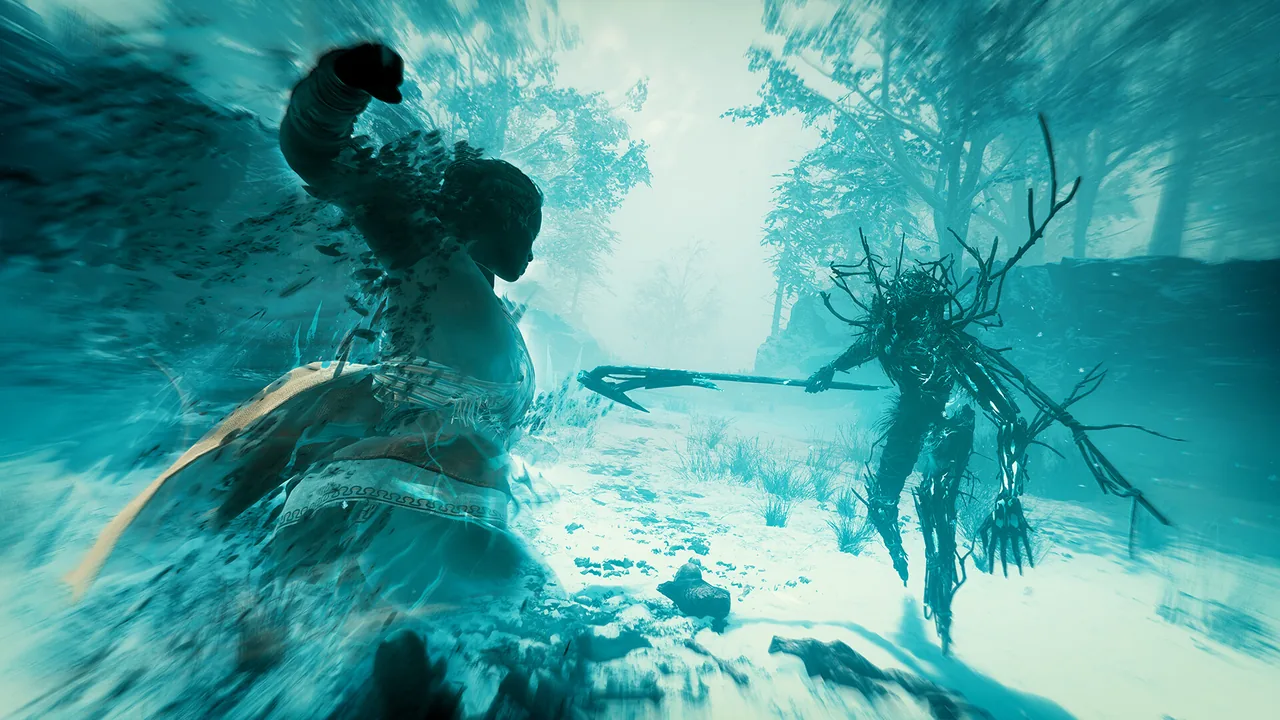
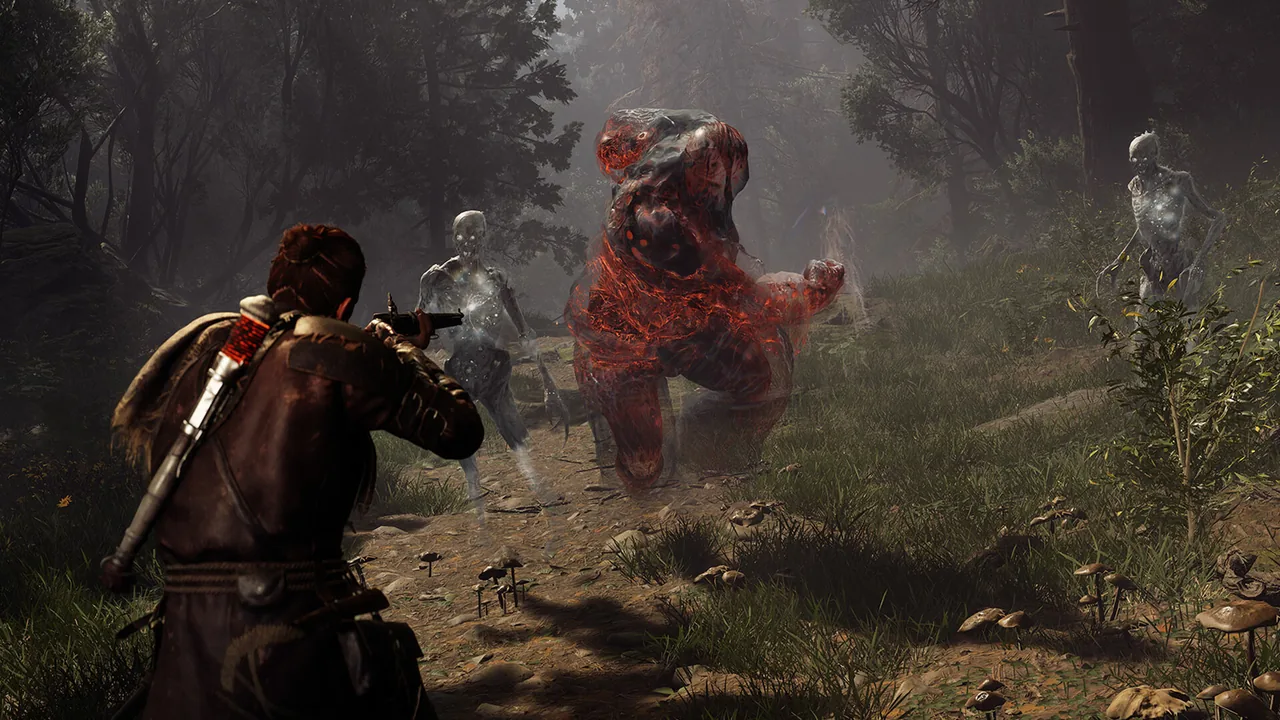
Combat itself draws a related but distinct complaint. Despite multiple equipment slots and the ability to switch between Red and Antea mid-fight, several reviewers describe the underlying options as functionally reskinned versions of each other rather than genuinely different playstyles — one reviewer with 2,785 hours logged put it directly: "despite there being 8 different equipment slots... fundamentally they are all reskins." Enemy variety compounds the problem, with reviewers citing as few as five to seven distinct enemy types recycled across the entire game. Notably, even a reviewer who ultimately loved the game, with 7,344 hours logged, described combat as "clunky" at first before it "clicks" — suggesting a real onboarding problem even for players who came around to it eventually.
Polish that reviewers don't take for granted
One more theme worth naming because it's specific rather than generic: reviewers repeatedly credit Banishers with shipping in a genuinely finished, stable state, free of the bugs that plague many open-world releases of comparable scale — and several specifically call out the absence of microtransactions and invasive DRM as a respectful choice for a full-price release rather than something to be assumed. In a genre where "surprisingly polished at launch" has become its own kind of praise, that's a real point in the game's favour distinct from anything about its story or combat.
Final Verdict
Banishers: Ghosts of New Eden succeeds decisively at the hardest thing a story-driven RPG can attempt: reviewers across an enormous, deeply invested sample consistently describe its central relationship and writing as genuinely exceptional, not merely competent. What holds it back from an even stronger recommendation is a structural mismatch its own most dedicated players identify specifically and repeatedly — an open world built at a scale the character-driven story underneath it doesn't need, with combat and enemy variety too thin to justify the extra hours that scale adds. The choice system that's meant to be the game's other pillar draws real, split verdicts from experienced players on whether it delivers genuine moral weight or an illusion of it. Taken together, this reads as a genuinely excellent 15-to-20-hour character study that chose to become a 40-to-50-hour open world — worth playing for what it does brilliantly, with patience for the considerable padding built around it.
Pros and cons
Pros
- The central relationship between Red and Antea draws consistently strong, specific praise as emotionally profound rather than merely well-executed, with reviewers citing it among the best story-driven games they've played
- Voice acting is repeatedly singled out as outstanding, distinct from generic "good performances" comments
- The moral choice system is credited by many reviewers with genuine difficulty and consequence, deliberately resisting an easy all-good or all-evil path in favour of a harder middle ground
- Ships with no microtransactions and no invasive DRM, drawn out specifically by reviewers as a respectful choice for a full-price release
Cons
- Reviewers across the sample, including several with thousands of hours logged, describe the open world as substantially larger than the story needs, with one calling it "SO — MUCH — PADDING" and another estimating the actual character-driven content at around 15 hours stretched across a 40-to-50-hour playthrough
- Combat draws a specific, recurring criticism: despite multiple equipment slots and character switching, several reviewers describe the underlying options as functionally reskins of each other rather than genuinely distinct playstyles
- Enemy variety is a consistent complaint, with reviewers citing as few as five to seven distinct enemy types recycled throughout the entire game
- The choice-and-consequence system draws a real, direct counter-complaint from a separate share of reviewers, who describe it as an illusion — predetermined "correct" answers rather than genuine moral ambiguity — directly contesting the praise the same system receives elsewhere in the sample
Screenshots
-
Banishers: Ghosts of New EdenImage: Focus Entertainment via Steam -
Banishers: Ghosts of New EdenImage: Focus Entertainment via Steam -
Banishers: Ghosts of New EdenImage: Focus Entertainment via Steam -
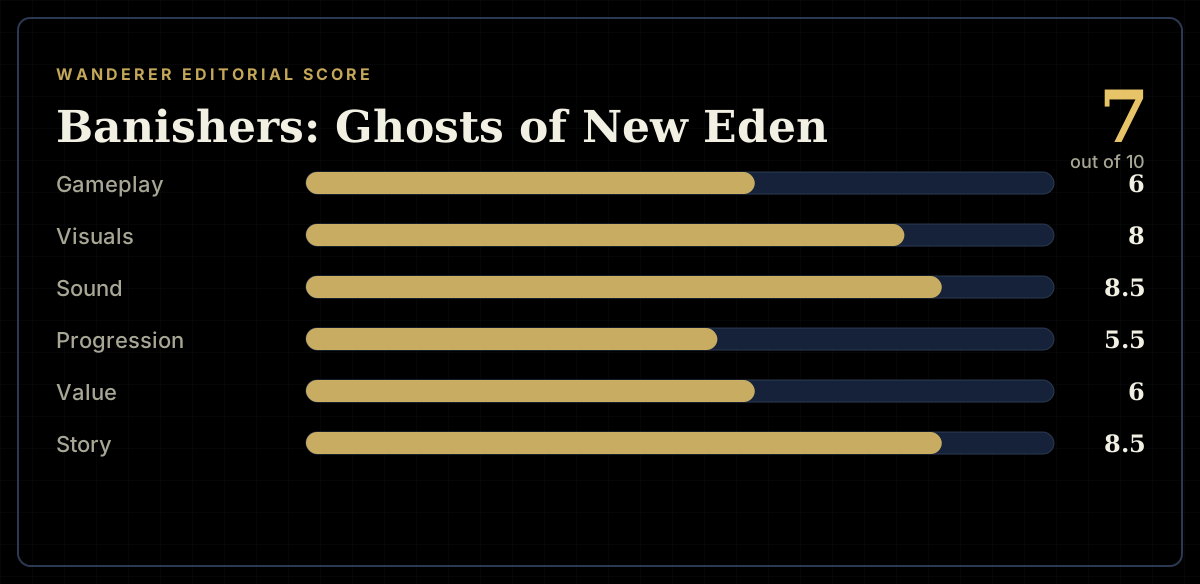
How the review scores each part of the gameWanderer Editorial -
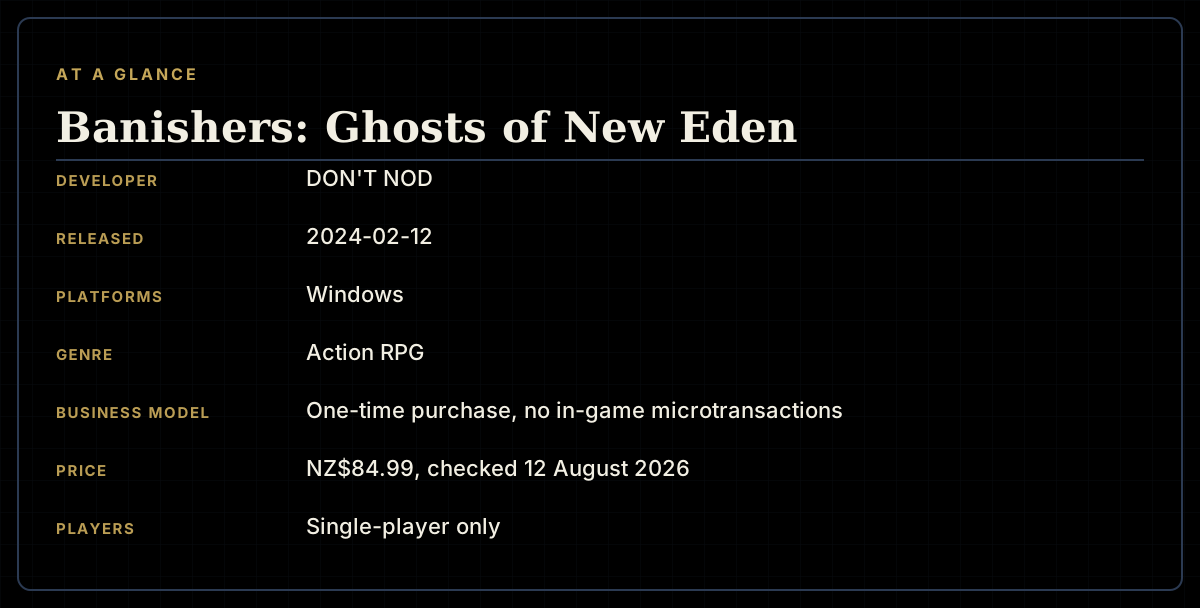
The essentials at a glanceWanderer Editorial -
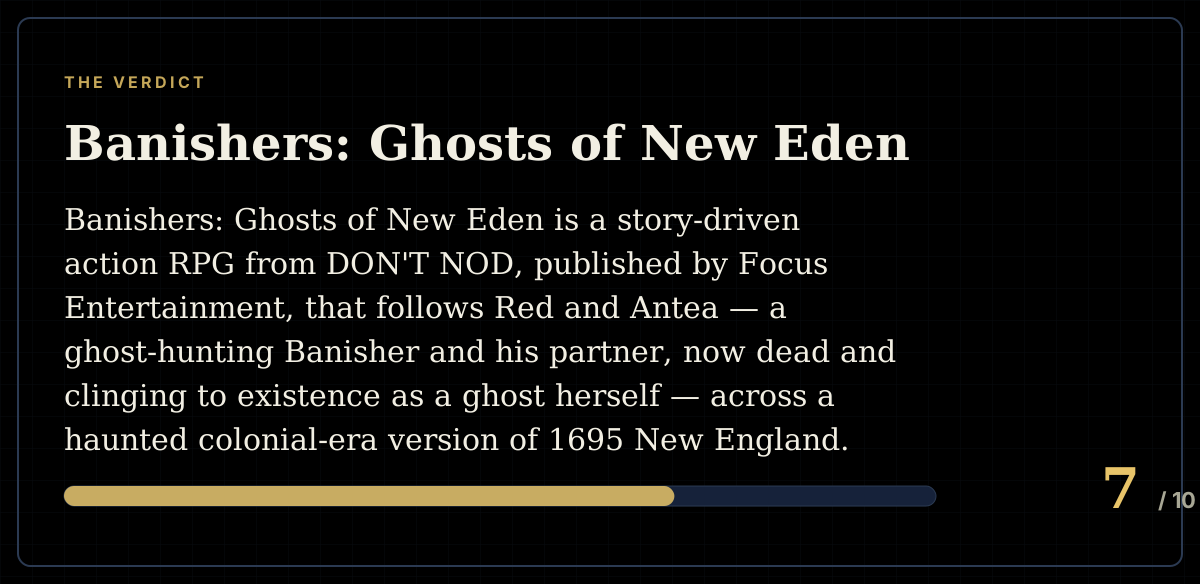
The short versionWanderer Editorial