
Game review
APE OUT
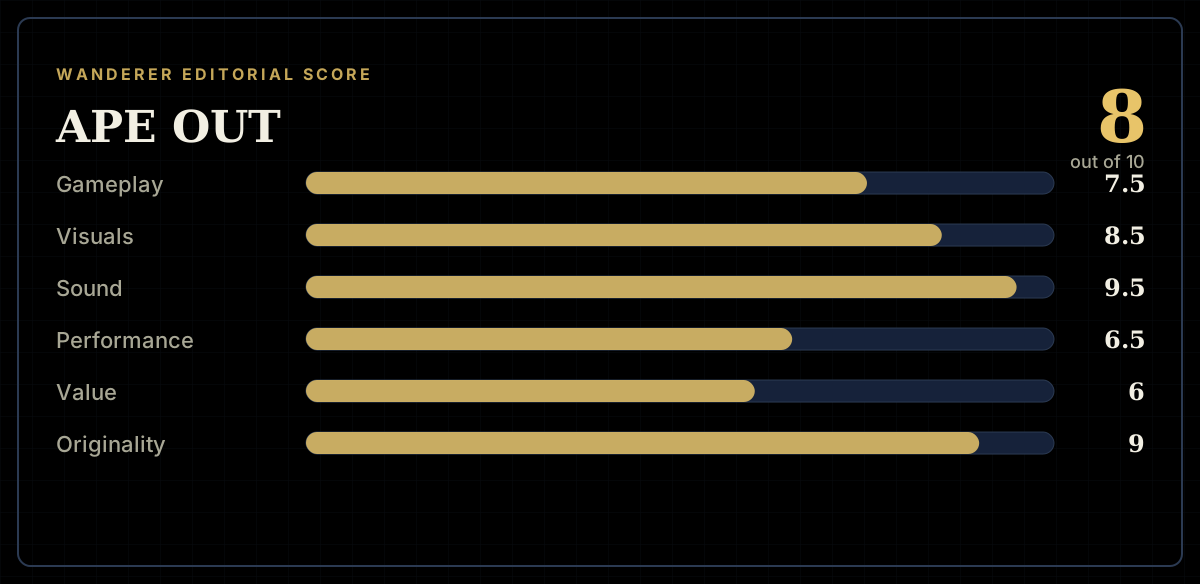
8 / 10
- Developer
- Gabe Cuzzillo, Bennett Foddy, Maxi Boch
- Publisher
- Devolver Digital
- Released
- 28 February 2019
- Platforms
- Windows, macOS
- Genre
- Action, Top-Down Beat-'em-up
- Monetisation
- One-time purchase, no DLC
- Players
- Single-player
The short version
APE OUT is a short, ferociously stylish smash-'em-up: you're a captive gorilla smashing through four procedurally reshuffled levels toward the exit, every impact and gunshot slotting into a live jazz-drum score that reacts to what you're doing rather than playing over it. Since its 28 February 2019 release it's held an Overwhelmingly Positive 95% across 2,763 reviews, a figure recent sentiment (94 of the last 100 English reviews positive) hasn't dented. Its detailed critics, a small but consistent minority, make one specific argument worth taking seriously: the same procedural level generation that keeps each run visually fresh also strips out the practice-and-master loop this genre usually rewards, since no failed attempt teaches you anything reusable about the next one.
Biggest strengths
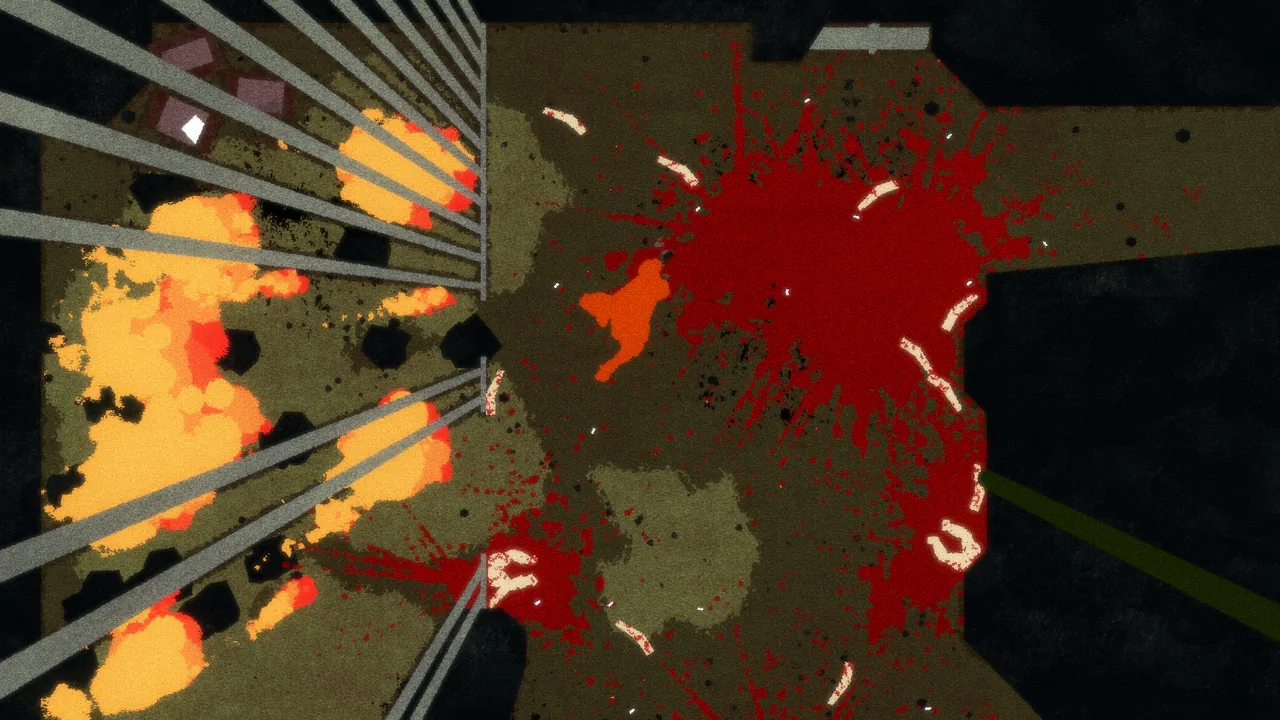
- A genuinely distinctive audiovisual identity — bold flat colour-blocked violence scored by a live, reactive jazz drum track — that draws praise from nearly every review, positive or negative
- Combat feel and the core "grab, throw, smash" moveset are widely called tight and immediately satisfying, translating the chaos on screen into real, learnable player skill even without memorised layouts
- Short enough to respect a limited time budget: the achievement for completing the game sits at 26.3%, well above what short, hard action games typically see, suggesting most buyers who start it do finish it
Biggest weaknesses
- The most repeated, substantive negative theme is that procedural level randomisation undercuts the genre's usual mastery loop — one detailed negative asks directly, "why the hell would a game like this have generated levels? Trying to practice and perfect a run is the whole point of these types of games, you ruined it" — and several others independently make the same argument in their own words
- A specific, named PC port issue: the game defaults to your monitor's highest refresh rate but is capped to a 60fps simulation rate, causing stutter on any refresh rate that isn't a clean multiple of 60Hz (one detailed reviewer measured 144Hz stuttering down to an effective 48fps); a windowed-borderless-at-60Hz workaround exists but shouldn't be necessary
- Multiple reviewers independently report a specific progress-blocking bug — unable to advance past the first level/"disk" — with at least one saying Steam support couldn't resolve it and declined a refund; this review could not confirm whether the bug has since been patched
Who it's for: Players who want a short, audiovisually spectacular, high-intensity action game they can finish in one or two sittings, and who don't need a memorisable, masterable layout to feel satisfied by improvement. A poor fit for genre fans coming from Hotline Miami-style games specifically for the "learn the level, execute the perfect run" loop, since APE OUT's randomisation works directly against that.
Our recommendation: Recommended, especially at a discount given its short length relative to price. Go in expecting a tight one-sitting experience built on style and feel rather than a deep, replayable skill ladder, and note the PC-specific frame-pacing issue below if you run a non-60Hz-multiple monitor.
8 / 10
APE OUT commits to a single, ferocious idea and gets out before it wears thin: you're a gorilla breaking out of captivity, smashing through waves of armed guards across four settings, with every impact, throw and gunshot slotting into a live, reactive jazz-drum score instead of playing under a fixed soundtrack. Devolver Digital published it on 28 February 2019 from a tiny team — Gabe Cuzzillo, Bennett Foddy (of QWOP and Getting Over It) and Maxi Boch — and it's held an Overwhelmingly Positive 95% across 2,763 reviews ever since, with recent sentiment (94 of the last 100 English reviews) landing almost exactly on that lifetime number. This is a game whose reputation was made in its first weeks and hasn't moved since.
The randomisation argument, made specifically and repeatedly
APE OUT's levels are procedurally reshuffled on every attempt, and its small negative corpus converges on a single, well-argued objection to that choice. "Why the hell would a game like this have generated levels?" asks one 10-vote negative. "Trying to practice and perfect a run is the whole point of these types of games, you ruined it." A longer, 35-vote review makes the same case with more detail, arguing the game "seriously suffers from its procedural generation" because it removes the ability to learn a specific layout and improve against it — the loop that games like Hotline Miami, which several reviewers name directly by comparison, are built around. This isn't a complaint about difficulty or content; it's a specific, structural argument about what randomisation costs a game whose core appeal is supposed to be masterable execution, and it shows up independently across enough reviews to be a real design conversation rather than one person's pet peeve.
Two concrete technical complaints worth flagging
Beyond the design argument, two specific, reproducible technical issues surface in the corpus. An 82-vote review pins down a PC-specific frame-pacing bug in detail: the game defaults to your monitor's full refresh rate while its simulation is capped at 60fps, so any refresh rate that isn't a clean multiple of 60Hz stutters — measured at an effective 48fps on a 144Hz panel, with a windowed-borderless-at-60Hz workaround the reviewer had to find themselves. Separately, at least two independent reviewers report a bug that blocks progress past the very first level or "disk," with one saying Steam support couldn't resolve it and the refund window had closed by the time they gave up trying. This review found no way to confirm whether either issue persists in the current build years of patches later, so both are reported as documented historical complaints rather than confirmed live bugs — but they're specific and reproducible enough to be worth a buyer's attention regardless.
What lands even for the critics
Nearly every review, positive or negative, agrees on the same strengths: the audiovisual identity is genuinely singular, the "grab, throw, smash" moveset feels immediately good in the hand, and the whole thing is short enough that even its harshest critics tend to finish it rather than abandon it — the completion-tier achievement sits at 26.3%, a notably high figure for a hard action game, and far above what a long, grind-heavy title would show. Reviewers who push into the optional Arcade Hard modes hit a real wall, though: those achievements cluster at 0.5-0.7% completion, a steep cliff after the relatively accessible base campaign.
Final verdict
APE OUT is a confident, compact, audiovisually distinctive smash-'em-up that earns its Overwhelmingly Positive score through sheer identity and feel rather than depth or longevity — and its own detailed critics make a genuinely good-faith case that the procedural generation meant to keep it fresh instead undercuts the genre's usual sense of mastery. Buy it for a couple of hours of something you won't have played before, note the refresh-rate workaround if your monitor isn't 60Hz-friendly, and don't expect a level you can learn to run perfectly, because the game won't let you try the same one twice.
Pros and cons
Pros
- A genuinely distinctive audiovisual identity — bold flat colour-blocked violence scored by a live, reactive jazz drum track — that draws praise from nearly every review, positive or negative
- Combat feel and the core "grab, throw, smash" moveset are widely called tight and immediately satisfying, translating the chaos on screen into real, learnable player skill even without memorised layouts
- Short enough to respect a limited time budget: the achievement for completing the game sits at 26.3%, well above what short, hard action games typically see, suggesting most buyers who start it do finish it
- A confident, singular creative vision from a small team (Gabe Cuzzillo, Bennett Foddy of QWOP/Getting Over It fame, and Maxi Boch) that reviewers credit for the game's coherence despite its brevity
- Recent English-language sentiment (94 of the last 100 reviews positive) matches the 95% lifetime figure closely, indicating a stable, still-loved reputation rather than a cooling one
Cons
- The most repeated, substantive negative theme is that procedural level randomisation undercuts the genre's usual mastery loop — one detailed negative asks directly, "why the hell would a game like this have generated levels? Trying to practice and perfect a run is the whole point of these types of games, you ruined it" — and several others independently make the same argument in their own words
- A specific, named PC port issue: the game defaults to your monitor's highest refresh rate but is capped to a 60fps simulation rate, causing stutter on any refresh rate that isn't a clean multiple of 60Hz (one detailed reviewer measured 144Hz stuttering down to an effective 48fps); a windowed-borderless-at-60Hz workaround exists but shouldn't be necessary
- Multiple reviewers independently report a specific progress-blocking bug — unable to advance past the first level/"disk" — with at least one saying Steam support couldn't resolve it and declined a refund; this review could not confirm whether the bug has since been patched
- Length-to-price complaints are common and specific: several reviewers report finishing the entire game in roughly 90 minutes to two hours, and more than one explicitly calls the NZ$21.99 asking price steep for that runtime
- Reviewers who beat the base game and pursue the harder "Arcade" achievement modes hit a wall fast — those achievements sit at 0.5-0.7% completion, an extremely steep jump from the 26.3% base-completion rate that signals a real difficulty cliff for anyone chasing full completion
Screenshots
-

APE OUTImage: Devolver Digital via Steam -
APE OUTImage: Devolver Digital via Steam -

APE OUTImage: Devolver Digital via Steam -
How the review scores each part of the gameWanderer Editorial -
The short versionWanderer Editorial