
Game review
Space Roguelike Adventure
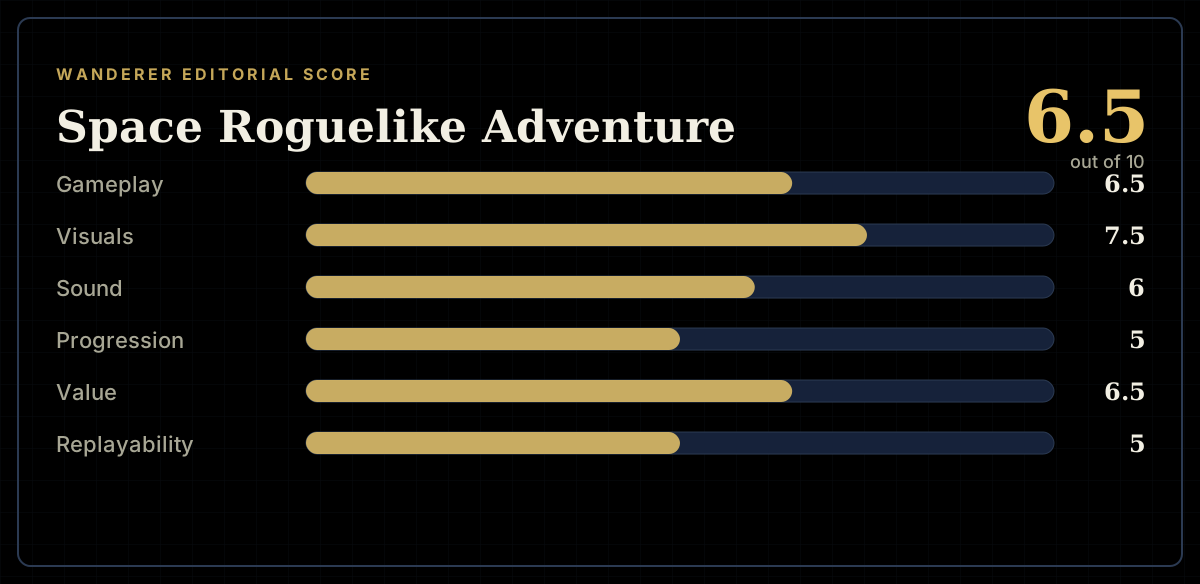
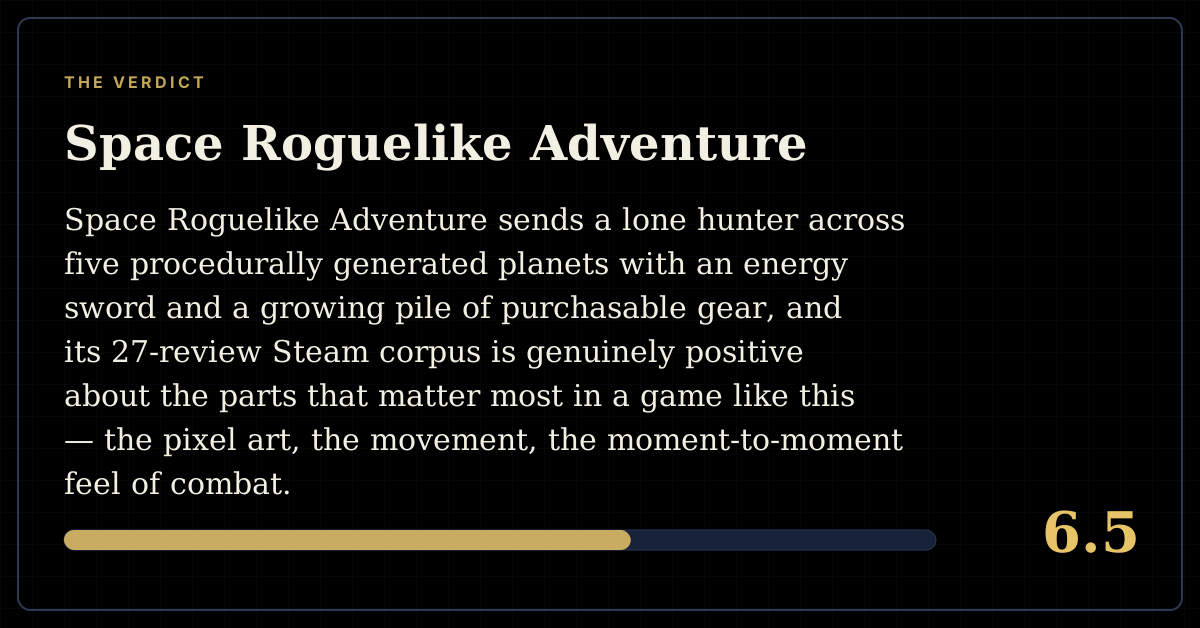
6.5 / 10
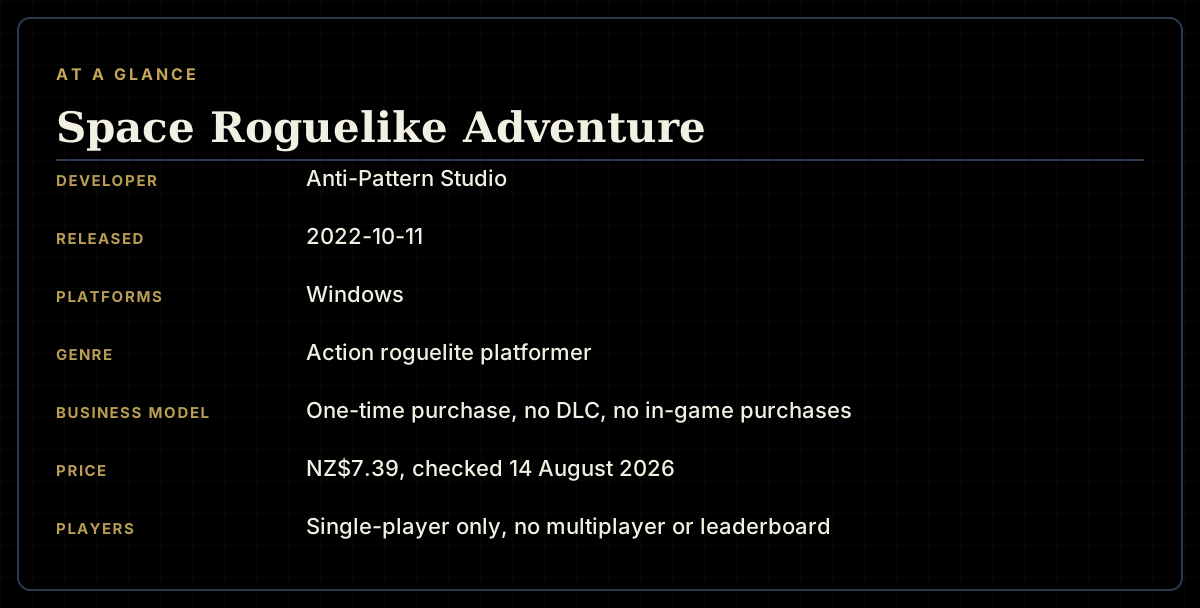
- Developer
- Anti-Pattern Studio
- Publisher
- ChiliDog Interactive
- Released
- 11 October 2022
- Platforms
- Windows
- Genre
- Action roguelite platformer
- Monetisation
- One-time purchase, no DLC, no in-game purchases
- Players
- Single-player only, no multiplayer or leaderboard
The short version
Space Roguelike Adventure sends a lone hunter across five procedurally generated planets with an energy sword and a growing pile of purchasable gear, and its 27-review Steam corpus is genuinely positive about the parts that matter most in a game like this — the pixel art, the movement, the moment-to-moment feel of combat. It's less convincing as the roguelike its title claims to be, its five worlds start to blur together by the back half, and the purchase-gated weapon ladder gives reviewers more to grind through than to strategise around. A likeable, competently made small game that doesn't quite live up to its most enthusiastic reviews.
Biggest strengths
- Combat feel and movement draw specific, repeated praise across the review corpus — "addictive," "satisfying arcade-style combat," "smooth and feels good"
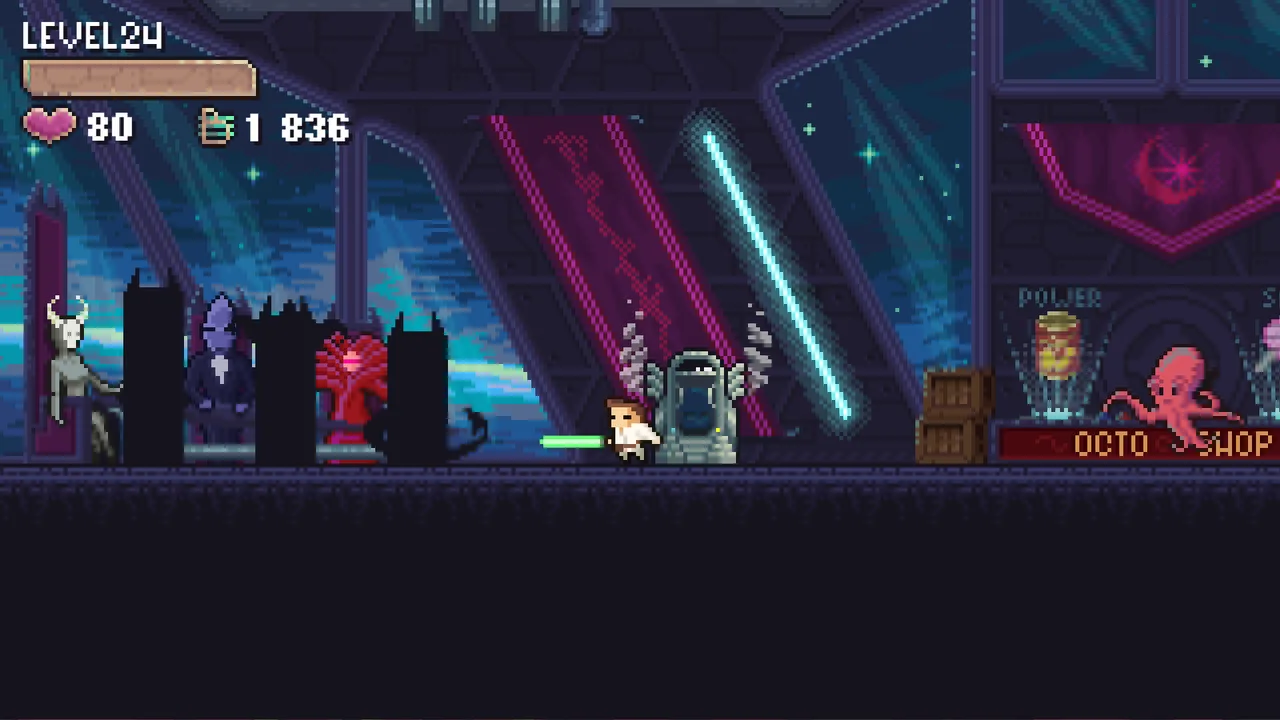
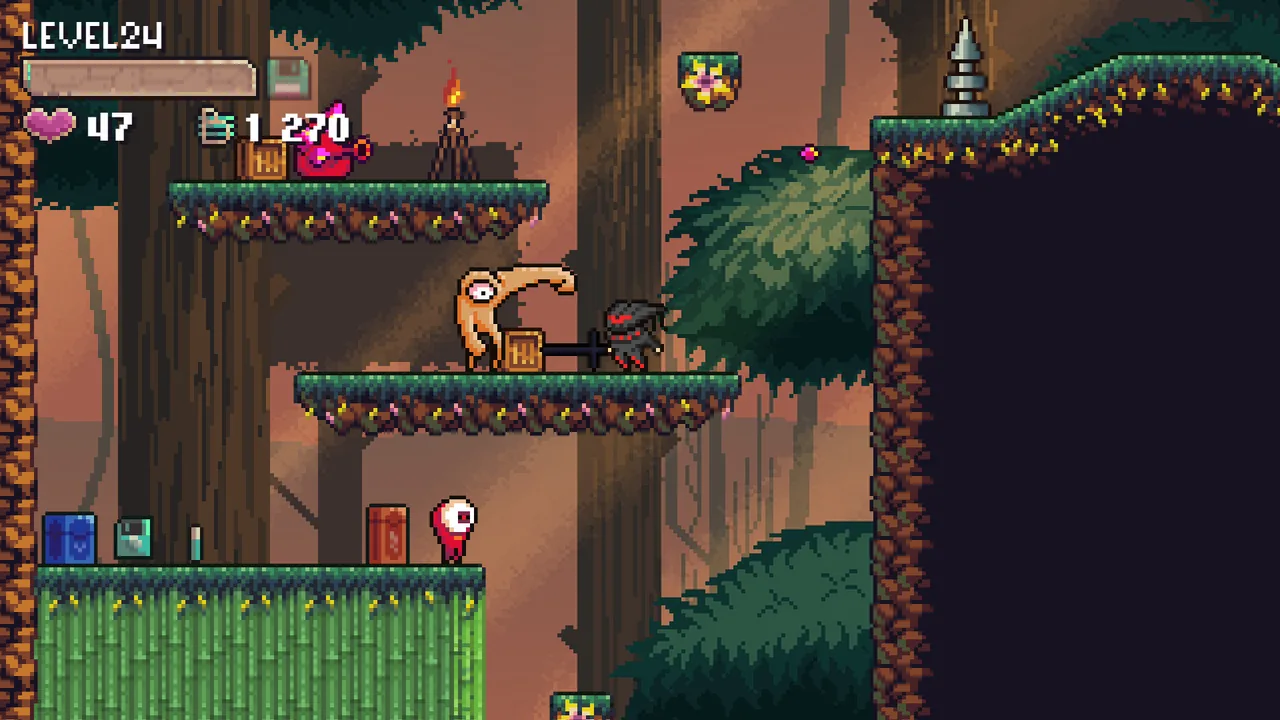
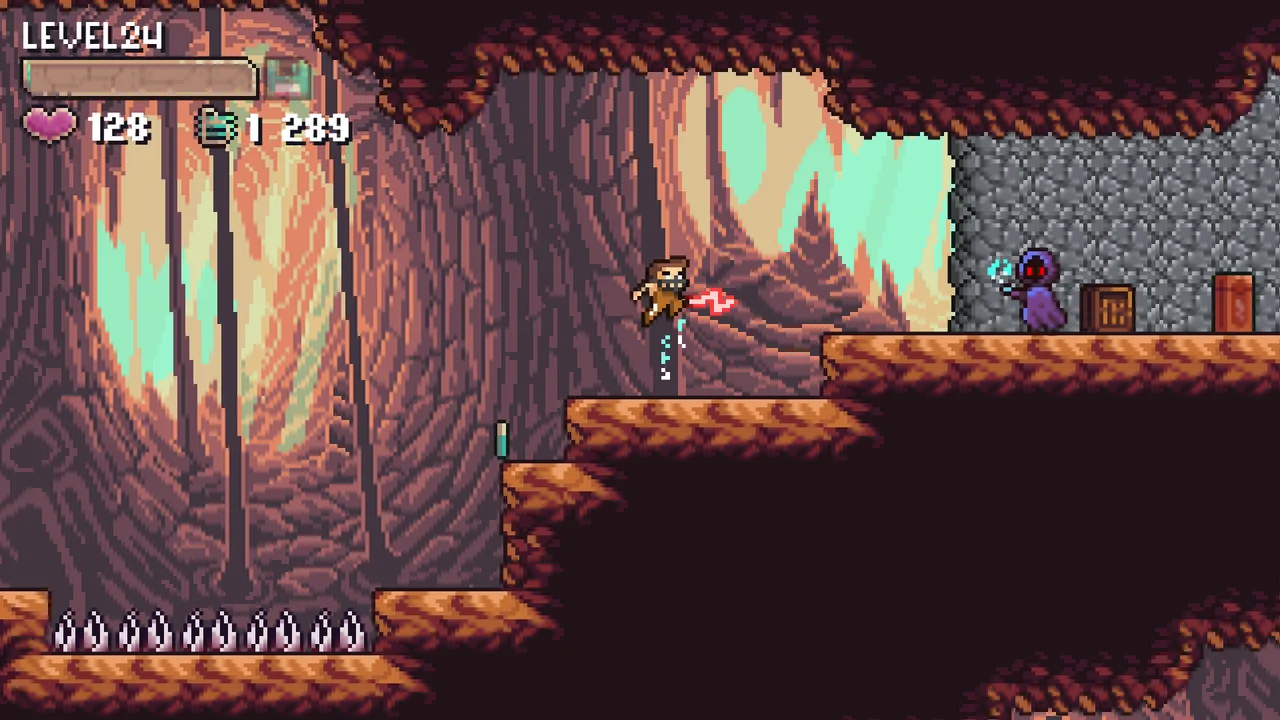
- The pixel art is consistently singled out as the game's strongest asset, with a distinct moody sci-fi aesthetic across its planets rather than generic tilesets
- Reviewers who go in expecting little report being pleasantly surprised, and the price-to-content ratio is called fair or better by multiple independent voices
Biggest weaknesses
- The weapon-upgrade system is purchase-gated and linear — reviewers who logged the most time report that new weapons mostly just do slightly more damage rather than playing differently, with no weapon synergies to plan around
- Several reviewers call the loop grindy, since new gear has to be bought in a fixed order and some of the pricier options slow down attack speed rather than clearly improving it
- Two reviewers push back specifically on the "roguelike" label — there's no run-ending permadeath loop with randomised meta-progression, players can choose their starting point, and progress persists in ways that read closer to a roguelite or a straightforward platformer with procedural level layouts
Who it's for: Fans of tight, arcade-style pixel platformers who want something they can finish in an evening or two and don't need a deep meta-progression system to stay hooked.
Our recommendation: A fair buy at NZ$7.39 for genre fans, especially with a Steam Deck or controller in hand. Go in expecting a short, well-presented action-platformer rather than a true roguelike with permanent stakes.
6.5 / 10
A prison planet's protective barrier gets smashed, galactic criminals scatter across five worlds, and a young hunter with an energy sword goes after them — that's the entire premise of Space Roguelike Adventure, and the game doesn't ask for much more than that to get moving. Anti-Pattern Studio launched it on 11 October 2022 after a Steam Next Fest appearance the week before, and the 27 reviews it's collected since sit at a genuinely healthy 81% positive, built almost entirely on praise for how the thing actually feels to play.
Where the praise is specific
That's worth dwelling on, because vague positivity is easy to write off and this corpus isn't vague. Reviewers independently call out the same handful of things: the pixel art's distinct, slightly moody sci-fi identity rather than reused tileset assets; movement and energy-sword combat that reads as "smooth," "satisfying" and "addictive" across multiple unrelated reviews; and a difficulty curve more than one person calls fair. One reviewer bought the game specifically for its music. Another, who admits going in with low expectations after letting it sit unplayed for a while, calls it "a lot of fun" despite reservations about pacing. None of that reads as manufactured enthusiasm — it's the kind of specific, varied praise that tends to mean a small team actually nailed the moment-to-moment feel of their game, which for an arcade platformer is most of the job.
A grindy ladder instead of a build
Where the corpus turns critical is progression. New weapons and gear have to be bought in a fixed order rather than found or chosen, and the most detailed review in the set — from a player with over two and a half hours in — reports that the nine weapons they'd unlocked by that point differed visually but were "essentially the same" mechanically, each just mildly ahead of the last on damage. There's no synergy system layering abilities together, which several reviewers frame as a missed opportunity rather than a deliberate simplicity. One negative review sums the whole issue up bluntly: "nice and fun idea with a mediocre execution... boring upgrade system, repetitive content." The five procedurally generated planets don't do enough to disguise the repetition either — distinct dressing over what more than one reviewer describes as fundamentally similar level structure and enemy patterns.
There's also a naming argument worth passing on honestly rather than adjudicating. Two reviewers push back specifically on calling this a "roguelike": there's no run-ending permadeath loop with randomised meta-progression between attempts, players can select their own starting point on a planet, and progress persists in ways that read closer to a roguelite, or arguably just a platformer with procedurally generated layouts. Whether that distinction matters to a given player is a matter of taste, but it's a fair complaint about expectation-setting on the store page.
What the achievement curve says
Global achievement data backs up the shape the reviews describe. Several early-game achievements sit above 85% completion, but the numbers for what appear to be later-stage milestones drop to roughly 12-18% — a real difficulty or attrition wall rather than a flat, evenly-paced game. Combined with a Russian-language negative review specifically asking for a dodge or roll option that isn't present, and an English review reporting combat that feels like it's running under 30 frames per second despite a normal on-screen counter, there's a credible pattern here: the early planets are polished and fun, and something — difficulty, repetition, or friction in the combat itself — thins the audience out well before the credits.
Final verdict
Space Roguelike Adventure earns its Positive badge honestly. The pixel art and the core combat feel are the real thing, praised specifically and independently by enough different reviewers that it isn't a coincidence, and a February 2023 patch shows the developer stuck around past launch week. What holds it back from a stronger recommendation is everything built on top of that foundation: a purchase-gated weapon ladder with little strategic depth, five planets that blur together by the end, and a title that promises more permanence and randomness than the actual design delivers. At NZ$7.39 it's an easy, low-risk pickup for anyone who wants a short, good-looking action-platformer and isn't hunting for a deep roguelike underneath the name.
Pros and cons
Pros
- Combat feel and movement draw specific, repeated praise across the review corpus — "addictive," "satisfying arcade-style combat," "smooth and feels good"
- The pixel art is consistently singled out as the game's strongest asset, with a distinct moody sci-fi aesthetic across its planets rather than generic tilesets
- Reviewers who go in expecting little report being pleasantly surprised, and the price-to-content ratio is called fair or better by multiple independent voices
- Steam Achievements (16) and full controller support are both present, and the game was featured in Steam Next Fest ahead of its October 2022 launch
- The developer shipped at least one substantive post-launch patch in February 2023, a real if modest commitment beyond a day-one release
Cons
- The weapon-upgrade system is purchase-gated and linear — reviewers who logged the most time report that new weapons mostly just do slightly more damage rather than playing differently, with no weapon synergies to plan around
- Several reviewers call the loop grindy, since new gear has to be bought in a fixed order and some of the pricier options slow down attack speed rather than clearly improving it
- Two reviewers push back specifically on the "roguelike" label — there's no run-ending permadeath loop with randomised meta-progression, players can choose their starting point, and progress persists in ways that read closer to a roguelite or a straightforward platformer with procedural level layouts
- The five planets are described by more than one reviewer as visually distinct but mechanically repetitive, amounting to "pretty much the same" content reskinned five times
- One reviewer reports combat feeling like it's running under 30 fps despite a normal on-screen framerate counter, and a separate reviewer specifically asks for a dodge or roll option that the game doesn't currently offer
- Global achievement data shows a real difficulty curve — completion sits above 85% for several early achievements but drops to roughly 12-18% for what appear to be the game's later-stage milestones, meaning most buyers don't see everything on offer
Screenshots
-
Space Roguelike AdventureImage: ChiliDog Interactive via Steam -
Space Roguelike AdventureImage: ChiliDog Interactive via Steam -
Space Roguelike AdventureImage: ChiliDog Interactive via Steam -
How the review scores each part of the gameWanderer Editorial -
The game at a glanceWanderer Editorial -
The short versionWanderer Editorial