Game review
Pixel Survivors: Roguelike
5.5 / 10
- Developer
- Amrita
- Publisher
- Amrita
- Released
- 30 June 2022
- Platforms
- Windows
- Genre
- Bullet-heaven survivor roguelite
- Monetisation
- One-time purchase, no DLC, no in-game purchases
- Players
- Single-player only, no multiplayer or leaderboard
The short version
Pixel Survivors: Roguelike puts a small pixel hero in an empty arena and buries them in escalating waves of monsters, upgrading skills between fights until the screen is a wall of numbers and sprites — the exact shape of Vampire Survivors, and its own reviewers say so constantly. Nineteen of the fifty-two most-helpful English negatives name Vampire Survivors directly, several call the assets themselves reused wholesale from other games, and the developer's public patch history stops cold the day 1.0 shipped in February 2023, with the studio's news feed since used only to promote two unrelated new releases. None of that stops it having a real, high-playtime fanbase who find it cheap, chaotic fun regardless of where the ideas came from.
Biggest strengths
- The core bullet-heaven loop — auto-attacking through escalating monster waves while picking upgrades between fights — is functional and delivers the genre's core chaos-and-power-fantasy appeal, according to reviewers with genuinely high playtimes (several past 20-30 hours)
- Very cheap at NZ$6.95, and even reviewers who dislike the game specifically say the price is fair for what's there
- 118 Steam Achievements give committed players real long-term goals, and one detailed achievement-hunter review estimates around 30 hours to 100%
Biggest weaknesses
- 19 of the 52 most-helpful English-language negative reviews name Vampire Survivors directly, and several go further, describing specific art and sound assets as recognisably reused from other games rather than original work
- Skills and upgrades are repeatedly described as lacking synergy — items and abilities function independently rather than combining, which several reviewers contrast unfavourably with genre leaders that reward build-crafting
- No in-run map, compass or codex exists to guide players toward points of interest or explain what upgrades actually do, a gap named independently by reviewers two years apart (2022 and 2024)
Who it's for: Genre completionists and budget-conscious bullet-heaven fans who've already exhausted better-known entries and want more of the same formula cheaply, without expecting anything the genre hasn't already offered.
Our recommendation: A reasonable NZ$6.95 pickup if you specifically want another Vampire Survivors-shaped game and have already played the more original entries in the genre. Skip it if originality or post-launch support matter to your buying decision.
5.5 / 10
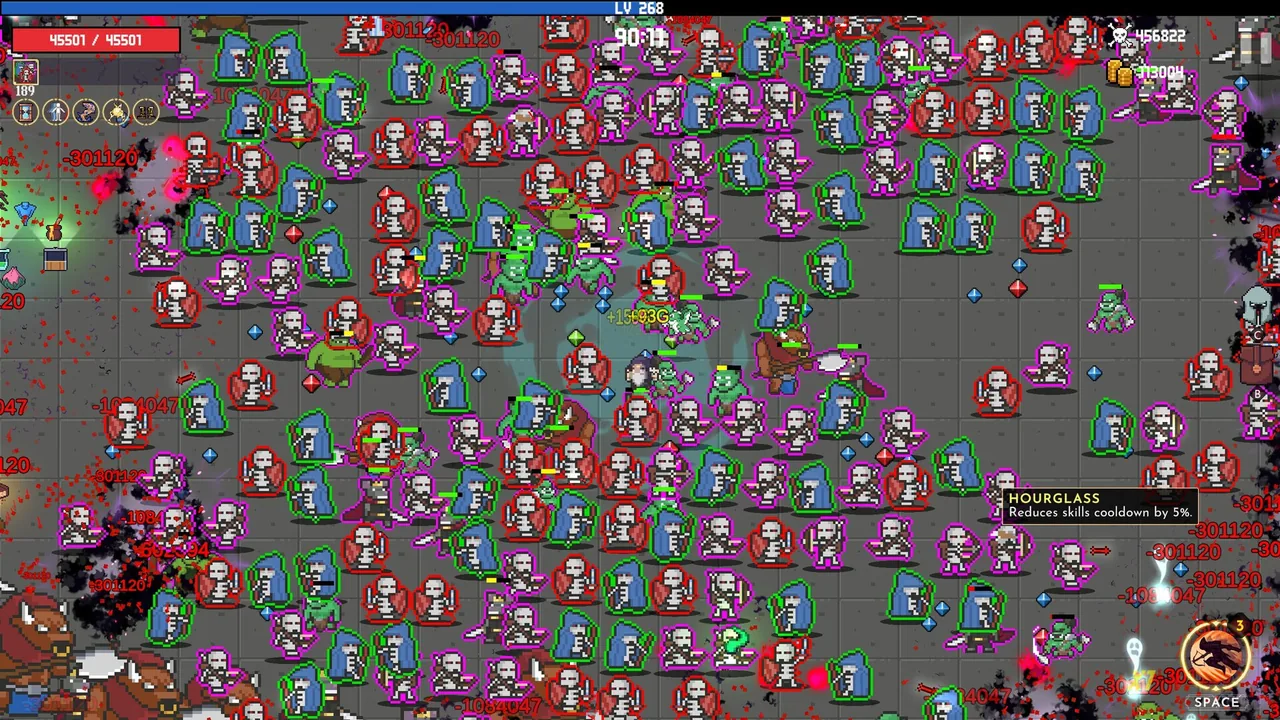
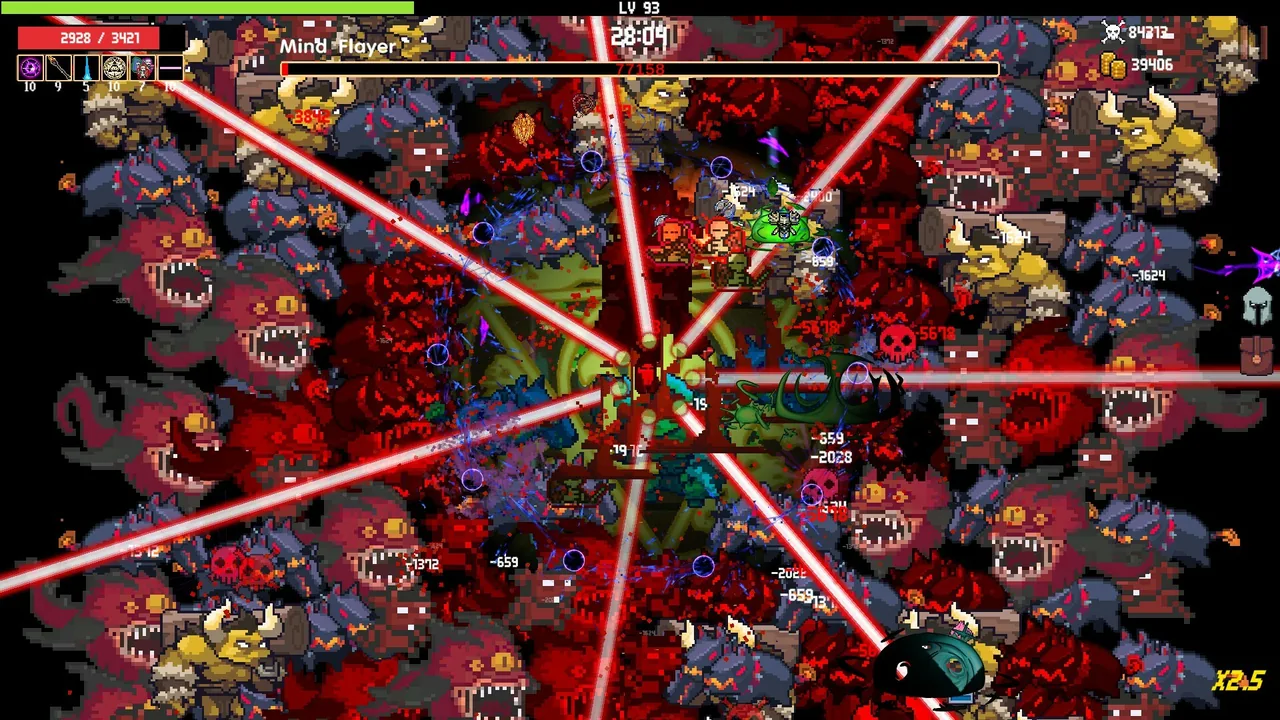
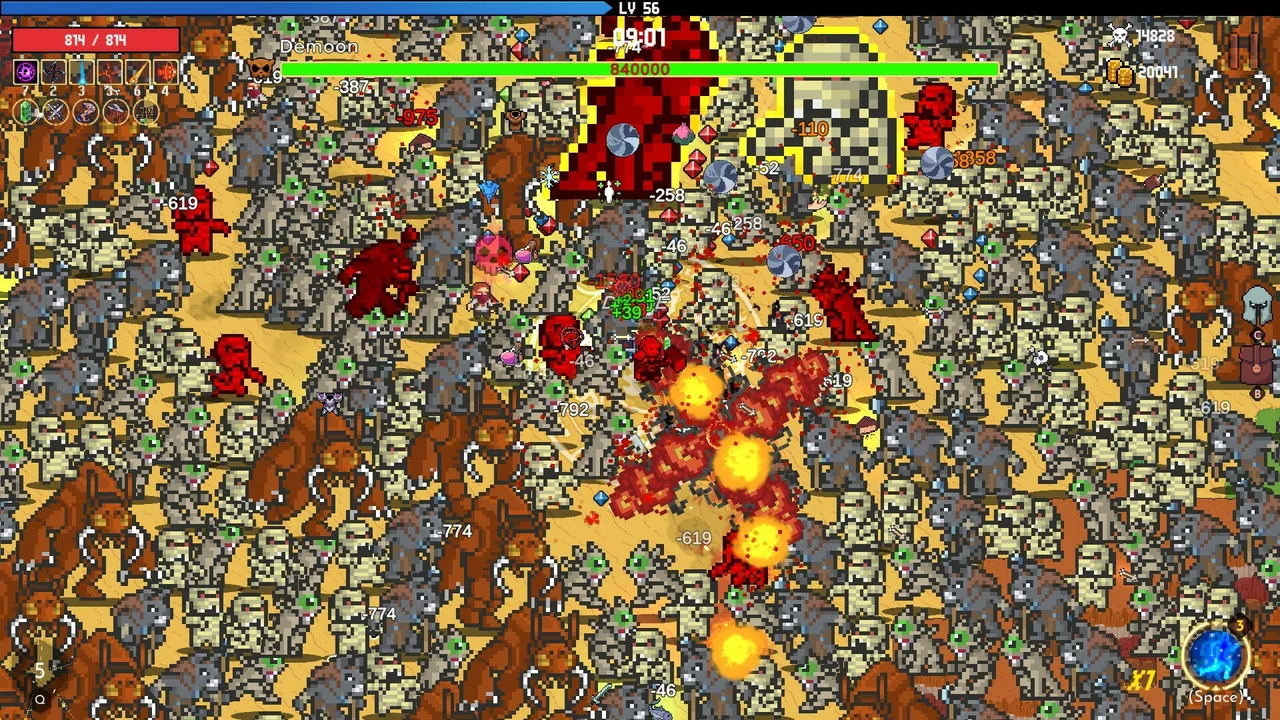
Pixel Survivors: Roguelike entered Early Access on 30 June 2022 and exited to 1.0 on 24 February 2023 — the date Steam's store page actually shows, which makes it worth stating plainly up front: this is a 2022 game wearing a 2023 release date, and its story runs through both years. Strip away the label and the pitch is exactly what the genre's biggest name established: a small hero stands in an open arena, auto-attacks whatever gets close, and survives escalating waves of monsters by picking new skills and upgrades between fights until the whole screen fills with damage numbers and sprites. Amrita's version of that formula sits at a healthy 80.6% positive across 470 lifetime reviews. Its own players are also its loudest critics of exactly how it got there.
"Vampire Survivors" is the review
Run the numbers on the most-helpful English-language negative reviews and one comparison dominates everything else: 19 of the 52 name Vampire Survivors directly, more than a third of the entire negative corpus. That's not incidental genre-labelling — reviewers use the comparison to make a specific accusation. "It's an asset flip," reads the most-upvoted negative, "you can find those assets in numerous other games." Another, more pointed, calls it "a cheap blatant knock-off... not a Genre issue but a copyright issue." A third, from over a year later, goes further still: "an unabashed, almost 1:1 ripoff... I wouldn't be surprised if the 'developer' of this knock-off gets sued." Whether any of that legal speculation has merit isn't something a review corpus can settle, and this review doesn't attempt to — but the pattern across dozens of independent reviewers, spanning the game's entire lifespan from July 2022 through 2024, is too consistent to wave away as a handful of cranks.
The design complaints layered on top of the originality accusation are specific rather than vague. Multiple reviewers describe skills and upgrades as functioning in isolation, with no synergy between them — pick more interesting combinations and you'll often find yourself dealing no damage at all, according to one detailed positive review that still recommends the game despite the flaw. There's no in-run map or compass to guide you toward chests and points of interest, a gap two reviewers name independently two years apart, and no codex explaining what a given skill or perk actually does once picked. No controller support rounds out the list, an odd omission for a genre frequently played in short, repetitive bursts.
A fanbase that knows exactly what it's getting
None of that stopped a genuine, engaged audience from forming around it. Positive reviews in this corpus include players well past 20 and even 30 hours, and the tone among them isn't blind enthusiasm — one calls it "terribly unbalanced and full of flaws but still fun," which is a fair one-line summary of the whole review. An achievement-hunter reviewer estimates roughly 30 hours to fully complete the game, rating the difficulty a middling 7 out of 10, and the global achievement curve backs that shape up: early milestones sit at 78-96% completion, while the deepest achievements drop to around 5%, a normal roguelite mastery curve rather than anything alarming. For NZ$6.95, several reviewers — even ones with real complaints — say the price matches what's delivered.
Development stopped the day it left Early Access
Steam's own patch history draws a clean line through this game's life. From roughly November 2022 through February 2023, updates arrive frequently and by name — a dash mechanic, challenge modes, balance passes — the ordinary rhythm of active Early Access development. Then, on 24 February 2023, "Release V1.0" posts, and the public record for this specific game goes silent. The studio's news feed hasn't stopped posting entirely; it's simply moved on, announcing an unrelated new game in early 2024 and another in late 2025. A September 2023 review sums up the reader's practical takeaway precisely: "Fun game for one or two runs but seems abandoned as soon as it hit v1.0." The evidence doesn't contradict that read.
Final verdict
Pixel Survivors: Roguelike works, in the narrowest sense — the loop is recognisable, the chaos is real, and cheap enough of a price that a meaningful number of players have gotten dozens of hours out of it despite everything below the surface. But "recognisable" is doing a lot of work in that sentence: this is a game whose own most engaged critics spend more time naming its inspiration than describing anything it does differently, and whose developer visibly stopped investing in it the moment it could be called finished. At NZ$6.95 it's a defensible bullet-heaven filler purchase for genre fans who've run out of better options; it's not a game this library can call original, well-supported, or a fair alternative to the game it so closely resembles.
Pros and cons
Pros
- The core bullet-heaven loop — auto-attacking through escalating monster waves while picking upgrades between fights — is functional and delivers the genre's core chaos-and-power-fantasy appeal, according to reviewers with genuinely high playtimes (several past 20-30 hours)
- Very cheap at NZ$6.95, and even reviewers who dislike the game specifically say the price is fair for what's there
- 118 Steam Achievements give committed players real long-term goals, and one detailed achievement-hunter review estimates around 30 hours to 100%
- Adjustable game speed is called out positively by more than one reviewer as a welcome quality-of-life option
- A substantial Early Access development period (June 2022 to February 2023) shows real iteration happened before 1.0, including a dash mechanic and challenge modes added along the way
Cons
- 19 of the 52 most-helpful English-language negative reviews name Vampire Survivors directly, and several go further, describing specific art and sound assets as recognisably reused from other games rather than original work
- Skills and upgrades are repeatedly described as lacking synergy — items and abilities function independently rather than combining, which several reviewers contrast unfavourably with genre leaders that reward build-crafting
- No in-run map, compass or codex exists to guide players toward points of interest or explain what upgrades actually do, a gap named independently by reviewers two years apart (2022 and 2024)
- No controller support, an unusual omission for a genre often played in short, repetitive sessions
- Public development stopped the day 1.0 launched on 24 February 2023 — the studio's Steam news feed has posted nothing about this game since, instead promoting two newer, unrelated releases in 2024 and 2025
- Recent English-language sentiment (77% of the last 100 reviews positive) sits modestly below the 80.6% lifetime figure, consistent with reviewers' framing that the genre has moved on without this entry
Screenshots
-
Pixel Survivors : RoguelikeImage: Amrita via Steam -
Pixel Survivors : RoguelikeImage: Amrita via Steam -
Pixel Survivors : RoguelikeImage: Amrita via Steam -
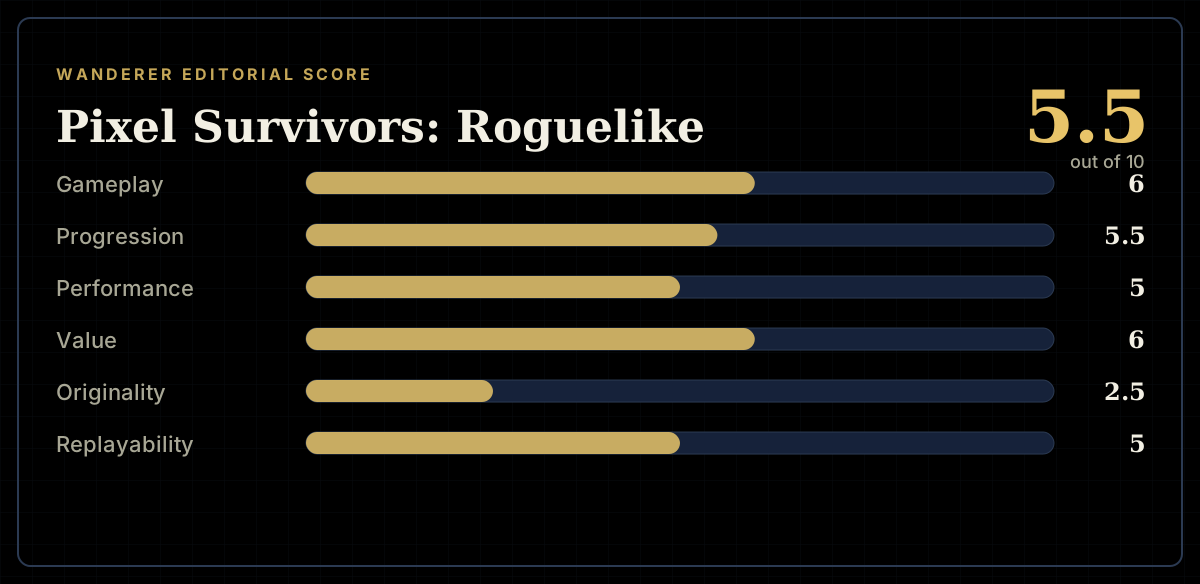
How the review scores each part of the gameWanderer Editorial -
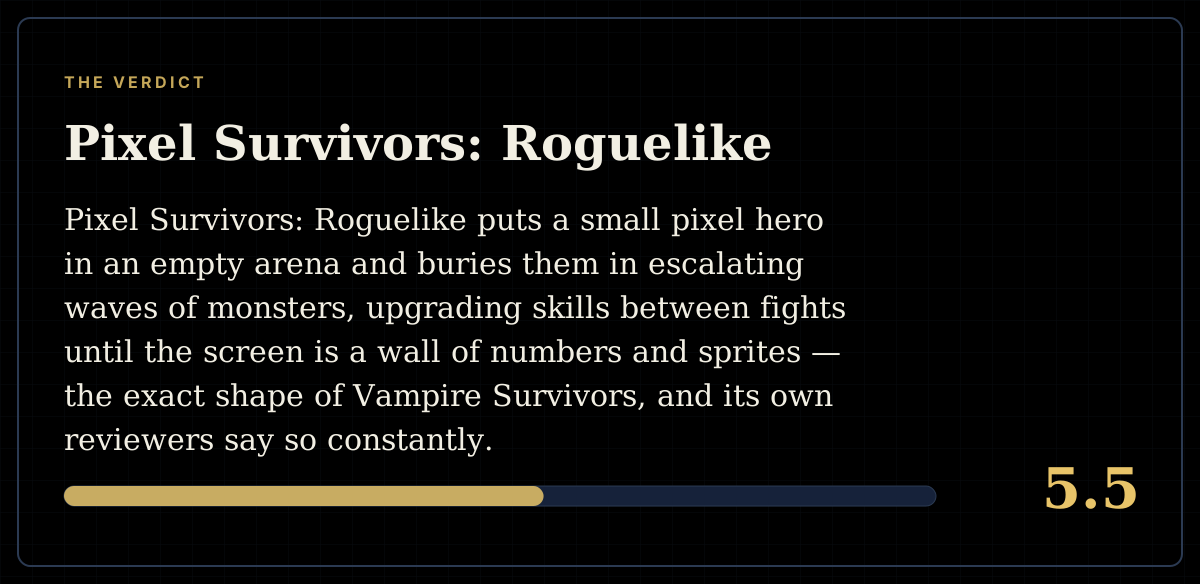
The short versionWanderer Editorial