Game review
Court Wizard
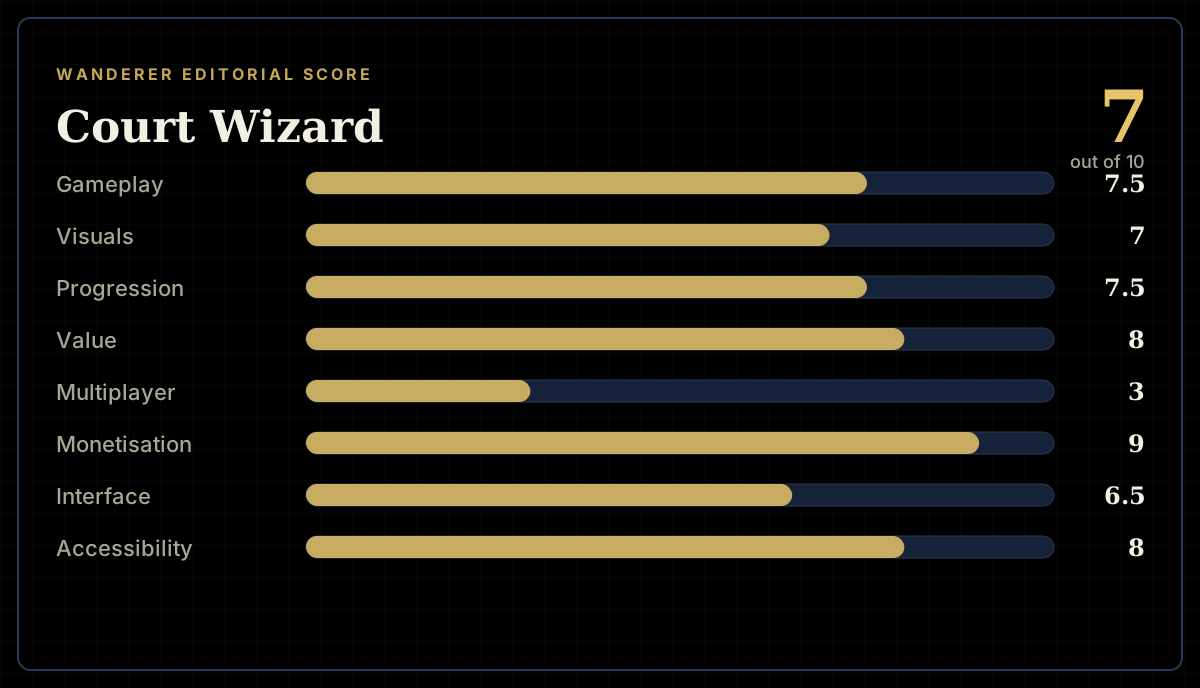
7 / 10
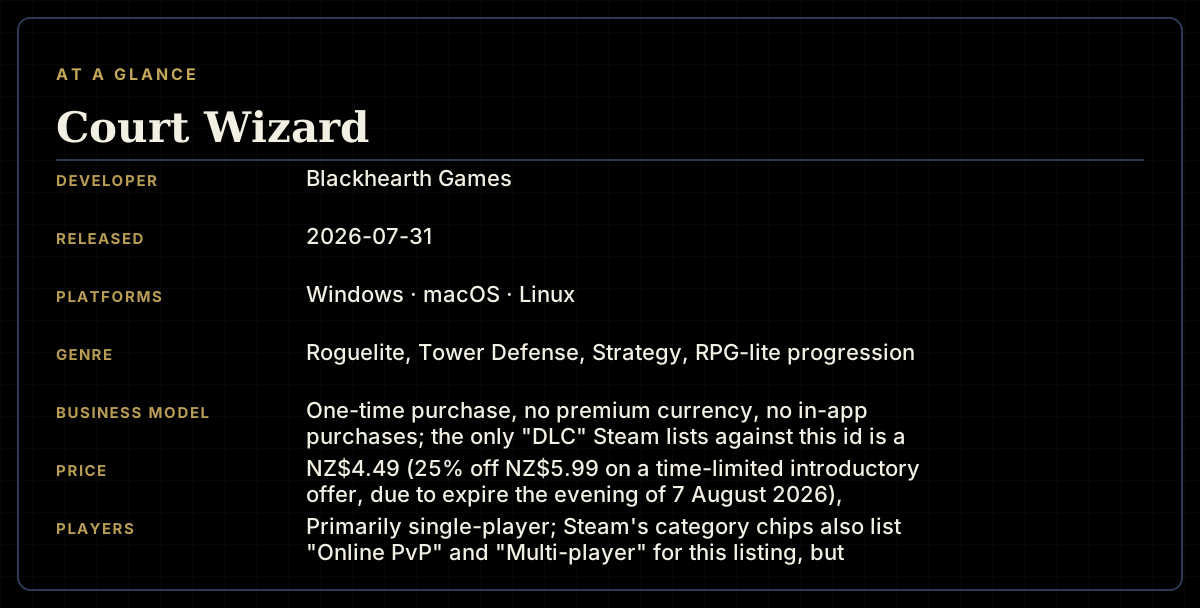
- Developer
- Blackhearth Games
- Publisher
- Blackhearth Games
- Released
- 31 July 2026
- Platforms
- Windows, macOS, Linux
- Genre
- Roguelite, Tower Defense, Strategy, RPG-lite progression
- Monetisation
- One-time purchase, no premium currency, no in-app purchases; the only "DLC" Steam lists against this id is a free pre-launch Playtest branch, not paid content
- Players
- Primarily single-player; Steam's category chips also list "Online PvP" and "Multi-player" for this listing, but nothing in the store description, the six official screenshots or the five post-launch patch notes explains what that mode is or how to reach it
The short version
Court Wizard hands you a castle, a king who will not stop wandering into your fireballs, and four wizard archetypes that genuinely change how the keyboard and mouse work in your hands — a rune-combo caster, a gambling-wheel Randomancer, a melee Swordcerer and a reload-counting Warglock. Underneath the retro CRT filter is a real roguelite structure: three-tier talent trees, a permanent research graph paid for in Arcane Insight, and 71 achievements against a "40+" the store page undersells. It arrived quietly eight days ago to exactly two Steam reviews and, at the moment of checking, nobody online — evidence too thin to call a verdict settled — but a solo developer who shipped five patches in the first week, fixing real bugs fast, is itself a signal worth weighing.
Biggest strengths
- Four wizard archetypes control like four different games rather than four reskinned versions of one kit — Q/W/E rune sequences, a spin-the-wheel Randomancer, a battlefield-brawling Swordcerer and a gun-and-reload Warglock all sit under one roof
- 71 Steam achievements against a store page that only promises "40+," with unlockable wizards and content gated behind them
- Talent trees carry real weight — three tiers per spell, one of three choices at each, plus a separate permanent-upgrade layer (Spell Damage, Spell Range, Cast Speed, Mana Cost) spent from Arcane Insight and tracked on its own research graph
Biggest weaknesses
- Steam lists "Online PvP" and "Multi-player" as categories for this game, but the description, screenshots and every patch note are silent on what that mode is or how to access it — a real information gap for anyone buying expecting to play with others
- The review corpus is two English reviews and the achievement population implies roughly seventy tracked players — there is essentially no independent evidence yet on how the game holds up past the opening hours
- Only English is supported, and the currently active 25% "introductory offer" is explicitly time-limited rather than a standing price
Who it's for: Tower-defense and roguelite players who want their wave-defense with a spellcasting twist, budget-conscious shoppers happy to bet NZ$4.49 on an unproven solo release, and anyone curious what a Rust-and-Bevy indie looks like when it reaches Steam rather than a game jam page.
Our recommendation: At NZ$4.49 the downside is small and the archetype variety is real, so it is an easy recommendation for genre fans willing to be early. Buy it for the Rune Caster's combo puzzle and the Warglock's ammo-counter chaos, not for the "Online PvP" line on the store page — nothing published anywhere explains what that mode actually is, and a buyer expecting a multiplayer game should ask the developer directly before purchasing.
7 / 10
Most games that let you pick a "class" are really letting you pick a paint job. Court Wizard is not that. Choose the Rune Caster and you are memorising Q/W/E sequences to unlock combo spells mid-fight. Choose the Warglock and you are watching an ammo counter tick down toward a manual reload. Choose the Randomancer and you are spinning a roulette wheel and hoping the number that comes up is worth the mana you just spent. That is an unusually large amount of mechanical distinction to build into a NZ$4.49 solo release, and it is the best reason to pay attention to a game that, eight days after launch, has been reviewed by exactly two people.
What the community's own tags say this actually is
Steam's official genre line for Court Wizard reads Casual, Indie, RPG, Strategy — reasonable enough, but generic. The more honest signal sits lower on the page, in the vote-weighted community tags rather than the genre chips: Wargame leads at 204 votes, ahead of Roguelite (198), Medieval (194), PvP (190) and PvE (187). Strategy (172) and RPG (166) don't show up until eighth and ninth place, behind even Point & Click (181) — almost certainly a reference to the mouse-driven spell targeting rather than a literal adventure-game comparison. Read plainly, the people who have actually tagged this game see it as a wave-management wargame with roguelite structure first and an RPG a distant second. That tracks with what the store page itself describes: auto-fighting defenders, wave counters, boss encounters and a wall-building spell, wrapped around a talent-tree progression system that is real but secondary to the combat. Anyone arriving expecting a story-driven fantasy RPG is shopping in the wrong genre; anyone expecting a keep-the-horde-out wargame with a spellcasting twist is exactly on target. The caveat is the sample size — with only two written reviews on the whole listing, these vote counts are still small enough that a single active week could reorder them.
Four wizards, four different games
The archetype system is where Court Wizard earns its keep, and the official screenshots back up the store page's claim that it "isn't a cosmetic choice." One shot shows the Rune Caster mid-combo, an on-screen prompt reading "Clear Skies — Press Q/W/E: Storm / Blizzard / Drought," turning spell selection into a small, readable puzzle under time pressure rather than a simple hotbar press. Another shows the Warglock's kit entirely replacing the standard five-spell bar with what look like firearm icons, an ammo readout sitting at "46 / 100" and an "R Reload" prompt in the corner — a wizard who has apparently given up on magic in favour of guns, tracked with the same resource-management language a shooter would use. The store description adds a third and fourth: the Randomancer, who spins a roulette wheel for randomised spells "at massive power," and the Swordcerer, who abandons the tower entirely to fight on the battlefield in melee. None of that reads as four difficulty sliders on one kit. It reads as four separate input languages sharing a castle, a king and a wave counter, which is a genuinely uncommon thing for a five-and-a-half-dollar game to attempt.
The trade-off is that a store page and six screenshots can only prove the archetypes are different, not that all four are equally well balanced against each other — that would need a population of players large enough to compare across builds, and Court Wizard doesn't have one yet.
Talent trees, arcane insight, and a research graph shaped like a promise
Underneath the archetype layer sits a conventional but well-specified roguelite progression system. Every spell carries three talent tiers, each offering one of three choices, unlocked through use rather than purchased outright — a fireball you cast fifty times earns the right to pick how it evolves, not just a currency spent at a menu. Above that sits a second, permanent layer: Arcane Insight, earned between runs and spent on account-wide upgrades to Spell Damage, Spell Range, Cast Speed and Mana Cost, tracked on what the store page calls "an interactive spell research graph." A 4 August patch fixed a launch bug where partial Insight commitments toward a rank were silently thrown away instead of saved as a partial arc — a rounding bug that would have made the whole permanent-upgrade system feel worse than it was designed to, caught and fixed within days rather than left to fester.
The achievement list backs up that there's real structure to climb. Court Wizard ships 71 achievements against a store page that only promises "40+," which undersells its own scope. The handful with any recorded completions at all sketch a real curve, even on a tiny population: 82.8% of the tracked players have cleared their first battle, 55.7% have reached "apprentice wizard," 31.4% have earned the achievement sharing the game's own title, 30.0% have gone one level further, and 12.8% have reached "archmage." Everything past that — full spell mastery, every wizard unlocked, every upgrade maxed — sits at 4.2% or lower, and 60 of the 71 achievements are still sitting at exactly 0.0%. That shape is consistent with a normal difficulty curve rather than a broken one, but it's worth being honest about what it's built on: a population implied to be somewhere around seventy players. Read it as an early sketch of the game's pacing, not as settled data.
When the horde becomes a blur
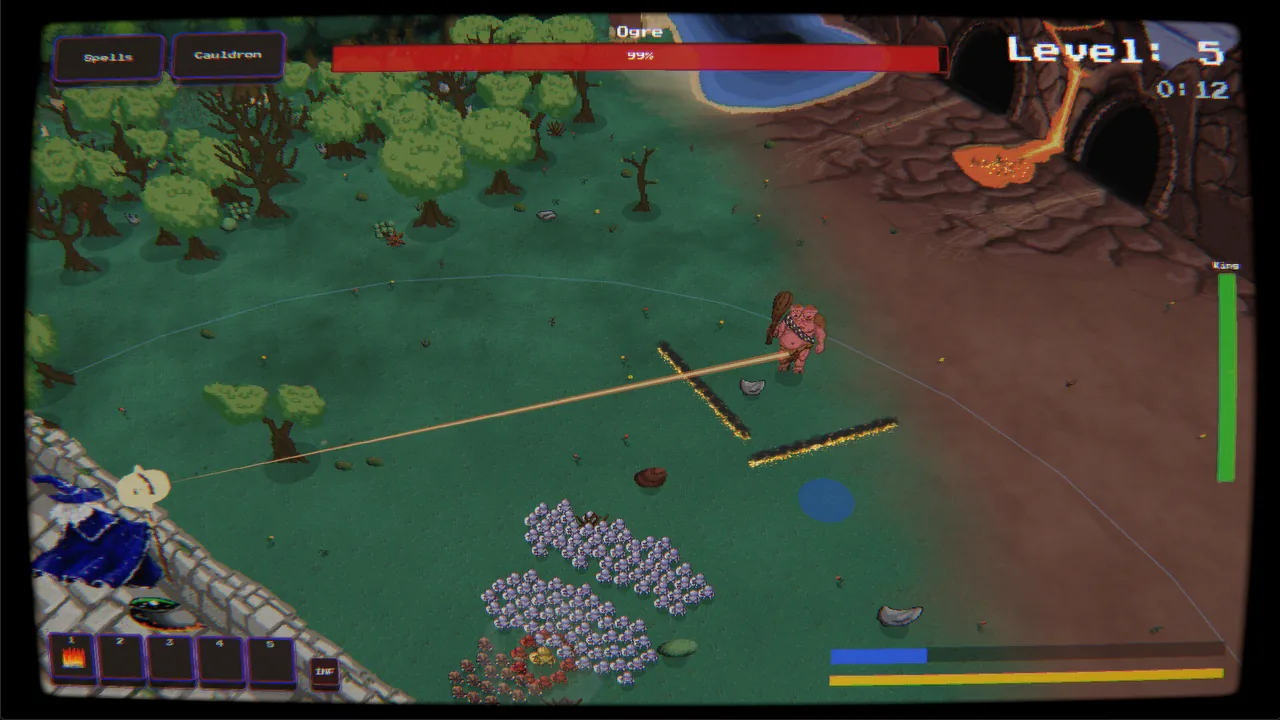
Court Wizard commits fully to a retro CRT look — scanlines, a curved-screen vignette, a soft chromatic-aberration blur — and the isometric pixel art underneath it is detailed and varied: lava caverns, forested approaches, a stone castle wall, and enemy rosters that stretch from generic skeletons up to named threats like an Ogre, a Lich and a trio of Hags, each apparently with boss-style health bars and unique mechanics per the store description. One screenshot shows a defensive wall constructed mid-battle, a stone line snaking across the map to funnel a wave away from an open flank — a small piece of evidence that the "build stone walls" spell is a genuine tactical tool, not a listed feature that never comes up.
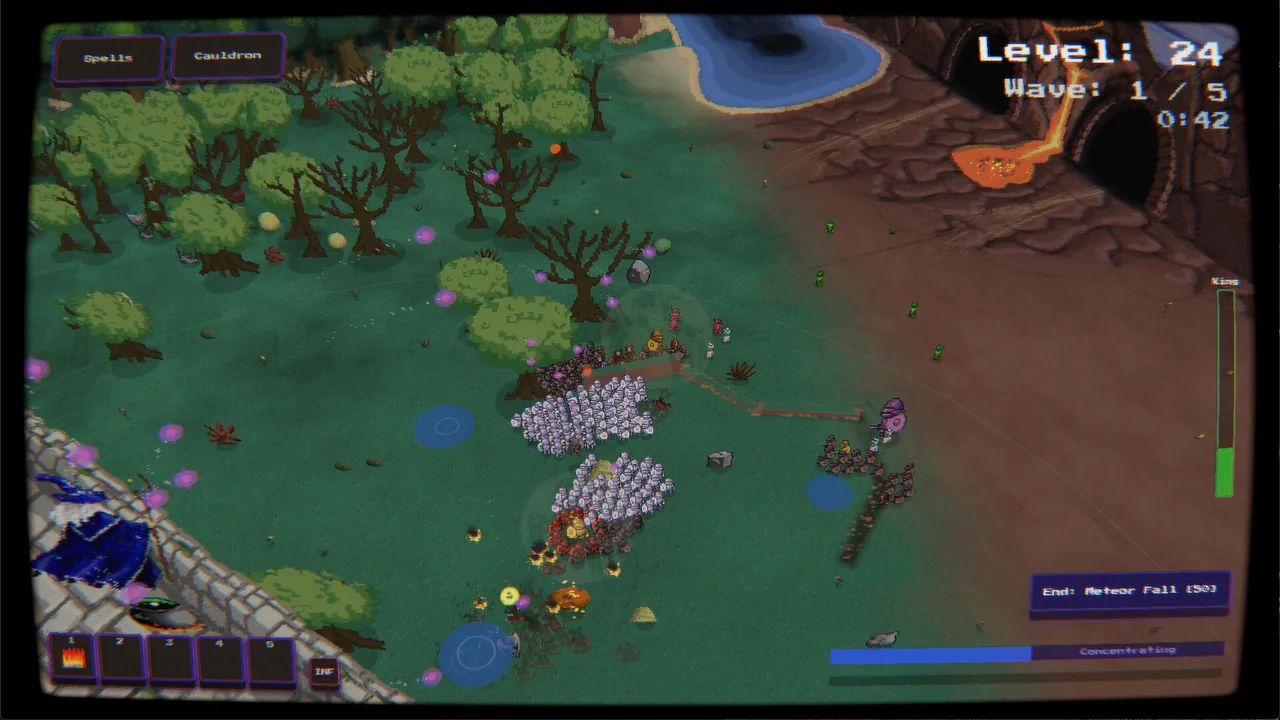
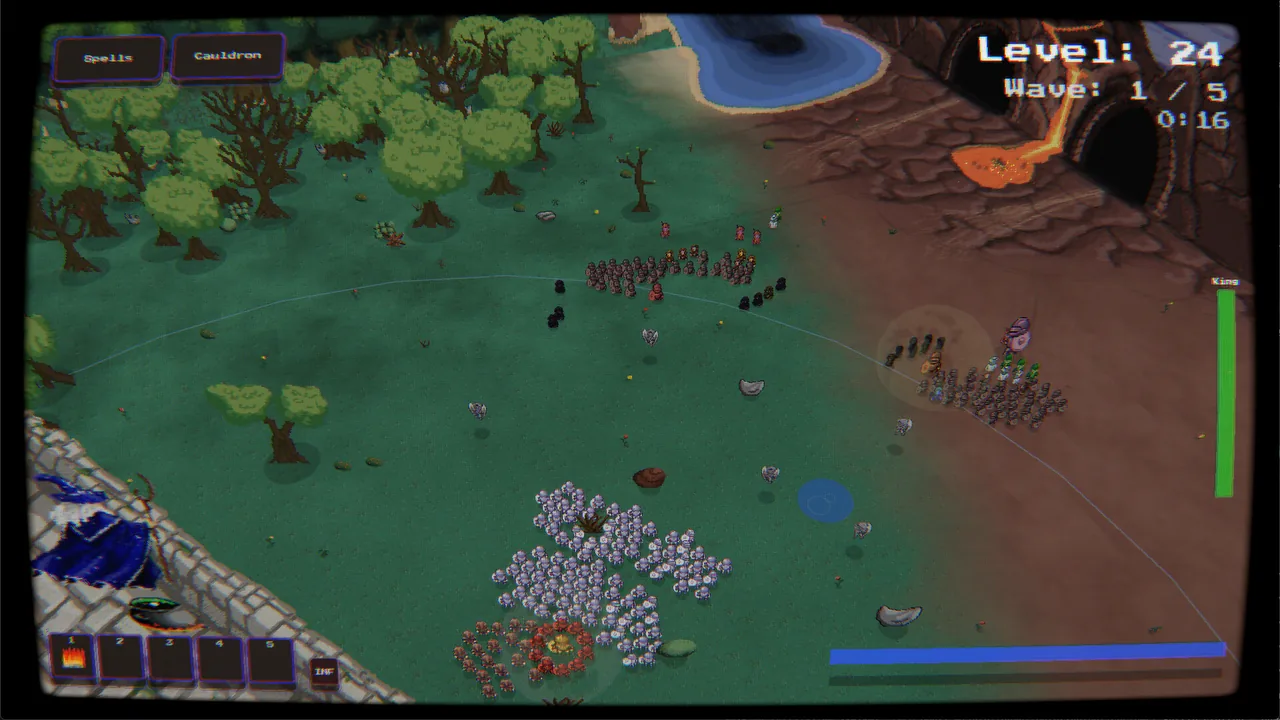
The same screenshots also carry a warning worth flagging plainly. By later levels, the official promotional shots show enemy waves clustering into dense blobs of near-identical sprites, tens or hundreds strong, moving as a single shifting mass rather than as legible individual threats. That's common to the reverse-tower-defense genre generally, but it's a real readability risk this specific game hasn't solved in its own marketing material — the screenshots meant to sell the combat are, in a few cases, the screenshots that make it hardest to tell what's actually happening on screen.
A solo developer who ships
Blackhearth Games has exactly one title on Steam, and the credits line in the store description — thanking "the maintainers of Rust, Bevy and the open game art community" — points to a solo or near-solo project built on an open-source engine rather than a funded studio release. What that developer has done since launch is worth crediting on its own terms: five news posts in two weeks, four of them numbered patches landing 1, 2, 4 and 5 August, each fixing a specific, described issue rather than a vague "stability improvements" line. A results-screen bug that made a replayed "time travel" level look like an unearned victory got its own clarifying patch. A notification that flashed past too quickly during fast-forwarded waves got its display time extended. A CRT-toggle setting that silently reset every session got fixed within a day of being reported. None of these are large systemic changes, but together they describe a developer actually watching what a tiny early audience runs into and responding fast, which matters more for a week-old release than for an established one.
The accessibility side of the store listing backs up that same impression of care. Blackhearth explicitly flags Mouse Only Option, Adjustable Difficulty, Camera Comfort and Contrast Controls as supported, alongside custom volume controls — a real, itemised list rather than a single generic checkbox, on a game that doesn't currently list controller support at all.
The mode nobody explains, and the price before it changes
Two things a shopper should know sit outside the marketing copy entirely. The first is the price: at the time of checking, Court Wizard is NZ$4.49, a 25% discount off its NZ$5.99 list price, explicitly labelled on the store page as an "INTRODUCTORY OFFER" with its own countdown timer — one that expires the evening of 7 August 2026, the same day this review was checked. Buyers reading this later should expect the price to have moved back toward NZ$5.99, still a low figure for the scope on offer, with no DLC, premium currency or in-app purchases attached to the listing at all; the only associated product Steam lists is a free playtest branch predating launch.
The second is the "Online PvP" and "Multi-player" category chips sitting on the store page, unexplained anywhere else. Nothing in the description, none of the six screenshots, and none of the five patch notes so much as mentions a multiplayer mode, a PvP arena, matchmaking or how a second player would even enter a match. It's possible this is a planned or lightly-implemented feature waiting on its own announcement; it's possible it's a leftover category flag from an earlier build. Either reading is a guess, and a guess isn't something to sell a purchase decision on. What's certain is that a buyer who sees "Online PvP" on the store page and buys expecting to play against another person currently has no public source telling them what that means.
Final verdict
Court Wizard earns a 7 for doing something genuinely uncommon at its price point — four wizard archetypes that change the actual controls rather than just the numbers behind them — wrapped in a roguelite structure with real teeth: three-tier talent trees, a permanent Insight economy, and 71 achievements that undersell themselves on the store page. A solo developer who shipped five patches addressing real, specific bugs in the first eight days is a strong early signal, and at NZ$4.49 the risk of trying it is close to nothing. It doesn't score higher because there is almost nothing yet to weigh that against: two reviews, an achievement population in the dozens, and zero players online at the moment of checking mean this verdict is closer to a first look than a settled judgement. Add to that a store page advertising a multiplayer mode nobody has explained, and screenshots that sometimes undercut their own case by turning the mid-game horde into a wall of near-identical sprites, and the honest advice is simple: if the archetype pitch appeals to you, the price makes this an easy bet, but go in knowing you'd be one of the first people to actually test whether it holds up.
Pros and cons
Pros
- Four wizard archetypes control like four different games rather than four reskinned versions of one kit — Q/W/E rune sequences, a spin-the-wheel Randomancer, a battlefield-brawling Swordcerer and a gun-and-reload Warglock all sit under one roof
- 71 Steam achievements against a store page that only promises "40+," with unlockable wizards and content gated behind them
- Talent trees carry real weight — three tiers per spell, one of three choices at each, plus a separate permanent-upgrade layer (Spell Damage, Spell Range, Cast Speed, Mana Cost) spent from Arcane Insight and tracked on its own research graph
- Five patches in the first eight days fixed specific, named bugs — a broken CRT-toggle setting, insight lost to rounding, an unclear "time travel" replay screen — the record of a developer paying attention right after launch
- NZ$4.49 for a full, DLC-free purchase, and one of the two existing user reviews calls it "a great deal even at full price"
Cons
- Steam lists "Online PvP" and "Multi-player" as categories for this game, but the description, screenshots and every patch note are silent on what that mode is or how to access it — a real information gap for anyone buying expecting to play with others
- The review corpus is two English reviews and the achievement population implies roughly seventy tracked players — there is essentially no independent evidence yet on how the game holds up past the opening hours
- Only English is supported, and the currently active 25% "introductory offer" is explicitly time-limited rather than a standing price
- Official screenshots of mid-run waves show enemy troops clumping into dense, near-identical blobs of sprites, which risks turning fights into visual noise once a level's headcount climbs into the hundreds
- No controller support is listed despite an isometric, hotbar-driven combat loop that would suit one
Screenshots
-
Court WizardImage: Blackhearth Games via Steam -
Court WizardImage: Blackhearth Games via Steam -
Court WizardImage: Blackhearth Games via Steam -
How the review scores each part of the gameWanderer Editorial -
The game at a glanceWanderer Editorial -
The short versionWanderer Editorial