
Game review
Amarta: Kingdom of Shadows Review
7 / 10
- Developer
- Eggtato
- Publisher
- Eggtato
- Released
- 21 August 2026
- Platforms
- ["Windows"]
- Genre
- Strategy
A Free Kingdom-Builder Rooted in Javanese Shadow Puppetry
Amarta: Kingdom of Shadows casts the player as Bima, one of the five Pandawa brothers of the Mahabharata, in a game built around Babad Wanamarta — a story from the Javanese Wayang Kulit shadow-puppetry tradition about the Pandawa transforming a cursed forest, Wanamarta, into the prosperous kingdom of Amarta. Steam's own store page frames Wayang Kulit directly, describing it as a UNESCO-recognised "Masterpiece of the Oral and Intangible Heritage of Humanity" and explaining the puppetry technique the game's presentation draws from. Reviews consistently single this out as the game's strongest asset: one wrote that they "really appreciate how they wrapped Indonesian culture into a great character design," another called it "a great way to introduce and teach Indonesian history through a game," and a third specifically thanked the developer "for showing Bali culture." For a free release from a small studio, building an entire game around a specific, less-internationally-known cultural narrative rather than generic fantasy trappings is a genuinely distinctive choice, and it's the throughline every review keeps returning to.
Kingdom-Style Side-View Building, Recruiting and Nighttime Defence
Mechanically, the game borrows its structure from the "Kingdom" side-scrolling settlement-building series, a comparison multiple reviews make unprompted. One reviewer, a self-described fan of that series, summarised the loop plainly: "You play as the great warrior Bima, raising cities and punching devils. You gather treasure and use it to recruit warriors to fight with you, builders to cut trees and make walls, and farmers to... well, farm. When night falls, defend your walls from the evil 'Jin' horde, as you expand across the [map]." Bima can also fight directly using the Kuku Pancaka, his signature claw weapon in Wayang tradition, cutting down enemies personally rather than relying purely on recruited units. Each territory is ruled by its own boss, and defeating one opens the next stretch of land — a familiar day-build, night-defend, boss-gate structure that genre fans will recognise instantly even without knowing the source material. That structure also gives the cultural framing room to do real work: rather than bolting a Javanese skin onto a generic building-and-defence template, the game ties its boss encounters and territory names directly to figures and locations from the Babad Wanamarta story, so progressing through the map doubles as moving through the narrative beats of the original shadow-puppet tale rather than just clearing an arbitrary sequence of levels.
Short, Repetitive, and Openly Described As Such
The most consistent critical note across reviews is length and variety rather than any hidden flaw: multiple reviewers describe the game as enjoyable but noticeably brief, with one noting the gameplay "can be very short and mostly feels the same for each level" despite praising the lore and visuals, and the Kingdom-series fan calling it "fairly short, and quite a bit clunkier than the real thing" while still saying they "had a really nice time with it." That's a fair characterisation to carry into a purchase decision: this reads as a small, focused project rather than an attempt at a full-scale Kingdom-style campaign, and reviewers who go in with that expectation come away satisfied rather than disappointed. One review, written in Indonesian, raised specific complaints about bugs during the tutorial's town hall upgrade step and suggested the worker-assignment controls needed refinement — a data point worth flagging even though it couldn't be independently translated in full here, since it's the one dissenting note in an otherwise uniformly positive review sample.
Runs Well on Modest Hardware
Performance comes up unprompted in more than one review, which is notable for a strategy game with dozens of units and structures on screen at once. One reviewer called the game "a lifesaver for my potato PC," and another separately confirmed it as "very optimized" alongside praise for the art style. Combined with the low system demands implied by its 2D side-view presentation, this positions Amarta as a strategy game that should run comfortably even on older or budget hardware, which matters for a free release aimed at a broad, casual audience rather than a strategy-genre core crowd chasing complex simulation systems. It also lowers the barrier to trying a game built around unfamiliar subject matter — a player curious about Wayang Kulit but unwilling to gamble hardware headroom on an untested free download gets a genuine answer within the first few minutes rather than a stuttering slideshow.
Free With No Monetisation Friction Reported
Amarta is entirely free to play on Steam, with Steam Achievements as its only listed structural feature beyond the core game and no in-app-purchase category flagged on its store page. Every review sampled treats the price point as a straightforward positive rather than a setup for hidden monetisation, with reviewers repeatedly noting the game is "completely free to play, which makes it even better" and calling it "great" specifically because it costs nothing. Nothing in the review sample suggests energy timers, premium currency, or paywalled content of any kind — for a genre that frequently leans on exactly those systems, that absence is worth stating plainly rather than assuming.
Verdict
Amarta: Kingdom of Shadows is a modest, culturally distinctive strategy game that borrows its build-recruit-defend loop from the Kingdom series and grounds it in Javanese Wayang Kulit storytelling rather than generic fantasy. It's short, occasionally rough around the edges, and won't satisfy anyone looking for a deep, lengthy strategy campaign — but as a free, well-optimised, single-player introduction to a specific and underrepresented cultural tradition, with no monetisation systems to worry about, it's an easy recommendation for strategy fans willing to meet a small free release on its own scaled-down terms.
Screenshots
-
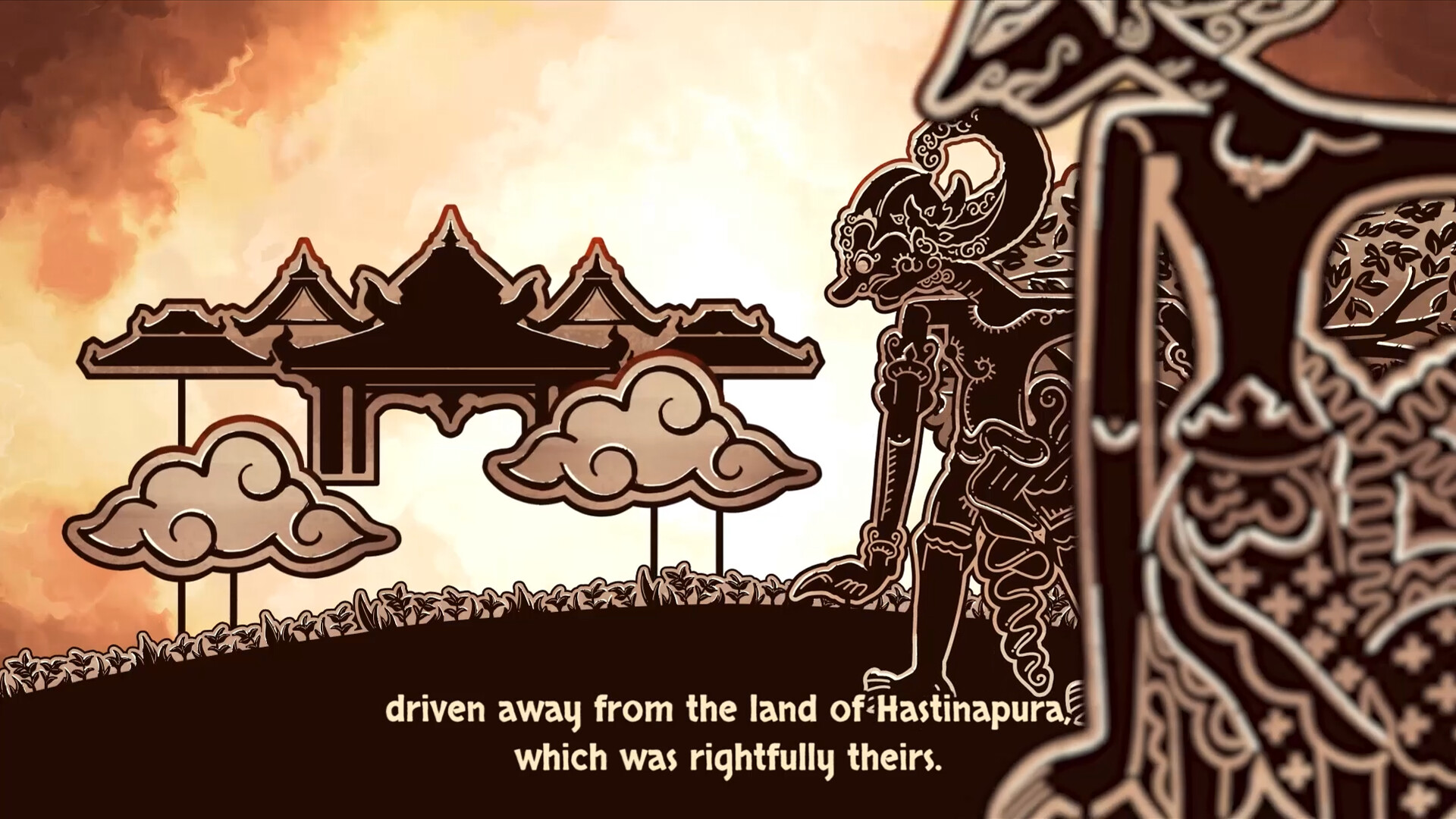
A shadow-puppet-style cutscene narrates the Pandawa's exile from Hastinapura, setting up the founding of AmartaImage: Eggtato via Steam -
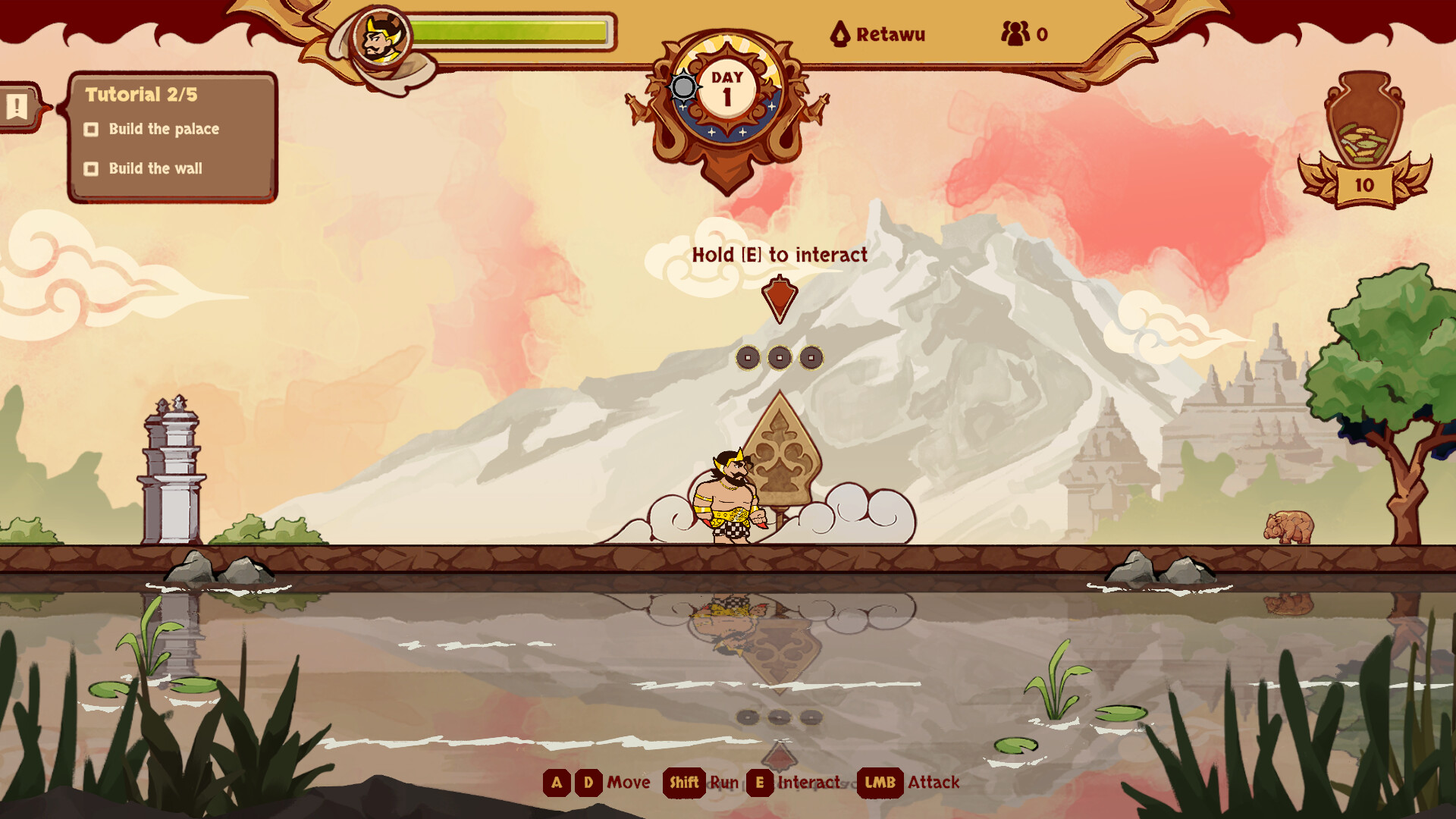
An early tutorial step guides the player through the side-view build controlsImage: Eggtato via Steam -
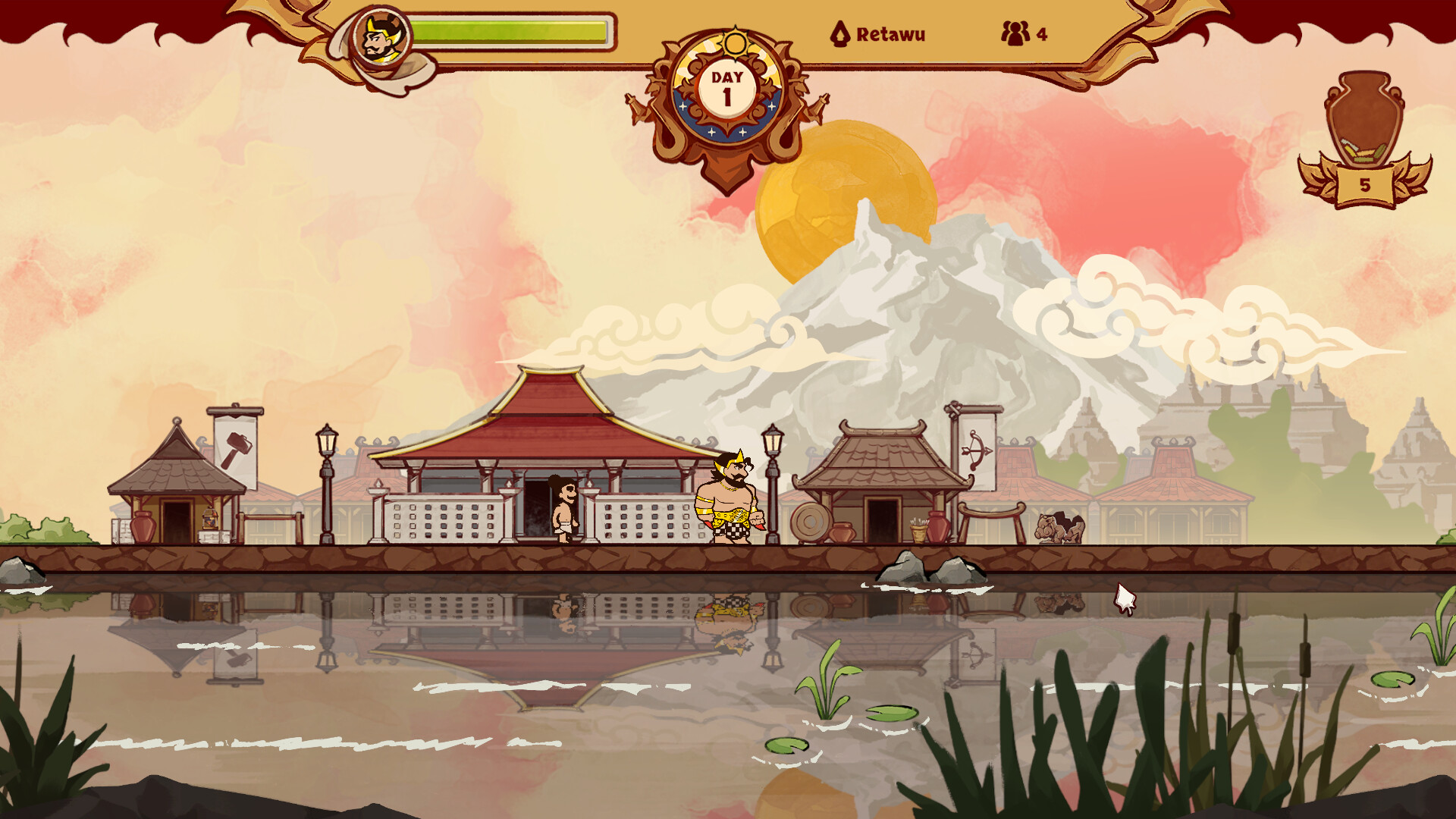
The growing settlement on Day 1, styled after traditional Javanese architectureImage: Eggtato via Steam