Game review
Anode Heart: Layer Null Review
8 / 10
- Developer
- Stove Powered Games
- Publisher
- Stove Powered Games
- Released
- 19 November 2025
- Platforms
- ["Windows", "macOS"]
- Genre
- RPG
A Card-Game Minigame That Outgrew Its Parent
Anode Heart: Layer Null is a strange kind of sequel: a standalone spin-off built entirely around a card-battling minigame that first appeared inside Stove Powered Games' monster-taming RPG Anode Heart. Rather than folding a bigger card system into a second creature-collector, the studio went the other way and cut the monsters loose, leaving a dedicated deckbuilding RPG where duels are the entire game. Players take on the role of Blank, a newcomer to the Duel Server, an in-between digital "Layer" of a wider system where rank, reputation and survival are all decided by card games. As Blank climbs the Server's rankings, the plot introduces the Shadowed, a secretive faction with an agenda that becomes clearer — and darker — the further the story goes.
The developer is upfront that returning Anode Heart characters and references show up throughout, but that prior knowledge of the first game isn't required to follow along or enjoy the story. That framing matters: this is not simply paid downloadable content bolted onto an existing save, but a fully separate purchase with its own campaign, its own card pool and its own progression systems, built for players who never touched the original.
Five Hundred Cards, Twelve Bosses, and a Genuinely Deep Deckbuilder
The core pitch is a card-battling system expanded well past its minigame origins: over 500 collectible cards, ten new booster packs, rebalanced sets and reworked rules, spread across twelve levels each capped by a card boss fight. Players build decks around Tama — the game's stand-in for monsters — captured as collectible "DNA" that slots into card synergies rather than being raised and battled directly, a structural choice that keeps the collector fantasy from Anode Heart's original creature-taming loop while centring everything on the tabletop-style combat.
Reviewers repeatedly compare the moment-to-moment feel to genre touchstones: Magic: The Gathering and Pokémon TCG come up often, as does the Game Boy-era structure of Yu-Gi-Oh's handheld RPG spin-offs, and more than one review specifically calls out Digimon World 3's card-battle sections as the closest analogue, both for the isometric PlayStation-and-Game-Boy-inspired presentation and for the underlying feel of deckbuilding against a rising ladder of AI opponents. One review summarised it as a deck-builder built for players who "grew up playing Digimon World 3" and who "love deck builder games," calling the result "absolutely stellar" independent of nostalgia. That combination of a legible, familiar TCG skeleton with genuinely substantial card variety is the game's strongest asset: several long-time players describe theorycrafting and deck experimentation as the reason they kept coming back well past the twelve-level campaign, treating archetypes and synergy-hunting as an open-ended metagame in their own right.
The learning curve is real, though. More than one review describes bouncing off the game entirely on a first attempt — one player says they "uninstalled it twice before the third time the rules of the game clicked," after which the systems "sneakily ate a lot of my time." That pattern of an initially opaque, rules-heavy ramp giving way to a much more rewarding mid-game once deck-building clicks is consistent enough across reviews to be worth flagging directly to newcomers, rather than treating it as an isolated complaint.
A Single-Player Card RPG With a Real Story, Not Just a Ladder
What separates Layer Null from a pure deckbuilding roguelike is the amount of narrative wrapped around the ladder-climbing structure. Reviews consistently praise the story as more substantial than the "card game minigame spin-off" framing suggests, with one review calling it "the most interesting single player card game in years" thanks to "an engaging story, that went well beyond expectations." Another review, written by someone who explicitly hadn't played the original Anode Heart, describes the crossover characters and callbacks as a "huge bonus" for returning players without feeling necessary to follow the plot — matching the developer's own claim that prior-game knowledge isn't a prerequisite.
The presentation draws heavily on late-1990s handheld and PlayStation aesthetics, with reviews describing an "isometric Gameboy/PSX vibe" that several players connect directly to their nostalgia for Digimon World 3 and similar era-appropriate RPGs. Not every element lands evenly, though: one detailed review singles out the card art itself as the weakest part of an otherwise excellent package, noting that "a lot of the card art is muddy at best," even while still recommending the game overall as "superb." A smaller number of reviews also flag some AI-controlled NPC opponents as playing by different rules than the player, with one describing certain NPCs as ones that "very blatantly cheat," a frustration that surfaces occasionally in mid-to-late campaign fights rather than throughout.
Local and Direct-Connect PvP, Not Full Online Matchmaking
Layer Null's multiplayer is more limited than its single-player campaign: PvP is supported via LAN and direct connection rather than open online matchmaking, meaning competitive play is realistically something arranged with a specific friend rather than found against strangers. Several reviews mention pairing up with a friend for 1v1 deck showdowns as a highlight, with one specifically recommending players "pick it up alongside a friend and have them fight you online 1v1 to see whose deck cheeses hardest" — but this is very much a bring-your-own-opponent feature rather than a matchmade ladder, and reviews don't suggest a broad, discoverable PvP scene exists around the game.
Priced and Structured Like a Full RPG, Not a DLC Add-On
At NZ$23.49 with no Steam discount at the time of writing, Layer Null is priced as a complete, standalone RPG rather than a cut-down expansion, and reviewers broadly agree the amount of content justifies that: 500-plus cards, twelve full levels with boss encounters, a real campaign narrative and Steam Achievements and Cloud support all point to a package built to stand on its own rather than lean on the original Anode Heart's audience. There's no premium currency, gacha-style card acquisition or energy-gated pacing mentioned anywhere in the reviews sampled — cards and progression are earned through play, which is a notably clean monetisation model for a card-battling RPG built around collecting hundreds of cards, a genre that frequently leans on booster-pack microtransactions elsewhere.
Verdict
Anode Heart: Layer Null takes a card-battling minigame from a monster-taming RPG and proves it was strong enough to stand entirely on its own, backed by a genuinely engaging story, hundreds of cards worth building around, and a presentation that lands squarely for anyone with a soft spot for late-90s handheld RPGs and their card-game spin-offs. The rules-heavy opening stretch will cost it some players who bounce off before the deckbuilding clicks, and the card art and occasional NPC fairness complaints are real, minor blemishes — but for card-RPG fans, this is one of the more substantial and best-received releases in its niche in recent memory.
Screenshots
-
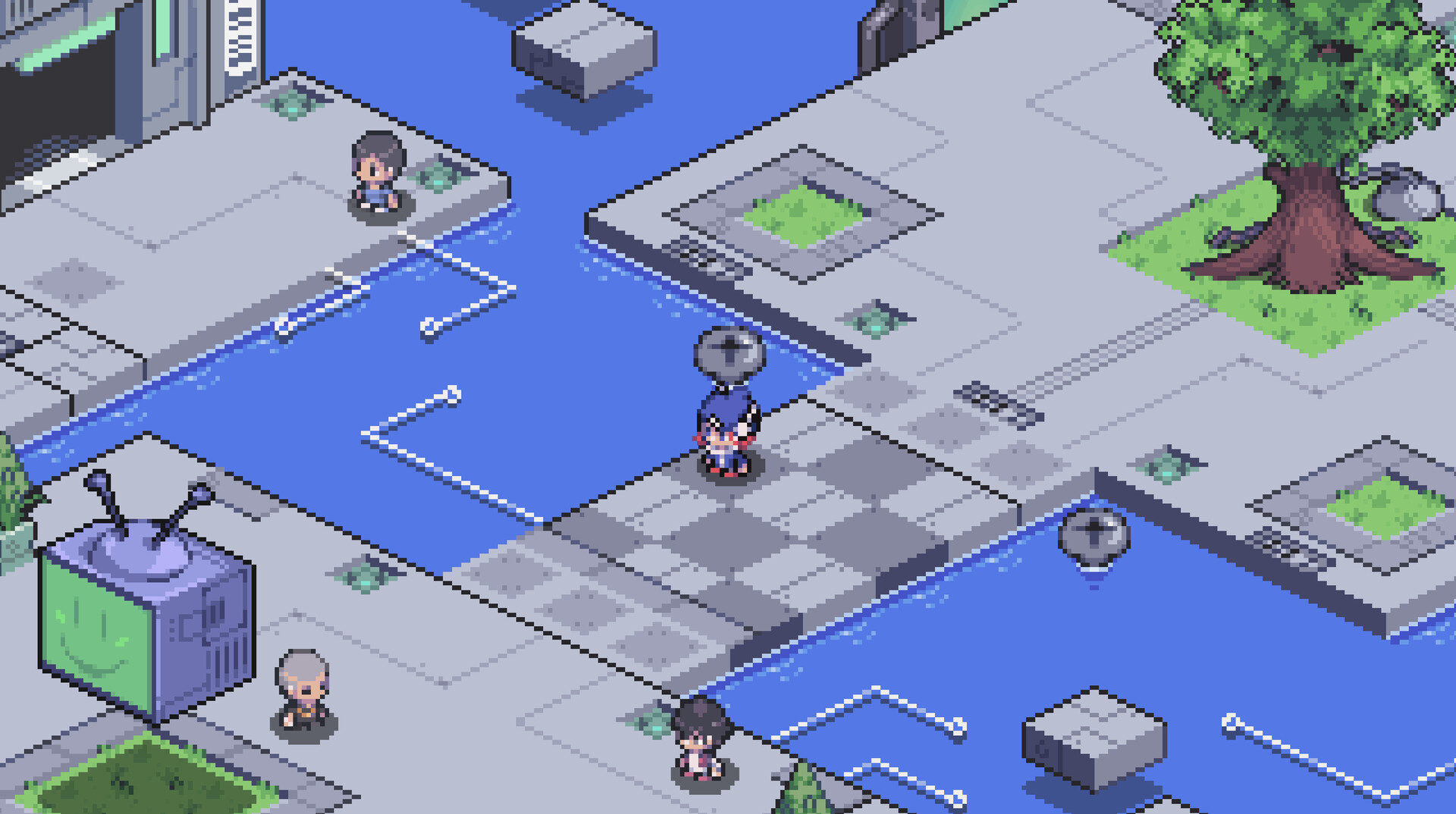
Exploring the Duel Server's isometric overworld between duels, dotted with NPCs and quirky machine propsImage: Stove Powered Games via Steam -
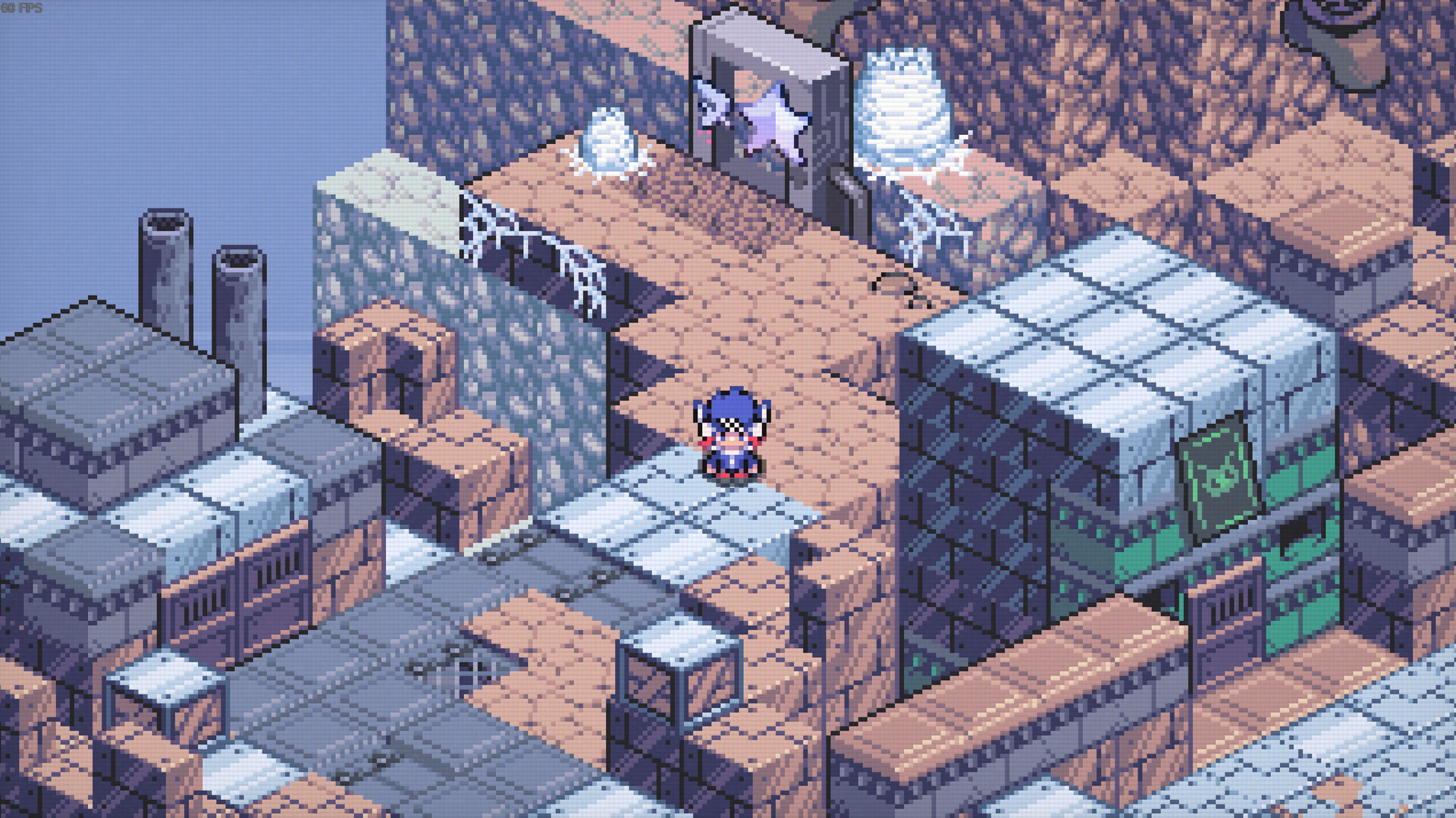
One of the game's rockier biomes, home to ghost-type Tama encountersImage: Stove Powered Games via Steam -
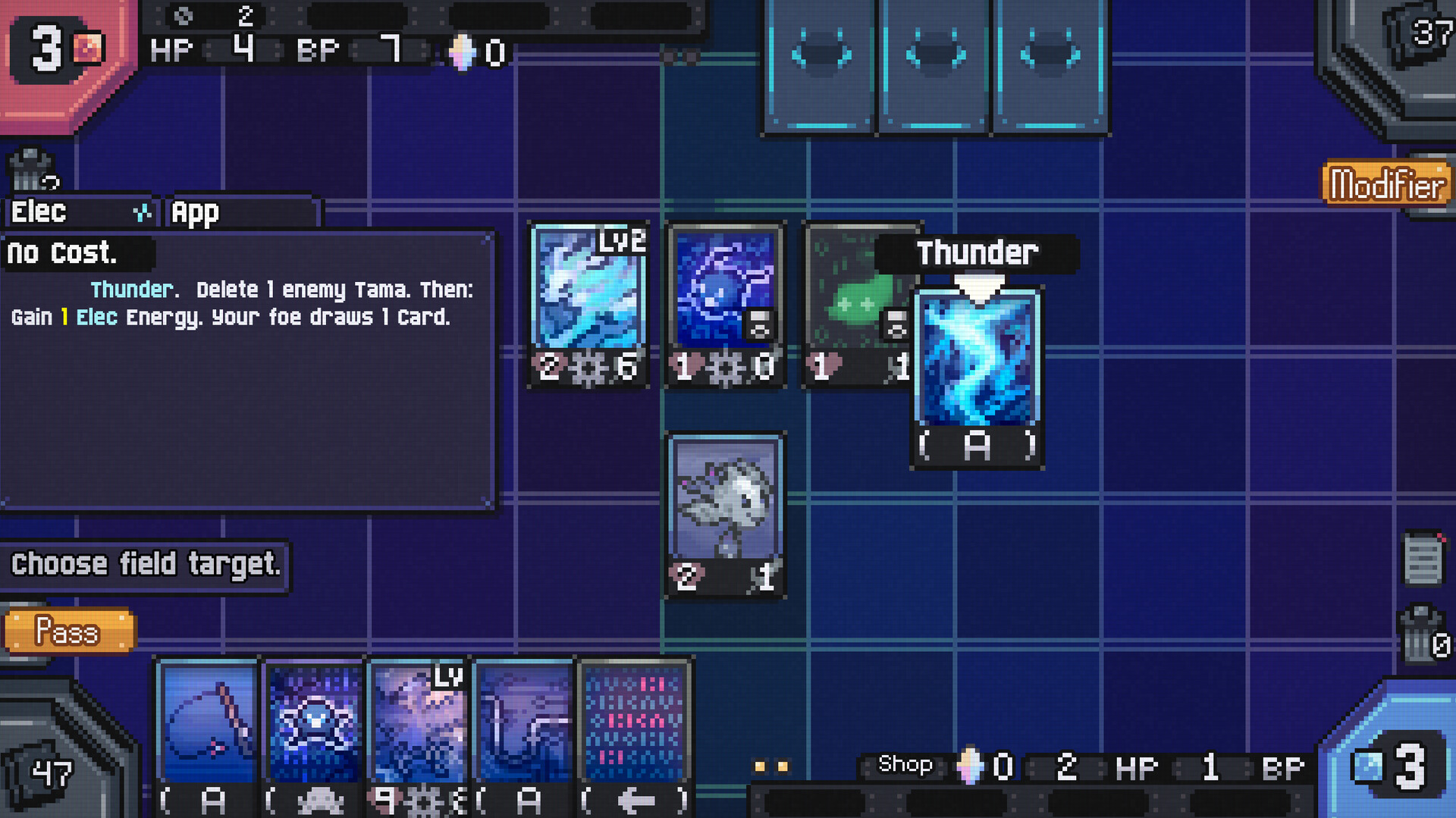
Mid-duel, resolving the Thunder card against an opponent's field of TamaImage: Stove Powered Games via Steam