
Game review
ON&OFF Review
7 / 10
- Developer
- DopamineCrucian
- Publisher
- Jungle Game Lab
- Released
- 31 July 2026
- Platforms
- ["Windows"]
- Genre
- Roguelike Deckbuilder
A Free Deckbuilder Built Entirely Around One Switch
ON&OFF released free on Steam on July 31, 2026, from developer DopamineCrucian and publisher Jungle Game Lab, and its entire identity rests on a single idea: cards don't get played once and discarded, they sit permanently on a grid and get toggled between an OFF and an ON state. Flipping a card to ON fires its effect and sends a signal outward in a direction printed on the card, and if that signal hits another card, that card flips too, potentially firing its own effect and sending its own signal onward. Reviewers across the 31-review sample describe the appeal in almost identical terms: watching one flipped card cascade into a dozen chained triggers is the entire hook, and it works. With 30 positive reviews against just a single negative one, the response is overwhelmingly warm for a completely free release, and several reviewers explicitly note they'd have happily paid for it.
Comparisons to Balatro and Slay the Spire Are Everywhere, and Mostly Earned
Almost every substantial review reaches for the same two touchstones: Balatro's "one more run" compulsion loop and Slay the Spire's climb-a-ladder roguelike structure, layered under a genuinely different core mechanic. One detailed review calls the chaining system "more satisfying than Balatro" specifically because a well-built loop can spiral toward an effectively infinite chain rather than just a big single payout, and multiple shorter reviews independently describe "building a loop and obliterating an enemy" as the single most satisfying moment the game offers. Runs are structured as a short climb through three acts, picking up new cards and choosing which to keep between fights, with the strategic tension coming from balancing card variety against the tightly interconnected chains that reward a smaller, more deliberate deck. Several reviewers frame this as the game's best idea: a card doesn't need to be individually powerful if it's positioned to trigger three other cards on the way past.
A Short, Uneven Difficulty Curve With Real Balance Complaints
The most consistent criticism in the sample isn't the core mechanic but how the game is tuned around it. More than one reviewer describes the standard difficulty as beatable on a first attempt once a player understands loop-building, with one reviewer bluntly noting that reaching the game's "infinite" difficulty tier is "hella easy" once a specific card-upgrade pattern is found. A longer, more critical review goes further, arguing the game "heavily penalizes anyone who tries to grab a lot of cards" because chain combos depend on tight card synergy, and that enemy variety doesn't hold up once a player has learned the system, denying the game the sense of being genuinely tested that Slay the Spire is praised for providing. That reviewer still recommended the game, landing on a 5.5/10 read specifically because of limited replay value, and suggested a sandbox or experimentation mode would help players understand the chain math without needing to relearn it inside a live run. A different reviewer raised almost the identical practical fix, requesting endless and leaderboard-driven modes to give a three-act structure somewhere to go once a player has already won.
Presentation Is Simple, Charming, and Has an Interesting Backstory
The pixel art fantasy presentation draws consistent, low-key praise as fitting for a game where the board itself is meant to hold a player's attention rather than the surrounding scenery, and small touches like a pettable shopkeeper cat get called out fondly by more than one reviewer as the kind of detail that makes the whole thing feel more charming than its free price tag would suggest. One notably thorough review adds a specific piece of production history: the developers reportedly replaced early generative AI artwork used during development with newly commissioned or created art before the game's official launch. A second, negative review references the same underlying fact from the opposite angle, expressing frustration that the earlier AI assets weren't disclosed at the time and casting the removal as the reason for an otherwise positive-sounding review being marked down. Between those two accounts, the picture that emerges is a small team that changed its art pipeline mid-development rather than a launch built on undisclosed AI content, though it's clearly a sore point for at least one player who tracked the change closely. On the technical side, one Steam Deck report described the game as "a bit rough" to play, while the broader sample reports no bugs or performance issues on desktop.
Playtime Numbers Suggest a Game People Return To, Not Just Sample
Because ON&OFF is free and only a few weeks old at the time of this review, playtime figures across the sample are a useful signal for whether the loop-building hook actually holds up beyond a first run. Several reviewers report well past ten hours played, including a handful past fourteen, which is a substantial commitment for a game that costs nothing and that more than one reviewer describes finishing on a first attempt. That pattern lines up with the recurring language reviewers use about chasing "infinites" and experimenting with different mana-focused or chain-heavy builds even after clearing the main difficulty, suggesting the appeal survives the initial "watch a chain go off" novelty for at least a meaningful chunk of the audience, even without much new content between runs. It also supports the shared request across several reviews for an endless mode or leaderboard-driven runs, since the people already logging double-digit hours are clearly the ones most likely to use them.
Verdict
ON&OFF takes a genuinely fresh spin on the deckbuilding roguelite formula, swapping the genre's usual "play and discard" rhythm for a permanent, chainable grid that rewards thinking several moves ahead, and the review sample's near-unanimous enthusiasm for chasing bigger and bigger chains says the idea lands exactly as intended. Its problems are the kind a small free release earns honestly: a difficulty curve that flattens out once the core trick is learned, only three acts to climb before the run is over, and a card pool multiple reviewers already want expanded. None of that outweighs what's here for the price of nothing, and for anyone who likes Balatro-style chain-chasing or Slay the Spire's structure, ON&OFF is an easy, low-stakes recommendation with real room to grow into something bigger.
Screenshots
-
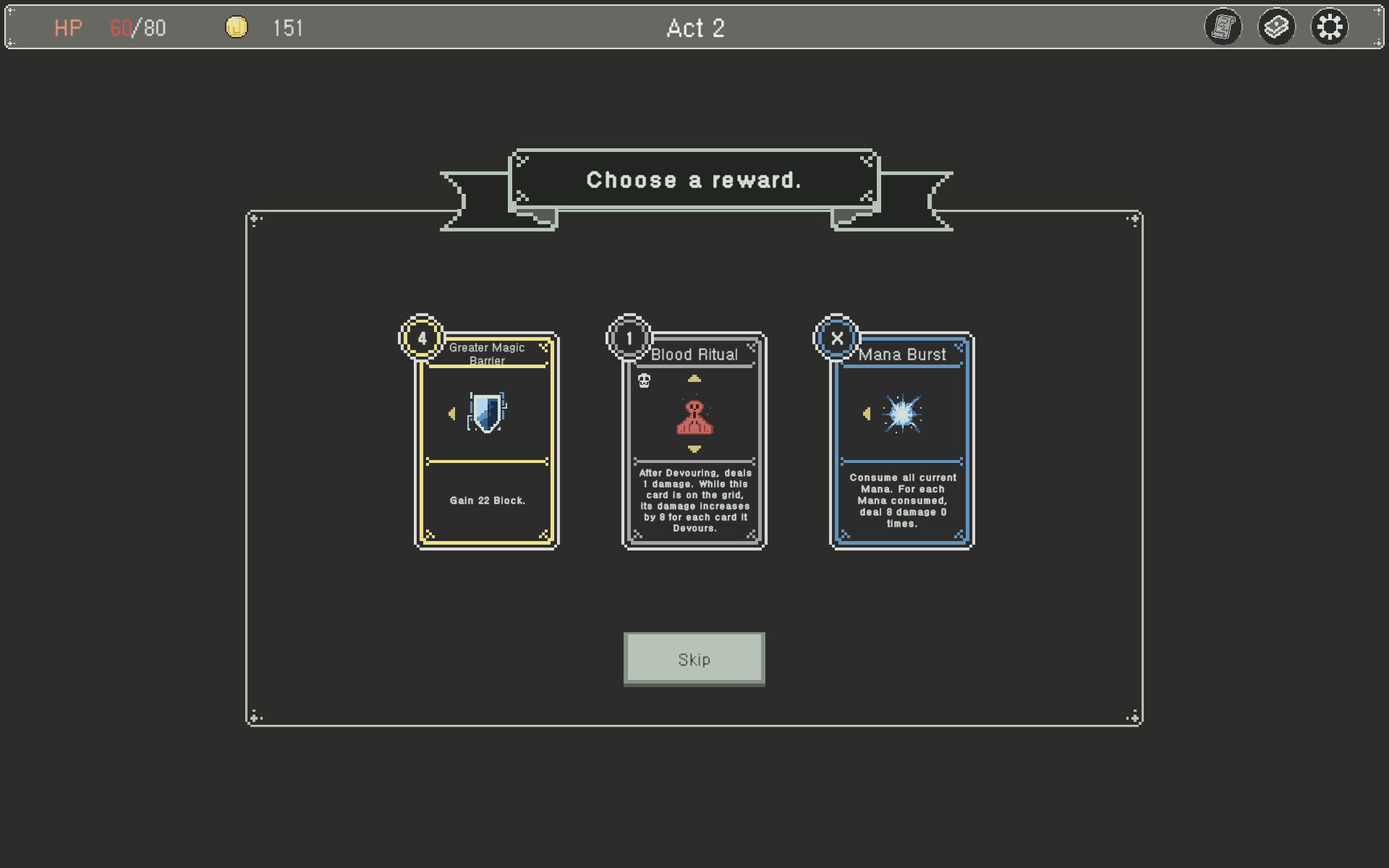
One of the run's card-choice moments, where picking a card that chains well with the current deck matters more than raw power.Image: Jungle Game Lab via Steam -
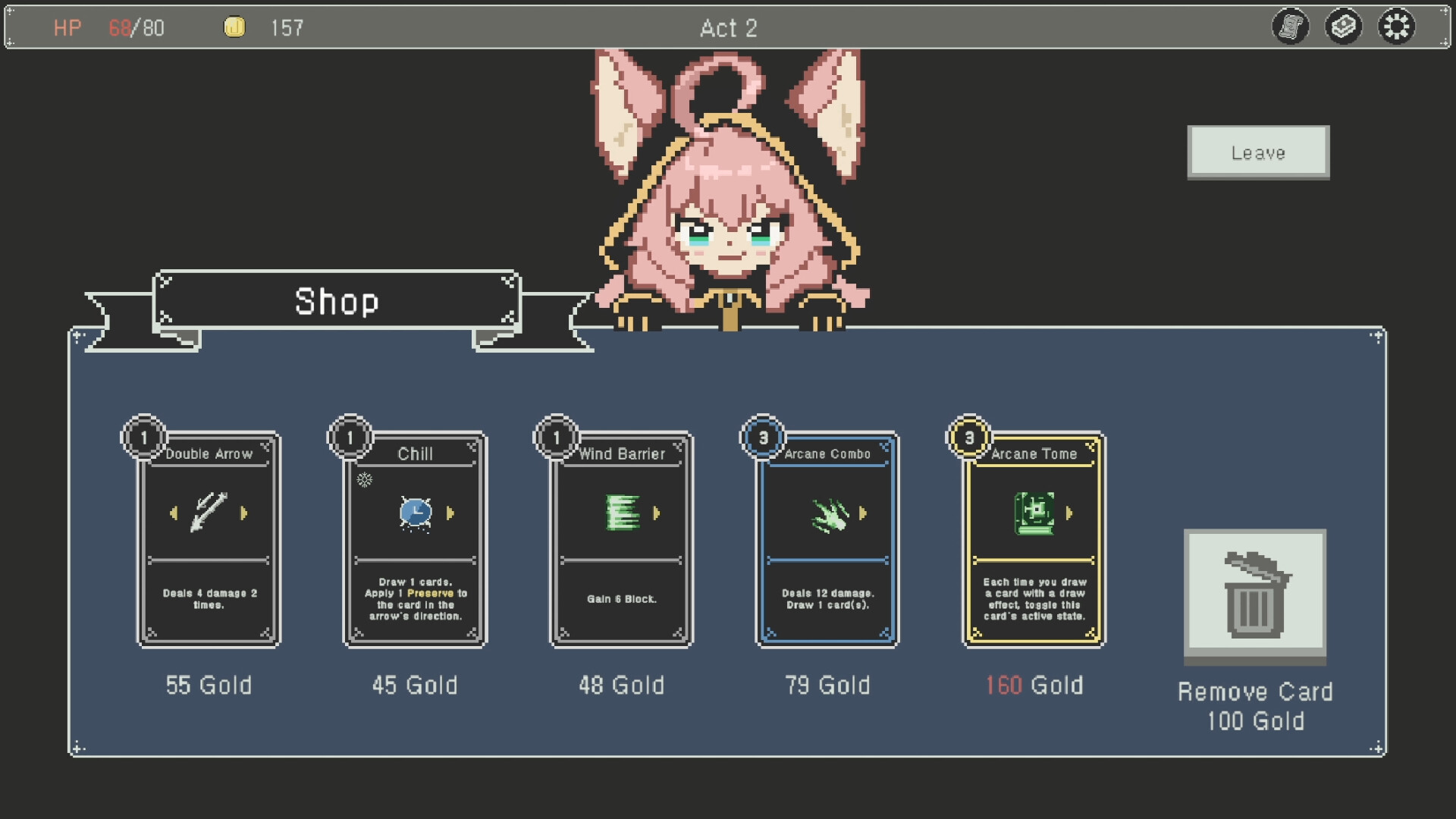
The shop's shopkeeper, the pettable detail more than one reviewer singled out as an unexpectedly charming touch.Image: Jungle Game Lab via Steam -
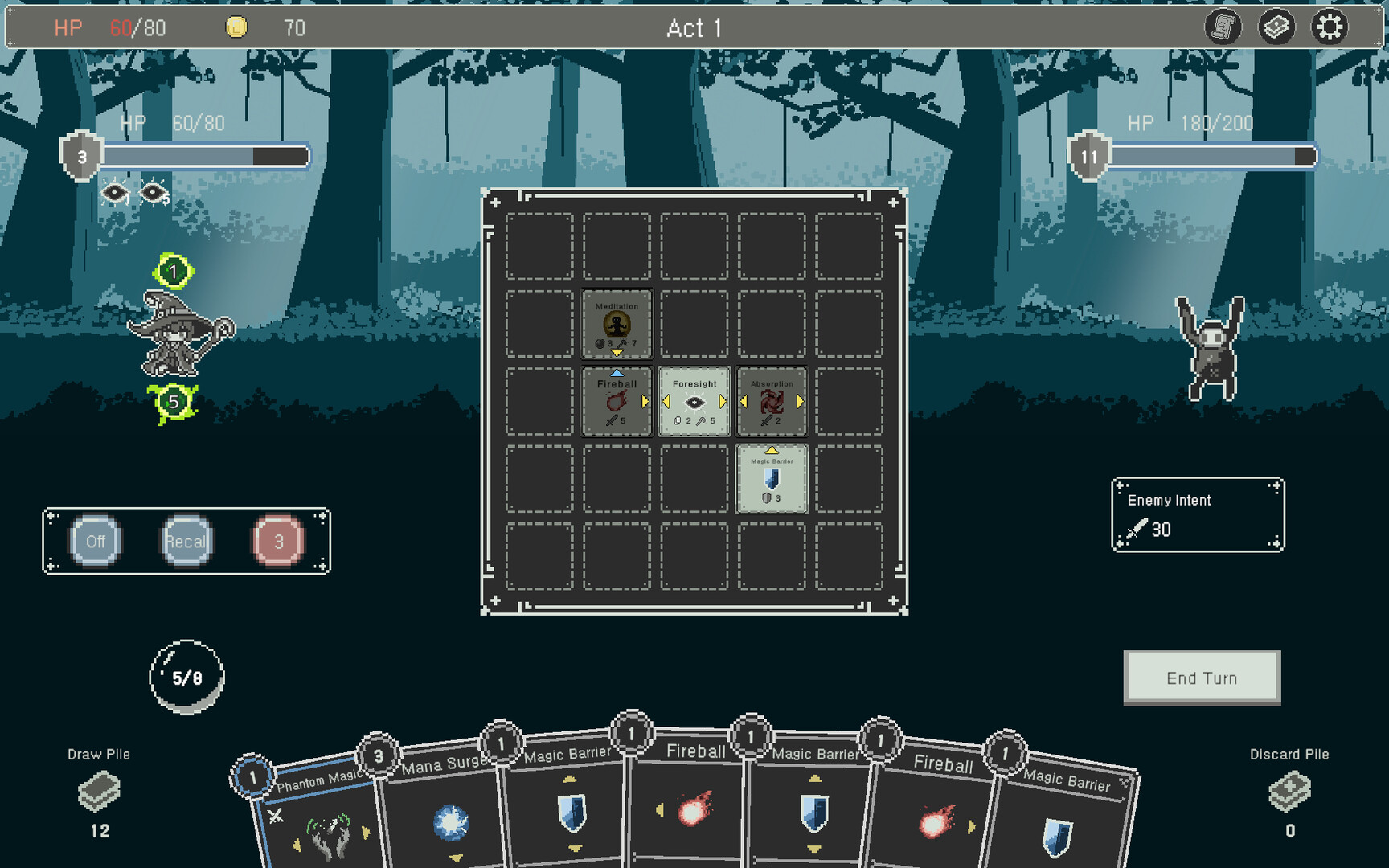
The grid at the heart of a run, where a card's placement and arrow direction matter as much as the card itself.Image: Jungle Game Lab via Steam