Game review
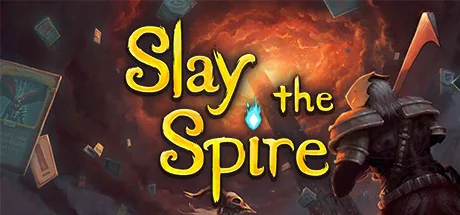
Slay the Spire
9 / 10
- Developer
- Mega Crit
- Publisher
- Mega Crit
- Released
- 23 January 2019
- Platforms
- Windows, macOS, Linux, PlayStation 4, Xbox One, Nintendo Switch, iOS, Android
- Genre
- Roguelike Deckbuilder
- Monetisation
- Premium, one-off purchase on every platform; the only DLC is an optional soundtrack, no microtransactions, no season pass
- Players
- Single-player only; there is no online or local multiplayer mode
The short version
Slay the Spire took two ideas that had nothing to do with each other — deckbuilding and the single-life roguelike run — and welded them together so cleanly that it's easy to forget, seven years later, how strange the pitch must have sounded in 2017. Every card you're offered, every relic you gamble on picking up, every path you choose through the map is a decision made under a constraint no card game usually has: there is no next game to fix your mistakes in. That pressure is where the entire design lives, and almost nothing about it has aged.
What has aged less gracefully is the presentation. The pixel art is functional rather than memorable, the game plays it safe visually in a way its imitators have since learned to avoid, and four characters is a small roster to still be the full lineup this far into a game's life. None of that touches the card design, which remains some of the best turn-based strategy work on Steam at any price.
Biggest strengths
- Every card, relic and map choice creates a real trade-off instead of a strictly better option
- Four classes reward completely different deckbuilding logic rather than reskinned stats
- Ascension's 20 stacking modifiers give a finished, single-player game genuine years of difficulty runway
Biggest weaknesses
- The pixel art and UI look dated next to almost everything that copied the formula afterward
- Ascension 20 asks for near-perfect play across dozens of runs, which reads as a grind rather than a climb to players who don't already love the game
- A single bad card-reward screen can end a 45-minute run with no way to recover, and the game never apologises for it
Who it's for: Strategy-minded players who like their tension to come from decisions rather than reflexes, anyone who bounced off a Slay the Spire imitator and wants the source material, and players deciding whether to buy this or its Early Access sequel first.
Our recommendation: Buy it. At a 75% discount it's one of the cheapest ways to get dozens of hours out of a single purchase on Steam, and even at full price it remains the benchmark the rest of its genre is still measured against. New players should start here rather than with Slay the Spire 2, which assumes you already know why the Ironclad's block matters.
9 / 10
Before Slay the Spire, "deckbuilding roguelike" wasn't a shelf at all. Deckbuilders were board games or long-form digital card games where you built toward a stable strategy over dozens of turns. Roguelikes were about permadeath and procedurally generated dungeons, usually with a weapon in your hand rather than a hand of cards. Mega Crit, a small Seattle studio led by Anthony Giovannetti and Casey Yano, put the two together in November 2017 and by the time it left Early Access on 23 January 2019, it hadn't just made a good game — it had made the template. Nearly every card-based roguelite released since, including its own sequel, is answering questions this game asked first.
That's a heavy legacy to carry into a review, and the temptation is to treat Slay the Spire as a monument rather than a game people are still deciding whether to buy. It's worth resisting that. Steam's 216,778 user reviews are still landing at 97% positive right now, in 2026, which is not a number that happens to a museum piece. It happens to a game that people are still actively finishing runs of tonight.
A deck with nowhere to hide
Most deckbuilders let you build across time — mulligan a bad draw, buy your way out of a weak turn, wait for the game to hand you the piece you're missing. Slay the Spire removes almost all of that safety net. You build a deck across a single climb of the Spire, from three cards offered after nearly every fight, and whatever you pick is what you're stuck defending your life with until the run ends, one way or another. That single constraint is the whole engine. It's why a card that would be mediocre in a game with unlimited time to plan around it — a card that trades your own health for damage, say, or one that only works with a specific set of other cards you may never actually draw — becomes a genuinely hard decision here. You're not asking "is this card good." You're asking "is this card good enough, soon enough, for the deck I'm actually going to end up with," and you're asking it with three seconds of information and a boss looming twelve fights away.
Relics raise the stakes further by acting less like items and more like build multipliers. A relic that makes your first card each turn free doesn't just help — it can single-handedly turn an entire archetype from unplayable into a run-winning engine, which is why the game is comfortable attaching real costs to some of them: a permanent scar on your maximum health, a curse card that clogs your deck for the rest of the run, a stat penalty you accepted for power you may or may not end up needing. Very few relics are simply good. Almost all of them are a bet, and the game's best moments come from realising three fights too late that the bet didn't pay off — or three fights too early that it's about to.
The map is a budget, not a checklist
The route through each act is presented as a branching map rather than a straight corridor, and it's easy to undersell how much design work that single screen is doing. Every node — a fight, an elite, a shop, a rest site, a mystery event — costs something to visit and returns something different, and the actual skill Slay the Spire is testing, more than card knowledge, is whether you can budget risk across an entire act rather than one fight at a time. Elite fights are the clearest version of this: skip them and you're weaker for the boss waiting at the act's end; fight them and you're spending health and resources you might need for the run between here and there. There's no objectively correct answer, which is exactly the point. A map that rewarded the same route every time would be a puzzle with one solution. This one asks you to read your own deck's strengths honestly and choose accordingly, run after run.
Ascension as the long game
Slay the Spire shipped with an ending, which is rarer than it sounds for a game this replayable — finish a character's run and the credits genuinely roll. What keeps players coming back for hundreds of hours afterward is Ascension: twenty stacking difficulty modifiers, unlocked one at a time by beating the previous level, that layer on tougher enemies, meaner bosses and fewer of the comforts a fresh run relies on. It's an unusually honest progression system, in the sense that it gives you nothing except the right to try something harder — no gear, no permanent stat boost, no safety net carried between runs. The reward is entirely the challenge itself, and for the audience this game is built for, that's enough.
It's also where the fairest criticism of Slay the Spire lives. Ascension 20 isn't really asking you to get better at the game once. It's asking you to be consistently, repeatably excellent across dozens of runs in a row, because a single unlucky card-reward screen or a single misjudged elite fight can end an otherwise perfect climb with no recourse. For a dedicated player that's the whole appeal — mastery measured honestly, with no way to buy or grind past it. For everyone else, the last several Ascension levels read less like a climb and more like a very long audition, and the game doesn't soften that distinction for players who came in expecting the curve to flatten out the way most games' difficulty settings do.
Presentation: the one place this hasn't aged well
Say the quiet part plainly: Slay the Spire looks exactly like an indie card game from 2017, because it is one. The pixel art does its job — cards, enemies and relics are all instantly readable, which matters far more here than it would in an action game — but "readable" is a different compliment than "memorable," and nothing about the presentation has grown any richer with time. Compare it to what Loop Hero or Balatro did visually with a similarly modest budget a few years later, or even to what Mega Crit's own sequel is attempting with a fuller art pipeline, and Slay the Spire's flat, slightly grey aesthetic is the one part of the package that genuinely shows its age. The soundtrack fares better — understated, atmospheric, built to sit under long thinking-heavy turns without becoming noise — but it was never going to be the reason anyone bought this game, and it isn't the reason anyone's still playing it either.
Built for a phone, a handheld or a couch, without changing a thing
Slay the Spire's system requirements were modest even in 2019, and that turned out to be one of its quiet strategic advantages rather than a limitation. A game whose combat is entirely turn-based, whose sessions naturally pause at fight boundaries, and whose deepest thinking happens during a card-reward screen rather than in real time is close to the ideal shape for a handheld or a phone. The Switch version, out from June 2019, and the iOS and Android ports that followed in 2020 and 2021 aren't compromises — they're the same game, unchanged, running comfortably on hardware that couldn't handle most of what shares a shelf with it. Steam Deck owners get the same deal for free, since nothing about the interface needed to be redesigned for a smaller screen to begin with; card text was always meant to be read closely regardless of the display it's on. Few games this mechanically dense translate to a touchscreen this cleanly, and it's a large part of why Slay the Spire spread as widely as it did.
A modding scene that became part of the game
Steam Workshop support turned out to be one of Mega Crit's better decisions, and not just as a feature checkbox. The most notable example is Downfall, a fan-made mode that flips the format on its head by making the game's own bosses playable characters fighting their way back down through inverted versions of the Spire — popular enough, and well-made enough, that it has since been folded into official recognition rather than left to rot as an unsupported mod. That's a healthier relationship between developer and mod scene than most games this size manage, and it's given Slay the Spire a second and third wind of community-made characters, card sets and challenge modes years after Mega Crit's own content updates slowed down.
Does a genre-founder still deserve a first purchase in 2026
This is the question that actually matters for anyone reading a review of a seven-year-old game today, and the honest answer is yes, more comfortably than almost any other back-catalogue purchase in the genre it created. The obvious counter-argument is that its own sequel exists now, with more classes, co-op and a bigger card pool — but Slay the Spire 2 is still in Early Access, its balance is visibly still being worked out in public, and it assumes a level of series familiarity that makes it a strange starting point for someone who's never played the original. There's also a meta-knowledge question worth being honest about: seven years of shared strategy guides, tier lists and streamed runs mean a new player today can absorb a lot of solved knowledge before ever touching the game, in a way 2019's players couldn't. That flattens some of the early discovery curve, but it doesn't touch the actual decision-making the game demands moment to moment — knowing that a card is theoretically strong and successfully building a deck around it under this run's specific constraints are two very different skills, and only one of them can be looked up online.
At a 75% discount bringing it down to NZ$9.24, checked 30 July 2026, this is close to disposable-income pricing for a game that will comfortably outlast most Ascension 20 attempts by dozens of hours. Even at the regular NZ$36.99 it's a fair trade for what's here: four fully realised characters, an optional Act IV and superboss for players who want more, twenty levels of self-imposed difficulty, and a design so influential that half the point of comparison for any new deckbuilder released this year is still, implicitly, this one.
Verdict
Slay the Spire earns its reputation the hard way — not by being flashy, but by getting a small number of systems so right that an entire genre built itself around the gap it left open. The single-run deck, the map as a running risk budget, and relics that behave like real bets rather than simple upgrades still make for some of the tightest turn-based decision-making on Steam, and Ascension gives that design a difficulty runway most finished games never bother building. It loses ground only on presentation, which was never its strongest suit and hasn't grown one since, and on how unforgiving its highest difficulty tiers are toward anyone who isn't already sold on the format. Neither of those changes what this actually is: the deckbuilding roguelike, still worth playing on its own terms rather than as homework before its sequel.
Anyone drawn to a game that rewards patient, long-term decision-making over twitch reflexes may also find something to like in Wanderer, which builds its own progression around steady choices made over time rather than a single life-or-death run.
Pricing, review figures and platform release dates checked 30 July 2026.
Pros and cons
Pros
- Every card, relic and map choice creates a real trade-off instead of a strictly better option
- Four classes reward completely different deckbuilding logic rather than reskinned stats
- Ascension's 20 stacking modifiers give a finished, single-player game genuine years of difficulty runway
- Runs on essentially anything, which is exactly why it works so well on Steam Deck and phones
- Steam Workshop mods add new characters, cards and the Downfall reversal mode for free
- NZ$9.24 at the current discount is a very small amount of money for this much replayable design
Cons
- The pixel art and UI look dated next to almost everything that copied the formula afterward
- Ascension 20 asks for near-perfect play across dozens of runs, which reads as a grind rather than a climb to players who don't already love the game
- A single bad card-reward screen can end a 45-minute run with no way to recover, and the game never apologises for it
- Only four characters exist seven years on, so a committed player eventually learns every deck archetype there is
- Years of shared strategy guides and tier lists mean an experienced player can walk into Act 1 with most of the game's mysteries already solved
Screenshots
-
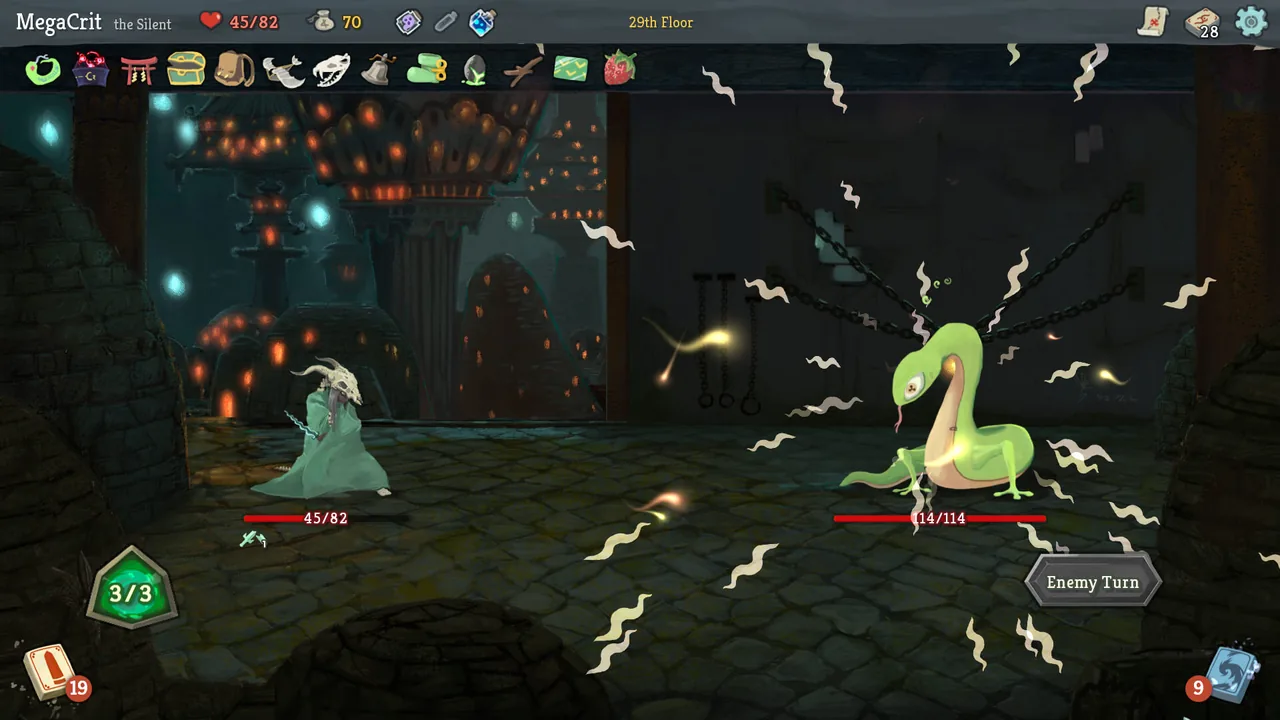
Slay the SpireImage: Mega Crit via Steam -
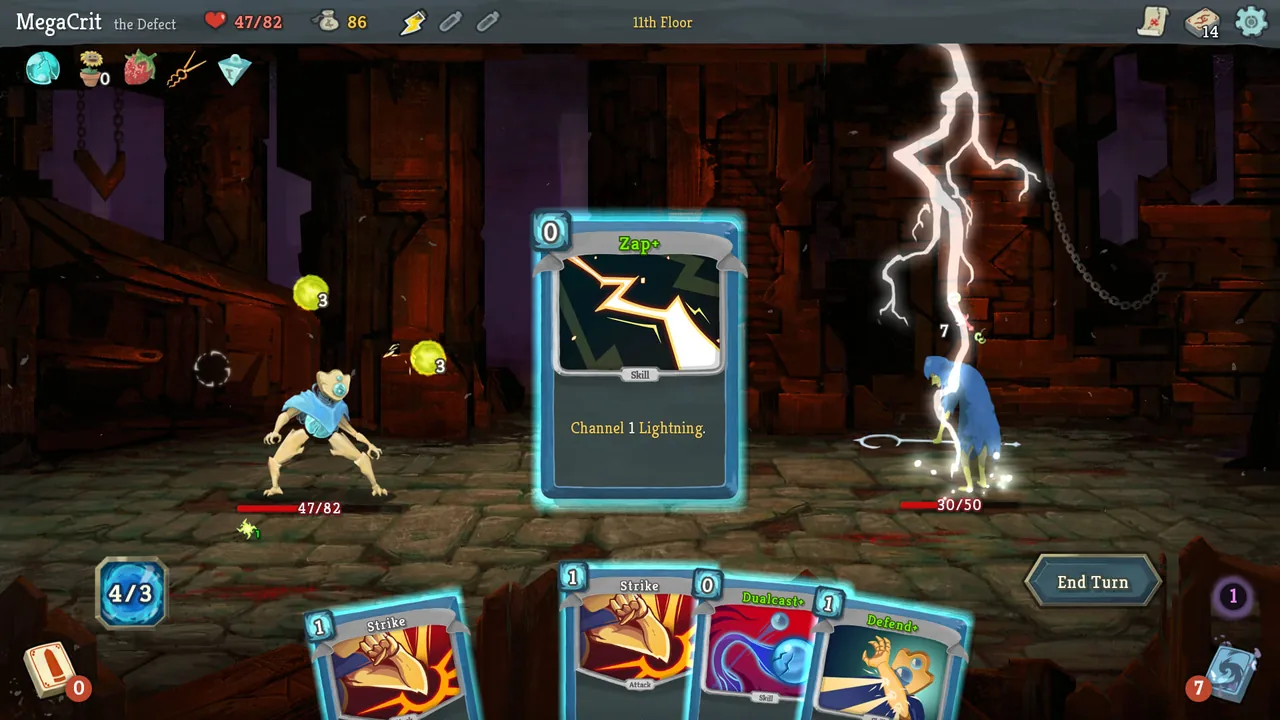
Slay the SpireImage: Mega Crit via Steam -
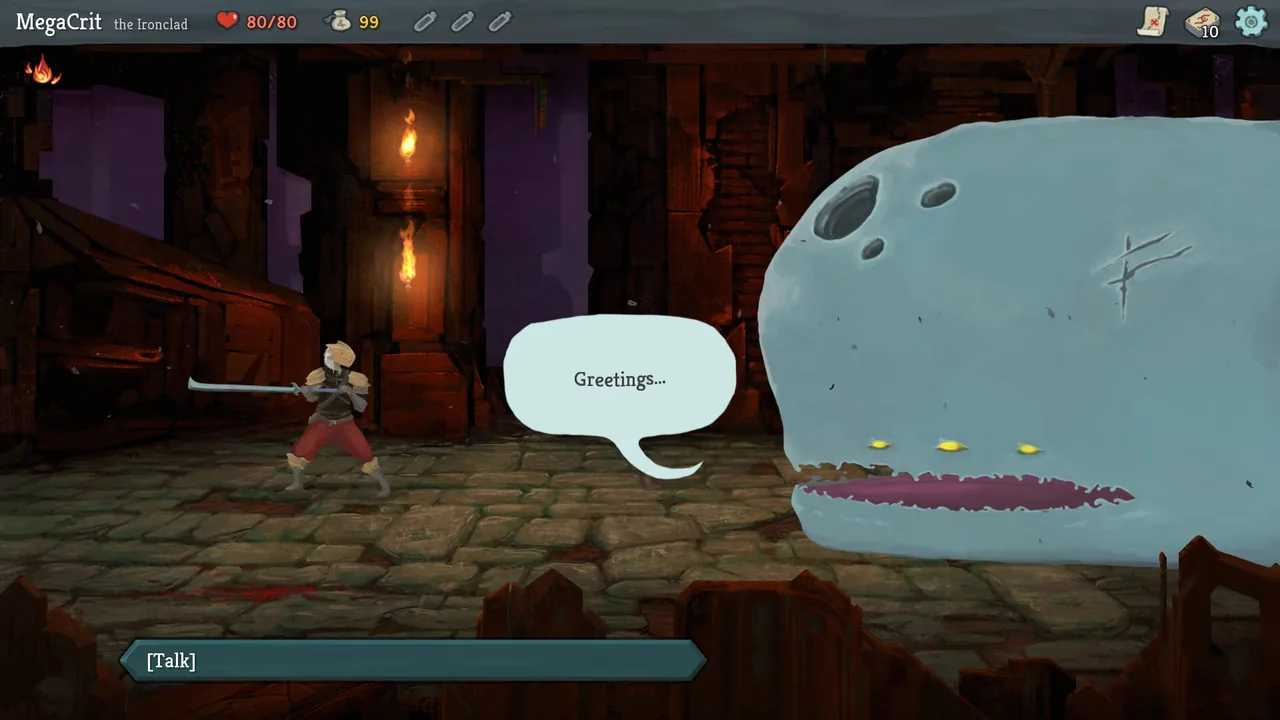
Slay the SpireImage: Mega Crit via Steam -
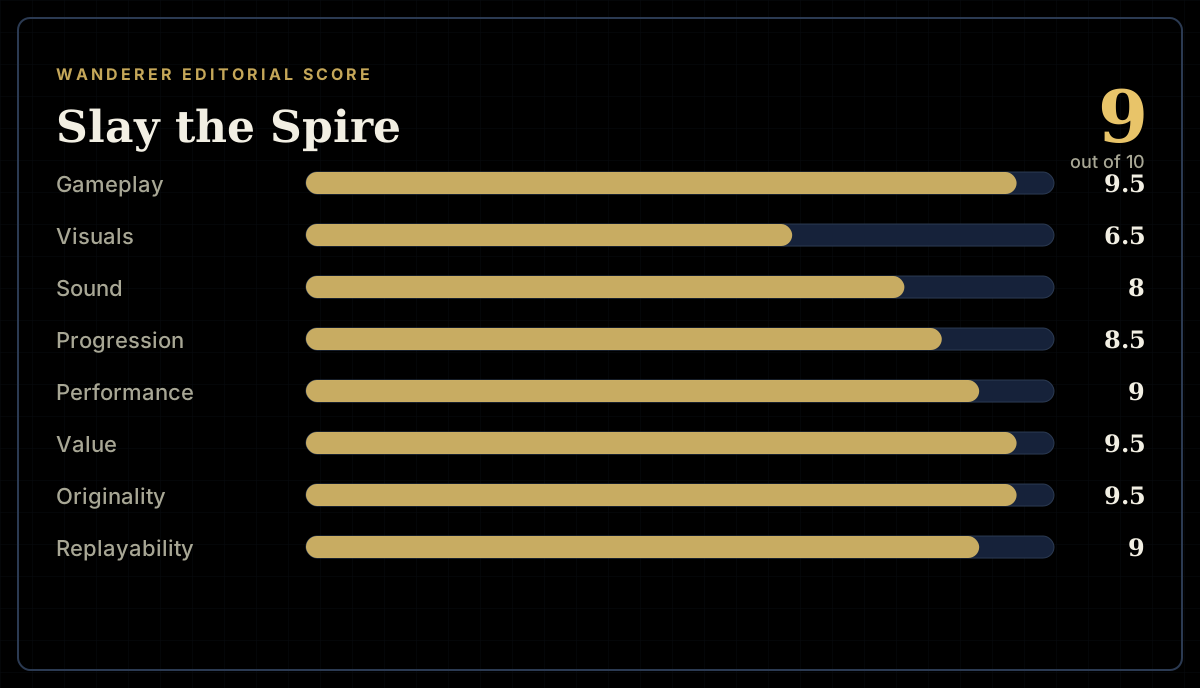
How the review scores each part of the gameWanderer Editorial -
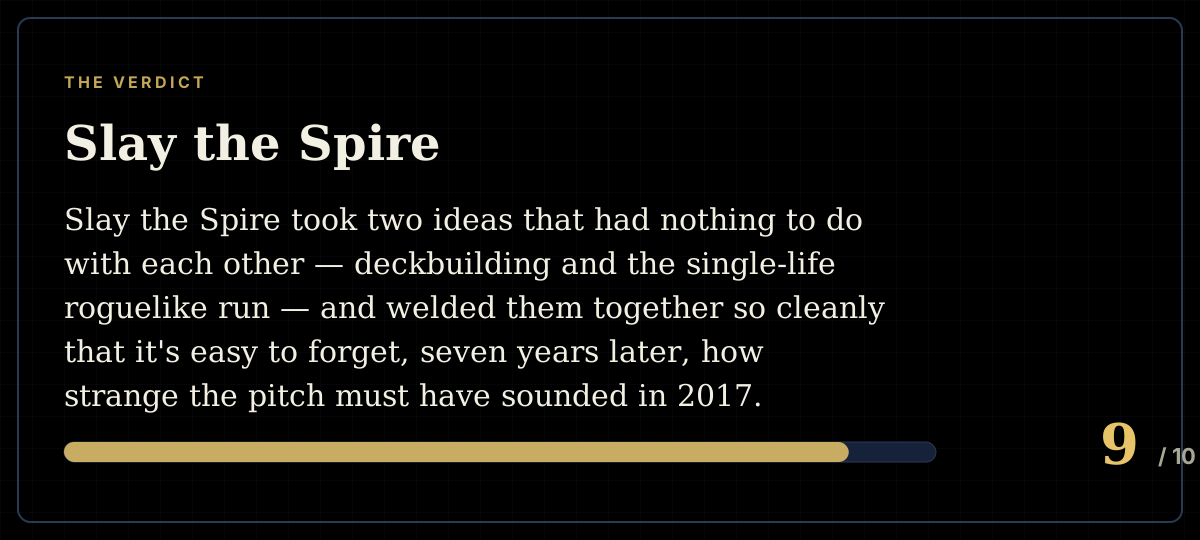
The short versionWanderer Editorial