Game review
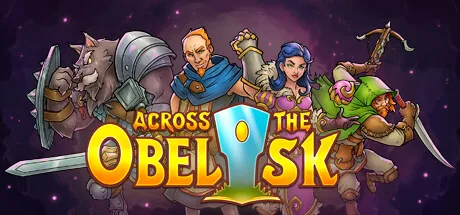
Across the Obelisk
6.5 / 10
- Developer
- Dreamsite Games
- Publisher
- Paradox Interactive (Paradox Arc)
- Released
- 16 August 2022
- Platforms
- Windows, macOS, Linux, Nintendo Switch, PlayStation 5, Xbox Series X|S
- Genre
- Co-op Roguelite Deckbuilder
- Monetisation
- Premium, one-off purchase for the base game, plus an unusually large paid-DLC roster (15 separate DLC entries on Steam as of August 2026, spanning full act-length expansions, extra playable heroes and cosmetic packs) — no ads, no premium currency, no subscription, but the DLC pricing itself is the single most consistent complaint in the game's review history
- Players
- Up to four players share one party and one set of run decisions in real time — drafting cards into a common pool, voting on which map node to visit next, and prompting each other's card choices mid-battle — with full cross-play between PC, Switch, PS5 and Xbox Series X|S; a genuinely different structure from a shared-seed race, though persistent desync reports in Steam's bug forums, especially from Act 3 onward, are a recurring cost of building the genre this way
The short version
Across the Obelisk's one real idea is worth the price of admission on its own: instead of one player piloting one deck the way Slay the Spire and Monster Train both do, up to four people build a single shared party and argue over a single shared deck, voting on the map together and passing suggestions across the table mid-fight. That's a structurally different multiplayer problem from anything else in the genre, and it's why the game sold past 350,000 copies and still sits at 80.5% positive across more than 13,000 Steam reviews four years after its 1.0 launch.
What that number doesn't show is how differently the last two years have gone. Paradox Interactive fully absorbed the game into its main portfolio in August 2023, and the reviews since then split into two distinct, dated waves that have nothing to do with the cards: a February 2024 wave over a new Paradox Launcher requiring agreement to a data-sharing EULA, and a longer-running, larger wave over DLC packs priced at or above the base game's own cost for a fraction of its content. Neither complaint is about how the game plays. Both are about what it costs to keep playing it.
Biggest strengths
- Four players genuinely share one party and one deck-building decision, voting on nodes and prompting each other's card picks mid-battle, rather than racing each other on an identical seed the way Monster Train's Hell Rush does
- Cross-play spans PC, Switch, PlayStation 5 and Xbox Series X|S, so a mixed-platform group of friends can sit in the same run
- A wide hero pool with distinct class identities gives four-person parties real build variety from one run to the next
Biggest weaknesses
- DLC pricing is the loudest and most consistent complaint across the review corpus: individual expansions and hero packs frequently cost as much as the entire base game for a fraction of its content, and Steam's own community forums are full of threads asking why
- The February 2024 Paradox Launcher rollout, which required agreeing to a new data-sharing EULA to keep playing, produced a distinct cluster of negative reviews unrelated to anything the game itself does
- Multiplayer desync bugs are still being reported in Steam's bug-tracking forums years after launch, most often once a run reaches Act 3
Who it's for: Groups of two to four friends who actually want to build one deck together rather than race each other on a shared seed, and anyone who liked Slay the Spire or Monster Train enough to wish it had proper co-op. Solo players are better served by either of those two instead.
Our recommendation: Buy the base game if a real four-player deckbuilder is what you're after — the core loop earns its positive review share on its own terms. Go in planning to stop at the base game, read the Steam community's own DLC-pricing threads before buying a single expansion, and expect the odd multiplayer desync in the later acts even years after launch.
6.5 / 10
One deck, four players, no shared seed required
Slay the Spire made the single-lane, single-deck deckbuilder the genre's default shape, and Monster Train's answer to multiplayer — Hell Rush, where up to eight players race the same seed without ever touching each other's boards — accepted that shape rather than breaking it. Across the Obelisk breaks it. Up to four players build one party and pilot one shared deck together in real time: everyone drafts cards into the same pool, votes on which node the party visits next, and can prompt teammates mid-combat about which card to play on their turn. It's the difference between "we're both playing the same level" and "we're playing the same run," and it's the reason Dreamsite Games' co-op deckbuilder found its own audience rather than reading as a reskin of games that came before it — Paradox's own figures put lifetime sales past 350,000 copies, and Steam's review corpus, checked 3 August 2026, sits at Very Positive: 10,486 of 13,031 reviews recommend it, an 80.5% share.
That's a genuinely good number for a game four years past its 1.0 launch. It's also a lower number than Wanderer's Monster Train review found for a single-player deckbuilder built on a comparable idea, and the gap between the two review corpuses tells you almost everything about where this game's problems actually sit — not in the cards, but in what happened to the business around them.
Building a party instead of a deck
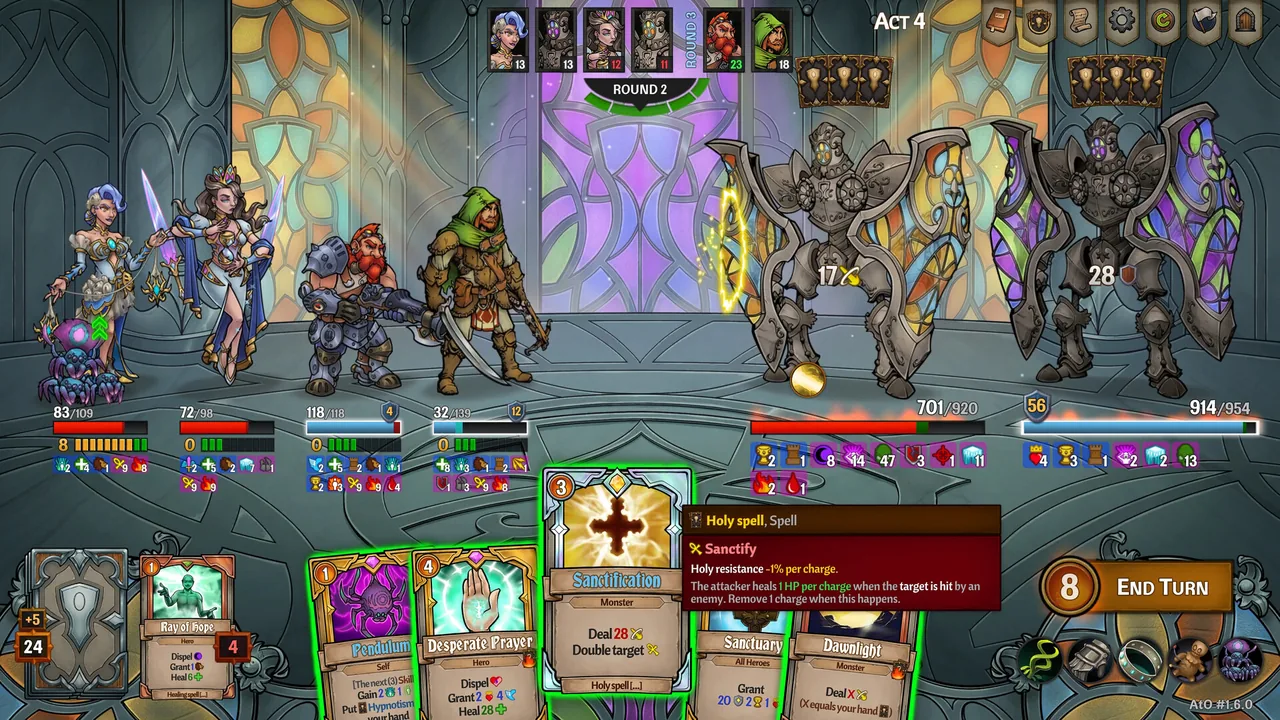
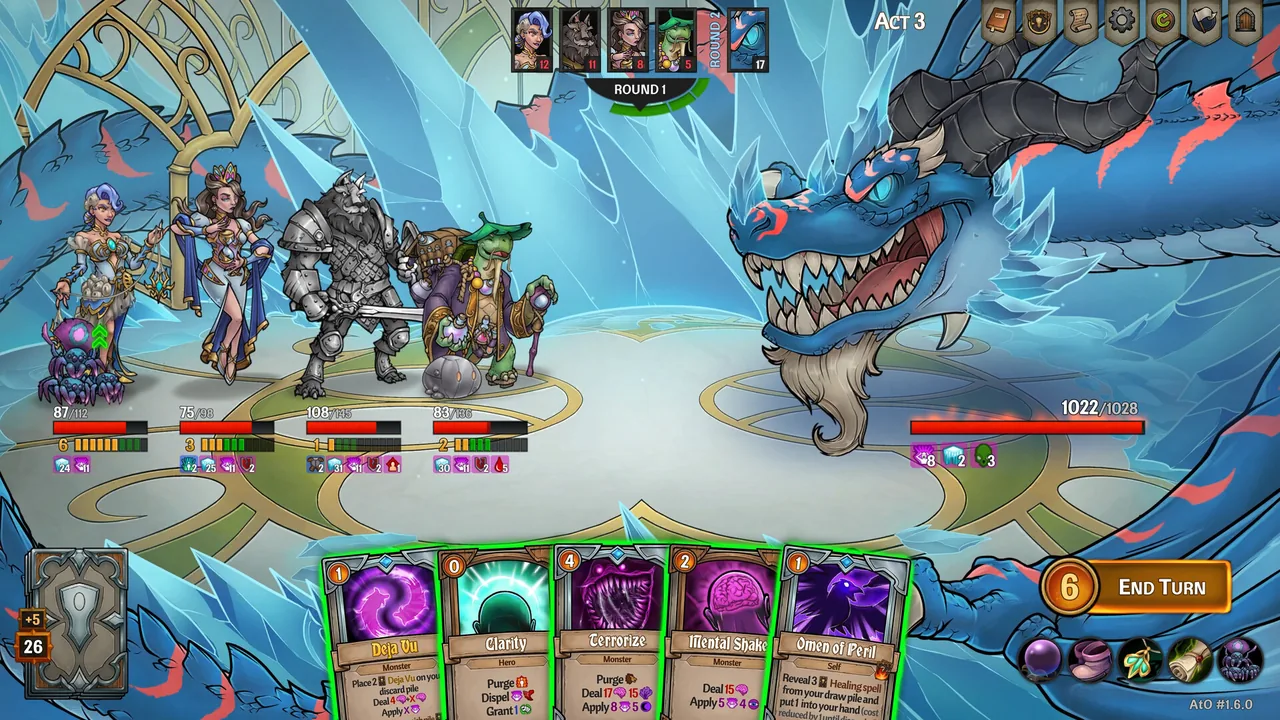
The base game ships five zones' worth of map, more than a hundred cards and items, and a roster of sixteen-plus playable heroes split across distinct classes, each contributing a different role to a four-person party the way a tabletop group might split into tank, healer, mage and scout. The deckbuilding decisions compound across the whole party rather than sitting inside one player's hand: a healer's card choices change what a warrior can safely risk next turn, and a party that never coordinates its damage types loses fights a coordinated one wouldn't. That's the mechanical payoff of the co-op structure, and it's real — screenrant's launch coverage called it "a great middle between D&D and deckbuilding" for exactly this reason, while noting plainly that the card design itself "doesn't measure up to the genre's greats" like Slay the Spire. Both things are true at once. The innovation here is structural, not a deeper card pool or a cleverer keyword system, and judged purely as a stack of individual cards, Across the Obelisk is competent rather than exceptional.
Where the party structure earns its keep is in replayability. A four-person group choosing between sixteen-plus heroes produces a genuinely different party composition from one run to the next in a way a solo deckbuilder's clan-pairing system can't fully match, because every seat at the table is a separate person making separate choices under time pressure. Disagreements over which tile to visit get settled by a card draw rather than deadlock, which keeps a four-way vote from turning into an argument, and the in-combat chat and card-suggestion tools mean a stronger player can mentor a weaker one without simply taking over their turn.
The bill that keeps arriving
The most consistent single complaint across the game's review history, by a wide margin, has nothing to do with any of that. Across the Obelisk currently carries 15 separate paid DLC listings on Steam — full act-length expansions, extra heroes, cosmetic packs — and Steam's own community discussion boards are dense with threads asking the same question in different words: "Why is the DLC more expensive than the base game?", "$20 DLC for a $20 game?", "What the hell is with this DLC pricing?" The specifics vary by thread, but the shape of the complaint doesn't: an expansion covering roughly one new area, a couple of heroes and a card set costs close to what the entire base game costs, which ships five areas and sixteen-plus heroes. Sands of Ulminin, the expansion released alongside Paradox's full acquisition of the game in August 2023, launched at US$19.99 — within a dollar of the base game's own list price for a fraction of its content. Community estimates for buying every current DLC on top of the base game land around US$70-90, and negative reviews from as recently as January 2025 cite totals in that same range as their reason for recommending against the game to newcomers, even players with hundreds of hours already logged.
None of that is about the deckbuilding. It's a pricing decision, made after the game had already built a large, loyal player base on its original terms, and the reviews written specifically about it read less like buyer's remorse and more like players who feel a game they already trusted changed the deal on them.
A launcher problem that wasn't really about this game
A second, separate wave of negative reviews clusters tightly around February through June 2024, and it's worth separating from the DLC complaints because it's a different issue with a different cause. Paradox rolled out a new Paradox Launcher across its published catalogue in early 2024, requiring players to agree to an updated EULA with data-sharing language before they could keep playing — a change that hit multiple Paradox titles at once, from Cities: Skylines to Europa Universalis IV, not just this one. Across the Obelisk's own Steam discussion boards carry threads from the same window flagging exactly this ("Paradox will harvest your data with their new launcher"), and the negative-review sample from that period repeats the same language: an unwanted account requirement, a launcher installed without clear warning, and a EULA change imposed on people who'd already bought the game under different terms. It's a fair complaint, and a well-documented one, but it's a Paradox-wide policy decision rather than anything specific to how this game is built — worth knowing before assuming every 2024 one-star review is about DLC.
Party of four, plus the bugs that come with it
Real-time shared decision-making across four players and one deck is a harder engineering problem than a single-player turn queue, and Across the Obelisk's bug forums show the cost of it plainly. Desync reports recur across Steam's troubleshooting board well past launch — mismatched card costs when multiple cards tie for the same value, towns and shops falling out of sync between players, specific cards and abilities named as repeat offenders — and the most common fix volunteered by the community is simply restarting the multiplayer session, which is a rough workaround for a run that four people have already invested time in. It isn't the kind of game-breaking instability that shows up on every playthrough, and it hasn't stopped the game's review share from staying comfortably in "Very Positive" territory, but it's a persistent enough thread across the bug forums, years apart, that the underlying synchronisation issues clearly haven't been fully run to ground.
What the achievement data actually shows
Steam's global achievement percentages for Across the Obelisk don't tell as clean a story as they sometimes do for this genre, and it's worth being honest about the shape of the data rather than forcing it into a tidier narrative. The lowest completion rates on the list — under 4%, down to 0.3% for the rarest — belong almost entirely to hidden, event-specific achievements tied to rare narrative encounters that a lot of owners may simply never stumble into, which measures event rarity more than it measures player attrition or difficulty. What is worth noting is the ceiling at the other end: out of 157 total achievements, not one is held by more than 82% of owners, and that top tier belongs to fairly basic milestones — recruiting a party member, visiting a town, collecting thirty cards of a given class. For a game whose opening hours are meant to be approachable, an achievement that simple sitting at 82% rather than something closer to Monster Train's 96.6%-owners-beat-the-first-boss figure suggests a meaningful share of buyers don't get far past the opening runs, which lines up with a review corpus full of players who say they stopped over a launcher prompt or a DLC price tag rather than a fight they lost.
Console ports that didn't starve the PC version
Across the Obelisk's platform history is one of the more level-headed parts of its story. It spent roughly sixteen months in Early Access before its 16 August 2022 1.0 launch — itself the debut title under Paradox's newly announced Paradox Arc publishing partnership, a marketing and distribution deal rather than an acquisition at that point — and didn't reach consoles until Nintendo Switch on 21 March 2024, followed by PlayStation 5 and Xbox Series X|S on 6 November
- Full acquisition into Paradox's main portfolio came in between, in August 2023. None of the
console ports cut Steam Achievements, Cloud saves or cross-play, and a mixed-platform group of friends can sit in the same run regardless of which box they own — a genuinely good outcome for a co-op game, and one that's easy to overlook next to the pricing complaints.
Verdict
Across the Obelisk gets the one thing that actually matters for a co-op deckbuilder right: four players sharing one party and one deck, arguing over the same map and the same hand of cards, is a better multiplayer answer to this genre than anything Slay the Spire or Monster Train offers, and the base game alone is a complete, sizeable roguelite that earned its 80.5% Steam approval honestly. What keeps this from scoring alongside those two games is almost entirely business decisions made after the fact: a DLC roster that its own community consistently calls predatory, a 2024 launcher and EULA change that cost it a distinct wave of goodwill, and multiplayer plumbing that still throws desyncs years after launch. Buy the base game for the co-op hook. Skip the DLC until you've read what current owners say about it, and don't expect this to be the tighter card game Slay the Spire fans are hoping for — that was never really the point.
Anyone who'd rather build one character's progression slowly over weeks than argue over a shared deck for an evening might find Wanderer a better fit for the same "playing this together" instinct, minus the DLC storefront.
Pricing, review figures and achievement data checked 3 August 2026.
Pros and cons
Pros
- Four players genuinely share one party and one deck-building decision, voting on nodes and prompting each other's card picks mid-battle, rather than racing each other on an identical seed the way Monster Train's Hell Rush does
- Cross-play spans PC, Switch, PlayStation 5 and Xbox Series X|S, so a mixed-platform group of friends can sit in the same run
- A wide hero pool with distinct class identities gives four-person parties real build variety from one run to the next
- The base game alone — five zones, over a hundred cards and items, sixteen-plus heroes — is a complete, sizeable roguelite before any DLC purchase is considered
- Console ports arrived nearly two years after the PC 1.0 without the base game being abandoned in between, and Steam Achievements, Cloud and Leaderboards all carried over intact
Cons
- DLC pricing is the loudest and most consistent complaint across the review corpus: individual expansions and hero packs frequently cost as much as the entire base game for a fraction of its content, and Steam's own community forums are full of threads asking why
- The February 2024 Paradox Launcher rollout, which required agreeing to a new data-sharing EULA to keep playing, produced a distinct cluster of negative reviews unrelated to anything the game itself does
- Multiplayer desync bugs are still being reported in Steam's bug-tracking forums years after launch, most often once a run reaches Act 3
- Reviewers at launch already noted the core card design doesn't reach the tactical depth of Slay the Spire or Monster Train — the co-op structure is the innovation, not the deckbuilding itself
- No single one of the game's 157 Steam achievements is held by more than 82% of owners, including entry-level ones like recruiting a party member or visiting a town
Screenshots
-
Across the ObeliskImage: Paradox Interactive via Steam -
Across the ObeliskImage: Paradox Interactive via Steam -
Across the ObeliskImage: Paradox Interactive via Steam -
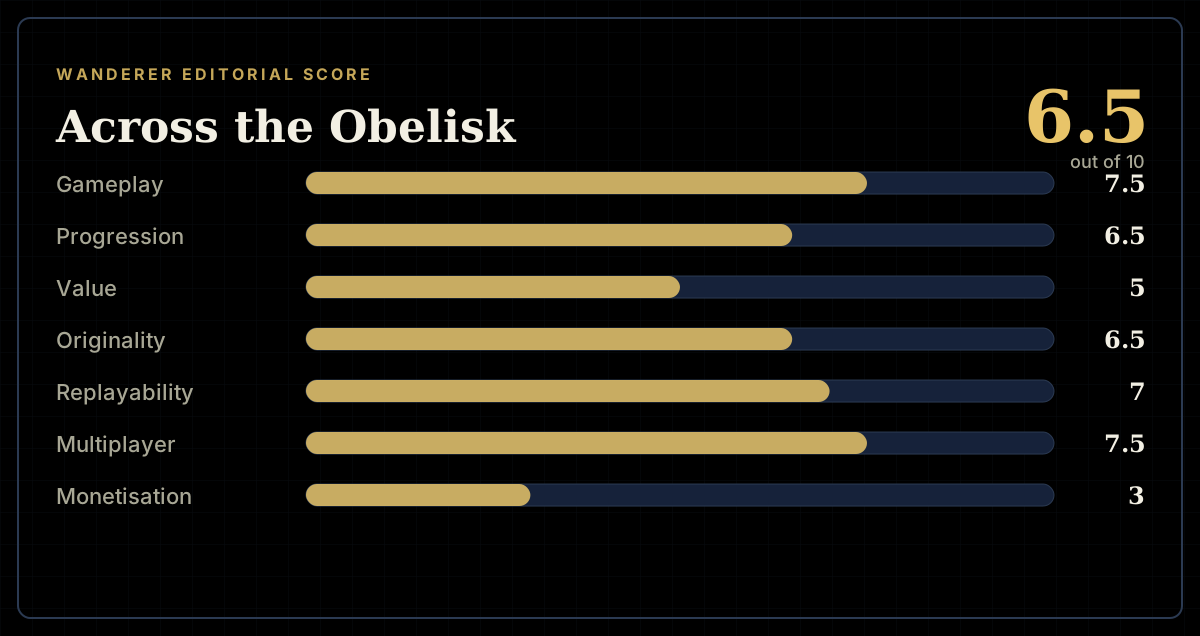
How the review scores each part of the gameWanderer Editorial -
The short versionWanderer Editorial