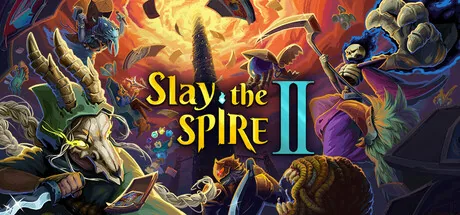
Game review
Slay the Spire 2
7 / 10
- Developer
- Mega Crit
- Publisher
- Mega Crit
- Released
- 5 March 2026
- Platforms
- Windows, macOS, Linux
- Genre
- Roguelike Deckbuilder
- Monetisation
- Premium, one-off purchase; no microtransactions, no DLC, no season pass
- Players
- Online co-op for up to 4 players alongside single-player, present since Early Access launch
The short version
Slay the Spire 2 is still, underneath everything, a Slay the Spire game — which means the card design, the risk-reward math of every fight, and the addictive pull of building one more run are as sharp as anything in the genre. Mega Crit hasn't lost the thread that made the original one of the best-reviewed games Steam has ever hosted. What it's added is co-op for up to four players, two genuinely new classes, and a live-service cadence of balance patches that has repeatedly swung too hard in one direction and then had to walk itself back.
That cadence is the story behind the 61% positive score, and it holds up under scrutiny far better than a simple review-bomb narrative would. The negative reviews aren't drive-by outrage from players who bounced off the tutorial — the typical unhappy reviewer has put in dozens or hundreds of hours and is specifically angry about a boss, a balance pass, or a promise the devs didn't quite keep. That's a harder problem to fix than a PR crisis, but it's also a much better sign for where this game ends up than the raw percentage suggests.
Biggest strengths
- The core card-and-relic loop retains the tight risk-reward decision-making that made the original one of the best-reviewed games in its genre
- Co-op for up to four players is a genuinely new structure, not a bolted-on mode, with its own cards and relics built around team synergy
- The Regent and the Necrobinder play nothing like the three returning classes, giving veteran players real new decisions to learn rather than reskinned strategies
Biggest weaknesses
- Ascension is currently capped at 10 rather than the original's 20, and progress is tracked per character, so committed players are climbing a shorter, more repetitive ladder five months in
- A specific Act 3 boss, Doormaker, drew enough sustained backlash that Mega Crit removed it outright and started over with a replacement that is now drawing similar complaints
- A genuine RNG bug, unnoticed until a player's own eight-hour investigation forced Mega Crit to confirm and patch it, cost the game real trust with its most invested audience
Who it's for: Slay the Spire veterans who want more of the same design language stretched further, co-op deckbuilding groups looking for something with real strategic depth, and anyone comfortable buying into an Early Access game whose balance is visibly, sometimes painfully, still being worked out in public.
Our recommendation: Worth buying now if you loved the first game and want to be part of the Early Access conversation, especially for the co-op mode, which doesn't really exist anywhere else in this shape. Players who want a finished, stable ladder to climb — or who get frustrated by a boss fight getting deleted out from under them mid-run — are better off waiting for 1.0, which Mega Crit itself says is a long way off.
7 / 10
The original Slay the Spire didn't just do well critically — it more or less invented a genre category and then sat near the top of it for six years, currently holding 97% positive across 216,000-plus Steam reviews, the kind of number that puts it alongside Steam's most acclaimed games of all time regardless of size or price. Slay the Spire 2 launched into Early Access on 5 March 2026 carrying that reputation and, for a game built by the same small studio using the same design instincts, currently sits at 61% positive across nearly 193,000 reviews — Steam's blunt "Mixed" label, applied to a sequel from a team that has rarely put a foot wrong. That gap is the actual story here, and it deserves a more careful answer than either "the sequel is bad" or "it's just review bombing."
It's neither, or rather, it's both in smaller doses than the headline number implies. The card game underneath Slay the Spire 2 is still excellent. What's dragging the score down is a specific, traceable pattern of Early Access growing pains — an aggressive live-balance cadence, one boss fight that had to be deleted and rebuilt from scratch, and a real bug in the game's randomness that a player had to prove existed before Mega Crit would fix it. None of that is invisible or speculative; it's documented in the studio's own patch notes and visible in the reviews themselves.
What actually changed from the original
Slay the Spire 2 keeps the shape everyone who played the first game will recognise instantly: climb a tower across three acts, build a deck one card at a time from combat rewards, spend relics and potions to bend the odds in your favour, and decide every turn whether the safe play or the greedy one is worth the risk. What's different is what surrounds that loop. The card and relic pool has been substantially rebuilt rather than just expanded — returning classes play with new keywords and mechanics rather than simply inheriting their old decks, and 15 additional cards, including several built specifically for co-op team synergy, landed in a single July update alongside ongoing balance work. The Spire itself has also grown teeth it didn't have before: enemies read differently, encounters escalate faster, and the developers have been explicit in their own newsletters that later Ascension levels are meant to punish sloppy deckbuilding harder than the original ever did.
The roster is the clearest evidence of intent. Three of the original's four classes return — the Ironclad, the Silent, and the Defect — each reworked with new mechanics rather than simply carried over. The Watcher, notably, has not returned as of this review, a gap veteran players are still waiting on. In its place sit two genuinely new characters: the Regent, who forges a sovereign blade and spends a resource called stars, and the Necrobinder, who fights alongside a skeletal companion that can absorb damage and attack independently. Both play distinctly enough from the returning trio that learning them feels like learning a new game rather than a reskinned one, which is exactly what a sequel to a genre-defining deckbuilder needs to justify existing at all.
Co-op is the real headline feature
The single structural addition that has no equivalent in the original game is co-op for up to four players, live since Early Access launch rather than bolted on later. This isn't four people taking turns on one deck — each player runs their own hand and relics, with cards and interactions specifically designed around team play, and the studio has kept adding co-op-focused content alongside solo balance work rather than treating multiplayer as an afterthought. It's a genuinely new answer to a question the deckbuilding-roguelike genre hasn't spent much time on: what does shared risk look like when the whole appeal of the format is usually a private, solitary spiral of escalating decisions? The answer here is "surprisingly good, when the difficulty is tuned right," and considerably less good when it isn't — several of the more substantive negative reviews single out high-Ascension co-op specifically, describing encounters where enemy health and damage scale in a way that punishes a two-player party disproportionately compared to solo play. That's a tuning problem rather than a design failure, but it's a real one, and it sits squarely inside Mega Crit's stated Early Access mandate to keep adjusting.
Ascension, and a ladder that's shorter than it looks
Long-term progression runs through Ascension levels, exactly as it did in the original — beating a character's run at a given Ascension unlocks modifiers that make the next attempt harder, in exchange for cosmetic and structural rewards. Right now that ladder tops out at 10, against 20 in the original game, and progress is tracked separately per character, so a player who's pushed the Ironclad to Ascension 8 is starting the Regent from nothing. For a genre built almost entirely around long-term mastery, a shortened, per-character ladder five months into Early Access is a reasonable state for an unfinished product to be in, but it's also a legitimate reason committed players feel like they're bumping against a ceiling faster than they expected to. Mega Crit's own roadmap acknowledges more Ascension content is coming rather than treating 10 as a final number, which is the right posture to have, but it doesn't change what a buyer gets today.
Interface and the quieter improvements
Away from the headline features, Slay the Spire 2 has picked up real quality-of-life work over its Early Access run. A proper monster Compendium — effectively a bestiary that tracks enemy behaviour and intents as you encounter them — arrived alongside Steam Workshop mod support in a June update, giving the game both a research tool for planning runs and an official channel for community content, something the original never had built in. Accessibility carries over well too: full control remapping, a mouse-only option, and the ability to play without timed input all sit alongside standard save-anywhere and cloud-save support. None of this is flashy, but it's the kind of infrastructure that suggests a studio thinking about the game's full lifespan rather than just its launch window, and it's a genuine improvement over how the original shipped.
The sentiment gap, taken seriously
This is where the review has to do more than describe features. A 36-point drop from the original's score to the sequel's isn't explained by "sequels always score lower" — plenty of beloved sequels hold their franchise's reputation intact. Reading a large sample of the negative reviews in detail turns up a specific, repeatable pattern rather than a single viral grievance, and it's worth being precise about what that pattern is and isn't.
It is not tourism. The median negative reviewer in a broad recent sample has logged roughly 90 hours, and the overwhelming majority have played well past the point where a bounce-off-the- tutorial complaint would make sense. Several explicitly open with some version of "I loved the first game and have hundreds of hours in this one" before explaining what soured them. That's the opposite of what a coordinated outside review-bombing campaign usually looks like, and it means the negativity has to be taken as a genuine, informed verdict from the game's core audience rather than dismissed as noise.
What that audience is angry about clusters around three concrete events, not a vague sense that the game is unfinished. First, balance: Mega Crit runs a fast, aggressive live-tuning cycle, and a large share of negative reviews describe recent nerf passes as making high-Ascension runs feel punishing rather than skill-testing, with wins depending more on the cards a run hands you than on play quality. Second, a specific Act 3 boss called Doormaker generated enough sustained frustration — players described it as shutting down entire deck archetypes at once — that Mega Crit removed it from the game entirely rather than continuing to patch it, replacing it with a new boss, Aeonglass, that a meaningful slice of the current negative reviews now single out by name as needing the same treatment. Third, and most damaging to trust: a player spent roughly eight hours investigating a suspicion that the game's randomness wasn't behaving the way Mega Crit claimed it did, and turned up a genuine bug — two supposedly independent random rolls at the start of a run were quietly correlated, skewing early-game curse odds. Mega Crit confirmed the bug, credited the discovery, and patched the seeding system in a mid-June update. That the bug was real is good news for the game's long-term integrity. That it took an outside investigation to surface it is exactly the kind of thing that erodes confidence in a game whose entire genre depends on players trusting the shuffle.
A smaller, separate thread is worth naming plainly rather than repeating uncritically: a portion of negative reviews accuse Mega Crit of undisclosed AI use, apparently triggered by placeholder art that some players read as AI-generated. Mega Crit's co-founder has stated on the record that the studio does not use generative AI for content, only limited internal tools for code review, and that the rough placeholder art is a deliberate stand-in rather than a shortcut. That's the developer's own stated position, and it's worth being clear that this thread is a smaller share of the negative-review sample than the balance and boss complaints — a trust dispute running alongside the larger one, not the primary driver of the score.
None of this means the 61% figure is measuring something other than the game. It's measuring exactly what a Steam review score is supposed to measure: how satisfied a large, informed player base currently feels. What it doesn't mean is that the underlying design has collapsed. Read past the aggregate number and the pattern is a passionate, engaged community reacting hard — sometimes overreacting, sometimes with good reason — to a studio that is visibly, publicly still building the back half of its game and occasionally getting the tuning wrong before it gets it right.
Price and what Early Access buys you today
At NZ$37.99 with no discount active, Slay the Spire 2 is priced as a finished premium game while being, by Mega Crit's own description, one to two years from actually being one. There's no microtransaction shop, no season pass, no DLC to worry about — whatever criticisms apply here, predatory monetisation isn't one of them, and that consistency with the original's business model is worth crediting directly. What you get for the price today is the full card pool as it currently stands, all five available classes, solo and co-op play up to four players, Steam Workshop mods, and a developer with a strong track record of listening and iterating quickly, even when that means publicly admitting a boss fight or a bug shouldn't have shipped the way it did. What you don't get yet is a finished Ascension ladder, the Watcher, or the settled balance that makes a deckbuilder's higher difficulty tiers feel like a fair test rather than a moving target.
Verdict
Slay the Spire 2 is a very good deckbuilder wrapped in an Early Access process that is currently testing its most devoted players' patience harder than it needs to. The card design, the new classes, and especially the co-op mode are exactly the kind of ambitious expansion a sequel to a genre-defining game should attempt, and Mega Crit's willingness to scrap a boss fight or rebuild its random-number seeding rather than defend a bad decision speaks well of where this ends up. But a score this far below the original isn't an accident of internet outrage — it's a large, invested player base telling a talented studio, loudly and specifically, that the live-balance cadence has swung too hard too often, and that trust in the game's fairness took a real hit this spring that hasn't fully recovered. Seven out of ten reflects a genuinely strong foundation held back by turbulence that is, at least in principle, entirely fixable — and worth revisiting once Ascension 20 and a steadier hand on the balance patches actually arrive.
Anyone who wants their long-term progression to keep moving without a live-balance rollercoaster attached to it might also want to look at Wanderer, which is free to play throughout its own ongoing development.
Price, review figures and patch history checked 30 July 2026.
Pros and cons
Pros
- The core card-and-relic loop retains the tight risk-reward decision-making that made the original one of the best-reviewed games in its genre
- Co-op for up to four players is a genuinely new structure, not a bolted-on mode, with its own cards and relics built around team synergy
- The Regent and the Necrobinder play nothing like the three returning classes, giving veteran players real new decisions to learn rather than reskinned strategies
- Mega Crit patches fast and explains its reasoning in detailed public notes, including reversing its own decisions when a boss or mechanic clearly wasn't working
- Accessibility options carried over and expanded from the original, including play without timed input and full remapping, keep the game approachable at the settings level
Cons
- Ascension is currently capped at 10 rather than the original's 20, and progress is tracked per character, so committed players are climbing a shorter, more repetitive ladder five months in
- A specific Act 3 boss, Doormaker, drew enough sustained backlash that Mega Crit removed it outright and started over with a replacement that is now drawing similar complaints
- A genuine RNG bug, unnoticed until a player's own eight-hour investigation forced Mega Crit to confirm and patch it, cost the game real trust with its most invested audience
- The Watcher, one of four classes from the original, hasn't returned yet, leaving series veterans without a class they may specifically be waiting for
- NZ$37.99 is full asking price for a game Mega Crit's own roadmap describes as one to two years from finishing
Screenshots
-
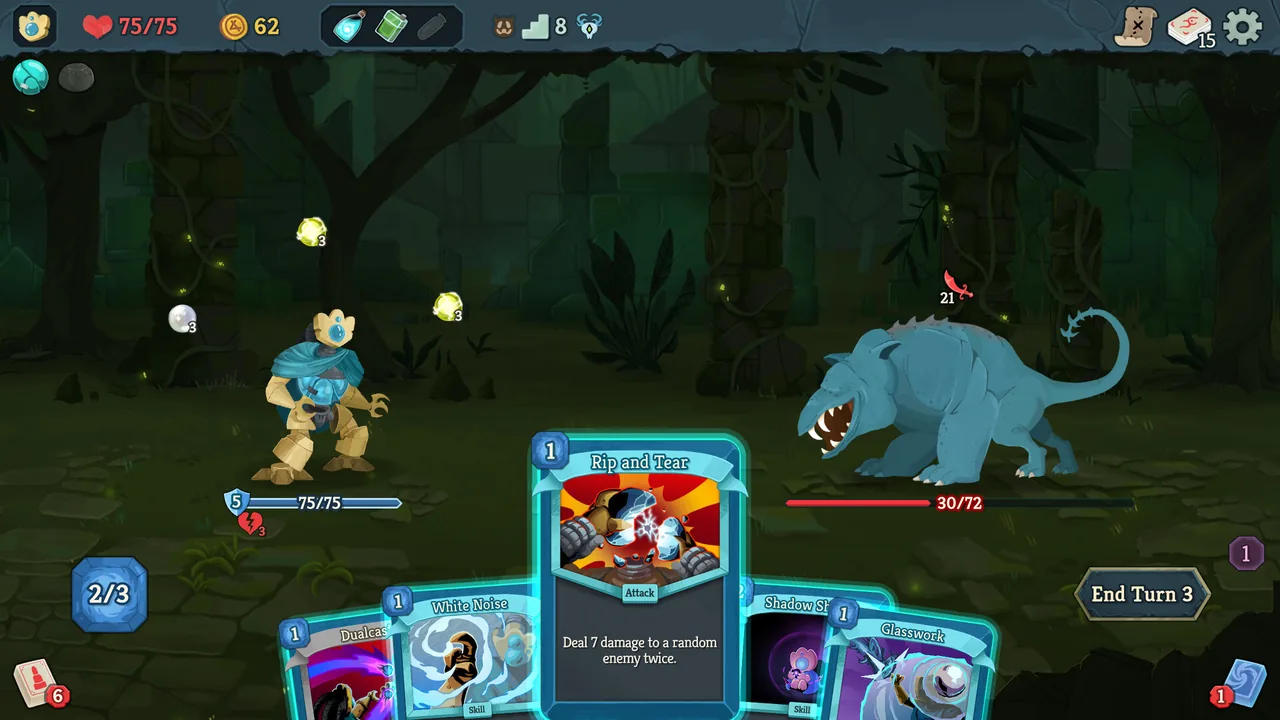
Slay the Spire 2Image: Mega Crit via Steam -
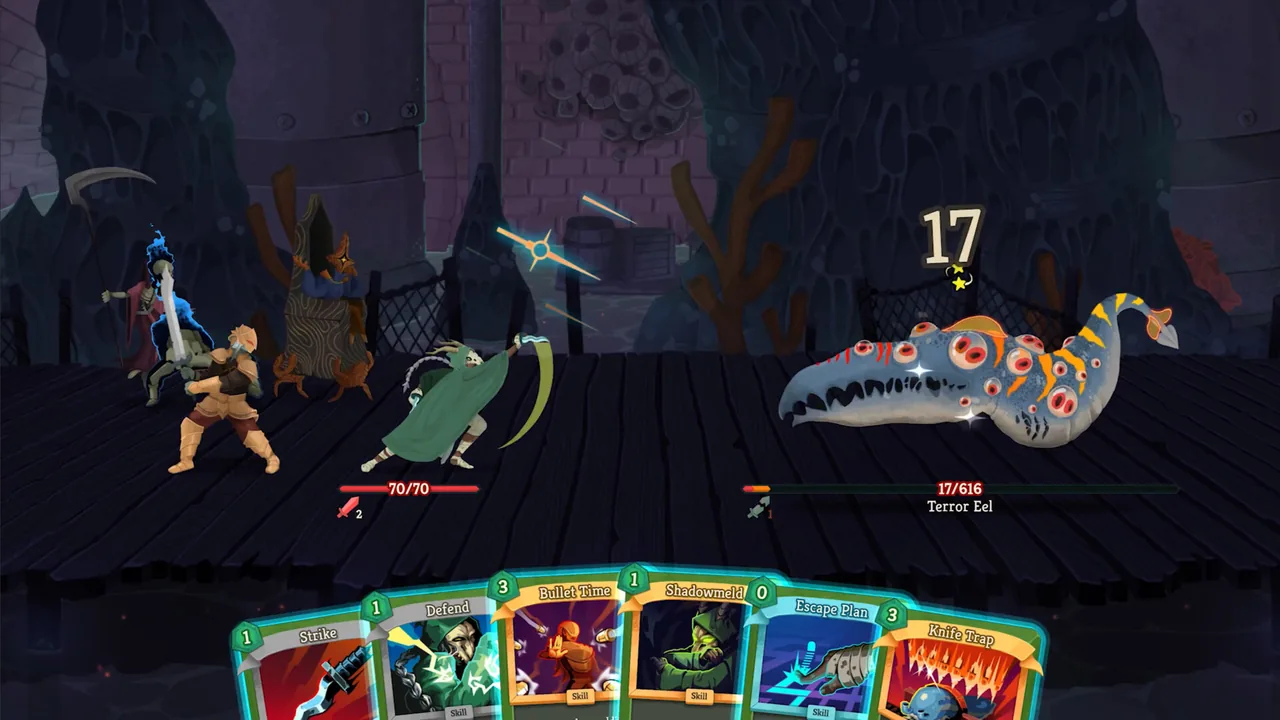
Slay the Spire 2Image: Mega Crit via Steam -
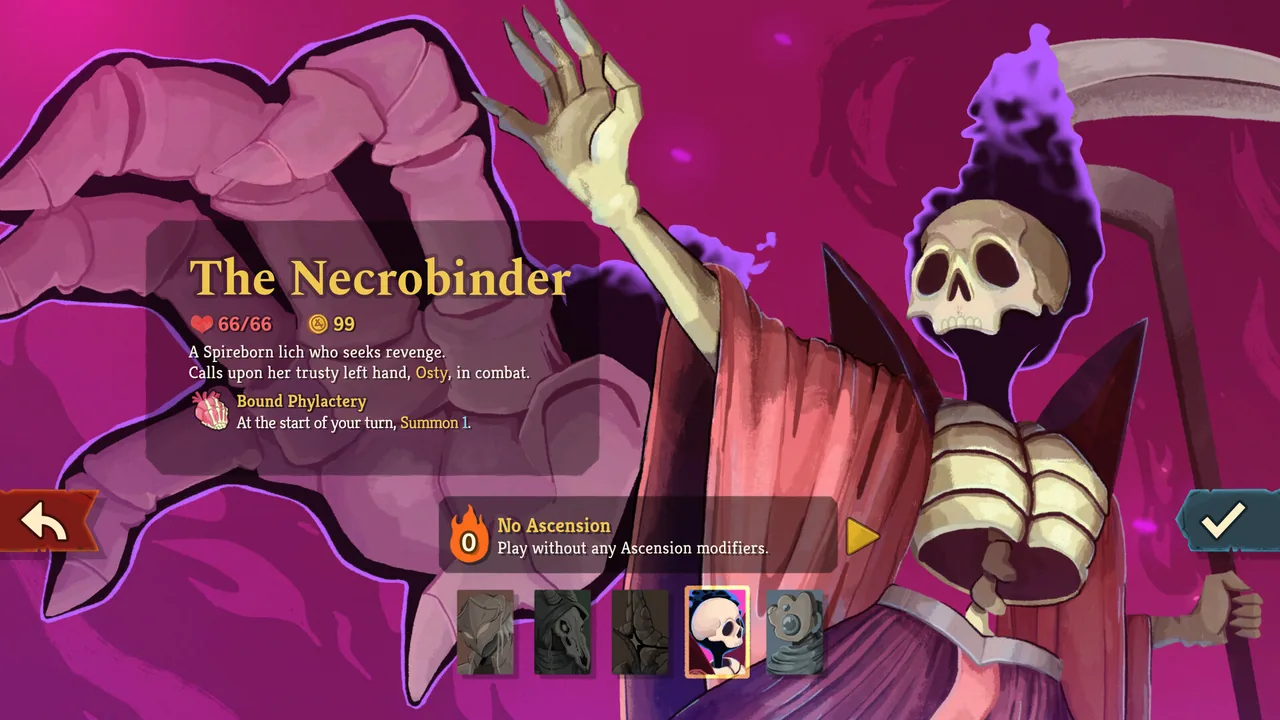
Slay the Spire 2Image: Mega Crit via Steam -
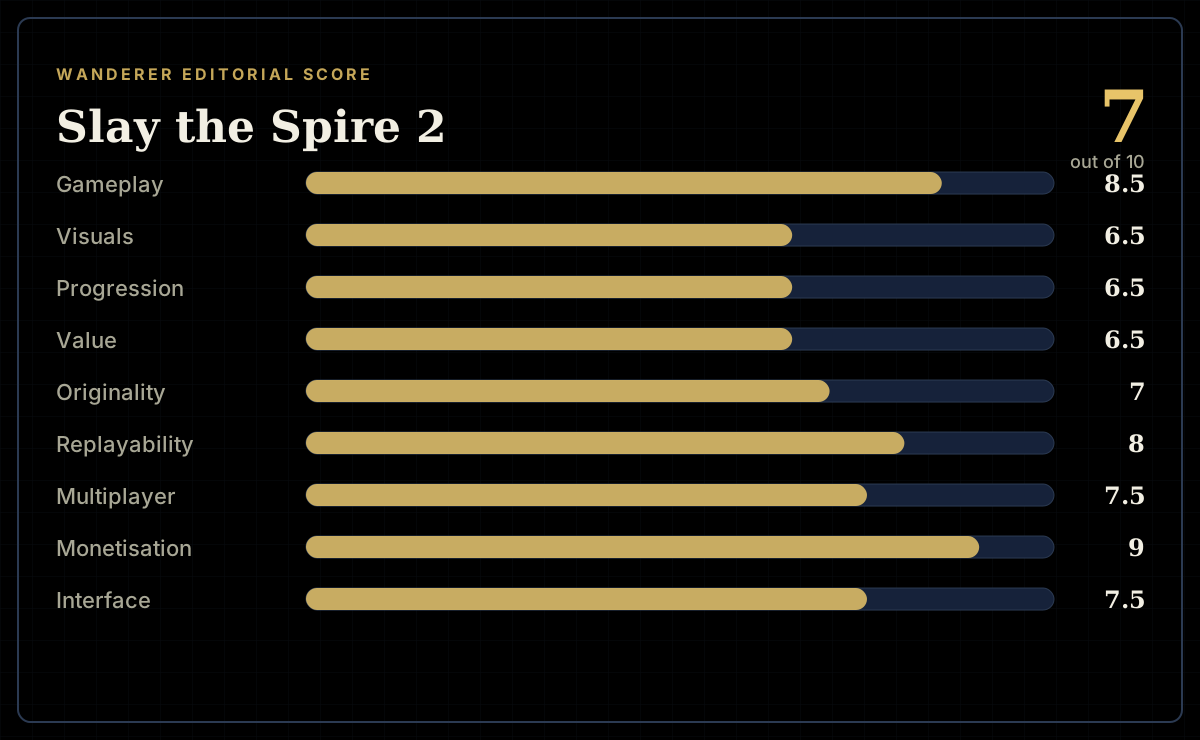
How the review scores each part of the gameWanderer Editorial -
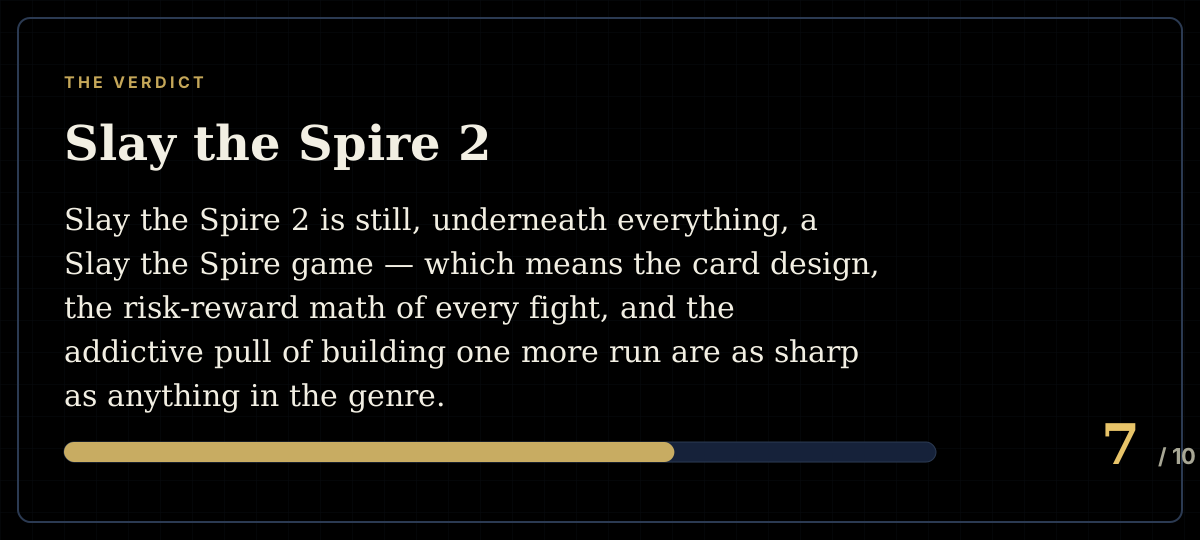
The short versionWanderer Editorial