LocalThunk's solo-developed poker roguelike turns chips times multiplier into the whole game — a review of how far that one exponential idea carries a run, and where the luck, the repetition and the small-screen text start to push back.
Supergiant welded a fully voiced, choice-reactive narrative onto the bones of a permadeath roguelite and made death itself the mechanism that moves the story forward — a look at why the original Hades still reads as close to a solved design problem five years and one full sequel later.
A card-based deckbuilder that spends its first act convincing you it's a horror-tinged roguelike, then spends the next two acts proving that was never the whole game — a genre-shifting puzzle box from Daniel Mullins Games that has held a 96.8% Overwhelmingly Positive rating across 134,000-plus Steam reviews for nearly five years, even as a consistent minority feels misled by its own store page.
Nolla Games' falling-sand roguelite simulates every pixel of fire, gas, liquid and rock as one honest physical system, then hands you a wand editor deep enough to break that system on purpose. Four and a half years after its 1.0 release, only one in ten owners has ever finished it.
The game that invented the deckbuilding roguelike as a genre in its own right, still sitting at 97% positive on Steam seven years on, and still worth the asking price even with a sequel already in Early Access.
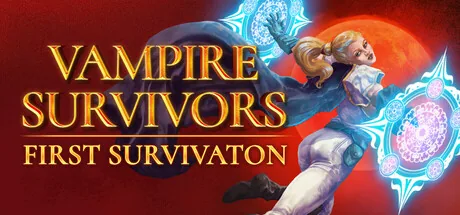
Poncle stripped aiming and attacking out of the action-roguelite formula and the result became one of the decade's most copied designs — a review of what actually holds four years later, now that the screen-filling spectacle has become the whole pitch.
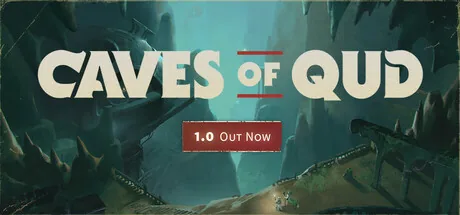
Freehold Games' science-fantasy roguelike spent nine years in Steam Early Access before reaching 1.0 in December 2024, and what it built in that time is less a dungeon crawler than a character-building engine wrapped around a simulation that keeps generating outcomes nobody scripted. The reputation for impenetrability is earned. So is the one for depth.
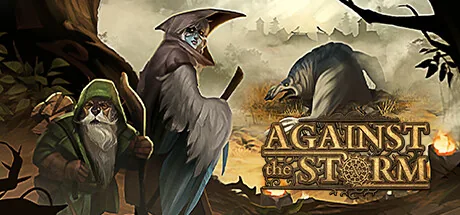
A city builder that refuses to let any settlement become permanent, banking what you learn into a roguelite meta-progression layer instead. It is one of the only games in its genre to treat the endgame as a design problem worth solving rather than a state to reach and stop.
A tower-defense puzzle wearing gacha-RPG clothes, where the placement grid matters more than the banner history — and where the sanity bar, not the wallet, is the thing actually managing your time.
A roguelite shooter about a crab with a gun, 98% positive across 26,943 English reviews — and the only people complaining have sixty to two hundred hours in it and think the balance patches ruined their favourite build.
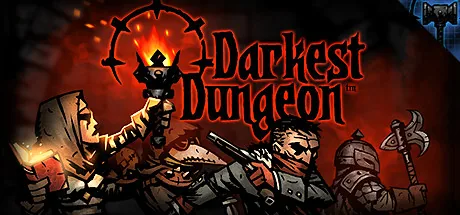
Red Hook Studios' gothic party roguelike turns stress into a second health bar and turns your roster, not any one hero, into the thing you're actually raising from level one.
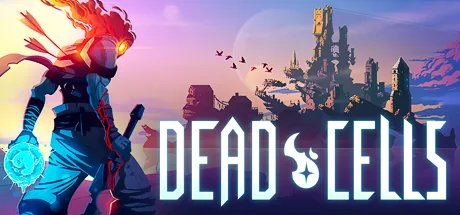
Motion Twin's roguelite metroidvania turned a simple pitch — permadeath runs through a procedurally reassembled castle — into one of the best-supported action games on Steam, and it mostly still holds up now that the studio behind its five years of updates has closed the book.
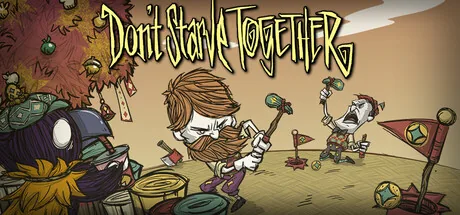
Klei's co-op survival sandbox turns Wilson's original nightmare into a shared one, where the real threat isn't the Deerclops so much as what happens when nobody on the team remembers it's coming. A decade of free content updates against 49 mostly-cosmetic DLC entries makes it a genuinely useful case study in how to monetise a survival game politely.
A dwarven mining incremental that turns every run into a demolition problem — hire dwarves, point war machines at a mountain, and work out how to get the gold home before the mountain takes it back.
The 2022 Steam release wrapped two decades of the deepest simulation PC gaming has ever built in a mouse-driven interface and a proper tileset. The question worth asking in 2026 isn't whether the game is good — it's whether that wrapping actually solved the problem it was sold to solve.
A genre-defining bullet-hell roguelike about diving through a fortress of guns to find the one weapon that can kill the past — nearly a decade old and still Overwhelmingly Positive across almost 80,000 reviews, with fans logging thousands of hours apiece, undercut by a steep, RNG-heavy difficulty curve and a still-raw 2025 controversy over online co-op arriving on mobile years before it ever reached PC or console.
Supergiant's first-ever sequel splits its roguelite loop into two directions instead of one, hands Melinoë a mana bar to manage on top of her dash, and asks you to keep three separate meta-progression tracks fed at once — an ambitious redesign that mostly earns its scope. It also shipped a 1.0 ending that triggered a real backlash, one Supergiant is still visibly patching a response to nine months later.
FTL's creators followed up randomness with certainty — a tiny, perfect-information tactics puzzle where every enemy move is telegraphed in advance. Most players call the trade a triumph; a consistent minority of FTL fans still feel the resentment the top positive review admits to feeling at first.
A deckbuilding auto-battler where the hero fights entirely on their own and the only real decisions are which terrain cards to lay down along the loop, and when to stop being greedy and walk the loot home.
A hundred thousand copies in its first week, and deservedly — you play a single parasite tearing organelles out of immune cells and grafting them onto your own body. The best twin-stick roguelite of the year so far, with one genuinely misleading line on its store page.
A breakout co-op climbing hit from a small Landfall-affiliated team, selling millions of copies for NZ$11.99 and earning genuine, chaotic devotion from its players — briefly overshadowed by a real, well-documented EULA controversy the developers reversed within days, and by two specific, widely repeated complaints (no save option, a punishing difficulty spike) that a remarkably attentive year of patches has since substantively addressed.
MMO raid mechanics compressed into a 40-minute co-op roguelike, 97.9% positive with a perfect recent record — and a colour-clarity problem that kills players through no fault of their own.
A fan remake that outgrew the game it copied, and has been updated every year for a decade. It's free on Android, open source on GitHub, and carries no ads or purchases of any kind — so the interesting question isn't whether it's good. It's why you'd ever pay for it.
A minimalist dice-based roguelike tactics game, originally built on itch.io, that's earned near-unanimous acclaim on Steam — with an unusually small negative-review pool centred on pacing and content depth rather than any fundamental design flaw.