Game review
Touhou Lensed Night Sky, Kaseigai
8.6 / 10
- Developer
- Fire Land
- Publisher
- Fire Land
- Released
- 26 April 2026
- Platforms
- [Windows]
- Genre
- Action
- Monetisation
- $22.00
- Players
- false
The short version
Touhou Lensed Night Sky, Kaseigai earns the outsized praise it's getting: a shmup-roguelike hybrid with a genuinely gripping story and one of the best soundtracks in the fangame scene, let down only by a difficulty curve that turns punishing well before the credits roll.
Biggest strengths
- A shop system that lets players spend graze range and firepower, the very stats that keep you alive, as currency, creating constant, meaningful risk-versus-reward decisions every run
- Widely praised writing and character work that reviewers repeatedly call some of the best in the Touhou fangame scene, built around an unusually earnest, occasionally yuri-tinged story
- A soundtrack singled out by nearly every reviewer as a standout, with boss themes and arrangements reviewers describe as genuinely emotional
Biggest weaknesses
- A brutal difficulty spike from around stage five onward that multiple reviewers, including at least one detailed negative review, describe as visually and mechanically overwhelming even on Normal
- Noticeable performance drops and frame stutter when bullet density peaks, particularly in late-game encounters, according to several reviewers
- A tedious fourth-character unlock process that one reviewer singles out as a real low point in an otherwise well-paced structure
Who it's for: Bullet-hell fans and Touhou devotees who want a fangame with real narrative ambition, and roguelike fans willing to learn shmup fundamentals to get the most out of it.
Our recommendation: Buy it
8.6 / 10
Go to the moon
Touhou Lensed Night Sky, Kaseigai, released April 26, 2026 by solo-studio-style developer and publisher Fire Land, is a $22 fan-made shoot-'em-up built on top of the Touhou Project's cast and mythology. After years of demos and betas going back to a closed beta in October 2022, it launched to a Very Positive reception, 167 reviews, roughly 96%, an unusually strong ratio for a niche fan-made genre entry, and the reviews make clear it's earned that response on craft rather than goodwill alone.
Your survivability is the currency
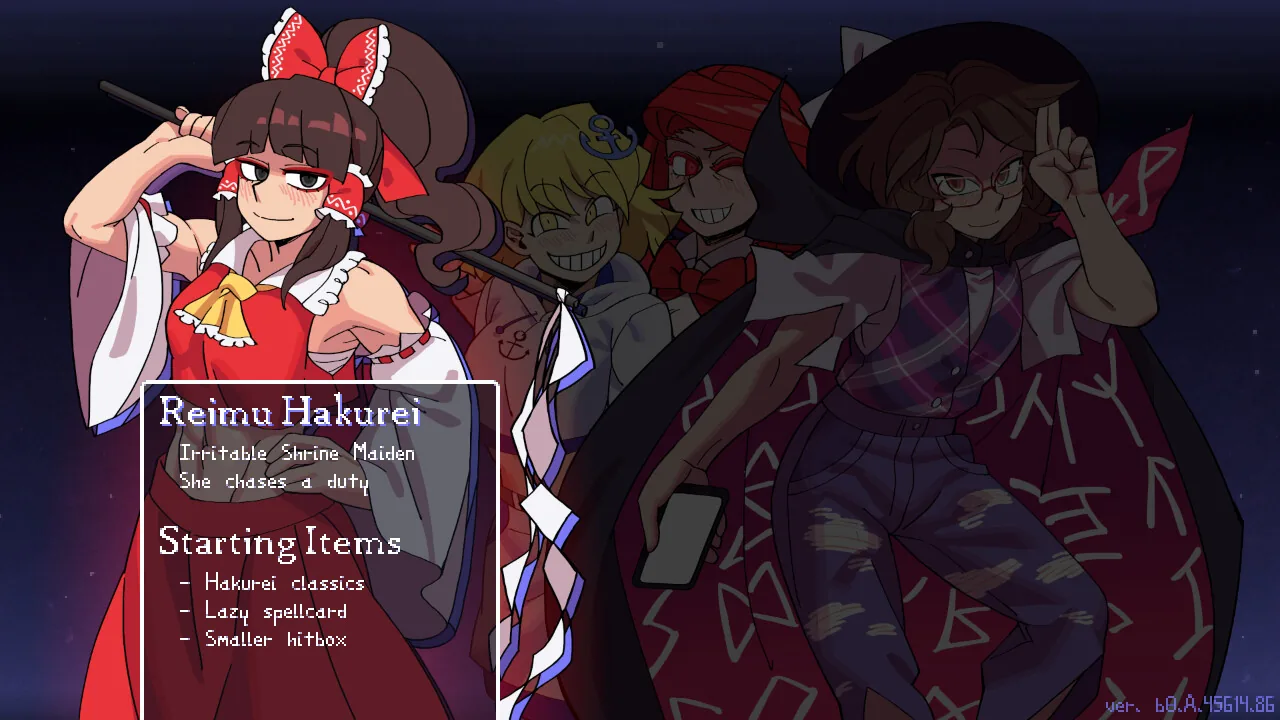
The game's defining mechanical hook is its shop system: rather than accumulating a separate currency to spend between runs, players can sell off their own graze range and firepower, the very stats that keep them alive through a bullet-hell screen, to buy new items and abilities. Reviewers consistently call this the game's smartest idea, describing constant micro-decisions about whether to stay defensive or gamble on offense as the thing that keeps runs from ever feeling rote. Three playable characters, a modular loadout that can be reshuffled mid-run, and a fourth unlockable character round out a system reviewers describe as unusually deep for the genre, though at least one reviewer flags that fourth character's unlock process as an annoying grind relative to the rest of the game's pacing.
Reviewers who cleared the game repeatedly bring up how differently a single run can play out depending on how aggressively they lean into that risk. Several describe building runs entirely around spellcard damage while stripping their graze range to almost nothing, a high-variance approach the game explicitly supports rather than quietly punishes, while others describe the opposite extreme, hoarding survivability stats and playing a slower, more defensive game that trades run length for consistency. That range of viable approaches is a big part of why so many reviewers describe returning for dozens of hours' worth of runs well past their first clear.
Writing that outran expectations
The single most repeated praise in the review sample isn't about the shooting, it's about the story. Reviewers who came in expecting a jokey, lightweight fangame narrative instead describe genuinely moving writing, strong characterization across the cast, and an emotionally ambitious plot that multiple reviewers say made them cry. The story leans into Touhou fanfiction conventions and features a notably earnest, occasionally yuri-inflected relationship at its core, elements reviewers overwhelmingly embrace, though newcomers without prior Touhou knowledge may find some of the character dynamics land with less impact than they do for longtime fans.
A soundtrack reviewers keep bringing up unprompted
Nearly every review in the sample mentions the music without being asked, and boss themes in particular draw specific, repeated praise as some of the best arrangements in the fangame scene. One reviewer jokingly called the $22 price tag a fair cost for a "22 dollar album" with a game attached, a joke that recurs often enough in the sample to suggest it's a genuinely shared sentiment rather than a one-off.
Fair enough to learn, brutal once you're deep in
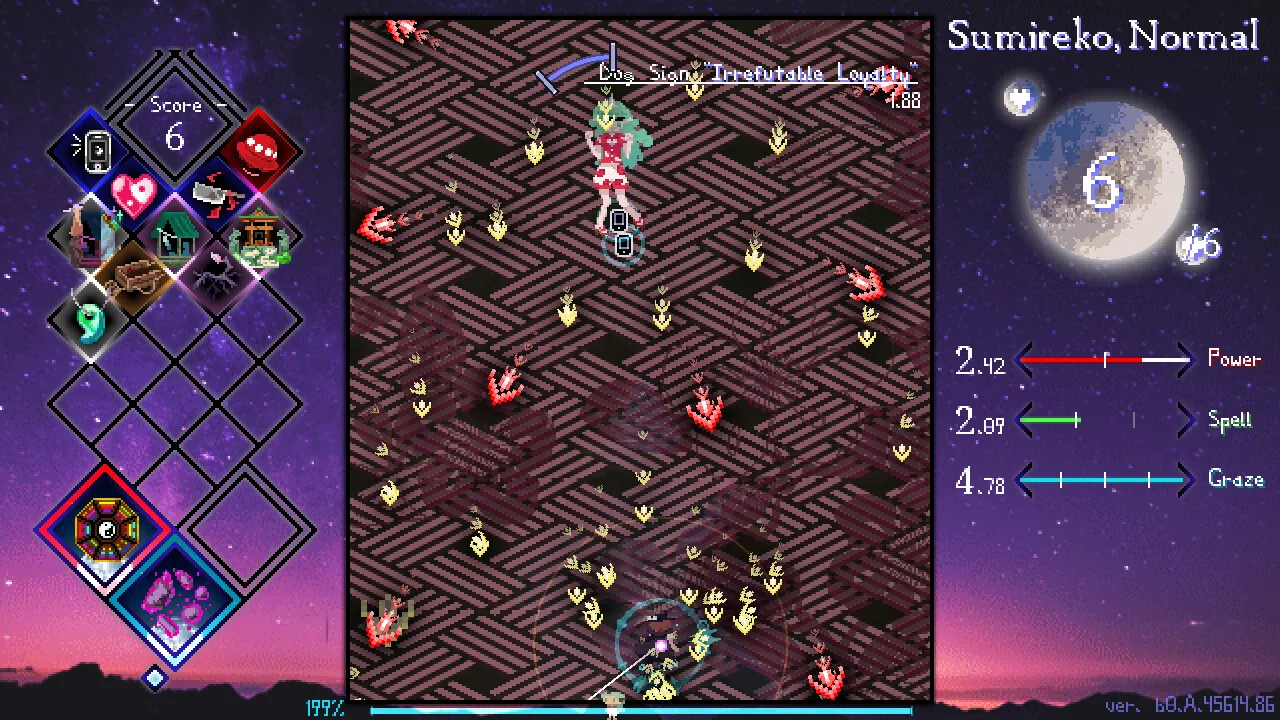
Difficulty options are generous on paper: four major tiers plus a curses-and-wards system that lets players dial in handicaps or aids without it feeling like cheating, alongside standard modifiers for players newer to bullet-hell shooters. Most reviewers describe the early-to-mid game as demanding but fair, the kind of challenge that rewards learning patterns rather than punishing blind luck. That reputation changes for a meaningful chunk of the sample once stage five hits: multiple reviewers, including a detailed negative review, describe the later stages as visually and mechanically overwhelming, with bullet patterns some call borderline unreadable even on Normal difficulty. It's not a universal complaint, several reviewers explicitly relish the late-game chaos, but it's consistent enough to flag for players who prefer a smoother curve.
Frame drops when the screen fills up
A secondary but recurring technical complaint concerns performance: several reviewers, across both English and Chinese-language reviews, report frame stutter and slowdown specifically when bullet density peaks, most often in late-game boss encounters where readability already matters most. The developer has continued patching post-launch, with a 1.1 update arriving in June 2026, but the reports suggest the issue wasn't fully resolved at launch and is worth knowing about for lower-end hardware.
A demo history that earns trust
Fire Land built this release on top of roughly three and a half years of public demos and betas, starting with a closed beta in October 2022 and continuing through a full Steam demo from February 2024 onward, with reviewers explicitly noting they'd logged significant hours in that free demo before the paid 1.0 launch. That long, visible development arc shows in the finished product's polish and clearly informed a loyal pre-release following, several reviewers describe buying the game specifically because they'd already fallen in love with the demo.
Who should dive in
This is an easy recommendation for existing Touhou fans and anyone who enjoys danmaku shoot-'em-ups with roguelike structure layered on top, especially players who want a fangame that takes its story seriously rather than treating it as an afterthought. Newcomers to bullet hell should expect a real learning curve, and anyone particularly sensitive to late-game difficulty spikes or performance hitches should go in with tempered expectations, but for its target audience this is close to a genre standout.
The verdict
Touhou Lensed Night Sky, Kaseigai backs up its enthusiastic reception with real craft: a shop system that turns survivability into a resource worth gambling with, a story and soundtrack reviewers keep calling some of the best the fangame scene has produced, and a difficulty curve that, while occasionally overwhelming, mostly rewards the patience it demands.
Pros and cons
Pros
- A shop system that lets players spend graze range and firepower, the very stats that keep you alive, as currency, creating constant, meaningful risk-versus-reward decisions every run
- Widely praised writing and character work that reviewers repeatedly call some of the best in the Touhou fangame scene, built around an unusually earnest, occasionally yuri-tinged story
- A soundtrack singled out by nearly every reviewer as a standout, with boss themes and arrangements reviewers describe as genuinely emotional
- Deep replayability through modular loadouts, four difficulty tiers, and a curses-and-wards handicap system that lets players tune challenge without feeling like they're cheating
Cons
- A brutal difficulty spike from around stage five onward that multiple reviewers, including at least one detailed negative review, describe as visually and mechanically overwhelming even on Normal
- Noticeable performance drops and frame stutter when bullet density peaks, particularly in late-game encounters, according to several reviewers
- A tedious fourth-character unlock process that one reviewer singles out as a real low point in an otherwise well-paced structure
- A story that leans heavily on prior Touhou knowledge and fanfiction conventions, which newcomers may find harder to fully appreciate even though the game doesn't require it to be playable
Screenshots
-
Touhou Lensed Night Sky, KaseigaiImage: Fire Land via Steam -
Touhou Lensed Night Sky, KaseigaiImage: Fire Land via Steam -
Touhou Lensed Night Sky, KaseigaiImage: Fire Land via Steam -
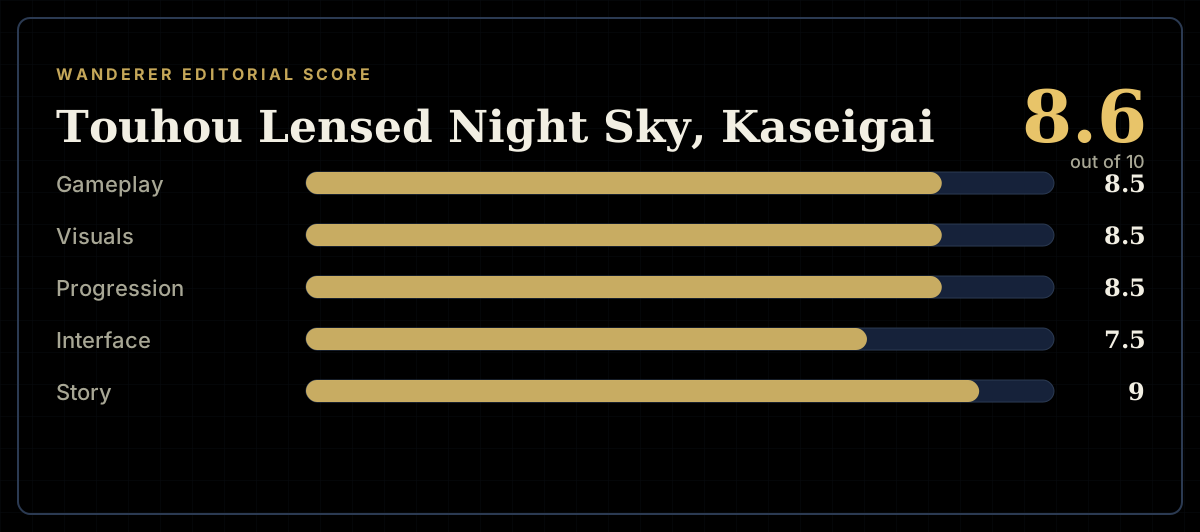
How the review scores each part of the gameWanderer Editorial -
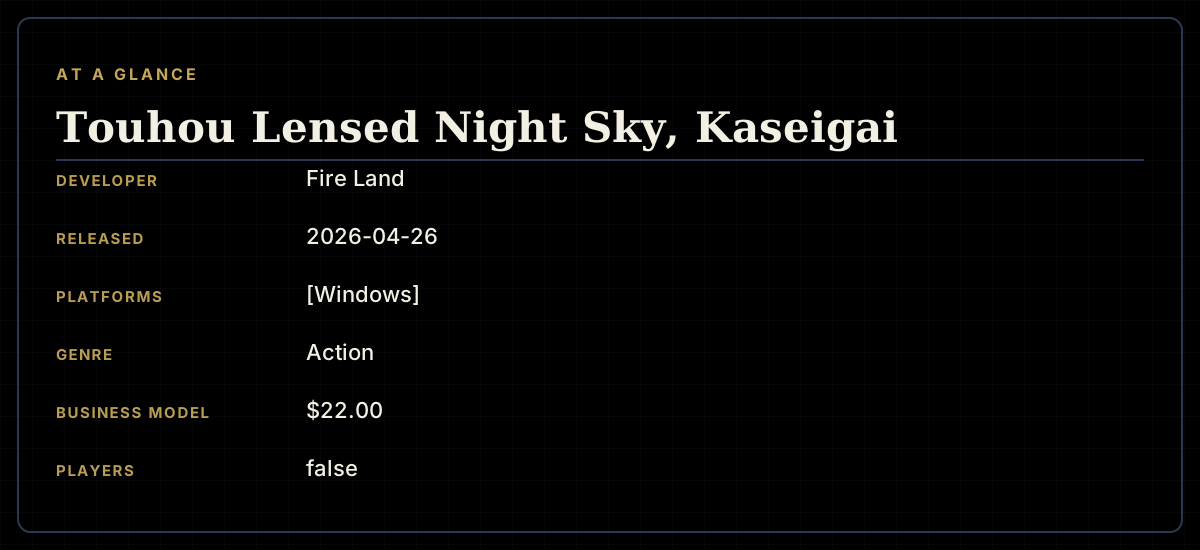
Key facts at a glanceWanderer Editorial -
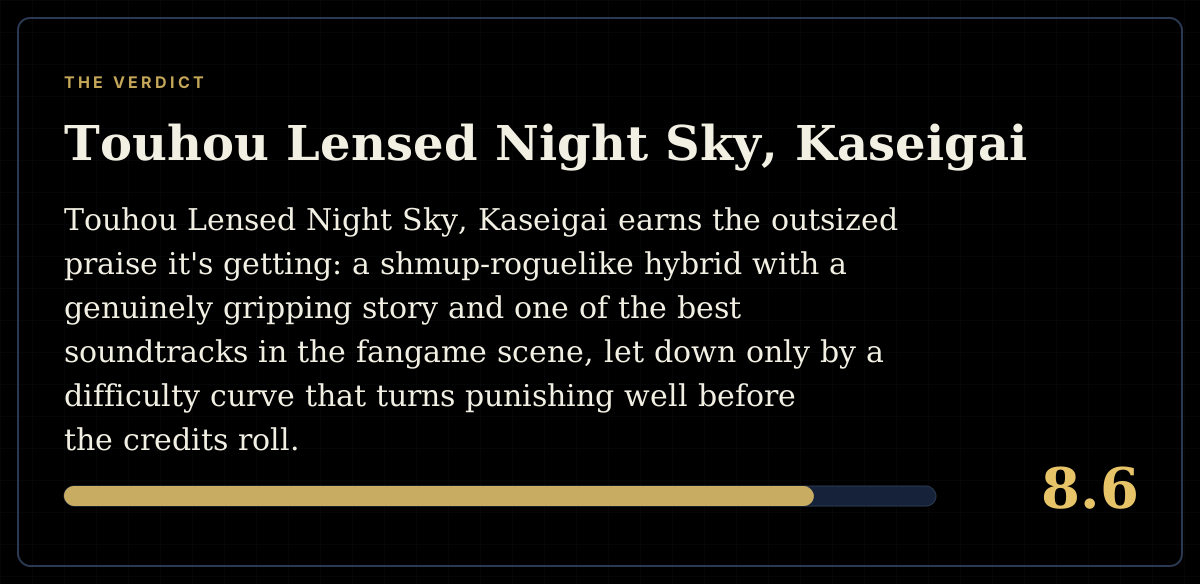
The short versionWanderer Editorial