
Game review
Particulitix
7.5 / 10
- Developer
- Workshop Geek
- Publisher
- Workshop Geek
- Released
- 6 June 2026
- Platforms
- Windows, Linux
- Genre
- Action, Indie
- Monetisation
- paid
- Players
- false
The short version
Biggest strengths
- A deep, synergy-driven upgrade system that reviewers repeatedly praised for avoiding flat, boring percentage-stacking in favor of build-altering choices
- A distinctive node-based level structure and 'glitch' modifier system that reviewers said sets it apart from typical strafing-focused bullet-heaven design
- Dozens of unlockable color palettes, including one that randomizes mid-run, that multiple reviewers singled out as a standout presentation touch
Biggest weaknesses
- AI-generated music is enabled by default, drawing at least one pointed negative review and a second more measured complaint, even though it can be switched off in the options menu
- One reviewer flagged the absence of Steam Cloud sync support despite wanting to switch between PC and Steam Deck
- A reviewer noted upgrade balance issues, including a likely-unintentional speed-damage scaling bug and menu information density that can feel overwhelming
Who it's for: Fans of Geometry Wars, Vampire Survivors, and other bullet-heaven roguelites who want a compact, synergy-focused build system at a low price
Our recommendation: recommended
7.5 / 10
Particulitix released on Steam on June 6, 2026, a $5.99 arcade roguelite from solo developer Workshop Geek that blends Geometry Wars-style twin-stick dodging and shooting with the run-stacking upgrade loop popularized by Vampire Survivors. Four weapons, node-based level progression, and a set of optional "glitch" modifiers that can speed up the action, restrict lives, or extend levels into endless mode sit at the center of the design. Its 20-review English pool lands at Positive (18 up, 2 down, 90%), and the reviews consistently describe a tightly focused, well-built arcade experience from a single developer punching well above their weight.
The upgrade and build system is where the pool's praise concentrates most. One reviewer contrasted it directly with genre norms, writing that "your run level ups are all unique and can change how you play depending on what abilities you are offered, no plus 3 percent damage here levels that ruin a lot of games and don't add value." Another, more detailed reviewer highlighted the node-based progression specifically: "the node-based progression makes each run feel grounded and meaningful. It adds an extra layer of decision-making that sets it apart from the typical strafing techniques found in many other bullet heaven games." A third reviewer praised the depth beneath the surface, noting "high difficulty, but smart play rewards you as you learn to synergize certain power-ups with the type of starting weapon you choose, as well as the passive tiles that appear on each level." Across the pool, that sense of meaningful, build-defining choices comes up again and again as the game's core strength.
Presentation earns similarly consistent, specific praise, particularly the game's visual customization. One reviewer described unlocking "various graphical styles, change your game from a green tinted sprites that fit in a Gameboy to a RGB masterpiece that looks like an epic animation tied to a Rave," while another called out "over a few dozen color palettes to change how the entire game looks," including "a setting to constantly randomize it mid-game so the visual style changes as you play." Multiple reviewers drew comparisons to Berzerk, Robotron 2084, Smash TV, and Asteroids, with one writing "if this game was in an arcade cab in the 80's, we'd still be talking about it," a strong signal that the retro-arcade tone Workshop Geek was aiming for lands convincingly with players.
The one recurring point of real friction in the pool is the game's default-on AI-generated music. One reviewer left a negative review specifically over it, writing bluntly: "unfortunately the final product has generative ai. having the ai music toggleable does not make it okay, it's like bandaging a fatal wound." A second, more measured reviewer noted the same issue without going as far: "AI music is on by default, and I'm not a fan of that, but you can just go into options and switch it off, getting perfectly valid (presumably stock) music instead." A third reviewer highlighted the opposite reaction, praising that they could turn it off: "I love the non-AI music." Taken together, the pool shows the option exists and works, but the fact that it ships enabled by default is clearly costing the game goodwill with at least a meaningful slice of its audience, independent of how the toggle itself performs.
Smaller complaints round out an otherwise strongly positive pool. One reviewer flagged a likely balance oversight, that "excessive speed damage scaling is probably a bug," though noted players can simply avoid picking those upgrades. Another pointed to a genuine feature gap: "there are no options for the Steam Cloud. So I can't switch between my PC and Steam Deck with this game," despite Steam Cloud being listed among the game's store page features, suggesting either a rollout gap or a configuration issue worth the developer's attention. A separate reviewer flagged menu density as the game's weak point: "the downside for this game is the menuing, so many boxes and information thrown in your face." None of these read as dealbreakers on their own, but together they paint a picture of a strong core game still working out some of its edges.
Value for money draws essentially unanimous approval across the pool, with reviewers repeatedly framing the $5.99 asking price as an easy sell. "We live in a society where big publisher games push past $70 but indie games have to justify costing $6," one reviewer wrote pointedly, while another called it "absolutely a steal due to replay ability to keep you coming back for more." Several reviewers also praised its suitability for short sessions, one describing it as "the perfect time-filler game" for waiting rooms and similar downtime, a notable contrast to the much longer commitment implied by genre touchstones like Vampire Survivors.
The pool also includes an unusually specific illustration of the goodwill Workshop Geek has built with players and press alike: one reviewer, who hosts an Italian videogame podcast, wrote that they "had access to the game before release because it was sent from the dev cause i host an Italian videogame podcast," and described climbing to the top of the game's leaderboard before eventually being knocked off. Several other reviewers separately mentioned direct, positive interactions with the developer, describing them as "a cool guy who's always open to feedback." For a five-dollar solo project, that level of visible, responsive developer engagement across the review pool is a meaningfully good sign for anyone weighing whether ongoing balance issues, like the AI-music default or the Steam Cloud gap, are likely to see attention after launch.
Taken as a whole, Particulitix is an accomplished, tightly designed bullet-heaven roguelite that earns its warm reception through a genuinely thoughtful upgrade system and a striking, highly customizable retro-arcade presentation, sold at a price the pool considers close to a steal. The default-on AI music is a legitimate and recurring point of friction worth knowing about going in, even though it's fully optional, alongside smaller rough edges around Steam Cloud support and upgrade balance. For fans of the genre looking for a compact, synergy-rich build system rather than a marathon runtime, it's an easy recommendation.
Pros and cons
Pros
- A deep, synergy-driven upgrade system that reviewers repeatedly praised for avoiding flat, boring percentage-stacking in favor of build-altering choices
- A distinctive node-based level structure and 'glitch' modifier system that reviewers said sets it apart from typical strafing-focused bullet-heaven design
- Dozens of unlockable color palettes, including one that randomizes mid-run, that multiple reviewers singled out as a standout presentation touch
- A fair, widely-praised price point for a run-time reviewers described as short and well-suited to quick sessions, including a reviewer who called it 'the perfect time-filler game'
Cons
- AI-generated music is enabled by default, drawing at least one pointed negative review and a second more measured complaint, even though it can be switched off in the options menu
- One reviewer flagged the absence of Steam Cloud sync support despite wanting to switch between PC and Steam Deck
- A reviewer noted upgrade balance issues, including a likely-unintentional speed-damage scaling bug and menu information density that can feel overwhelming
- The genre's usual screen-clutter problem is present here too, with one detailed reviewer calling dense late-run visuals 'both an amusing reward and a messy punishment to look at'
Screenshots
-
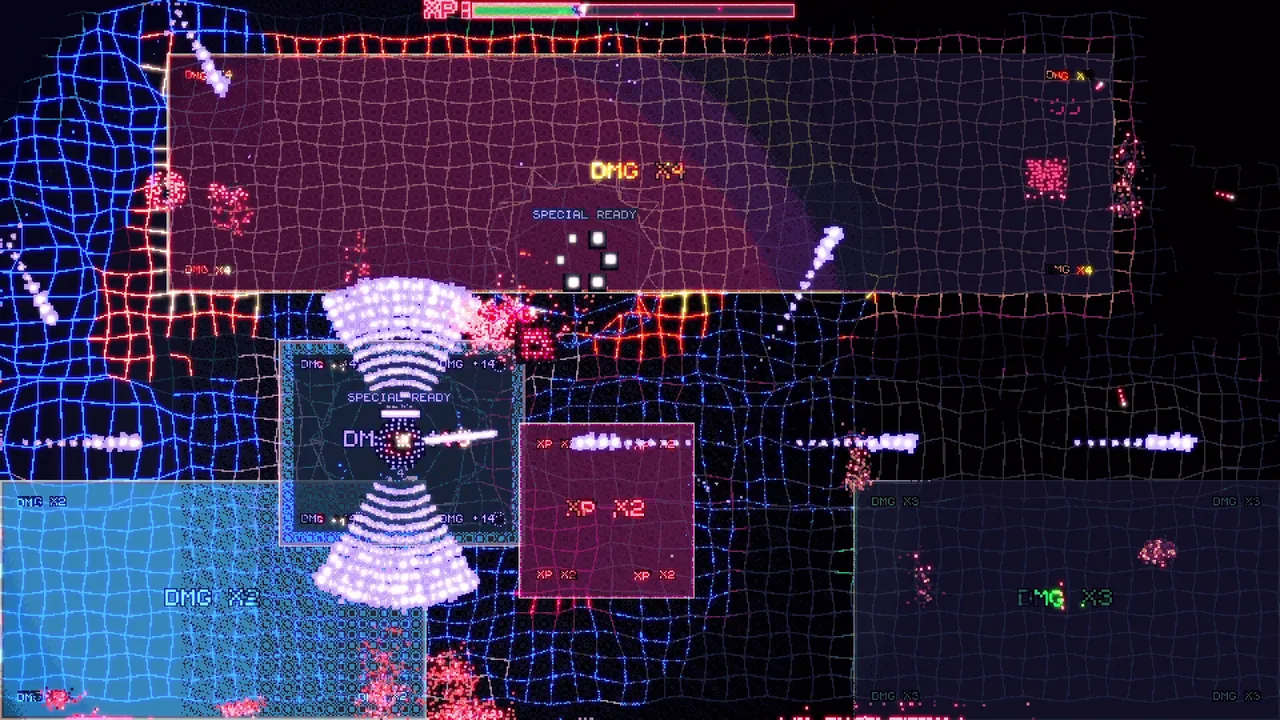
ParticulitixImage: Workshop Geek via Steam -
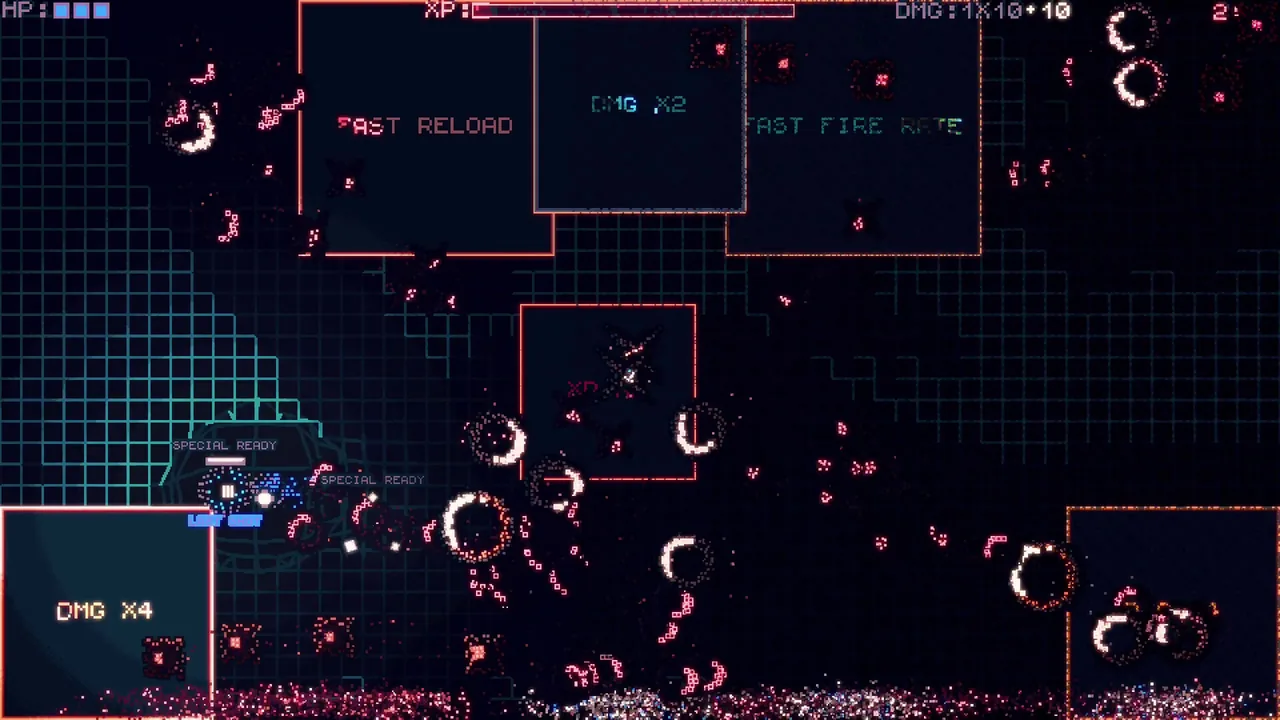
ParticulitixImage: Workshop Geek via Steam -
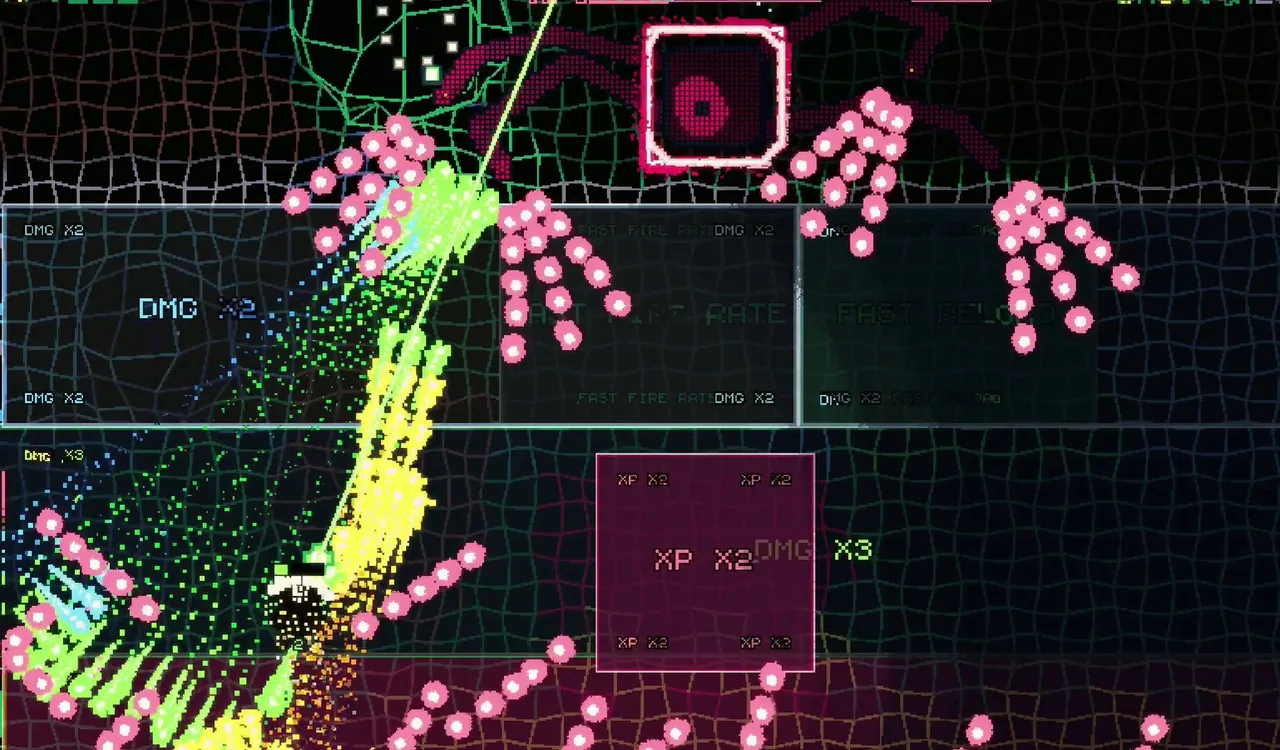
ParticulitixImage: Workshop Geek via Steam