Game review
1325 Maple Lane
4 / 10
- Developer
- Paws and Play Studios
- Publisher
- Paws and Play Studios
- Released
- 1 May 2026
- Platforms
- Windows
- Genre
- Casual, Indie, Simulation
- Monetisation
- Paid, one-time purchase.
- Players
- Single-player only.
The short version
1325 Maple Lane is a first-person horror-parody investigation game from Paws and Play Studios, sending players through a supposedly haunted house with a flashlight to check off a list of mundane household problems rather than genuine supernatural threats. Its extremely small, majority-negative English review sample credits the parody premise's cleverness, but repeatedly flags the game as too brief and too light on actual content to justify its asking price.
Biggest strengths
- Praised by one reviewer, who describes themselves as a long-standing homeowner, for a genuinely clever, "close to home" parody of horror-genre conventions applied to mundane domestic problems.
- Notable for a distinctive premise that swaps traditional supernatural scares for relatable household anxieties, a comedic angle this review found reasonably original even within its small sample.
Biggest weaknesses
- A fair, corroborated complaint from two independent reviewers is that the game offers essentially no genuine horror content, consisting instead of walking around checking off a list of mundane problems, such as bills, an empty fridge, and a flooded basement, before reaching its ending.
- A fair complaint from the same two reviewers is that the entire experience runs only five to ten minutes, which both found difficult to justify given the game's asking price.
- A fair complaint from one reviewer is that the game's tonal pivot into a saccharine, kitten-based ending sequence felt like an unwelcome bribe rather than an earned payoff after the setup.
Who it's for: Players curious about a very short, low-stakes horror parody who are willing to judge from a tiny, mostly critical review base and treat five to ten minutes as an acceptable length; players wanting genuine scares or substantial playtime should look elsewhere.
Our recommendation: A clever one-joke premise stretched across too little actual content, worth a look only at a steep discount and with expectations firmly set on its brevity.
4 / 10
The house has been waiting, but not for long
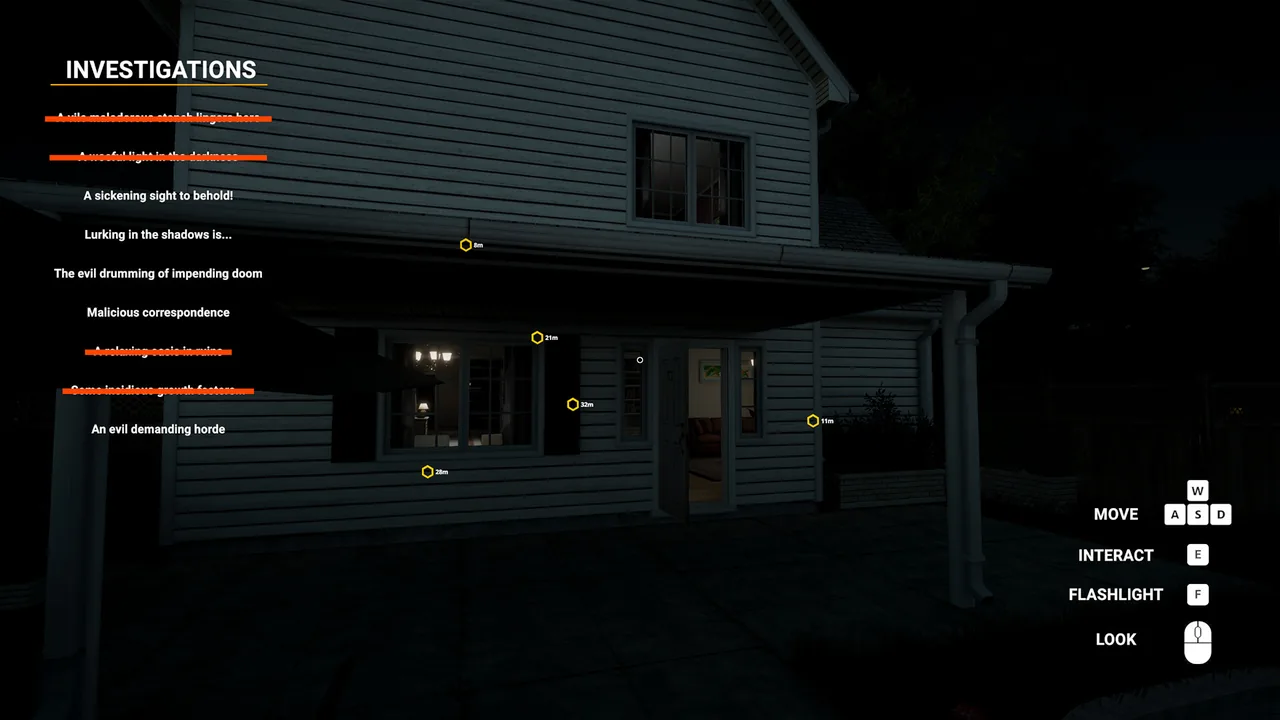
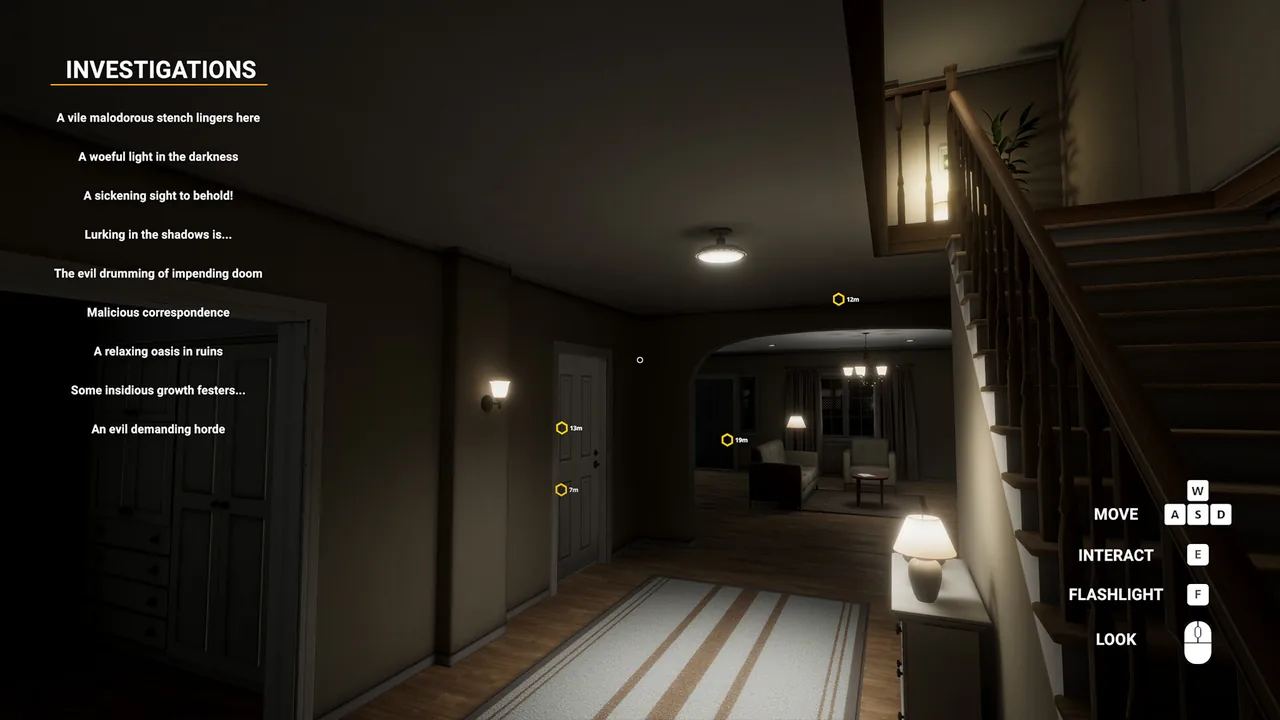
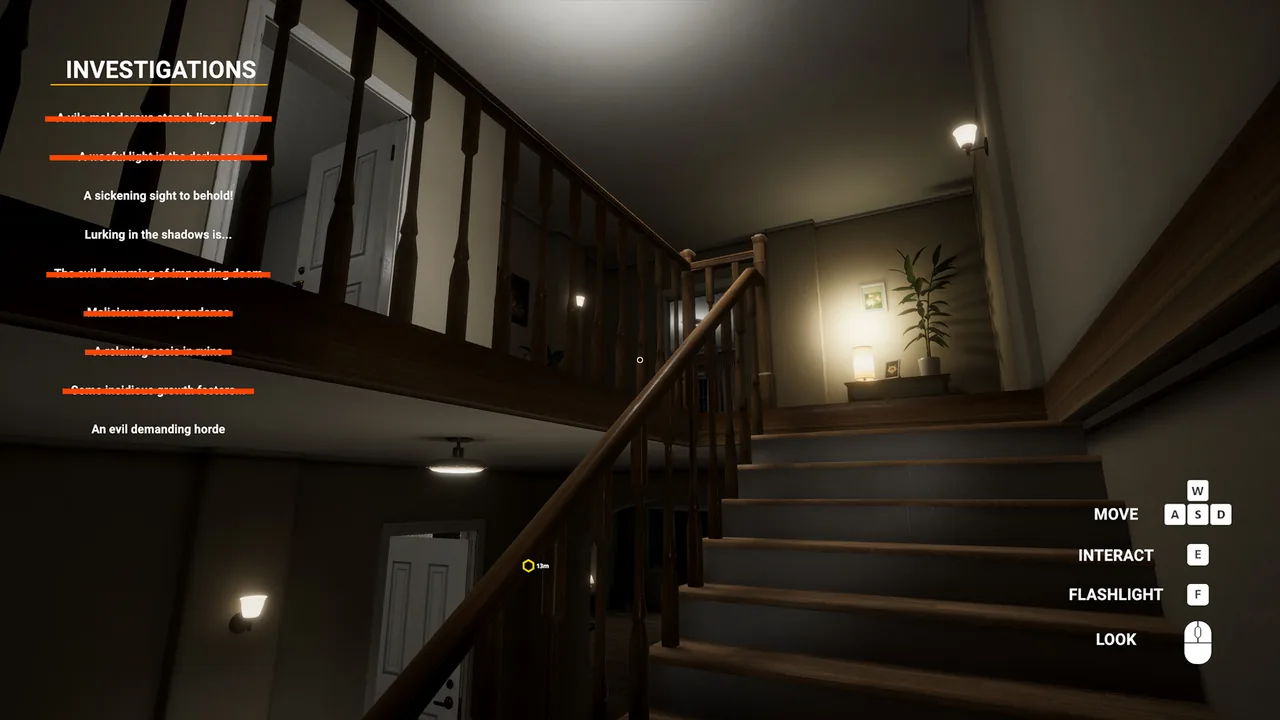
1325 Maple Lane is a first-person horror-parody investigation game from Paws and Play Studios, casting players as a visitor exploring a supposedly haunted house with a flashlight, working through a checklist of things to investigate before reaching the game's ending. Rather than supernatural threats, the checklist consists of mundane domestic problems: unpaid bills, an empty fridge, a flooded basement, a moldy bathroom. The game's central joke is a straightforward genre-swap, borrowing the framing and pacing of a first-person horror walking simulator, complete with flashlight and creeping dread, and redirecting all of it toward the far more relatable terrors of homeownership and deferred maintenance. This review draws on an English review sample of only 3 reviews at the time of research, one of the smallest samples this review has covered, and one where two of the three reviewers are critical.
The game's structure is deliberately minimal: there is no combat, no puzzle-solving beyond locating each item on the investigation list, and no branching choices beyond which order to explore the house in. That structural simplicity is central to understanding why this review's small sample splits so sharply between appreciating the concept and being frustrated by how little the game builds on top of it.
Praised for a clever parody premise
Where this review found praise, it centred on the game's core joke landing for at least one player. "As a long-standing Home Owner, I really enjoyed the light-hearted parody of the Horror Genre. This game is really clever. Many of the horrors hit quite close to home," reads the sample's sole positive review. This review treats that as fair, if narrow: a single reviewer's genuine appreciation for the game's conceptual hook, swapping supernatural dread for the mundane horrors of homeownership, is credible evidence that the underlying idea has real comedic merit for the right audience, even though it comes from only one voice in an otherwise critical sample.
A fair, corroborated complaint about brevity and thin content
Set against that praise, this review found the sample's dominant, repeated complaint. "Avoid this, the whole game is 5 to 10 minutes long. No horror elements, just walk around seeing bills, empty fridge, flooded basement, moldy bathroom, among others," reads one detailed negative review. A second, independent reviewer echoes the same underlying judgment far more tersely: "not scary as advertised." This review treats that as fair: two independent reviewers, one in detail and one in brief, both converging on the same underlying complaint, that the game delivers neither meaningful horror content nor enough runtime to justify its price, is credible, corroborated evidence of a genuine shortfall in what the game actually offers relative to its premise. At an asking price of NZ$4.79, a five-to-ten-minute experience works out to a notably steep per-minute cost even by the standards of short, joke-premise indie titles, and this review finds that context relevant to why both critical reviewers singled out value specifically rather than treating the brevity as a neutral fact about the game's scope.
A fair complaint about the ending's tonal pivot
The same detailed negative reviewer also raises a specific complaint about the game's conclusion, describing how, once every item on the investigation checklist is cleared, the game "proceeds to bribe you with kittens" as a reward, a moment the reviewer found tonally jarring enough to react to with pointed sarcasm rather than warmth. This review treats that as a fair, if single-sourced, account of an ending that misjudges its own tone, swinging from mundane-horror parody into unearned sweetness in a way that at least one player found more grating than charming, distinct in kind from the broader brevity complaint above.
Achievement data is consistent with a very short, largely finishable game
This review's own check of Steam's global achievement data shows 94.4 percent of players reaching the game's regular ending, a rate high enough to support the critical reviewers' account of a brief, easily completed experience rather than one many players abandon partway through. A smaller but still substantial share, 55.5 percent, go on to find an alternate "Easter Egg" ending, with 44.4 percent finding every Easter Egg the game offers, figures that read as broadly consistent with a game short enough that curious players can reasonably see most of what it offers in a single, brief sitting.
A note on this review's extremely small, majority-negative sample
This review draws on a total sample of only 3 English reviews at the time of research, two of them negative, one of the smallest and most critically weighted samples this review has covered. The corroborated brevity and content complaints rest on two independent sources, while the sole point of praise rests on just one, so this rating leans toward the weight of the corroborated criticism rather than toward the smaller positive account, consistent with this review's standing approach of not inflating a score simply because a sample happens to be too small for a fuller picture.
Final verdict
1325 Maple Lane is a short horror-parody investigation game that this review found has a genuinely clever premise, credited by at least one player for its light-hearted take on the mundane horrors of homeownership. That credit is significantly outweighed by a fair, corroborated complaint that the game offers only five to ten minutes of content with no real horror substance, alongside a specific complaint about a tonally jarring ending. For players curious about a very short, low-stakes horror parody who can accept that runtime and judge from a tiny, mostly critical review base, it may be worth a look at a discount; players wanting genuine scares or substantial playtime should look elsewhere.
Pros and cons
Pros
- Praised by one reviewer, who describes themselves as a long-standing homeowner, for a genuinely clever, "close to home" parody of horror-genre conventions applied to mundane domestic problems.
- Notable for a distinctive premise that swaps traditional supernatural scares for relatable household anxieties, a comedic angle this review found reasonably original even within its small sample.
Cons
- A fair, corroborated complaint from two independent reviewers is that the game offers essentially no genuine horror content, consisting instead of walking around checking off a list of mundane problems, such as bills, an empty fridge, and a flooded basement, before reaching its ending.
- A fair complaint from the same two reviewers is that the entire experience runs only five to ten minutes, which both found difficult to justify given the game's asking price.
- A fair complaint from one reviewer is that the game's tonal pivot into a saccharine, kitten-based ending sequence felt like an unwelcome bribe rather than an earned payoff after the setup.
- This review's own assessment notes the sample here is extremely small, only 3 English reviews at the time of research, two of them negative, so this rating leans heavily on the corroborated brevity and content complaints rather than on the sample's lone positive account.
Screenshots
-
1325 Maple LaneImage: Paws and Play Studios via Steam -
1325 Maple LaneImage: Paws and Play Studios via Steam -
1325 Maple LaneImage: Paws and Play Studios via Steam -
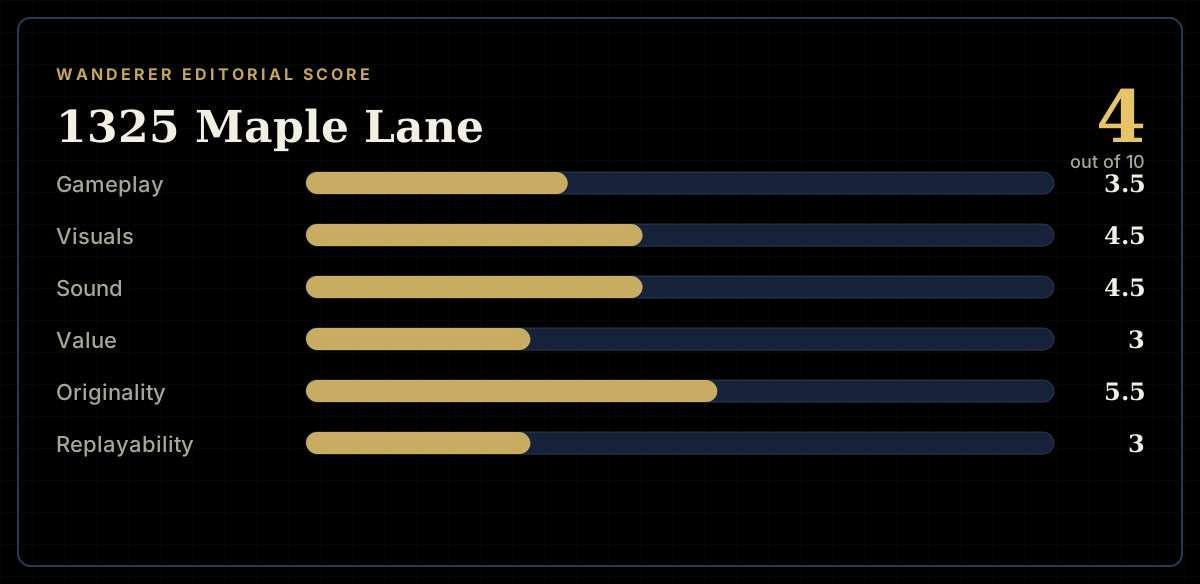
How the review scores each part of the gameWanderer Editorial -
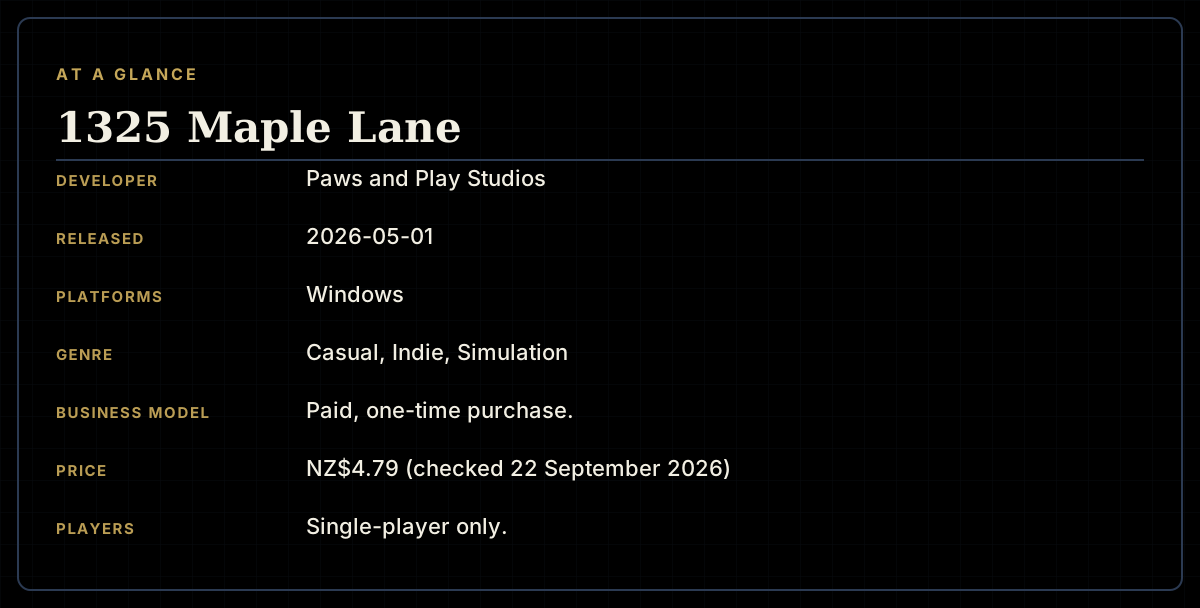
The specs at a glanceWanderer Editorial -
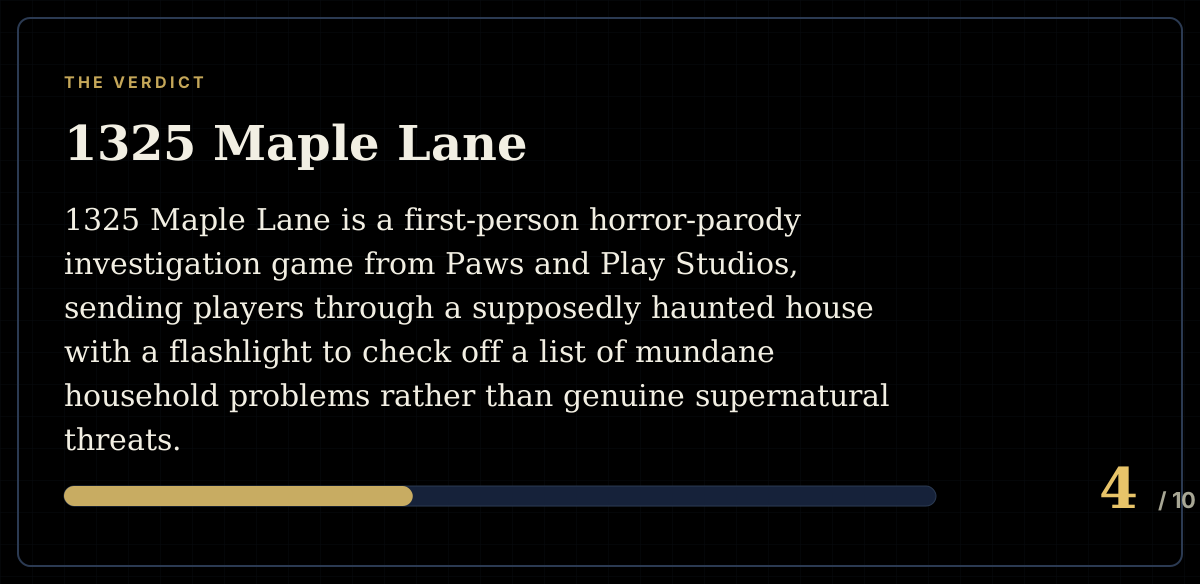
The short versionWanderer Editorial