Game review
Dead Cells
8.5 / 10
- Developer
- Motion Twin
- Publisher
- Motion Twin
- Released
- 7 August 2018
- Platforms
- Windows, macOS, Linux, Nintendo Switch, PlayStation 4, PlayStation 5, Xbox One, iOS, Android
- Genre
- Roguelite Metroidvania
- Monetisation
- Premium, one-off purchase with optional paid DLC expansions
- Players
- Single-player
The short version
Dead Cells took the run-based structure of a roguelite and grafted it onto a metroidvania's interconnected castle, and the combat is sharp enough — every weapon has its own timing, range and stagger behaviour — that the loop of dying, unlocking a little more, and going again never stopped feeling earned across five years of paid and free content.
The Boss Cell difficulty ladder that keeps veterans engaged is also the game's clearest design compromise: it adds real challenge, but it does so by punishing anything that isn't a proven weapon combination, which narrows exactly the build variety the rest of the game spends so much effort encouraging.
Biggest strengths
- Weapon and mutation combinations produce genuinely distinct builds rather than cosmetic variety on the same strategy
- The Boss Cell system gives the game five real, escalating difficulty tiers instead of one static challenge
- Hit-stop, screen shake and weapon-specific animation sell every attack before you've read a single number
Biggest weaknesses
- Higher Boss Cell tiers quietly funnel players back toward a handful of proven weapon combinations instead of rewarding experimentation
- The castle's biomes are strong set pieces but mostly gate shortcuts rather than the hidden rooms a metroidvania fan expects
- Motion Twin ended active development in February 2024, so any balance complaint or bug that remains now stays that way
Who it's for: Action-platformer fans who want permadeath tension without losing all their progress between attempts, metroidvania players willing to trade hand-placed secrets for procedural variety, and anyone weighing whether five DLC packs are worth adding to an already-excellent base game.
Our recommendation: Buy the base game without hesitation — it's a complete, superbly animated action roguelite on its own. Add Return to Castlevania if you want the single best expansion on offer, and treat the rest of the DLC ladder as a long-term shopping list rather than a day-one purchase.
8.5 / 10
Most roguelites ask you to accept that death erases your progress and call that the whole design. Dead Cells makes the same demand — lose a run and every weapon, every scroll, every rune you picked up along the way is gone — but it wraps that demand in a castle that remembers you between attempts, one door and shortcut at a time. That tension, between a genre built on resetting to zero and a genre built on permanently opening up a map, is the actual subject of this review, and it's still the most interesting thing about a game that first went into Early Access in May 2017.
The combat carries the whole loop
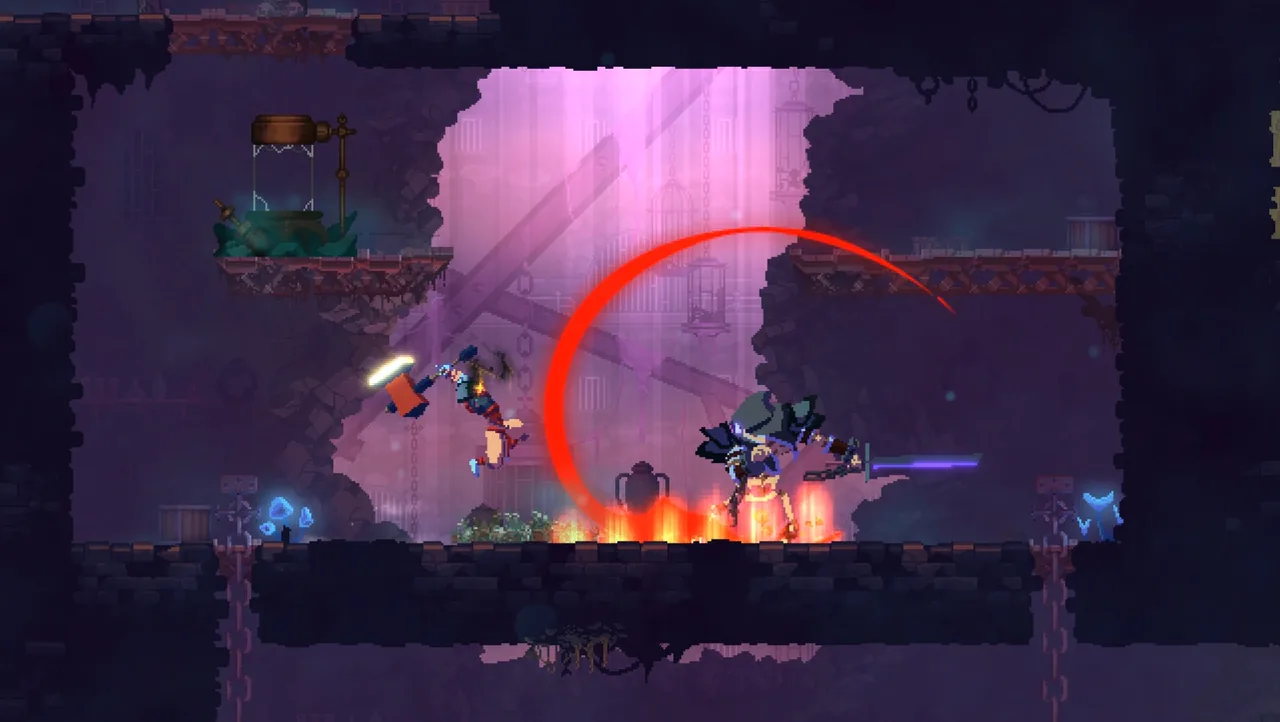
Strip away everything else and Dead Cells is a 2D action-platformer with unusually good combat feedback. Every weapon has its own windup, range, stagger value and follow-through, and the game communicates all of it through animation rather than a stat sheet — a heavy weapon like a war hammer telegraphs its commitment visually, while a dagger or bow rewards spacing and repositioning instead of trading hits. Parries, dodge-rolls with brief invulnerability, and a shield block that can be timed for a stun all sit on top of that, and the game expects you to combine them rather than lean on one. It's frequently described as "souls-lite," and that's fair as shorthand, but the faster pace and platforming layer make positioning matter in a way a pure souls game doesn't ask for.
What actually gives runs their identity is the interaction between weapons, skills and mutations — passive modifiers that key off specific playstyles, like bonus damage after a dodge or health regeneration on a killing blow. A run built around dual daggers and a mutation that rewards back-to-back kills plays and looks nothing like one built around a tank-ish shield-and-hammer loadout, and figuring out which random drops the game is handing you and building toward a coherent combination is the actual skill test, not just landing hits. That's the loop's real strength: the combat mechanics are simple enough to learn in an hour, but the space of viable combinations is large enough that veteran players are still discovering new ones years after launch.
Cells, blueprints, and progress that survives death
The meta-progression is where Dead Cells earns the "roguelite" half of its label rather than "roguelike." Cells, the currency you collect during a run, get spent at the Collector between attempts on permanent unlocks — mostly new blueprints that add weapons, skills and mutations to future runs' drop pools, plus a handful of stat-boosting mutations and forge-level upgrades that raise the ceiling on gear quality. None of this makes an individual run easier to survive through raw numbers the way experience points would in an RPG; it widens the pool of things that can drop, which is a subtler and, over dozens of hours, more satisfying kind of progression. Early runs feel thin because the drop table is thin. Twenty hours in, a run can hand you three or four synergistic options at every fork, and the game becomes as much about reading those options correctly as executing the combat.
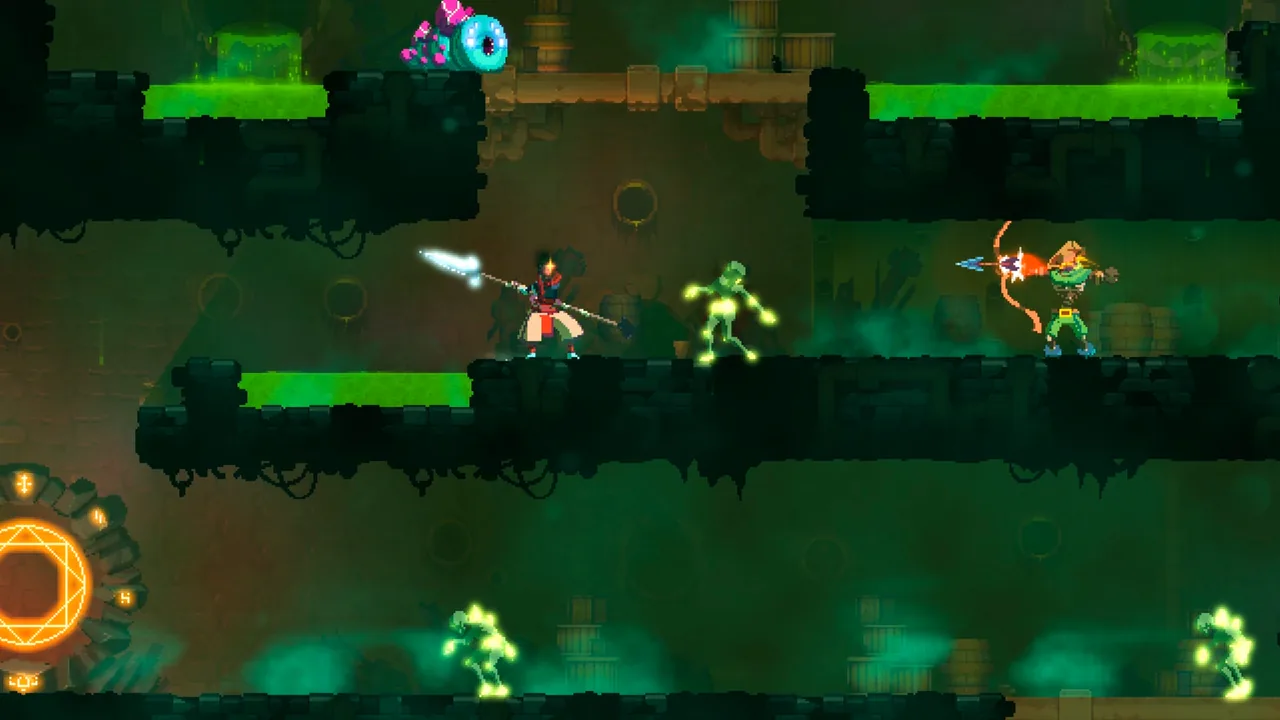
The castle itself is built from hand-designed chunks stitched together in a different order every run, rather than fully randomised tile generation, and a handful of movement-unlocking items — double jumps, grapples, vine climbs — double as keys that open specific branches once you've found them in a permanent form. That's the metroidvania half of the pitch, and it's worth being honest about what it actually delivers: most of what these unlocks open are alternate paths and shortcuts between the castle's biomes rather than the kind of hidden, hand-placed secret room a Metroid or a Hollow Knight builds its exploration around. The tension between "roguelite" and "metroidvania" in the marketing is real, and the roguelite half wins more often than the framing suggests. That's not a flaw exactly — the biomes are strong enough as set pieces that revisiting them across many runs rarely gets old — but players coming in expecting classic metroidvania discovery should recalibrate what "explore" means here.
Boss Cells: the difficulty ladder that also narrows your options
Beating the final boss for the first time unlocks a Boss Cell, which can be activated at the start of a run to raise difficulty permanently until you choose to deactivate it. Up to five can be stacked, and each one meaningfully changes the game rather than just padding enemy health bars: enemies hit harder and more often, healing flasks recharge less generously, enemy placement gets meaner, and at higher tiers a mechanic called Malaise starts stacking up if you don't keep clearing rooms fast enough, killing you outright once it caps. In exchange, higher Boss Cell tiers unlock better blueprints, higher forge levels and enemy-exclusive drops, which is the game's way of making the hardest difficulty also the one with the best rewards.
This is the review's central piece of criticism, and it's worth stating plainly rather than burying it under praise for the system's ambition: raising the difficulty this way rewards consistency over experimentation. A handful of proven, high-damage weapon-and-mutation combinations clear the higher Boss Cell tiers reliably; most of the game's more interesting, riskier combinations simply don't survive contact with Malaise timers and buffed enemy damage at four or five stacks. The system succeeds at giving committed players a genuine, escalating wall to climb, which most roguelites never bother building. It fails to protect the build diversity that makes the early-to-mid game so replayable, and the practical result is that endgame Dead Cells often looks like a smaller set of "solved" loadouts repeated at higher stakes rather than the freeform experimentation the meta-progression spends dozens of hours encouraging.
Presentation that still looks current
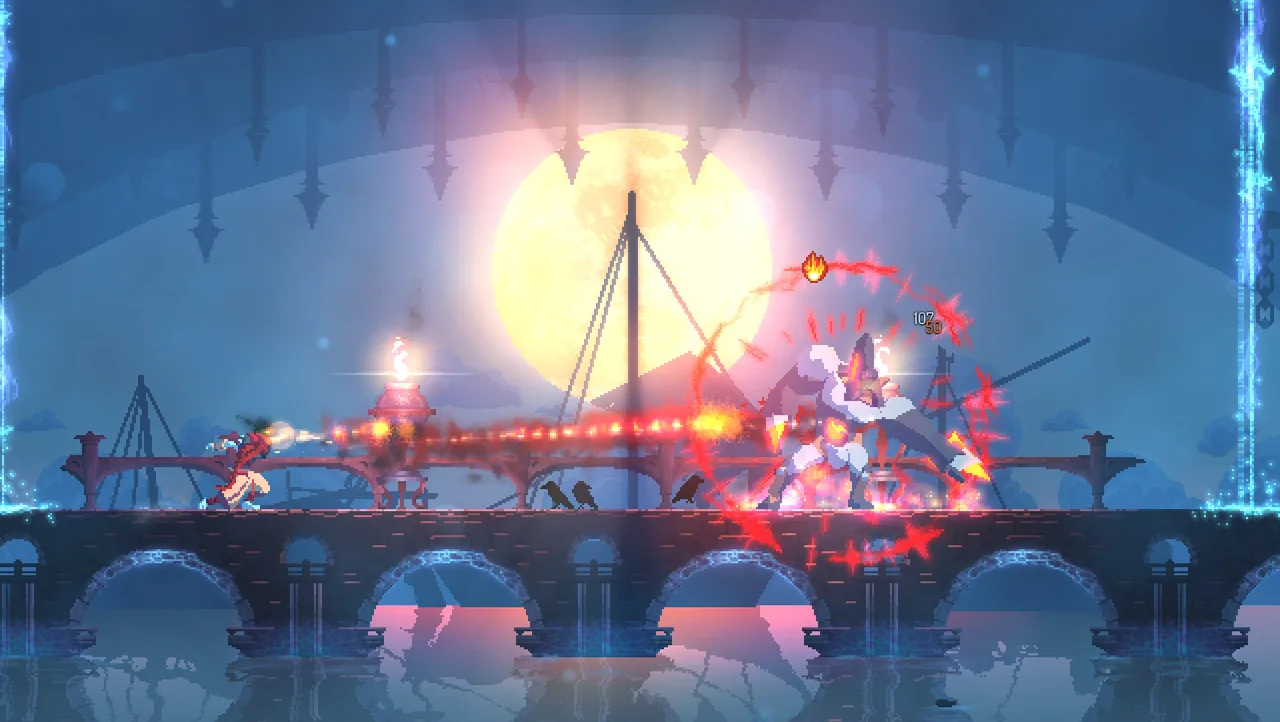
Visually, Dead Cells has aged well specifically because it never chased photorealism — the hand-animated pixel art leans on exaggerated, readable silhouettes and genuinely excellent frame-by-frame animation on every weapon and enemy, and that kind of art direction doesn't date the way lower-resolution 3D from the same era does. Hit feedback does a lot of the game's heavy lifting: screen shake, hit-stop and particle bursts make even early, underpowered weapons feel consequential, which matters enormously in a game whose whole structure depends on the first few minutes of a run feeling worth the investment. The soundtrack, built around percussive, industrial-tinged tracks that shift with the biome, does its job without becoming a reason to play on its own, which is a fair trade for music that never gets in the way of reading a fight.
Across platforms without the usual compromises
Dead Cells launched on Windows, macOS, Linux, Nintendo Switch, PlayStation 4 and Xbox One together in August 2018, added iOS in August 2019 and Android the following year, and picked up a PlayStation 5 version in mid-2023. That's an unusually wide spread for an indie action game, and the surprising part is how little the core experience suffers on the smaller end of that list. Switch and Steam Deck both run it at a resolution and frame rate that keep the combat's timing intact, which matters more here than in a slower genre. The mobile version, built with Playdigious, translates the combat convincingly with virtual buttons, but the platforming — precise jumps and dashes through tight castle geometry — loses a noticeable amount of precision without a physical stick or trigger, and it's the one platform where this reviewer would steer a serious player back toward a controller if they have the choice.
Developer support, and the fact that it's actually over
Dead Cells' post-launch history is unusually well documented, and it matters for anyone deciding whether to buy in now. Motion Twin handed ongoing development to Evil Empire, a studio formed by former Motion Twin staff, in 2019, while Motion Twin itself stepped back to preserve its flat, everyone-has-equal-say co-op structure. Evil Empire ran with it for nearly five years, shipping four paid DLCs, one free expansion, roughly eighteen major content updates and a string of crossovers, plus the mobile port. That's about as good a post-launch track record as an indie game gets. It's also finished: Motion Twin announced in February 2024 that Update 35 would be the last, and both studios have since moved on to other projects. Buying Dead Cells today means buying a complete, no-longer-changing product rather than a live game — which is a perfectly reasonable thing to buy, but it does mean any imbalance in the Boss Cell curve discussed above is now permanent rather than a future patch note.
The DLC ladder and what it actually costs
The gameplay expansions, in release order: Rise of the Giant (March 2019, free, adding two levels and bosses), The Bad Seed (February 2020, around NZ$6.29, an Arboretum and Swamp biome with a new boss), Fatal Falls (January 2021, around NZ$6.29, two levels and a boss built around new traps), The Queen and the Sea (January 2022, around NZ$6.29, shipwrecks, a lighthouse and the game's final boss encounter), and Return to Castlevania (March 2023, around NZ$14.75, a full crossover with Konami's series featuring Richter Belmont and Alucard as playable outfits, reworked Castlevania weapons and an entirely new area). Two soundtrack packs exist separately and aren't gameplay content. Buying every gameplay DLC at full price adds up to more than the base game's own list price, which sounds steep until you weigh it against what each pack actually contains — these are proper levels and bosses, not a handful of cosmetic skins, and Return to Castlevania in particular is large and well-crafted enough to function as a genuine event rather than a paid afterthought. The honest recommendation is to treat the DLC ladder as something to buy over time rather than in one sitting: the base game is a complete experience by itself, and each expansion is best appreciated once you've actually hit the difficulty wall it's designed to ease.
Players who like a run-based combat loop but would rather their progression carried over without a permadeath reset might find Wanderer's slower, persistent take on the same instinct — keep playing, keep the gains — a useful contrast to what Dead Cells asks of you every single attempt.
Final verdict
Dead Cells earns its reputation as one of the best-supported action games of its generation: the combat is precise and varied enough to carry hundreds of hours, the Cells-and-blueprints progression makes permanent unlocks feel meaningful without trivialising runs, and five years of free updates and paid expansions turned a strong Early Access game into a genuinely complete package. It settles at 8.5 rather than higher because the difficulty system built to keep veterans engaged does so at the direct expense of the build variety the rest of the game is built around, and because the metroidvania framing promises more genuine exploration than the mostly shortcut-driven level design actually delivers. Neither problem undoes what works, and what works is still very good. Buy it, play the base game until the Boss Cells start to bite, and decide from there how much of the DLC ladder is worth adding.
Price, platform and DLC details checked 30 July 2026.
Pros and cons
Pros
- Weapon and mutation combinations produce genuinely distinct builds rather than cosmetic variety on the same strategy
- The Boss Cell system gives the game five real, escalating difficulty tiers instead of one static challenge
- Hit-stop, screen shake and weapon-specific animation sell every attack before you've read a single number
- Cells and blueprints turn permanent progression into better odds and more options rather than raw stat inflation
- Runs cleanly across PC, consoles, Steam Deck and phones without the core game feeling compromised on any of them
- Return to Castlevania is a substantial, lovingly built expansion rather than a reskinned add-on
Cons
- Higher Boss Cell tiers quietly funnel players back toward a handful of proven weapon combinations instead of rewarding experimentation
- The castle's biomes are strong set pieces but mostly gate shortcuts rather than the hidden rooms a metroidvania fan expects
- Motion Twin ended active development in February 2024, so any balance complaint or bug that remains now stays that way
- Buying every piece of gameplay DLC at full price adds more than the base game itself costs
- Malaise and other high-difficulty penalties add pressure more than they add interesting decisions
- Touch controls on the mobile version handle platforming with noticeably less precision than combat
Screenshots
-
Dead CellsImage: Motion Twin via Steam -
Dead CellsImage: Motion Twin via Steam -
Dead CellsImage: Motion Twin via Steam -
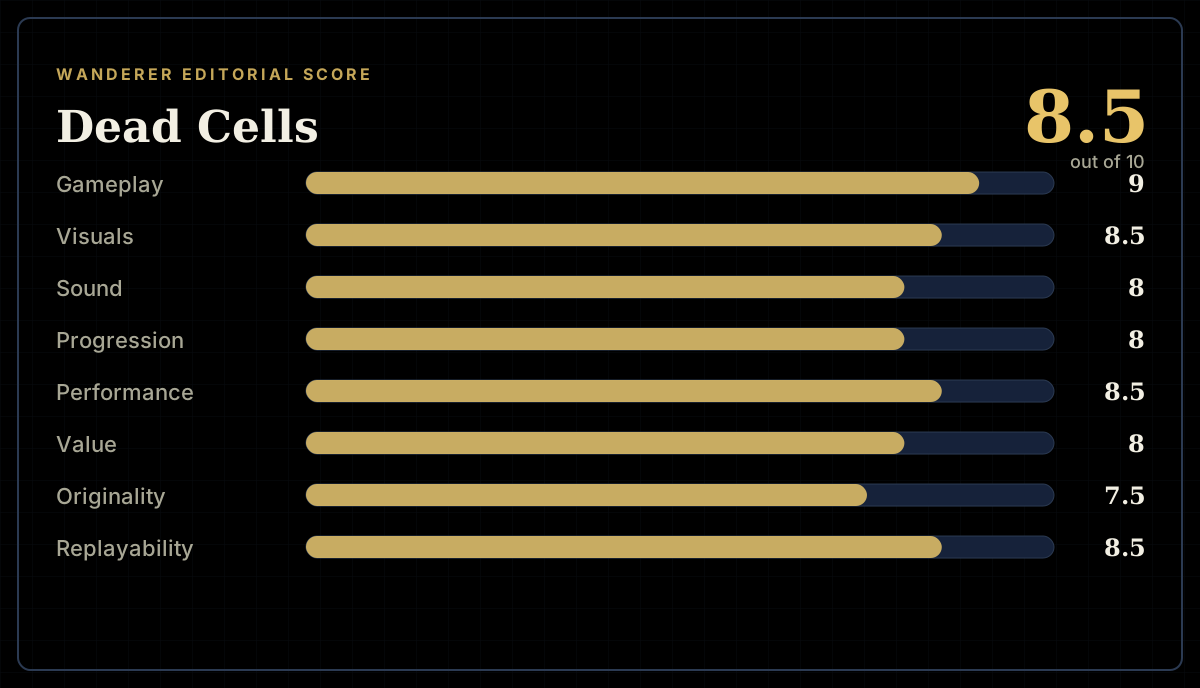
How the review scores each part of the gameWanderer Editorial -
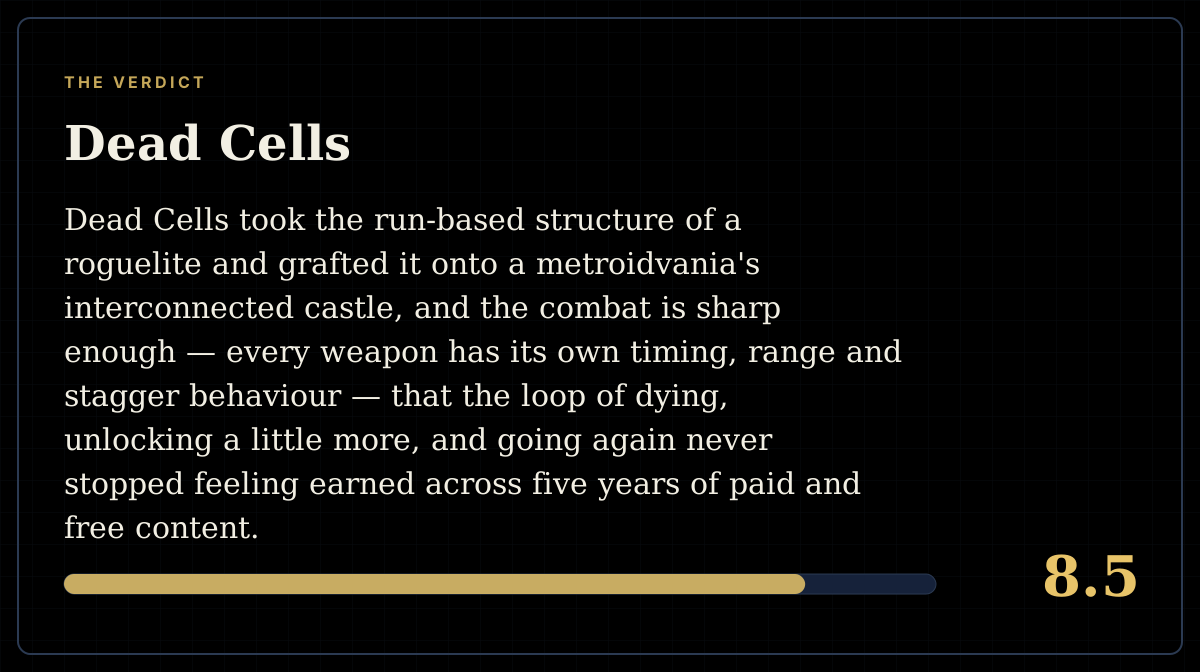
The short versionWanderer Editorial