
Game review
Never Grave: The Witch and The Curse
6 / 10
- Developer
- Frontside 180
- Publisher
- Pocketpair Publishing
- Released
- 4 March 2026
- Platforms
- Windows
- Genre
- Action, Adventure, Indie
- Monetisation
- One-time purchase
- Players
- Up to 4-player co-op (password-protected rooms only, no public matchmaking)
The short version
Never Grave: The Witch and The Curse casts players as a cursed hat that survives by possessing defeated enemies, exploring procedurally-arranged dungeons, and returning between runs to build up a village hub with skill trees, crafting stations, and farmland. Developed by Frontside 180 and published by Pocketpair, it lands Mostly Positive on the strength of charming art, a combat feel reviewers repeatedly compare to Dead Cells and Hollow Knight, and a genuinely creative possession mechanic. But the sample is unusually candid, across both praise and criticism, that the game is stretched thin between three identities: metroidvania, roguelite, and village-builder, and doesn't fully commit to any of them. Recognisable room layouts that undercut the promise of procedural generation, a structure that forces players to restart an entire run if they leave a sub-level incomplete, and a possession mechanic several reviewers found underused relative to its marketing are the most consistent complaints, softened somewhat by a development team the sample credits with responding to feedback quickly after launch.
Biggest strengths
- A distinctive possession mechanic, leaving the witch's body behind as a hat to take control of fallen enemies, that multiple reviewers single out as a genuinely creative idea even when they wished it were used more
- Combat reviewers repeatedly and independently compare favourably to Dead Cells and Hollow Knight, built around basic melee combos, unlockable magic, and status-effect builds
- A village hub with skill trees, crafting, farming, and freeform building that gives runs a genuine sense of long-term progression between dungeon attempts
Biggest weaknesses
- The game's procedural generation is repeatedly described as an illusion: multiple independent reviewers report recognising specific room layouts and enemy placements after just two or three runs, undercutting a core roguelite promise
- Reaching the end of a dungeon sub-level without completing it forces the run to end entirely, a structural choice several reviewers single out as actively punishing rather than challenging
- The possession mechanic, despite being the game's headline feature in marketing, is limited in practice to roughly one possessable enemy per zone, which multiple reviewers found disappointing
Who it's for: Fans of cosy-adjacent action roguelites who enjoy Palworld- or Animal Crossing-style base building as a genuine part of the loop, and who don't mind a game that borrows liberally from several genres rather than mastering one.
Our recommendation: A charming, imperfect hybrid worth trying for genre fans with patience for its identity crisis, best enjoyed in co-op with friends who already own it.
6 / 10
Never Grave: The Witch and The Curse follows a witch whose body is destroyed early on, leaving players to journey onward as her sentient, cursed hat, capable of possessing defeated enemies to keep fighting when their host form falls. Developed by Frontside 180 and published by Pocketpair, best known for Palworld, it splits its time between fast, physical dungeon combat and a village hub where players build structures, farm crops, and level up permanent upgrades between runs. It's landed Mostly Positive on Steam, and the review sample makes clear why: a charming, distinctive concept executed with real combat feel, even as a large and vocal portion of that same sample argues the game never quite decides which of its several genre identities it wants to be.
A possession mechanic that undersells itself
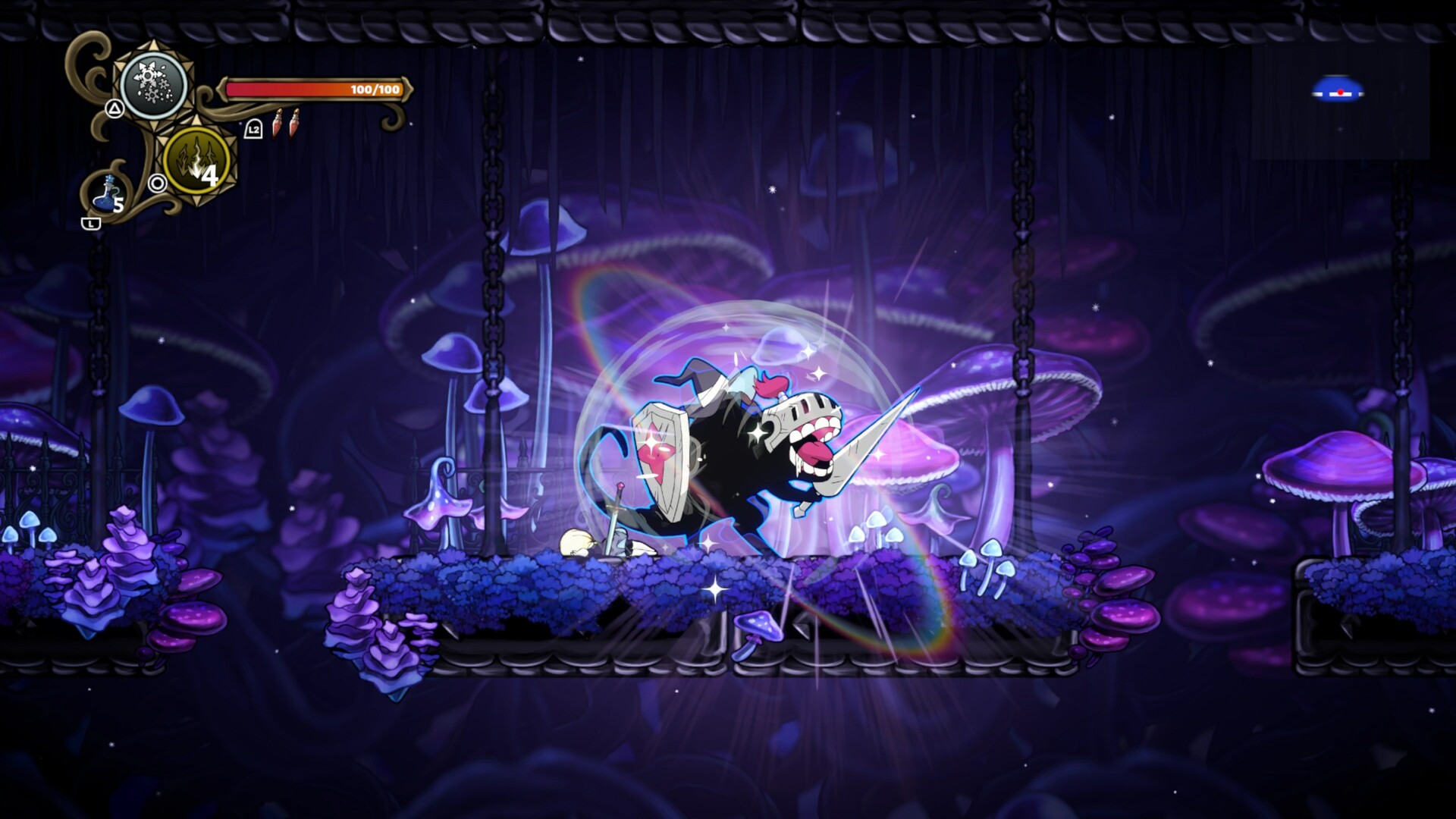
The game's headline hook, leaving your body behind to possess fallen enemies and fight as them, draws consistent praise as a genuinely creative idea, but just as consistently draws the caveat that it's underused in practice. Multiple reviewers note that each zone offers only around one possessable enemy, a sharp contrast to how prominently the mechanic featured in the game's marketing and trailers. It's a mechanic reviewers clearly wanted more of rather than one they disliked, which is arguably a more interesting problem than a mechanic that simply doesn't work, but it leaves a gap between what the game promises and what it delivers in any given run.
Combat that earns its Dead Cells and Hollow Knight comparisons
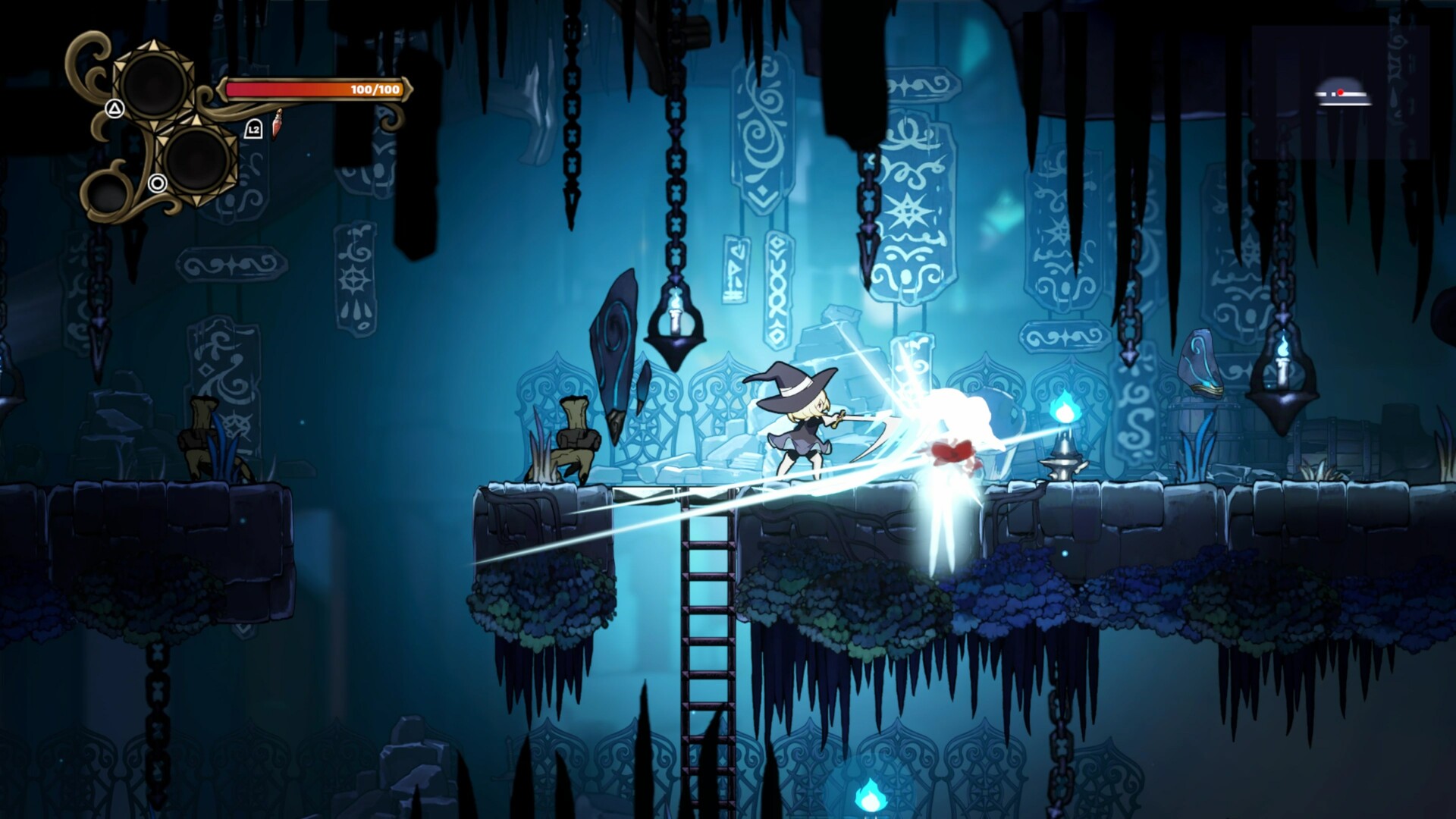
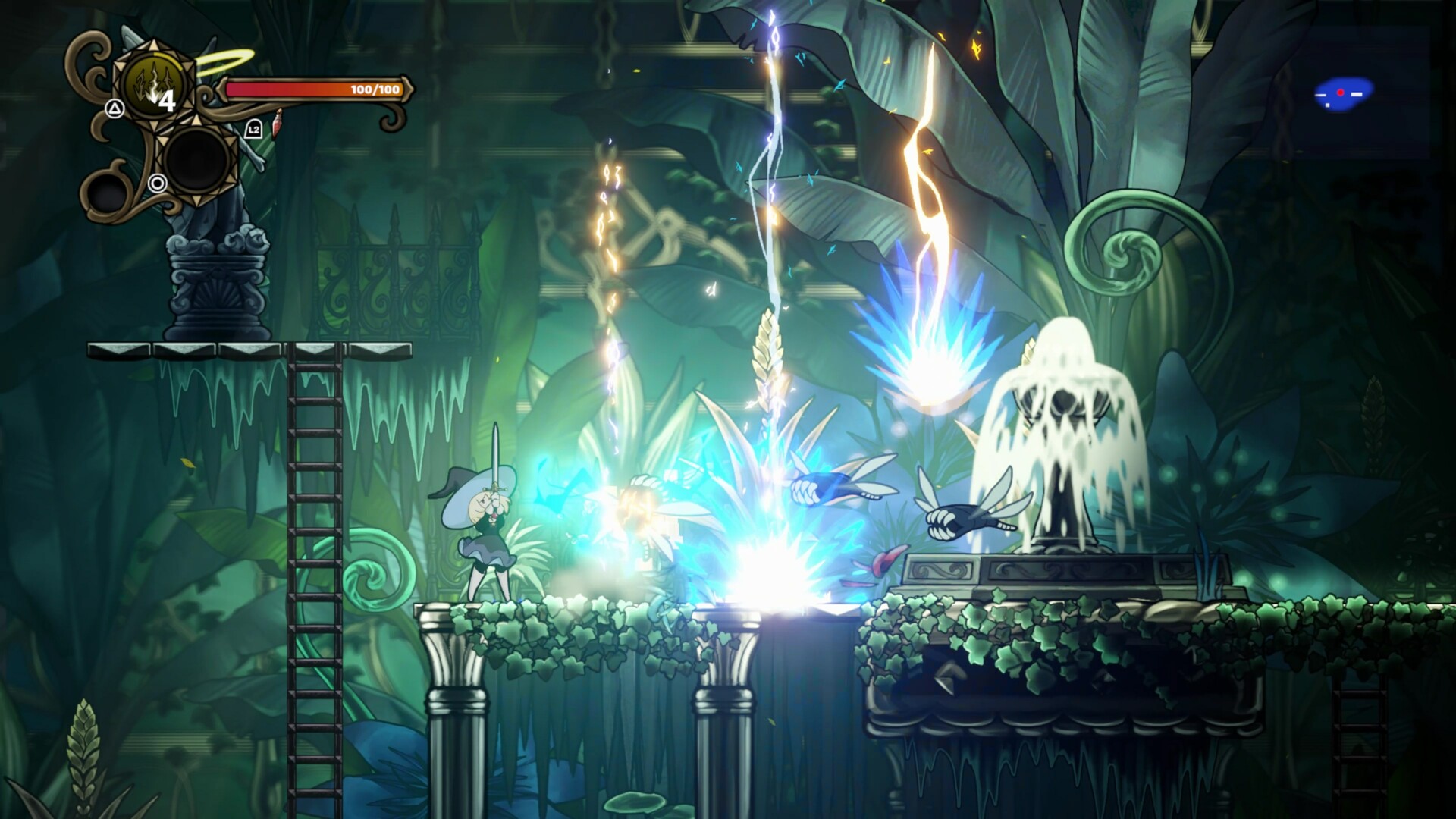
Where the sample is closer to unanimous is on how the combat itself feels. Reviewers across wildly different playtimes, from under an hour to over fifty, independently reach for the same comparisons: Dead Cells for the physicality of the hits, Hollow Knight for the movement and unlockable traversal abilities like air dashes and wall clings. Status-effect builds, magic that consumes and regenerates mana through basic attacks, and a growing pool of blessings and relics all get specific, positive mentions. It's a real strength, and it's likely the single biggest reason the game clears Mostly Positive despite its structural criticisms.
Procedural generation that stops feeling procedural
The most consistent, most specific complaint in the sample concerns the dungeons themselves. Several independent reviewers, across different months and different playtimes, report recognising exact room layouts and enemy placements after just two or three runs, describing the illusion of randomness as breaking down almost immediately. One detailed critical review goes further, noting that by a certain point they could predict what loot specific destructible objects would drop before opening them. For a structure explicitly built around repeat runs, that's a meaningful problem, and its recurrence across unconnected reviewers suggests it's a genuine design limitation rather than bad luck on any one player's part.
A run-ending structure some reviewers call actively punishing
A second structural complaint, distinct from the repetition issue but often raised by the same reviewers, concerns what happens if a player reaches the end of a dungeon sub-level without clearing it: the run ends and sends them back to the village, regardless of how well the run was otherwise going. One reviewer calls this out specifically as something that "sucks" and undermines runs that were going well right up until that point. It's the kind of design choice that reads as intentional risk-and-reward from one angle and needlessly punitive from another, and the sample doesn't reach consensus on which reading is fairer, only that it's a friction point worth knowing about going in.
Torn between three genres
Underneath the specific complaints sits a more fundamental one, raised independently by several of the sample's most detailed reviews: the sense that Never Grave is trying to be a metroidvania, a roguelite, and a village-builder all at once, and that the tension between those goals keeps it from fully succeeding at any single one. One reviewer frames it plainly, arguing the game would have worked better as a straightforward, linear metroidvania without the repeat-run roguelite structure layered on top; another makes almost the exact opposite case, wishing the roguelite elements were pushed further with more randomisation rather than less. That kind of directly conflicting feedback, both sides recommending the game while disagreeing about what it should have been, is itself a useful signal about where the design compromises landed.
A responsive team softening the launch bumps
To the developer's credit, the sample repeatedly notes rapid post-launch responsiveness: difficulty and grind adjustments reportedly shipped within days of release in direct reaction to community feedback, and reviewers who stuck around describe a noticeably improved experience compared to launch week. That doesn't erase the structural complaints raised above, several of which are about fundamental design choices rather than tuning, but it does suggest a studio still actively shaping the game rather than treating the Steam release as finished.
Final Verdict
Never Grave: The Witch and The Curse is a charming, creatively conceived hybrid let down by not fully committing to any of its three genre identities. The combat is genuinely good, consistently earning comparisons to well-regarded peers, and the possession mechanic and village-building add real texture even when reviewers wanted more from both. But recognisable procedural generation, a run-ending structure some find needlessly punishing, and co-op limited to private, password-protected rooms with difficulty tuned around it all chip away at the experience. It's worth a look for genre fans with patience for a game still finding its footing, especially with friends already on board, but it's not the genre-defining mashup its concept promised.
Pros and cons
Pros
- A distinctive possession mechanic, leaving the witch's body behind as a hat to take control of fallen enemies, that multiple reviewers single out as a genuinely creative idea even when they wished it were used more
- Combat reviewers repeatedly and independently compare favourably to Dead Cells and Hollow Knight, built around basic melee combos, unlockable magic, and status-effect builds
- A village hub with skill trees, crafting, farming, and freeform building that gives runs a genuine sense of long-term progression between dungeon attempts
- A visibly responsive development team, with multiple reviewers reporting balance and difficulty changes shipped within days of launch in direct response to community feedback
- Charming, readable art direction and a small but well-regarded soundtrack that draw praise even from reviewers otherwise critical of the game's systems
Cons
- The game's procedural generation is repeatedly described as an illusion: multiple independent reviewers report recognising specific room layouts and enemy placements after just two or three runs, undercutting a core roguelite promise
- Reaching the end of a dungeon sub-level without completing it forces the run to end entirely, a structural choice several reviewers single out as actively punishing rather than challenging
- The possession mechanic, despite being the game's headline feature in marketing, is limited in practice to roughly one possessable enemy per zone, which multiple reviewers found disappointing
- Co-op is limited to password-protected private rooms with no public matchmaking, while several reviewers report the difficulty curve is tuned around multiplayer, leaving solo play feeling unevenly balanced
- A recurring, more fundamental complaint that the game tries to be a metroidvania, a roguelite, and a village-builder simultaneously and doesn't fully succeed at any of the three
Screenshots
-
Never Grave, The Witch and The CurseImage: Frontside 180 via Steam -
Never Grave, The Witch and The CurseImage: Frontside 180 via Steam -
Never Grave, The Witch and The CurseImage: Frontside 180 via Steam