
Game review
Amberspire
6.5 / 10
- Developer
- Lunar Division
- Publisher
- Bithell Games
- Released
- 6 May 2026
- Platforms
- Windows, macOS
- Genre
- Indie, Simulation, Strategy
- Monetisation
- Premium, one-time purchase
- Players
- Single-player
The short version
Amberspire, from Lunar Division (The Banished Vault) and published by Bithell Games, reimagines the city builder as a dice-allocation puzzle: buildings generate dice, dice fund construction and a resource called Influence, and everything must be arranged within tight overlapping radii on the ruins of a long-dead lunar city. It's a genuinely novel take on the genre, closer in spirit to a dense solo board game than to SimCity, and the review sample is full of players who describe it as "esoteric," "a puzzle, not a sandbox," and unlike anything else they've played. That same sample is just as consistent about its limits: a short single playthrough with little to bring players back, event and lore writing that several reviewers wanted developed much further, some real interface friction, and a premium price that a number of reviewers found hard to justify against a handful of hours of content. It's a distinctive, confidently designed game for the right audience, undercut by thinness where it should have more to offer.
Biggest strengths
- A genuinely original core loop, building placement gated by overlapping dice-resource radii, that multiple reviewers say they haven't seen done this way before
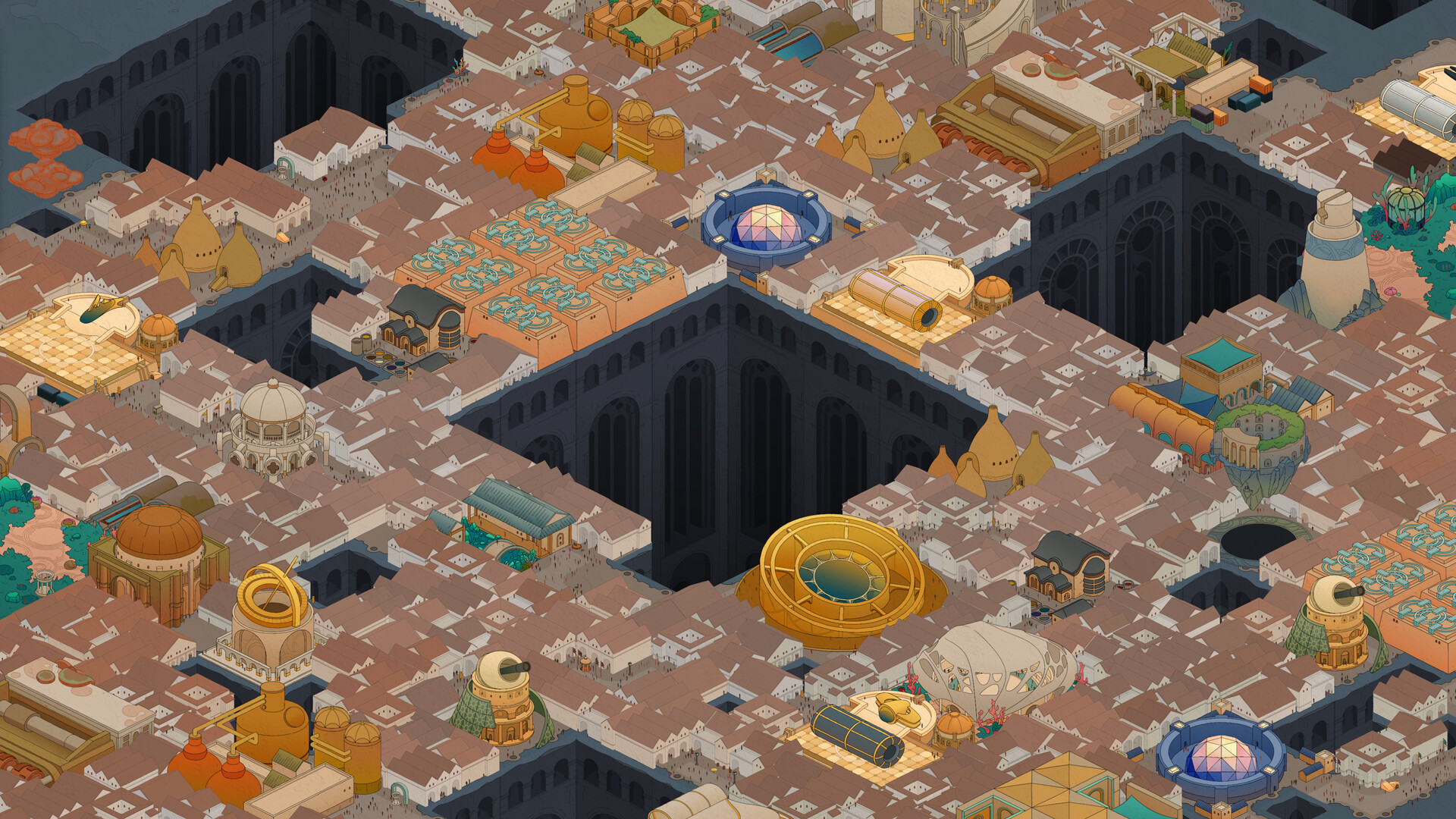
- Distinctive ligne-claire art direction and a well-regarded soundtrack that reviewers repeatedly single out as some of the game's strongest elements
- An organically-growing city layout that emerges from play rather than deliberate design, which several detailed reviews describe as genuinely satisfying once it clicks
Biggest weaknesses
- Several reviewers finished a full playthrough in well under ten hours and found little reason to start another, with one explicitly asking for a challenge mode or additional unlocks
- Event and faction writing is repeatedly described as "shallow" or "spartan," with reviewers wishing for more narrative texture given how evocative the underlying worldbuilding is
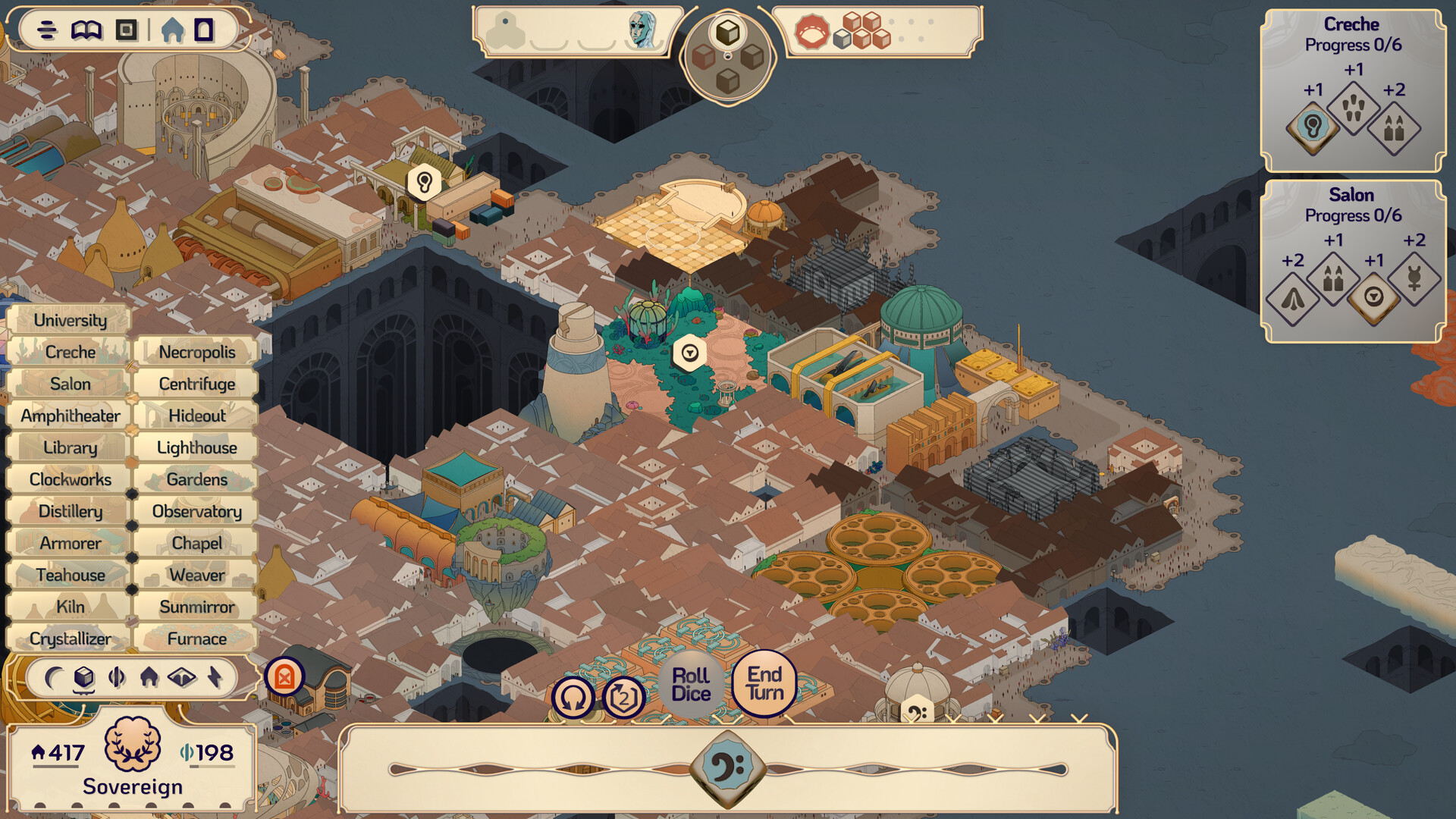
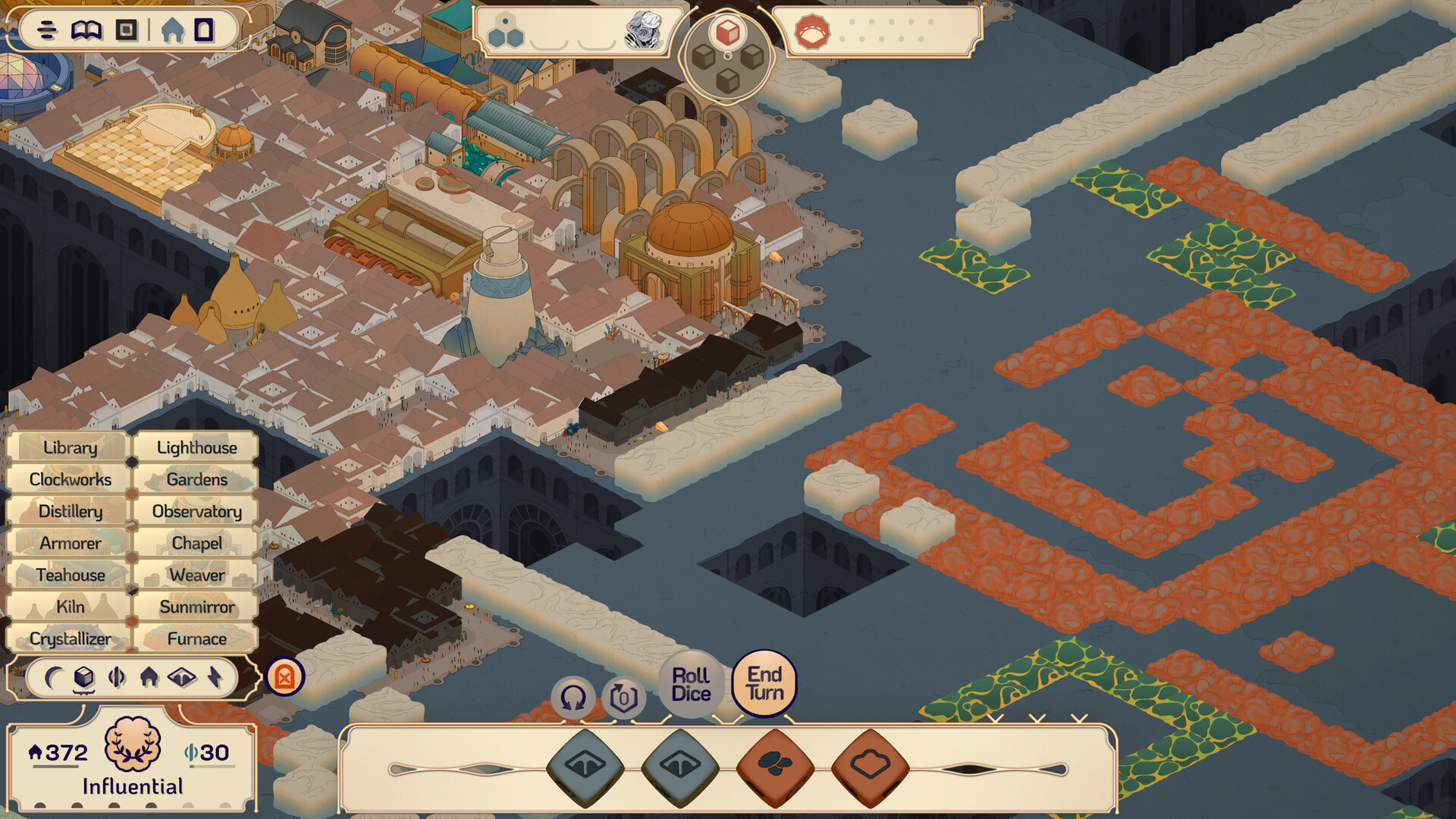
- Real interface friction is documented across multiple reviews: a jerky grid-locked camera, a limited zoom-out range, a map that recenters unhelpfully at the end of each turn, and assorted UI bugs including tooltips and info boxes that misbehave
Who it's for: City-builder and solo-board-game fans looking for something structurally different from the genre norm, who are comfortable reading a lengthy in-game manual and don't need a long tail of replayable content to feel satisfied.
Our recommendation: Worth it for players drawn to unconventional, puzzle-forward city builders; those wanting a long-term management sim or a strong narrative throughline should look elsewhere.
6.5 / 10
Amberspire asks players to build a city atop the ruins of an abandoned lunar mausoleum, but the mechanism for doing so has almost nothing in common with the genre's usual grid-and-zoning formula. Buildings generate dice; dice fund new construction, feed a currency called Influence, or trigger factional events; and everything must be positioned so that overlapping supply and demand radii actually connect. Developed by Lunar Division, the team behind The Banished Vault, and published by Bithell Games, it's less a management sim than an elaborate solo board game rendered in software, and the review sample treats it accordingly: as something genuinely new, judged on its own, unusual terms.
A puzzle wearing a city builder's clothes
The single most consistent observation across the sample is that Amberspire plays like a tabletop game too intricate for an actual table. Reviewers repeatedly reach for board-game comparisons, citing the complexity of managing dice results, building radii, and faction relationships simultaneously, with one comparing it to Alien Frontiers rather than SimCity, and another likening its puzzle-of-radii structure to Slipways. The core tension, that you can only roll a handful of dice per turn and must decide which section of your city to develop with them, produces the kind of "just one more turn" pull reviewers usually associate with 4X strategy games rather than city builders, without the accompanying scale of managing fleets or armies. It's a design choice that clearly took real thought, and reviewers who click with it describe genuine engrossment: cities that grow organically rather than to a plan, and small triumphs, like fighting back a fog outbreak that had disabled an entire neighbourhood, that read as some of the sample's most enthusiastic passages.
Atmosphere the mechanics don't always back up
Visually, the sample is close to unanimous: the ligne-claire art style, muted colour palette, and soundtrack draw consistent, specific praise, with more than one reviewer noting the game's central sound cue sticks in their head well after playing. The worldbuilding, factions, a mysterious dead civilisation, resources with names like Glow and Ritual, is repeatedly called evocative and distinctive. But several of the more detailed reviews note a gap between the strength of that atmosphere and how little the actual event and dialogue writing does with it. Reviewers describe event resolution text as "spartan" or "shallow," note that no in-game character ever speaks directly to the player, and suggest the game's sense of place would improve dramatically with more narrative content or even basic voice acting. It's a mismatch between a genuinely interesting setting and a delivery system, mostly numeric event outcomes with minimal flavour text, that undersells it.
Short, and light on reasons to return
Multiple reviewers completed a full playthrough in well under ten hours and reported little incentive to start again, and this is one of the sample's more consistent structural complaints. One reviewer explicitly calls for a challenge mode or additional unlockable content to extend the game's life; another notes that without meaningful failure states, and by their account it's difficult to actually lose, the tension the game is clearly trying to build never quite materialises for them. A different reviewer with a much longer 13-hour session pushes back harder, arguing the disruptive systems (Instability penalties, weather hazards, punitive events) actively work against, rather than enable, satisfying long-term play, comparing it unfavourably on that front to genre peers like Frostpunk or Against the Storm while still crediting Amberspire for trying something genuinely new. Between these accounts, a fair reading is that Amberspire's structure rewards a certain kind of player, one happy to treat a single run as the whole experience, and frustrates those expecting a management sim's usual replay loop.
Interface friction that adds up
Beyond the broader design debate, the sample documents a consistent set of smaller interface problems. A camera that snaps rigidly to the city grid is called "jerky" by multiple reviewers; the available zoom-out range is repeatedly described as too limited to track which dice belongs to which part of a sprawling city; and the map recentring itself at the end of every turn is flagged as an unforced annoyance that costs players their place. Beyond these UI quirks, several reviewers report outright bugs: crashes, dice losing track of their origin building, tooltips failing to update until reselected, and in one detailed account, a late-game bug that could block hazard-removal buildings near the map's edge entirely. None of these individually sound disqualifying, and most reviewers who mention them say the issues didn't stop them enjoying the game, but their cumulative presence across an otherwise polished-looking release suggests a game that shipped before its edges were fully sanded down.
Final Verdict
Amberspire's core idea, a city builder built entirely around overlapping dice-resource radii instead of zoning and sprawl, is a genuinely original contribution to a genre that doesn't get many of those, and the review sample's most engaged voices back that up with real enthusiasm for its puzzle-like structure, its art, and its soundtrack. But the same sample is consistent about where it falls short: thin event writing that doesn't live up to its atmospheric setup, a short single playthrough with little pull to return, and a scattering of interface rough edges that a patch or two could likely fix. At its asking price, it's an easier recommendation for city-builder and solo-board-game enthusiasts specifically hunting for something structurally different than for players wanting a long-running management sim to sink dozens of hours into.
Pros and cons
Pros
- A genuinely original core loop, building placement gated by overlapping dice-resource radii, that multiple reviewers say they haven't seen done this way before
- Distinctive ligne-claire art direction and a well-regarded soundtrack that reviewers repeatedly single out as some of the game's strongest elements
- An organically-growing city layout that emerges from play rather than deliberate design, which several detailed reviews describe as genuinely satisfying once it clicks
- A dense, board-game-style rulebook (rather than a hand-holding tutorial) that reviewers who enjoy that format found refreshing and well presented as an in-game reference
Cons
- Several reviewers finished a full playthrough in well under ten hours and found little reason to start another, with one explicitly asking for a challenge mode or additional unlocks
- Event and faction writing is repeatedly described as "shallow" or "spartan," with reviewers wishing for more narrative texture given how evocative the underlying worldbuilding is
- Real interface friction is documented across multiple reviews: a jerky grid-locked camera, a limited zoom-out range, a map that recenters unhelpfully at the end of each turn, and assorted UI bugs including tooltips and info boxes that misbehave
- A handful of reviewers report crashes and other bugs, including one describing a bug that could block hazard-removal buildings from activating near the map's edge in the late game
- Multiple reviewers say the roughly NZ$36 asking price is difficult to justify against the amount of content on offer, particularly for a single playthrough with limited replay incentive
Screenshots
-
AmberspireImage: Lunar Division via Steam -
AmberspireImage: Lunar Division via Steam -
AmberspireImage: Lunar Division via Steam