Game review
Urbek City Builder
7.2 / 10
- Developer
- Fridus
- Publisher
- RockGame S.A.
- Released
- 13 July 2022
- Platforms
- Windows
- Genre
- City Builder
- Monetisation
- One-off premium purchase, with two optional paid DLC expansions layered on top
- Players
- Single-player only
The short version
Urbek City Builder swaps the money-and-disasters formula of most city sims for something closer to a spatial puzzle game wearing a city builder's clothes: buildings only function, or upgrade, when specific other structures sit within or outside precise distance bands, and there is no tax system or random catastrophe to distract from getting that web of relationships right. It is a genuinely distinctive idea, built by a small Chilean studio and rendered in an attractive voxel style, and it has earned a Very Positive standing across roughly 940 Steam reviews for exactly that originality. The friction shows up later: reaching new biomes and map types runs through an achievement-style tech tree, and a large, consistent slice of the critical review sample — backed up by Steam's own global achievement statistics — describes getting stuck on the starting map with no way forward and no true sandbox escape hatch.
Biggest strengths
- A genuinely original hybrid — city builder scale and voxel presentation wrapped around a real spatial puzzle, with buildings that upgrade or fail based on precise adjacency rules rather than money or disasters
- No tax system, no random catastrophes and no fail states pulling attention away from the placement puzzle, which a wide range of reviewers single out as unusually relaxing for the genre
- Attractive, readable voxel art with first-person exploration of the finished city, built and shipped by a very small team
Biggest weaknesses
- Progression to new biomes and map types is gated behind achievement-style tech-tree unlocks; Steam's own global achievement data shows completion collapsing from roughly two-thirds of players on the very first milestones to under one percent on later map variants, matching a recurring, specific player complaint about being stuck on the starting map
- No true sandbox mode, and several reviewers describe specific pre-built maps as effectively unsolvable without external editing
- The Steam Deck Verified badge is disputed by a number of players, who report missing controller prompts, tiny default UI text and no evident handheld-specific tuning
Who it's for: Players who enjoy city builders as logic puzzles rather than economic simulations — fans of Concrete Jungle, Dorfromantik or Caesar-style placement puzzles more than SimCity or
Our recommendation: Worth it at its asking price for the puzzle-building idea alone, but go in expecting the early hours to be the whole experience unless later maps genuinely appeal — check recent reviews for whether the progression gate has loosened before buying for the biome variety specifically.
7.2 / 10
Introduction
Most city builders measure success in tax revenue and disaster survival. Urbek City Builder, released in July 2022 by the small Chilean studio Fridus and published by RockGame S.A., throws both of those pillars out entirely. There is no money system and no random catastrophe waiting to level a neighbourhood; instead, every building in the game has a precise set of adjacency rules — this structure only works within a certain distance of that one, this other structure fails or starts polluting nearby housing if placed too close to it — and the entire game is built around untangling that web correctly. It is, in the words of more than one reviewer, less a city builder and more a puzzle game wearing a city builder's skin, and it has settled into a Very Positive standing on Steam (840 of the last 942 reviews positive, an 89% rate) almost entirely on the strength of that idea. What complicates an otherwise easy recommendation is a specific, well- evidenced structural problem: the very achievement-driven system that gives the game its identity also gates its content, and a substantial number of players report it locking them out of most of what the game has to offer.
A city builder that's really a placement puzzle
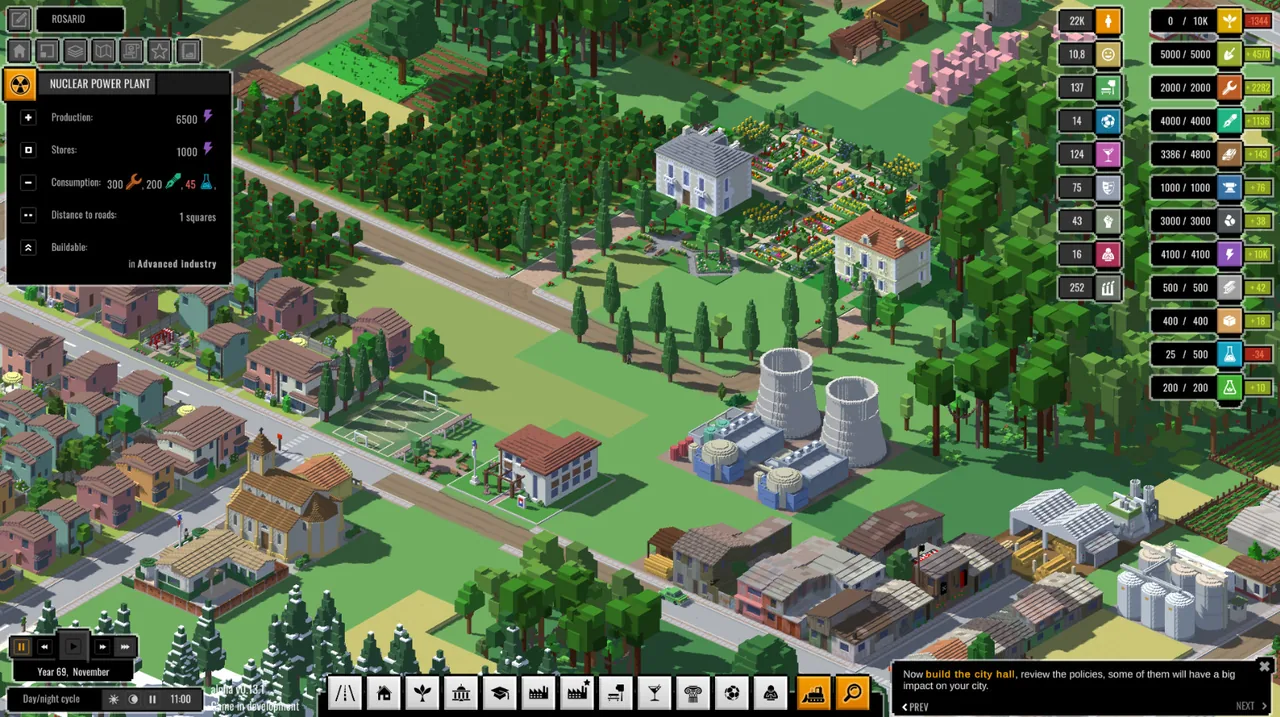
Urbek's core loop will be immediately readable to anyone who has played Caesar, Pharaoh or Tropico — build a road-connected settlement, keep resource chains fed, keep housing serviced — but the mechanism underneath is stricter and more deliberate than any of those. Buildings in Urbek have explicit zone requirements: markets need to sit near residences but away from certain industry, farms need open land but suffer if crowded by pollution sources, and higher-tier buildings only unlock or upgrade once specific lower-tier structures exist in the right configuration around them. One widely-cited Steam review calls this "a cross between Caesar/ Pharaoh and Tropico... more about configuration and resource management than about traffic management and tax revenue," and another goes further, framing the whole game as adjacency puzzling with city-builder set dressing rather than the reverse. That framing is echoed enthusiastically by a large share of the positive review sample, several of whom explicitly compare it to Concrete Jungle's puzzle-placement mechanics rather than to traditional sim-city descendants.
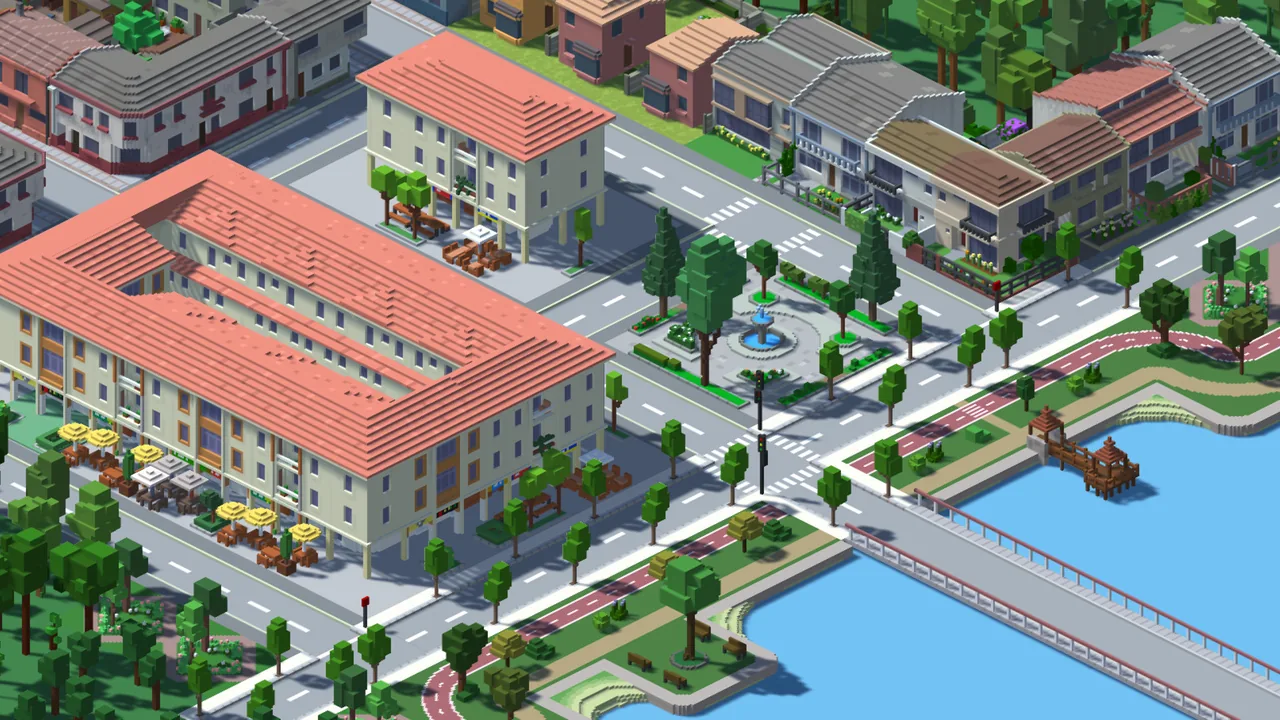
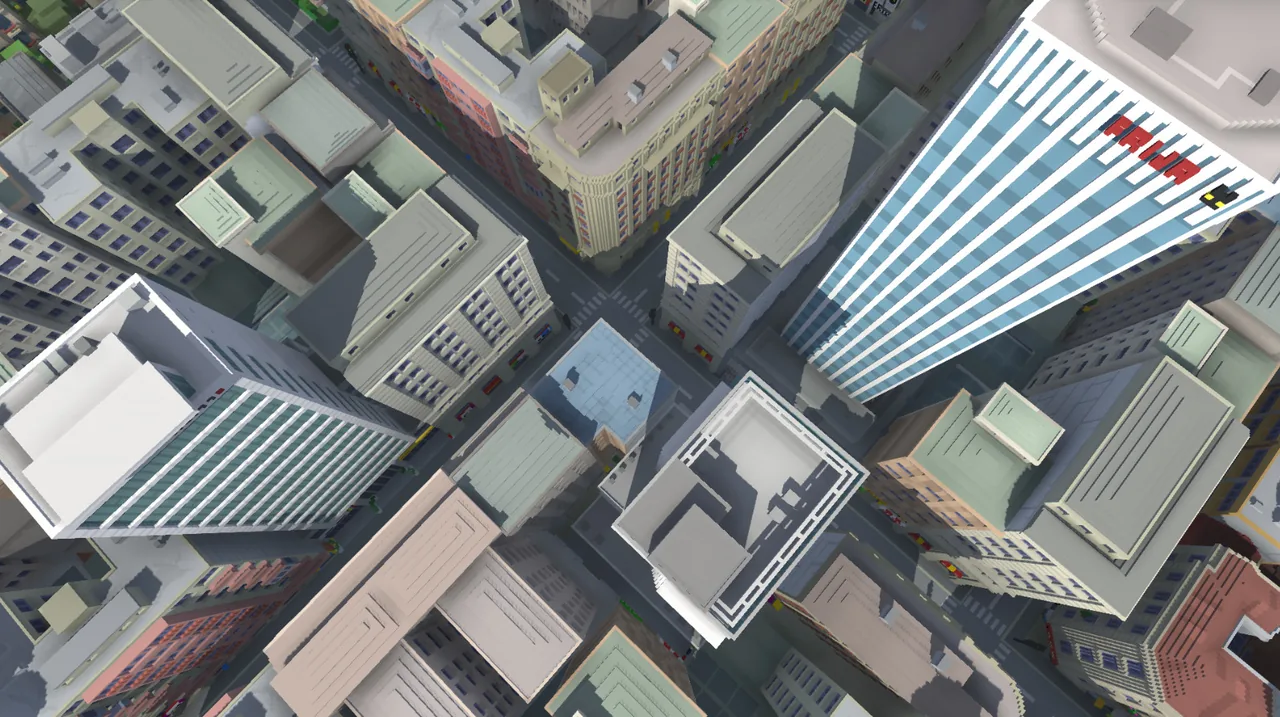
The removal of money and disasters is deliberate, and it lands. With no tax slider to balance and no earthquake or fire waiting to erase an afternoon's work, attention stays entirely on the placement puzzle itself — and a striking number of reviewers describe the resulting pace as unusually calm for the genre. "If Urbek is the future of city builders, the future is blindingly bright," reads one enthusiastic review; a more measured one calls it simply "the best isometric city builder I've played since SimCity 4," praising the depth hiding underneath what looks like a fairly simple presentation. The voxel art style does real work here too: buildings read clearly at a glance even as the adjacency web around them gets complicated, and the game supports first-person exploration of the finished city, letting a carefully solved neighbourhood actually be walked through rather than only admired from above.
Where the achievement wall bites
The same tightly-designed system that makes Urbek's puzzle interesting is also what generates its most consistent and best-supported criticism: progress toward new biomes, larger maps and later content runs through an achievement-style tech tree, and clearing enough of the right milestones on the very first map is a prerequisite for reaching anything beyond it. One detailed review lays the mechanism out plainly: "the entire map-unlock system is tied to several 'tech tree' achievement unlocks you must accomplish, and are given to you very early in your city-creation." The frustration isn't a fringe complaint — a meaningful cluster of critical reviews converge on functionally the same description, several using the word "restrictive" without prompting each other, and one flatly states that "half the maps are unbeatable unless you edit them before playing," adding that "there is no true Sandbox mode."
Steam's own global achievement statistics back that pattern up in a way that's hard to argue with. Roughly two-thirds of players (65.5%) have popped the very first population milestone, and more than half have cleared the first green-space achievement — normal, healthy early-game numbers. But completion falls off a cliff from there: achievements tied to later biomes and advanced map variants (desert, archipelago, ruins-themed and tier-three unlocks across several biome families) each sit at roughly 0.3% of the player base. That is not a gentle difficulty curve; it's a wall, and it lines up exactly with the recurring "I never got past the first map" complaint running through the negative and mixed review sample. A separate, calmer thread of feedback points at a smaller but related gap: no service-coverage heatmap for healthcare, retail or leisure, which leaves players eyeballing coverage by trial and error rather than planning it with real feedback — a rough edge on an otherwise carefully considered UI.
Steam Deck, and the badge dispute
Urbek carries a Steam Deck Verified badge, and a specific, recurring group of reviews disputes it directly. Complaints center on the game showing keyboard-and-mouse prompts rather than controller icons, a default UI text size several players call uncomfortably small on the handheld's screen, and no evident tuning of the control scheme for a gamepad-first setup — one review calls the badge "just plain wrong" and "the blatant lies," which is strong language, but it's specific and it repeats across more than one independent account rather than reading as a one-off gripe. It's worth weighing against the base Windows experience, which draws no comparable complaints; this looks squarely like a handheld-certification gap rather than an underlying design problem.
Post-launch support and the DLC picture
Fridus hasn't walked away from Urbek since its 2022 launch. Defend the City arrived in March 2023 as a paid expansion, followed by a Trains DLC in April 2024 — nearly two years of continued paid content on top of a base game that, per its Steam achievement list, still has 103 achievements spanning content well past what the review sample suggests most players actually reach. That's a genuinely healthy support cadence for a small studio's single project, and it's reflected in a review score that has stayed Very Positive rather than drifting downward over time, even as the progression-gate complaints keep recurring in the same period. Buyers weighing the DLC specifically should treat the base game's own achievement completion curve as the relevant signal: the paid expansions add more of a system that a sizeable share of the existing player base reports never fully opening up for them.
Verdict
Urbek City Builder earns its Very Positive standing honestly — the adjacency-puzzle idea at its core is genuinely inventive, well-realised in voxel art, and a real departure from the money-and- disaster formula that defines most of the genre. The catch isn't a matter of taste so much as structure: the achievement-gated tech tree that gives the early game its shape is also, by the game's own published statistics, the thing stopping the overwhelming majority of players from ever seeing the biomes and maps that its marketing and DLC lineup are built around. That's a real, documented gap between what the game promises across its lifetime and what most owners actually experience, and it's the single thing worth knowing before buying — not whether the puzzle is worth solving, but whether one map's worth of it is enough.
Pros and cons
Pros
- A genuinely original hybrid — city builder scale and voxel presentation wrapped around a real spatial puzzle, with buildings that upgrade or fail based on precise adjacency rules rather than money or disasters
- No tax system, no random catastrophes and no fail states pulling attention away from the placement puzzle, which a wide range of reviewers single out as unusually relaxing for the genre
- Attractive, readable voxel art with first-person exploration of the finished city, built and shipped by a very small team
- Real post-launch support: two paid DLC expansions across the two years after launch, plus a Very Positive review standing that has held steady over roughly 940 reviews
Cons
- Progression to new biomes and map types is gated behind achievement-style tech-tree unlocks; Steam's own global achievement data shows completion collapsing from roughly two-thirds of players on the very first milestones to under one percent on later map variants, matching a recurring, specific player complaint about being stuck on the starting map
- No true sandbox mode, and several reviewers describe specific pre-built maps as effectively unsolvable without external editing
- The Steam Deck Verified badge is disputed by a number of players, who report missing controller prompts, tiny default UI text and no evident handheld-specific tuning
- No service-coverage heatmap or comparable overlay, leaving players to manually eyeball healthcare, retail and leisure coverage rather than plan it with proper feedback
Screenshots
-
Urbek City BuilderImage: RockGame S.A. via Steam -
Urbek City BuilderImage: RockGame S.A. via Steam -
Urbek City BuilderImage: RockGame S.A. via Steam -
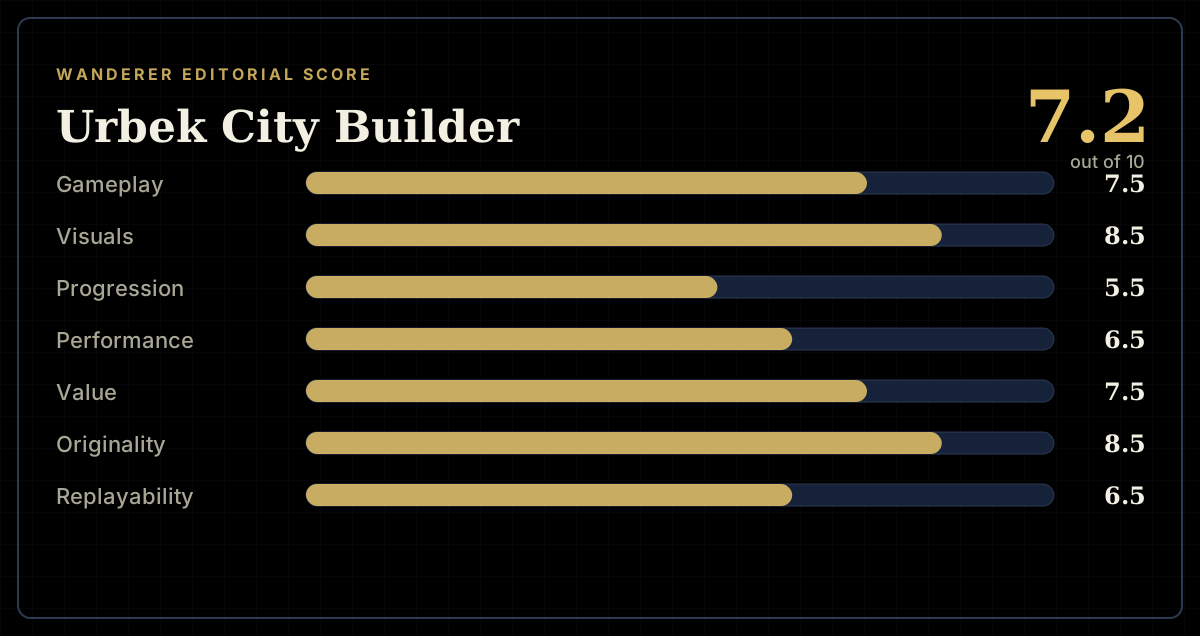
How the review scores each part of the gameWanderer Editorial -
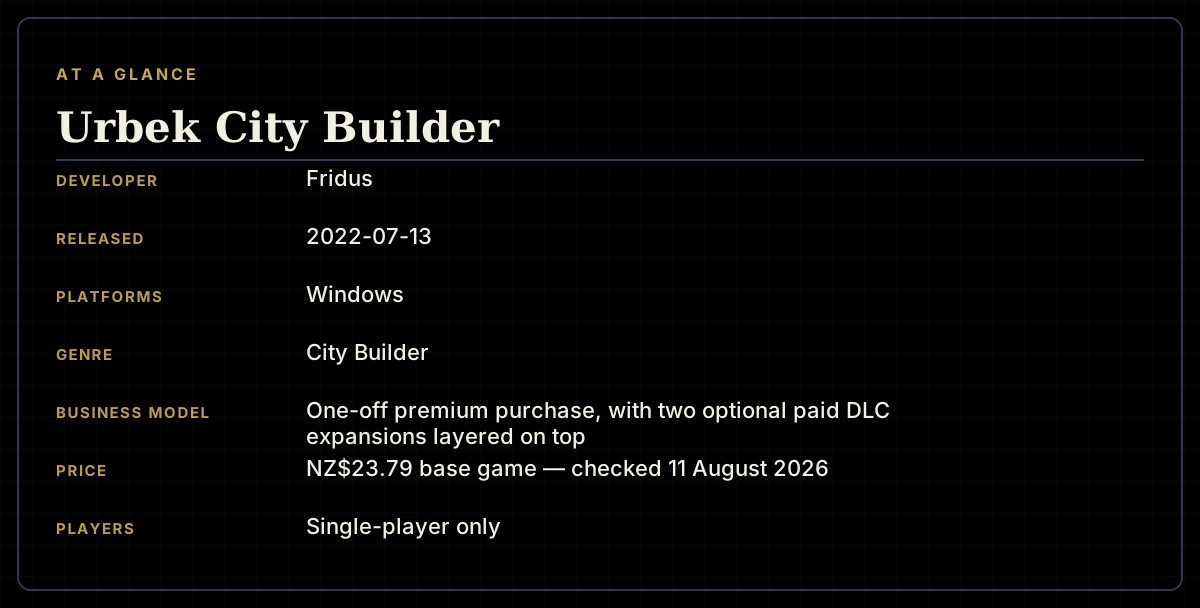
The essentials at a glanceWanderer Editorial -
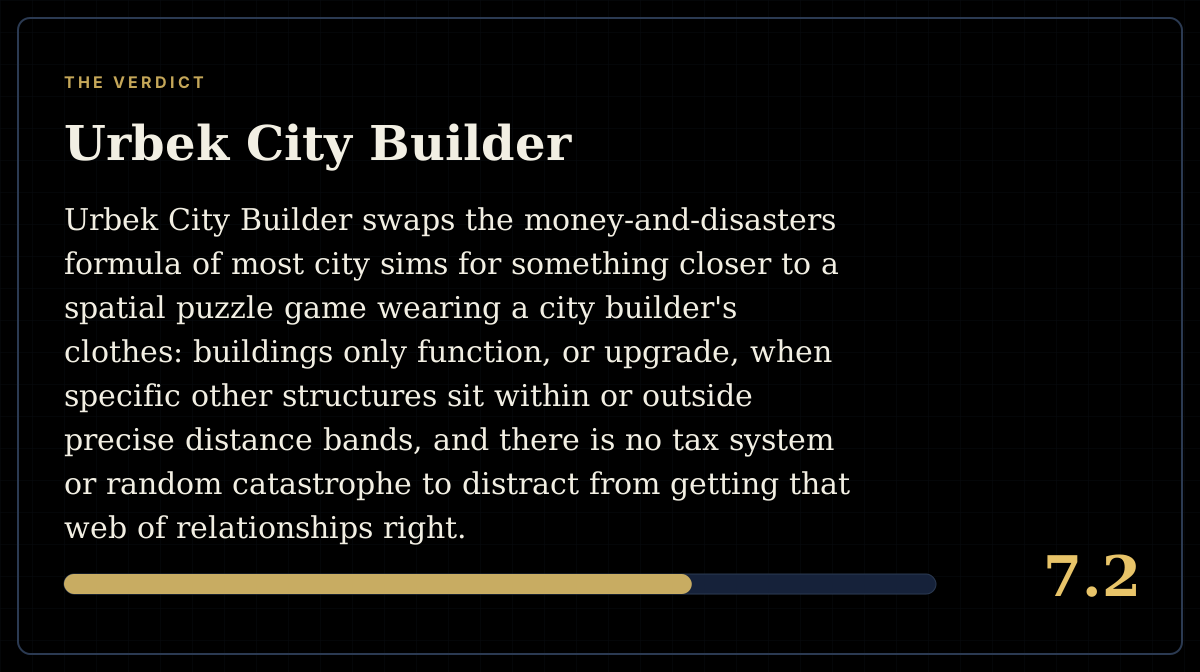
The short versionWanderer Editorial