Game review
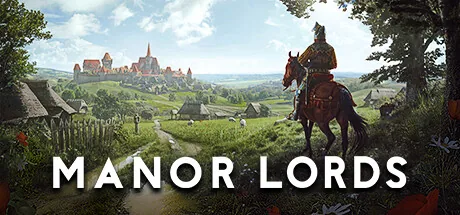
Manor Lords
7 / 10
- Developer
- Slavic Magic
- Publisher
- Hooded Horse
- Released
- 26 April 2024
- Platforms
- Windows
- Genre
- Medieval city builder and real-time tactical strategy
- Monetisation
- Premium, one-off purchase. No gameplay DLC exists — a separate Artbook and Soundtrack are sold purely as collector extras and touch nothing in the game itself. No microtransactions, season pass, energy systems or loot boxes. Steam storewide sales cutting 35% off the base price have run close to monthly through 2026
- Players
- Single-player only; no co-op or competitive mode exists or is planned
The short version
Manor Lords' burgage plot system — households that grow backyard extensions based on how deep their plot runs, and families you assign to specific trades rather than push around with a worker slider — is the sharpest piece of city-builder design released in years. It's built around a game that isn't finished, and that isn't a technicality: the perk tree it launched promising has sat under a "coming soon" banner for well over a year, a trade system overhaul was announced, built up and then quietly shelved in May 2026 while the studio fixed things that had "quietly degraded," and the whole project went nine content-free months in 2025 that tipped its Steam rating to Mixed before recovering.
Combat is the other half of the pitch, and it's the smaller half by a wide margin — real-time battles exist, retinues and levies exist, but the trailers that sold three million copies leaned on siege warfare a typical playthrough barely touches. Buy this for the economy simulation, not the war it's dressed up as, and buy it knowing "Early Access" here has meant real stretches of silence as often as steady progress.
Biggest strengths
- The burgage plot system makes households, not abstract worker pools, the unit of simulation — plot depth determines what a family can farm or raise in its own backyard
- Assigning specific families to trades produces visibly different towns from the same map, rather than one optimal worker-allocation build
- Gridless placement following roads and terrain makes every settlement look like it grew rather than got zoned
Biggest weaknesses
- The perk and skill tree teased at Early Access launch has sat visibly incomplete for well over a year, with no shipped date
- A trade system rework was announced, previewed and then paused in May 2026 to fix systems that had "quietly degraded" — a pattern of promised features stalling mid-development
- A nine-month gap between content updates in 2025 dropped the game's recent Steam rating to Mixed before it recovered
Who it's for: City-builder veterans who want a household-level economic simulation deeper than anything else on the market, and who are comfortable owning an unfinished game with a genuinely uneven update history. A poor fit for anyone drawn in by the battle trailers, or for players who want a stable, content-complete game rather than a bet on where a small studio takes it next.
Our recommendation: Worth owning if the burgage plot system genuinely appeals to you — nothing else simulates a medieval settlement at this resolution. Everyone else should wait, and specifically wait for a real 1.0 announcement rather than the next major update; this studio has shipped three solid updates since December 2025 but has also paused a headline feature mid-promise before, and full price today buys a promising, unfinished economy game, not the war-and-peace epic the marketing implies.
7 / 10
Manor Lords sold on a promise it has spent two years and change only partly redeeming. The trailer that pulled in three million wishlists before launch and made it Steam's most-wanted game of early 2024 was full of siege towers, cavalry charges and burning palisades. The game that actually shipped into Early Access on 26 April 2024, and the one still sitting in Early Access today, is a slow, detailed household economy simulation that occasionally interrupts itself with a battle. That gap between what got people to click "wishlist" and what they've actually been playing is the real subject of any honest review of this game — not whether Manor Lords is good, but whether it's finished enough, and honest enough about not being finished, to recommend at full price right now.
Where the game actually is
Start with the facts, because Manor Lords' Early Access story has been unusually public and unusually bumpy. Developer Slavic Magic — founded by Grzegorz "Greg" Styczeń, who built the game solo for years before growing a small team around it — shipped 1.0 for nobody: there is still no full release, and no announced date for one. The main branch currently sits at version 0.8.090, folded into "Major Update #7" on 10 July 2026, itself the accumulation of four months of beta patches focused almost entirely on technical debt — pathfinding, character locomotion, squad commands and collision handling, plus a first pass at gamepad support. It's useful, unglamorous work, and the developer has been explicit that it's cleanup before the next round of actual content.
The update history behind that is where the real caution belongs. Major Update #5 landed in December 2025 with a castle overhaul and new maps and modes. Major Update #6 followed in March 2026 with battlefield changes and family-based settlement progression. Major Update #7 arrived in July. Three solid updates in eight months is a genuinely healthy cadence — but it followed a much worse stretch: the game went completely quiet for nine months across 2025, from January to October, a silence long enough that it dragged the game's recent-review standing on Steam down to Mixed before the next update walked it back. Slavic Magic's own public update after that gap described "rethinking what went wrong" internally, which is candid, but it's also an admission that the studio itself didn't see the drought coming.
It's still happening in smaller ways. In January 2026 the developer previewed an ambitious trade system rework — deliberate monopolies, real economic strategy, a genuine overhaul of how goods move between settlements. By May, that rework was paused indefinitely so the team could fix systems that had, in the developer's words, "quietly degraded over time." The pathfinding rework that resulted is a legitimate improvement and the right call technically. But it's also the second time in this game's history that a headline feature got announced, built up in public, and then set down unfinished for something more urgent. Judge the game as it is today, not as its roadmap promises, and today's Manor Lords is still missing the perk and skill tree it launched teasing — well over a year with that system parked under a "coming soon" label in its own UI.
The burgage plot is still the best idea in the genre
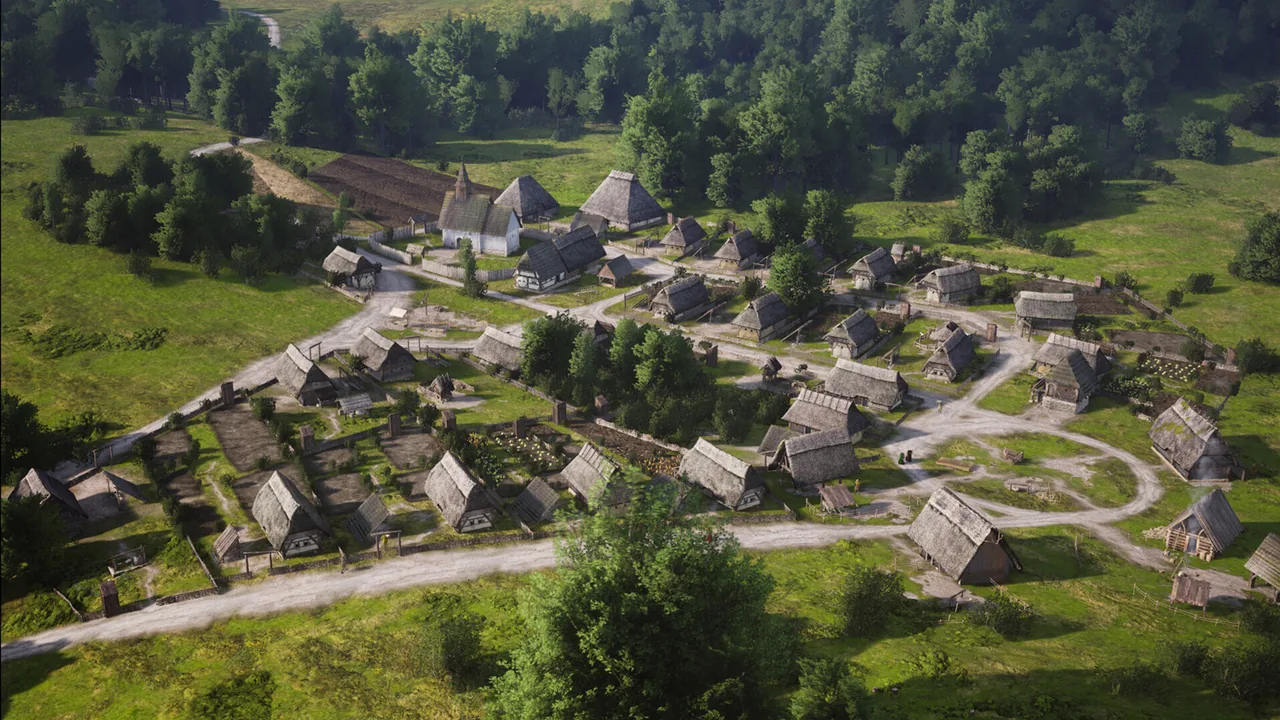
None of that should obscure what Manor Lords actually got right, because it's a genuinely rare kind of right. Most city builders manage population as an abstraction — a worker pool you drag between jobs with a slider, indifferent to who's actually doing the work. Manor Lords instead simulates the town at the level of the household. Land is divided into burgage plots that scale to the terrain and the road network rather than a fixed grid, and each plot's depth is a real resource: a shallow plot barely fits a house, while a deep one has room behind the building for a garden, chickens, or goats that feed the family living there without ever touching your managed farms. You aren't optimising abstract "food output" — you're deciding how much backyard a particular family gets, and that family's actual production changes as a result.
Families are the other half of the idea, and it's the part that makes the whole system click. You assign specific households to specific trades — a family becomes the town's tanners, another becomes its bakers — rather than allocating fungible labour units to abstract job categories. That sounds like a small distinction from a conventional worker-allocation model, but it isn't: it means two towns built from the same map can end up structurally different, because which families you settled where and which trades you gave them shapes the settlement's whole economy going forward. March 2026's Major Update #6 leaned further into this by tying settlement-level progression to families reaching a certain level rather than plots hitting a tier, which is the right direction — it makes the household, not the building, the thing the game is actually tracking.
It's a genuinely novel piece of simulation design, and it's the reason Manor Lords still gets recommended by players frustrated with everything else about it. Nothing else on the market currently does household-level medieval economics this well, gridless placement included — you can watch a town's shape grow organically along a river bend or a trade road in a way that reads as settled rather than zoned, which very few genre entries manage.
The battles you were sold, and the battles you get
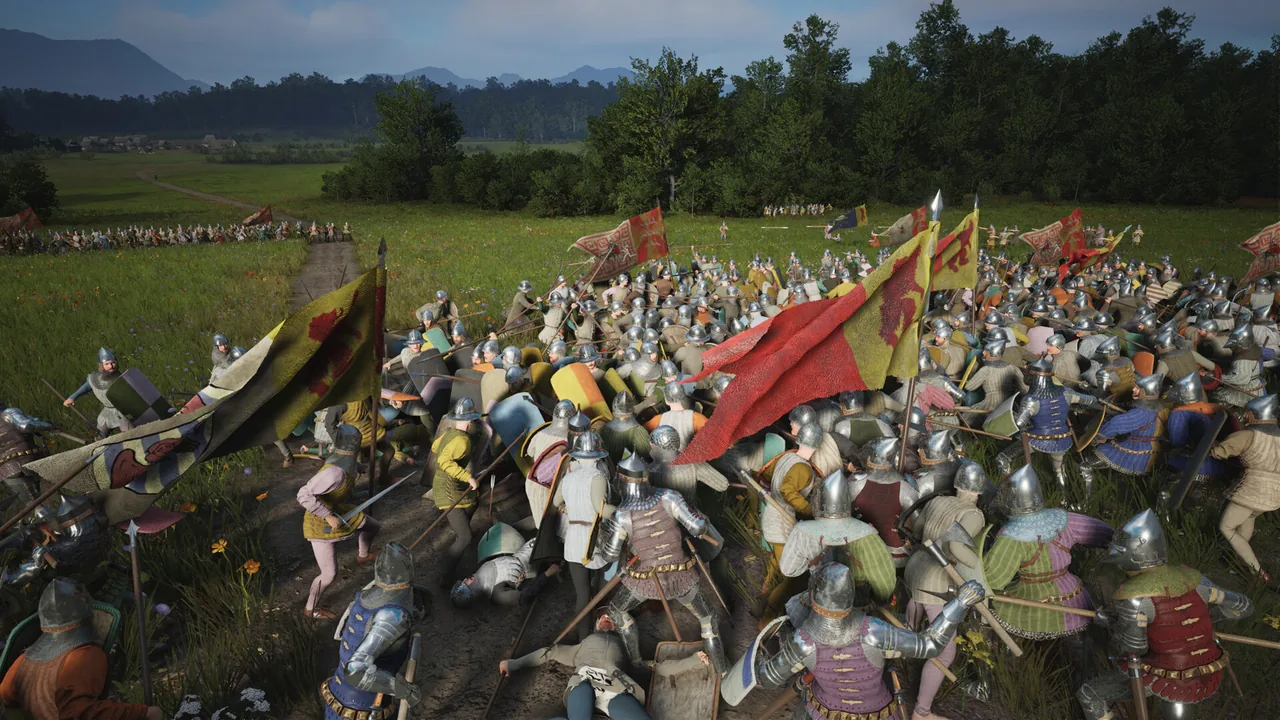
Set that against how the game was marketed, and the mismatch is stark. Manor Lords' pre-launch trailers pushed real-time tactical battles — retinues, levies raised from the town militia, mercenaries, sieges against rival lords — hard enough that a meaningful share of buyers came in expecting something closer to a Total War campaign layer bolted onto a city builder. What they got is a game that is, by a wide margin, an economic simulation with occasional combat, and current player feedback says so plainly: recent negative Steam reviews specifically call out how small a fraction of actual playtime the marketed battles occupy, with one recurring complaint putting city management at well over 90% of a typical session against the small slice spent fighting.
The combat that does exist is functional rather than deep. You raise levies, hire a standing retinue, buy in mercenaries when your own manpower is short, and position squads on a battlefield where fatigue, weather and equipment matter. It's coherent as a system, but it's thin relative to its billing, and a recurring player complaint is sharper than "there's not enough of it" — several describe wars as decided mainly by who can afford the most mercenaries fastest, which turns a promised tactics layer into an economic contest wearing a battle's clothes. AI-controlled rival lords compound the frustration: multiple recent reviews describe enemy armies scaling in size well past what the player's own economy can support at the same settlement stage, which reads less like difficulty and more like the AI getting resources the player's economy doesn't.
If you specifically bought in for the battles, you will likely be disappointed. If you came for a detailed medieval economy simulation and can take or leave the war, the balance works fine — the fighting exists, it looks good, and it doesn't get in the way of the part of the game that's actually excellent.
Where it's still thin
Beyond the missing skill tree and the mismatched combat, the shape familiar to every long Early Access city builder shows up here too: once a settlement's core production chains are solved — food, basic goods, a stable trade surplus — there isn't much new decision-making left until the next major update introduces something. That's a structural problem the perk tree was specifically supposed to solve, which is exactly why its absence stings more than a missing nice-to-have would. Performance is a related sore point: recent reviews report crashes during extended sessions, workers that silently stop responding to assignments, and enough general instability during wartime that players describe manually saving and reloading to keep a session running. Major Update #7's locomotion and pathfinding work should help — it was built to address exactly this class of bug — but it landed too recently to have settled the pattern in the review data yet.
Value in Early Access: buy now, or wait
At NZ$59.99, Manor Lords asks full premium-game money for a product that is, by its own developer's recent admission, still fixing things that quietly broke rather than adding the features it's been promising for over a year. The 35%-off sales that run close to monthly bring it closer to NZ$39, which is a fairer price for what's actually here today — a genuinely excellent economic simulation wrapped around an incomplete progression system and a combat layer that doesn't match its own trailers. There's no gameplay DLC diluting that calculation either way; the Artbook and Soundtrack are pure extras that don't touch balance.
The honest advice is to wait for the next real content milestone rather than the next sale. Slavic Magic has shown, twice now, that it will announce a headline feature, build public anticipation for it, and then set it aside when something more urgent turns up. That's not damning on its own — plenty of small studios reprioritise mid-development, and the pathfinding work that displaced the trade rework was clearly the right call — but it means "coming in the next update" has a real track record of not meaning what it sounds like here. Buy in now if the burgage plot system is reason enough on its own, because it is that good. Wait if you were hoping for the finished, battle-forward epic the 2024 trailers implied; that game, if it arrives, isn't the one currently installed.
The comparison worth making isn't to another medieval game so much as to what "finished" looks like in this genre right now. Against the Storm, also published by Hooded Horse, shipped a structurally complete 1.0 in December 2023 and has kept adding paid content on top of a game that already worked end to end. Going Medieval spent nearly five years in Early Access before landing its own 1.0 in March 2026, proof that this genre's slow-burn development model can still resolve into a finished product rather than an indefinitely open beta. Manor Lords hasn't reached that point, and after the 2025 it just had, it's fair to want proof of a real finish line before paying full price for one more promise. Players who like watching a system run and reward patient planning without needing a finished war to justify it might also find something familiar in Wanderer, on a much smaller scale.
Verdict
7.0 out of 10. Manor Lords contains the best household-level city simulation currently on PC — the burgage plot system and family-based trade assignment do things no competitor attempts, and the game is gorgeous enough in motion that its art direction survives every complaint levelled at its pace. It is not the game its own trailers sold, and it is not close to finished: a skill tree promised at launch is still missing more than a year later, a headline trade rework got paused mid- promise in May 2026, and 2025 included a nine-month silence serious enough to tank the game's own review score for a stretch. None of that erases what's genuinely there. It does mean the fair verdict is "buy the idea, not yet the finished game" — recommended for players who want that specific economic simulation badly enough to tolerate an uneven roadmap, and a clear wait for everyone hoping the next update is the one that finally delivers on 2024's promise.
Pricing, platform and update details checked 1 August 2026.
Pros and cons
Pros
- The burgage plot system makes households, not abstract worker pools, the unit of simulation — plot depth determines what a family can farm or raise in its own backyard
- Assigning specific families to trades produces visibly different towns from the same map, rather than one optimal worker-allocation build
- Gridless placement following roads and terrain makes every settlement look like it grew rather than got zoned
- Major Update #7's pathfinding and locomotion overhaul directly targets years of reported worker-stalling and combat freezing
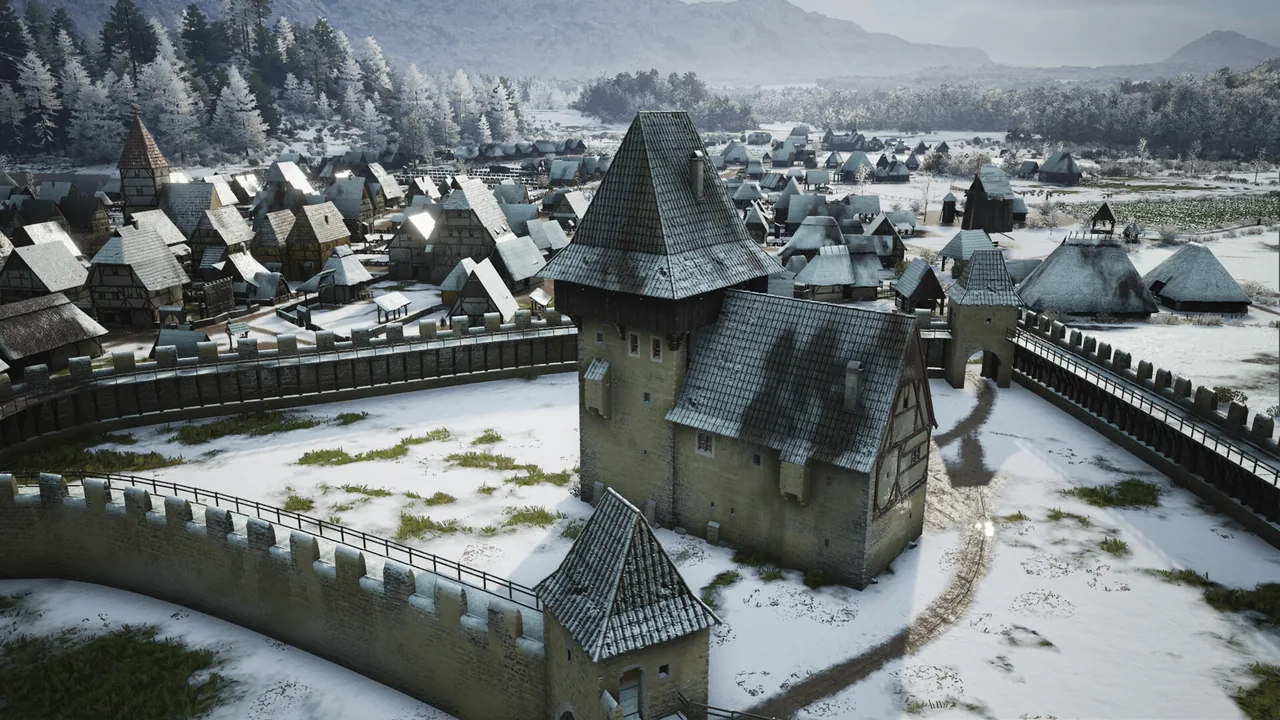
- Art direction, seasonal lighting and the score consistently draw praise even from players frustrated with development pace
- Three major updates since December 2025 show a faster, steadier cadence than the game's rocky 2025
Cons
- The perk and skill tree teased at Early Access launch has sat visibly incomplete for well over a year, with no shipped date
- A trade system rework was announced, previewed and then paused in May 2026 to fix systems that had "quietly degraded" — a pattern of promised features stalling mid-development
- A nine-month gap between content updates in 2025 dropped the game's recent Steam rating to Mixed before it recovered
- Marketing leaned on siege battles that occupy a small fraction of actual playtime against an AI whose armies scale in ways players regularly find unfair
- Once a settlement's core production chains are solved, there's little left to decide until the next major update adds new systems
- Crash reports and stuck-worker bugs still surface regularly enough in recent user reviews to be a pattern, not isolated incidents
Screenshots
-
Manor LordsImage: Hooded Horse via Steam -
Manor LordsImage: Hooded Horse via Steam -
Manor LordsImage: Hooded Horse via Steam -
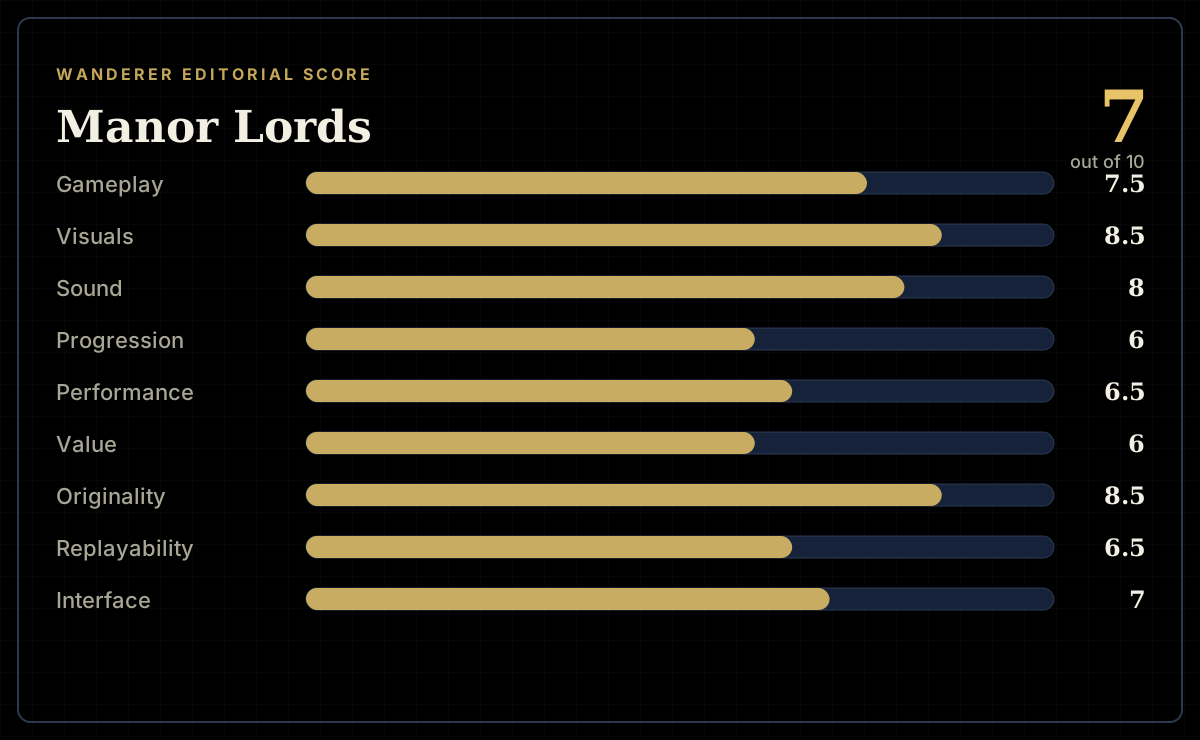
How the review scores each part of the gameWanderer Editorial -
The short versionWanderer Editorial