Game review
Norland
6.5 / 10
- Developer
- Long Jaunt
- Publisher
- Hooded Horse
- Released
- 18 July 2024
- Platforms
- Windows
- Genre
- Medieval Colony Sim
- Monetisation
- One-time Early Access purchase. No in-app purchases or DLC.
- Players
- Single-player only
The short version
Norland asks you to run a noble house through generations of medieval politics, building a hall, farming the land and fielding an army, while an emergent story engine borrowed straight from the RimWorld and Crusader Kings school of game design quietly decides that your queen is having an affair with your bishop. It has been in Early Access since 18 July 2024, sits at Very Positive across 8,757 Steam reviews (81% positive), and its achievement data tells a clear story: a quarter of players survive to a basic milestone, but only 4.2% ever reach the "become an emperor" achievement most players would consider a real endgame.
The available English negative sample is unusually specific for a colony sim: bugs that lose hours of setup work, an interface that hides its own numbers behind unlabelled icons, a single playable map that undercuts the genre's usual replayability, and -- from players with hundreds of hours in RimWorld and Dwarf Fortress -- a direct, repeated verdict that Norland's own systems don't yet match its influences. None of that comes from people who dislike the pitch; several of the harshest reviews are written by players who clearly want the game to be better than it currently is.
Biggest strengths
- A genuinely funny, genuinely emergent narrative system -- affairs, executions, poisonings and grudges that read like a Crusader Kings session compressed into a RimWorld colony
- An actively updated Early Access game from a developer reviewers repeatedly describe as caring and responsive, not one that has gone quiet
- A distinctive medieval-fantasy art style that several reviewers single out as charming even when frustrated with the mechanics underneath
Biggest weaknesses
- Persistent bugs nearly two years into Early Access, including one that can delete a fully customised world on an accidental "back" click with no confirmation prompt
- A punishing, poorly explained learning curve, with symbols and interface elements several reviewers say have no tooltip or in-game explanation at all
- Only one playable map as of this review, a serious limitation for a genre whose replay value usually comes from varied starts
Who it's for: Colony-sim veterans who want the genre's emergent-story chaos wrapped in a medieval political setting, and who are comfortable with Early Access roughness. Not for anyone who wants a finished, polished game today, or who needs more than one map to feel a colony sim has replay value.
Our recommendation: Worth it now for genre die-hards who want to see where it's headed and don't mind losing an evening to a bug; worth waiting for everyone else, given how many of its own long-time players are recommending exactly that in their reviews.
6.5 / 10
The pitch: Crusader Kings' court, RimWorld's colonists
Norland's premise is easy to state and hard to execute: take the character-driven, "oh no, what now" storytelling of RimWorld's colony simulation, move it into a medieval kingdom-management setting with the succession and intrigue mechanics of a Crusader Kings, and let the two systems collide. You start as a noble house with a handful of family members and peasants, build a hall, clear farmland, manage a treasury, and defend against raiders and rival lords, while every character on the map has relationships, ambitions and grudges that the game is quietly tracking in the background. It has been developed by Long Jaunt and published by Hooded Horse -- a publisher whose catalogue already includes Against the Storm and Terra Invicta, both games built around the same "systems generate the story" philosophy -- since entering Early Access on 18 July 2024 at NZ$39.99, with no further purchases required.
That pitch pays off constantly, and it's the single biggest reason 8,757 reviewers have landed on Very Positive. The review section reads less like typical colony-sim feedback and more like a shared anecdote exchange: a queen seducing the family bishop, a captured lord "groomed" into becoming a spy against his own house, a father executing his own mentally broken son on a scaffold in front of the other children "so they will behave." One reviewer, 152 hours in, compares an in-game family breakdown directly to their own real one and notes -- approvingly -- that Norland lets them handle it rather more decisively than real life allows. This is exactly the kind of story-generation magic RimWorld popularised, applied to a genre -- medieval politics -- that has plenty of real historical material to draw on, and it is genuinely, repeatedly funny in the reviews that quote it.
Where the systems actually sit
Underneath the drama is a real colony-management game: a hall to expand room by room, a population with individual needs and moods, farming and crafting chains, a library-based tech system that gates new buildings and equipment, a military that can be raised and equipped for both offence and defence, and a succession system where the death of your ruler genuinely matters rather than being a game-over screen. Several positive reviews describe exactly this combination as the draw -- "the mix of Manor Lords and Crusader Kings," as one puts it, or "the best parts of CK3 and Rimworld but with actually fun battles," as another -- and it is a legitimately underserved niche. Manor Lords, reviewed elsewhere in this library, covers the building and battle side of medieval life without much character-driven intrigue; Crusader Kings covers the intrigue without hands-on colony management. Norland is one of a small number of games actually attempting both at once.
The achievement list is a useful, dispassionate cross-check on how far players actually get into those systems. A quarter of players reach ACH_7_VICTORY and ACH_4_POP -- reasonable early milestones -- and just over a fifth reach ACH_2_KING, becoming a king rather than a lesser noble. From there the numbers fall sharply: ACH_24_LIBRARY (built up the tech-granting library) sits at 9.9%, ACH_1_IMPEROR (the empire-tier endgame) at 4.2%, and more than a dozen of the twenty-five achievements sit under 1%. That is a steeper mid-to-late-game cliff than the achievement curves this library usually sees in colony sims, and it lines up precisely with reviewer complaints about the pace of the tech tree: "it takes FOREVER to learn stuff so you can build them," writes one 17-hour reviewer, "in the meantime the whole game is in an accelerated pace like you have to assemble an army to defend your kingdom while having no way to." The fun, systemically speaking, front-loads into the drama and the first hall; genuinely finishing a playthrough is rare.
The rough half of "Early Access"
The negative-review sample is short -- 13 of the available English reviews -- but strikingly coherent, and importantly, it does not read as a rejection of the concept. It reads as frustration from people who already like the pitch. "I really want to like the game," begins one representative review, before describing a learning curve the reviewer calls "unbelievable steep" alongside visuals they call "fantastic" and "cozy." Another, 144 hours deep and still unable to fully recommend it, focuses on how updates are delivered: Early Access breakage is expected, the reviewer says, but Norland's specific update cadence "doesn't respect the player's time" -- a complaint about process as much as content.
Three concrete, checkable problems recur often enough to matter. First, a genuine bug: at least one reviewer describes spending ninety minutes building a custom world, clicking "back" while placing their hall, and losing every customisation with no save-confirmation prompt to catch the mistake -- exactly the kind of unforced, easily-fixed friction that costs a colony sim real goodwill. Second, an interface reviewers describe as actively unhelpful: "the game annoyingly places symbols all over the place, on characters, on buildings etc. But there are no tooltips, no help entry," reads one blunt review, and a more measured one calls out "awkwardly worded text/representations of data" throughout the UI. Third, and most structural: as of this review Norland has a single playable map. Multiple reviewers with deep genre experience -- one citing 1,200+ hours in RimWorld and 500+ in Dwarf Fortress -- describe playthroughs as converging on "the same thing every time" as a direct result, which is a real limitation for a genre whose appeal is built on varied starts and long-tail replayability.
It is also worth naming the comparison that shows up unprompted, repeatedly, in the negative sample: Songs of Syx and RimWorld both get cited by name as doing the same job better, and by reviewers who are not hostile to Norland's ideas, just unconvinced its execution has caught up to them yet after roughly two years of development. That is a fair, specific complaint rather than vague genre pessimism, and it is the most useful single sentence for calibrating expectations: Norland's ambition currently outpaces its polish.
What the fans keep saying instead
Set against all of that is a genuinely large, genuinely engaged body of positive reviews that don't read as forgiving a broken game so much as actively rooting for a good one. "The developers actually care about the project," is a recurring line, echoed almost word for word across reviews with 54, 122 and 355 hours logged -- players who have clearly stress-tested the game far past a first impression and kept coming back anyway. One reviewer specifically praises the developers for reversing a past decision to simplify a system after player pushback, which is a concrete, checkable signal of the kind of responsiveness Early Access is supposed to promise and often doesn't deliver. None of this cancels out the bug reports and the UI complaints, but it does explain why Very Positive is the honest read of the review section rather than a rating propped up purely by pre-release hype: this is a community that has watched the game change and likes the direction, even while flagging real problems along the way.
Verdict
Norland's core idea -- Crusader Kings' court drama fused with a RimWorld-style colony sim, set in a medieval kingdom instead of a spaceship crash site -- is one of the more distinctive pitches in the colony-sim space right now, and when it fires, it produces genuinely great stories that justify the premise on their own. But nearly two years into Early Access it is still held back by real, specific problems: a bug that can erase hours of setup, an interface that leaves its own systems unexplained, a single map that limits replay value, and achievement data confirming that very few players ever see the game's later systems in action. The fanbase's own verdict, read across hundreds of reviews, is close to this review's: a great foundation, worth following, not yet worth recommending to someone who wants a finished game today.
Pros and cons
Pros
- A genuinely funny, genuinely emergent narrative system -- affairs, executions, poisonings and grudges that read like a Crusader Kings session compressed into a RimWorld colony
- An actively updated Early Access game from a developer reviewers repeatedly describe as caring and responsive, not one that has gone quiet
- A distinctive medieval-fantasy art style that several reviewers single out as charming even when frustrated with the mechanics underneath
- Real systemic depth once learned -- succession, culture, religion and a functioning economy sit underneath the drama rather than being window dressing
Cons
- Persistent bugs nearly two years into Early Access, including one that can delete a fully customised world on an accidental "back" click with no confirmation prompt
- A punishing, poorly explained learning curve, with symbols and interface elements several reviewers say have no tooltip or in-game explanation at all
- Only one playable map as of this review, a serious limitation for a genre whose replay value usually comes from varied starts
- Achievement data confirms what reviewers say about pacing -- only 4.2% of players ever reach the emperor-tier endgame, and most of the higher achievements sit under 1%
Screenshots
-
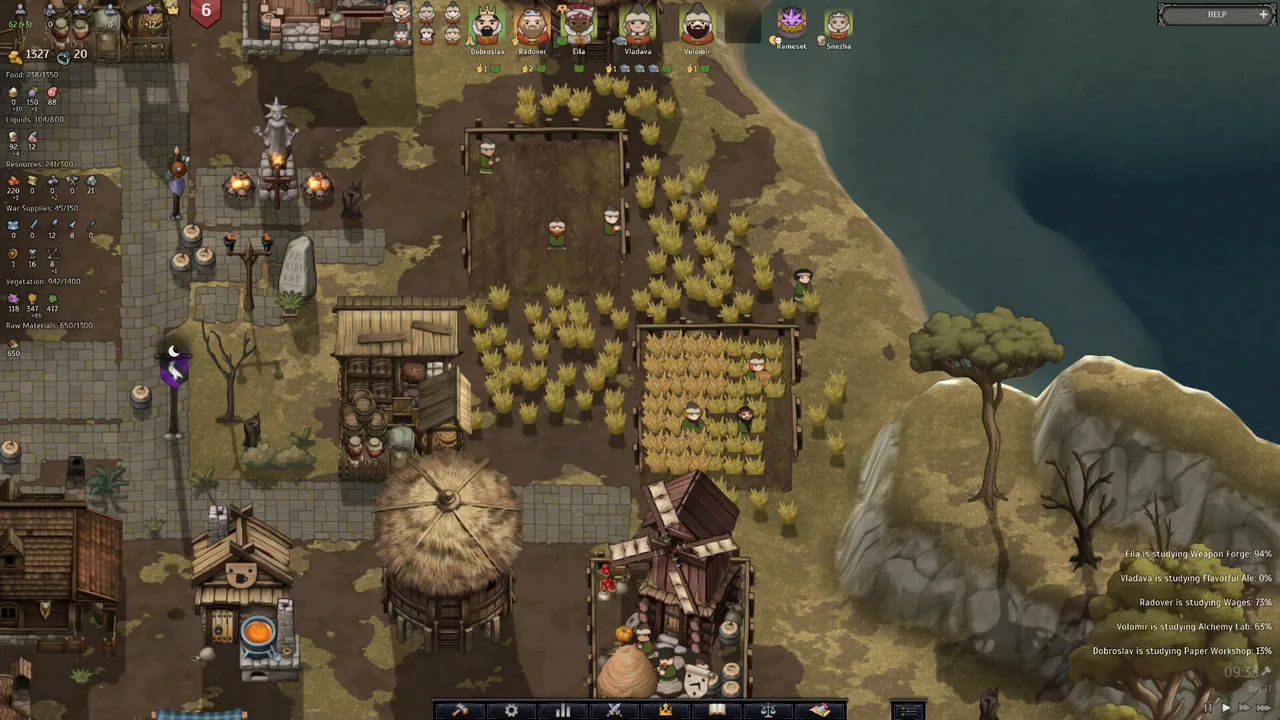
The colony-management layer -- farms, a windmill and named villagers each studying a trade in the backgroundImage: Hooded Horse via Steam -
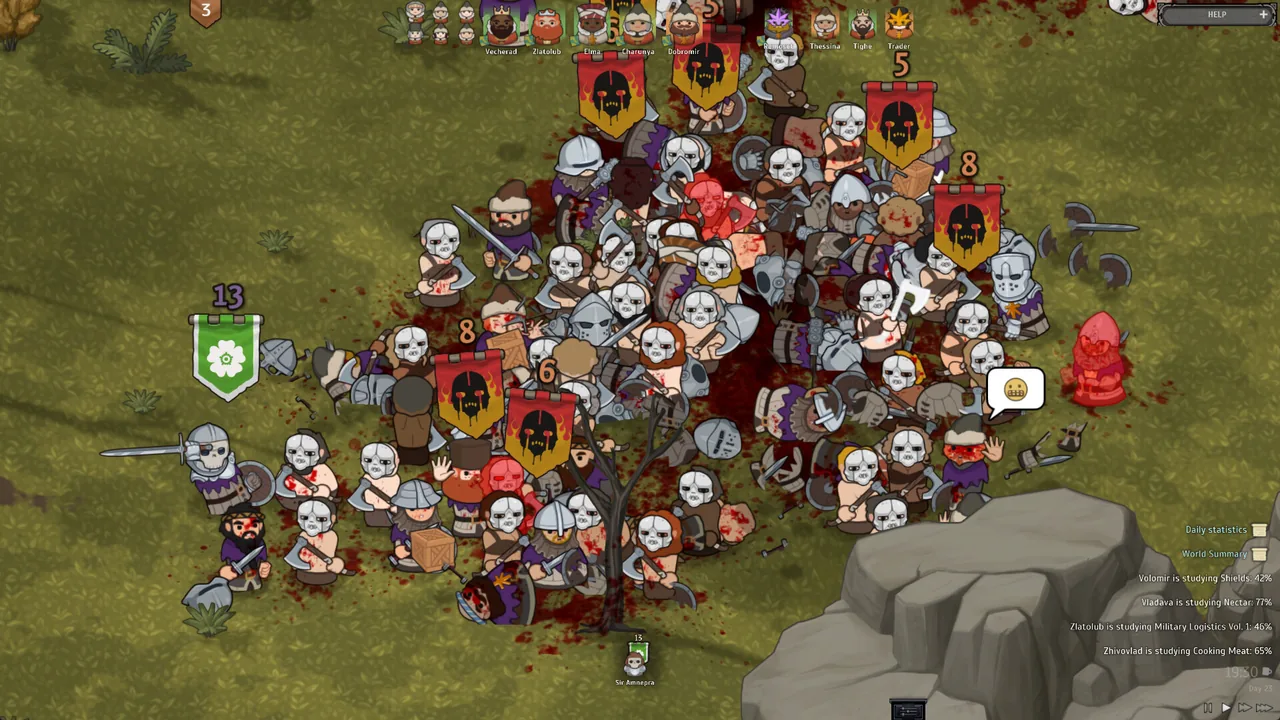
One of the banner-led battles reviewers cite when comparing Norland's combat favourably to RimWorld'sImage: Hooded Horse via Steam -
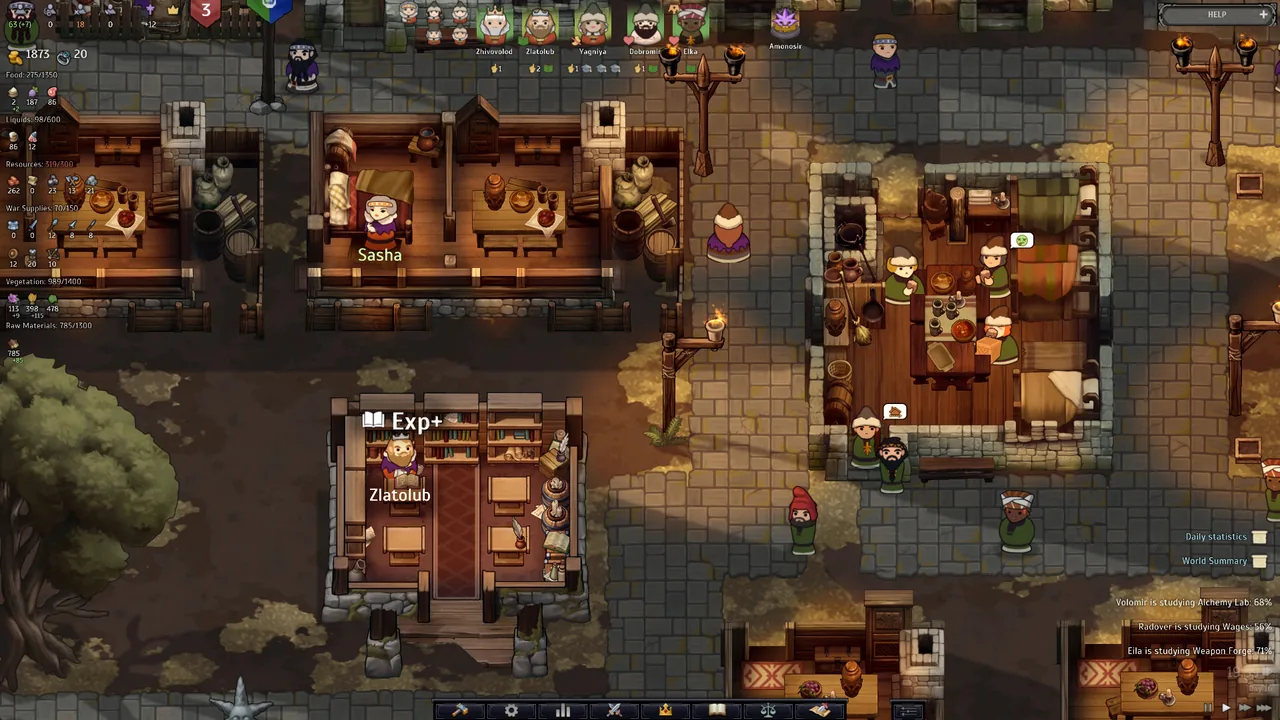
Interior detail inside the hall, where a library building drives the game's slow- moving tech systemImage: Hooded Horse via Steam -
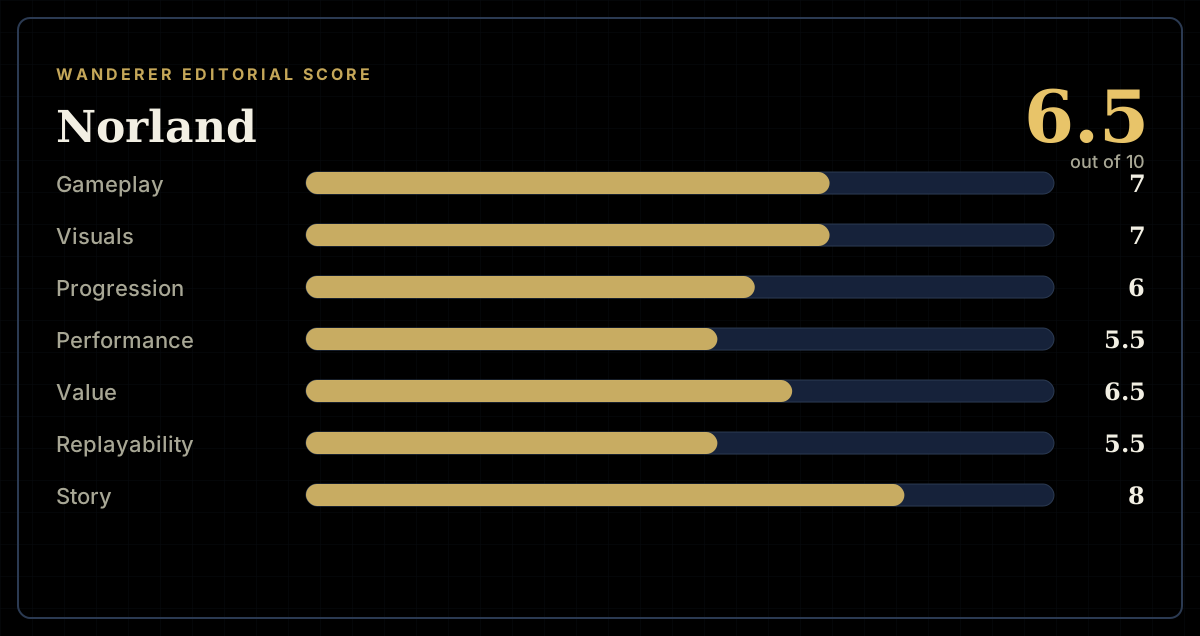
How the review scores each part of the gameWanderer Editorial -
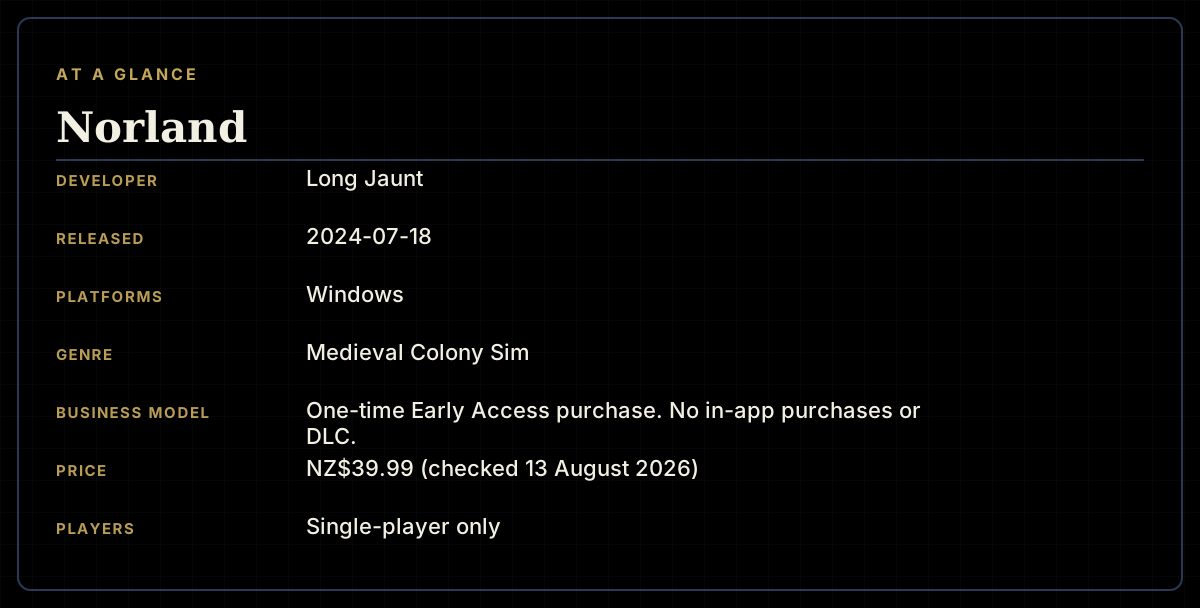
The game at a glanceWanderer Editorial -
The short versionWanderer Editorial