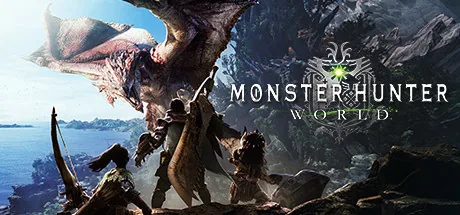
Game review
Monster Hunter: World
8.5 / 10
- Developer
- CAPCOM Co., Ltd.
- Publisher
- CAPCOM Co., Ltd.
- Released
- 26 January 2018
- Platforms
- Windows, PlayStation 4, Xbox One
- Genre
- Action RPG, Monster Hunting
- Monetisation
- Premium, one-off purchase; a paid expansion (Iceborne) adds a full second progression tier; over 200 individual paid Steam DLC listings on top of that, all cosmetic — hairstyles, gestures, layered outfit pieces, room decorations, a soundtrack pack — with no stat-relevant purchases anywhere in the storefront
- Players
- Fully playable solo start to finish; up to four-player co-op through a shared Gathering Hub session or by answering another hunter's SOS flare from outside your session; no cross-platform play between PC, PlayStation 4 and Xbox One
The short version
Monster Hunter: World is the point where this series stopped assuming you'd already read a strategy guide and started teaching you everything through the fight itself. Eight years and one Wilds sequel later, its hunt loop — the tracking, the prep, the fourteen wildly different weapons, the slow accumulation of knowledge about a specific monster's specific tells — still plays as well as anything the genre has produced since. The interface buries information it shouldn't, the multiplayer session system is a relic of 2018, and the decoration grind at endgame can turn a beloved loop into a slot machine. None of that has stopped it from being the version of Monster Hunter most people mean when they say the series finally clicked.
Biggest strengths
- Every extended fight teaches you something concrete about that specific monster that carries into the next one, so getting better feels like earning knowledge rather than farming a number
- Fourteen weapon types are mechanically distinct enough that switching from Long Sword to Gunlance is closer to starting a new game than reskinning the same combo string
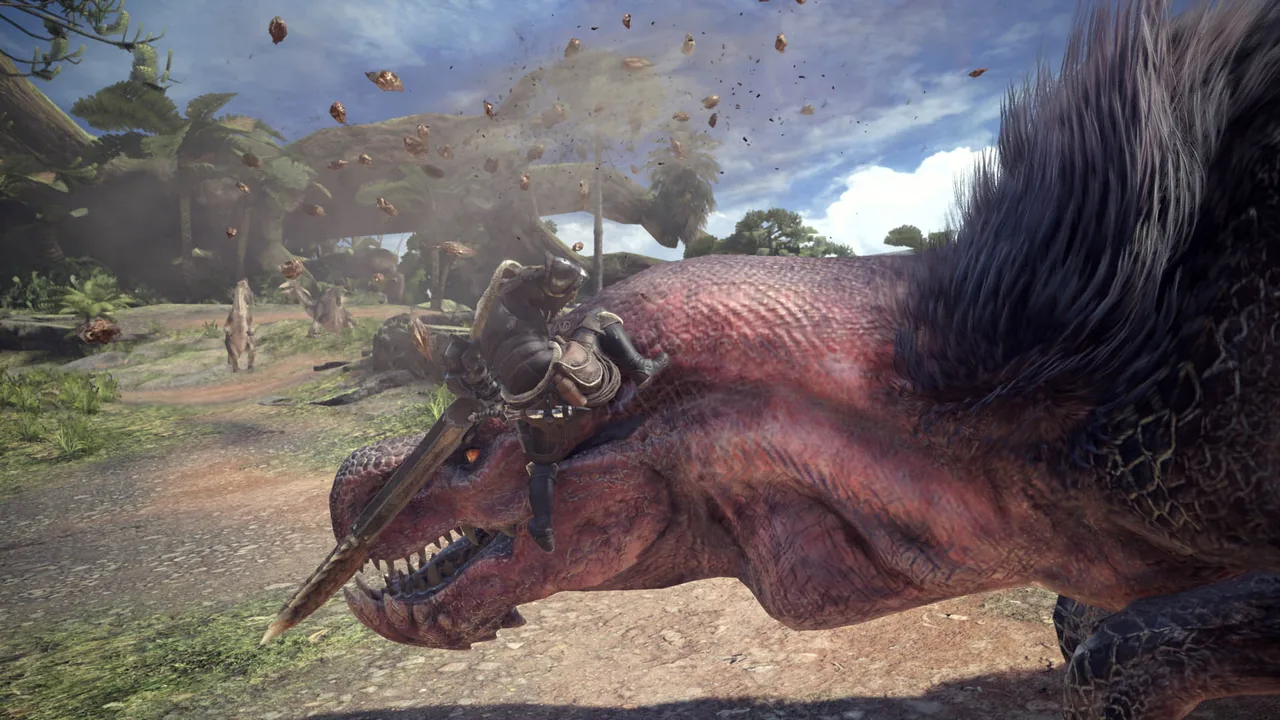
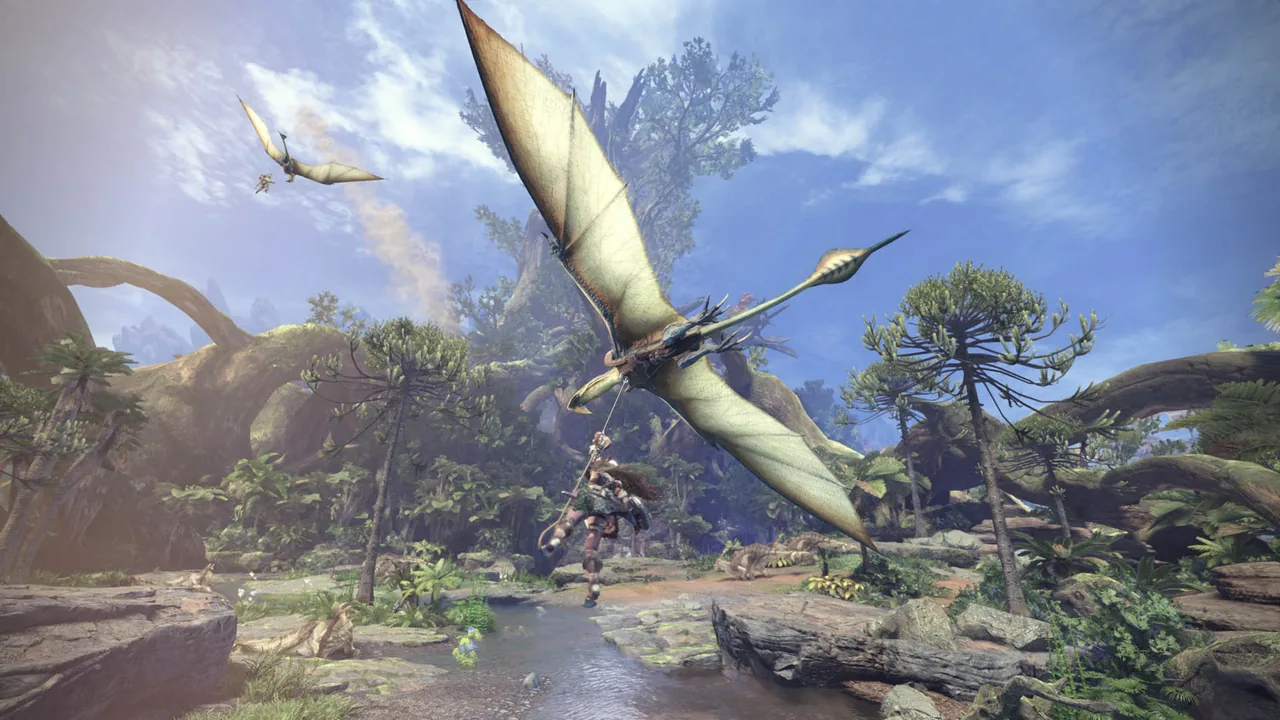
- The living ecosystem of each map — turf wars, environmental traps, monsters that flee wounded into another monster's territory — changes a hunt without any input from the player
Biggest weaknesses
- Chasing a specific decoration slot at endgame can mean running the same quest hundreds of times against odds the community has never stopped calling broken
- Joining a hunt outside your own session still runs through an SOS flare system built for 2018 server tech, and it fails to connect players more often than a game this old should in 2026
- Item box categories, bestiary notes and the decoration-equip screen bury information a hunter needs mid-fight behind several layered submenus instead of surfacing it
Who it's for: Anyone who wants a loot-and-fight loop where getting good is a knowledge problem, not a stat problem; series veterans who never fully warmed to Wilds' friendlier pacing; and players happy to commit real hours to one game rather than spreading them across several.
Our recommendation: Buy it now — base game and Iceborne together cost less than a single new release and deliver several hundred hours between them. New players should go in expecting a slow, deliberate opening ten hours before the game shows its hand, and should plan on finishing base-game High Rank properly before jumping into Iceborne's Master Rank.
8.5 / 10
Most action RPGs measure your progress in numbers going up. Monster Hunter: World measures it in what you know. Spend three hunts against a Great Jagras and you'll clear the fourth one faster — not because your weapon hit a higher number, but because you've learned it drags itself when its belly's full, that its tail sweep has a tell half a second before it lands, and that baiting it toward the map's trap pit is faster than fighting it head-on. That's the entire design thesis of this game, and it's why Monster Hunter: World remains one of the most quietly demanding, quietly rewarding action games Capcom has ever shipped — a gear treadmill dressed up as an RPG that is actually, underneath, a very long series of exams about paying attention.
Reading the monster is the skill tree
A hunt in World starts long before you swing a weapon. You check your item box for the right traps, potions and environmental tools for the specific monster you're chasing, pick a meal at the canteen that buffs the stats that fight will actually punish, and send your Palico and a scoutfly trail out ahead to mark tracks. None of that is busywork dressed up as depth — footprints, scratch marks, shed scales and monster droppings are the raw material the scoutfly system turns into a live tracking meter, and a hunter who's studied a monster's habits reads that meter faster than one who hasn't. By the time you're actually swinging, the fight itself keeps teaching: sharpened senses reveal breakable parts, wounds and stagger thresholds shift as a fight goes on, and every monster has an idiosyncratic rhythm — Anjanath's bite-and-recover, Legiana's ice-breath retreat, Nergigante's spike regrowth — that rewards specific counterplay rather than generic dodge-and-hit. The difficulty curve isn't really about bigger health bars as you climb from Low Rank to High Rank to (with Iceborne) Master Rank. It's about how much of that per-monster information you've actually retained, which is a far more interesting axis of mastery than most loot games bother building.
Fourteen weapons, fourteen different games
The other reason World's combat has aged so well is the sheer structural difference between its fourteen weapon types. This isn't a stance system or a skin over one shared moveset — a Charge Blade player is managing a phial-charging economy and timing Savage Axe mode for burst windows; a Bow player is kiting and managing coatings and stamina; a Hunting Horn player is playing a support class that buffs an entire party through musical notes while still doing respectable damage; a Gunlance player is choosing between poking damage and committing to a wyvernfire that can end a fight or leave them exposed for several seconds. Picking up a second weapon type after a hundred hours with your first genuinely feels like learning a new game's fundamentals, not unlocking a reskinned combo string, and that's the single clearest advantage World holds over most action RPGs that only ever give you one class per character. It's also, not coincidentally, the one part of the formula that survived completely intact into Monster Hunter Wilds — Capcom knew better than to touch it.
That weapon-first design does come at a cost the game never really tries to hide: World's story exists mostly to justify the next monster on the list. The Research Commission's investigation into the Elder Crossing is a serviceable framing device with a handful of genuinely striking cutscenes — the first sight of Zorah Magdaros hauling itself across the map is one of the series' best moments — but the actual writing is thin, the Handler's comic-relief characterisation wore out its welcome with a lot of players well before Iceborne's story leaned into her more, and named NPCs mostly exist to hand out the next quest rather than develop across the campaign. That's a reasonable trade for a game built around systems rather than scenes, and nobody buying Monster Hunter is buying it for the plot, but it's worth being honest that the presentation layer between hunts is the least interesting thing World does.
The gear ladder, and where the wheels come off
Crafting equipment from monster parts is the loop that ties the hunting to the RPG side of the game, and for most of the campaign it works cleanly: beat a monster, harvest specific carves and break-rewards from its body, craft a weapon or armor piece themed around it, and use that gear to tackle the next, harder monster it's weak or strong against. It's legible, it's satisfying, and the gear you're wearing visibly tells a story about what you've killed. Where it turns genuinely predatory is the endgame decoration system — small gem-like skill slots that drop at random from high-rank quests and augment builds meaningfully enough that serious players effectively need specific ones to hit their intended stats. The problem isn't that decorations are rare; it's that the drop table treats every decoration as equally likely regardless of how useful or useless it is, so a hunter chasing one specific slot can run the same expedition hundreds of times and never see it, while duplicates of decorations nobody wants pile up in the box. It's the single most persistent community complaint about World's structure, years after launch, and it's a fair one — a system this random shouldn't be gatekeeping the difference between a mediocre build and a great one.
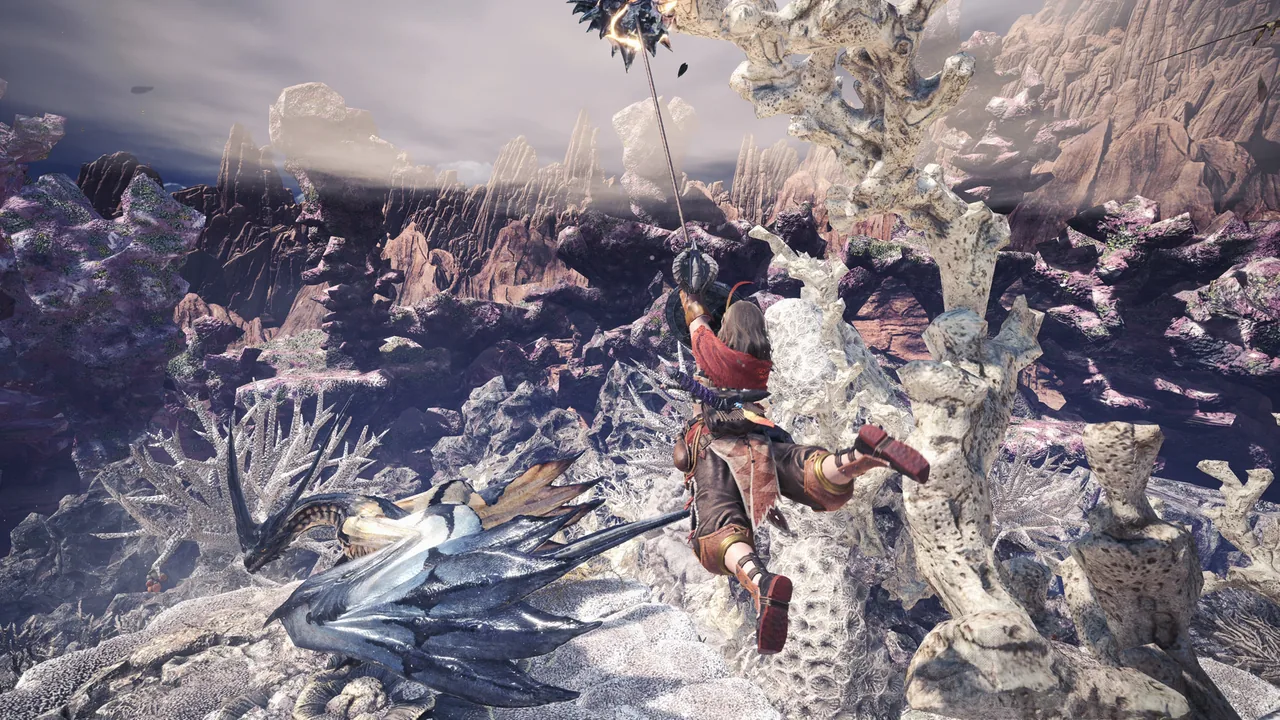
Iceborne complicates that ladder further with the clutch claw, a grappling tool that lets you latch onto a monster mid-fight, ride it into a wall to stagger it, and "tenderize" specific body parts to unlock bonus damage on them. It's an interesting idea that turned into an obligation: almost none of the fourteen weapons received attacks built around the claw, so using it means interrupting your own combo to pull out a separate tool, and Capcom initially tuned Master Rank's damage math so tightly around tenderizing that skipping it left you doing visibly less damage for no stylistic reward. Later title updates walked the tuning back and made tenderizing optional rather than mandatory, and the claw settled into a less central role than it had at Iceborne's launch — but the fact that Capcom had to patch a core expansion mechanic back down after complaints is itself telling about how the game's difficulty math gets built. It also flags a lesson Wilds' designers plainly took to heart: nothing in that later game demands you learn a second, separate toolset just to keep pace with its damage curve.
A hub built for people who show up
World's multiplayer is genuinely additive when it works: Astera's Gathering Hub puts a session's worth of hunters in one shared space, quest boards let anyone in that session join a hunt with no friction at all, and four hunters coordinating against a Nergigante with actual roles — trapper, damage, support — is one of the better co-op experiences in the genre. The trouble starts the moment you want to hunt with someone outside your own session, which is where the SOS flare system comes in — fire one mid-quest and it's meant to open your hunt to strangers hunting the same monster elsewhere. In practice, players have reported failing to connect on a large share of flare attempts, session searches effectively limited to nearby matchmaking regions, and hunts that show open slots but silently refuse new joiners. None of that is exaggerated review-bombing; it's a structural weakness of the system Capcom built for 2018-era server tech and never fully modernised, and it means the easiest way to reliably hunt with friends is still to organise a private session in advance rather than trust the game's own matchmaking to find you a fourth.
Six years older, still one of the best-built worlds in the genre
The New World's zones were built to be lived in rather than just traversed — turf wars between territorial monsters happen with or without you, weather and time of day shift which creatures are even active, and a wounded monster fleeing into another's territory can turn a routine hunt into an accidental three-way fight. That systemic density is still rare in the genre, and it's the exact foundation Wilds later built its own moment-to-moment environmental shifts on top of. World was also the first entry in the series to give combat a genuinely dynamic score rather than one looping area theme: every large monster gets its own main theme and a separate chase theme for when it flees to another zone, riding a mount layers extra percussion over whatever's already playing, and if a second, more dangerous monster barges into a fight the music swells into its theme on a loud string cue instead of just cutting. It's a modest technical achievement that pays off constantly — you can often hear a turf war coming before you see it — and it's a large part of why individual hunts stick in memory the way a scripted boss fight in a more linear game does, despite World never scripting a single one of them. What shows its age is the technical side: World runs on Capcom's MT Framework, and the PC port that arrived seven months after the console launch shipped notably CPU-heavy, stuttering on hardware that had no business struggling with a game that didn't look especially demanding for 2018. Years of patches and faster consumer CPUs have closed most of that gap, and the version sold today is a reasonably stable experience on modern hardware — but the engine still leans on CPU threads harder than its visuals justify, doesn't take advantage of a modern GPU the way a freshly built engine would, and caps out well below what its own sequel demands. It's the same MT Framework lineage that gave Dragon's Dogma 2 its own launch-week performance headlines, and the family resemblance is visible if you know to look for it.
The store page tells its own story
Buying into World honestly today means buying two things: the base game, which caps out around High Rank, and Iceborne, the paid expansion that adds Master Rank, a new hub city, new monsters and roughly doubles the game's structural depth. Both are currently priced low enough that together they undercut almost any other premium RPG's cost per hour, and that's before counting the hundreds of hours World's community routinely reports putting into just one weapon's mastery. Beyond that sits a genuinely large secondary storefront — north of 200 individual paid DLC listings, mostly hairstyles, gesture packs, layered outfit pieces and room decorations, alongside a soundtrack release and character-edit vouchers. None of it is remotely necessary and none of it touches power, drop rates or progression speed in any way, which is real restraint for a game this commercially successful. What it does do is clutter the storefront enough that a new buyer scrolling past 200 DLC entries before finding Iceborne could be forgiven for assuming some of it matters. It doesn't — but Capcom doesn't make that obvious from the store page alone.
Verdict
Monster Hunter: World earns its reputation as the series' high-water mark on PC honestly, and its 89% positive standing across more than half a million Steam reviews eight years after launch isn't nostalgia — it's a game whose central loop, learn the monster rather than grind the number, still holds up better than most of what's copied it since. Wilds arrived seven years later with a friendlier difficulty curve, a smoother mount, and a rockier PC launch, and the two games make an interesting pair: Wilds plays better in the hand, moment to moment, but World still asks more of you, and for a lot of this audience that's the whole appeal. The decoration RNG at endgame is a real design failure that Capcom never fixed, the SOS session system hasn't meaningfully improved since 2018, and the interface still buries information a hunter needs in the moment behind more menus than it should. None of that is enough to knock this out of Very Good territory, because the hunting itself — the fourteen weapons, the living ecosystem, the slow accumulation of monster-specific knowledge — is still doing something few other games attempt and fewer still pull off. At today's price, with Iceborne folded in, it's one of the easiest recommendations in the genre, provided you go in accepting that the reward for patience here is understanding, not just loot.
Players who like progression that rewards paying attention to a system's specific behaviour, rather than just accumulating bigger numbers, may find a similar instinct at work in Wanderer's own always-ticking approach to character growth.
Pros and cons
Pros
- Every extended fight teaches you something concrete about that specific monster that carries into the next one, so getting better feels like earning knowledge rather than farming a number
- Fourteen weapon types are mechanically distinct enough that switching from Long Sword to Gunlance is closer to starting a new game than reskinning the same combo string
- The living ecosystem of each map — turf wars, environmental traps, monsters that flee wounded into another monster's territory — changes a hunt without any input from the player
- Iceborne's Master Rank content roughly doubles the base game's structure and story for a fraction of the original asking price
- Base game plus Iceborne together now sit cheap enough that the cost per hour of play undercuts almost any other premium RPG on Steam
- Over 200 paid DLC listings and not one of them touches a stat, a drop rate or a progression timer
Cons
- Chasing a specific decoration slot at endgame can mean running the same quest hundreds of times against odds the community has never stopped calling broken
- Joining a hunt outside your own session still runs through an SOS flare system built for 2018 server tech, and it fails to connect players more often than a game this old should in 2026
- Item box categories, bestiary notes and the decoration-equip screen bury information a hunter needs mid-fight behind several layered submenus instead of surfacing it
- The PC port launched CPU-bound and stuttering on capable hardware, and while patches and years of faster CPUs have closed most of the gap, the aging MT Framework engine still leaves modern GPUs underused
- The opening several hours pace out core systems so slowly that some players quit before the game actually starts rewarding them for paying attention
- No cross-platform play means a PC hunting party can never include a friend who only owns the console version
Screenshots
-
Monster Hunter: WorldImage: CAPCOM Co., Ltd. via Steam -
Monster Hunter: WorldImage: CAPCOM Co., Ltd. via Steam -
Monster Hunter: WorldImage: CAPCOM Co., Ltd. via Steam -
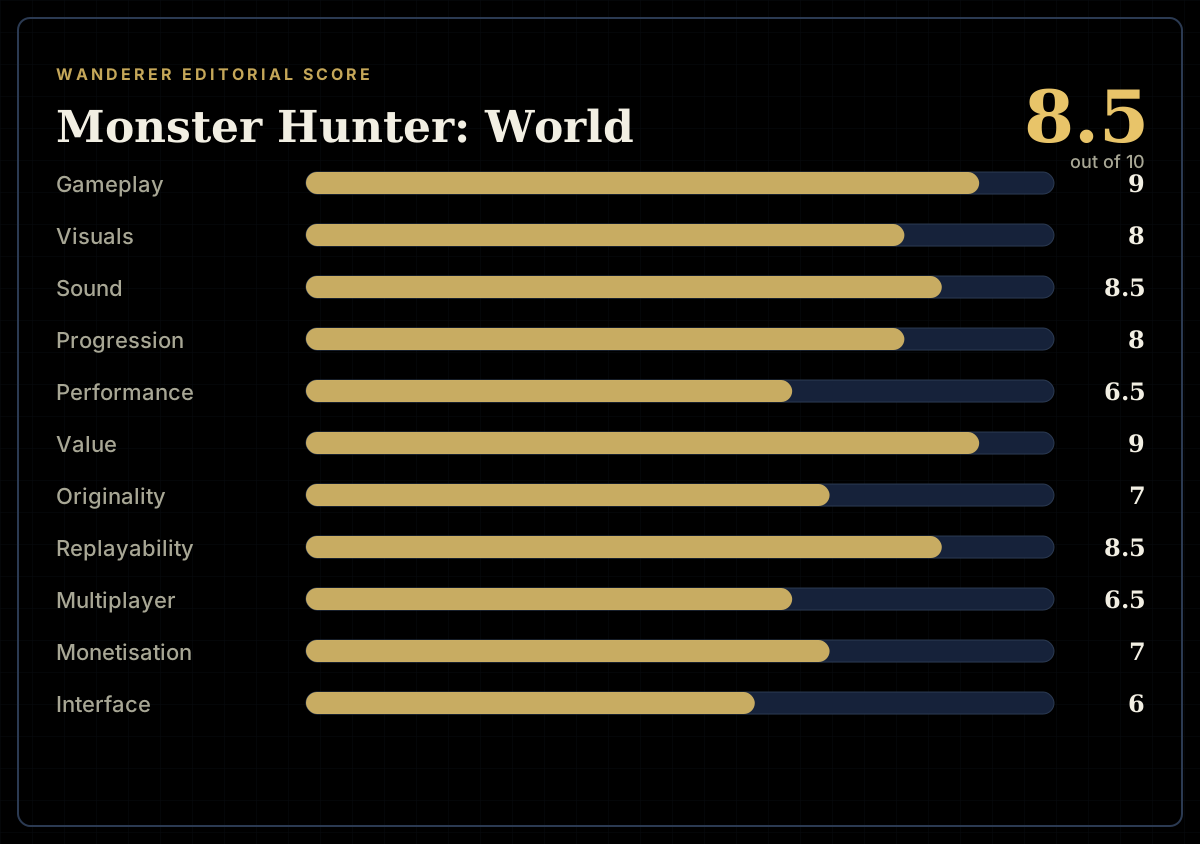
How the review scores each part of the gameWanderer Editorial -
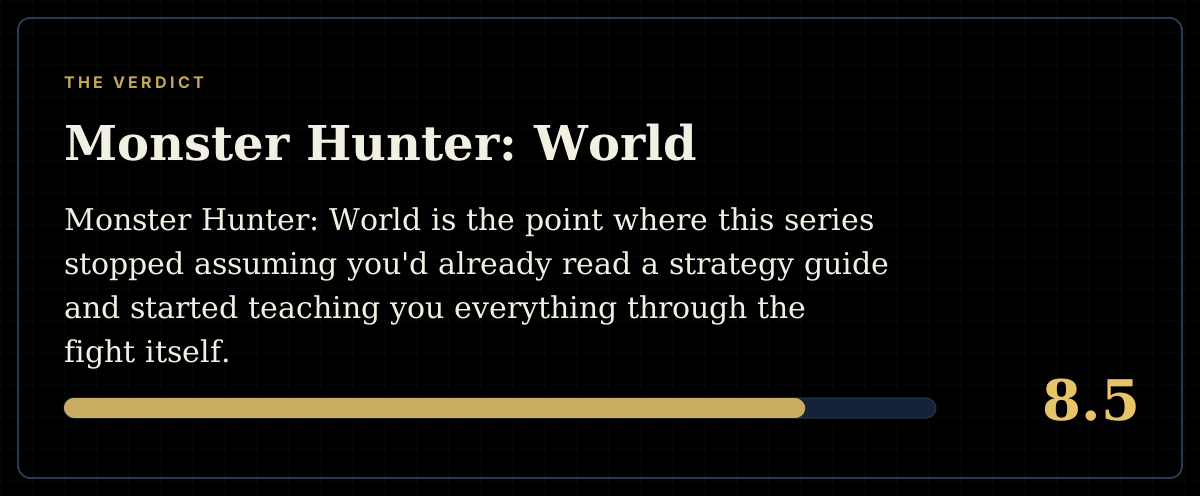
The short versionWanderer Editorial