Game review
Monster Hunter Wilds
7.5 / 10
- Developer
- Capcom
- Publisher
- Capcom
- Released
- 28 February 2025
- Platforms
- Windows, PlayStation 5, Xbox Series X|S
- Genre
- Action RPG, Monster Hunting
- Monetisation
- Premium, one-off purchase across three storefront editions (Standard, Deluxe, Premium Deluxe); no pay-to-win items — every one of the 159 paid Steam DLC listings is cosmetic (layered armor, hairstyles, gestures, music sets, Seikret decorations), sold individually or bundled into a separate Cosmetic DLC Pass; a paid expansion, Ascendance, is scheduled for 2027
- Players
- Fully playable solo start to finish; SOS-style co-op hunts for up to a full party with cross-platform play between PC, PlayStation 5 and Xbox Series X|S; a free multiplayer Grand Hub social space added post-launch
The short version
Monster Hunter Wilds is the most welcoming door the series has ever built, and the hunting itself — Focus Mode targeting, the wound system, a Seikret mount that never gets in the way — is the best the franchise has ever played. What it launched with was a PC version that buckled under its own crowd simulation and an endgame so thin that even generous reviewers noticed. Capcom spent the better part of a year patching the first problem and content-updating the second, and both are meaningfully better than they were, without being fully resolved.
Biggest strengths
- Focus Mode and the wound system turn every extended fight into a running conversation about where to aim next, not just when to dodge
- The Seikret mount removes travel tedium without ever removing player agency, including mid-ride attacks and item resupply on the move
- Environments transform hour to hour within a single hunt, from clear skies to sandstorms that change which monsters are even active
Biggest weaknesses
- Launch-week PC performance was severe enough that Steam's recent-review rating fell to Overwhelmingly Negative by mid-2025, and CPU-bound stutter in crowded areas still surfaces on capable hardware
- The base campaign is easy enough that multiple major critics reported barely failing a quest across dozens of hours, a real departure from the series' identity
- Endgame content at launch was thin next to World and Rise at the same point in their lives, and the real high-rank depth doesn't arrive until the 2027 Ascendance expansion
Who it's for: Series veterans willing to accept an easier, friendlier Monster Hunter in exchange for its best combat systems yet, newcomers who bounced off earlier entries' opacity, and co-op groups who want a huge shared hunting ground rather than a tightly authored campaign.
Our recommendation: Worth buying now if you're new to the series or don't mind a game that still asks something of your CPU; players burned by launch-week performance should check current patch notes before assuming the January and early-2026 fixes solved everything on their specific rig.
7.5 / 10
Twenty years into Monster Hunter, Capcom shipped a game where a reviewer could spend dozens of hours without ever seeing the "quest failed" screen. That's not an accident and it's not a balance oversight — it's the entire design thesis of Monster Hunter Wilds, a game built to let anyone walk in cold and leave with a trophy. Whether that's the best thing that ever happened to this series or the moment it quietly stopped being what made people fall in love with it in the first place is the argument that's followed Wilds through its entire first year and a half, and it's worth having honestly rather than settling with a shrug.
Focus Mode and the wound system change what a hunt is about
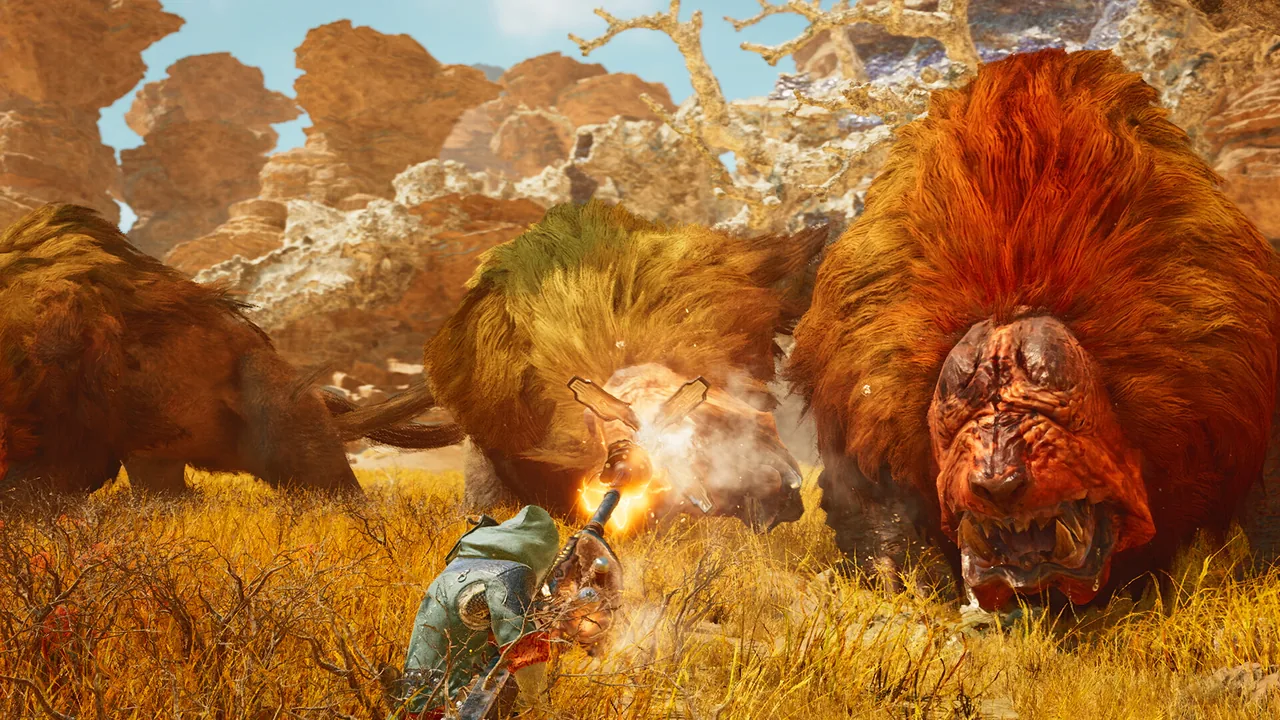
The mechanical core of Wilds is a genuine evolution, not just a fresh coat of paint on Monster Hunter World's formula. Focus Mode lets you aim in real time at a monster's specific body parts during an attack window, and repeated hits to the same spot open a visible wound — a soft, glowing weak point you can then finish with a Focus Strike for a chunk of extra damage and, often, a severed tail or broken horn on the spot. Where earlier games asked you to memorise weak points from a menu screen or guess from hit sparks, Wilds puts that information directly on the monster's body and rewards you for tracking it live, mid-fight, while the beast is doing its best to kill you.
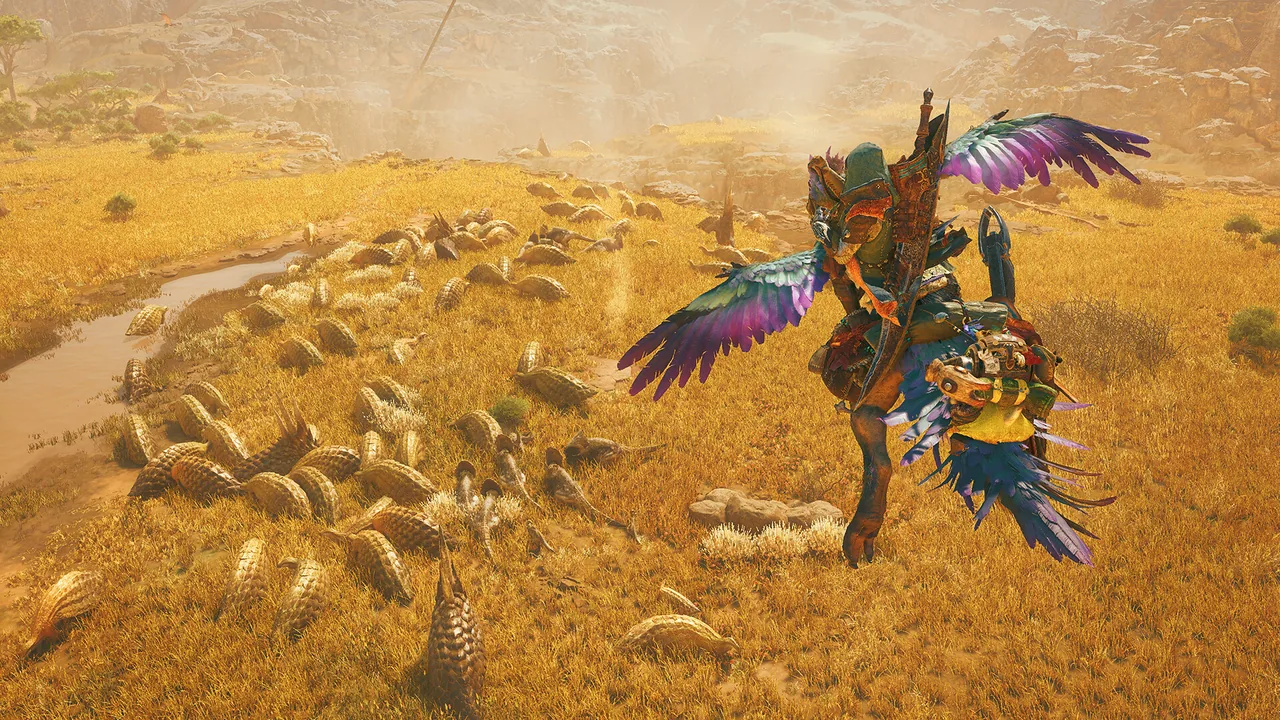
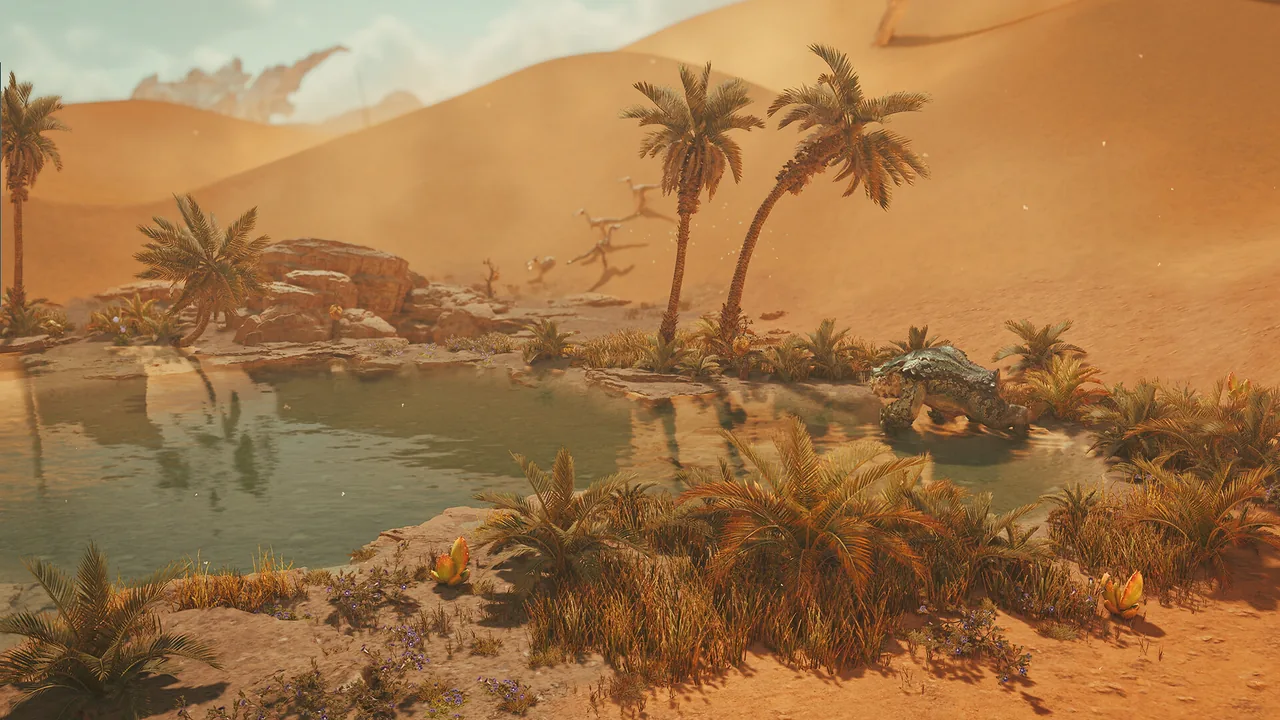
It's a smarter, more readable version of the series' long-running obsession with breakable monster parts, and it holds up across all fourteen weapon types without flattening their differences — a Greatsword player is still hunting for the one enormous charged swing, a Dual Blades player is still stacking rapid hits, but both are now doing it with a shared visual language for where the damage actually matters. The Seikret, your mountable bird-lizard companion, complements this rather than undercutting it: it auto-navigates terrain so you're never fighting the map to reach a fight, lets you fire ranged weapons and use certain items while riding, and turns supply runs and camp travel into something closer to a quick-travel tool than a chore. Combined with environments that genuinely shift over the course of a single hunt — a plain drying into a sandstorm that wakes different monsters entirely — the moment-to- moment hunting in Wilds is the most technically accomplished the series has produced.
The most approachable Monster Hunter ever, and what that costs
None of that mechanical polish answers the question critics kept asking at launch: where did the danger go? IGN's Tom Marks wrote that the game felt "light on any real challenge" and that he'd fainted only twice total across dozens of hours — a number that would have been a rough afternoon in Monster Hunter World. Eurogamer's Matt Wales went further, reporting he "still haven't failed a quest forty hours in" and openly wondering whether the game's "aggressive streamlining" was "robbing the series of some of its distinctive personality." Those aren't outlier complaints; they're two of the most measured, positive reviews Wilds received, raising the same concern almost in passing.
The honest read is that Wilds didn't remove challenge so much as redistribute it. Damage output is generous, monster aggression is tuned lower than in Rise or World, and the game leans hard on guiding systems — a scent-trail path to your target, clear UI callouts for wounds, an AI partner who can revive you — that used to be optional crutches and are now closer to the default experience. None of that makes the combat itself worse; the systems described above are the best version of Monster Hunter's core loop the series has shipped. What it does is remove the layer of consequence that used to make landing those systems correctly feel earned rather than assumed. Newcomers gained a series they can finally get into without a wiki open in a second window. Veterans lost the thing that made clearing a hunt without a single faint feel like an achievement instead of Tuesday.
An endgame that launched thin, and a year spent answering for it
The accessibility debate would have stayed a taste argument if the game had backed it with a deep, demanding endgame the way World eventually did with Iceborne's high-rank grind. It didn't, not at launch. Slower-than-expected long-term sales through mid-2025 and what Capcom's own post-mortems described as player frustration over an "apparent lack of content" pushed the studio into accelerating its patch and content cadence rather than sitting on a quarterly schedule. Title Update 1, in April 2025, added new monsters, quests and — tellingly — a rebuilt multiplayer Grand Hub, restoring the bustling shared social space that launch had quietly scaled back from what World's Gathering Hub offered. Crossover events followed: a Street Fighter 6 collaboration in May 2025, then a much larger Final Fantasy XIV crossover that September bringing an Omega boss fight and a rideable Chocobo skin for the Seikret.
That's a genuinely active first year, and it matters for judging the game today rather than the game that shipped in February 2025. But it's also worth being precise about what's still missing: the deep, punishing high-rank progression that past entries eventually built their back half around — the equivalent of World's Master Rank or Rise's Sunbreak — isn't in the base game at all. It's arriving with Ascendance, a paid expansion Capcom has slated for 2027, which adds a new Eastlands region, elder dragons, Master Rank quests and a new Boost Bracer weapon system, gated behind finishing the base campaign's late-game assignment. That's the same two-step Capcom has run before, and returning players know the shape of it. It does mean anyone buying Wilds today for its "full" Monster Hunter experience is, once again, buying roughly half a product now and waiting a year or more for the half that's traditionally where the series earns its hundred-hour reputation.
Steam's year: launch, Overwhelming Negative, and a recovery that isn't complete
The PC version's technical story is the other half of why Wilds' reputation doesn't match its sales numbers. It launched simultaneously across Windows, PlayStation 5 and Xbox Series X|S — a first for the series — and sold enormously well doing it: over 8 million units in three days, Capcom's fastest-selling release ever, 10 million by the end of March 2025, and a Steam concurrent peak of 1.38 million players, the fifth-highest the platform had ever recorded at that point. None of that stopped the PC build from stuttering badly in crowded areas, with a CPU-bound bottleneck that dragged frame rates down even on high-end rigs regardless of GPU horsepower — an oddly familiar story to anyone who followed Dragon's Dogma 2's own RE Engine struggles the year before. By around July 2025, sustained frustration over that stutter had pushed Steam's recent-review rating all the way down to Overwhelmingly Negative, a genuinely rare and serious signal for a game this commercially dominant.
Capcom's response stretched across most of a year rather than a single hotfix. Title Updates 1 and 2 targeted performance directly but didn't resolve it; a January 2026 patch added dedicated CPU and GPU optimisation options and fixed a DLC-detection bug shared with Dragon's Dogma 2; and by early 2026 a fourth title update landed promising further, more comprehensive CPU and GPU refinements. The scar tissue from that period is why the all-time, all-language Steam score still reads Mixed at just 49% positive across 325,712 reviews — a number pulled down hard by the mid-2025 low point and unlikely to fully recover no matter how good the game plays today, since Valve's aggregate never forgets a bad quarter. Filter to English-language reviews only and the picture brightens to 68% positive, and Steam's own weekly review histogram for the seven weeks running from early June to late July 2026 shows consistent English-language sentiment between 62% and 71% positive — genuinely closer to Mostly Positive territory than the all-time headline number suggests, and stable rather than trending in either direction. That gap between the English and all-language figures is real and Valve's public data doesn't break it down by country, but it lines up with a straightforward explanation: the worst of the backlash landed globally at once, and some markets haven't come back to the game the way the current English-language sentiment has.
Editions, cosmetics, and the price of getting in
Wilds' storefront presence is more layered than the "no pay-to-win" headline suggests. Steam lists three purchasable editions of the base game — Standard at NZ$125.95, Deluxe at NZ$159.95, and Premium Deluxe at NZ$194.95 — plus a separate Cosmetic DLC Pass at NZ$79.94 bundling a slice of the 159 individual paid DLC listings Capcom has released since launch: layered armor sets, hairstyles, gesture packs, BGM sets and Seikret decorations, most priced between roughly NZ$3 and NZ$13 apiece if bought individually. Every discount figure above was checked 30 July 2026 and none of them are guaranteed to persist. None of it touches combat power, drop rates or progression speed, and that restraint deserves real credit in a market where far smaller games gate stat-relevant items behind a shop. But a NZ$125.95 base price before any of that cosmetic shelf gets involved is a steep entry point, and the edition math — figuring out whether Deluxe's extra NZ$34 or Premium Deluxe's extra NZ$69 actually buys anything you'd otherwise regret skipping — is homework the storefront doesn't make easy.
Hunting with other people, and the AI hunters who fill in when you can't
Wilds is built to be soloed front to back, and it holds up doing that: the campaign, environment storytelling and monster roster don't lean on a party to feel complete. Bring friends and the SOS-style co-op system slots them into an existing hunt with cross-platform matchmaking between PC, PlayStation 5 and Xbox players, which removes the old console-silo problem entirely. The rebuilt Grand Hub from Title Update 1 gives multiplayer groups an actual social space to regroup in between hunts rather than a menu screen, closer in spirit to World's beloved Gathering Hub than anything Wilds shipped with at launch. The AI hunters who fill empty party slots when you're playing solo are competent enough to keep a fight moving but noticeably passive compared to a human fourth — useful for padding numbers on a tough monster, not a substitute for an actual squad when the fight calls for real coordination.
Verdict
Monster Hunter Wilds is two different stories depending on which year you're grading it in. The 2025 story is a technically rocky PC launch, a base game that felt light next to the franchise's own back catalogue at the same age, and a difficulty curve so gentle it became the headline criticism from reviewers who otherwise loved the combat. The 2026 story is a game that's been patched, expanded and cross-promoted almost continuously, with hunting mechanics — Focus Mode, wounds, the Seikret — that represent a genuine, lasting improvement to how Monster Hunter plays at the controller level, whatever you think of how forgiving the surrounding game has become.
Both stories are true at once, and that's exactly what the Steam numbers show: a Mixed all-time score dragged down by a real crisis, sitting next to weekly English-language sentiment that's been quietly running two-thirds positive for months. The accessibility argument won't resolve here — some players will always want their Monster Hunter harder than this, and Ascendance arriving in 2027 rather than at launch means the deep endgame veterans expect is still a future purchase, not a current one. But taken as the game it currently is, with a year of free content and real optimisation work behind it, Wilds earns its enormous player base honestly: it's the best-playing entry the series has made, even if it's not yet the most complete one.
Players who like a world that keeps demanding attention through its progression systems rather than easing off once the hook lands may also find something to enjoy in Wanderer's own always-ticking approach to character growth, even outside the hunting genre.
Pros and cons
Pros
- Focus Mode and the wound system turn every extended fight into a running conversation about where to aim next, not just when to dodge
- The Seikret mount removes travel tedium without ever removing player agency, including mid-ride attacks and item resupply on the move
- Environments transform hour to hour within a single hunt, from clear skies to sandstorms that change which monsters are even active
- Post-launch support has been genuinely substantial — new monsters, a rebuilt multiplayer hub, and full crossover events with Street Fighter 6 and Final Fantasy XIV
- Cross-platform play means a hunting party isn't limited by which console anyone owns
- No pay-to-win purchases anywhere in the storefront, unusual restraint for a game this commercially successful
Cons
- Launch-week PC performance was severe enough that Steam's recent-review rating fell to Overwhelmingly Negative by mid-2025, and CPU-bound stutter in crowded areas still surfaces on capable hardware
- The base campaign is easy enough that multiple major critics reported barely failing a quest across dozens of hours, a real departure from the series' identity
- Endgame content at launch was thin next to World and Rise at the same point in their lives, and the real high-rank depth doesn't arrive until the 2027 Ascendance expansion
- Three separate purchasable editions plus a standalone Cosmetic DLC Pass on top of a NZ$125.95 base price is a lot of storefront to navigate before you've hunted anything
- Support Pawns — sorry, hunting partners you don't control directly — aren't part of this game, but the AI companion hunters that fill empty party slots are noticeably less useful than a human fourth
- All-language Steam sentiment is still only Mixed at 49% positive across the game's full history, a scar the recovery hasn't erased
Screenshots
-
Monster Hunter WildsImage: CAPCOM Co., Ltd. via Steam -
Monster Hunter WildsImage: CAPCOM Co., Ltd. via Steam -
Monster Hunter WildsImage: CAPCOM Co., Ltd. via Steam -
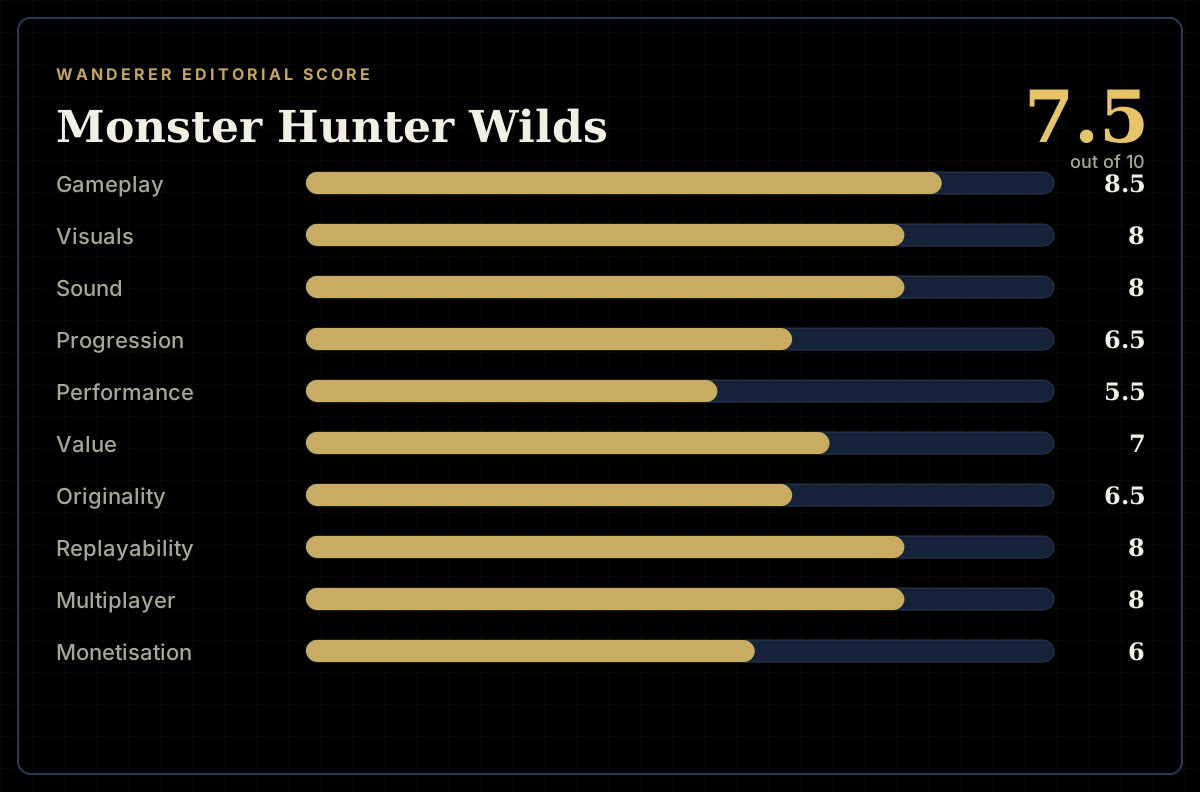
How the review scores each part of the gameWanderer Editorial -
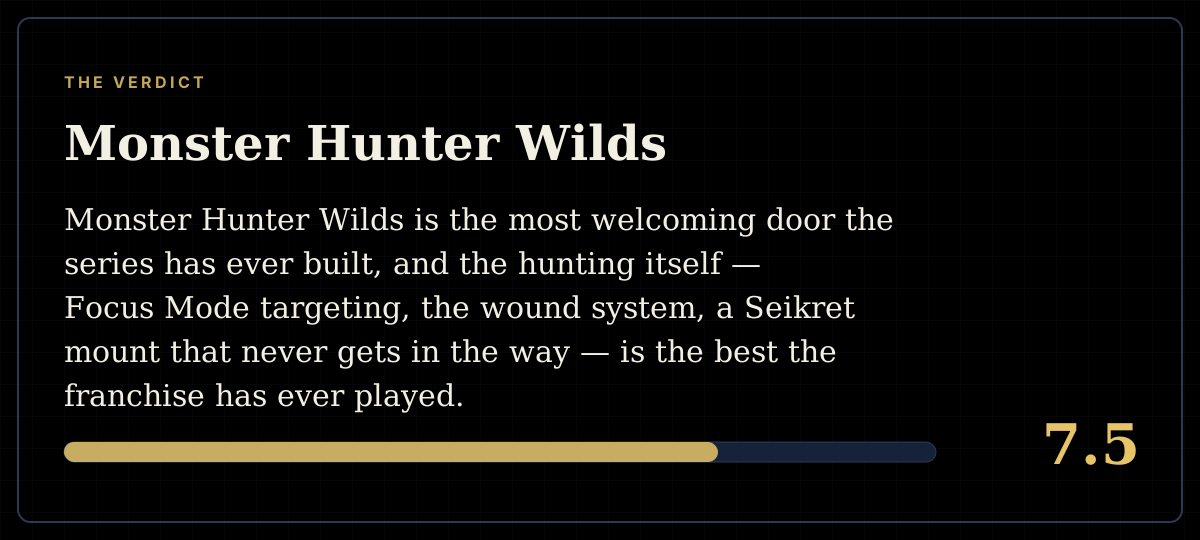
The short versionWanderer Editorial