Game review
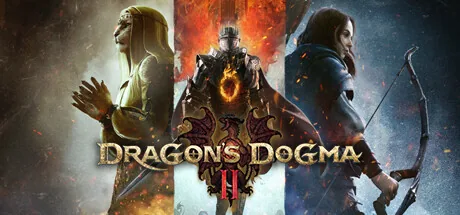
Dragon's Dogma 2
7.5 / 10
- Developer
- Capcom
- Publisher
- Capcom
- Released
- 22 March 2024
- Platforms
- Windows, PlayStation 5, Xbox Series X|S
- Genre
- Action RPG
- Monetisation
- Premium, one-off purchase — a small clutch of convenience and cosmetic microtransactions shipped alongside launch; most of the controversial ones have since been discontinued; a paid expansion is due in October 2026
- Players
- Single-player, with an online Pawn-sharing system for borrowing AI companions from other players' games
The short version
Dragon's Dogma 2 is a game built almost entirely around friction that pays off — a world that makes travel dangerous and slow, a vocation system that turns your build into a genuine identity, and a Pawn system that remains the single most interesting thing an RPG has done with multiplayer this decade. It launched with real performance problems and a needlessly petty microtransaction menu, and both of those did lasting damage to how the game is remembered. Two years of patches have fixed far more of that than its Steam score suggests.
Biggest strengths
- Grabbing, climbing and toppling large monsters mid-fight is still unmatched by anything else in the genre
- Vocations change how you approach the entire map, not just your damage numbers, and switching between them stays meaningful into the late game
- Pawns genuinely carry knowledge between playthroughs, calling out monster weaknesses and hidden paths they learned in someone else's world
Biggest weaknesses
- Frame rate still drops in crowded towns and during large monster fights on the recommended PC spec, and Capcom's own patch notes admit a further fix isn't out yet
- Support Pawns can't switch vocations, so two of your three party slots are locked into whatever build you hired
- The main story is thin compared to the world built to hold it, and most of the memorable moments come from side content and emergent chaos
Who it's for: Players who want an open world that respects distance, fans of the first Dragon's Dogma, and anyone curious what a genuinely novel take on multiplayer companions looks like in practice.
Our recommendation: Buy it now at its permanently reduced price if slow, deliberate exploration and a real risk of dying three hours from the nearest bed appeal to you; wait for a frame-rate patch due this August if a stable 60fps in cities matters more to you than anything else.
7.5 / 10
Three hours east of Vernworth, with the sun going down and a Cyclops blocking the only road back, is where Dragon's Dogma 2 either clicks or doesn't. There's no fast-travel shortcut out of that fight unless you planted an expensive crystal there earlier. Your torch is running low. One of your Pawns is shouting advice about the Cyclops's eye that it apparently picked up fighting the same monster in someone else's game last week. That combination — real consequences for distance, and companions that arrive already knowing things — is the whole pitch of this game, and outside of Dragon's Dogma there's genuinely nothing else quite like it.
It's also a game that launched in March 2024 carrying two self-inflicted wounds: a PC version that struggled to hold a stable frame rate in its own capital city, and a microtransaction menu that sold things like appearance-change tickets and portable fast-travel points next to a full-price single-player game. Both became the story of its launch week almost as much as the game itself did. Reviewing it now, in its current patched-and-discounted state with a paid expansion three months out, means separating what was true in 2024 from what's still true today — and a fair amount of it has genuinely changed.
The Pawn system is still the most interesting idea in the genre
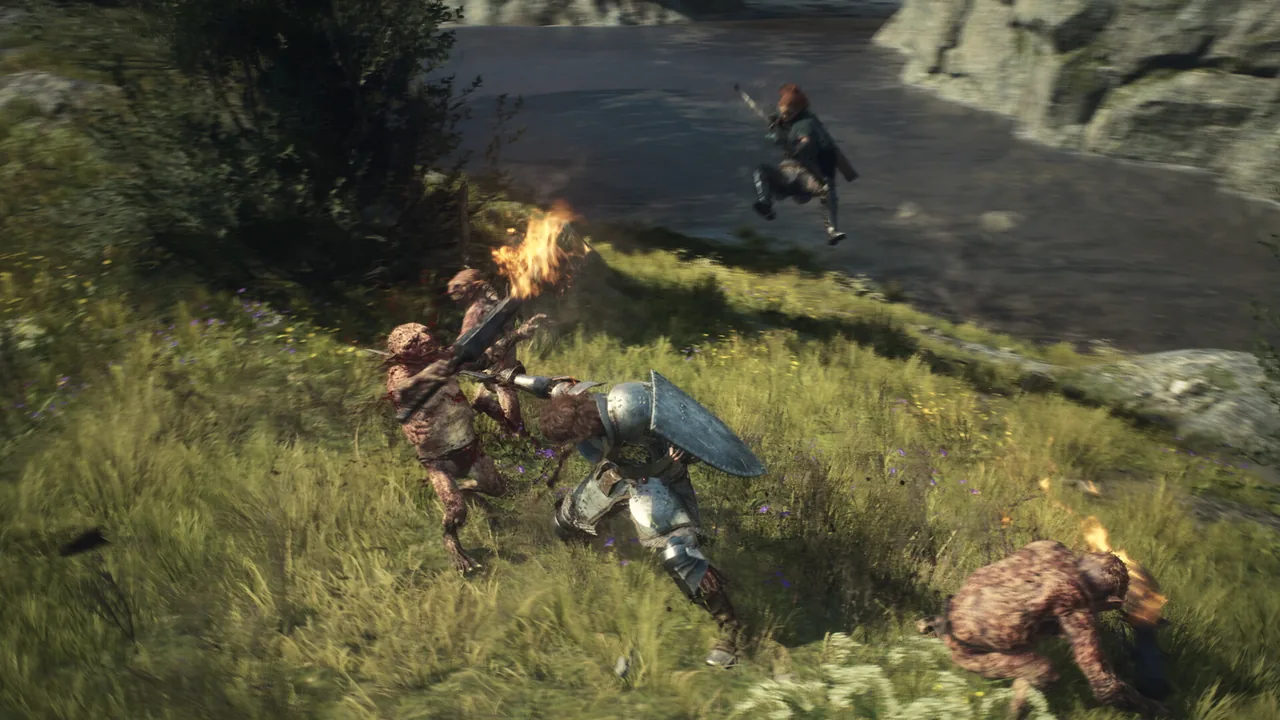
Start with the thing that actually makes Dragon's Dogma 2 unusual, because it's easy to lose it under the performance discourse. You create a Main Pawn — a fully customisable AI companion with its own vocation, equipment and "inclination," a set of behavioural tendencies you tune rather than script directly. That Pawn then goes and fights in other players' worlds while you're offline, and comes back having learned things: a monster's weak point, a hidden chest, the shortest route through a cave system. You, in turn, borrow two Support Pawns from other players' games to round out your party, and they arrive carrying the same kind of world-specific knowledge, occasionally interrupting a fight to warn you about an attack pattern they've clearly seen before.
None of that is padding. It's a genuinely different answer to the question every RPG asks — "how do you make AI companions feel alive" — and Dragon's Dogma 2 answers it by making them social objects that pass through other people's games and bring pieces of those games back with them. A solo player never has to touch another human being to benefit from this system, and that's the point: it's multiplayer infrastructure quietly propping up what still looks and plays like a single-player campaign. The trade-off is real, too — Support Pawns can't change vocation once hired, so building a party means either compromising on what's available to recruit or repeatedly re-hiring, which turns party composition into its own small economy rather than a solved problem you set once and forget.
Vocations as identity, not a stat sheet
Where the first Dragon's Dogma treated vocations as fairly interchangeable damage profiles, the sequel makes the choice structural. Basic vocations like Fighter, Archer and Mage feed into advanced classes — Warrior, Trickster, Magick Archer and others — and two new hybrid vocations, Mystic Spearhand and Trickster, ask you to think about combat differently rather than just hitting harder. Mystic Spearhand's duospear plays with range and stance in a way nothing else in the game does; Trickster skips damage output almost entirely in favour of confusing enemies and buffing the party, which is a genuinely strange thing to ask a player to main in an action RPG and works better than it has any right to.
The vocation you're playing changes how you approach the map itself, not just how a fight plays out. A Thief scales cliffs and monster backs that a Warrior has to fight around. A Sorcerer needs open ground and time to charge spells that a melee build never has to think about. That's the sequel's best trick: it turns "what's your build" into "how do you experience this specific world," and switching vocations mid-playthrough — which the game actively encourages through its Vocation Rank system — genuinely changes what kind of game you're playing for a while, not just your numbers.
Combat that rewards climbing on things
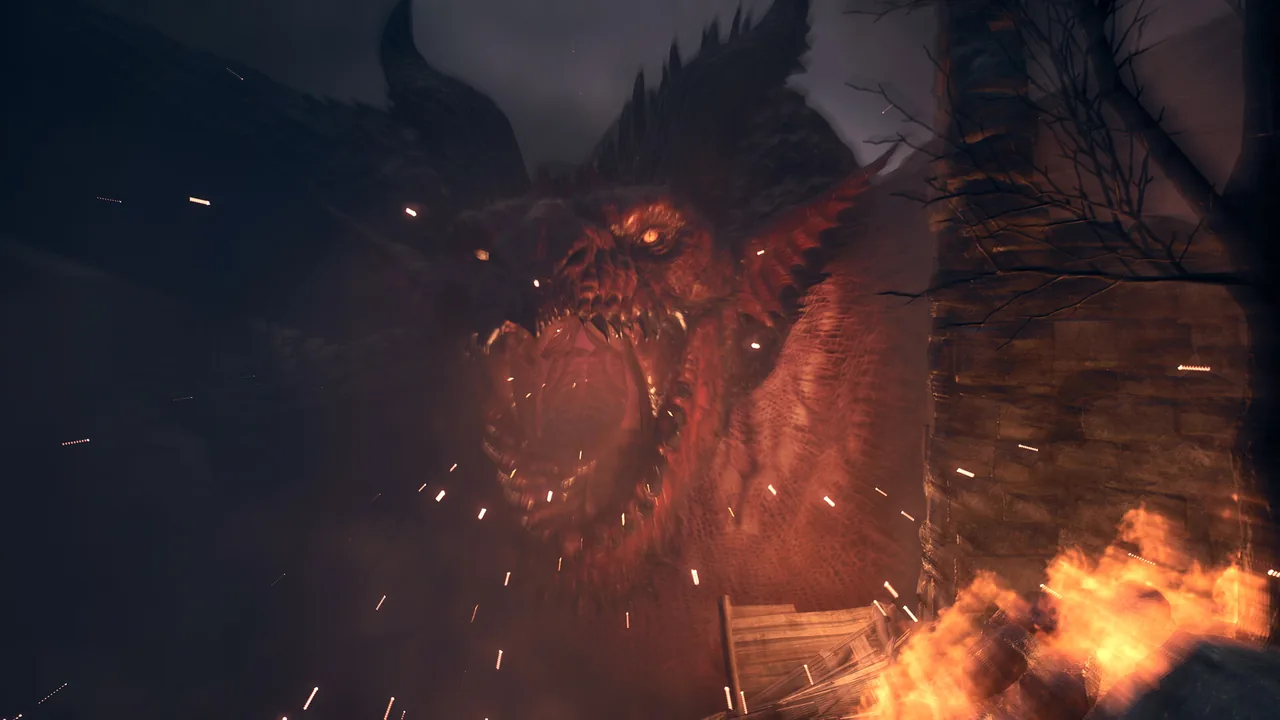
The moment-to-moment fighting is still built around Dragon's Dogma's signature idea: large enemies aren't damage sponges to whittle down from range, they're objects you climb, grab and destabilise. Latching onto a Cyclops's arm and stabbing its eye while it thrashes to throw you off remains one of the best physical-feeling things an action RPG has ever done, and it scales up convincingly to the game's larger monsters — griffins you can grab mid-flight, drakes you can topple by cutting the right leg out from under them. Weight and stagger matter more than raw damage output for a lot of encounters, which keeps fights readable even when four or five enemies are on screen at once.
The flip side is enemy variety, which critics flagged at launch and which hasn't meaningfully changed since: you'll see the same handful of monster types reskinned across biomes far more than a 2024 open-world RPG with this much ambition should ask you to tolerate. The spectacle of any individual fight against a Cyclops or a Griffin holds up on the fifteenth encounter about as well as the first, because the mechanic driving it — where do I climb, what do I cut — is strong enough to carry repetition. It's still repetition, though, and the roster doesn't grow fast enough to fully outrun it.
A world built to make travel expensive
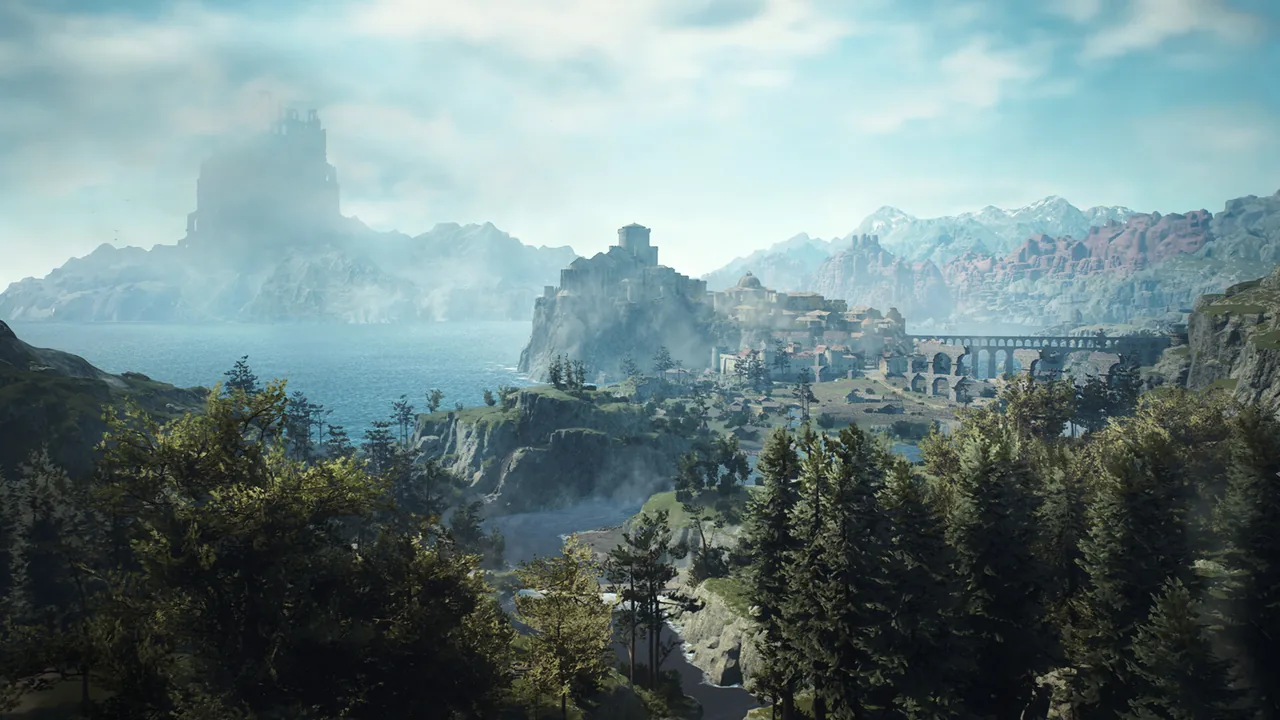
Dragon's Dogma 2's map is roughly four times the original game's, split across two kingdoms — Vermund's temperate north and Battahl's arid south — and the entire design brief seems to be making the distance between two points cost something. There's no default fast travel beyond oxcarts that can be ambushed mid-route and a limited network of one-way ferrystone points. Night genuinely changes the danger level, with enemies that don't appear in daylight and a torch that makes you visible to things you'd rather not attract. Camping is a real decision, not a menu formality: where you make camp determines what finds you.
This is where the microtransaction controversy actually bit hardest, and it's worth being specific about why. At launch, the fast-travel points that make this friction bearable — a crystal called a Portcrystal, which lets you set a new ferrystone destination — were sellable as a real-money item alongside being craftable in-game. Critics at the time, including PC Gamer's Harvey Randall, pointed out that nearly everything in that small MTX shelf was reasonably obtainable through normal play, which is true, but it doesn't really answer the objection: selling a shortcut around the exact friction the game is designed to make you feel, in a $70 box-price release, reads as Capcom not trusting its own pitch. It became the headline complaint of launch week largely because it targeted the one system the whole game is built around.
What's changed since is worth stating plainly, because it doesn't get repeated as often as the original complaint did: a June 2026 update added a reusable Eternal Ferrystone as a free quality-of-life addition, and as of a permanent price adjustment on 24 June 2026, several of the original small-purchase items — including the ones for character appearance changes and fast-travel crystals — no longer appear for sale on Steam at all. What remains for purchase is a camping-gear DLC and a legacy sound pack, both closer to conventional cosmetic add-ons than anything that touches the friction the game is built around. Capcom didn't reverse course immediately, and the damage to the game's reputation happened in the first week when it mattered most for review scores — but over two years, the actual shopping list got considerably less embarrassing, and the core complaint about paying to skip the game's central mechanic has mostly been resolved by giving that mechanic away for free instead.
PC performance: better, not solved
The other launch-week story was technical. Dragon's Dogma 2 runs on Capcom's RE Engine, which has handled fixed-perspective horror and action games extremely well and was visibly straining under an open world this dense — particularly in Vernworth, where dozens of simulated NPCs going about their own routines could drag frame rates down regardless of GPU horsepower, because the bottleneck was CPU-bound crowd simulation rather than anything a graphics card could brute-force around. Capcom's own recommended specs quietly admit the ceiling is modest: the official "performance estimate" for a recommended-spec PC is 2160i (a checkerboard 4K target) at 30fps, not 60, which tells you where the studio's own expectations sat even before the patches started.
The good news is that this has been an active area of investment rather than a launch problem Capcom walked away from. Updates through 2024 and 2025 added a "Prioritize Graphics" versus "Prioritize Performance" toggle and a steady stream of general optimisation and bug fixes. More tellingly, Capcom's own June 2026 patch notes describe a second major update — due at the end of August 2026, timed ahead of the Dark Arisen expansion — that promises "improved frame rates" on top of everything already shipped. Read plainly, that's Capcom telling its own players, over two years after launch, that the frame-rate problem still isn't fully solved. Anyone buying today should expect a meaningfully smoother experience than launch week, particularly outside dense towns, but not a rock-solid 60fps in Vernworth's streets until that patch actually lands.
Where the story doesn't keep up
The narrative is the part of Dragon's Dogma 2 least likely to convert a skeptic. The framing — you're the Arisen, chosen by a dragon, walking a path the game deliberately keeps light on exposition — is more mood than plot for long stretches, and the main quest can be finished in a fraction of the time it takes to see everything the world offers. That's a deliberate choice consistent with the original game's philosophy: the story exists to put you in interesting places, not to be the reason you're there. It mostly works, because Vernworth and Battahl are detailed enough, and side content committed enough to its own small dramas, that the thin spine rarely feels like a hollow one. Players expecting a heavily authored, cutscene-driven epic in the mould of most $70 open-world releases should recalibrate that expectation before buying.
What the expansion changes about buying in now
Capcom announced Dragon's Dogma 2: Dark Arisen on 9 June 2026, an expansion launching 9 October 2026 across PC, PlayStation 5, Xbox Series X/S and Nintendo Switch 2, adding a new snowy region called Norgan, a set of twelve dungeon trials called Lost Rites, and additional character-creator options. Pre-orders are live now, bundled purchases include instant access to the base game, and the base game's price cut to US$39.99 on 24 June 2026 was explicitly timed around this announcement. None of that is out yet, so it isn't part of this score — but it does mean anyone buying the base game today is buying into a title Capcom is still actively expanding, at a price considerably lower than launch, three months before its next major content drop.
Verdict
Strip away the timing of its launch controversies and Dragon's Dogma 2 is a genuinely distinctive open-world RPG: a Pawn system nothing else has meaningfully copied, a vocation system that changes how you play rather than just what your numbers look like, and a world committed enough to the cost of travel that a night walk home can be the tensest thing in the game. What kept it from landing as the outright triumph its combat and world design deserved was self-inflicted — a frame rate that still isn't fully fixed two-plus years on, and a microtransaction shelf that picked a fight with the exact system the game is proudest of.
The performance issue is real today, not just a launch-week memory, and it costs the game half a point on its own. The monetisation issue has aged much better than its reputation has — most of what people were actually angry about is gone from the storefront, and the fast-travel item that started the argument is now free — but the fact that it needed two years and a permanent price cut to get there keeps this from scoring as an unqualified recommendation. For players willing to let a world push back against them, it's very much worth the current asking price. For players who want their $40 city to hold 60 frames without exception, wait for August's patch and judge it then.
Players who enjoy a world that pushes back against convenience rather than smoothing every path for you may also find something familiar in Wanderer's own always-ticking approach to progression, even if the genres sit far apart.
Pros and cons
Pros
- Grabbing, climbing and toppling large monsters mid-fight is still unmatched by anything else in the genre
- Vocations change how you approach the entire map, not just your damage numbers, and switching between them stays meaningful into the late game
- Pawns genuinely carry knowledge between playthroughs, calling out monster weaknesses and hidden paths they learned in someone else's world
- No fast travel by default forces routes through hostile territory, and night in the wilderness is legitimately frightening
- Vernworth and Battahl are dense, vertical, hand-built cities rather than padded open-world filler
- A June 2026 patch added a reusable Eternal Ferrystone, directly addressing the launch-era complaint that easy fast travel was locked behind a paid item
Cons
- Frame rate still drops in crowded towns and during large monster fights on the recommended PC spec, and Capcom's own patch notes admit a further fix isn't out yet
- Support Pawns can't switch vocations, so two of your three party slots are locked into whatever build you hired
- The main story is thin compared to the world built to hold it, and most of the memorable moments come from side content and emergent chaos
- Launch-day microtransactions for items like character appearance changes and portable fast-travel crystals were a genuinely bad look for a $70 single-player game, even if most were easy to earn in play
- Inventory weight and carry capacity create constant, low-grade menu friction that the game never really resolves
- A paid expansion arriving in October 2026 means the "complete" version of this game is a purchase still two years in the making
Screenshots
-
Dragon's Dogma 2Image: CAPCOM Co., Ltd. via Steam -
Dragon's Dogma 2Image: CAPCOM Co., Ltd. via Steam -
Dragon's Dogma 2Image: CAPCOM Co., Ltd. via Steam -
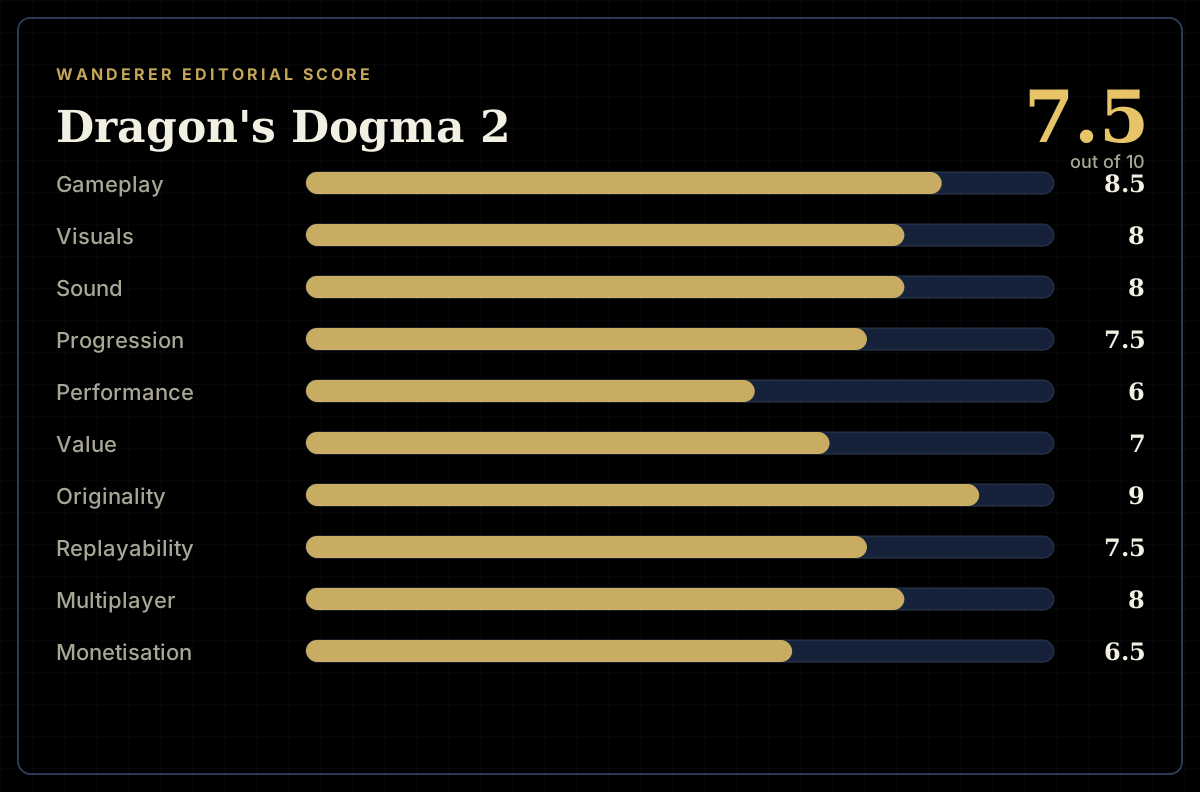
How the review scores each part of the gameWanderer Editorial -
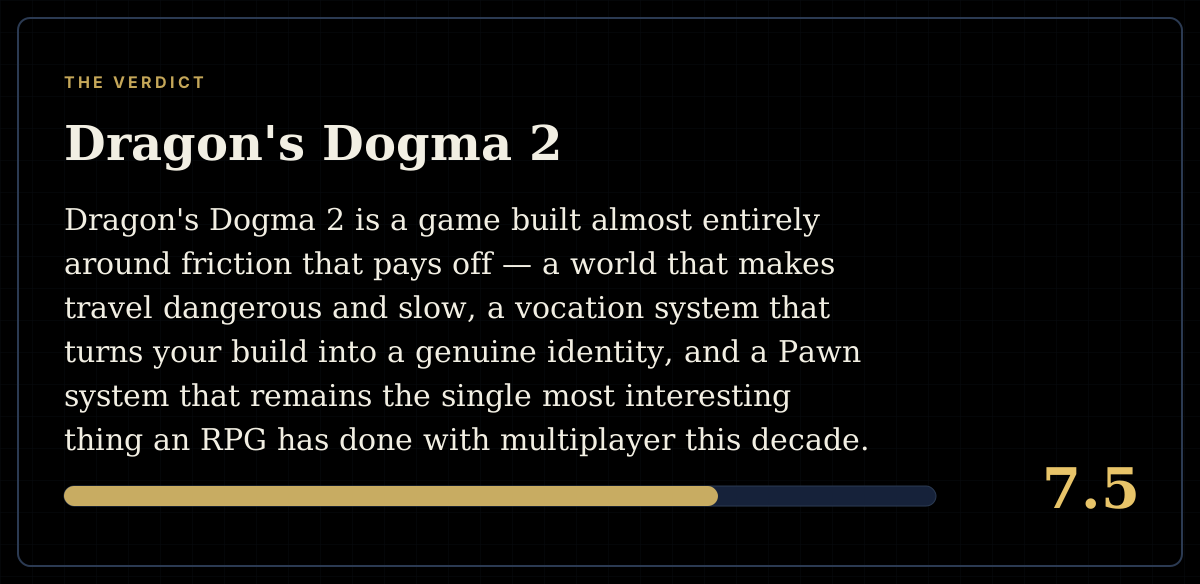
The short versionWanderer Editorial