Game review
Plushy Store Tidy Up Review
5.5 / 10
- Developer
- SIV Games
- Publisher
- SIV Games
- Released
- 1 September 2026
- Platforms
- ["Windows"]
- Genre
- Simulation
1,600 Plushies And No Instructions
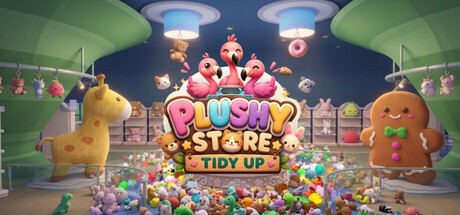
Plushy Store Tidy Up, released September 1, 2026 by solo studio SIV Games, drops players into a store buried under more than 1,600 stuffed animals and asks them to put every one back where it belongs across 90-plus shelves. At $4.99, it's pitched squarely at the "tidy-up" genre that's grown around games like PowerWash Simulator and Unpacking, offering a Relaxed Mode with no wrong answers and a Challenge Mode where every plushy has exactly one correct home. The idea is charming, and the review pool, 29 of 45 English reviews positive for a "Mixed" rating, largely agrees the plushies themselves are the best part. Whether the game around them holds up is a much more contested question.
Two Modes, One Missing Feature
The mode split is the game's clearest structural idea: Relaxed Mode lets players fill shelves in whatever order feels satisfying, while Challenge Mode asks them to actually reason out each plushy's category, by color, habitat, species, or food type, before placing it. Several reviewers who stuck with Challenge Mode described real, if slow-building, satisfaction once the logic clicked, with one writing "it didn't take long to really get into it" once the categories started making sense. Progress carries forward through an ability system funded by "bulbs" earned for completed shelves, spent on faster movement, higher carry capacity, a magnet, and better jumping, a light but functional progression loop layered on top of the sorting itself.
No Feedback, No Idea If You're Right
The single most repeated complaint in the review pool, appearing across at least five separate reviews, is that the game gives almost no indication of whether a plushy has been placed correctly. One reviewer summed it up bluntly: "No checkmark, no sparkle, nothing. Just silence and a vague feeling of 'I guess that's done?'" Another put it in nearly identical terms: "Putting plushies on shelves offers absolutely zero feedback about proper positioning," while a third reported the game "only tells you at the end of filling the shelf if it's wrong or not," turning what should be a quick puzzle check into a long guessing exercise. For a genre whose whole appeal rests on the small dopamine hit of watching a mess resolve into order, a half-dozen independent reviewers all hitting the same missing-feedback wall is a real design problem, not a one-off gripe.
Launch-Week Bugs, Fixed Quickly
Plushy Store Tidy Up also launched with real technical rough edges. Multiple reviewers reported resolution and display problems at launch, one calling the game "currently unplayable as there are no settings for changing screen res," and a Steam Deck player separately describing being unable to "see a third of the screen" with "awful" controller bindings that assign picking up, dropping, and shelving to different buttons. To the developer's credit, several of these issues were patched within days, and more than one reviewer specifically credited the turnaround: "Devs fixed a few things pretty quick, I'm glad they were reactive," and another noted the post-launch patches "significantly improved gameplay." The willingness to patch fast is a genuine point in the game's favor, even for reviewers who otherwise landed negative.
A Disclosed AI Art Process Split The Reviews
A distinct thread running through several reviews concerns the game's own disclosure about its art production. According to reviewers who referenced it directly, the developer stated that AI was used for portions of the 2D artwork and then "cleaned up" afterward. Multiple independent reviewers pushed back on how thoroughly that cleanup actually happened, with one writing "I feel like they weren't honest about the AI Disclosure... yet the traces of AI are everywhere," another flagging "possible limited AI usage in cover/title photo," and a third saying plainly, after learning about it, "I'm so upset about this." This wasn't a single reviewer's passing suspicion; it's a disclosed part of the game's own production process, and enough reviewers independently reacted to it that it's worth naming as a real factor in the Mixed score, separate from the feedback and bug complaints above.
Verdict
Plushy Store Tidy Up gets the raw material right: 1,600 plushies is a genuinely enormous, appealing pile to sort through, and the two-mode split between stress-free organizing and logic-driven puzzle solving is a smart way to serve two different audiences with one game. Where it falls short is everything wrapped around that material. A tidy-up game that never tells you whether you're tidying correctly undercuts its own core loop, and that complaint came from enough independent players that it can't be dismissed as one bad session. Layer on launch-week display and control bugs, and a disclosed AI-assisted art process that several reviewers felt wasn't as thoroughly "cleaned up" as advertised, and the Mixed score on Steam reads as earned rather than harsh.
None of this makes the game worthless. The developer's fast patch turnaround is a real, repeatedly credited positive, and the reviewers who pushed past the early confusion mostly came away satisfied, cute plushies, a relaxing atmosphere, and a completion arc that several described finishing in full. But for a $4.99 tidy-up game entering a genre that already has strong, well-understood competitors, "figure it out yourself, we'll patch the bugs eventually" is a shakier pitch than it needed to be. Players drawn specifically to the plushy theme will likely find enough here to enjoy, but anyone expecting the polished feedback loops of the genre's best entries should wait for a few more patches before picking this one up.
Screenshots
-
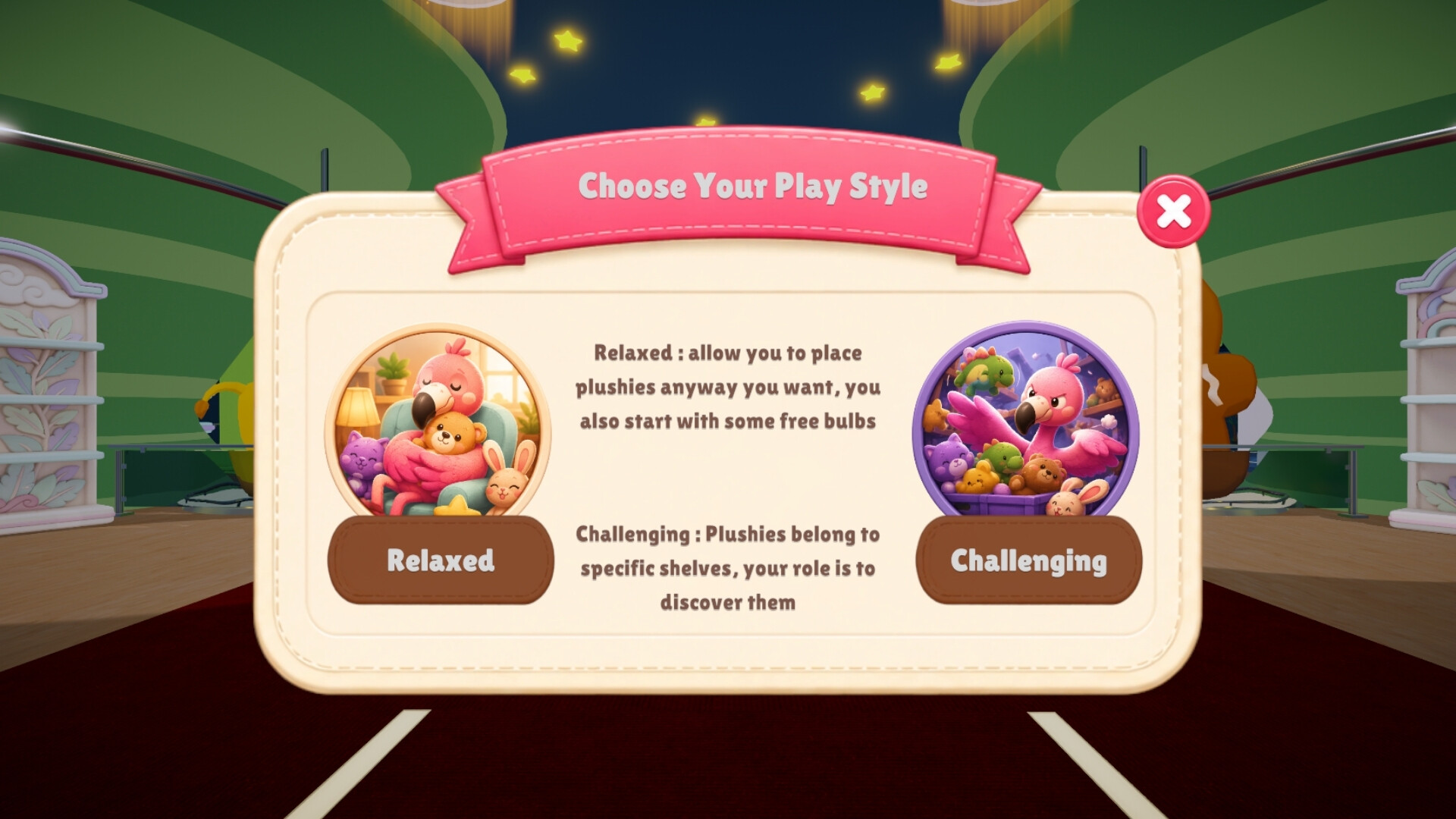
The mode-select screen that splits the game in two: place plushies anywhere in Relaxed Mode, or hunt for each one's correct shelf in Challenging Mode.Image: SIV Games via Steam -
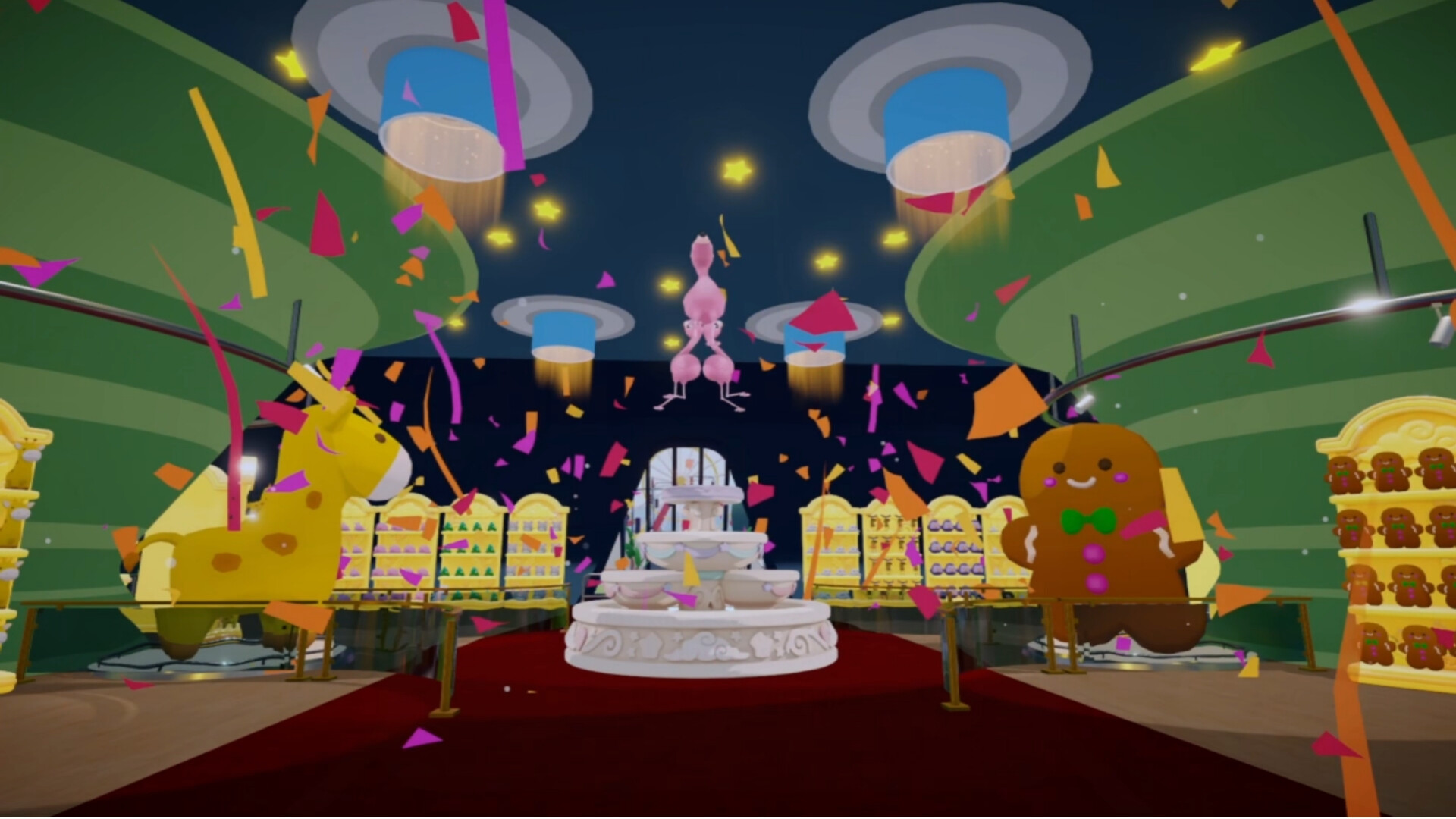
A celebration moment in the store's central atrium, confetti falling over the fountain and the giant mascot plushies once a section is complete.Image: SIV Games via Steam -
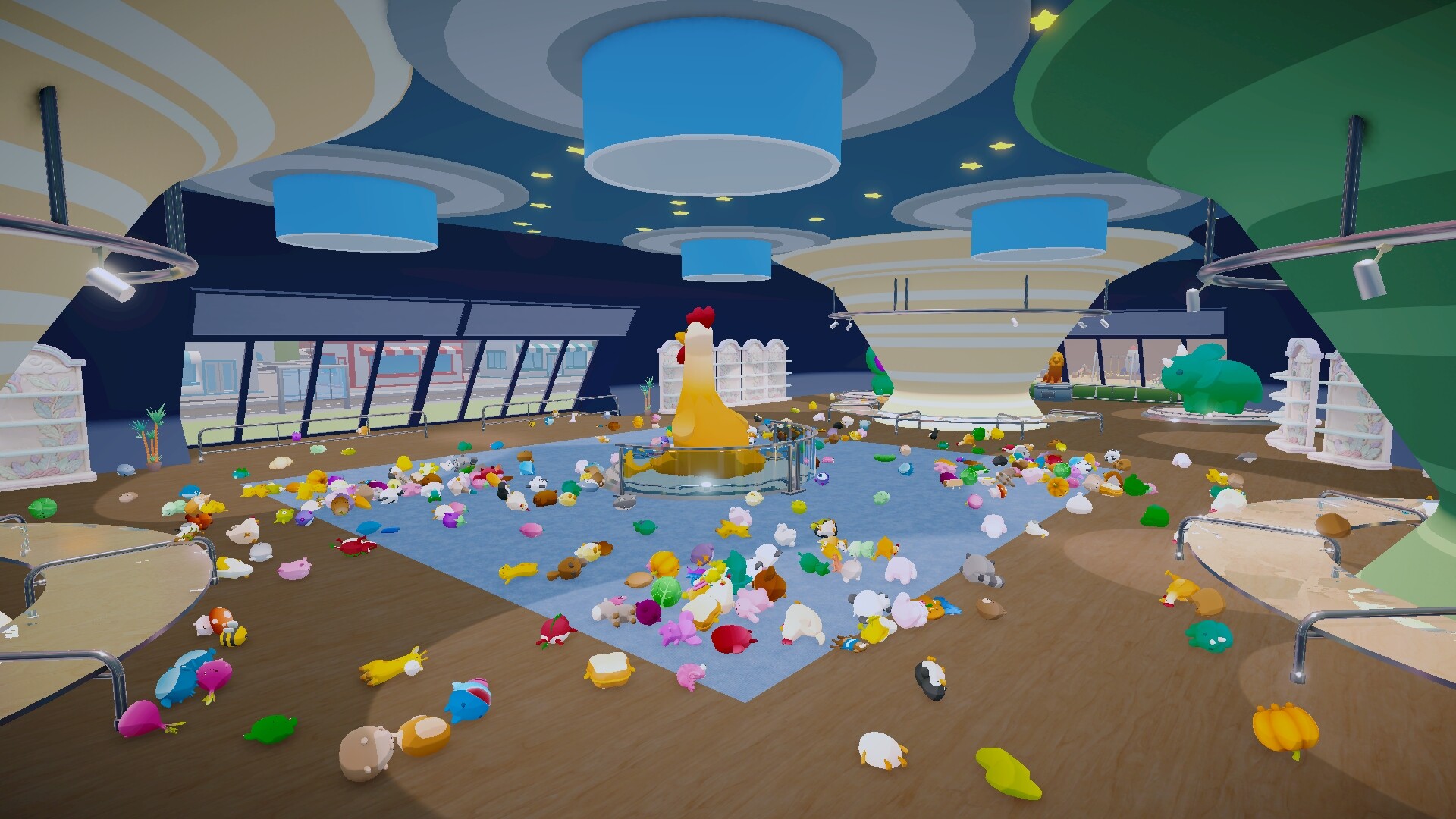
The mess at the heart of the pitch: hundreds of loose plushies scattered across the floor, waiting to be carried to their shelves.Image: SIV Games via Steam