Game review
Cards Everywhere! Review
6.4 / 10
- Developer
- Armed Chicken
- Publisher
- Armed Chicken
- Released
- 17 September 2026
- Platforms
- ["Windows"]
- Genre
- Simulation
Sorting Thousands of Scattered Trading Cards Into an Album
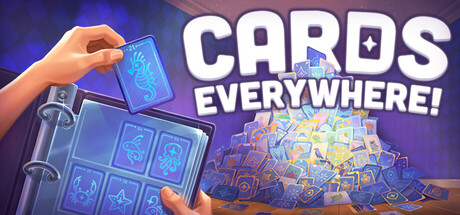
Cards Everywhere! is a first-person organizing game from solo-ish studio Armed Chicken, part of the recent wave of cozy "sorting sim" releases that has been sweeping Steam. The premise is simple: thousands of collectible cards lie scattered across a room, and your job is to pick each one up, identify which of the game's dozens of themed sets it belongs to, and slot it into the correct page of your album. With over 1,500 unique cards to track down among 2,000 total pieces scattered around (500 of them intentional duplicates handled separately), the loop is built entirely around methodical searching, sorting, and the satisfaction of watching an empty album slowly fill in. At $5.99, it's priced squarely in line with its genre peers, betting on volume of content and presentation to stand out in an increasingly crowded space.
A Mixed Reception Split Almost Entirely Along One Fault Line
Cards Everywhere! launched to 18 reviews, 12 of them positive, landing at 67% and Steam's "Mixed" label. Ten of the seventeen reviews sampled are in English, a workable majority for this review, though the small overall sample size means this snapshot could shift meaningfully as more players weigh in. Unlike most mixed-reception launches, where criticism is scattered across many different complaints, this one splits almost entirely along a single specific line: reviewers who enjoy the actual sorting gameplay rate it well, while a distinct and vocal cluster of negative reviews centers on one specific issue — the game's use of AI-generated artwork for its card designs — rather than on the mechanics themselves.
A Satisfying, Well-Built Sorting Loop for Genre Fans
Reviewers who engaged with the gameplay itself are largely positive about the fundamentals. One detailed review calls it an exception among the current wave of "organize slop games," writing "I had so much fun seeing all the cute cards and hearing the sounds when you place them in the book," and specifically praising the soundtrack as the first in the genre they didn't feel compelled to mute. Another reviewer who received an early copy highlights the game's control scheme, noting that holding right-click to look around rather than a free-look camera felt odd at first but "by the end of my first hour I understood exactly why they built it that way" — the design forces you to plant yourself and methodically search a pile rather than constantly swiveling the camera, and frees the mouse up entirely for grabbing cards. That same reviewer praises the album's presentation, with every card numbered and detailed on the back, and calls out the haptic "card shuffle" sound effect on every button press as a small but effective touch. A completionist-focused review notes the achievement list is approachable, estimating around 8 hours for 100% completion across just one or two focused playthroughs, with no missable achievements requiring a guide to navigate safely. Reviewers do flag a slow opening pace and a progression system that gates skill points behind completing full 30-to-50-card sets, which more than one review found could use tuning toward smaller incremental rewards.
A Vocal Backlash Over AI-Generated Card Art
The clearest driver of negative reviews in this pool has nothing to do with the sorting mechanics and everything to do with the source of the card artwork. Multiple reviewers state plainly that the game's illustrations are AI-generated, and object to that on principle rather than on any technical or gameplay basis — one writes simply "it looks fine, but i can't possibly spend hours looking at AI slop pictures on every single card," while another states "ALL cards are AI generated, not just to 'support creation.'" Several of these reviewers describe requesting refunds specifically because of this discovery rather than because of any issue with how the game plays, with one writing at length about buying the game precisely because it seemed to check every box they wanted — relaxing, nice music, a satisfying collection loop — only to lose interest once "realizing ingame that all art on the cards is so clearly AI-creations." Another reviewer frames it as a matter of principle around supporting artists directly, writing "it's really not hard to find artists, instead of being another game in the list of collector games using ai." Notably, none of the reviews raising this objection dispute that the underlying sorting gameplay works, and a handful of positive reviewers separately praise the specific art and card selection, including one who called the sleeping-animal-themed cards "just cute" and highlighted the game's "unique wands" among their favorite sets, suggesting reactions to the art itself are more about its origin than its actual quality on screen.
Verdict
Cards Everywhere! delivers a competently built, genre-typical sorting loop with real attention to feel — good haptic feedback, a soothing soundtrack, and a smartly designed camera scheme that reviewers who stuck with it came to appreciate. Its mixed reception isn't really about whether the gameplay works; it's about a specific and consistent objection from a vocal segment of reviewers to the game's use of AI-generated card art, several of whom requested refunds on that basis alone after enjoying everything else about the experience. At $5.99, this is a reasonable, low-cost pickup for genre fans who are comfortable with AI-assisted art direction and mainly want a relaxing, well-designed card-sorting loop with a large amount of content to work through — but shoppers for whom the artwork's origin is a dealbreaker should know that going in, since it's clearly the single biggest factor shaping this launch's early reception.
Screenshots
-
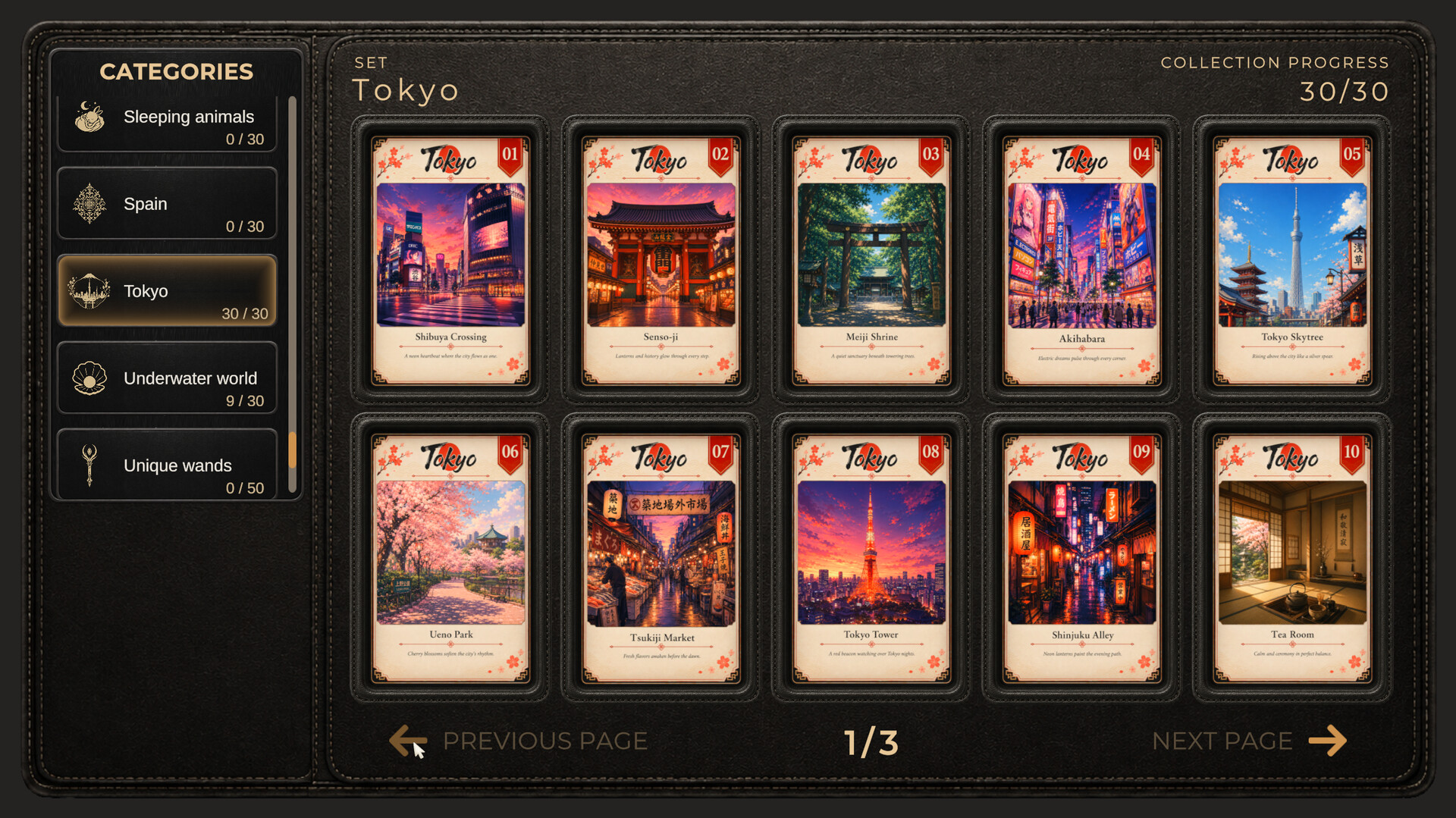
A fully completed Tokyo-themed set in the collection albumImage: Armed Chicken via Steam -
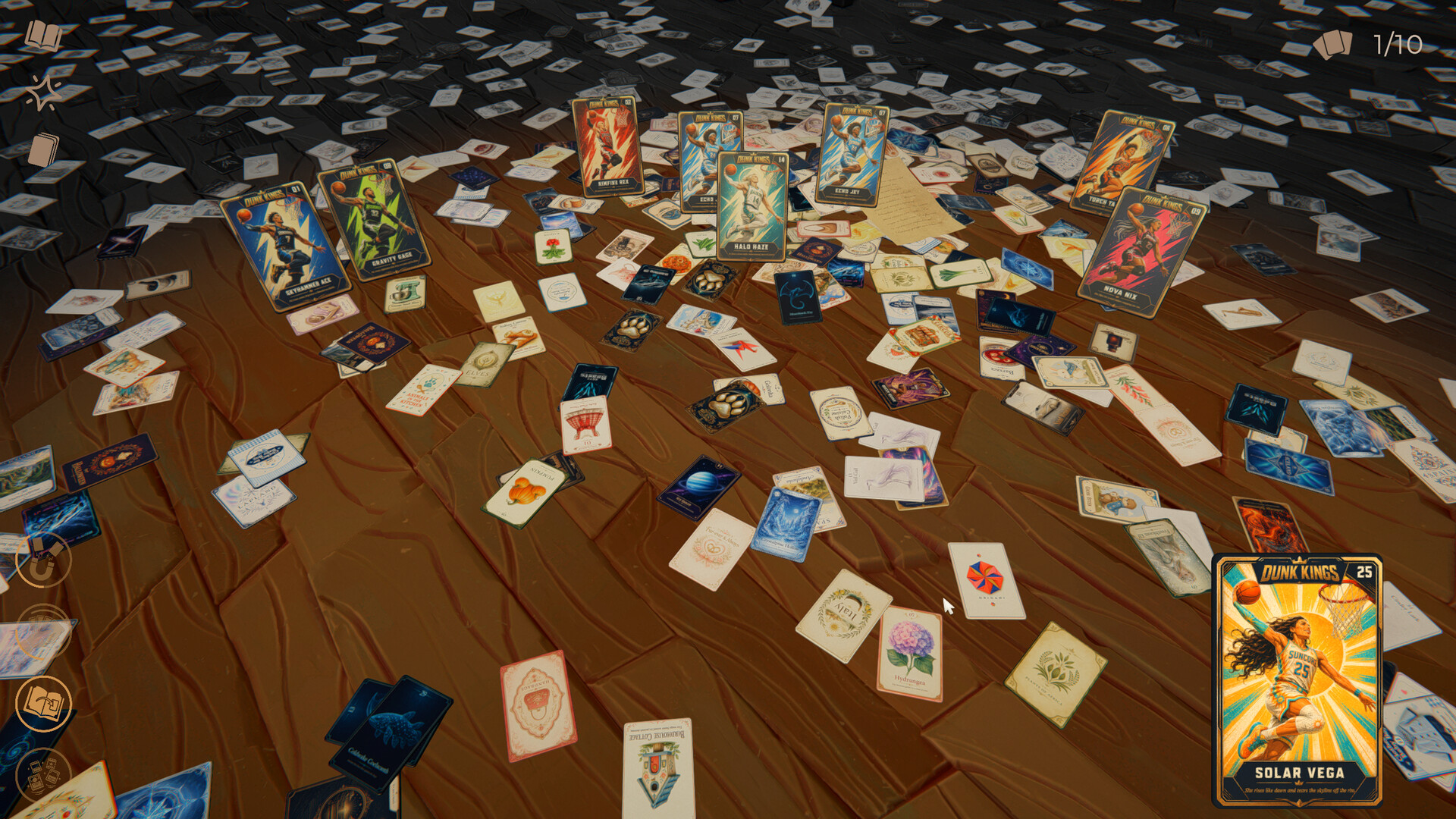
A cluttered pile of scattered cards waiting to be sorted, spanning sets from basketball trading cards to floral illustrationsImage: Armed Chicken via Steam -
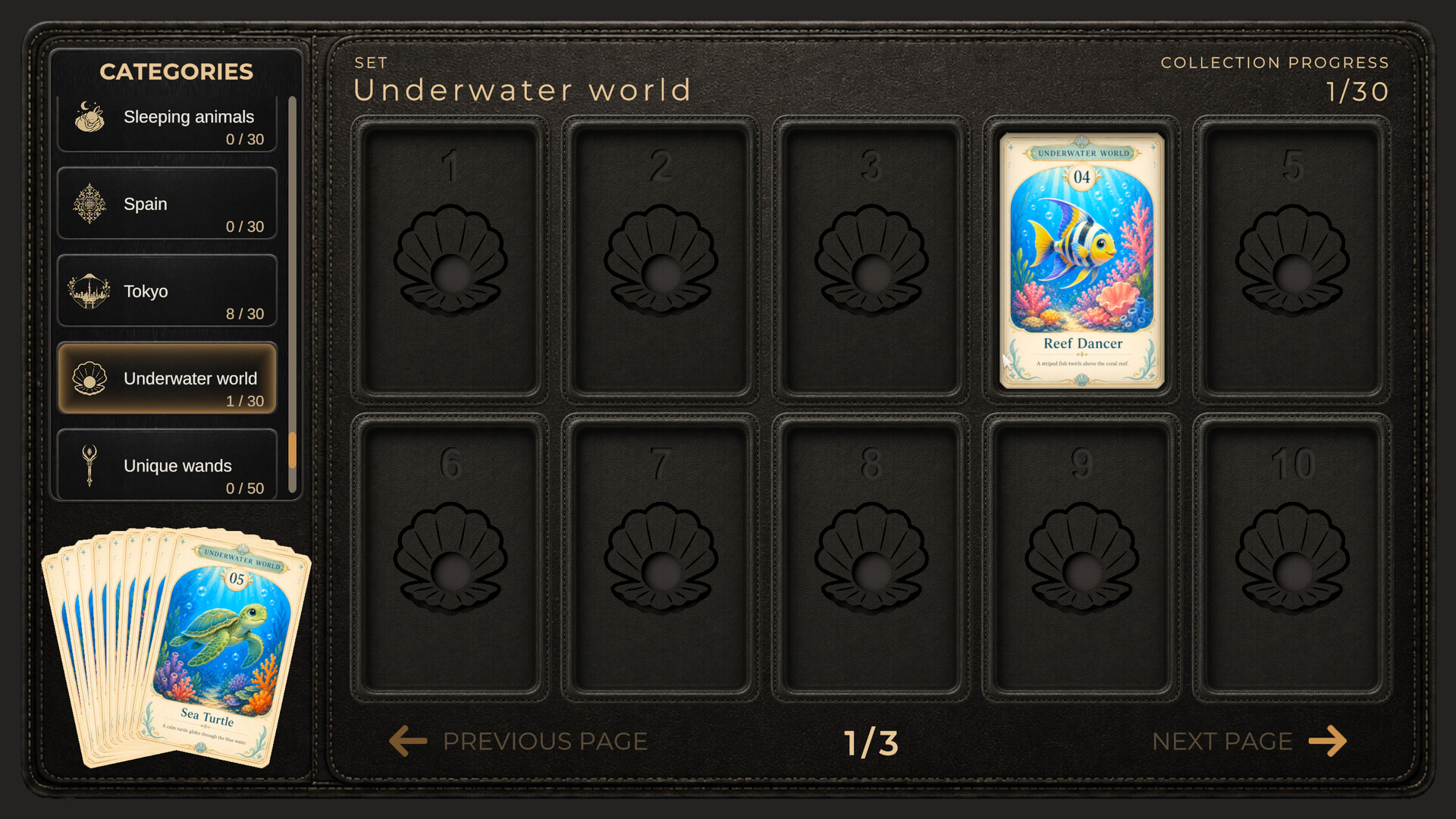
An early, mostly-empty page in the Underwater World set, before more cards have been found and sortedImage: Armed Chicken via Steam