Game review
Aqua Scrap: Deep Clean Review
7.4 / 10
- Developer
- Obsessive Games
- Publisher
- Obsessive Games
- Released
- 21 August 2026
- Platforms
- ["Windows"]
- Genre
- Simulation
Scrubbing the Seabed, One Timed Dive at a Time
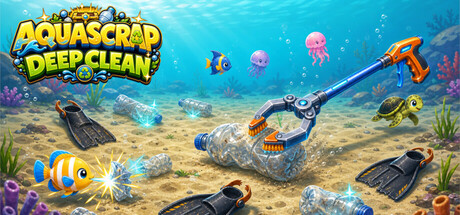
Aqua Scrap: Deep Clean is a cursor-driven incremental game built around a simple, repeatable loop: dive to the ocean floor for a strict 20-second window, hover your cursor over drifting plastic, tyres, fishing nets, and toxic waste to scrub it away, haul everything you collect back to the surface, and pour the proceeds into a sprawling skill tree of tools, chain-lightning attacks, and explosive charges. Built and published by the small studio Obsessive Games, it leans on a familiar incremental-game skeleton — short runs, escalating power, a timer that becomes a scoreboard rather than a hard limit once a strong enough build is running — but wraps it in a distinctly cozy, environmental-cleanup theme rather than the usual clicker aesthetic of numbers and cookies. At $4.99, it's a low-cost, low-friction pickup clearly aimed at players who enjoy watching a simple system snowball into something chaotic.
A Strongly Positive but Very Small Early Reception
Aqua Scrap: Deep Clean launched to just 8 total reviews, 7 of them positive, which Steam's algorithm doesn't yet convert into a percentage-based label at that volume — this review calculates the underlying 88% positive rate directly from the review pool rather than relying on a text bucket alone. Seven of the eight reviews are in English, giving this review a workable, if extremely small, base to draw from. What's notable given the tiny sample is how substantive several of the reviews are: multiple reviewers report play sessions well past the three- and four-hour mark, with one logging over six hours and specifically pushing back on the idea that the game is a short, disposable experience, pointing to a skill tree deep enough that "you MUST have unlocked the recycling room (level 5) before you can get certain skills." That kind of engaged, detail-oriented feedback from a small early audience is a reasonably good sign for a budget incremental release, even if it hasn't yet been tested by a wide audience.
A Satisfying Escalation From Relaxing Cleanup to Chaotic Skill-Tree Chaining
The reviews are consistent about what makes the loop work: a calm, approachable start that gradually turns hectic and rewarding as the skill tree opens up. One reviewer describes it as "fun little game that starts very chilled and relax looking like a nice time waster turning chaotic and entertaining quick when upgrades start really affecting the game," while another calls it "surprisingly addictive ocean cleaning," praising how the mechanics stay "fun, simple, and easy to pick up" even as the underlying systems deepen. Several reviewers specifically highlight the satisfaction of watching a genuinely filthy ocean floor gradually transform into something clean over the course of a run, framing the cleanup theme as more than just window dressing on a standard incremental structure. The collectible fish and artifacts found in chests are called out by more than one reviewer as a fun secondary hook, and the achievement list draws specific praise from at least one player who reports hitting 100% completion and enjoying the process. The pacing of upgrades — quick early wins giving way to a "massive skill tree" with real build diversity — is repeatedly cited as the game's strongest design element, with reviewers noting that no two players are likely to build their diver the same way. One reviewer specifically breaks down why the loop clicks for them: no frantic clicking required since a hovering cursor does the work, every tool feels distinct in how it clears debris, and a well-built run turns the countdown timer from a hard limit into something closer to a personal high score to chase on the next attempt. That framing of the timer as a score rather than a wall is echoed by more than one reviewer describing runs that stretch well past their first expectations once air-extending upgrades and lucky salvage rolls start compounding.
A Confusing Upgrade Path and Frustratingly Luck-Based Endgame Achievements
The criticism in this small pool clusters around two specific, credible complaints rather than a broad range of issues. The lone negative review, written in Korean, describes the upgrade path as "too haphazard," saying it's unclear which upgrades unlock the next tier of resources, and adds that even after unlocking a wider collection tool, it doesn't actually scoop up everything within its range — only some pieces of debris — a design choice the reviewer found frustrating enough to recommend against the game entirely. Separately, a detailed positive review raises a similar-toned but distinct complaint about the endgame: several of the remaining achievements are tied to pure random chance when opening chests for pet fish and artifacts, and even with every upgrade maxed out, the reviewer describes the drop rates as "frustratingly too random," adding that the stat boosts those rare items grant aren't worth the grinding required to chase them. Both complaints point toward a system that's satisfying in its first several hours but grows less transparent and more luck-dependent the deeper a player pushes into full completion.
Verdict
Aqua Scrap: Deep Clean is a small, well-executed spin on the incremental genre that dresses a satisfying build-and-escalate loop in a genuinely charming ocean-cleanup theme, and the handful of early reviewers who've spent real time with it are largely won over, several explicitly asking the developer for more content and a sequel. Its rough edges are specific rather than sweeping: an upgrade path that at least one reviewer found genuinely confusing, a collection-range mechanic that doesn't behave as expected, and a late-game achievement chase that leans on frustrating random-chance drops rather than skill or progression. At $4.99, it's an easy, low-risk recommendation for fans of cozy incremental games looking for a relaxing loop with real depth underneath — just temper expectations around full completion, since the reviews suggest the last stretch toward 100% leans more on luck than on mastering the skill tree.
Screenshots
-
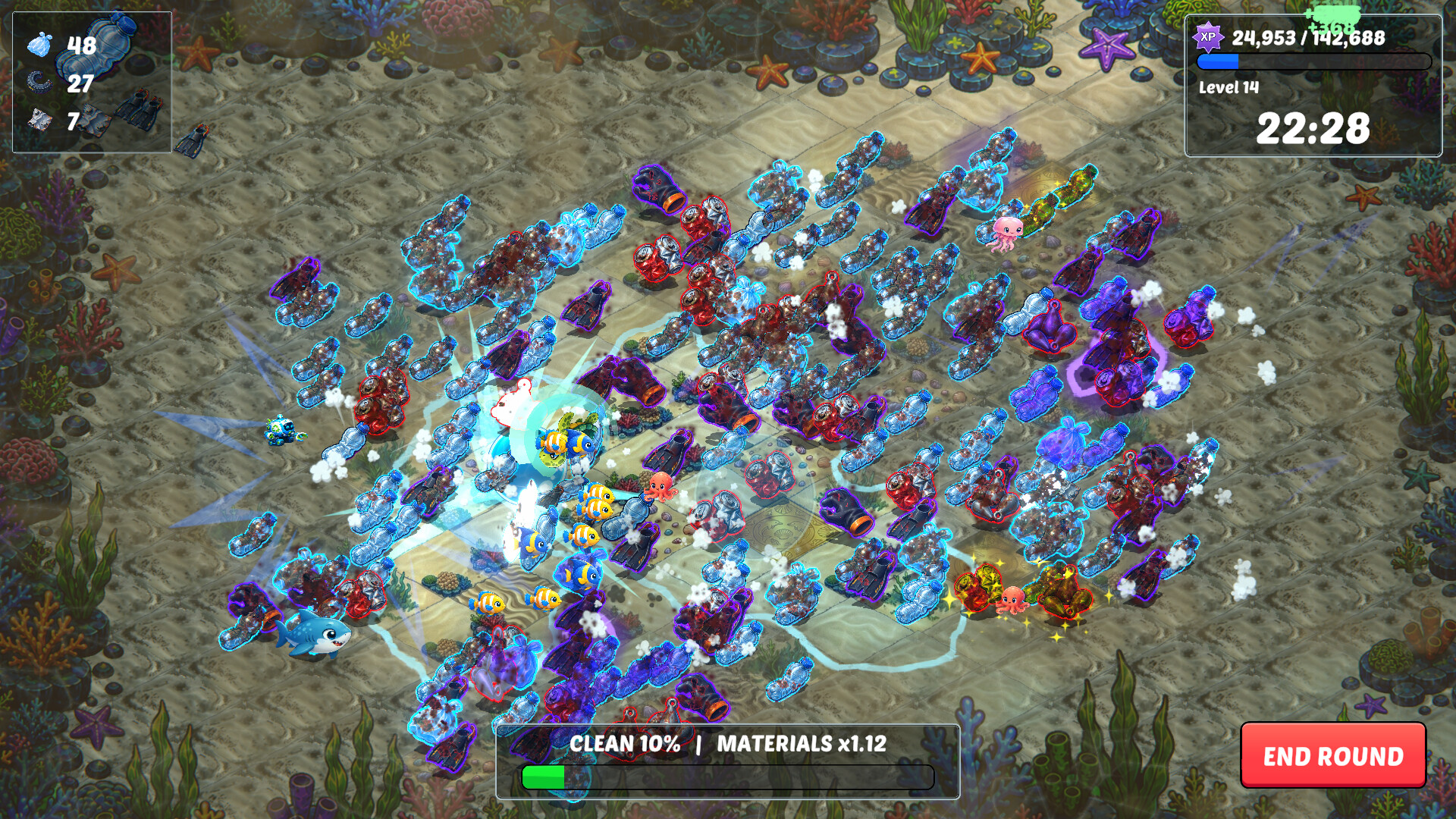
A late-game dive, with a heavily upgraded build clearing a seabed packed with debris well past the base 20-second limitImage: Obsessive Games via Steam -
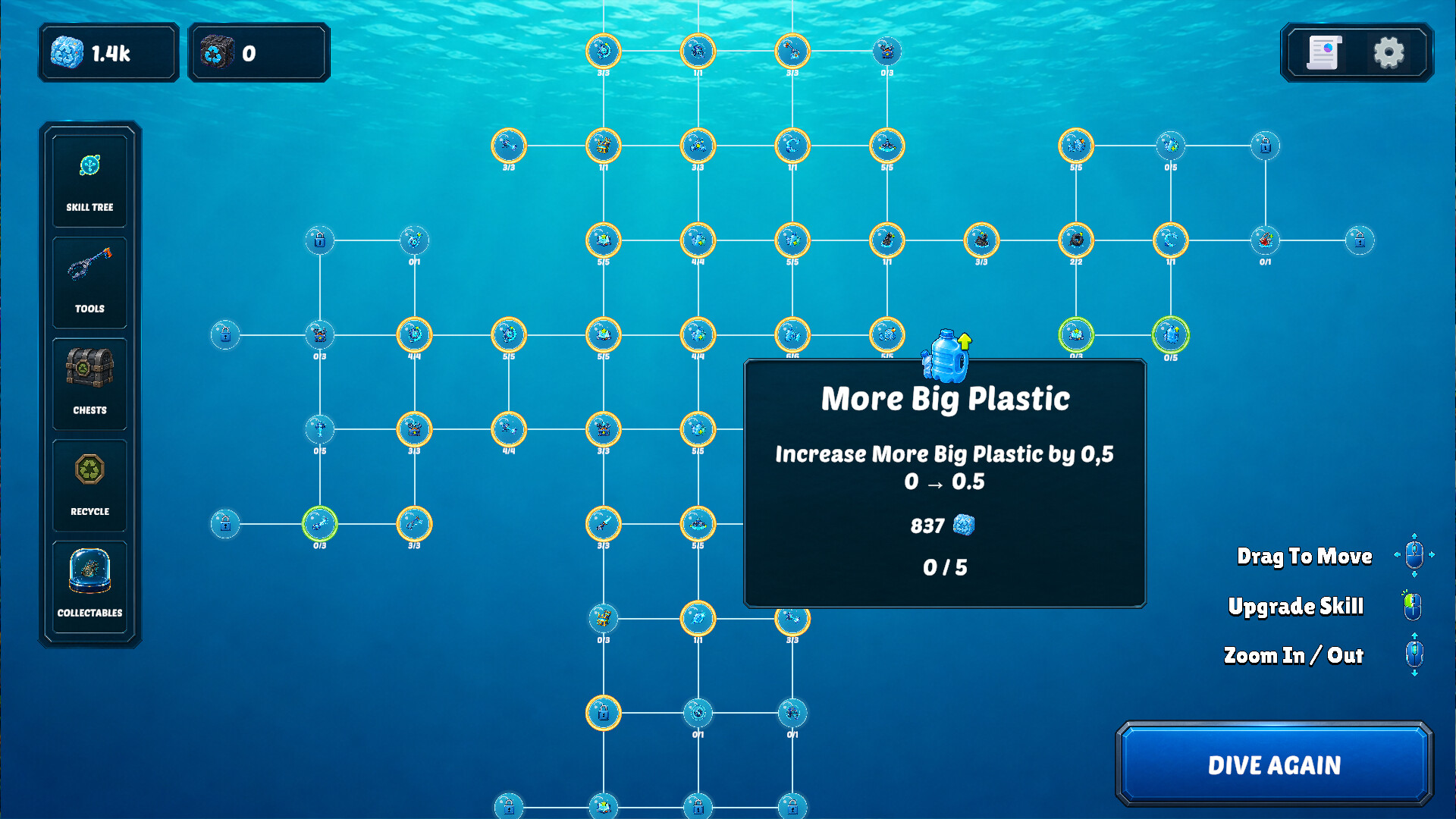
The sprawling skill tree, where currency earned from dives is spent on tools and passive upgradesImage: Obsessive Games via Steam -
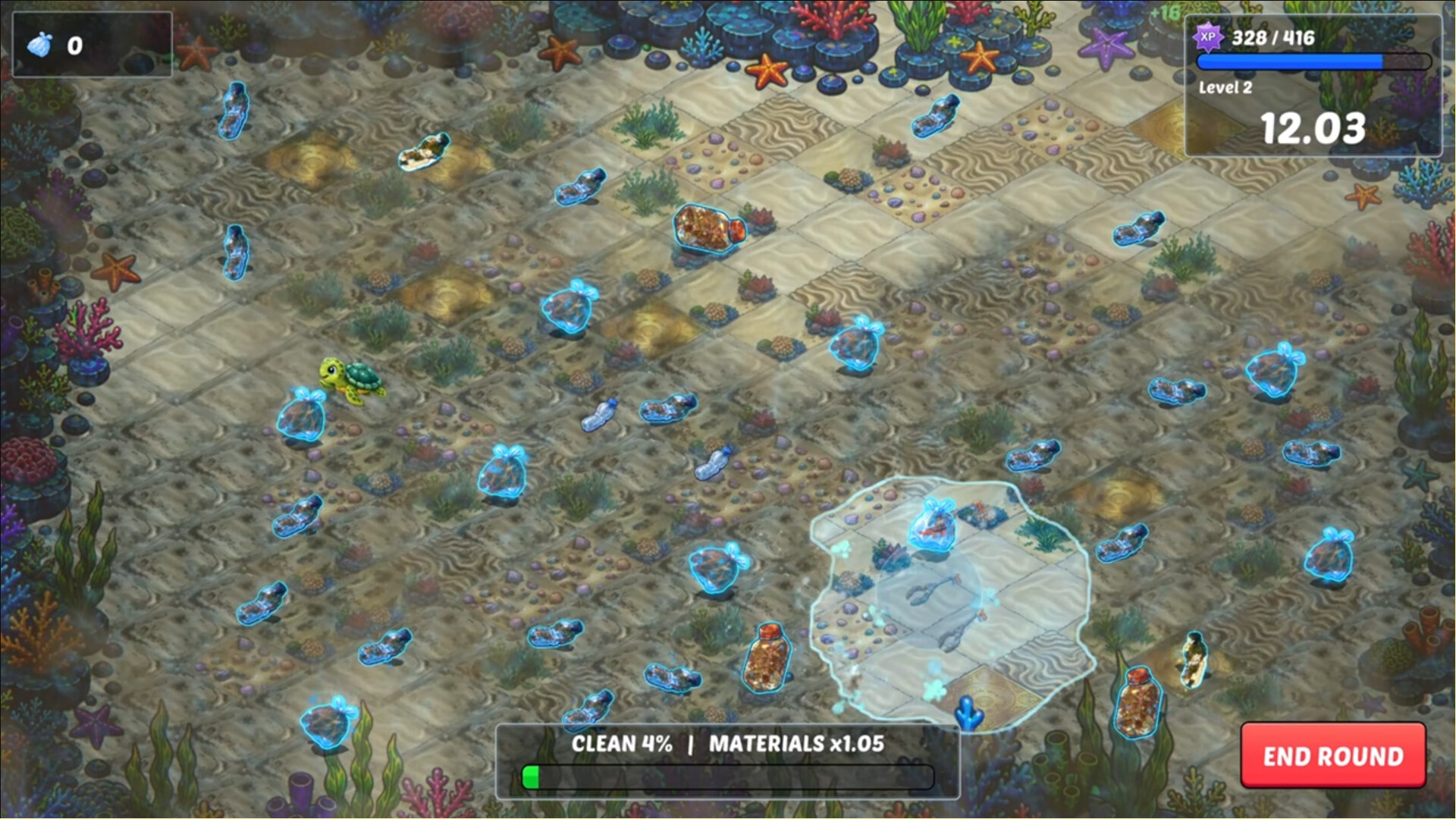
An early dive on a lightly cluttered seabed, before the skill tree opens up faster tools and bigger debrisImage: Obsessive Games via Steam