
Game review
Moon Garden
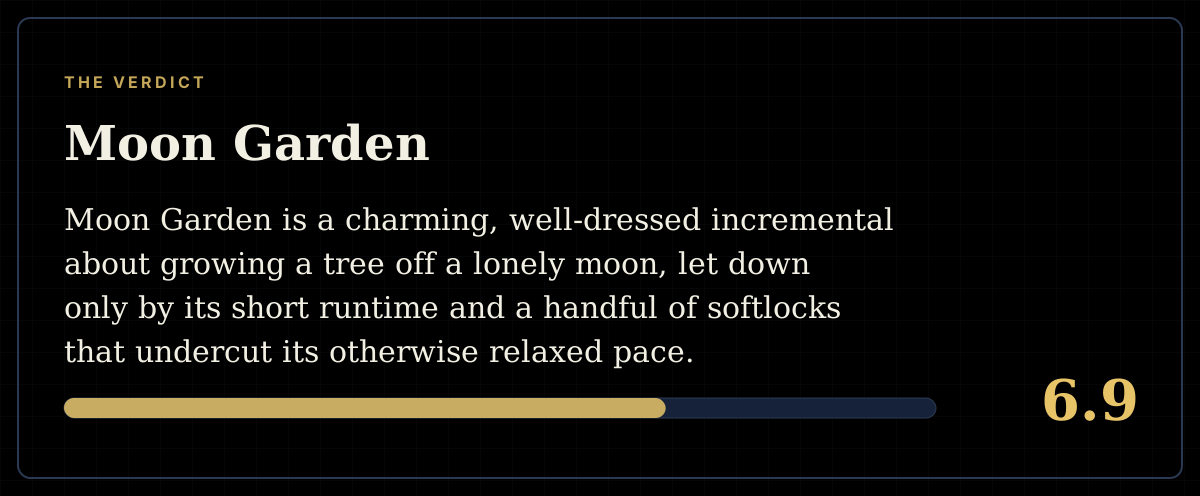
6.9 / 10
- Developer
- Kairos Games LLC
- Publisher
- Kairos Games LLC
- Released
- 11 September 2026
- Platforms
- ["Windows"]
- Genre
- Simulation
- Monetisation
- Paid
- Players
- Single-player
The short version
Moon Garden is a charming, well-dressed incremental about growing a tree off a lonely moon, let down only by its short runtime and a handful of softlocks that undercut its otherwise relaxed pace.
Biggest strengths
- Charming pixel art, a warm soundtrack, and a genuinely sweet ending that reviewers keep singling out
- A varied set of interlocking systems, gardening, mining, drone automation, that stay engaging without becoming overwhelming
- Flexible pacing that works equally well as an active clicker or a background idler
Biggest weaknesses
- Very short for the price, with most players finishing everything in under three hours
- Multiple reported softlocks tied to achievement and skill-tree choices that can force a full restart
- Several systems, like the energy generator and observatory, are introduced but barely matter by the late game
Who it's for: Fans of cozy incremental and idle games who want a short, story-tinged experience they can finish in a single sitting or two.
Our recommendation: Worth buying for the art and music alone, but go in expecting two to three hours rather than a long-term idler, and save often around achievement pushes.
6.9 / 10
A Tree, a Moon, and a Reason to Leave
Moon Garden, developed and published by the solo team at Kairos Games LLC, casts players as a small robotic gardener tending a lone tree on the surface of the moon, with the eventual goal of growing that tree tall enough to escape. It's a premise that sounds slight on paper but lands with real warmth in practice, helped along by a talking cat astronaut companion, a soft pixel-art palette, and a soundtrack reviewers repeatedly single out as one of the game's best features. The 53 English-language Steam reviews sit at Very Positive, 47 recommending against just 6 who don't, and the tone across almost all of them is some version of "short, but I loved every minute."
Mechanically, this is an incremental in the classic mold: plant flowers, harvest resources, feed them into automation, and watch numbers climb toward the next unlock. What sets it apart is how much variety gets packed into that loop. Alongside the core garden, players unlock a mining operation, an energy grid, an observatory, and eventually a fleet of assistant drones, each contributing resources back into the central task of mulching the tree to make it grow. Reviewers describe the systems clicking into place gradually rather than all at once, with the skill tree acting as the connective tissue that makes later unlocks feel earned rather than just handed over.
A Loop That's Fun While It Lasts
The strongest praise in the review set is reserved for presentation and feel rather than mechanical depth. The pixel art is repeatedly called charming and cozy, the ground visibly turning greener and lusher as the garden grows, and the prestige-style mechanic, which resets tree height while preserving broader progress, gets specific credit for being a clever twist on a familiar incremental structure. Several reviewers also praise the pacing: the game supports both an actively-managed clicking style and a leave-it-running idle style equally well, which several note is rarer in the genre than it should be.
Where the loop loses some players is in its late game. More than one reviewer points out that several systems, the energy generator and the observatory in particular, get introduced with fanfare early on but stop mattering well before the credits roll, either because resources stop being a bottleneck or because their outputs become trivial relative to what's already been unlocked. The mining and drone-automation systems fare better, with reviewers describing them as the parts of the loop that stay relevant longest, but the overall sense across the sample is of a game that front-loads its mechanical variety without always following through on it.
Softlocks and Sharp Edges
The most consistent and pointed criticism in the negative reviews, and in several otherwise-positive ones, concerns a handful of ways players can accidentally lock themselves out of progress. Buying the wrong flower early on, or maxing out the final skill-tree upgrade before fully exploring the rest of the tree, can each result in a forced restart from scratch, with reviewers specifically flagging the loss of 100% completion runs as the sting behind this. At least one reviewer reports that this issue was patched after release, updating their review from negative to positive once the softlocks were fixed, and later patch notes in the game's own update history back that timeline up, but not every player in the sample appears to have caught the fix, and the risk is real enough to be worth flagging for anyone chasing achievements.
A smaller cluster of complaints centers on late-game performance, with a few reviewers reporting lag or occasional crashes once a large number of automated drones are active on screen, and one reviewer describing a UI that doesn't clearly communicate how quickly a resource like water is being consumed. None of these come up as often as the softlock issue, and several reviewers explicitly note the game ran flawlessly for them, but they're a consistent enough thread across the sample to mention.
Short, Sweet, and Priced Accordingly
The single biggest fault line in the review set is length. Reviewers consistently report finishing the game, including 100% achievement completion, in somewhere between ninety minutes and three hours, occasionally stretching to five hours for players who want to explore every system thoroughly. For a game priced at roughly ten dollars, that's enough to tip several otherwise-positive reviewers into explicitly recommending it only with caveats about value, with more than one comparing the cost-per-hour unfavorably against cheaper titles in the same genre. Others push back on that framing entirely, arguing the game's polish, charm, and ending are worth the price regardless of runtime, and that treating an incremental purely by hours-per-dollar misses what it's actually going for. Both readings show up often enough in the sample that either seems like a fair way to go in: this is a short, complete experience rather than an endless idler, and reviewers who wanted the latter are the ones most likely to come away disappointed.
Verdict
Moon Garden is a small, confidently made incremental that leans hard on charm, and mostly earns it, with genuinely lovely art and music wrapped around a varied, well-paced core loop. Its handful of softlocks and its short runtime relative to its price are real dings against it, but neither stops the overall experience from landing as a warm, satisfying couple of hours for anyone who enjoys watching numbers grow in a pretty garden.
Pros and cons
Pros
- Charming pixel art, a warm soundtrack, and a genuinely sweet ending that reviewers keep singling out
- A varied set of interlocking systems, gardening, mining, drone automation, that stay engaging without becoming overwhelming
- Flexible pacing that works equally well as an active clicker or a background idler
Cons
- Very short for the price, with most players finishing everything in under three hours
- Multiple reported softlocks tied to achievement and skill-tree choices that can force a full restart
- Several systems, like the energy generator and observatory, are introduced but barely matter by the late game
Screenshots
-
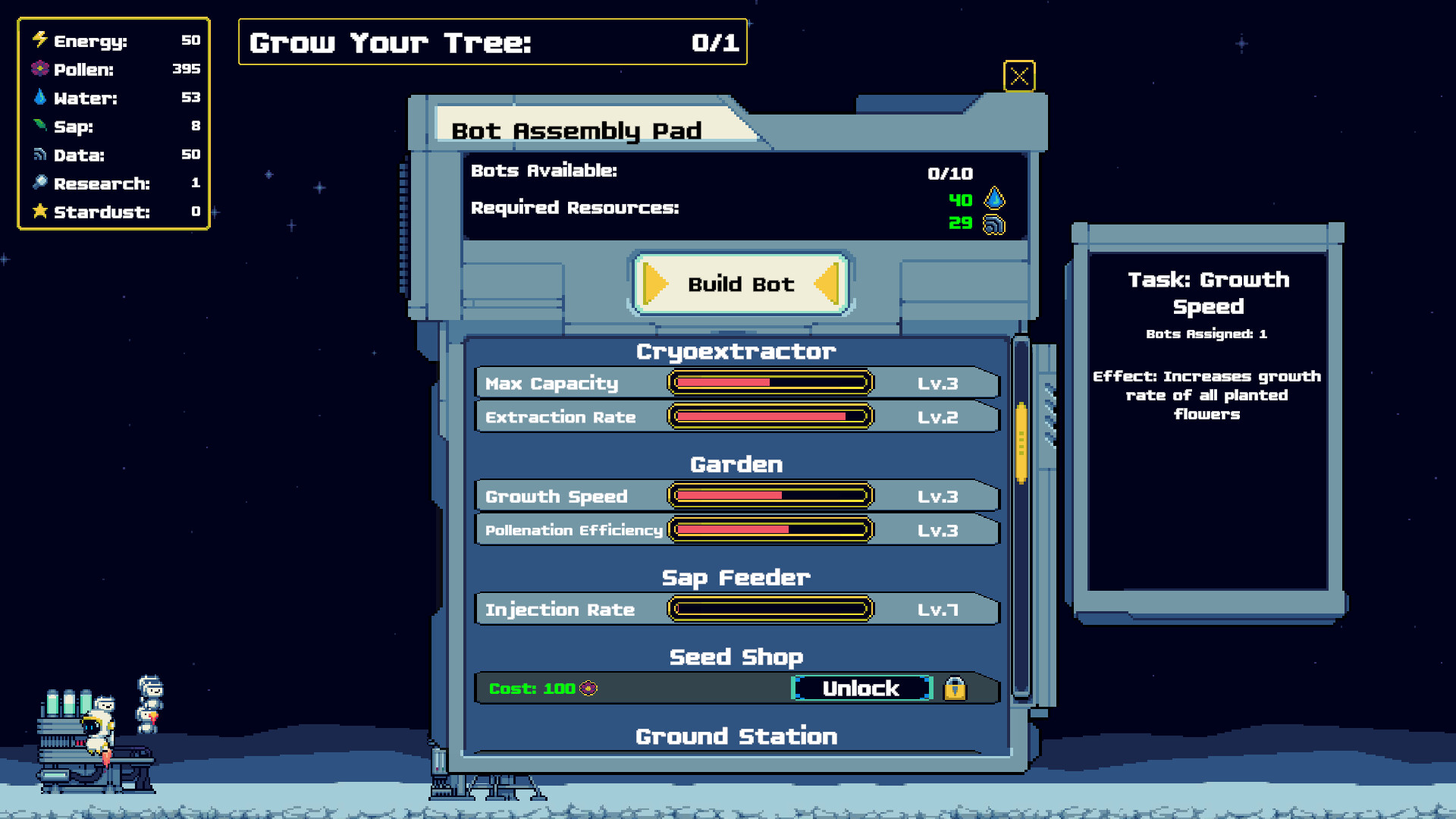
Automation systems like the Bot Assembly Pad stack on top of the core garden loop as the game progressesKairos Games LLC -
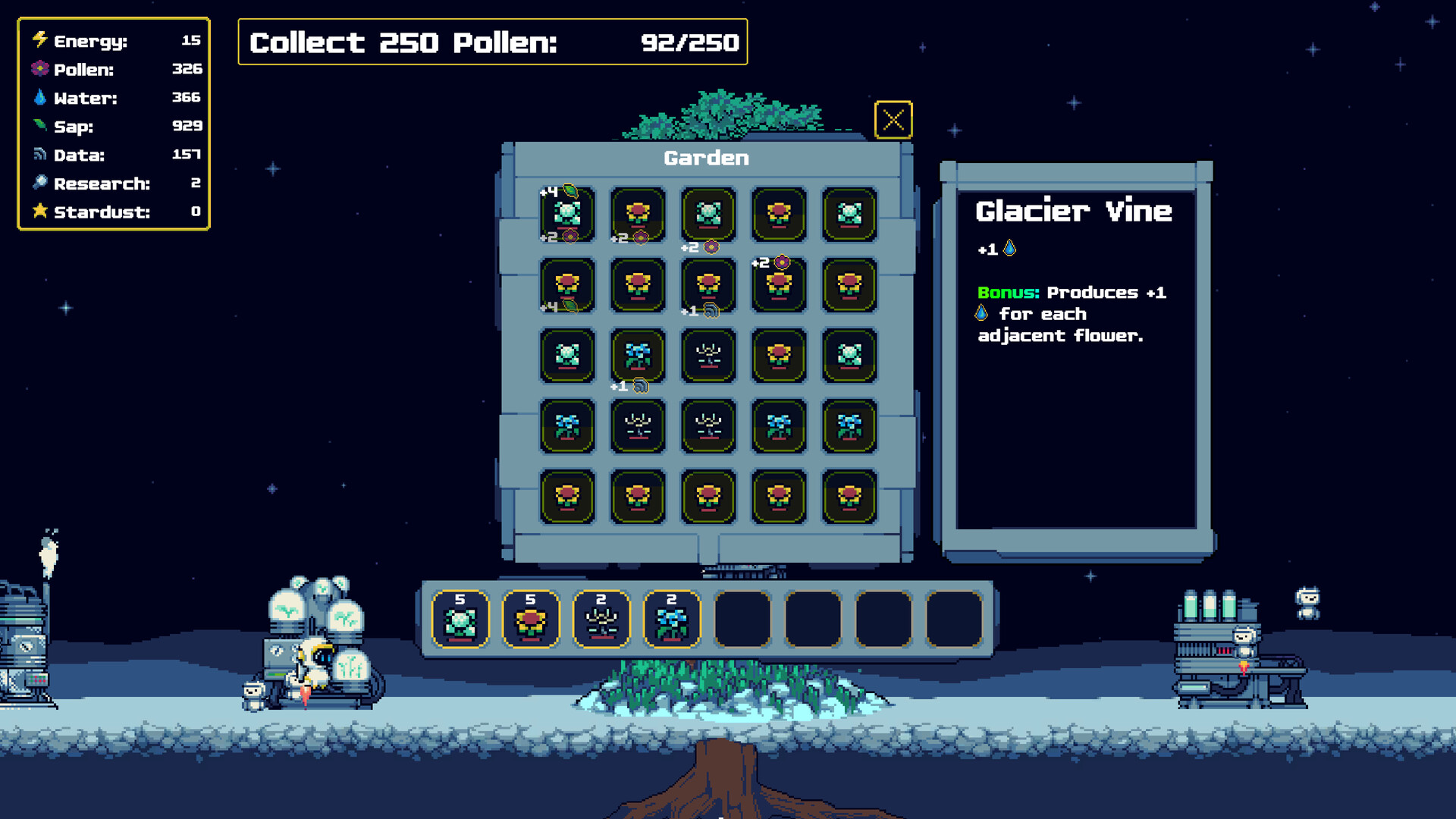
Planting flowers in the right configuration is central to the resource loop reviewers praisedKairos Games LLC -
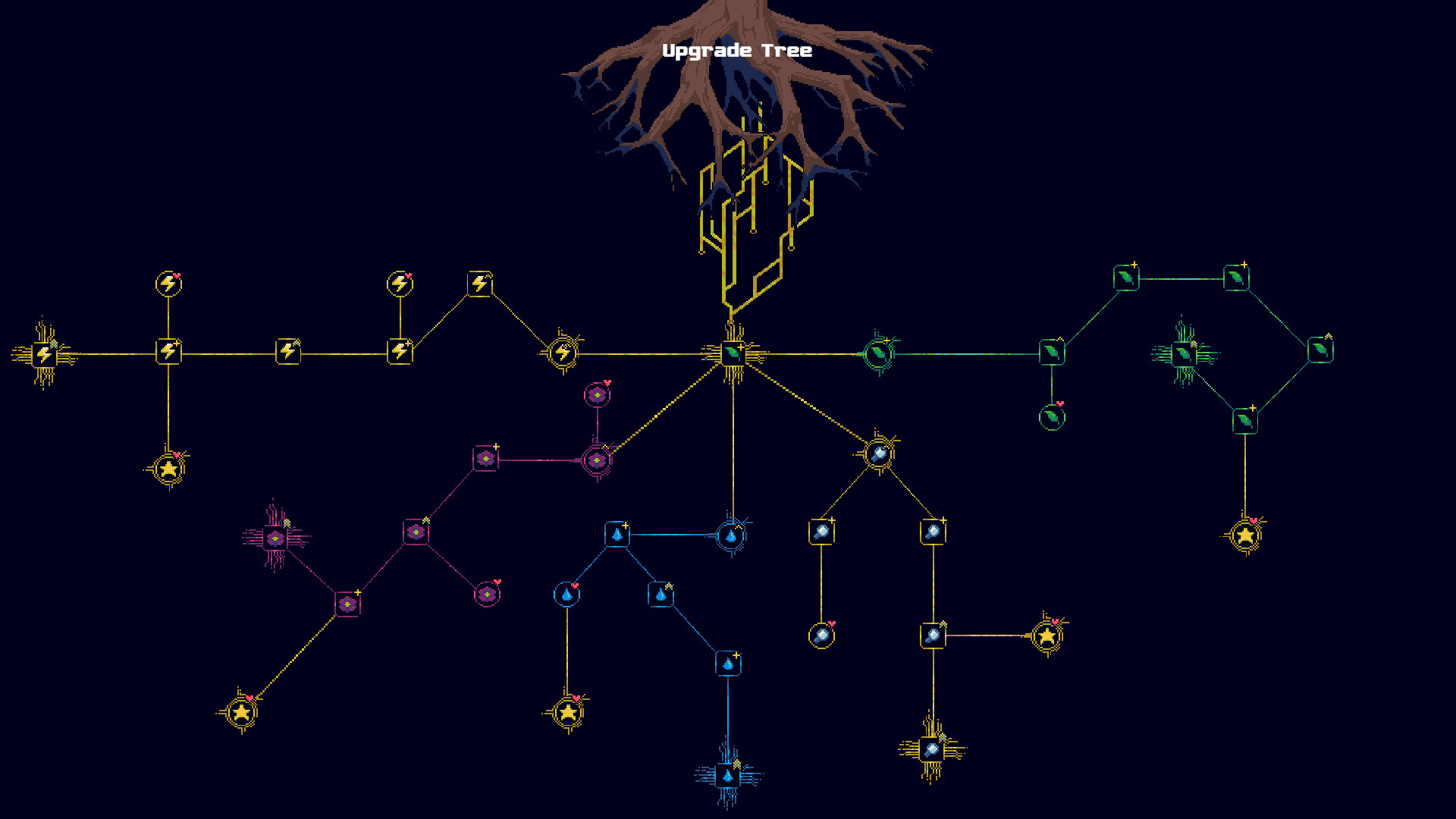
The skill tree ties the game's separate systems together, though reviewers warn some branches barely matter by the late gameKairos Games LLC -
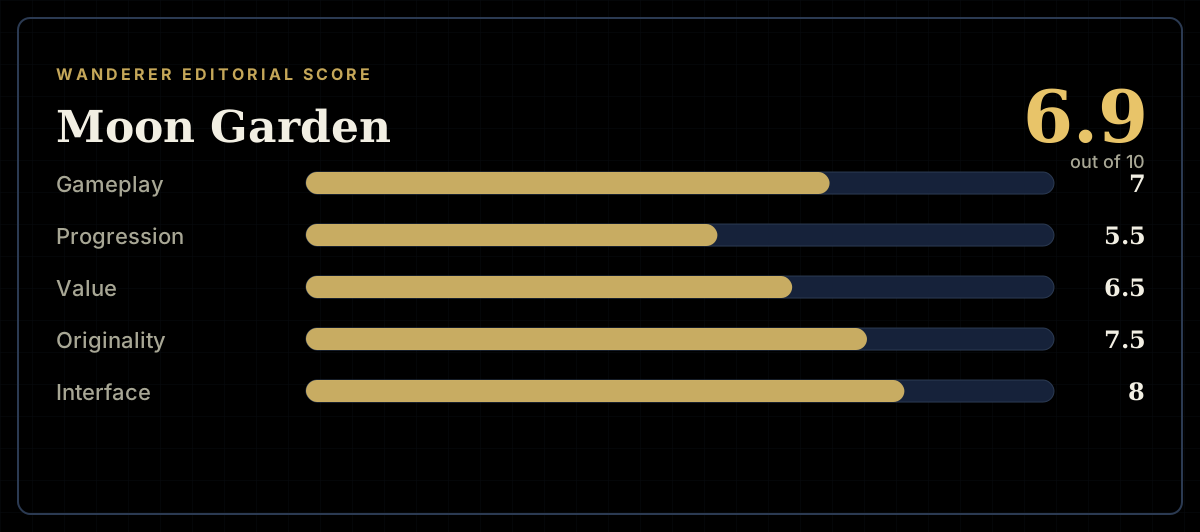
How the review scores each part of the gameWanderer Editorial -
The short versionWanderer Editorial