
Game review
Alchemist's Garden Review: A Cozy, Clicky Incremental With a Grindy Back Half
6.1 / 10
- Developer
- Lumis Entertainment
- Publisher
- Lumis Entertainment
- Released
- 21 April 2026
- Platforms
- ["PC", "Mac"]
- Genre
- Simulation
- Monetisation
- Paid
- Players
- false
The short version
Alchemist's Garden is a cozy incremental crafting game about taking over an abandoned potion shop, foraging ingredients, brewing recipes by trial and error, and prestiging to unlock deeper upgrades, in a mould reviewers repeatedly compare to Digseum. Most reviewers find it a cute, relaxing, and genuinely good-value way to spend four to eight hours, with charming pixel art and relaxing music drawing consistent praise. That said, a real and specific mechanical complaint runs through the sample: the core foraging loop demands a lot of manual clicking without auto-clicker support, and the shop's decoration system scatters cosmetic placements every time the shop is upgraded or the player prestiges, both frustrations that show up again and again independent of each other.
Biggest strengths
- Reviewers consistently describe the game as cute, cozy and relaxing, with the pixel art, music and overall presentation drawing repeated specific praise
- Most reviewers finish the game and its achievements in a tight four to eight hours, and consistently call this a good length for the low asking price
- The recipe-guessing system, where players experiment with ingredient combinations to discover new potions, is singled out by more than one reviewer as a satisfying, low-stakes puzzle element
Biggest weaknesses
- A specific, repeated complaint: the foraging mini-game requires extensive manual clicking with no way to hold the cursor down, and multiple reviewers explicitly warn of hand or wrist strain without an auto-clicker
- Decorations placed around the shop scatter randomly every time the shop is upgraded in size or the player prestiges, with no option to save layouts or auto-place them, a frustration several reviewers raise independently
- Several reviewers describe the difficulty and grind escalating noticeably in the back half, with late-game prestige requirements and a shrinking forage-area upgrade that some found actively counterproductive rather than rewarding
Who it's for: Fans of short, cozy incremental and idle games, especially those who enjoyed Digseum, who don't mind some repetitive clicking for a low asking price.
Our recommendation: Recommended for incremental-game fans looking for a short, cheap, charming diversion, with the caveat that the manual clicking and back-half grind can wear thin.
6.1 / 10
Alchemist's Garden hands players the keys to a town's long-abandoned potion shop, tasking them with foraging ingredients from a shrinking, upgradeable plot of land, experimenting to discover potion recipes, and prestiging periodically to unlock deeper permanent upgrades. Developed and published by Lumis Entertainment, the game launched to full release in April 2026 and sits at a strong 93% positive rating across 181 Steam reviews. The 20-review English-language sample gathered for this piece, spanning both the toprated and most-recent review queues, describes a game reviewers genuinely enjoy in short, cozy bursts, with two specific and independently recurring mechanical complaints keeping it from a stronger consensus.
A Cozy, Digseum-Flavoured Incremental Reviewers Genuinely Like
The dominant sentiment across the sample is warm, if measured, affection. Reviewers repeatedly compare the game favourably to Digseum, a clear touchstone for the genre, with several describing themselves as fans of that style of incremental who "eat up" every new entry they find. One reviewer who beat the game thoroughly describes both the progression and meta-progression as "relatively smooth," singling out the recipe-guessing puzzle element as a highlight, noting they solved combinations together with their eight-year-old sister for suggestions. Others describe the game more simply as "fun and chill," "cute, cozy... perfect to unwind with after a long day," and repeatedly praise the relaxing music alongside the charming pixel-art presentation. Several reviewers specifically flag the price as excellent value relative to the four to eight hours most take to reach 100% completion, with one calling five hours of play for a few dollars an easy, worthwhile trade.
A handful of reviewers also comment on the game's visual references to other titles, most often Minecraft, with one detailed critical review going as far as calling some of the decorative assets direct lifts rather than affectionate nods, arguing the references land as "eyeroll worthy" rather than charming. That same review is otherwise the sample's harshest, and most reviewers don't mention the issue at all, but it's a small, specific point of friction worth noting for anyone particularly sensitive to genre-standard asset reuse in a budget indie title. More common than complaints about presentation, though, is simple enjoyment of the replay incentive: several reviewers describe returning to squeeze out the final few percentage points of completion purely because the core loop of foraging, brewing and upgrading remained satisfying even once the main story beats were finished, with one reviewer pushing an optimised late-game upgrade to a cost of 38 trillion in-game dollars purely out of curiosity about how far the numbers would scale.
The Clicking Is a Genuine, Repeated Problem
Set against that warmth is a specific and consistent mechanical complaint: the foraging mini-game, where players gather ingredients from a field by clicking repeatedly rather than holding a button down, demands a lot of manual input. One detailed critical review states plainly that anyone without an auto-clicker "will give yourself RSI," only half-joking, and argues the design simply isn't worth the physical toll it can cause over a long session. Another reviewer's feedback, acknowledged directly by the developer in a reply, requests removing an unnecessary confirmation step on the upgrade button specifically because of how many extra, unfun clicks it adds to an already click-heavy loop. This isn't a single outlier opinion; it recurs across otherwise very differently-scored reviews, from a harsh Not Recommended write-up to a warm, detailed Recommended one, suggesting it's a real and fixable friction point in the core design rather than a matter of taste.
A Frustrating Decoration System
The second consistent complaint concerns the shop's decoration system. Reviewers describe placing decorative items around their shop for cosmetic bonuses, only to have those placements scattered randomly every time the shop's footprint is upgraded or the player prestiges and starts a new run. One reviewer who otherwise praises the game's progression specifically asks for an auto-place option, writing "I don't like the tedium, I'm here to forage!" Another reviewer's detailed critique goes further, arguing decorations should simply unlock their bonuses in a menu regardless of placement, since the current system offers no way to preserve a preferred layout and instead forces players to either re-decorate repeatedly or ignore the system's cosmetic side entirely after their first prestige. Both complaints point at the same underlying design gap: a system built around visual customisation that doesn't actually let players keep the customisation they've built.
A Grindier Back Half Than the Opening Hours Suggest
Several reviewers who pushed through to full completion describe a noticeable shift in pacing partway through. One reviewer, who otherwise recommends the game, describes the first run before prestige as thoroughly enjoyable before the loop "gradually becomes a grind and not an enjoyable one," pointing specifically to a forage-area upgrade that actually makes gathering harder rather than easier at one point, calling it "frustrating" and suspecting the developer padded the late game simply to extend playtime. A separate reviewer with over 19 hours logged reports not finishing the game at all, citing an end-game grind that exceeded what they were willing to put in, and suggesting other players pick the game up on sale or in a bundle rather than at full price if the back-half slog is likely to be a dealbreaker. Not every reviewer experiences this the same way, several finish happily inside four hours without complaint, but the pattern recurs often enough among longer, more thorough playthroughs to be worth flagging for completionist-minded players in particular.
Value and Final Verdict
At its low asking price, the sample lands solidly in Alchemist's Garden's favour, with reviewers repeatedly citing its short length, charming presentation and satisfying recipe-discovery puzzle as more than enough to justify the cost. The clicking-heavy foraging loop and the decoration system's refusal to remember a player's preferred layout are real, specific, independently-raised frustrations rather than nitpicks, and completionists in particular should expect the game's back half to demand noticeably more grind than its cozy opening hours suggest. For incremental-game fans looking for a short, cheap, Digseum-flavoured diversion, though, this remains an easy, well-liked recommendation.
Pros and cons
Pros
- Reviewers consistently describe the game as cute, cozy and relaxing, with the pixel art, music and overall presentation drawing repeated specific praise
- Most reviewers finish the game and its achievements in a tight four to eight hours, and consistently call this a good length for the low asking price
- The recipe-guessing system, where players experiment with ingredient combinations to discover new potions, is singled out by more than one reviewer as a satisfying, low-stakes puzzle element
Cons
- A specific, repeated complaint: the foraging mini-game requires extensive manual clicking with no way to hold the cursor down, and multiple reviewers explicitly warn of hand or wrist strain without an auto-clicker
- Decorations placed around the shop scatter randomly every time the shop is upgraded in size or the player prestiges, with no option to save layouts or auto-place them, a frustration several reviewers raise independently
- Several reviewers describe the difficulty and grind escalating noticeably in the back half, with late-game prestige requirements and a shrinking forage-area upgrade that some found actively counterproductive rather than rewarding
Screenshots
-
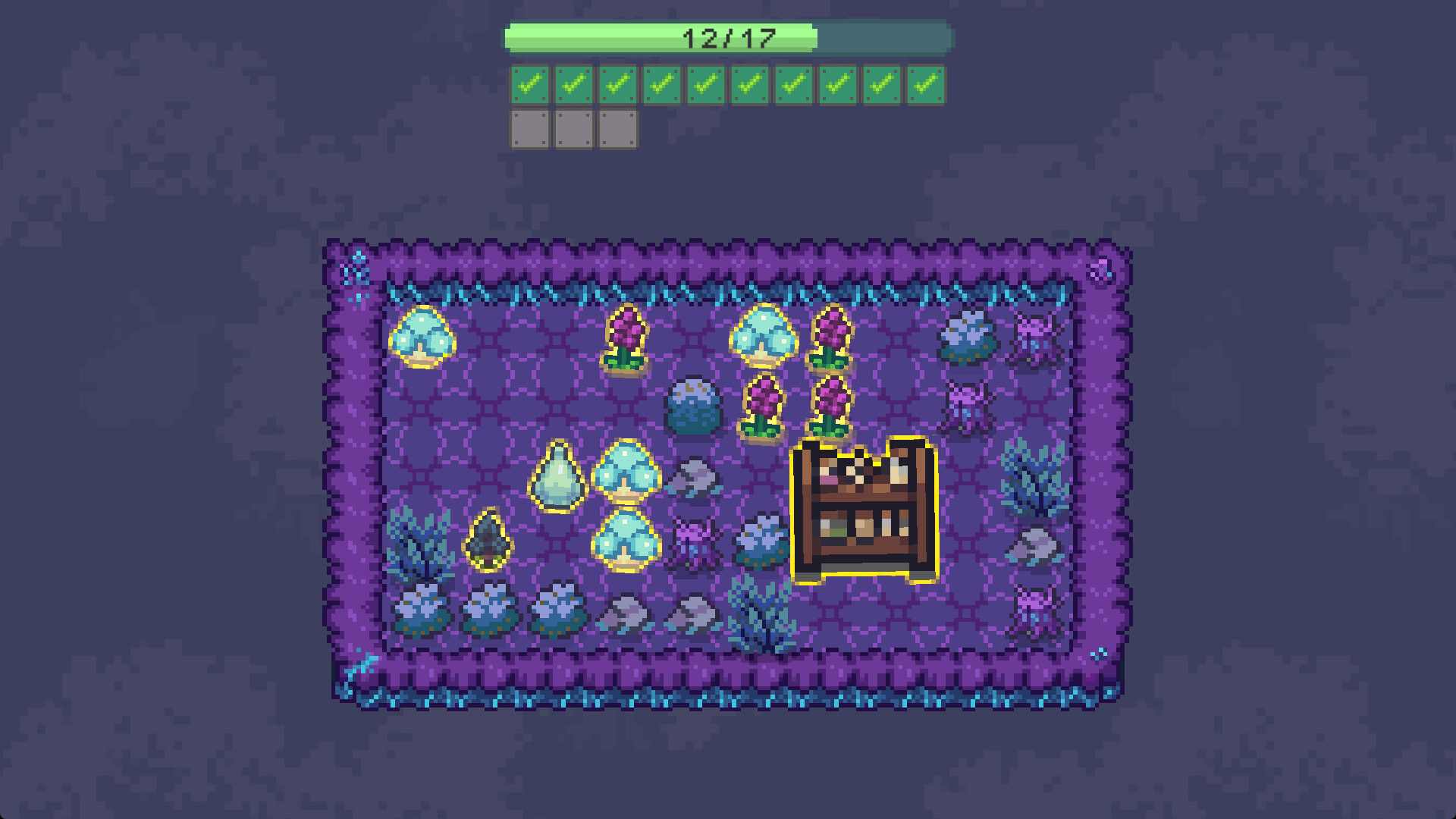
Foraging ingredients from the shop's shrinking, upgradeable plot of landLumis Entertainment -
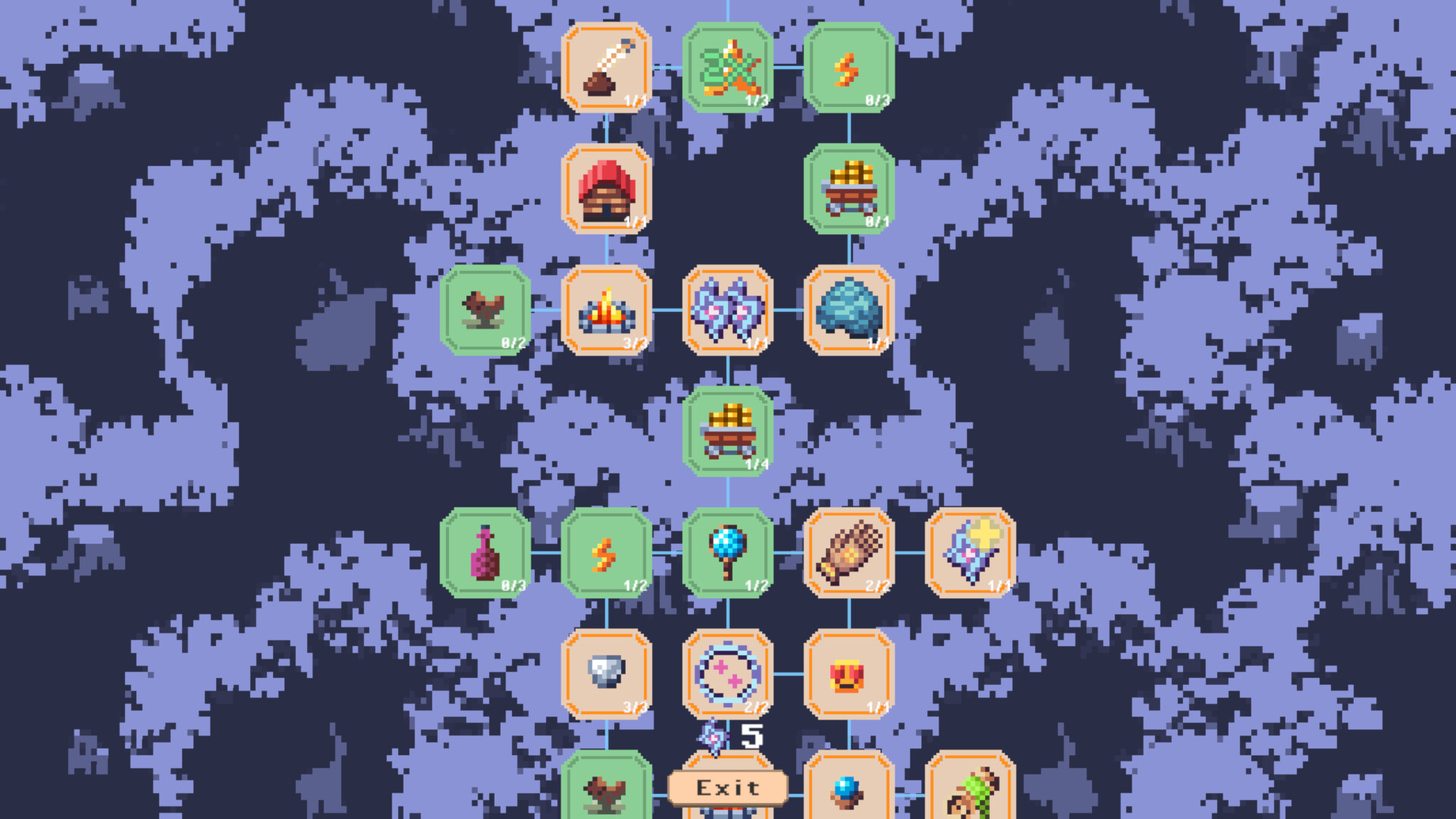
Spending prestige currency on the game's branching upgrade treeLumis Entertainment -
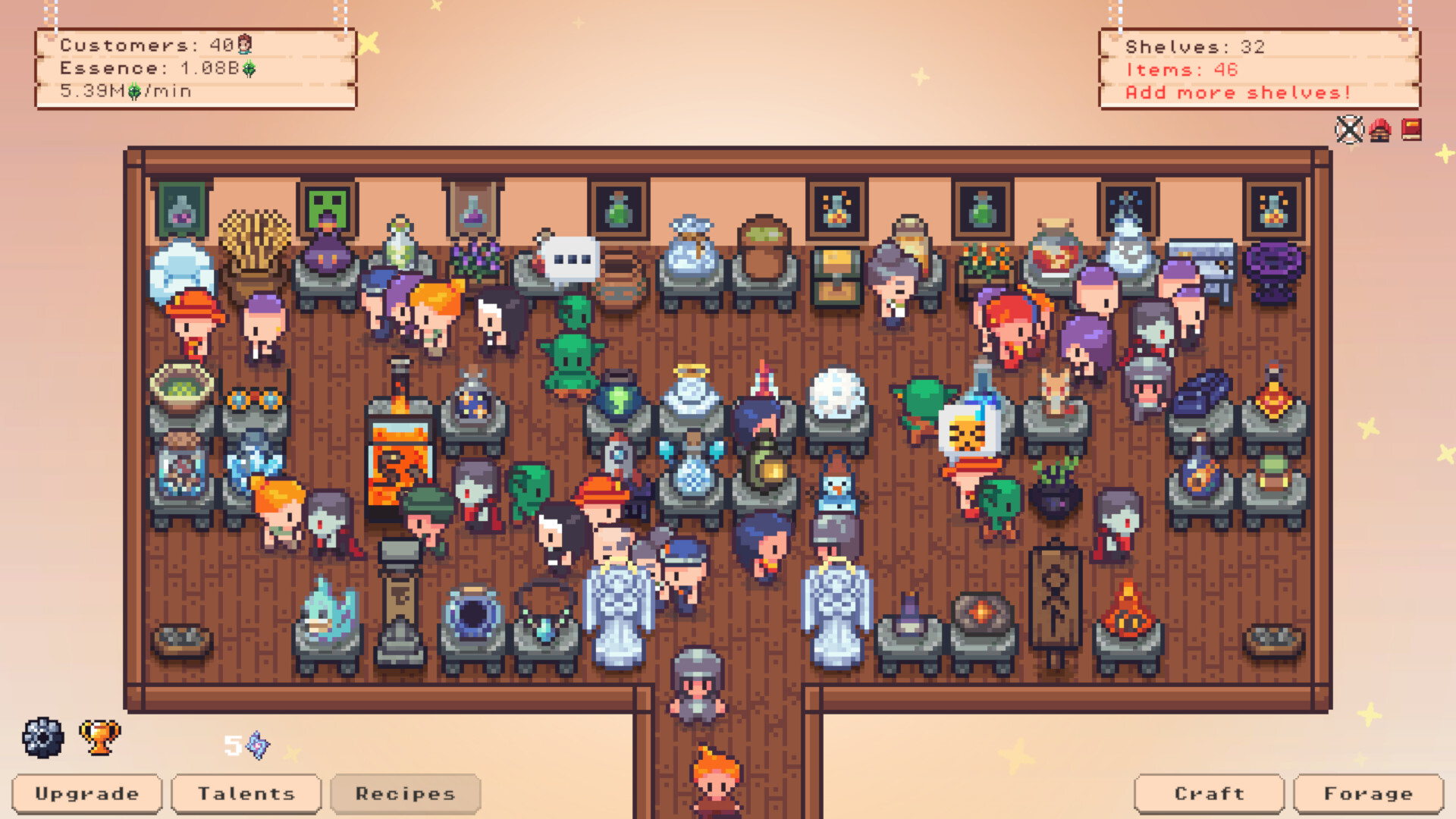
The shop in full swing, packed with customers and shelved potionsLumis Entertainment -
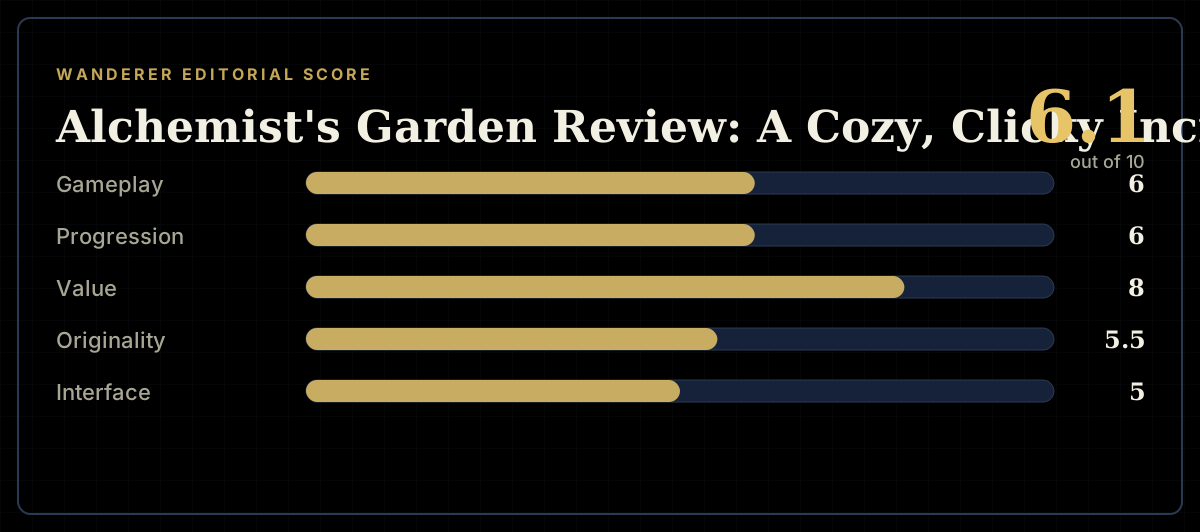
How the review scores each part of the gameWanderer Editorial -
The short versionWanderer Editorial