Game review
Alaris
8.2 / 10
- Developer
- Crescence Studio
- Publisher
- Crescence Studio
- Released
- 19 September 2025
- Platforms
- [Windows, Mac, Linux]
- Genre
- Visual Novel
- Monetisation
- Paid
- Players
- Single-player only
The short version
Alaris entered Early Access in September 2025 and has built one of the more consistently glowing review records this lane has seen in an otome visual novel, carrying that reputation through to its full release with six completed romance routes. The praise is specific and repeated across dozens of reviews: distinct, non-overlapping route writing, a genuinely thoughtful personality and pronoun system, striking art, and a scope that easily clears thirty hours for players chasing every ending. Its few criticisms — expressionless character sprites, inconsistent voice acting quality, one report of broken achievements — are minor next to how much of its audience calls it an outright favourite in the genre.
Biggest strengths
- Distinct, largely non-overlapping route writing that reviewers say rewards playing through every love interest rather than just one
- An unusually well-regarded personality and pronoun system, letting players shape how the protagonist responds and is perceived, including flexible pronoun options for both protagonist and love interests
- Widely praised art direction, backgrounds, and CG work, repeatedly singled out as some of the best reviewers have seen in the genre
Biggest weaknesses
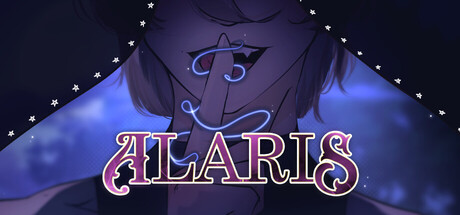
- Character sprites that multiple reviewers find stiff or "expressionless" compared to the promotional key art, with one reviewer specifically noting a mismatch with the banner art
- Inconsistent voice acting quality across the cast, with at least one review calling select performances "mid at best"
- At least one report of broken Steam achievements not triggering after fully completing a route
Who it's for: Fans of otome and romance visual novels who want route-specific storytelling, meaningful character-personality systems, and a fantasy setting with real narrative stakes rather than a purely slice-of-life romance.
Our recommendation: Strongly recommended for otome/VN fans, especially at this price point given the amount of content across six full routes.
8.2 / 10
A Healer, a Fae Mystery, and Six Distinct Routes
Alaris casts the player as a healer with the rare ability to see and manipulate energy — the setting's underlying form of magic — who gets pulled into an unfolding crisis involving hidden fae politics and a mystery tied to their own past. Developed and published by Crescence Studio, the game entered Early Access in September 2025 with four of its eventual six romance routes available, adding the remaining two before reaching its full 1.0 release. Reviewers who followed the game from its earliest Early Access build through to launch consistently describe the wait as worthwhile, several explicitly noting they'd tracked its development since an early public demo years before release.
Structurally, Alaris is built the way its strongest reviews describe the genre working best: each of its six love interests anchors its own largely self-contained route, layering in different pieces of the overarching mystery rather than repeating the same core story with a different face attached. One reviewer who'd completed all six routes called this the game's defining strength, praising "unique stories with minimal overlap" that mean replaying for a different route delivers genuinely new interactions rather than reused content wearing a different skin. Another reviewer framed the appeal in similar terms, writing that each route "shows you something new to help you get a better picture" of the setting's central mystery, adding they "haven't gotten bored a single time" across multiple full playthroughs.
A Personality System That Reviewers Keep Singling Out
Beyond the writing itself, the single most consistently praised mechanical feature is Alaris's personality and stat system, which tracks traits like bravery, kindness, wisdom, and charisma based on dialogue choices and feeds them back into how other characters react to the protagonist. One reviewer, going in expecting a shallow implementation, wrote they were "pleasantly surprised" it wasn't simply a case of "whichever is the highest is the only one ever used" — the system visibly shapes scenes rather than sitting in the background as a cosmetic stat sheet. Another reviewer specifically highlighted the comic possibilities of leaning hard into one trait, describing accidentally maxing charisma on a first run and "laughing at how many times I accidentally either ended up flirting with a character or was able to carry out some very BOLD actions."
The game's approach to identity and pronoun options draws unusually specific praise as well. One reviewer called it out directly: "I have never played a game with such wonderful pronoun options. The fact that I could use all pronouns, have them switch each sentence, and could choose what gendered language was used is absolutely phenomenal." The same reviewer noted a wish for slightly more options among the love interests themselves, a rare piece of constructive, rather than purely critical, feedback in an otherwise glowing review — a useful reminder that even Alaris's warmest reviewers have specific, considered opinions rather than blanket enthusiasm.
Presentation draws similarly strong, specific praise. Reviewers repeatedly call the art "gorgeous," the UI "the most beautiful I've seen in a visual novel," and the CG work worth the price on its own. The game is partially voiced rather than fully voiced, and multiple reviewers credit the voice work with making the cast easier to keep straight and more memorable between routes, even while acknowledging it doesn't cover every line.
Where the Reviews Get More Specific and Critical
Alaris's review base skews overwhelmingly positive, but the sample includes enough consistent, specific criticism to be worth detailing rather than glossing over. The most frequently repeated complaint concerns the character sprites, which several reviewers feel look noticeably stiffer and less expressive than the game's promotional art. One reviewer wrote plainly that "the character sprites are kind of an eyesore," adding they'd hoped the in-game models "would look more like the banner." The same review also flagged the sprites as "pretty expressionless," describing them as looking like they're "always vaguely smiling," regardless of a scene's emotional tone — a real disconnect for a genre that leans heavily on facial expression to sell its emotional beats.
Voice acting draws more mixed marks than the writing or art. While most reviewers who mention it are positive, at least one review singled out specific performances as "mid at best," naming two of the six love interests directly. That same review also reported a functional bug: after fully completing one character's route, no Steam achievements had triggered, a frustrating gap for players motivated by completionist tracking across six routes' worth of content. It's a single report in the sample rather than a widely repeated complaint, but worth flagging as a possible technical rough edge rather than dismissing outright.
A smaller thread of reviews, mostly from players who experienced Alaris during its Early Access window, raised the reasonable point that some routes felt less resolved than others at the time — one review specifically felt a particular character's route was "half-baked" compared to the rest, though this criticism predates the two routes that were still in development during Early Access and may reflect content that has since been completed for the full release.
Value, Pace, and Who Alaris Is Built For
At NZ$17.49 for six full, distinct romance routes, reviewers consistently frame Alaris as excellent value, with one estimating "at least thirty hours" to see everything the game offers across all paths and endings. That scope, combined with the personality system's replay incentive, means the game rewards exactly the kind of repeated, patient engagement its slower pacing asks for. Several reviewers describe it explicitly as a "slow burn," and that's clearly intentional rather than a pacing misstep — the game spends real time on world-building and character development before payoff, and reviewers who came in expecting a faster-moving story are the ones most likely to bounce off it.
That pacing, along with the genre itself, points to a fairly specific audience: players already inclined toward otome and romance visual novels, comfortable with route-based replay structures, and interested in a fantasy setting with actual narrative stakes tied to its central mystery rather than a purely slice-of-life romance backdrop. For that audience, the reception here is about as strong an endorsement as this lane has seen for a visual novel — repeated comparisons to well-regarded genre peers, specific praise for nearly every major system, and a review base that skews toward long, detailed, enthusiastic write-ups rather than one-line recommendations.
Verdict
Alaris earns its near-unanimous praise the hard way — not through a single flashy hook, but through consistently strong execution across writing, art, and a personality system that reviewers repeatedly say does more than most genre peers attempt. Six distinct, well-differentiated routes and roughly thirty hours of content at a modest price make it an easy recommendation for otome and visual novel fans specifically, tempered only by stiff character sprites, some uneven voice acting, and an isolated achievement bug. If a slow-burn fantasy romance with real narrative stakes and a genuinely flexible personality system sounds appealing, Alaris's review base suggests it delivers on that promise about as well as anything currently in the genre.
Pros and cons
Pros
- Distinct, largely non-overlapping route writing that reviewers say rewards playing through every love interest rather than just one
- An unusually well-regarded personality and pronoun system, letting players shape how the protagonist responds and is perceived, including flexible pronoun options for both protagonist and love interests
- Widely praised art direction, backgrounds, and CG work, repeatedly singled out as some of the best reviewers have seen in the genre
- Strong, if only partially voiced, voice acting that several reviewers say helps the cast stick in memory between sessions
- Substantial content for the price, with one reviewer estimating roughly thirty hours to see everything across all routes
Cons
- Character sprites that multiple reviewers find stiff or "expressionless" compared to the promotional key art, with one reviewer specifically noting a mismatch with the banner art
- Inconsistent voice acting quality across the cast, with at least one review calling select performances "mid at best"
- At least one report of broken Steam achievements not triggering after fully completing a route
- A slow, dialogue-heavy pace that reviewers agree is by design but won't suit players wanting a faster-moving story
Screenshots
-
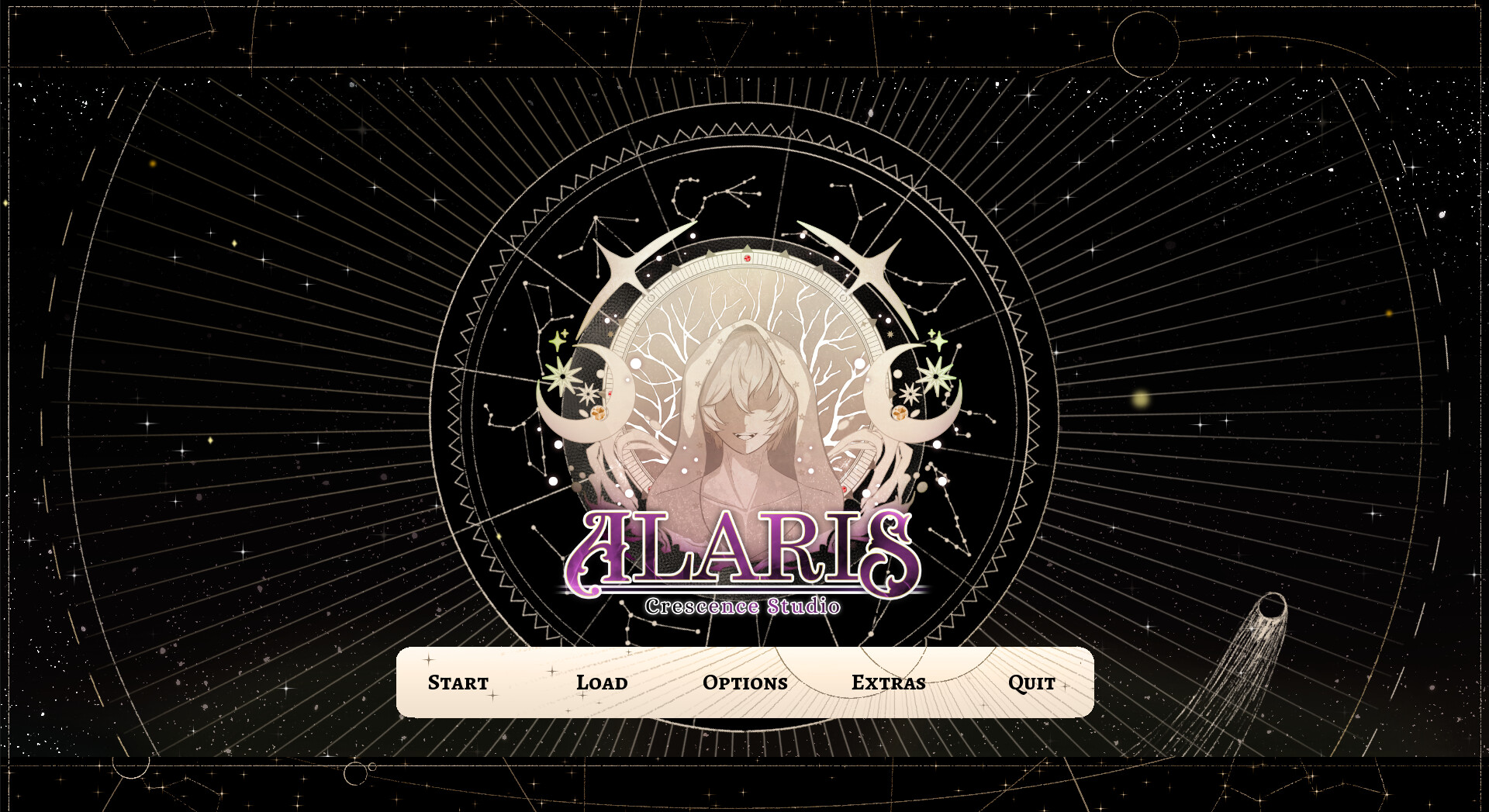
The game's astrology-themed UI, one of the most consistently praised elements in its reviewsCrescence Studio -
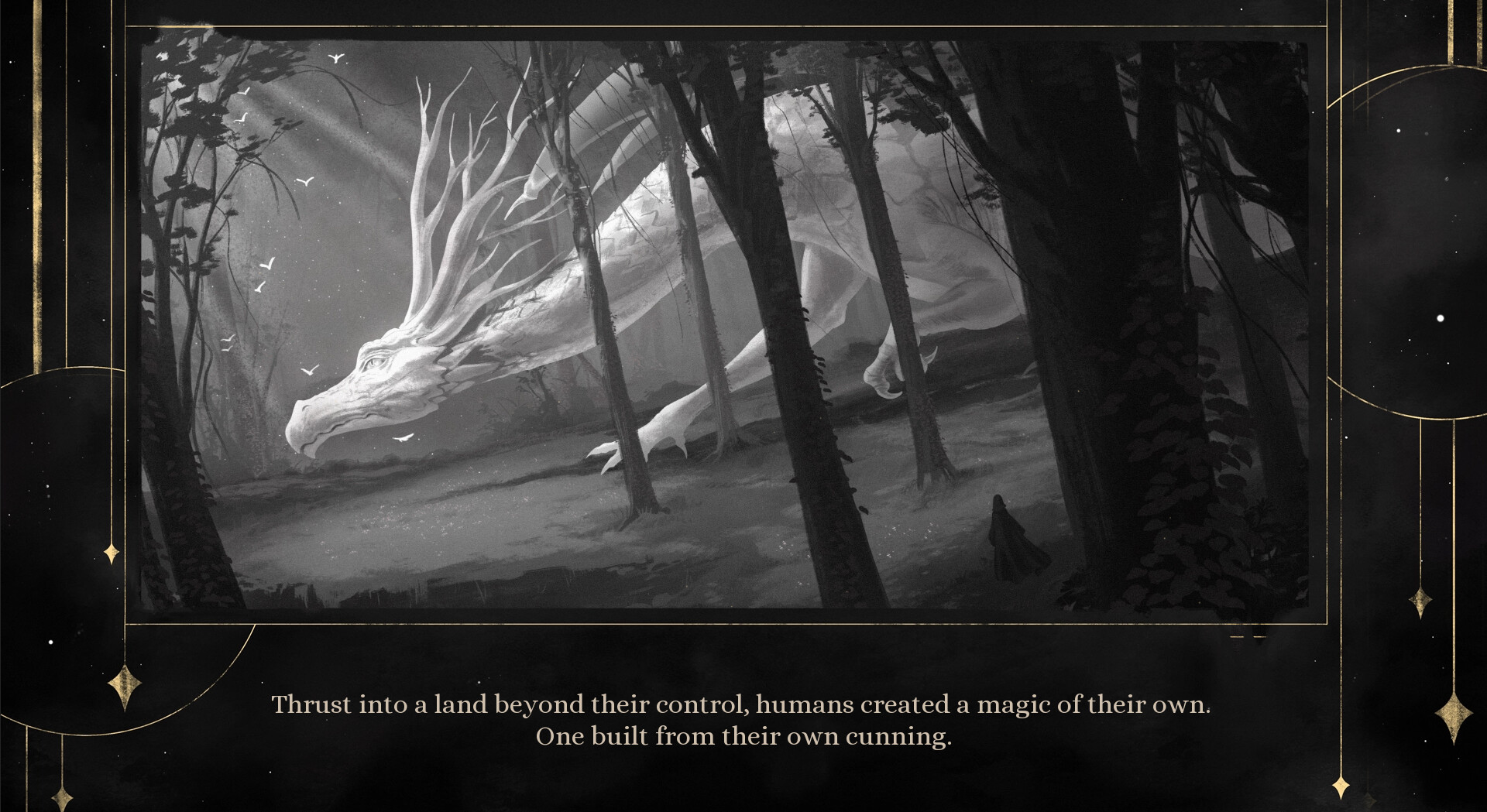
One of the game's fully illustrated CG scenes, tied to its fae-and-magic mystery plotCrescence Studio -
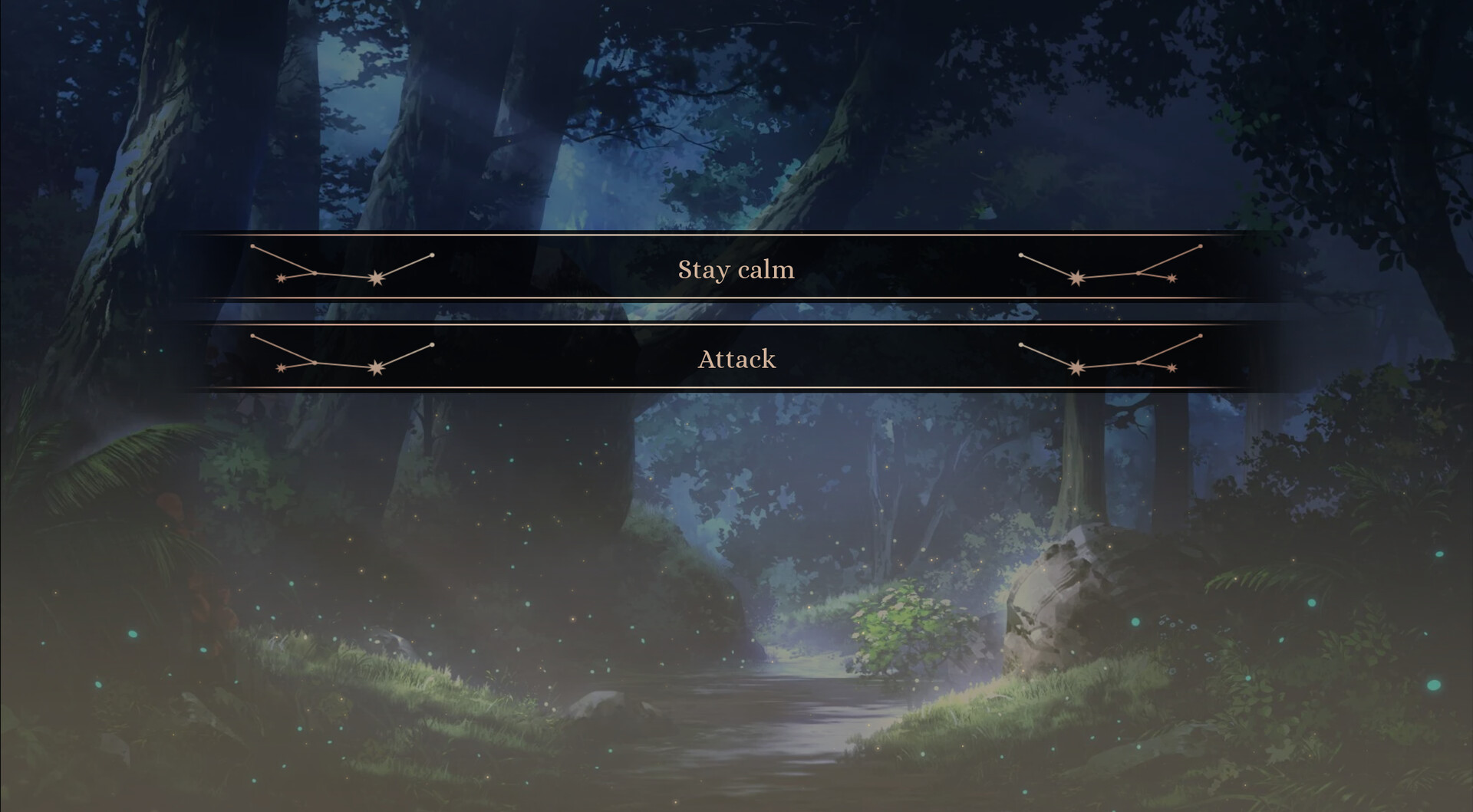
The choice-driven personality system that reviewers repeatedly single out as a standout featureCrescence Studio -
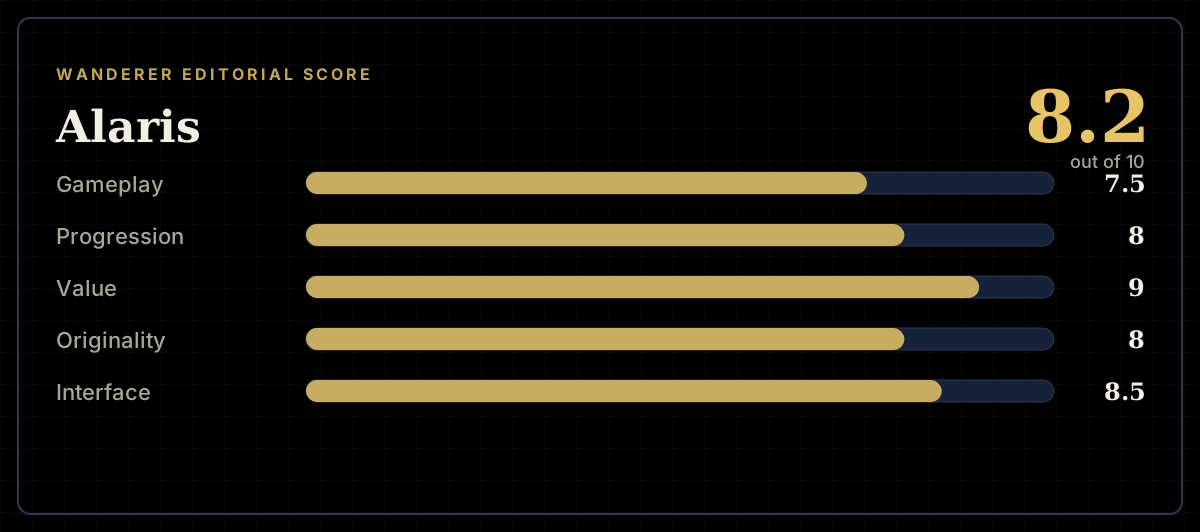
How the review scores each part of the gameWanderer Editorial -
The short versionWanderer Editorial