Game review
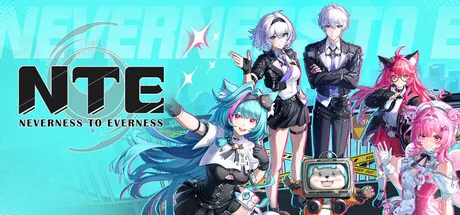
NTE: Neverness to Everness
7 / 10
- Developer
- Hotta Studio
- Publisher
- Perfect World Games
- Released
- 7 July 2026
- Platforms
- Windows
- Genre
- Free-to-play Open-World Action RPG
- Monetisation
- Free to play with a dual gacha currency system (Fabricated Dice for the standard banner, Solid Dice for limited character banners, Tri-Key for weapon pulls), a hard pity of 90 pulls with no 50/50 split on limited banners, a NZ$1.59 Steam Starter Pack, and two competing seasonal battle passes (Elite Hunter Supplies and Honor Hunter Supplies) priced at roughly US$9.99 and US$19.99.
- Players
- Online co-op is supported for missions and social spaces, alongside a friends system ("Bagel" friends) and recurring PvP events tied to pull-currency rewards
The short version
NTE is Hotta Studio's second attempt at an open-world gacha RPG, and the improvement over Tower of Fantasy is obvious the moment you're loose in Hethereau: a dense, detailed supernatural city with driving, street racing, fishing, café management, home decoration and a genuinely funny cast of companions layered on top of the usual anomaly-hunting main quest. The gacha system is unusually fair by genre standards, with a guaranteed featured character inside 90 pulls and no coin-flip 50/50 to lose. What holds the package back is the combat underneath all of that activity, which borrows its parry-and-dash rhythm from Zenless Zone Zero and Wuthering Waves without matching either's polish, plus a set of technical and Steam-specific frustrations — heavy CPU demands, a kernel-level anti-cheat driver, and a purchase flow that a widely-read Steam review accuses of marking prices up on the way through Steam's own storefront.
Biggest strengths
- Hethereau is packed with side activities — driving, street racing, fishing, café management, home decoration and casino games — that reviewers repeatedly single out as the game's real hook, ahead of the main story
- The gacha breaks from genre convention in the player's favor: no 50/50 coin flip on limited banners, a hard pity of 90 pulls that guarantees the featured character, and pity that carries over between banners
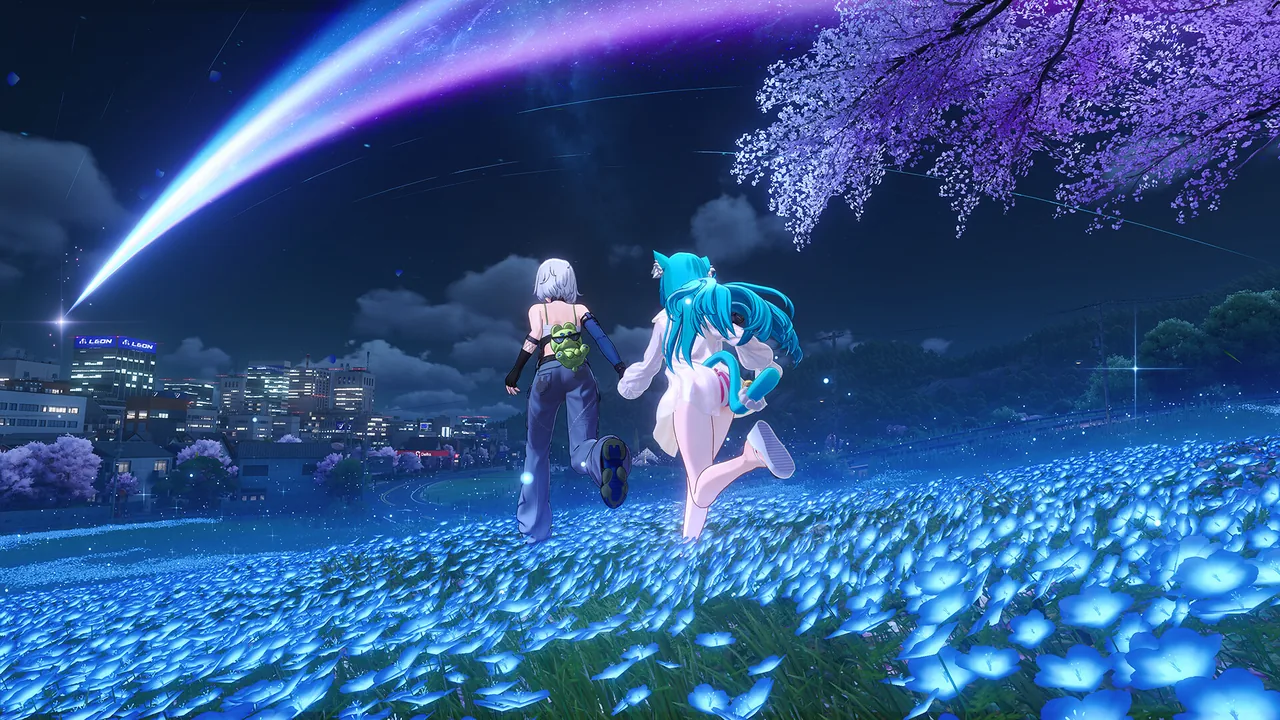
- Character and environment art represent a clear step up in ambition and polish over Hotta Studio's earlier Tower of Fantasy, and it shows in how consistently visuals are the first thing both positive and negative reviews mention
Biggest weaknesses
- Combat runs on the same parry-and-counter rhythm as Zenless Zone Zero and Wuthering Waves without their precision, and more than one review calls it stiffer and more superficial by comparison
- CPU and GPU demands are steep enough that even reviewers who call this "the best gacha I've played" warn newcomers to expect the game to "cook your CPU," and mobile performance is reported as noticeably worse than PC or PS5
- The Steam release's own purchase flow draws real complaints: the single most-upvoted Steam review documents a purchase redirecting through Steam's storefront at a converted price higher than the figure shown in-game
Who it's for: Players already invested in the Genshin-adjacent open-world gacha space who want more city-sim busywork than genre leaders typically offer, and who are willing to tolerate combat that's competent rather than best-in-class to get it.
Our recommendation: Worth installing for free, especially for anyone who wants an open world to putter around in between story beats rather than just a boss list to clear. Go in expecting the combat and the Steam purchase flow to be the weak points, not the world or the gacha terms.
7 / 10
A better city than the one Hotta Studio built last time
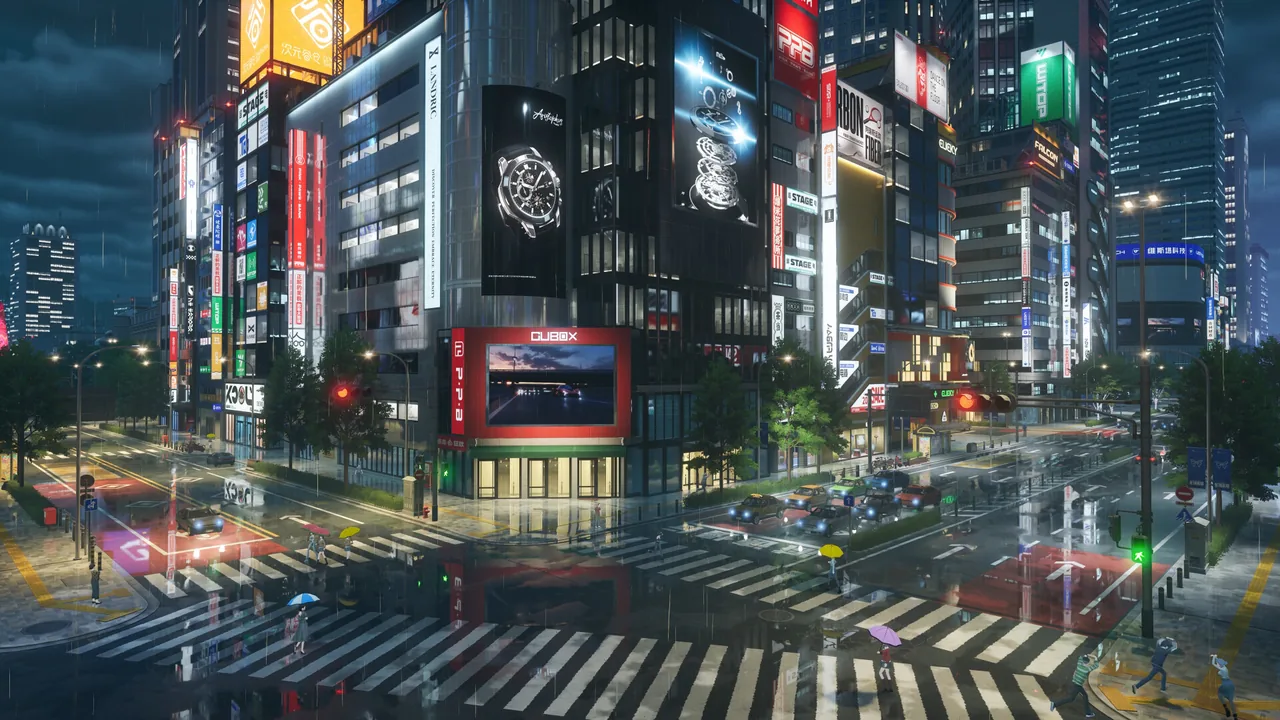
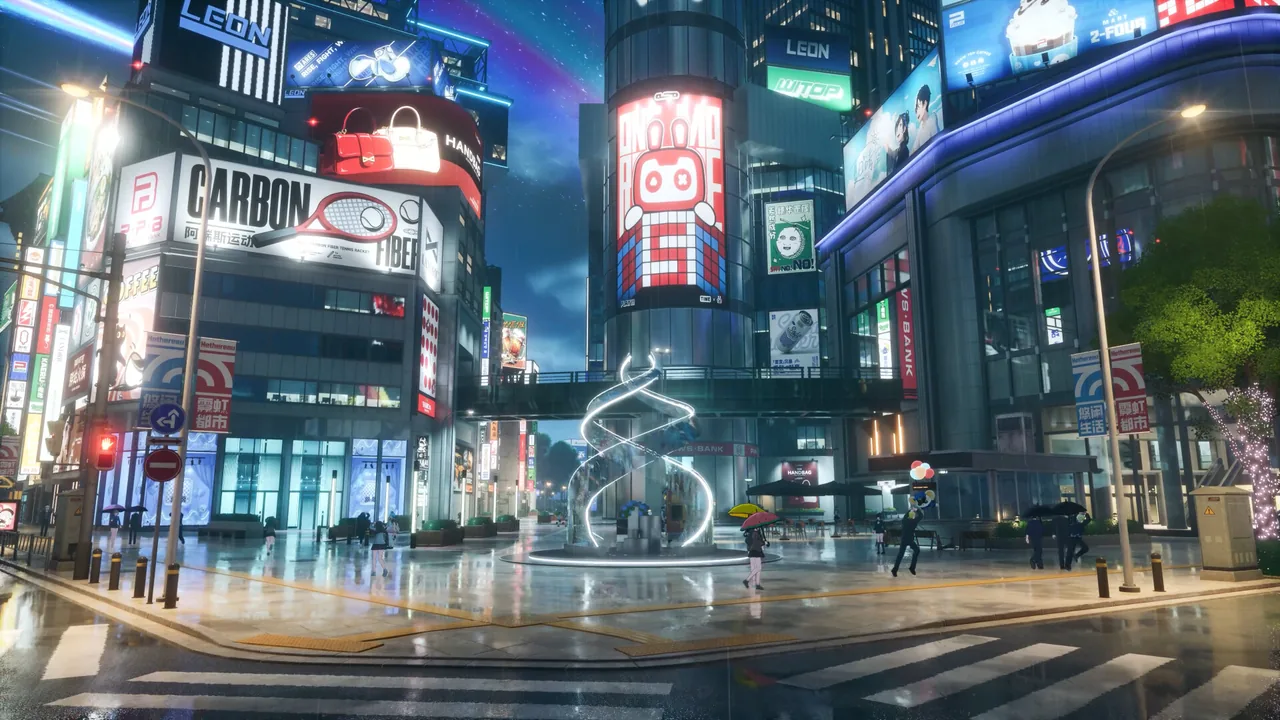
Hotta Studio's first game, Tower of Fantasy, was a competent sci-fi MMO-lite that never quite shook the feeling of being assembled from a checklist of what a Genshin-adjacent open-world gacha is supposed to contain. NTE: Neverness to Everness is the studio's second swing, and it's a ground-up rebuild rather than an iteration. Gone are the sci-fi towers; in their place is Hethereau, a dense, neon-soaked city where humans and "Anomalies" coexist in an uneasy, often funny arrangement, and where you play as the city's first unlicensed Anomaly Hunter working out of a rundown antique shop called Eibon. The game launched globally on 29 April 2026 for PC, PlayStation 5, iOS and Android with cross-platform progression, and arrived on Steam more than two months later, on 7 July, by which point it was already several content patches deep into its live-service schedule. That matters for how to read this review: the Steam audience isn't judging a day-one product, it's judging a game that had already found its shape elsewhere.
What that audience found, going by a review sample of 3,899 on Steam sitting at 84.7% positive — comfortably in "Very Positive" territory — is a game whose city is more interesting than its combat.
Anomaly hunting: combat that borrows without quite matching its influences
Fights play out in real time, built around dodging, parrying and chaining combos across a small roster of playable Hunters, each carrying their own weapon and ability kit. It's a familiar structure to anyone who's spent time with Zenless Zone Zero or Wuthering Waves, and that familiarity is exactly the problem critics keep raising: NTE runs the same parry-and-counter rhythm as both without matching either's precision. One detailed review calls the combat "much stiffer and more superficial" than its clearest competitors, and that assessment lines up with a recurring thread in the negative Steam sample, where players describe fights as simple, enemies as damage sponges, and the whole system as pleasant but forgettable rather than a reason to keep playing on its own merits. It isn't broken — nobody in the review sample calls the combat actively bad — it's just clearly the least ambitious system in a game that's otherwise unusually ambitious everywhere else.
Hethereau is the actual pitch, and it mostly delivers
Strip away the anomaly-hunting plot and NTE is closer to a slice-of-life city sim than an action RPG, and that's consistently the part of the game reviewers reach for first. Hethereau supports customizable vehicles and street racing, a "Ghost Train" fast-travel system, fishing, café management, purchasable and decoratable homes, and casino minigames, on top of a social layer where players collect "Bagel" friends across the city's factions. More than one review compares the density of side content to a Yakuza game, and that comparison is doing real work — it's not just that there's a lot to do, it's that the activities feel handcrafted rather than padded in. The main story leans comedic in its opening arcs, and companion writing gets singled out repeatedly for giving its cast actual personality rather than interchangeable gacha-unit stat sheets. The trade-off shows up later: several reviews, including one of the more detailed critical write-ups in the sample, describe the story thinning out and becoming formulaic once it moves past its strong opening, with unskippable cutscenes turning what was charming in the first few hours into friction by the tenth.
The gacha does something most of the genre still won't
This is the section of an NTE review that has the most concrete, checkable numbers behind it, and they're genuinely good news for anyone wary of the genre's worst habits. Limited character banners carry a base S-rank drop rate around 0.99%, which climbs sharply to roughly 19.59% once a player crosses 70 pulls without a hit — a soft-pity mechanic — and hits a hard pity at 90 pulls, at which point an S-rank character is guaranteed. Crucially, NTE skips the industry-standard 50/50 coin flip on that guaranteed pull: hit pity, and the character you get is the featured one, not a generic S-rank consolation prize. Pity also carries over between banners rather than resetting to zero every time a new limited character launches. Multiple Steam reviews independently call this the fairest gacha economy they've encountered, and a couple of long-time players in the positive sample specifically credit it with keeping them free-to-play without feeling punished for it.
None of that erases the fact that this is still a gacha game funding itself on chance-based pulls, weapon banners (Tri-Key), and two overlapping battle passes — Elite Hunter Supplies at roughly US$9.99 and Honor Hunter Supplies at roughly US$19.99. It's also worth flagging, because it's the single most-upvoted review on the entire Steam page, a specific complaint about how purchases on the Steam build actually work: a player describes an item priced at $26 in-game that, on checkout, redirects through Steam's own storefront and converts to a final charge above what was shown, attributing the gap to Hotta Studio routing purchases to avoid losing margin to Steam's cut. That's a genuinely different complaint from "the gacha is expensive" — it's a pricing-transparency problem specific to the Steam version, and it's worth knowing about before adding payment details on this platform specifically.
The technical cost of an ambitious open world
Even NTE's biggest fans in the Steam review sample tend to include a caveat about performance in the same breath as their praise. One of the most-upvoted positive reviews, from a player with over 8,000 hours logged, calls it "probably the best gacha game" available while warning in the same post that "the optimization is truly sub-par" and to "expect this game to cook your CPU." That's not an isolated complaint — independent coverage reports the game running smoothly on PlayStation 5 but struggling noticeably on mobile hardware, and CPU load shows up often enough across the review sample, on both sides of the recommend/not-recommend split, to read as a real, current limitation rather than launch-week noise. Reducing detail settings helps, and several reviewers note the game still looks respectable on medium settings, but "open world this dense" and "runs light" were never going to be compatible goals, and NTE lands closer to the former.
Anti-Cheat Expert, the kernel-level anti-cheat driver bundled with the Steam install, is the other recurring technical concern. Kernel-level anti-cheat is a live, unresolved debate across PC gaming generally rather than something specific to this game, but it shows up often enough in NTE's negative review sample — alongside general discomfort about what that level of system access means — that it's worth flagging plainly for anyone deciding whether to install on this platform.
What the Steam sentiment actually breaks down to
Reading a real cross-section of the 3,899 Steam reviews rather than just the 84.7% headline turns up a consistent shape: the positive reviews cluster around the city, the character writing and the fairness of the gacha, frequently from players who logged the bulk of their time on the official launcher before Steam release; the negative reviews cluster around combat that feels derivative, performance that taxes even capable hardware, the Steam-specific purchase-flow complaint above, and a smaller but real thread of players unhappy that PvP events increasingly gate pull currency they'd rather earn through PvE content. One long-time player summed up the split honestly in a review that still recommended the game: "I'm ashamed to admit that I love the game" — a decent shorthand for a title whose strongest ideas and most tiring systems sit closer together than most.
Verdict
NTE earns its 7.0 by doing the hard part of this genre well and the easy part only adequately. Building a city this dense, this funny and this full of things to actually do — rather than just look at — is a genuinely difficult design problem, and Hethereau clears it more convincingly than most of NTE's open-world gacha competition manages. Pairing that world with a gacha system that actually breaks from the genre's worst habits, no 50/50, a real hard pity, carryover progress, deserves credit that's easy to undersell next to flashier praise for the visuals.
It doesn't score higher because the combat holding all of that activity together is competent without being distinctive, because the game asks a lot of mid-range PC hardware to run it well, and because the Steam version specifically carries two frustrations — a disputed purchase flow and a kernel-level anti-cheat driver — that players evaluating this platform in particular deserve to know about going in. None of that outweighs what Hethereau gets right. It just keeps this from being the genre-leading release its city alone might have earned.
Players who like a persistent world that rewards showing up regularly, without a gacha wrapped around the character progression, might also want a look at Wanderer.
Pros and cons
Pros
- Hethereau is packed with side activities — driving, street racing, fishing, café management, home decoration and casino games — that reviewers repeatedly single out as the game's real hook, ahead of the main story
- The gacha breaks from genre convention in the player's favor: no 50/50 coin flip on limited banners, a hard pity of 90 pulls that guarantees the featured character, and pity that carries over between banners
- Character and environment art represent a clear step up in ambition and polish over Hotta Studio's earlier Tower of Fantasy, and it shows in how consistently visuals are the first thing both positive and negative reviews mention
- Companion writing leans comedic and specific rather than generic, and several detailed reviews note that the cast reads as more personality-driven than is typical for the genre
Cons
- Combat runs on the same parry-and-counter rhythm as Zenless Zone Zero and Wuthering Waves without their precision, and more than one review calls it stiffer and more superficial by comparison
- CPU and GPU demands are steep enough that even reviewers who call this "the best gacha I've played" warn newcomers to expect the game to "cook your CPU," and mobile performance is reported as noticeably worse than PC or PS5
- The Steam release's own purchase flow draws real complaints: the single most-upvoted Steam review documents a purchase redirecting through Steam's storefront at a converted price higher than the figure shown in-game
- Anti-Cheat Expert's kernel-level driver shows up repeatedly in the negative review sample as a trust concern, on top of the wider industry debate around that anti-cheat vendor
- Several detailed reviews describe story and content quality thinning out past the initial 1.0 release, with unskippable cutscenes and PvP events increasingly gating pull currency
Screenshots
-
NTE: Neverness to EvernessImage: Perfect World Games via Steam -
NTE: Neverness to EvernessImage: Perfect World Games via Steam -
NTE: Neverness to EvernessImage: Perfect World Games via Steam