Game review
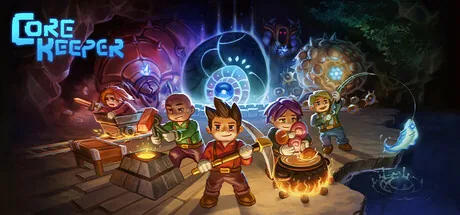
Core Keeper
8.5 / 10
- Developer
- Pugstorm
- Publisher
- Fireshine Games
- Released
- 27 August 2024
- Platforms
- Windows, Linux, PlayStation 5, PlayStation 4, Xbox Series X/S, Xbox One, Nintendo Switch, Nintendo Switch 2
- Genre
- Survival sandbox / mining RPG
- Monetisation
- Premium, one-off purchase — no in-game currency, ads or gameplay-affecting DLC; an optional artbook DLC and an optional soundtrack DLC are cosmetic-only add-ons
- Players
- 1-8 players, drop-in/drop-out online co-op, dedicated server support, cross-play across PC storefronts (Steam, Epic, GOG, Microsoft Store)
The short version
Core Keeper takes the two things Terraria and Stardew Valley do separately — boss-gated exploration and skills that grow through use rather than a level-up screen — and welds them onto a mining loop that never runs out of reasons to keep digging. The Titans that block each new region give the sandbox a spine without turning it into a checklist, and the automation layer that opens up mid-game is where the hours really go.
It loses half a point to a late game that leans on repetition to fill the space between content updates, and to inventory and base-logistics friction that four years of patches still haven't fully solved. For a one-time purchase with no gameplay-gated add-ons and a co-op mode built for a full lobby, that's a minor complaint against a very well-judged game.
Biggest strengths
- Skills level up by doing the thing, not by spending points, which keeps early hours frictionless
- Titan bosses gate new biomes without forcing a single critical path through them
- Automation (conveyors, smelters, generators) gives the mid-game a second loop once mining alone gets old
Biggest weaknesses
- Post-Titan stretches between named content updates lean on repeated mob variants to pad playtime
- Inventory and storage management gets noisy well before automation catches up to the clutter
- The skill system rewards doing rather than choosing — there's little build expression compared to a real talent tree
Who it's for: Players who liked Terraria's boss-gated progression or Stardew Valley's skills-by-doing systems and want them under the ground instead of on the surface; groups looking for a co-op game that scales cleanly to eight people without turning into a race.
Our recommendation: Worth buying at full price on PC or console. If you're on the fence, the appeal is almost entirely about whether "dig, craft, fight a Titan, dig further" sounds like a loop you want to live inside for dozens of hours — the trailers and screenshots undersell how much of the game is systems rather than scenery.
8.5 / 10
Most mining sandboxes give you a shovel and a horizon and call it a design. Core Keeper gives you a shovel, a horizon, and something worse than a horizon: a locked door. Somewhere out in the dark there is a sleeping Titan, and until you beat it, an entire biome's worth of ore, recipes and monsters simply doesn't exist for you yet. That's the decision that separates this from most of its genre, and it's the decision the rest of the game is built to support.
The dig itself is the tutorial
You start on a stone platform in the middle of nothing, with a pickaxe and total silence. Every direction is unexplored, and every wall you break reveals slightly more of a world that was generated whole the moment you started, rather than streamed in ahead of you. That single fact — the map already exists, you're just uncovering it — is what makes the first few hours work. There's no waypoint pulling you toward the "real" content; the cave itself is the content, and the game trusts you to go looking.
Skills level as you use them: swing a pickaxe enough and mining goes up, along with your damage against rock and your chance at bonus ore; get hit enough times and your defence creeps up with it. It's the same shape as Stardew Valley's skill system rather than Terraria's — Terraria's progression is almost entirely about the gear you're wearing, while Core Keeper layers a slow, passive character growth underneath the gear. The result is that even a fresh spawn with a bronze pickaxe feels like it's making progress on two axes at once: better tools, and a character who is quietly getting better at using them. It's a smart hybrid, and it's the reason the opening hours never feel like busywork the way "grind to level 5" often does in more overtly RPG-shaped games.
Titans as the spine, not the leash
The genre's usual failure mode is that a sandbox with no external pressure turns into a to-do list you write for yourself, and most players stop making the list around hour ten. Core Keeper's answer is the Titans — a handful of story bosses, each one tied to progress through a specific biome, each one blocking the next tier of ore, recipes or map access until it's dead. It's the same trick Terraria plays with its hardmode bosses, and it works for the same reason: a boss gate gives an otherwise infinite sandbox a shape, checkpoints that say "you are here" without removing the freedom to wander off and do something else first.
What Core Keeper does better than a lot of boss-gated sandboxes is keep the gates loose. You don't need to beat a Titan the moment you find its arena — you can spend as long as you like fishing, farming, decorating a base or clearing a side-biome instead, and the game never nags you back toward the critical path. But once you do want to progress, the fight is unambiguous: it's a proper arena encounter with attack patterns to learn, not a damage-race against a reskinned mob. That's the balance a lot of survival-crafting games get wrong in one direction or the other — either the boss is a formality that any half-decent gear beats on the first try, or it's a wall that stops casual players from ever seeing the next biome. Core Keeper's Titans sit closer to the Terraria model of "beatable with the gear you'd naturally have by then, punishing if you rush it," which is exactly where a boss gate should sit.
Automation is where the second game starts
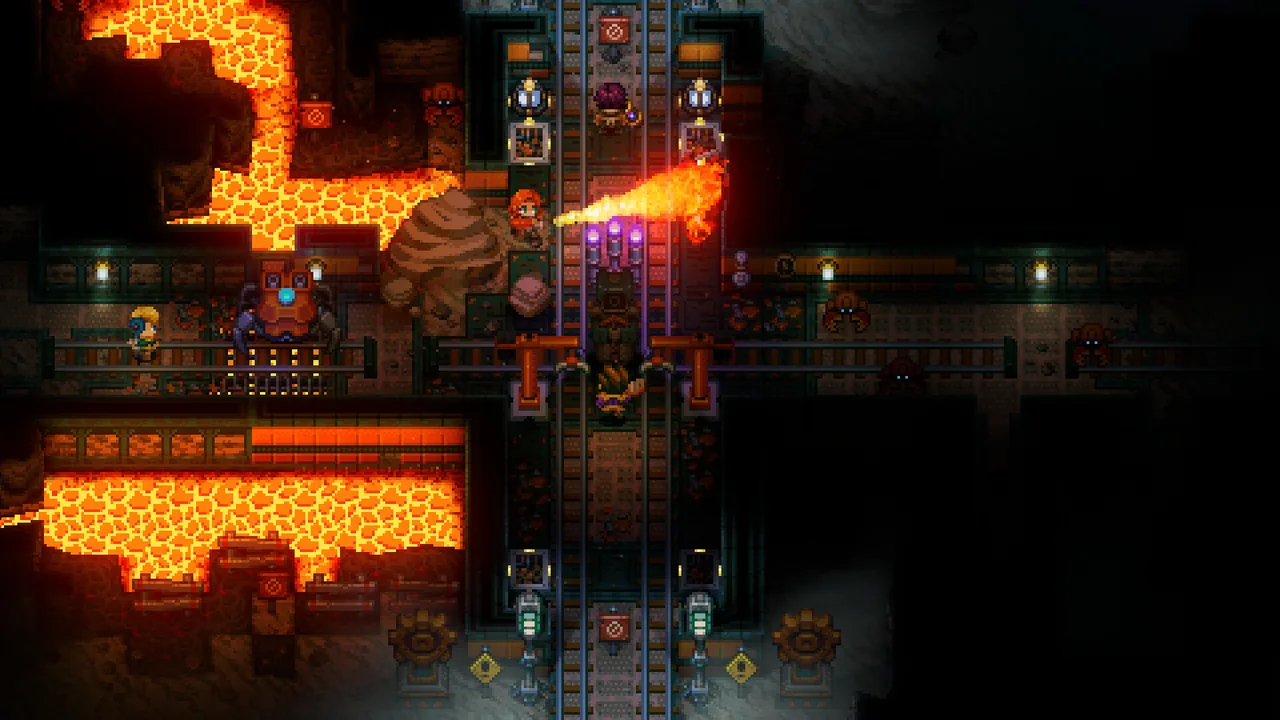
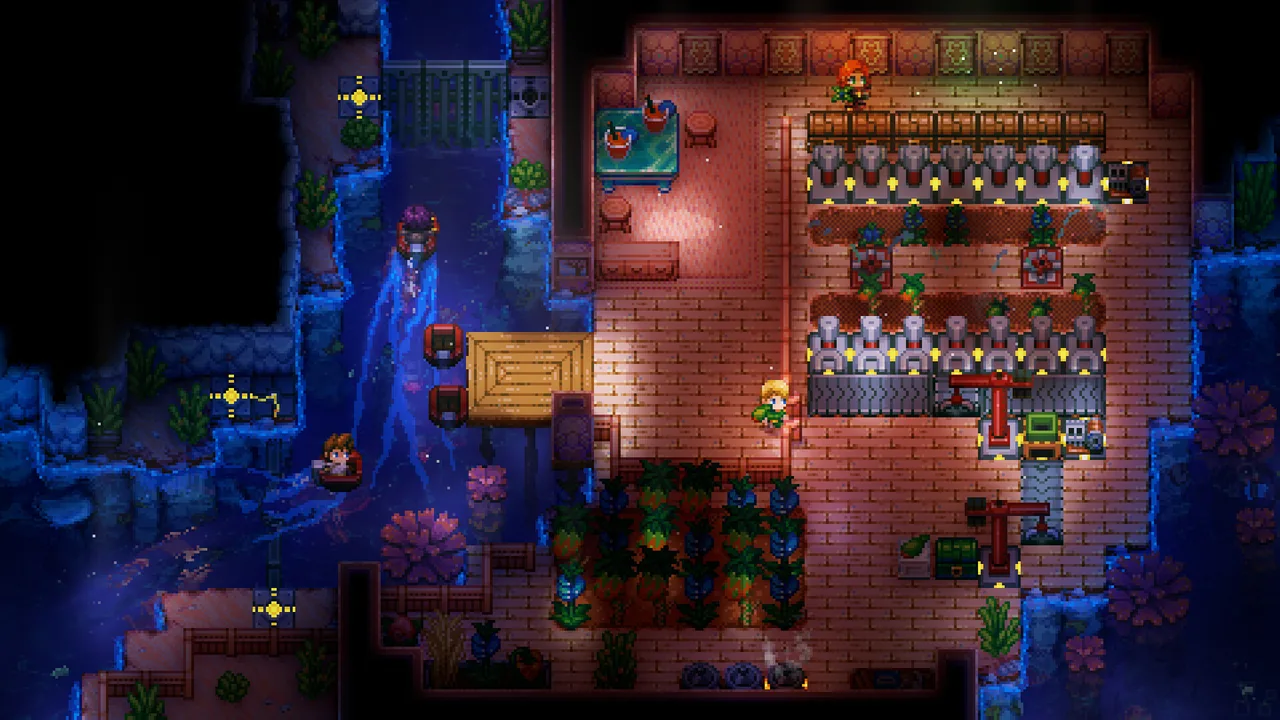
The early loop is mining and crafting by hand; the mid-game loop, once you've unlocked conveyor belts, smelters and generators, is building a base that mines and crafts for you. This is the part of Core Keeper that most resembles a light factory game bolted onto an RPG, and it's arguably the strongest sustained stretch in the whole experience — there's real pleasure in watching a chain of machines turn raw ore into finished bars without you standing at a furnace clicking, and it gives returning players something to optimise that has nothing to do with combat stats.
It also solves a problem the early game creates for itself: mining by hand stops being interesting long before you've gathered enough of any given resource to build the next tier of anything. Automation is the release valve. The design is confident enough to let a huge amount of mid-to-late-game material gathering become passive, on the reasonable bet that players who wanted to keep mining by hand forever were never the target audience for a game with a talent tree and boss fights in the first place.
Base building has actual stakes
Walls in Core Keeper aren't just decoration — they define the boundary the game uses when it places new hostile spawns and when it decides what counts as "inside" for defence purposes, so a sloppy, half-finished perimeter is a genuine liability rather than a cosmetic choice. That gives the building layer a reason to exist beyond making a nice house, which more crafting games could stand to learn from. It's not as expressive a building toolkit as something purpose-built for construction, but it's more consequential than most survival games bother to make it.
Eight players, one shared dig
Co-op is where Core Keeper separates itself furthest from Stardew Valley, which caps out at four, and it does something Terraria's default multiplayer never quite nailed cleanly: drop-in, drop-out joining on a persistent world, with proper dedicated server support for groups who want a world that stays up when nobody's actively playing. Scaling to eight players in a shared cave without the game turning into eight people standing in eight different corners is a real design achievement — the map is big enough, and the Titan fights are built to expect a group, so a full lobby doesn't trivialise them the way an underscaled boss would.
The caveat worth knowing before you commit a group to it: the cross-play that shipped alongside dedicated servers spans PC storefronts — Steam, Epic, GOG and Microsoft Store players can share a world — rather than confirming PC-to-console play in the same lobby. If your group is split between a Steam Deck and a PlayStation, check the current storefront-crossplay list before you assume everyone can join the same server.
Where the shine wears off
Two honest weaknesses, and they're both the kind that show up after the first Titan rather than before it.
The skill system, for all that it feels good early, doesn't give you much to actually decide. Levelling is a byproduct of play rather than a set of choices — there's no talent tree moment where you pick between two builds and live with the consequence. Compared to a game like Stardew Valley, which at least gates a handful of meaningfully different profession choices behind its skill levels, Core Keeper's skills mostly just make the numbers bigger in the background. It's pleasant, it's not deep.
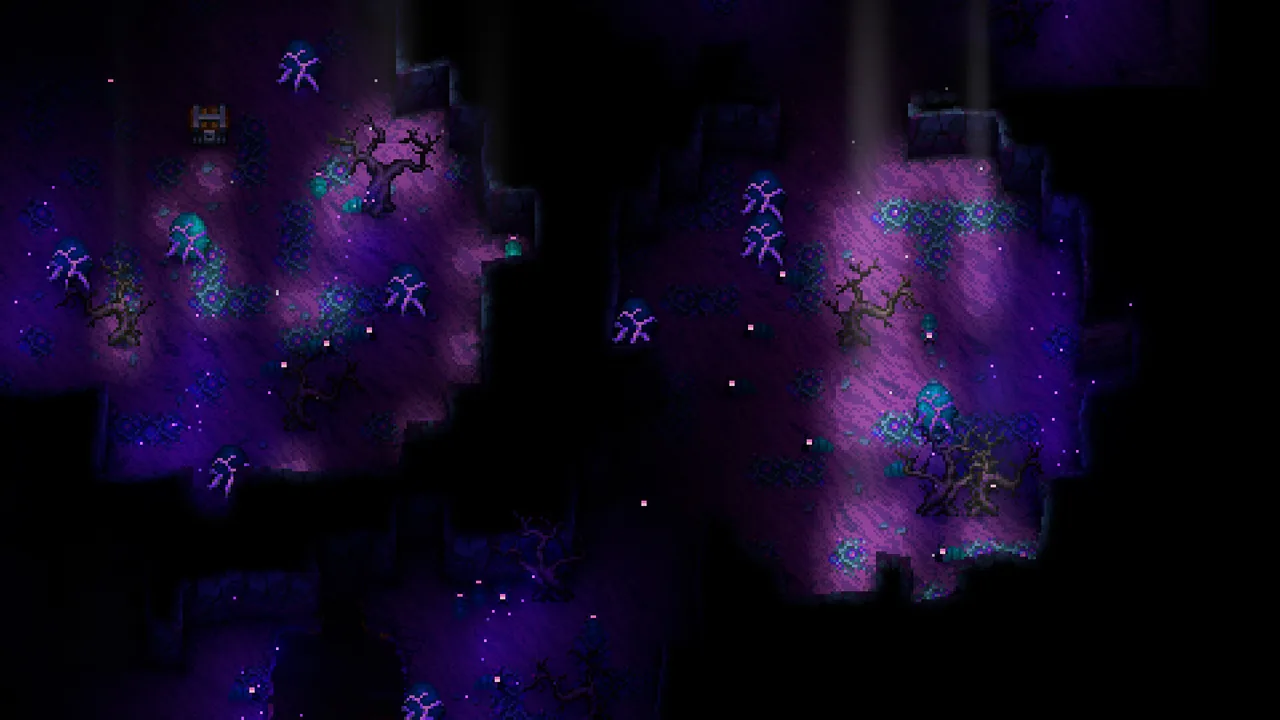
The other is pacing between named content updates. Pugstorm has kept the game fed with real content since 1.0 — a desert-focused update added a new boss and sub-biome, a void-and-electricity biome arrived as a post-game addition, and smaller patches have kept rebalancing classes and adding quality-of-life fixes — but the stretches of world between major biomes lean on repeated enemy variants and materials you've already farmed once. It's not padding in the cynical, timer-based sense; it's the ordinary cost of a sandbox that has to fill in the space between hand-crafted set pieces with something, and "more of what you already know how to fight" is the cheapest thing to fill it with.
Presentation, performance and price
The pixel art earns the comparisons to Terraria and Stardew Valley that it invites — biomes read clearly at a glance, creature silhouettes are distinct enough to plan a fight around, and the underground setting gets real mileage out of lighting rather than just being a dark reskin of a surface game. The soundtrack is distinctive enough that Pugstorm sells it as a standalone item on Steam, which is a reasonable indicator that it's doing more than filling silence. Performance is generally solid for a game of this scope, though heavily automated bases with a lot of active machinery are the kind of setup where any game in this genre starts to show its seams, and Core Keeper is no exception once a base gets ambitious.
At NZ$28.99, checked 30 July 2026, this is a one-time purchase with four-plus years of free content updates behind it and nothing resembling a battle pass or premium currency in front of it. The only paid extras are a cosmetic artbook DLC and a soundtrack DLC, neither of which touches gameplay. For a game that's been actively supported from Early Access through a full console launch and well past its 1.0 release, that's a genuinely good deal — the kind of pricing model this section is quick to praise when a game earns it, and Core Keeper earns it.
Verdict
Core Keeper's real trick isn't the setting — plenty of games have put a crafting loop underground — it's how deliberately it borrows the two best progression ideas from its nearest neighbours and makes them work together. The boss gating gives an open sandbox direction without removing its freedom, the way Terraria's hardmode does at its best. The skills-by-doing layer keeps the earliest hours moving without demanding a spreadsheet, the way Stardew Valley's does. Automation gives the whole thing a second act once mining alone runs dry.
It isn't flawless: the skill system is shallower than its Stardew ancestor once you look closely, the late game asks you to repeat yourself more than a hand-crafted world should have to, and groups hoping for PC-to-console lobbies need to check the fine print first. None of that changes what this is — a well-paced, generously supported mining RPG that rewards a full evening as easily as a full weekend, solo or with a lobby of seven other diggers. Players who came to Wanderer for a game where the numbers go up while you're doing something with your hands, rather than while you're away, will find a lot to like here.
Pros and cons
Pros
- Skills level up by doing the thing, not by spending points, which keeps early hours frictionless
- Titan bosses gate new biomes without forcing a single critical path through them
- Automation (conveyors, smelters, generators) gives the mid-game a second loop once mining alone gets old
- Base building has real spatial stakes — walls double as world-generation boundaries and defence
- Co-op scales to eight players with dedicated servers and drop-in/drop-out joining
- One-time purchase with no gameplay-affecting DLC four years after launch
Cons
- Post-Titan stretches between named content updates lean on repeated mob variants to pad playtime
- Inventory and storage management gets noisy well before automation catches up to the clutter
- The skill system rewards doing rather than choosing — there's little build expression compared to a real talent tree
- No native macOS build, and cross-play is confirmed across PC storefronts rather than PC-to-console
- Early biomes can feel thin on their own once you've already cleared them for a returning Titan fight
Screenshots
-
Core KeeperImage: Fireshine Games via Steam -
Core KeeperImage: Fireshine Games via Steam -
Core KeeperImage: Fireshine Games via Steam -
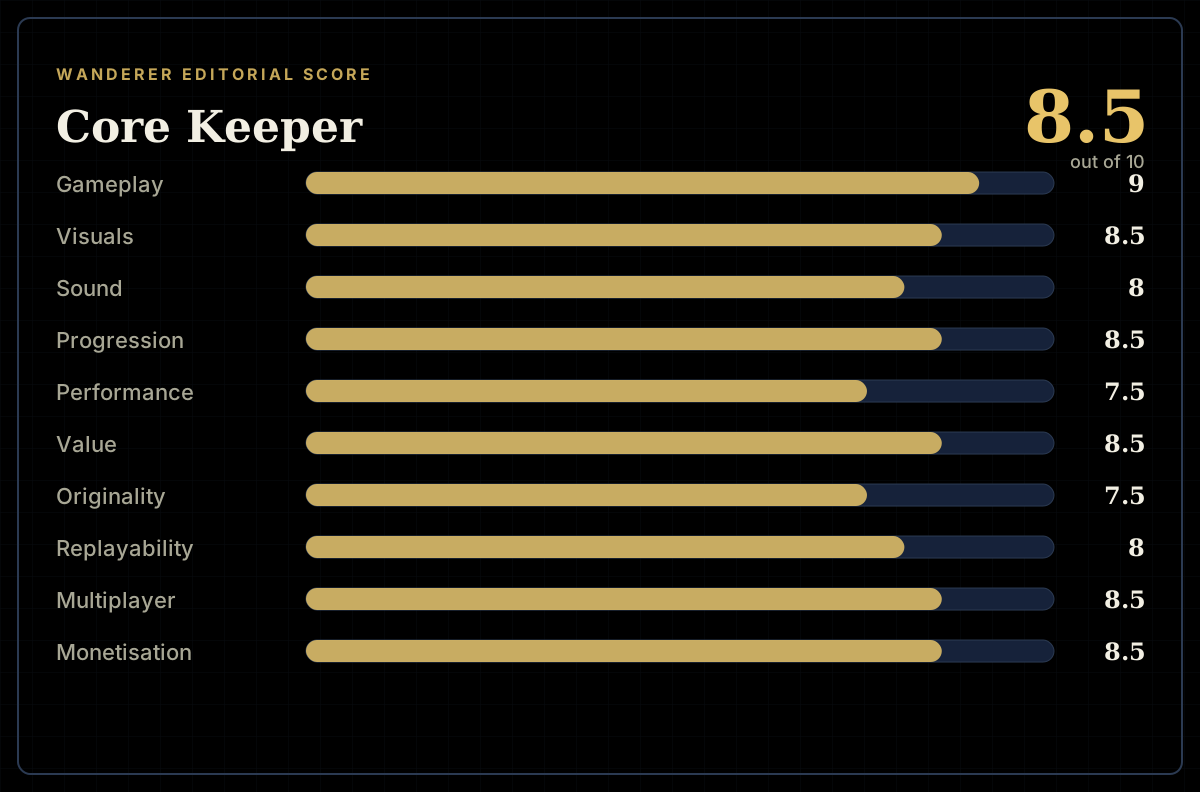
How the review scores each part of the gameWanderer Editorial -
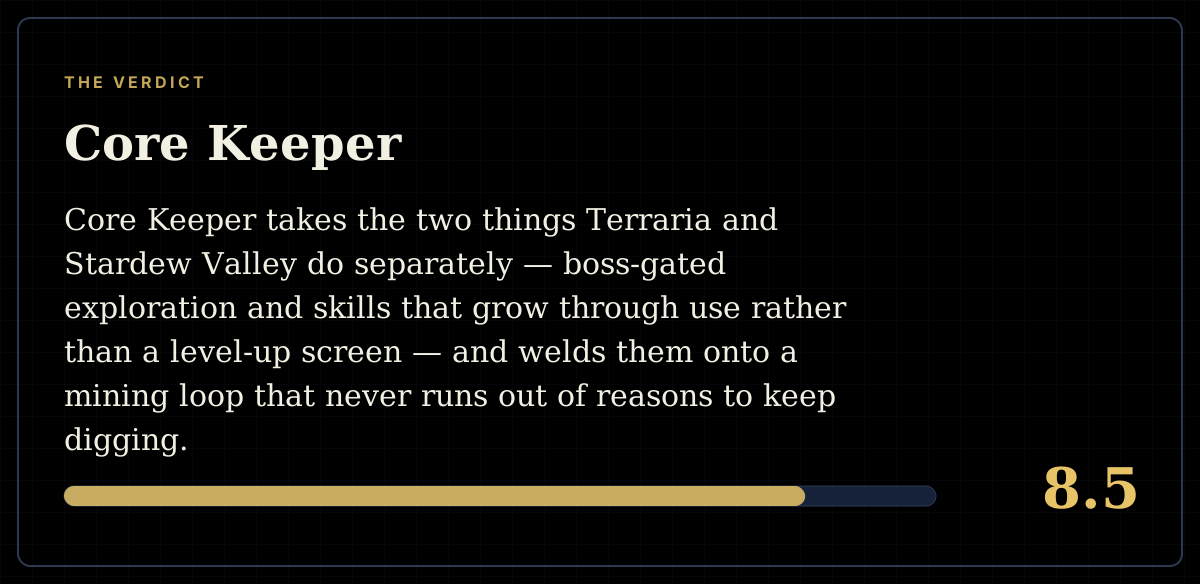
The short versionWanderer Editorial