Game review
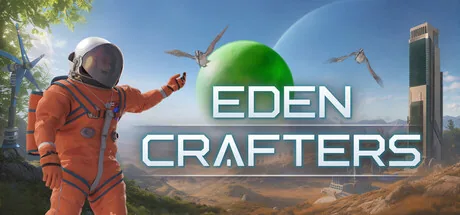
Eden Crafters
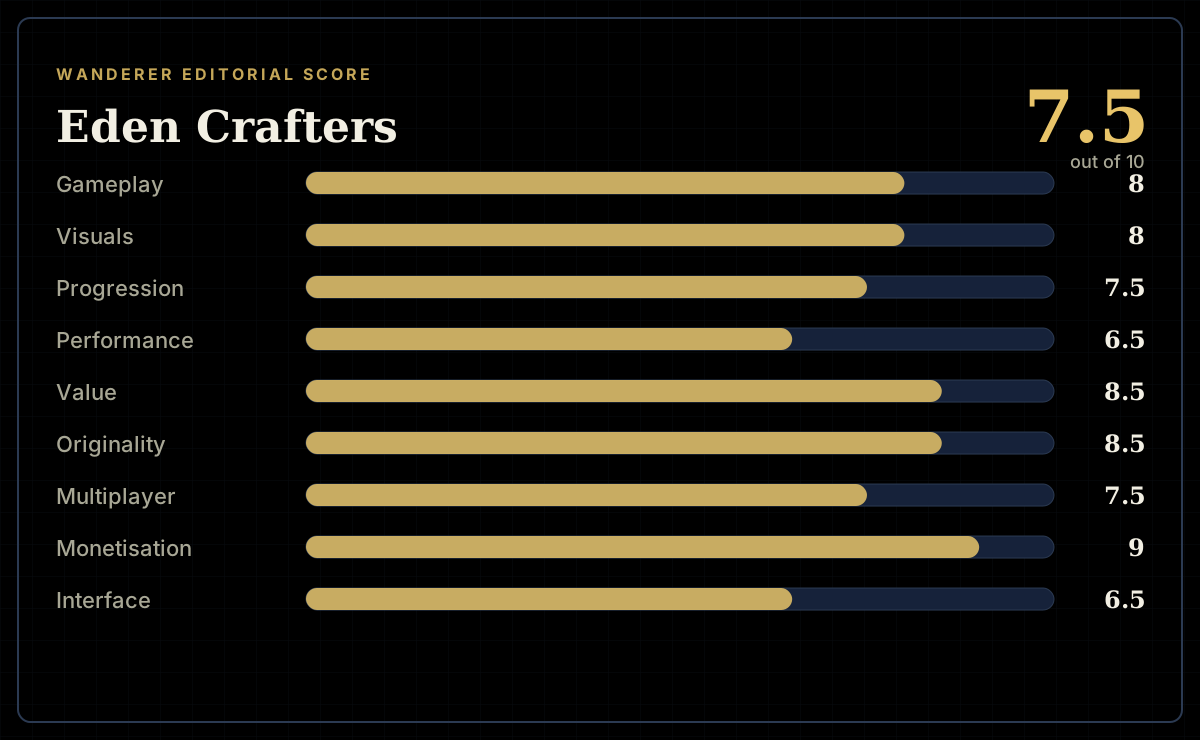
7.5 / 10
- Developer
- Osaris Games
- Publisher
- Osaris Games
- Released
- 7 May 2026
- Platforms
- Windows
- Genre
- Survival crafting and factory automation
- Monetisation
- Premium, one-off purchase. No in-game shop, no premium currency, no subscription, no ads, and no DLC — all five planets and the full terraforming campaign ship in the base game
- Players
- Solo or online co-op, sharing one persistent base and its terraforming progress
The short version
Eden Crafters takes the belt-and-machine grammar of a Satisfactory-style factory game and points the entire tech tree at a single goal: pushing a dead planet's Habitability Index to 100 percent. Every conveyor you route and every machine you unlock exists to scrub toxic air, filter poisoned lakes and coax the local ecology back to life, and watching a barren valley fill in with foliage because your factory earned it is a genuinely different payoff than watching a production counter climb. Five planets and a full campaign ship in one box with no DLC, which is a rare and welcome thing at this price point.
The 1.0 release closes out an Early Access run that started in October 2024 with real new systems — birds that amplify terraforming once populations return, a Centrifuge and Magnetizer that add welcome depth to the mid-game, and a queueing workbench that finally takes some of the manual click-work off the player. What it doesn't ship with is a blueprint system, which means every machine cluster in a sprawling factory still gets placed by hand, and the interface hasn't fully caught up to bases that have grown past a few dozen machines. Frame rate can sag once a factory gets large, especially in co-op. None of that undoes the central idea, which is strong enough to carry the rest.
Biggest strengths
- Terraforming is the actual progression system, not a coat of paint over a standard tech tree — every machine you build visibly changes the planet's atmosphere, water and plant life
- Five planets and the complete campaign are included in the base game with no DLC required, which is unusually generous for a factory-survival title at this price
- The Centrifuge and Magnetizer, added for 1.0, give the mid-game two genuinely new production puzzles instead of just more of the same conveyor math
Biggest weaknesses
- No blueprint or stamping system exists yet, so every repeated machine cluster in a large factory has to be placed by hand, exactly the friction Satisfactory only solved by its fourth tier
- Frame rate noticeably softens once a base sprawls past a few dozen machines, and the drop is more pronounced in co-op sessions than solo play
- The interface struggles to keep pace with very large factories, and late-game inventory management becomes a genuine source of friction rather than a minor annoyance
Who it's for: Automation fans who want their factory to mean something beyond bigger numbers, and anyone who liked The Planet Crafter's premise but wanted a deeper production chain underneath it. Less suited to players who want Satisfactory-level blueprint tools and megabase performance on day one, or anyone hoping for combat and exploration to carry equal weight with the automation.
Our recommendation: Worth buying at NZ$28.99 for genre fans, especially anyone who hasn't tried pairing terraforming with proper factory automation before. Newcomers to the automation genre may want to wait for a blueprint system before attempting a genuinely large base, since manual placement is still the only option a year and a half into development.
7.5 / 10
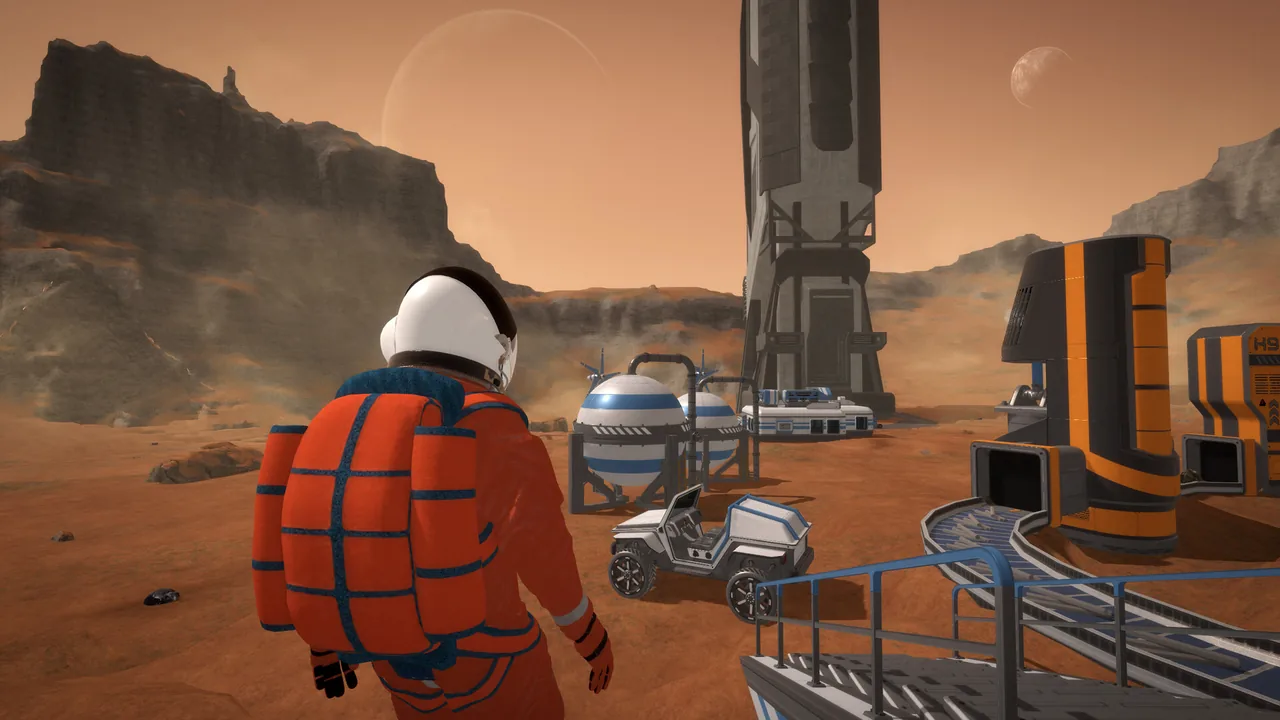
Most factory games measure success in a number going up. Eden Crafters measures it in a planet coming back to life. Osaris Games' survival-automation title spent about nineteen months in Early Access before its 1.0 launch on 7 May 2026, and the pitch never changed in that time: you land on a hostile, airless world, and the only way to survive long-term is to terraform it — clean the atmosphere, filter the toxic water, coax the ecology back — using exactly the same belts, smelters and assembly machines that power every other automation game on Steam. What makes it work is that the terraforming isn't a side objective bolted onto a standard tech tree. It's the tech tree. Every machine you unlock exists to push the planet's Habitability Index a little closer to 100 percent, and the game is at its best in the moment a valley you spent hours automating quietly fills back in with grass and birdsong because your factory earned it.
Automation with somewhere to point it
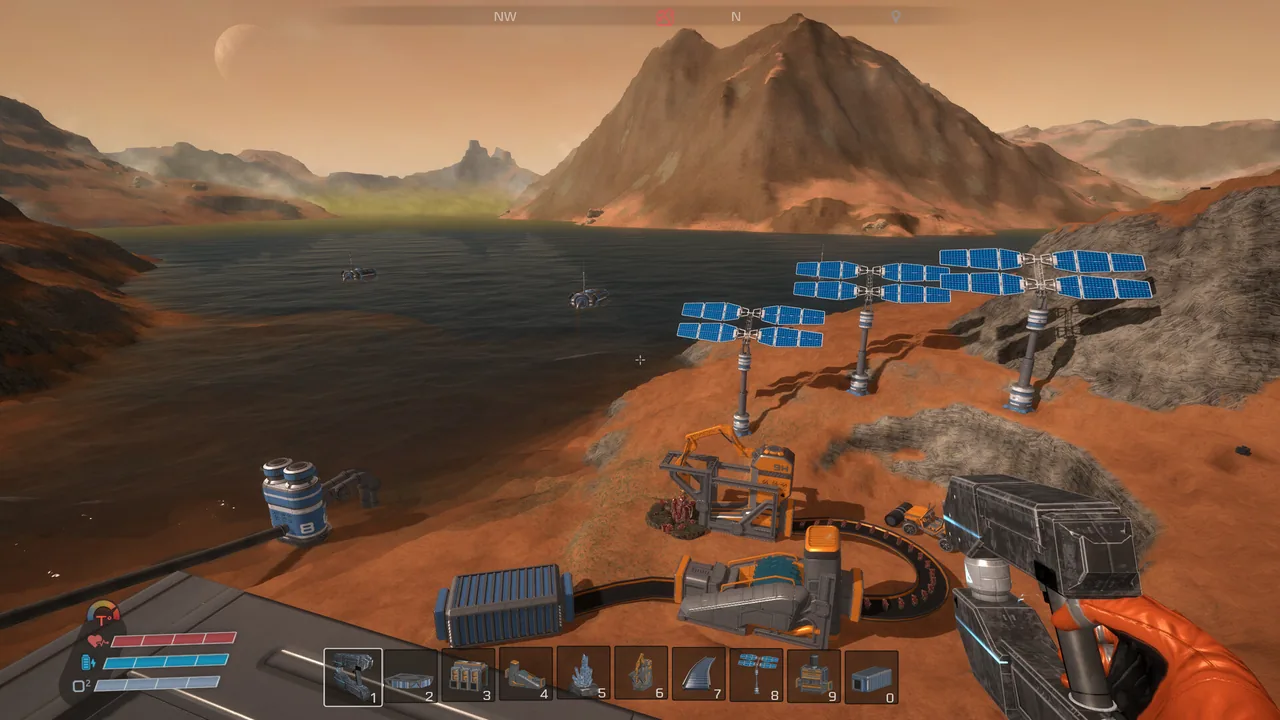
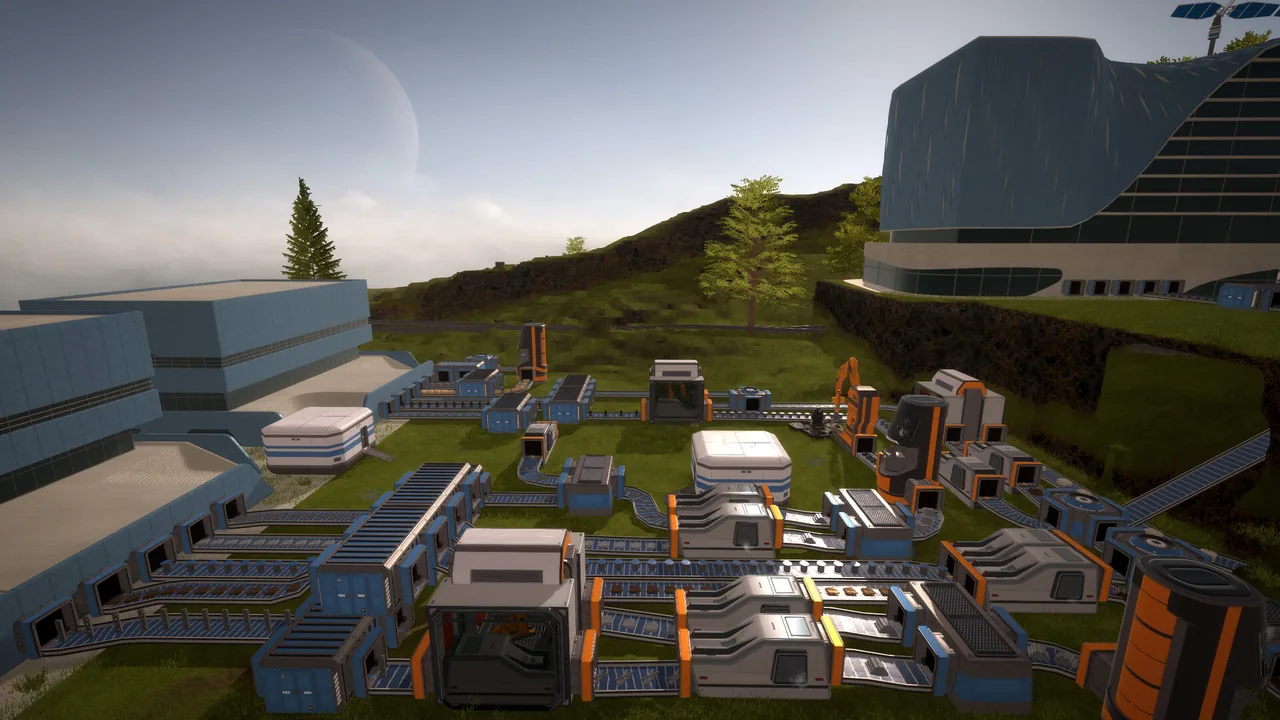
The genre comparison writes itself, and Eden Crafters doesn't shy away from it: it has The Planet Crafter's aesthetic and premise, but plays a lot closer to Satisfactory underneath. The Planet Crafter leans on exploration and scavenging from crashed ships, with automation arriving late and mostly optional. Eden Crafters flips that emphasis — you're building proper production chains from the opening hours, because there's no realistic way to hit meaningful habitability targets by hand. Ore gets smelted into plates, plates get assembled into atmospheric processors and water filtration rigs, and those machines get chained together with conveyors the same way they would in any throughput-puzzle automation game.
The difference that actually matters is what all that throughput is for. In Factorio or Satisfactory, finishing a production chain means you've solved a ratio problem. In Eden Crafters, finishing one means measurable environmental change: a toxic lake actually clears, a patch of atmosphere becomes breathable without a suit, and — new for 1.0 — birds and other wildlife start returning to areas that cross a habitability threshold, which in turn accelerates further terraforming in a small but satisfying feedback loop. It's a smarter marriage of automation and ecology than either genre parent attempts on its own, and it gives the mid-game a sense of why you're optimising a belt layout that a pure numbers-go-up factory game can't match.
What 1.0 actually added
Coming out of Early Access, Osaris Games used the 1.0 update to widen the machine roster rather than just polish what already existed. The Centrifuge separates raw materials into rarer components and crystals, and the Magnetizer produces the high-energy magnetic parts that gate some of the later terraforming tech — both give the mid-game a genuinely new production puzzle instead of another smelter variant. The advanced workbench can now queue crafting tasks and pull in the sub-components those tasks need on its own, which quietly removes a chunk of the click-and-wait tedium that Early Access testers complained about for over a year. Forty Steam achievements and a batch of purely decorative base items round out the update, giving longer-term players something to chase once the core terraforming goals are met.
The headline structural fact, though, is that the full release ships five planets with no DLC attached. That's a genuinely generous offer at NZ$28.99 — a lot of survival-crafting games at this price gate a second map behind paid content, and Eden Crafters instead treats planetary variety as part of the base pitch. Reaching a planet's full Habitability Index unlocks an Earthlink Communication Tower that opens a wormhole onward, giving the campaign a clear sense of escalating scale rather than one map you simply keep decorating forever.
The parts that haven't caught up
The most consequential gap in Eden Crafters right now is the one Satisfactory took years to properly solve too: there's no blueprint or factory-stamping system. Every repeated cluster of machines — and a terraforming base built around processing five planets' worth of raw material has a lot of repeated clusters — has to be placed by hand, every time. Satisfactory eventually gave players a Blueprint Designer, just later than anyone wanted it; Eden Crafters, a year and a half into public development, hasn't shipped an equivalent yet, though Osaris has flagged one as a planned future update alongside interplanetary travel and Steam Workshop support. Until it arrives, scaling a base up stays a genuinely manual chore in a genre where most direct competitors have already solved that problem.
The interface shows its age in similar ways. It manages a modest factory just fine, but inventory juggling in the late game and reading a sprawling conveyor network both get noticeably more cumbersome once a base grows past a few dozen machines — exactly the point where a factory game's interface needs to be doing its best work, not its most strained. A handful of automation bugs persist as well, the most commonly reported being belts that keep transporting items even after whatever was feeding them stops, which is a minor annoyance solo but a more visible one when a co-op partner is relying on that line staying accurate.
Performance follows the same pattern as the interface: solid for most of the game, softer once factories get genuinely large, and more pronounced in co-op sessions than solo play, where more players building simultaneously puts more strain on however the game is currently synchronising and simulating machine state. None of this is unusual for the genre — Satisfactory has its own well-documented CPU ceiling on sprawling bases — but Eden Crafters is a younger, smaller-studio project, and it shows in how much sooner that ceiling arrives.
Co-op that suits the loop
Multiplayer here is built the way this kind of game should be: solo or online co-op sharing one persistent base and its terraforming progress, which lets a group divide up subsystems — one player running the atmospheric side, another handling water filtration, a third scaling up raw material throughput — and watch those separate efforts combine into a single climbing Habitability Index. That collaborative structure is a natural fit for a game whose entire goal is a shared, visible transformation of the world around you, and it's a genre where shared building projects tend to be one of the more durable multiplayer hooks going. The performance softening under co-op load is the one real caveat, and it's worth knowing about before a group commits to a genuinely large joint base.
Value and where the price lands
At NZ$28.99, with five planets, a full campaign and zero DLC or in-game purchases of any kind, Eden Crafters undercuts a lot of its automation-genre peers on price while matching or exceeding them on raw content volume. The monetisation model is about as clean as this genre gets: one purchase, no premium currency, no battle pass, nothing to buy after the fact except the game itself. Whether that price is worth it comes down almost entirely to how much you value the specific hook — if turning a dead planet green because you built the right machines sounds like a better payoff than watching a production counter tick upward, this is a genre entry built specifically for you.
Players who like a production loop that keeps ticking over even when they've stepped away, without needing to hand-place every belt themselves, might find a gentler version of that same appeal in Wanderer's own gathering and crafting systems.
Verdict
Seven and a half out of ten. Eden Crafters' central idea — that automation should have an ecological destination, not just a numerical one — is genuinely the best thing about it, and it's executed with enough new mid-game machinery and enough planetary variety at launch to justify a full release rather than another Early Access milestone. What keeps it from climbing higher is exactly what you'd expect from a smaller studio's first major release in a genre with some very polished competition: no blueprint system yet, an interface that starts to strain once a base gets properly large, and performance that softens under the same conditions, particularly in co-op. Those are real costs, not manufactured ones for balance's sake.
None of that changes what the game gets right. If you've played enough automation titles to want a factory that means something beyond its own output, and you're willing to place your first few hundred machines by hand while Osaris Games catches the tools up to the ambition, Eden Crafters is one of the more genuinely original takes the genre has produced in some time.
Price and platform details checked 31 July 2026.
Pros and cons
Pros
- Terraforming is the actual progression system, not a coat of paint over a standard tech tree — every machine you build visibly changes the planet's atmosphere, water and plant life
- Five planets and the complete campaign are included in the base game with no DLC required, which is unusually generous for a factory-survival title at this price
- The Centrifuge and Magnetizer, added for 1.0, give the mid-game two genuinely new production puzzles instead of just more of the same conveyor math
- Birds and other returning wildlife actively contribute to the Planetary Habitability Index once your terraforming takes hold, rewarding patience as much as raw output
- Co-op lets a group split up factory subsystems and watch them link into one shared terraforming effort, which suits the genre's collaborative instincts well
Cons
- No blueprint or stamping system exists yet, so every repeated machine cluster in a large factory has to be placed by hand, exactly the friction Satisfactory only solved by its fourth tier
- Frame rate noticeably softens once a base sprawls past a few dozen machines, and the drop is more pronounced in co-op sessions than solo play
- The interface struggles to keep pace with very large factories, and late-game inventory management becomes a genuine source of friction rather than a minor annoyance
- A handful of automation bugs persist, including belts that keep moving items they're no longer actually being fed
- Once a planet reaches full habitability the loop's momentum drops off noticeably until the next planet resets the challenge
Screenshots
-
Eden CraftersImage: Osaris Games via Steam -
Eden CraftersImage: Osaris Games via Steam -
Eden CraftersImage: Osaris Games via Steam -
How the review scores each part of the gameWanderer Editorial -
The short versionWanderer Editorial