Game review
Ashes of Morgravia Review
6.5 / 10
- Developer
- background blur.
- Publisher
- background blur.
- Released
- 22 June 2026
- Platforms
- ["Windows"]
- Genre
- RPG
A World the Gods Left Broken, Fought Over One Hex at a Time
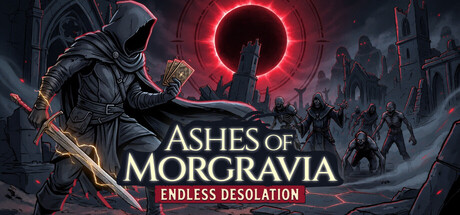
Ashes of Morgravia sets its dark fantasy tactical deckbuilder in the aftermath of a divine collapse — players lead a Godwoken through Morgravia's "eternal night," choosing a route through dangerous encounters and grotesque bosses while uncovering what the fallen gods left behind. The pitch that separates it from the crowded deckbuilder-roguelite space is its insistence that "positioning matters as much as your cards": fights happen on a hex battlefield where cover, line of sight, and pushing or pulling enemies out of position can matter more than the strongest card in hand. Adding pressure to that spatial puzzle is a Closing Fog that "consumes the battlefield's edges each round," shrinking the safe area and forcing both sides into tighter, more dangerous space as a fight drags on.
Two Decks, One Battlefield, and a Reward for Weaving Between Them
The central mechanical hook is running two separate decks at once — a Stride deck built for movement and defense, and a Clash deck built for offense — with a system called Weave that specifically rewards alternating between them rather than mining one deck for value. One reviewer described the appeal directly: "I liked the core element of drawing from two decks, ensuring a mix of support/buff and damage-dealing cards in my hand," while another called the hex-based combat the game's strongest asset: "The hex map, movement cards, and positioning make fights more interesting. You have to think where you stand, what enemies can reach you, and how to use your cards together." Not every reviewer found the dual-deck idea self-explanatory, though — one noted that "the most important mechanic (Weave) is not well signposted to the player, although it can be understood" after some trial and error, a fair criticism for a system this central to how fights actually play out.
Runestone Forge, Five Godwoken, and an Endless Mode Built on Crafted Cards
Beyond the campaign, Ashes of Morgravia includes Endless Desolation, a roguelite mode unlocked after completing the campaign's Patrol Desolation, which pushes players through escalating Ruination tiers and character-specific global leaderboards. Its standout feature is the Runestone Forge — rather than hoping a needed card appears as a run reward, players gather runestones and combine their effects to craft custom cards built for the strategy already in progress. Five playable Godwoken are available, each with a distinct sigil and equipment progression, and characters retain earned levels between runs so a defeat doesn't wipe out all prior investment. Legendary weapons that change how individual cards function add another layer of build variety on top of the equipment-set and boon systems described on the store page.
A Small Team, an Openly Disclosed Use of AI, and No Attempt to Hide It
One recurring thread among the English-language reviews is a direct, player-raised note about the game's production: a reviewer wrote, "Disclaimer: Yes AI was used in this game and the developer openly admits this. They are clearly a small team and they used AI to assist in making the game... They didn't fire anybody to replace them with a computer and as far as I can tell they didn't steal any art but used AI to refine theirs." Wanderer has not independently verified the extent or specifics of that claim and is relaying a player's account rather than confirming it directly, but it's worth surfacing here because the same reviewer went on to recommend the game regardless, framing the disclosure as a mitigating factor rather than a dealbreaker. It's a data point for anyone weighing that question before buying, presented as reported rather than established fact.
Short, Uneven Difficulty, and a Few Bugs — But Real Tactical Depth
Reception across the sixteen English-language reviews leans positive but comes with consistent caveats. Length is the most repeated complaint: one reviewer put a full campaign playthrough at "about three to five hours," and another agreed it "can be completed in about three to five hours," pairing that with a harsher note that it "offers little to no challenge" and that "the AI is simply bad," on top of frustration that a completed run doesn't preserve XP or rewards earned along the way. Other reviewers pushed back on the difficulty complaint specifically, praising the tactical layer instead — "Enjoyable turn-based game with some clever mechanics," "the combat has way more depth than I expected," and "quickly demonstrates its depth in terms of battle mechanics" all appear independently across different reviews. Bugs come up too, if less frequently: one player who compared it favorably to Trials of Fire noted "a lot of bugs though all around and started quite easy." Presentation earned some of the strongest praise in the sample — reviewers singled out the "animated card art," a "beautiful and haunting" art style, and an atmosphere that "gives spine shivers," alongside voiced dialogue and a gold-and-blue visual palette the store page describes directly.
Verdict
Ashes of Morgravia's hex-and-fog battlefield and its dual-deck Weave system give it a genuinely distinct identity in a genre where "deckbuilder roguelite" often means minor variations on a familiar template — and several reviewers who came in skeptical of the card-game framing left convinced by the positioning-first combat instead. Where it struggles is scope: a three-to-five-hour campaign at NZ$18.75 is a tough sell against genre benchmarks with dozens of hours of content, the difficulty curve reads as too gentle for players who came for a real test, and a handful of bugs and an under-explained core mechanic take some shine off the presentation. For players specifically drawn to positioning-heavy tactical combat and a shorter, focused roguelite loop in Endless Desolation, there's real substance here. For anyone expecting a lengthy campaign or a brutal difficulty curve, it's worth tempering expectations first.
Screenshots
-
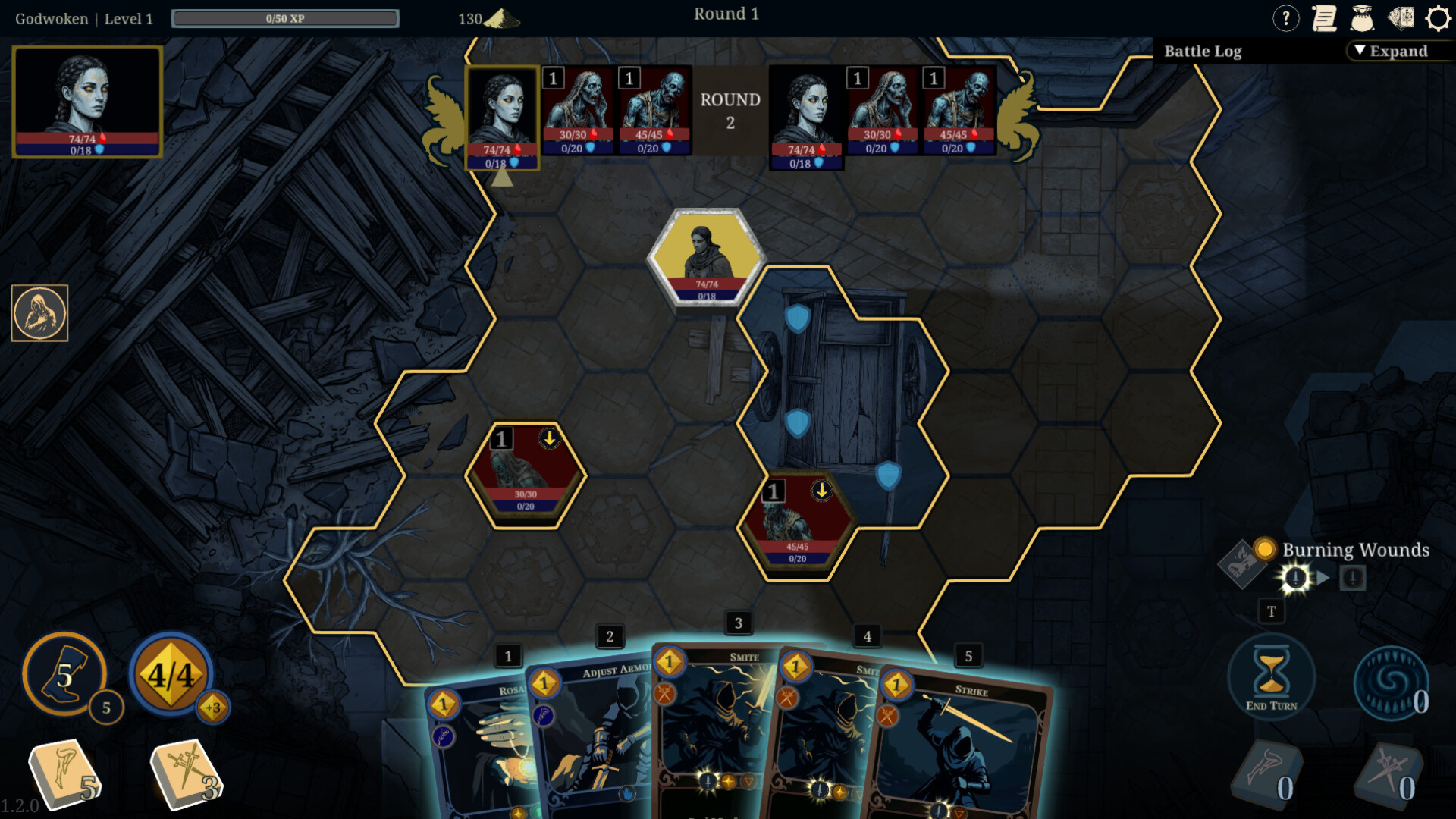
A Weave-turn combat encounter on the hex battlefield, alternating between the Stride and Clash decksImage: background blur. via Steam -
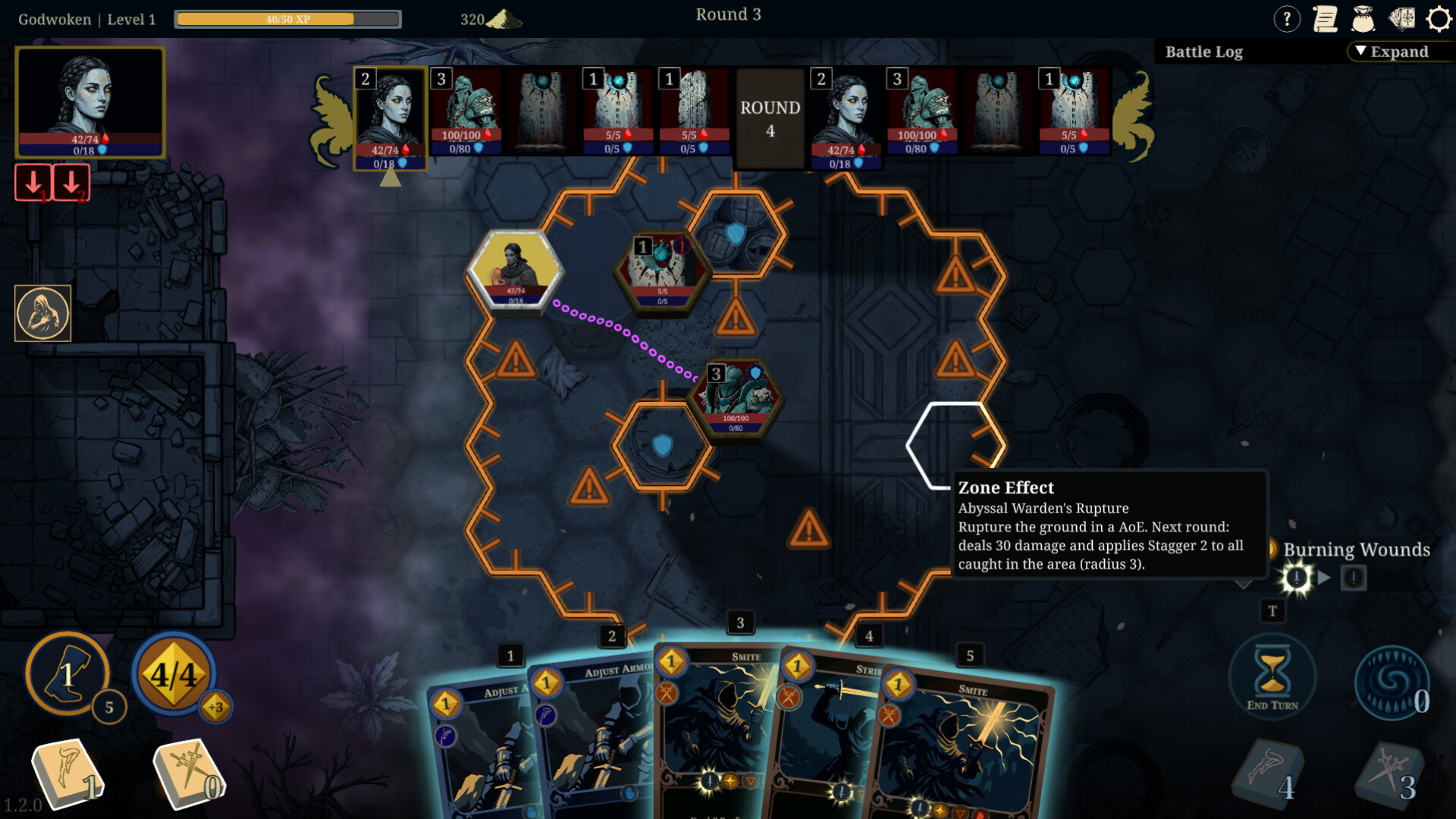
A Closing Fog encounter with an area-denial Zone Effect threatening the shrinking battlefieldImage: background blur. via Steam -
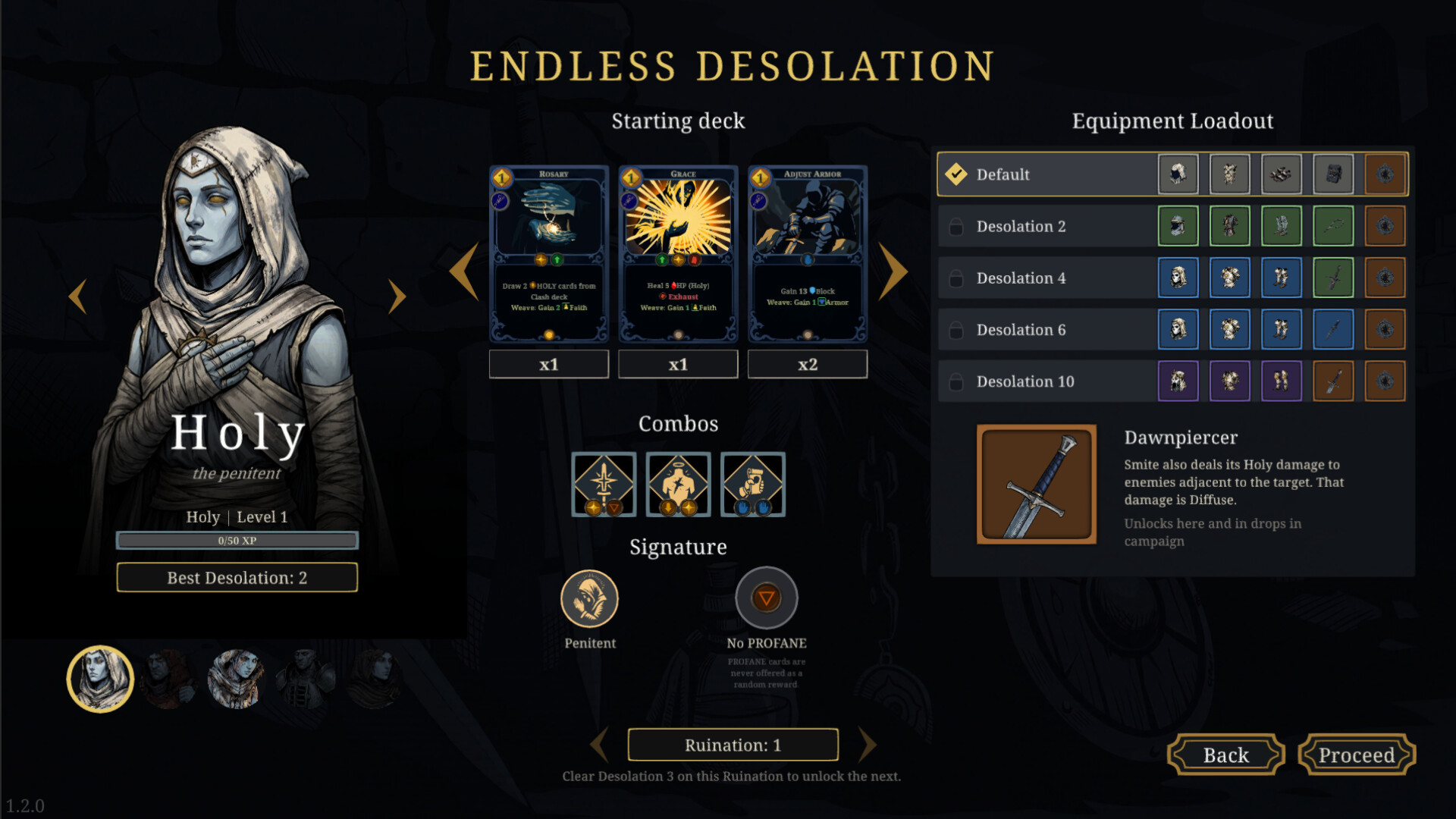
Selecting a Godwoken and loadout for a run of the Endless Desolation roguelite modeImage: background blur. via Steam