Game review
Eslabong Review
7.5 / 10
- Developer
- shirowita
- Publisher
- shirowita
- Released
- 24 August 2026
- Platforms
- ["Windows"]
- Genre
- Strategy
A Gladiator Club Wearing an Autobattler's Clothes
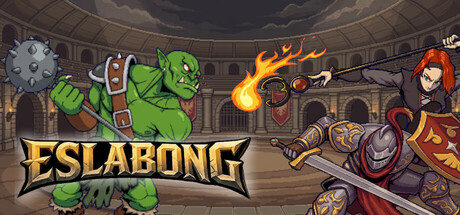
Eslabong, from solo developer shirowita, entered Early Access on August 24, 2026, and describes itself simply as "arena combat meets mercenary club management." That undersells what's actually going on. You recruit fighters from a rotating market, slot them into classes ranging from spear-wielders to lasso-toting brawlers to spellcasters, tune their AI behavior and tactics, and send them into auto-resolving arena fights across seasons of league play, climbing from the bottom divisions toward the Main League. Five hundred and fifty-nine English-language reviews in, it sits at "Overwhelmingly Positive," 97% approval, an extraordinary number for a fourteen-dollar Early Access debut from a single developer, and the review pool reads like a fanbase that stumbled onto something they didn't know they were missing.
Football Manager Wearing Gladiator Sandals
The comparison reviewers reach for most often is a mashup: Football Manager's seasonal grind and roster management, crossed with Mount & Blade-style arena combat and an autobattler's tactical layer. One reviewer called it "a mix between Mount and Blade's arena fights with troop command, Battlerite, an autobattler, and gladiator manager," while another framed it as playing three roles simultaneously: "the team manager... the coach... " directing tactics and formations, on top of actually building the roster. That layering is what reviewers keep pointing to as the game's real strength. A player can sit back and watch fights resolve on autobattle, or drop into manual control of an individual fighter mid-match, and multiple reviewers describe genuine surprise at how much strategic depth sits underneath what first looks like a simple auto-battler: stat rolls, class synergies, gear and relic loadouts, and AI behavior tactics that reviewers say meaningfully change fight outcomes when tuned well.
An Absurd Number of Classes, and a Roster That Tells Stories
Reviewers repeatedly cite the sheer breadth of classes and build combinations as the game's addictive core. "So many classes to choose from" is a near-universal refrain, and several reviews describe emergent, almost narrative attachment to specific fighters as they level up and develop a track record across seasons, one reviewer described planning a match around a specific "lasso Blackguard" fighter they'd grown attached to, while another recounted a blow-by-blow account of a late-game roster crisis complete with an injured captain and a clutch new recruit "raining lava rocks" on the opposition. That kind of unprompted, specific storytelling shows up constantly in the review pool and is a strong signal that the moment-to-moment fights, not just the meta-progression around them, are landing.
The Price of Living Development
The single most corroborated theme across the entire review pool, positive and negative alike, is the sheer pace of shirowita's patching. The developer visibly ships multiple updates a day; the ISteamNews feed for this game logged dozens of patches in barely a month, several days seeing three or four separate releases. Most reviewers treat this as a selling point, "every time you open Steam on a new day, you will find Eslabong in the update queue," one wrote, and many specifically praise the developer's responsiveness to player feedback on the Steam forums. But that same pace is also the review pool's most consistent complaint. One detailed critical review put it plainly: "I feel like I'm playing a different game every four days," and argued the game needs a separate unstable branch so players attempting a long league campaign aren't blindsided by balance changes mid-run. A second reviewer, more skeptical, flagged the menu-heavy management layer as "poorly designed and hard to get to grips with" in a game where menus make up most of the interface, and a third reviewer specifically praised the rapid patching while still holding back a full recommendation until "a few more patches" land. These aren't contradictory accounts so much as the same fact read two ways: a solo developer moving fast enough that today's Eslabong genuinely isn't quite the same game you played last week.
Rough Edges Under the Enthusiasm
Beyond the patch-cadence debate, a few reviewers raise more specific structural complaints. One noted that the "management" half of the management game is thinner than the genre comparisons suggest, fighters not on the active roster level up passively through simulated academy matches rather than anything resembling deliberate training, leaving less to actually do with a bench than the Football Manager comparisons imply. Given the scale and pace of ongoing patches, some of this thinness reads like territory the developer is actively still building out rather than a settled design choice, but it's a fair gap between the marketing framing and the current build. The interface earns mixed marks for similar reasons: functional and information-dense, but multiple reviewers agree it doesn't yet make its own depth easy to parse for a newcomer.
Verdict
Eslabong is an unusually confident Early Access debut: a solo developer's genre mashup that shouldn't cohere as well as it does, built around a deep, genuinely surprising combination of gladiator arena combat and season-over-season roster management. The class variety, the AI tactics layer, and the sheer density of builds on offer are all real and all corroborated across dozens of reviews, and the fourteen-dollar price looks like a bargain against how much game is already here. The catch is baked into the same thing reviewers love most: development is moving so fast that stability and a coherent, readable interface haven't caught up yet, and anyone starting a long campaign should go in expecting today's balance to look different in a week. For genre fans willing to ride out that volatility, the review pool's enthusiasm looks earned rather than hyped.
None of this reads as a shovelware Early Access cash-grab dressed up with a roadmap; it reads as a solo project already delivering most of what it promises, with the review pool's patience for its remaining rough edges clearly tied to how visibly and quickly those edges keep getting sanded down. Whether that goodwill holds depends on shirowita eventually trading some of that breakneck patch cadence for the kind of stability a season-spanning management game ultimately needs, but on the evidence of its first month, this is exactly the kind of Early Access release the label was meant for: unfinished, ambitious, and already worth the asking price.
Screenshots
-
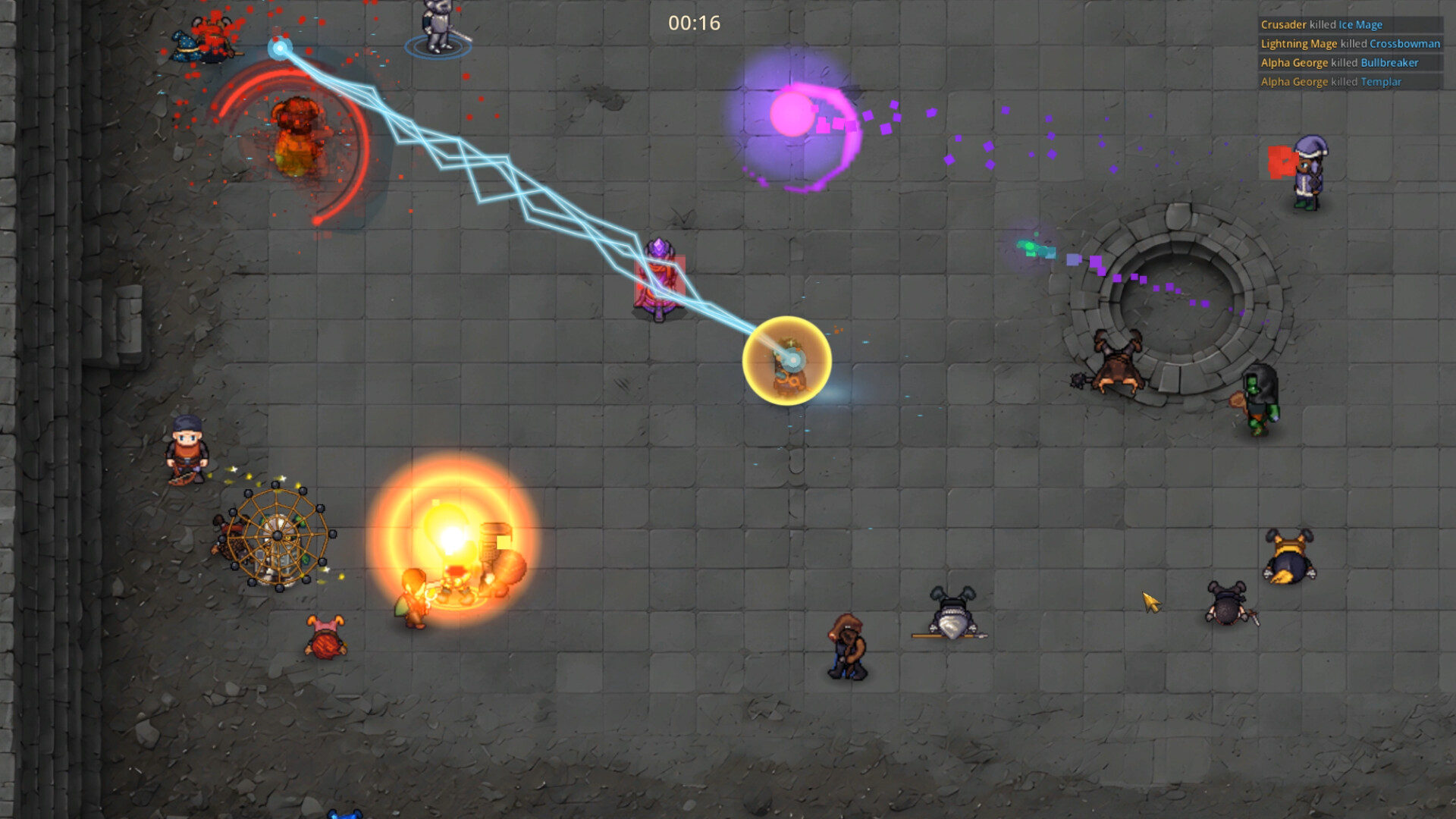
An auto-resolving arena fight in progress, full of overlapping ability effects, a live kill feed, and the kind of chaotic combat multiple reviewers describe managing through AI tactics rather than direct control.Image: shirowita via Steam -
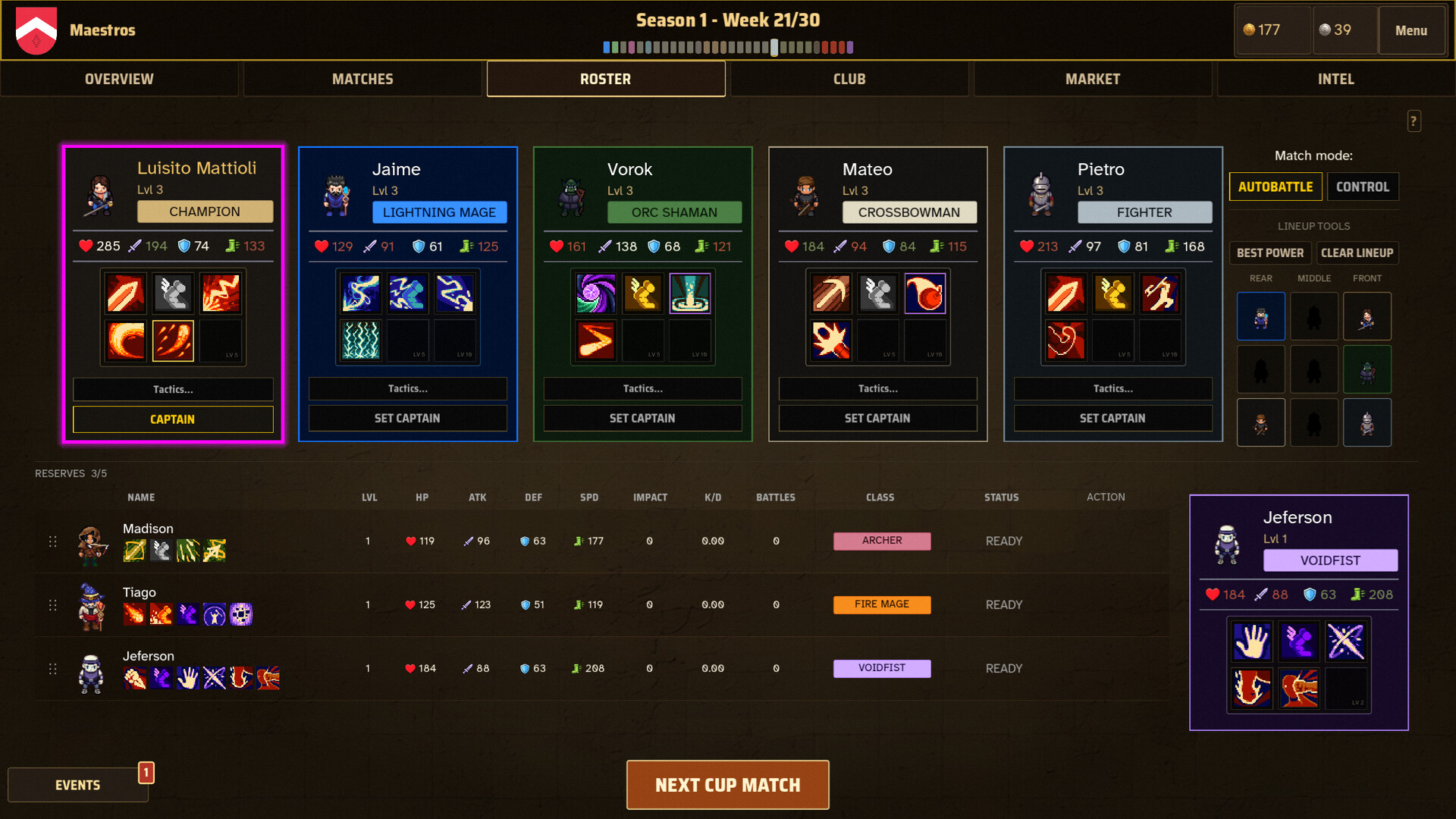
The Roster tab, where fighters, stats, abilities, and captaincy get set between matches, the management layer reviewers compare to Football Manager.Image: shirowita via Steam -
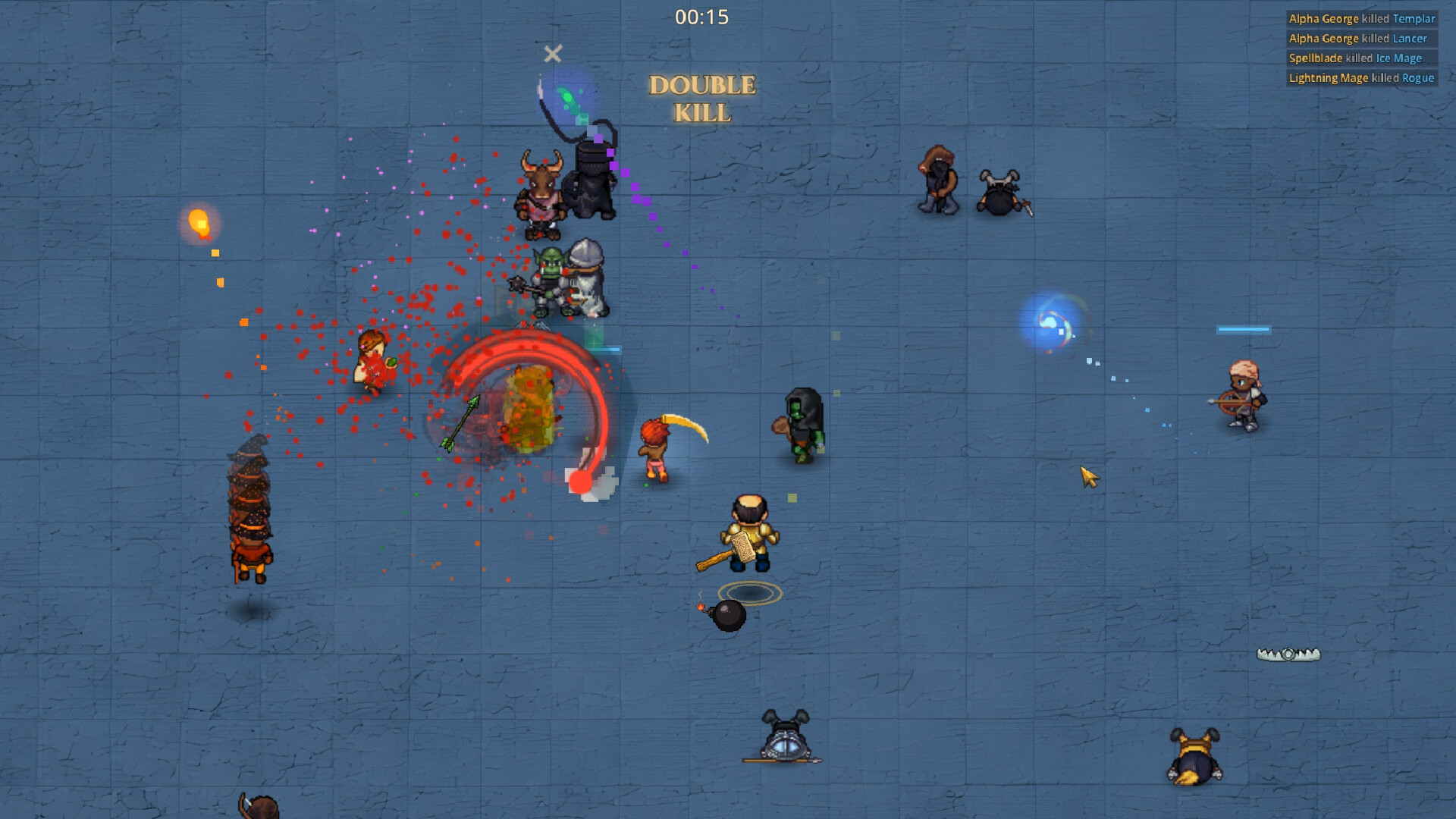
A double kill mid-match, the kind of swingy, chaotic teamfight moment reviewers say gets more readable, and more manageable, once you actually understand a fighter's tactics settings.Image: shirowita via Steam