Game review
Gallipoli Review
7 / 10
- Developer
- BlackMill Games
- Publisher
- BlackMill Games
- Released
- 20 August 2026
- Platforms
- ["Windows"]
- Genre
- World War I Multiplayer Shooter
The Fourth Front in BlackMill's War
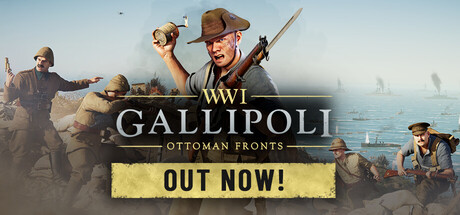
Gallipoli, from BlackMill Games, launched on August 20, 2026, as the fourth entry in the studio's long-running WW1 Game Series, following Verdun (2015), Tannenberg (2019), and Isonzo (2022). This time the setting shifts to the Ottoman Front, dropping 25-a-side squads into trench assaults, beach landings, and desert skirmishes across historically modeled maps like Anzac Cove, Ctesiphon, and V Beach, with ten distinct classes armed with period-accurate bolt-actions, machine guns, and artillery. At 2,038 English-language reviews and 80% positive, "Very Positive," it's a solid launch by the numbers, but the review pool tells a more interesting story underneath that headline: a passionate, decade-invested fanbase split down the middle over just how much this entry dares to change.
A Deliberately Slower, Heavier War
The single biggest talking point across the review pool is Gallipoli's new suppression and panic system, where sustained enemy fire causes visible shaking, screaming, and wildly increased weapon sway, paired with generally slower movement and stamina than the series' previous entry, Isonzo. Reviewers are genuinely split on this. A large contingent, including several thousand-hour veterans of Verdun and Tannenberg, praise it as the most immersive and tactically rewarding version of the formula yet, arguing that real WW1 combat rewarded caution over twitch reflexes and that the panic mechanic finally makes machine gun fire feel like a genuine threat rather than an afterthought. An equally vocal contingent, many with hundreds of hours in Isonzo specifically, argue the pendulum swung too far, calling the sway "grossly overexaggerated" and describing firefights as a fight against the game's own systems rather than the enemy. One especially detailed critique flags a specific authenticity break: suppression visibly swings the aim of a stationary, hand-cranked 18-pounder gun, which several reviewers single out as the kind of realism inconsistency that undercuts the game's own core sales pitch.
Atmosphere and Authenticity Land, Almost Universally
Whatever side of the pacing debate a given reviewer falls on, the pool converges hard on praise for the game's presentation. The lighting, terrain modeling, and Ottoman and Entente voice acting draw consistent, often gushing praise, with multiple reviewers, including at least one self-identified WW1 historian and a curator of firearms at a UK museum, specifically complimenting the historical accuracy of uniforms, weapons, and the Gallipoli terrain itself. The scale of the 25-versus-25 battles, the sound design around artillery bombardment, and the game's willingness to cover an underrepresented front of the war are called out again and again as the series' continuing strength, regardless of whether a given reviewer ultimately recommends the current build.
Hit Registration and Missing Social Features
Beyond the pacing debate, two specific technical complaints recur across a wide swath of independent reviewers rather than a handful of outliers. First, hit registration: more than a dozen reviewers separately describe shots that visually connect but register no damage or suppression, alongside player models that flicker invisible when not aiming down sights or partially behind cover. Second, and just as heavily repeated, is the near-total absence of party and squad-management features: reviewers report being unable to queue into a match as a pre-made group, unable to join a friend already in an active full server even when bot-controlled slots are open, and unable to switch into a friend's squad once a match has started. Several reviewers frame this as a genuinely baffling omission for a multiplayer-only release in 2026, and at least one explicitly contrasts it with Isonzo, which they say had the same problem and was never fixed. A smaller number of reviewers also report stuttering, desync, and a handful of refund requests tied to concerns about anti-cheat coverage.
Verdict
Gallipoli is a confident, handsome, and genuinely divisive fourth entry in a series that has never been afraid to reinvent its own formula between installments. The historical presentation, scale, and atmosphere are as strong as the series has ever delivered, and for a meaningful share of the review pool, the new suppression and panic systems represent the most tactically interesting version of BlackMill's WW1 combat yet. But the hit registration complaints and the baffling lack of basic squad-up features are corroborated by enough independent reviewers, spanning both positive and negative verdicts, that they read as real, current problems rather than launch-week noise, and the pacing overhaul will simply not land for players who came specifically for Isonzo's faster, snappier gunplay.
At $29.99 with purely cosmetic DLC and a 25% launch discount that several reviewers flagged as a fair entry price, the value proposition is reasonable for a series regular, and multiple reviewers note that all four games can be sampled cheaply during the franchise's frequent sales if a newcomer wants to find their preferred entry point first. Prospective buyers who loved Isonzo's faster, more forgiving combat should go in aware that Gallipoli deliberately walks that back in favor of a slower, more punishing rhythm, while fans who found Isonzo a little too close to mainstream shooters may find exactly what they were hoping BlackMill would eventually build. Either way, this is a series that keeps finding new fronts of the Great War worth dramatizing, and Gallipoli's ambition, even where it stumbles on execution, keeps that reputation intact.
It's also worth noting how unusually self-aware much of the review pool is about its own disagreement. Several reviewers explicitly frame their four-out-of-five or thumbs-down verdicts as temporary, betting that BlackMill's post-launch patch history on Verdun, Tannenberg, and Isonzo, each of which received sustained free content support long after release, will eventually smooth over the hit registration bugs and add the missing party tools rather than abandon them. That track record is doing real work in this review pool's collective patience, and it's a reasonable bet: a studio four games into the same franchise, still actively patching within weeks of launch, has already shown it plans to stick around. For genre fans specifically drawn to large-scale, historically grounded WW1 combat, Gallipoli earns a recommendation now, with the expectation that the version worth playing in six months will likely be meaningfully better than the one reviewed here.
Screenshots
-
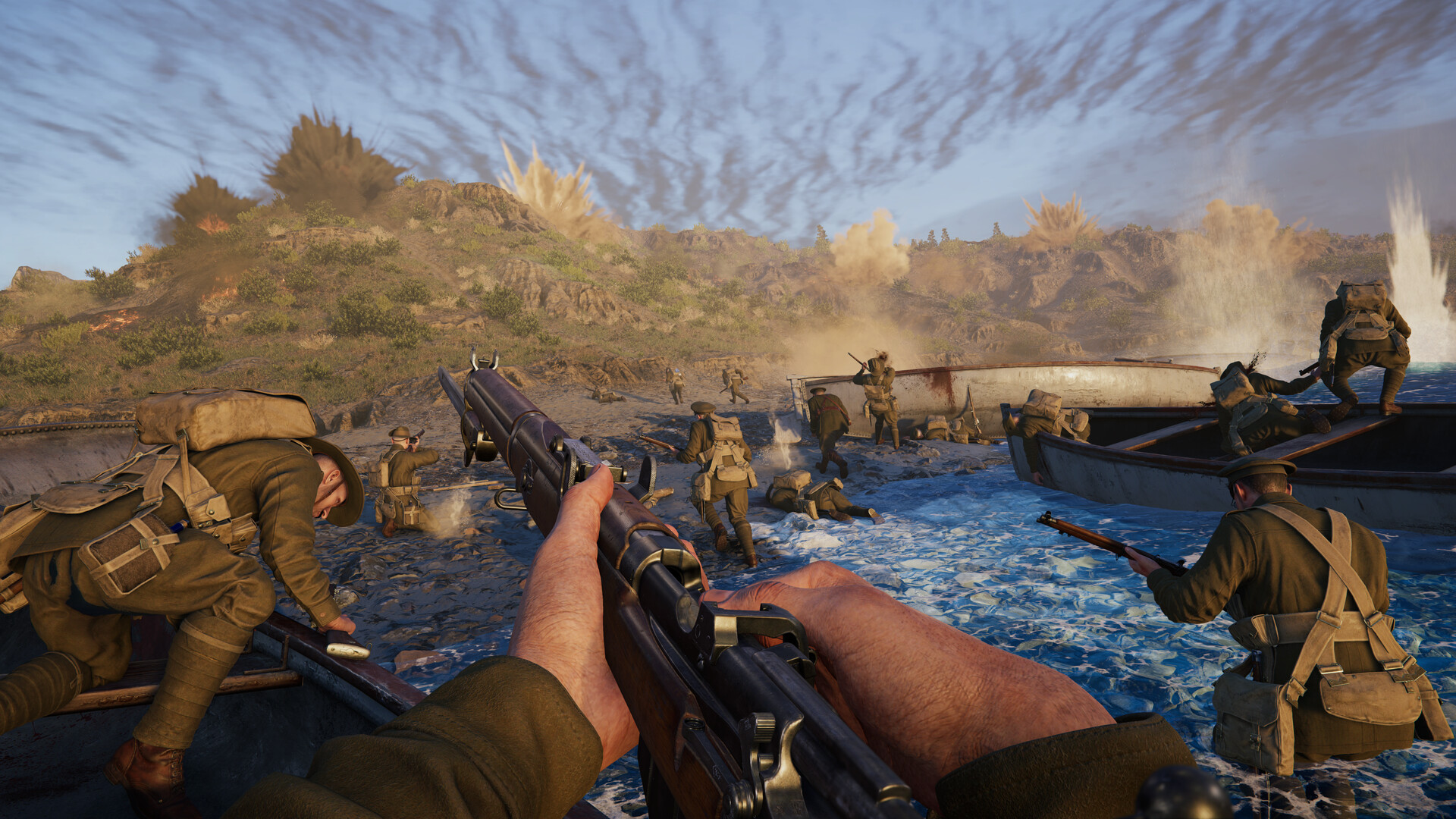
A beach-landing assault, one of the game's signature large-scale set pieces, with explosions dotting the hillside as squads pour out of rowboats.Image: BlackMill Games via Steam -
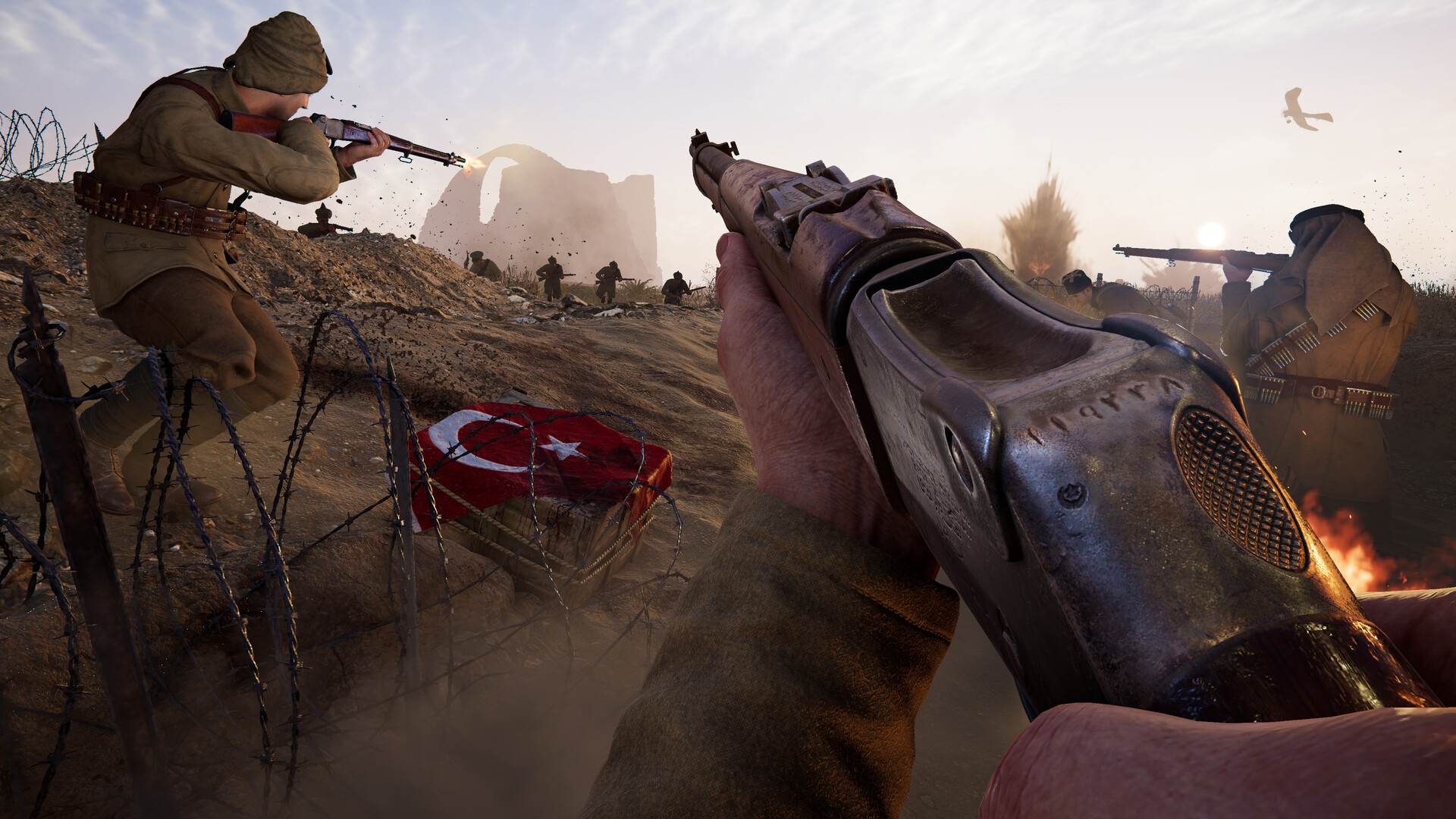
Trench-to-trench combat across barbed wire, with an Ottoman flag marking the contested ground between the two firing lines.Image: BlackMill Games via Steam -
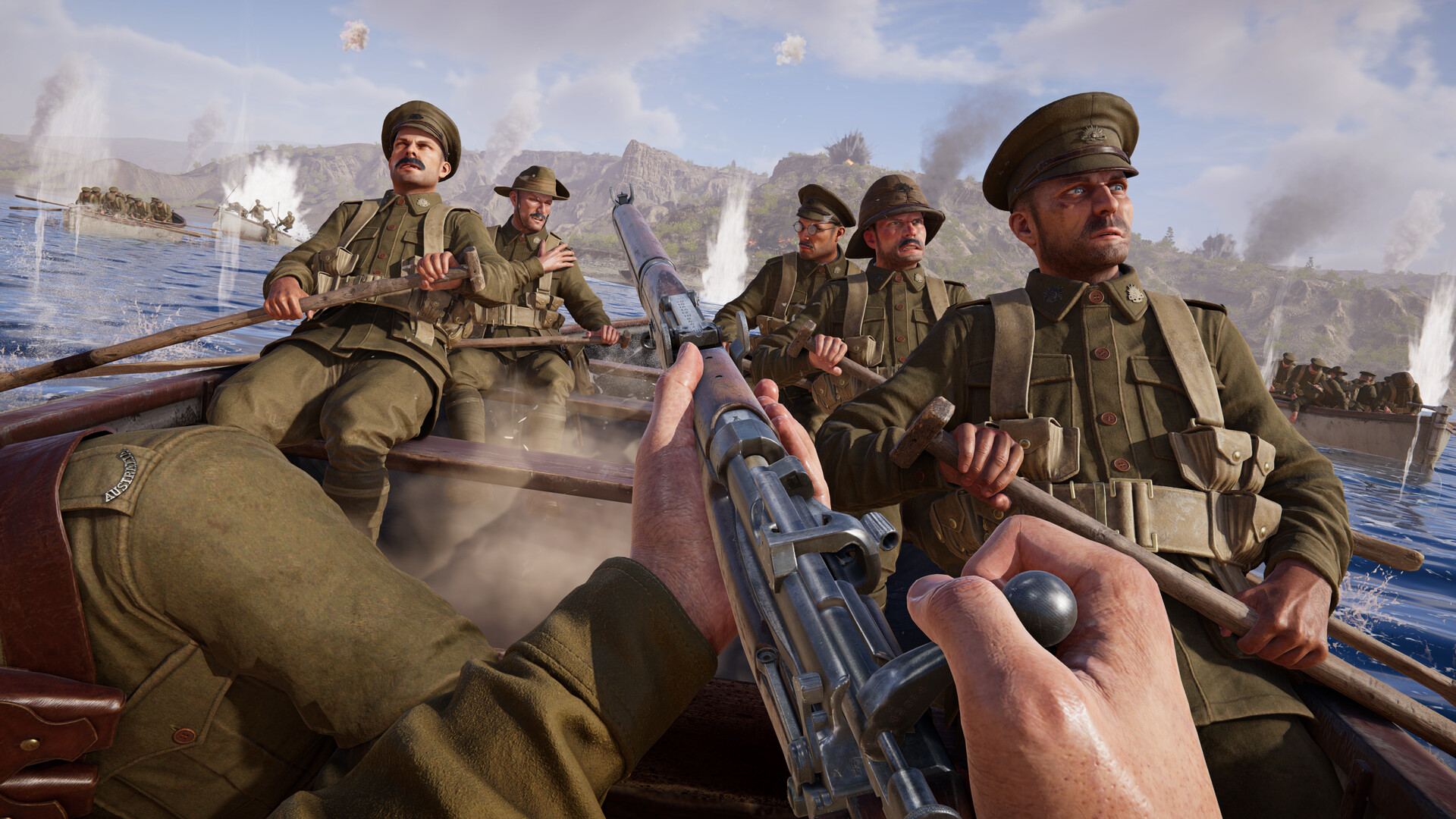
The approach to shore, a boat full of tense Australian soldiers rowing toward the beach as smoke rises from the cliffs ahead.Image: BlackMill Games via Steam