Game review
Minimon: Tiny Idle Tactics Review
8 / 10
- Developer
- Reign of Gaming
- Publisher
- Bufflehead Studios
- Released
- 31 August 2026
- Platforms
- ["Windows"]
- Genre
- Idler
A Creature Collector That Fits In A Corner Of Your Screen
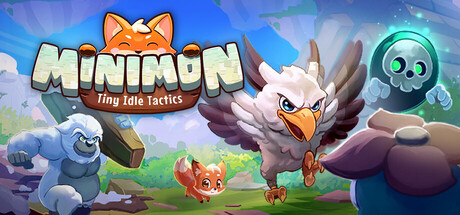
Minimon: Tiny Idle Tactics, released August 31, 2026 by developer Reign of Gaming and publisher Bufflehead Studios, pitches itself as a monster-taming auto-battler small enough to live beside a spreadsheet, a browser tab, or "that other game you're supposedly playing." Catch up to ninety Minimon across nine elemental types, kit them out with loot, and let them grind through waves of enemies while doing something else entirely, or sit down and play it properly when the mood strikes. Eleven English reviews, every single one positive, back up that pitch almost unanimously, and a long demo period before launch clearly did a lot of the work getting the formula right.
Idle By Default, Tactical When You Want It To Be
The core hook, repeated across nearly every review in the pool, is how comfortably Minimon straddles the line between passive and active play. "Fun little game! I leave it running on my second monitor while I work and check in every now and then. Surprising amount of features and depth for a desktop companion game," one reviewer writes, a sentiment echoed almost word for word by several others who describe checking in periodically rather than sitting through active sessions. But the game doesn't punish players who want to dig in: a wave director reshuffles enemy squads and loadouts as runs progress, meaning a build that cleared yesterday's stages can hit a wall today, forcing a real decision about gear, ability retooling, and team composition rather than just leaving the game to grind indefinitely. One reviewer who leaned into that optimization layer describes going "heavy DOT" with two support Minimon to clear a stubborn raid stage after an initial gear-agnostic approach stalled out, exactly the kind of min-maxing depth a purely idle game wouldn't support.
Ninety Minimon And A Twitch Hook
Beyond the idle/tactical balance, the collection layer itself gets consistent praise: "lots of different creatures to collect and play as," multiple reviewers note, with several specifically calling out variety in ability kits across the roster as the thing keeping team-building interesting well past the first few hours. A built-in Twitch integration, letting streamers run community-facing raid and "Brawl Bracket" modes, comes up unprompted in several reviews as an unexpected value-add rather than a bolted-on gimmick: "The twitch integration made the game so much more fun too," one reviewer writes, and another separately calls the brawl mode "amazing for giveaways on twitch." For a desktop-companion-style idler, building a genuine streaming hook into the core loop is a distinctive choice that several reviewers treat as the game's most memorable feature, ahead of even the collection mechanics themselves.
A Demo Period That Clearly Paid Off
Minimon's pre-launch news history tells an unusually clean story of iteration: more than a dozen demo-labeled update posts stretching from May 2026 through a Steam Next Fest appearance in June and into launch week in August, covering tutorial overhauls, endless-mode balance, currency drops, and ability-aiming fixes, all clearly marked as demo builds rather than purchasable releases. That extended, transparent public testing period shows up directly in the reviews: "Played this game during the demo, you can really see the feedback has been heard! Easy to pick up and play, each of the mons are cute and fun to collect. You can tell the devs put a lot of work into this project," one reviewer writes, drawing a direct line between the demo-era community feedback and the polish of the finished release. A September update adding achievements and Japanese language support, posted just over a week after launch, suggests that same responsive cadence has carried on past release.
Cheap For The Depth On Offer
At $7.99, reviewers are near-unanimous that Minimon punches well above its price point. "Fun game for very little cost! You can play it casually or spend many hours perfecting builds of your minimons. Lots of replayability," one reviewer sums up, while another calls it simply "the best idle game I've ever played." Nobody in the pool raises a complaint about pacing, monetization, or missing content, a notably clean review pool for a genre, idle/incremental games, that often draws exactly those complaints elsewhere. The absence of any negative review at all across eleven write-ups is itself a modest but real signal: whatever rough edges the demo period didn't already sand down clearly weren't significant enough for any of this pool to flag.
Verdict
Minimon: Tiny Idle Tactics earns its all-positive review pool by nailing the specific balance a desktop-companion idler needs: genuinely relaxing to leave running in the background, but with a wave-director system and gear-based tactical layer deep enough to reward players who want to actually sit down and optimize a squad. Its creature-collection hook, nine elemental types and ninety Minimon to track down, gives the loot-and-loadout grind a clear long-term goal, and the Twitch-integrated raid and brawl modes are a genuinely distinctive touch for the genre rather than a tacked-on feature. At $7.99, with a visible history of the developer acting on demo-era feedback and continuing to patch post-launch, this is an easy recommendation for idle-game fans and creature-collector fans alike, provided a small, screen-corner window is exactly the kind of game they're looking for.
What stands out most about Minimon is how deliberately it was built for exactly the audience it found: people who want a game running while they do something else, rather than a game demanding their full attention. That's a narrower design target than most idle games aim for, and it shows in details like the desktop-companion framing and the Twitch hooks, features that only make sense if the developers assumed from day one that most players would be half-watching at best. Committing to that premise, rather than trying to also be a full-attention game with idle elements bolted on, is likely exactly why this review pool reads as cleanly satisfied as it does.
Screenshots
-
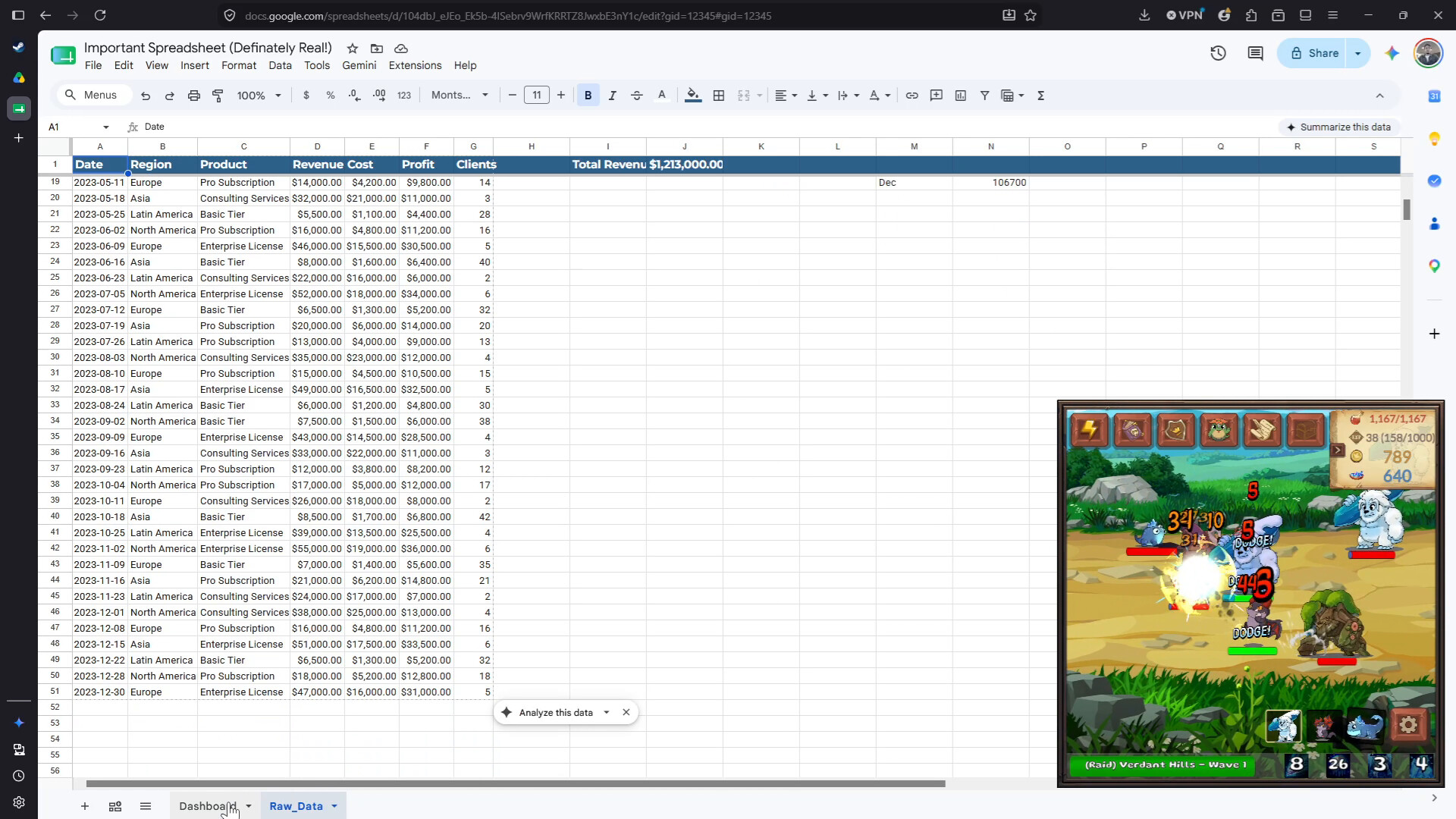
The pitch made literal: a Minimon raid fight running in a small window while a spreadsheet fills the rest of the screen.Image: Bufflehead Studios via Steam -
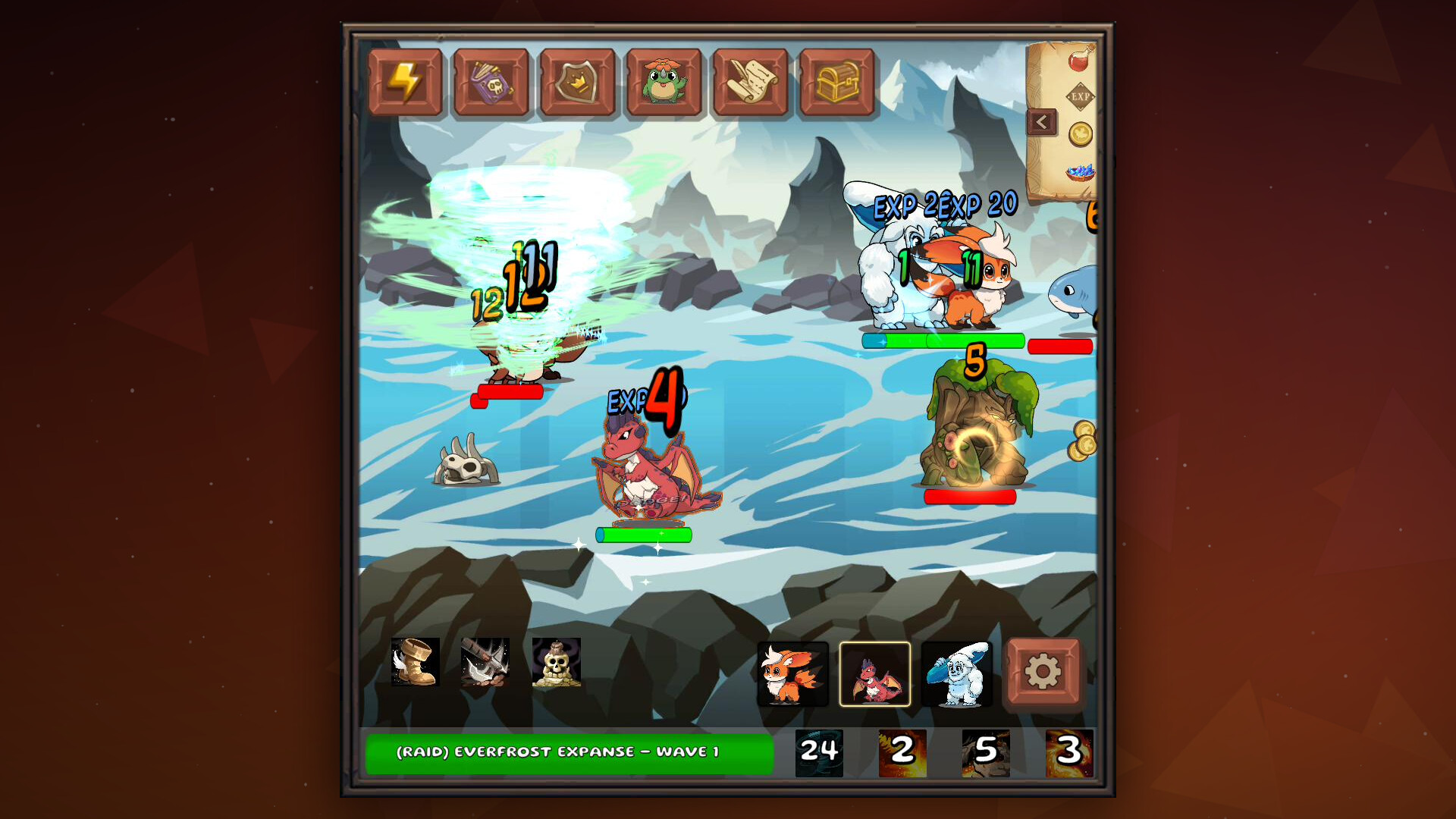
A raid stage in Everfrost Expanse, one of several biomes where the wave director reshuffles enemy squads as players climb higher.Image: Bufflehead Studios via Steam -
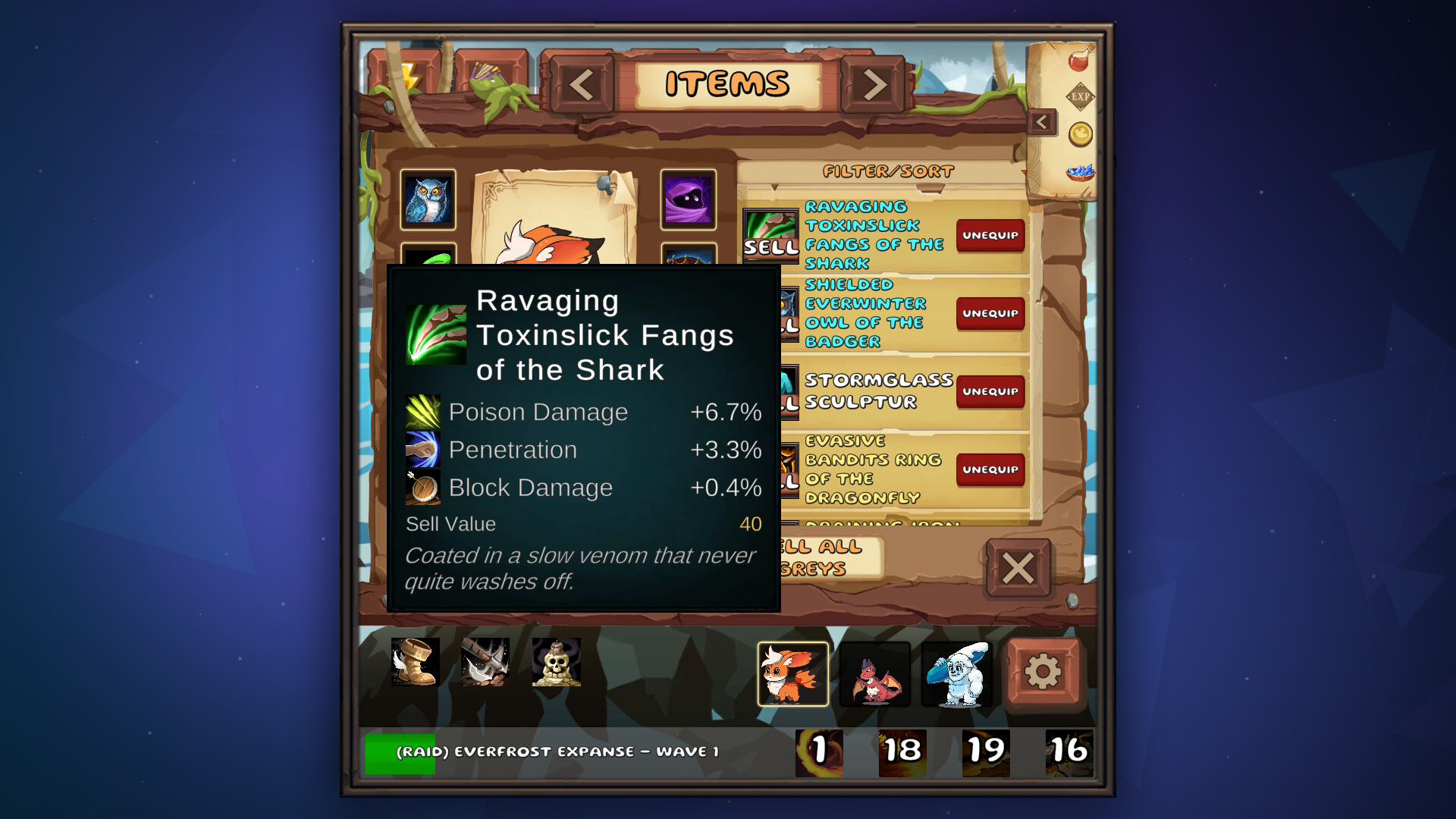
The loot and loadout screen reviewers cite as the game's tactical depth, gear pieces with stacking percentage bonuses to fine-tune a squad's build.Image: Bufflehead Studios via Steam