
Game review
Incremedieval Review
6 / 10
- Developer
- Jestercraft
- Publisher
- Jestercraft
- Released
- 3 September 2026
- Platforms
- ["Windows"]
- Genre
- RPG
Five Colonists, One Sword, A Whole Lot Of Number-Go-Up
Incremedieval, released September 3, 2026 from solo-flavored developer and publisher Jestercraft, opens with a premise that's more sci-fi than its name suggests: five space colonists crash-land on a new planet and decide to claim it. You directly control the warrior, hacking through dungeon arenas one sword swing at a time, while the other four colonists run the home village, converting the loot you drag back into buildings, upgrades, artifacts, and new gear. It's an incremental game wearing a retro pixel-art arcade skin, sixteen English-language reviews in, nine positive and four negative, a "Mostly Positive" score that reads as a fairly accurate summary of a genuinely divided reception rather than a rounding error. At $4.99, this is a small, cheap game, and the review pool's central disagreement is almost entirely about whether "small and cheap" excuses "short and unfinished," rather than about whether the core loop itself is any good.
A Real Incremental Loop, Not Just A Skin On One
The strongest praise in the pool comes from players who clearly know the incremental genre well and rate this one specifically against its peers rather than grading on a curve for being pixel-art and cheap. "Brilliant - one of the absolute best incremental game loops I've ever played, and I've played dozens. I hope this spawns a whole series!" is about as strong an endorsement as this kind of niche genre gets. A more detailed review, written by someone running a curator page for exactly this category of game, goes further into specifics: "Incremedieval seems to be more than just a simple incremental game and is several notches above most of the games in this project," pointing to a daily Overworld-management layer where you upgrade your character, unlock companions and blessings, feeding into dungeon runs where "the combat is simple but serves its purpose," and comparing the loop's structure to "more complex games like Moonlighter, albeit in a far simpler form." Another reviewer nails the specific appeal of the genre in one line: "it's simple but challenging, and the incremental progression tickles the brain in the right way." That reviewer also flagged something worth taking at face value: "Dev is also friendly and really happy with any feedback we might want to share, which is always great," a small but real signal that whatever rough edges exist right now aren't necessarily permanent.
Short, And Several Reviewers Say Too Short For The Price
The most consistent, corroborated complaint across the negative side of the pool isn't about the combat or the progression systems, it's about runtime relative to price. "The game is very short, I deliberately stretched it by buying most upgrades before the final boss, and it still took less than 1.5 hours," one reviewer wrote, adding that "the fundamental gameplay isn't bad, but it's not worth the price." A second reviewer describes beating the final boss "with not even half the upgrades" and calling the boss's only real mechanic "some puddles on the ground," concluding the game "seems incomplete." A third does the math explicitly: "you don't get 1 hour of gameplay for every euro you spend... if it wasn't [on sale] then its too expensive," while still recommending it conditionally as "a 3 hour game after work." That's three separate reviewers landing on the same complaint through different math, which elevates it well past a single outlier's pet peeve: this is a game whose content-to-price ratio is the actual sticking point for a meaningful slice of its audience, not its underlying design.
Crashes And A Sound Mix That Resets Itself
Beyond pacing, a second cluster of complaints centers on stability and audio, and these read as more straightforwardly fixable than "the game is short." One reviewer reports the game "freezes, and you have to relaunch" every three or four dungeon runs, and separately that "every time you launch, your sound settings reset, so you have to adjust them again," alongside "a weird bug with the sound sliders where if you go below 75%, the game is muted" and individual sound effects mixed at wildly inconsistent volumes. A second, unrelated reviewer independently corroborates the crash issue, noting the game "even started crashing before every second run" by a certain point in their playthrough. Two independent reports of crashes, plus a specific, reproducible-sounding sound-slider bug, is real technical signal rather than one unlucky install, and it's the kind of complaint a patch could plausibly resolve without touching the underlying loop that the game's fans are praising.
Verdict
Incremedieval is a case where the core design and the current build are pulling in different directions: the incremental loop itself, dungeon-crawling with your warrior feeding resource management back at camp, artifacts and blessings layered on top of straightforward combat, earns real praise from players who know the genre well, up to and including a reviewer calling it one of the best incremental loops they've played across dozens of similar games. But a meaningfully sized chunk of the negative reviews aren't disputing that design, they're pointing at a runtime that several independent players clock at under two hours even when deliberately padding it, a final boss some found underwhelming and undertuned, and real, reproducible bugs, periodic freezes and a sound-settings reset that happens on every single launch. At $4.99, that's a game whose ambition and its actual current shape haven't quite lined up yet, and the "Mostly Positive" score is the honest result of two groups of players, one grading the loop, one grading the finished package, arriving at different conclusions from the same eight-bit dungeon crawl. Anyone drawn to the specific pleasure of a tight incremental progression curve should find real substance here; anyone buying primarily for hours-per-dollar should wait for a patch or a deeper sale first.
Screenshots
-
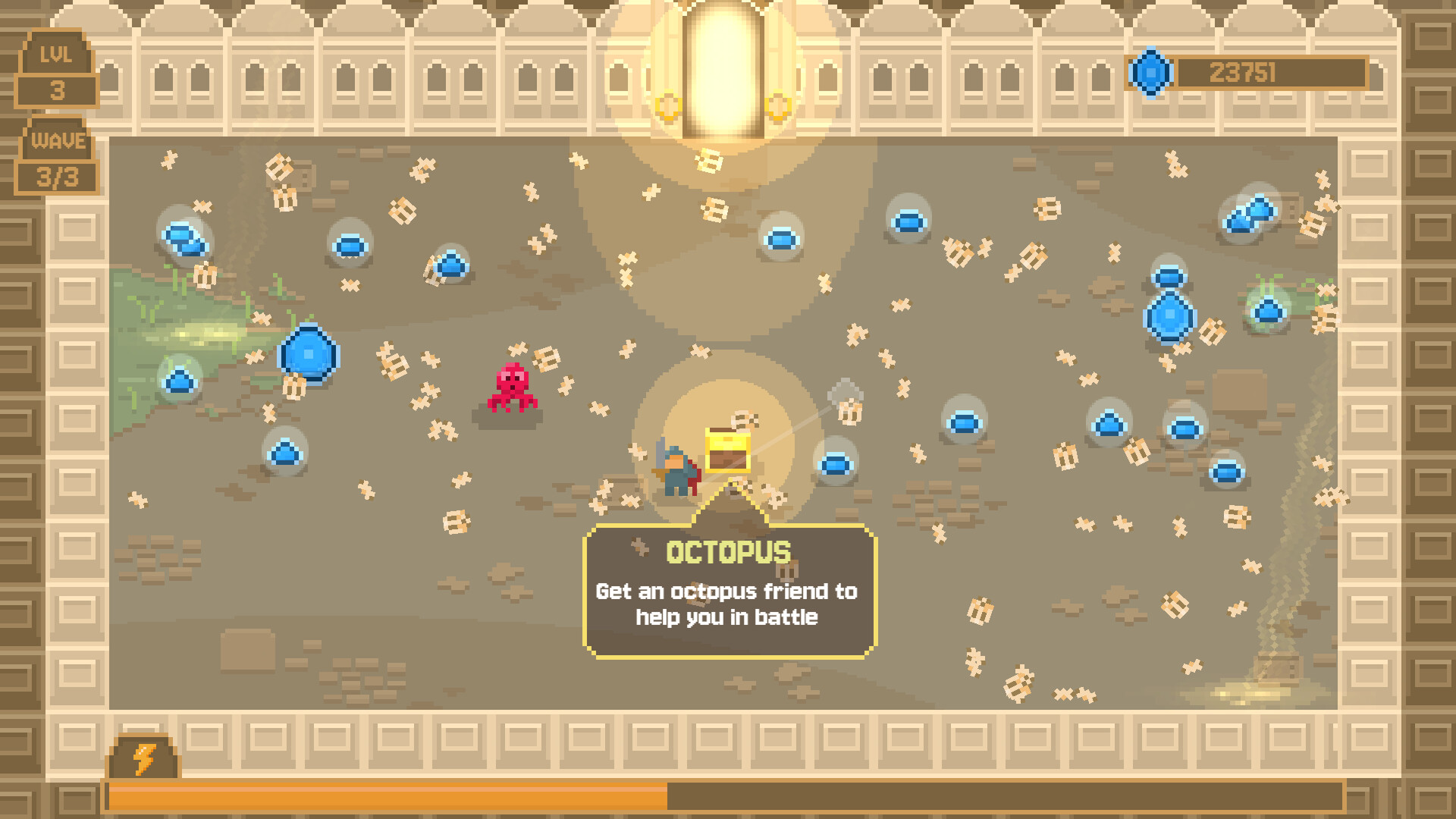
The screen fills up fast: gems, enemies, and a chest offering a new companion, all part of the resource-collecting loop reviewers say gets genuinely addictive.Image: Jestercraft via Steam -
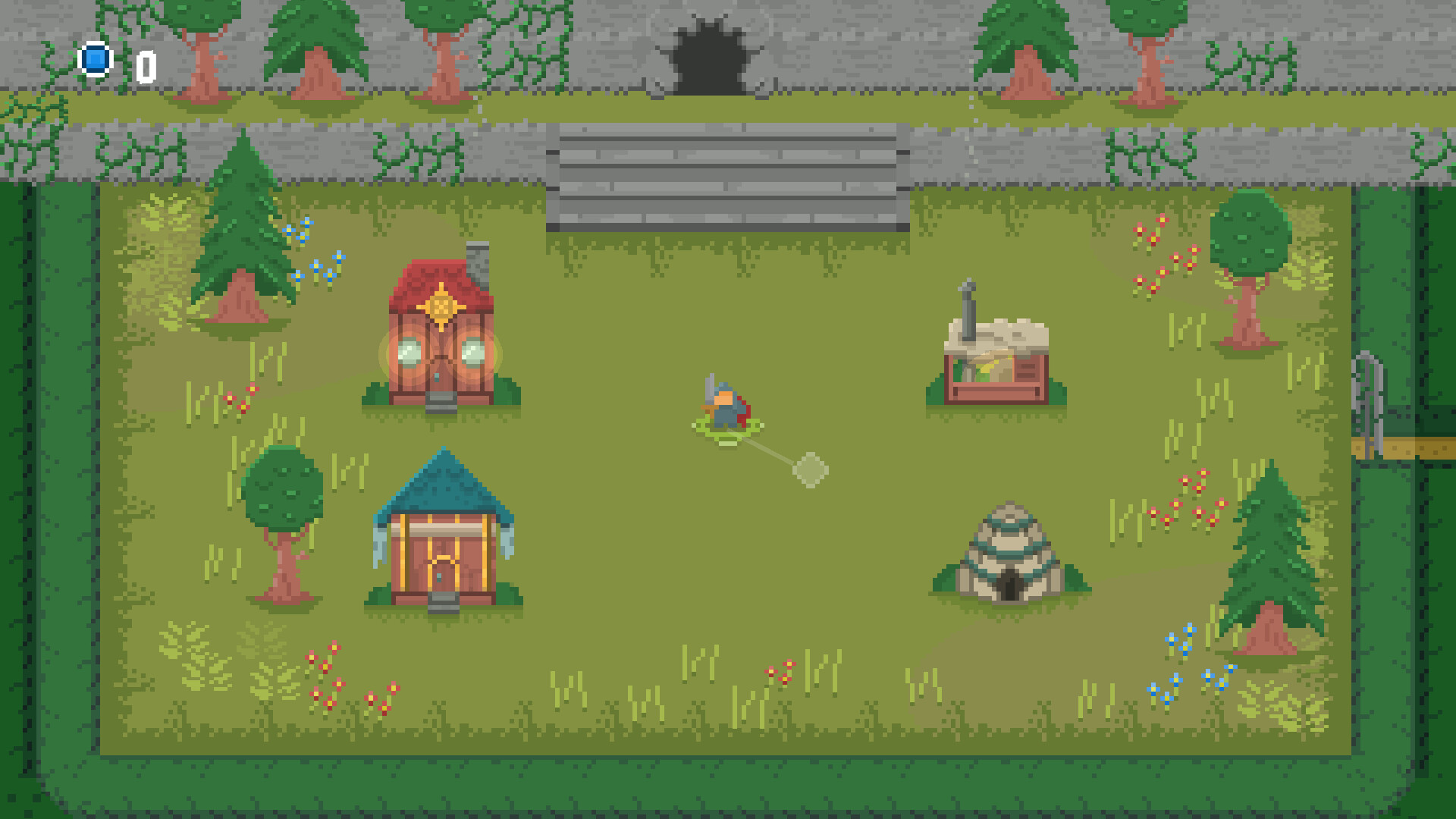
Between dungeon runs, the village hub is where loot gets turned into buildings and upgrades, the incremental half of the loop several reviewers single out as the game's real strength.Image: Jestercraft via Steam -
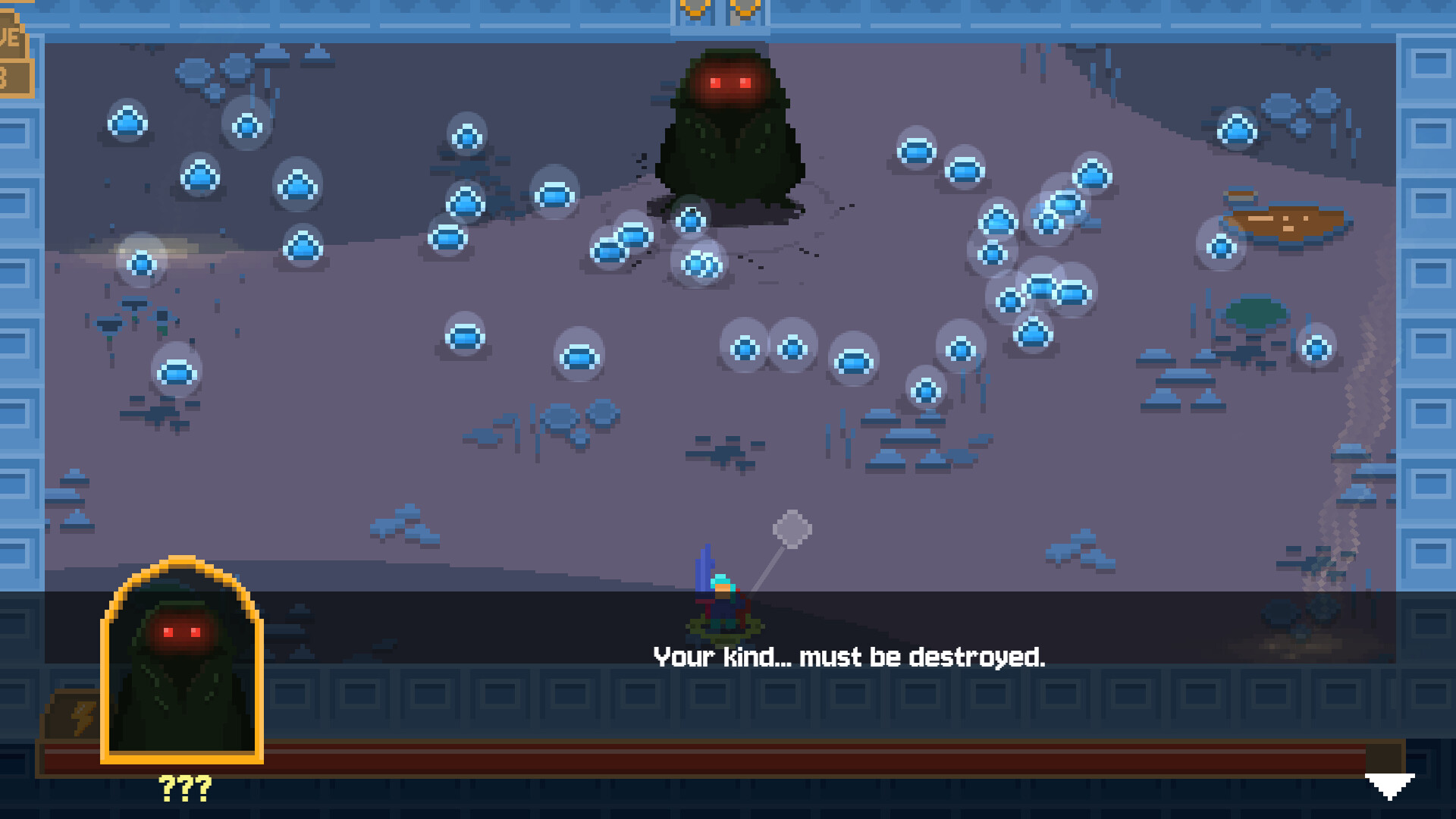
The 10th-stage boss fight, the moment a few reviewers found underwhelming relative to the buildup, though the gem-drop spectacle still lands.Image: Jestercraft via Steam