
Game review
NERMIUS Review
7 / 10
- Developer
- Saturn アクメ Corp.
- Publisher
- Saturn アクメ Corp.
- Released
- 8 June 2026
- Platforms
- ["Windows"]
- Genre
- Action
A Corporate Shell, an Angry Colony, and an ASCII Planet
NERMIUS entered Early Access around June 8, 2026 from the solo-flavored studio Saturn Acme Corp., pitching itself as a genre mashup: bullet-hell roguelite survival where you play a corporate combat "Shell" fighting alien fauna, layered on top of an incremental clicker mode and a colony-strategy sim, all wrapped in a retro pixel-art shell with a running corporate-conspiracy joke about the mysterious Saturn Acme Corp itself. At $5.00, it's a cheap, odd little pitch, and at review time it carried 12 all-language reviews (all positive) with a 7-review English subset, also all positive, a small but genuinely unanimous pool for a game barely three months into Early Access.
Bullet Hell Meets Spreadsheet, and Somehow It Works
The core loop reviewers describe is a layered one: run-based bullet-hell combat against waves of enemies feeds into meta-progression systems, which eventually unlock an entirely separate incremental clicker mode and a colony-management layer bolted on top. One reviewer summed up the surprise of that expansion directly: "there is now a whole rad looking colony sim mode that is tied to a small incremental game on top of the original bullet hell game. There is a weird little universe going on here." Another reviewer focused on the moment-to-moment combat feel, calling the pixel art "great" and the music well-suited to "the retro vibe," while praising how "the different Shells and worlds give you plenty of reasons to keep doing more runs." It's not a subtle design, three genres stapled together under one save file, but multiple reviewers describe it working better than that description suggests, largely because none of the individual layers overstays its welcome before the next one kicks in.
The ASCII World and a Retro Sci-Fi Aesthetic
A specific, recurring point of praise across the pool is the game's ASCII-styled planet, a deliberately old-school terminal aesthetic sitting alongside its more conventional pixel-art worlds. "The planet ASCII is simply wonderful, I love it," one reviewer wrote, while another described being drawn in specifically by that mode: "Mainly brought to the game because it features an ASCII-style world, but I honestly see the retro pixel art style that this game gives." A third reviewer leaned into the game's broader tonal identity, joking about "chrome robots looking to crush humanity" and describing the interface as "function over form," but preferring that terminal-like readout to something more conventionally polished: "I would not trade the feeling of poking around a terminal you would see in an 80s sci-fi movie." The throughline across these comments is a game whose visual identity is doing real work, several reviewers specifically credit the aesthetic choices, not just the mechanics, for making the game memorable.
Rapid Content Growth for an Early Access Game
Reviewers writing early in the game's Early Access life repeatedly note how much content was already present at launch and how quickly more kept arriving. "In early access and already so many maps?" one reviewer asked, going on to praise the number of unlockable planets, characters, and dialogue options already in place. Another reviewer specifically credited the pace of updates as a defining strength: "Interesting ideas, pleasant gameplay, frequent updates — all in all, a great game." A third reviewer, writing after an update added the colony-sim layer entirely, described it as "still easily one of the more interesting Steam finds this year," treating the mid-Early-Access feature addition as evidence of a developer actively building rather than coasting on an initial release.
Rough Edges: Unclear Progression and a Few Loose Threads
The pool's praise comes with real, specific caveats rather than blanket enthusiasm. Two separate reviewers flagged confusion around the game's progression and currency systems specifically: one noted that "some of the progression systems could be explained a little better," while another, writing at greater length, described being unsure how two separate in-game currencies, SPX and an unnamed coin-like resource, actually functioned: "I think. Please correct me if I am wrong. I don't want to mislead anyone here." Smaller, individually-reported issues round out the list, one reviewer noted the music can repeat too often on longer runs, another reported a boss's loot chest spawning inside terrain geometry and becoming unreachable, and a third pointed out the game tracks in-game achievements but has no Steam achievements implemented yet. None of these were treated as dealbreakers, most of the reviewers who raised them still recommended the game, but they paint a picture of a genuinely early Early Access build still working out its explanatory and technical rough edges.
Verdict
NERMIUS is a strange, likeable grab-bag of a game, bullet-hell combat, an incremental clicker, and a colony sim sharing one save file, unified more by a shared retro aesthetic and a running corporate-conspiracy joke than by any single genre identity. Its ASCII-world presentation and rapid Early Access content pace are its clearest strengths, repeatedly and specifically praised across its small review pool, while its unclear currency and progression systems, along with a handful of minor bugs and missing Steam achievement support, mark it as a game still finding its footing this early into development. At $5.00 it's a low-risk curiosity for players drawn to genre mashups and retro sci-fi presentation, though anyone allergic to Early Access rough edges or genuinely unclear tutorializing should wait for a few more of those systems to firm up before diving in. For now, the seven-for-seven positive English reviews suggest the people who bother trying it tend to come away won over by its weirdness rather than put off by it, even with those caveats attached.
Screenshots
-
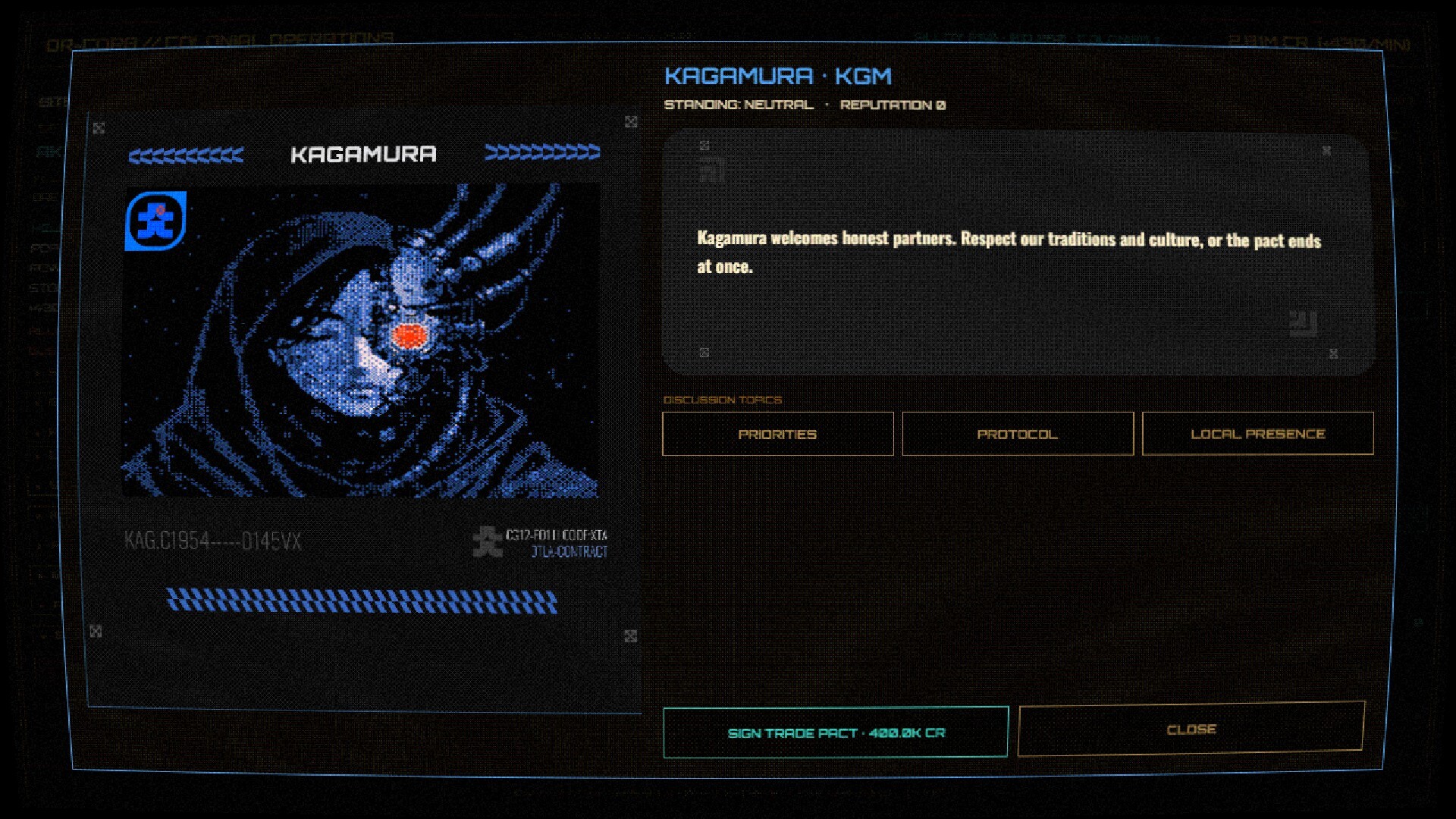
A faction negotiation screen, part of the colony-strategy layer reviewers say adds real depth on top of the game's bullet-hell combat.Image: Saturn アクメ Corp. via Steam -
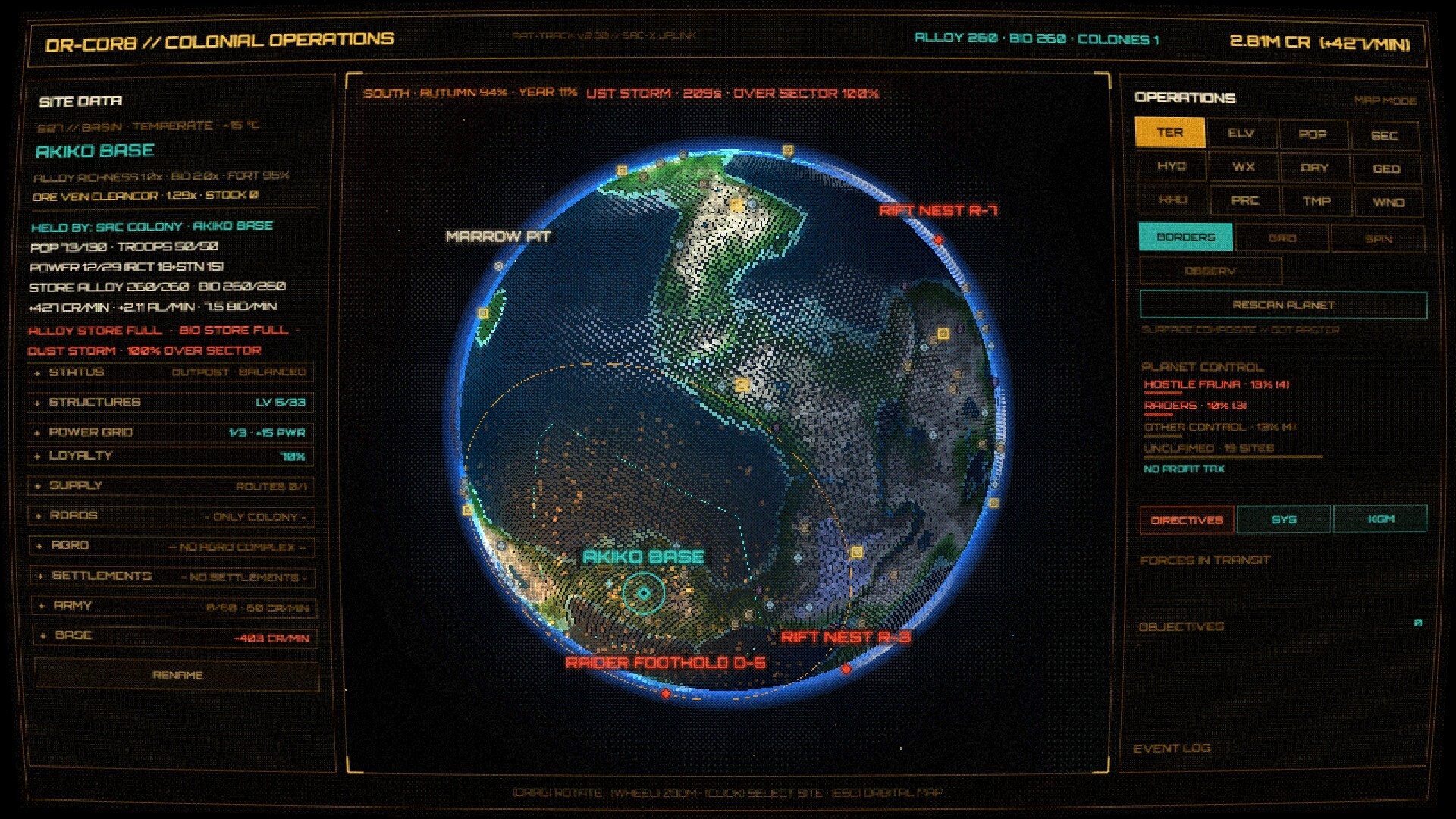
The colony-management interface, deliberately styled like an 80s sci-fi computer terminal, function over form by design.Image: Saturn アクメ Corp. via Steam -
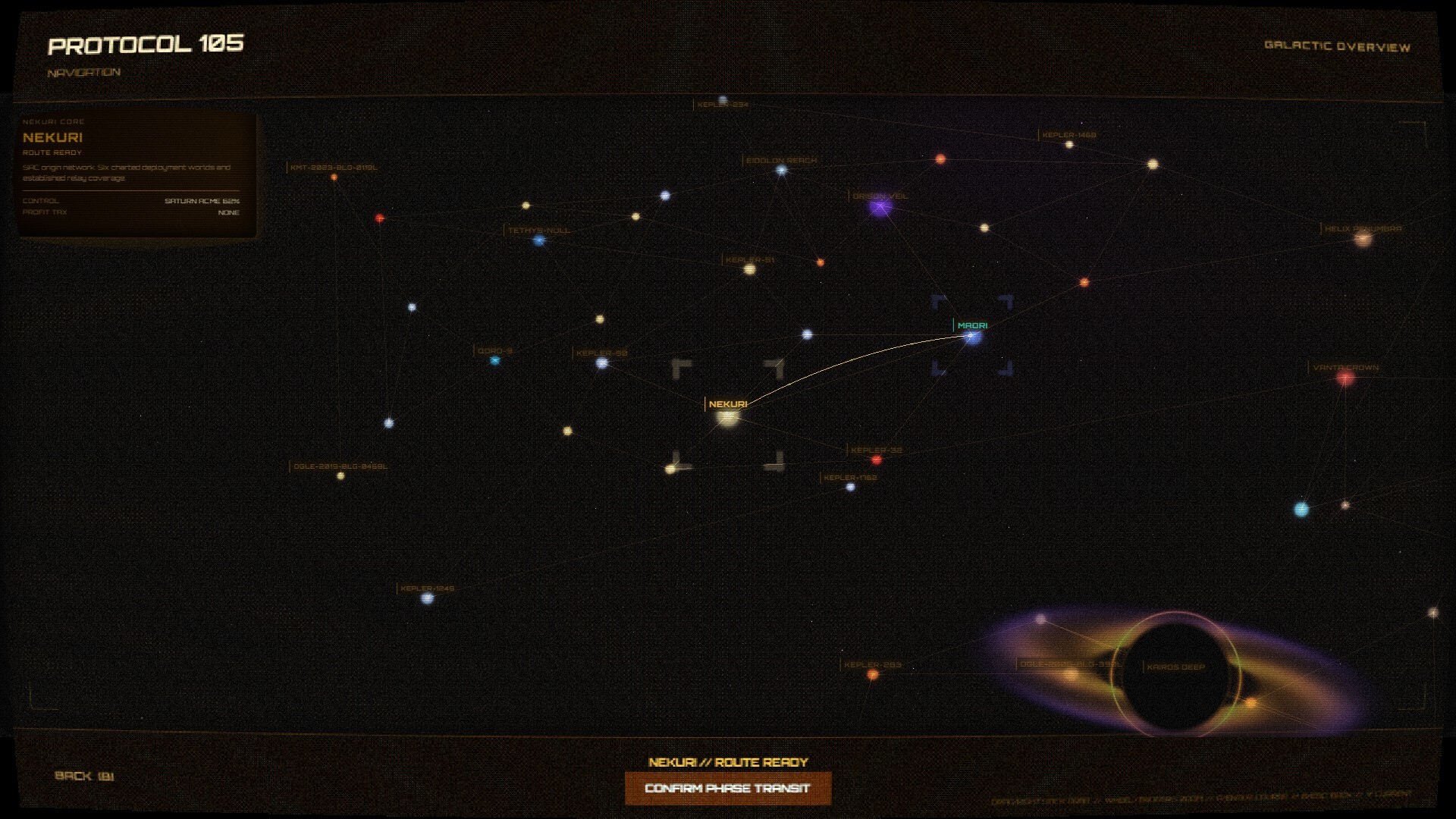
The game's galactic star map, used to chart phase transit between systems as the Shells expand Saturn Acme Corp's reach.Image: Saturn アクメ Corp. via Steam