
Game review
Angel Essence Review
8 / 10
- Developer
- g3bsoft
- Publisher
- g3bsoft
- Released
- 21 July 2026
- Platforms
- ["Windows"]
- Genre
- Action
A Spiritual Successor to Pseudoregalia, Worn Openly
Angel Essence launched on July 21, 2026, from solo developer g3bsoft, and it is impossible to talk about the game without first talking about the one it's constantly compared to: Pseudoregalia. Nearly every one of its 162 reviews name-checks that earlier retro 3D platformer, sometimes as high praise, sometimes as a mild demerit for being derivative, and the developer themselves doesn't seem to mind: reviewers note that Pseudoregalia's creator appears in this game's special-thanks credits. At $4.99, Angel Essence casts Angelique, a treasure hunter ascending through a heavenly realm, in a movement-first 3D platformer built around a hub world and five self-contained areas, and the reception has been overwhelming: 160 of 162 reviews positive, a "Very Positive" score that's rare even by this genre's enthusiastic standards.
Movement Is the Whole Game, and It Delivers
The consistent throughline across the sample is that the moveset is the point, and it lands. Reviewers describe a slow-burn opening that gates most of the fun behind early unlocks, followed by a steady cascade of new abilities, a gravity-orb tool, a dash, a wall kick, an "Alternate Function" modifier, that each meaningfully expand what's traversable. Multiple reviewers single out how quickly the game turns into a "power fantasy for movement instead of violence," describing moments where a single new item cracked open the whole map, and several note real, rewarded sequence-breaking: skipping intended paths entirely once enough traversal tech is unlocked. One especially detailed positive review calls the gravity-node mechanic "super neat" for how it makes players unravel a space before committing to a jump, even while noting the later dash somewhat outclasses it. This isn't shallow praise, either: reviewers with 20, 30, even 48 hours logged describe going back in purely to chase 100% completion and remaining hidden trinkets.
Retro Visuals With Real Atmosphere
The low-poly, N64-and-PS1-inspired art style draws consistent praise, several reviewers specifically invoke the "fifth generation of consoles" or early Dreamcast, and more than one reviewer calls the resulting sense of scale and emptiness "almost unsettling" in a good way. The soundtrack comes up unprompted and repeatedly as a highlight, with multiple reviewers singling out the final area's track by name-adjacent praise and asking for a standalone release; one reviewer flatly states they're "mad" they haven't paid enough for the game and wants to support an eventual OST release. It runs comfortably on modest hardware, including the Steam Deck, which several reviewers call out directly as a selling point.
Combat: An Afterthought by Design
Where the reception turns genuinely critical is combat. Reviewers across the board describe it as trivial: enemies deal negligible damage, the player has no traditional health bar and instead only loses a small amount of currency ("Essence") when hit, and most encounters can be brute-forced by holding down a weak ranged attack. One long, detailed review goes as far as to lay out the specific mechanical problem, the "fairy meter" that powers attacks recharges so generously that its upgrades feel pointless to seek out, and recommends the developer make enemies either more aggressive or more punishing. Several reviewers explicitly say they wondered why combat was included at all given how disconnected it feels from the platforming that's clearly the actual design focus, though almost none treat this as a dealbreaker.
Rough Edges in Menus and Control Mapping
The other recurring complaint is control complexity, particularly on controller, where the sheer number of distinct movement actions (wall running, kicking, dashing, gravity-orb use, backflipping) mapped across a small number of inputs leads to frequent misinputs, especially in the game's back half. A few reviewers report the wall-kick's trajectory feels inconsistent compared to Pseudoregalia's, and one keyboard-and-mouse player describes the controls as "clunky" with dropped inputs on gravity orbs specifically. Menu navigation draws separate, smaller complaints about sticky cursor movement, and more than one reviewer asks for an invert-X camera option that currently doesn't exist (only invert-Y is available). None of this appears in the negative-review column alone; it shows up constantly even inside five-star raves, as a genuine but forgivable rough edge.
An Active, Listening Developer
Even reviewers with substantive complaints repeatedly credit g3bsoft for visibly engaging with the community and shipping fixes, one reviewer thanks the developer by name for continuing to improve the game post-launch, and another notes the currency display was patched to show live values rather than requiring a pause menu check. This pattern, a small studio actively iterating rather than abandoning a finished release, echoes what's shown up favorably in other reviews from this same window.
Short, Cheap, and Built for Speedrunners
Playtimes cluster tightly around 4 to 7 hours for a full clear, occasionally stretching past 20 for completionists chasing every trinket and challenge area, and reviewers are near-unanimous that the $4.99 price is a steal relative to that. Several reviewers, including ones with real critiques of the controls or combat, explicitly say they'd have happily paid $10 or more. The freeform movement and sequence-breaking already have speedrunners circling, with at least two reviewers openly hoping for community randomizer support down the line, the kind of grassroots afterlife that tends to follow only genuinely well-built movement systems.
Verdict
Angel Essence wears its Pseudoregalia influence openly, and rather than being a weakness, that comparison is mostly why it works: a tight, escalating moveset, a genuinely charming N64-flavored world, and a soundtrack people are already asking to buy separately, all wrapped around a hub-and-five-areas structure that rewards exploration and skilled skipping alike. The combat is vestigial and the controls can get cluttered on both controller and keyboard, but at five dollars for a short, dense, constantly-praised platformer from a developer who's still patching it weeks after launch, those are easy flaws to forgive.
Screenshots
-
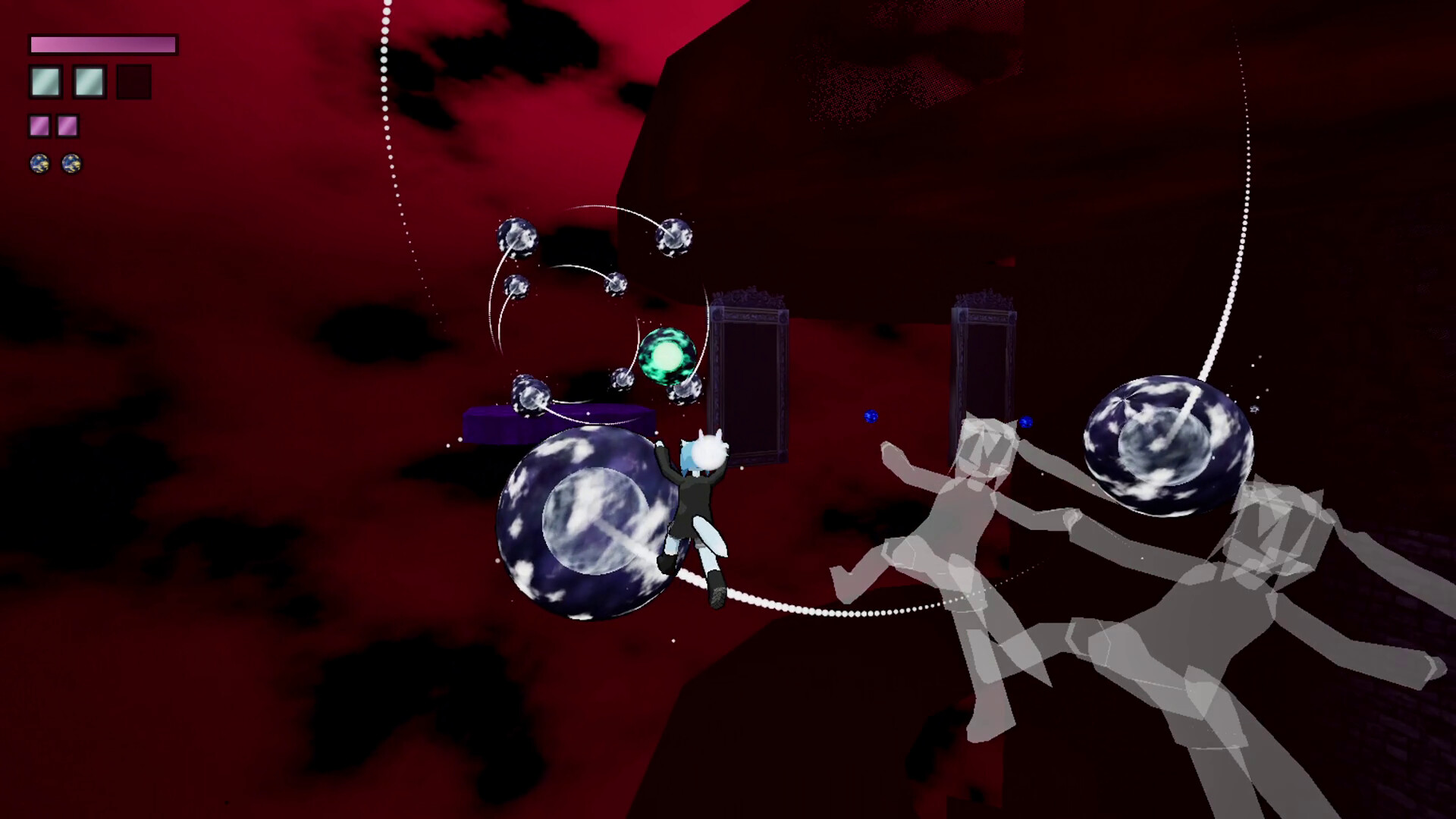
A gravity-orb encounter against one of the game's ghostly enemies, in a red-tinted cavern area.Image: g3bsoft via Steam -
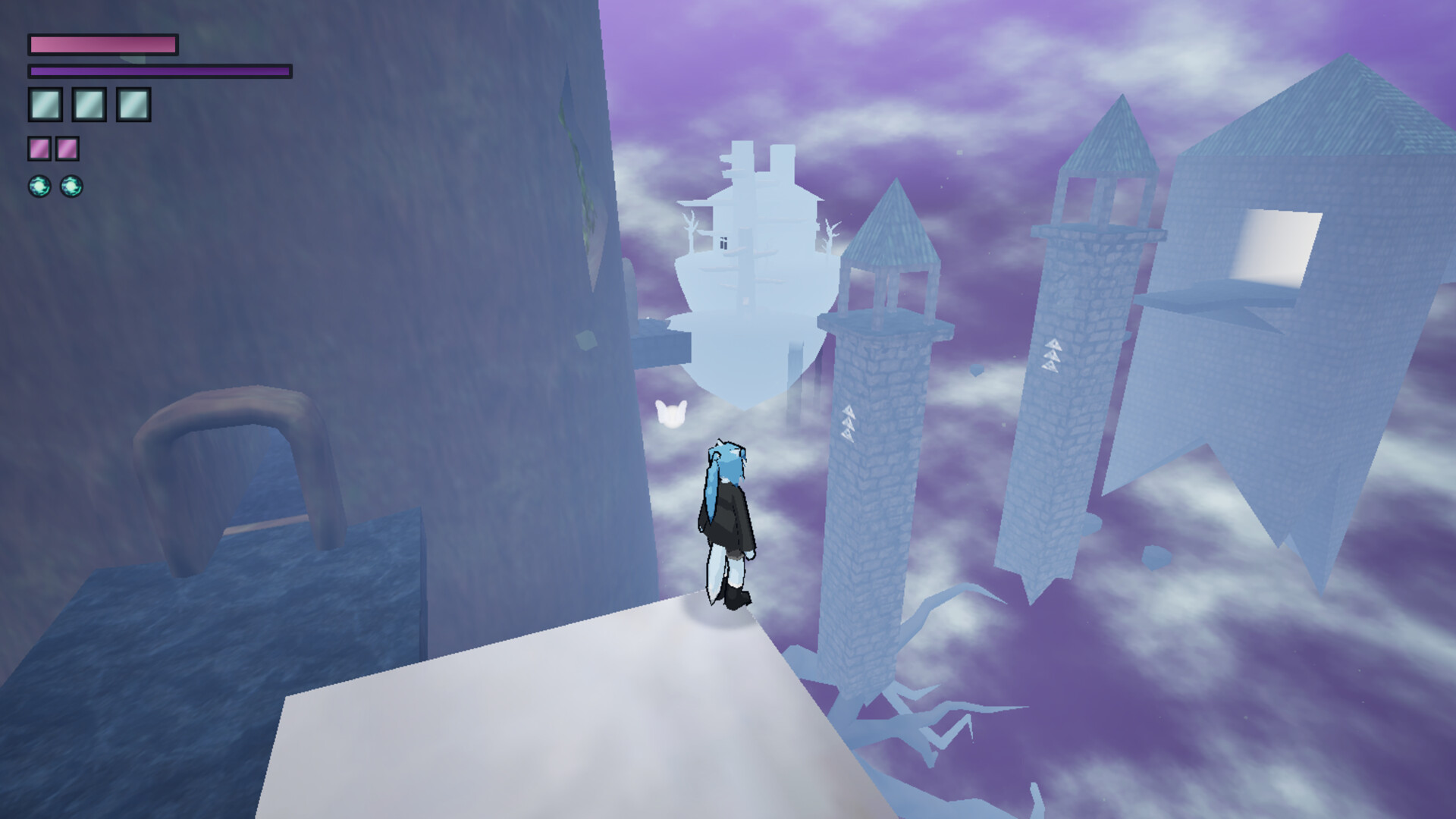
One of the game's more atmospheric vistas, looking out toward a floating, ghost-ship-like manor.Image: g3bsoft via Steam -
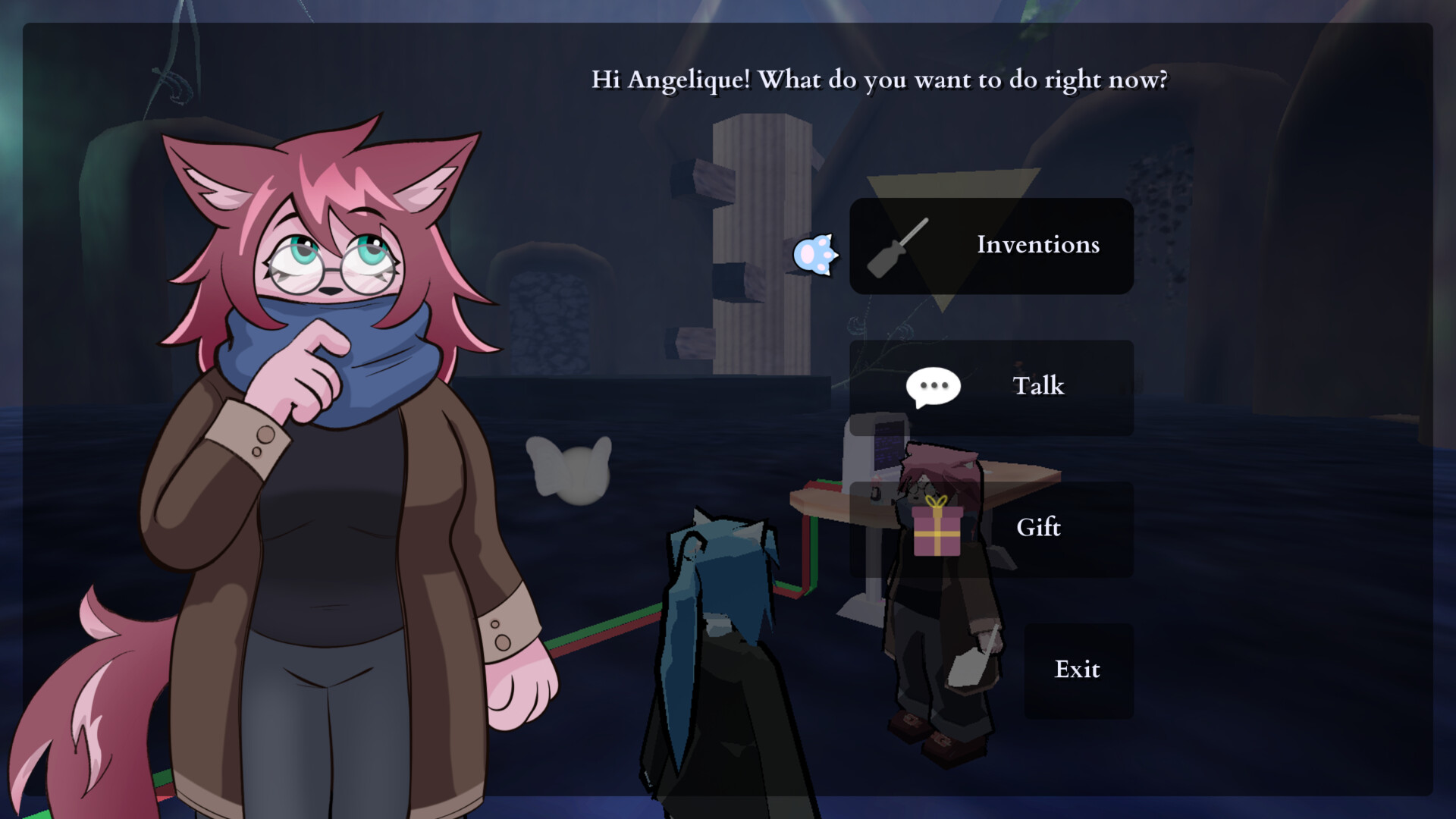
The hub area, where the assistant Maple offers inventions, conversation, and gifts between runs.Image: g3bsoft via Steam